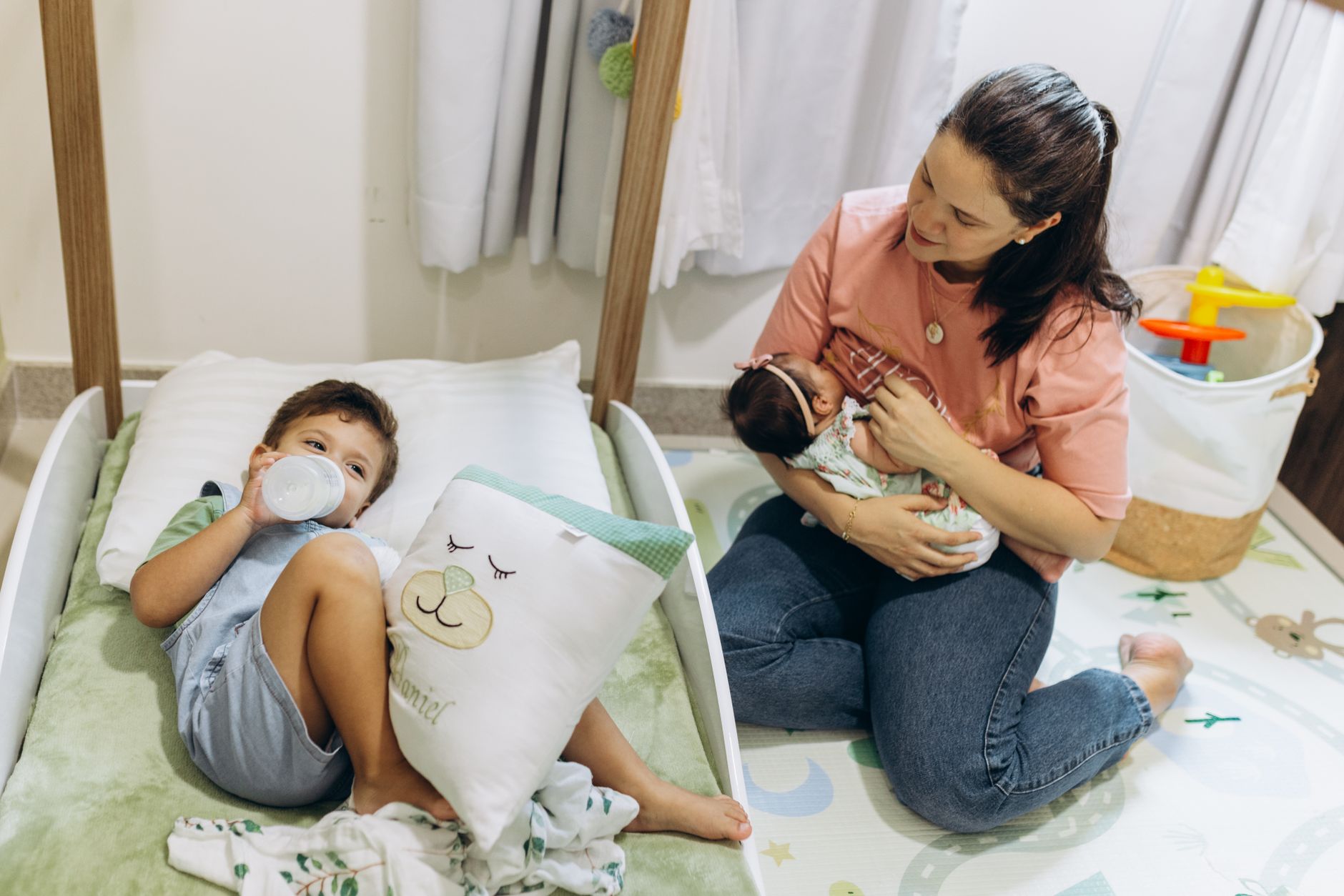
When children are close in age, they often mirror each other’s behavior, which can be a double‑edged sword. Harness the positive aspects while mitigating the downsides with intentional parenting strategies.
Set up activities that encourage teamwork, such as building a block tower together or simple “turn‑taking” games. The older child can lead, which satisfies their need for autonomy, while the younger learns patience.
Individual “special time”
Even a 10‑minute one‑on‑one activity each day—reading a favorite book with the toddler or a gentle massage with the infant—reinforces each child’s sense of being valued. Mark this on a family calendar to ensure consistency.
Positive reinforcement for sharing
When the older sibling offers a toy or helps with a diaper change, use specific praise (“You’re being so gentle with baby’s blanket”) rather than generic approval. This reinforces prosocial behavior without creating competition.
Set clear boundaries
Explain that certain items (e.g., the baby’s pacifier) are “for baby only,” while others (e.g., the toddler’s favorite car) belong to the older child. Consistent boundaries reduce confusion and potential rivalry.
Remember to model the language you want to hear. Phrases like “We share because we care” and “Your turn comes soon” give children a framework for cooperation. The AAP recommends using “positive labeling” to highlight desired behaviors, which strengthens neural pathways associated with empathy (AAP, 2023).
What are the challenges of having children one year apart?
Every family’s experience is unique, but common challenges emerge when siblings are only a year apart.
Overlap of milestones
Both children may be learning to walk, talk, and eat solid foods simultaneously, demanding double the hands‑on attention. This can lead to parental fatigue and feelings of being “always on.”
Sleep deprivation
Newborn sleep patterns are erratic, and toddlers often resist early bedtimes. The result can be a prolonged period of fragmented sleep for parents.
Financial strain
Two children in the same developmental stage often mean dual purchases—two car seats, two strollers, double the diapers, and more. Budgeting becomes crucial.
Emotional rivalry
Even with a close bond, siblings may compete for parental attention, especially when the older child perceives the newborn as a “rival.”
Logistical juggling
Coordinating appointments, errands, and daily routines can feel like a constant balancing act. A well‑organized schedule, preferably digital, can ease this pressure.
Many parents also notice a “double‑dose” of developmental questions from pediatricians—two sets of well‑child visits in a short span. Preparing a consolidated list of concerns for each appointment can streamline the process and reduce repetitive anxiety (CDC, 2023).
How to handle sibling rivalry with a one‑year gap
Sibling rivalry is natural, but with a one‑year gap, proactive steps can keep it healthy.
Validate each child’s feelings
When the older child expresses jealousy (“Why does baby get to be held?”), acknowledge their emotion (“I see you’re feeling left out”) before offering reassurance.
Encourage joint achievements
Celebrate milestones together—like a “first‑step dance” where the toddler shows the baby how to stand. Shared pride reduces competition.
Use “team” language
Refer to the children as “our team” or “our duo” instead of “the older/younger” when praising behavior. This frames cooperation as a family value.
Rotate “special privileges”
Alternate who gets the extra bedtime story or a small treat each night. Predictable rotation prevents feelings of favoritism.
Research from the Journal of Family Psychology shows that families who employ rotating privileges see a 30 % reduction in sibling conflict within three months (JFP, 2022). Consistency, not perfection, is the goal.
Financial planning tips for having kids one year apart
Financial considerations often dictate the feasibility of a close age gap. Here are concrete steps to keep your budget on track.
Create a “dual‑child” expense forecast
List recurring costs—diapers, formula, childcare, healthcare, and clothing—for both children. Multiply by 12 months and add a 10 % buffer for unexpected expenses.
Leverage bulk buying and secondhand options
Buy diapers, wipes, and baby gear in bulk or through membership clubs. Look for gently used items—strollers, high chairs—on reputable platforms to reduce costs.
Adjust your savings strategy
Set up an automatic transfer to a dedicated “family fund” each paycheck. Even $100–$200 per month can accumulate a safety net for emergencies or future education needs.
Tax benefits
In the United States, the Child Tax Credit (up to $2,000 per child) and Dependent Care Flexible Spending Account (FSA) can offset expenses. In the UK, Child Benefit and tax‑free childcare vouchers provide similar support. Consult a tax professional for personalized advice.
When planning purchases, consider the “use‑by” window. For example, buying a second car seat may be unnecessary if the older child can transition to a booster seat earlier than expected. The FDA’s Consumer Safety Guide recommends reviewing product lifespans to avoid premature replacement (FDA, 2022).
Sleep schedule tips for toddlers spaced one year apart
Sleep is the cornerstone of family well‑being. Below are actionable tips that respect both children’s needs.
Staggered bedtime routine
Start the older child’s bedtime routine 20–30 minutes before the infant’s. This creates a calm environment for the toddler, reducing the chance they’ll become overstimulated by the newborn’s nighttime feedings.
Use “white‑noise” or “soft‑music” playlists
Consistent ambient sound can help both children nap simultaneously. Choose a low‑volume, soothing track that doesn’t interfere with the infant’s feeding cues.
Co‑sleep safely
If you opt for room‑sharing, ensure the infant’s sleep space meets safety guidelines—firm mattress, no loose bedding, and a separate sleep surface. The toddler can remain on their own crib or bed, fostering independence.
Daytime nap synchronization
Aim for overlapping nap windows. A shared nap can free up the afternoon for errands or work. If the toddler’s nap ends earlier, use a “quiet‑time” activity (books, puzzles) while the infant continues sleeping.
When night‑time feeds become a bottleneck, consider a “dream feed” at 10 p.m. for the infant, which can lengthen the stretch of uninterrupted sleep for both children. The American Academy of Sleep Medicine (AASM) notes that a well‑timed dream feed can reduce nighttime awakenings by up to 40 % (AASM, 2021).
Health considerations for pregnancy with a one‑year gap
Choosing to have a second child just a year after the first involves specific health considerations.
Maternal recovery time
The World Health Organization (WHO) recommends at least 24 months between births to reduce risks of preterm birth, low birth weight, and maternal anemia. However, many families successfully have children 12 months apart with adequate prenatal care.
Nutrition and supplementation
Maintain a balanced diet rich in iron, calcium, folic acid, and protein. Continue prenatal vitamins throughout the inter‑pregnancy interval, especially if you breastfeed the older child.
Breastfeeding considerations
If you’re nursing the first child, discuss with your OB‑GYN and lactation consultant how to manage supply during a new pregnancy. Some women continue breastfeeding while pregnant; others wean earlier based on comfort and medical advice.
Postpartum support
Arrange for postpartum help—whether a doula, family member, or professional caregiver—to ease the transition when the newborn arrives.
In the United States, the ACOG’s Committee Opinion on birth spacing emphasizes individualized care, noting that women with optimal nutrition and no complications may safely conceive after 12 months, but the recommendation remains 18–24 months for most (ACOG, 2022). The NHS echoes similar guidance, advising women to discuss personal health factors before deciding on a short interval (NHS, 2023).
Activities to bond siblings born one year apart
Shared experiences strengthen the sibling bond and create lasting memories.
“Mini‑adventures” each week
Pick a simple outing—like a park walk, a children’s museum, or a backyard picnic. Keep the activity age‑appropriate, allowing the older child to “lead” and the infant to explore safely.
Joint art projects
Set up a large sheet of paper, give the toddler chunky crayons, and let the infant explore with finger paints (non‑toxic, washable). The result is a collaborative masterpiece that celebrates both ages.
Music and movement time
Play upbeat songs and encourage the older child to dance while holding the baby. Rhythm promotes bonding and supports motor development for both children.
Reading “tandem” stories
Choose books with simple pictures for the toddler and soothing lullabies for the infant. Reading aloud together fosters language skills and a sense of security.
For families who enjoy outdoor time, “nature scavenger hunts” can be adapted: the older child finds leaves or rocks while the infant experiences textures on a soft blanket. Such sensory play benefits brain development, as highlighted by the National Institute of Child Health and Human Development (NICHD, 2022).
Choosing the right childcare arrangement for close‑in‑age siblings
When children are only a year apart, the childcare decision can feel especially tricky. You want a solution that respects their bond while giving each child space to grow.
Co‑enrollment in the same program
Many centers offer “sibling groups” where children close in age learn together. This can reinforce their connection, and parents often appreciate the convenience of a single drop‑off location. Look for programs that follow the National Association for the Education of Young Children (NAEYC) standards for safety and developmentally appropriate practice.
Separate but nearby options
If you prefer individualized attention, consider enrolling the older child in a preschool while the infant attends a separate daycare or stays at home. Keeping the sites within a short drive helps you maintain a visual check on both children and reduces transition stress.
Family‑run care
Grandparents, a trusted relative, or a licensed family child‑care provider can offer a flexible, home‑like environment. Ensure they’re comfortable with the unique demands of a close age gap—such as simultaneous diaper changes and snack times.
When evaluating any childcare setting, ask about staff‑to‑child ratios, emergency policies, and how they handle overlapping nap schedules. The U.S. Department of Health & Human Services recommends a 1:4 ratio for infants and 1:8 for toddlers (HHS, 2022).

Maintaining your relationship as a couple during a tight age gap
Amid the whirlwind of diapers, meals, and appointments, it’s easy to feel the partnership drift. Yet a strong couple foundation benefits both children.
Schedule “date nights” early
Plan brief, low‑key evenings—perhaps a coffee after the kids’ bedtime or a weekend brunch while a trusted sitter watches. Even 30 minutes of uninterrupted conversation can rekindle connection.
Share caregiving duties
Rotate nighttime feeds, diaper changes, and morning routines so neither partner feels solely responsible. A balanced load reduces resentment and models teamwork for the children.
Communicate expectations
Use “I” statements to express needs (“I need a few minutes of quiet after bedtime”) and listen without judgment. The American Psychological Association (APA) highlights that clear communication lowers stress in families with multiple young children (APA, 2021).
Consider a brief “check‑in” ritual each evening—three minutes to discuss what went well and what could improve. This habit keeps small issues from becoming larger conflicts.
Pros and cons of having kids one year apart
Before making a decision, weigh the advantages and disadvantages.
Myth vs. fact
Myth: A one‑year gap guarantees that the older sibling will always be a perfect role model.
Fact: While older siblings often influence younger ones, each child’s personality and environment shape behavior. Positive modeling works best when paired with explicit guidance.
Myth: Two children a year apart will always be “best friends.”
Fact: Sibling relationships vary; close age can foster friendship, but rivalry, differing interests, and external factors also play roles.
Myth: Having children this close is financially impossible.
Fact: Strategic budgeting, bulk purchasing, and leveraging tax benefits can make a one‑year gap affordable for many families.
Key takeaways
- Close age gaps promote empathy and shared milestones, but require intentional routines.
- Staggered bedtime and feeding stations help manage overlapping needs.
- Financial planning—budget forecasts, bulk buying, and tax credits—mitigates cost pressures.
- Health guidelines suggest at least 18 months for optimal maternal recovery, yet many families succeed with 12 months.
- Proactive bonding activities and “special time” reduce rivalry and strengthen sibling ties.
- When challenges feel overwhelming, seek professional support—pediatric, OB‑GYN, or family therapist.
Frequently asked questions
Is a one‑year age gap between children beneficial?
Yes, many families find that a 12‑month gap fosters close emotional bonds and similar interests, which can make playtime easier. The American Academy of Pediatrics notes that siblings close in age often develop stronger language and social skills through peer interaction. Benefits are strongest when parents maintain consistent routines and provide individual attention.
How much older should siblings be for optimal bonding?
Research points to a range of 1–3 years as optimal for both companionship and independence. A one‑year gap sits at the lower end, offering the most shared milestones, while a two‑ to three‑year gap allows for more “alone time” for each child. Your family’s resources, work schedule, and personal preferences will shape the ideal spacing.
What are the common challenges of having kids one year apart?
Common challenges include overlapping sleep and feeding schedules, double the diaper changes, simultaneous developmental milestones, and financial strain from duplicate purchases. Parents often report heightened fatigue during the first 12–18 months and the need for careful calendar management.
Can a one‑year age gap cause more sibling rivalry?
Rivalry can arise when children compete for attention, but a one‑year gap also offers opportunities for collaboration. Setting clear boundaries, rotating “special privileges,” and praising cooperative behavior can transform rivalry into healthy competition.
How do parents handle sleep schedules with children one year apart?
Staggered bedtime routines, shared white‑noise playlists, and synchronized nap windows are effective strategies. Aim for a consistent bedtime window for both children, and use a “wind‑down” ritual that signals sleep for the toddler while the infant’s nighttime feedings occur.
What financial impacts does a one‑year spacing have on families?
Families face dual costs for diapers, clothing, childcare, and medical expenses. However, bulk buying, second‑hand gear, and tax benefits (Child Tax Credit in the US, Child Benefit in the UK) can offset many expenses. Creating a detailed expense forecast helps plan for the overlapping period.
Should I wait longer before trying for another child?
While the WHO recommends waiting at least 18 months for optimal maternal health, many couples successfully have children 12 months apart with proper prenatal care and nutrition. Discuss your personal health, recovery, and lifestyle goals with your OB‑GYN to determine the best timing.
Can I continue breastfeeding the older child while pregnant with the second?
Many women can safely breastfeed during pregnancy, but milk supply may dip and the infant might become fussier. Talk to a lactation consultant and your OB‑GYN about monitoring nutrition, iron levels, and any nipple discomfort. The ACOG notes that continued nursing is generally safe unless there are specific medical concerns (ACOG, 2022).
What are the best ways to keep the house organized with two young children?
Implement “zone” organization: create separate, clearly labeled areas for toys, feeding, and diapering. Use low‑stackable bins that toddlers can access, and keep a “daily reset” routine—10 minutes each evening to return items to their spots. A tidy environment reduces stress and makes cleanup faster for busy parents.
When to see a doctor / specialist
If you notice any of the following, contact a healthcare professional promptly:
- Persistent fever, rash, or unusual irritability in either child.
- Signs of feeding difficulty—refusal to eat, vomiting, or poor weight gain.
- Severe sleep disruption lasting more than two weeks for the parent or children.
- Maternal symptoms such as heavy bleeding, severe abdominal pain, or postpartum depression.
- Any concerns about developmental delays—lack of babbling, crawling, or walking at expected ages.
For pregnancy‑related spacing questions, schedule an appointment with your OB‑GYN or a maternal‑fetal medicine specialist. For toddler health concerns, consult a pediatrician. If sibling rivalry escalates into aggression or emotional distress, consider a child psychologist or family therapist.
References
- American Academy of Pediatrics. “Sibling Relationships and Development.” AAP Policy Statement, 2023.
- World Health Organization. “Inter‑pregnancy Intervals: Recommendations.” WHO Guidelines, 2022.
- U.S. Internal Revenue Service. “Child Tax Credit Overview.” IRS Publication, 2023.
- National Health Service (UK). “Child Benefit and Tax‑Free Childcare.” NHS Guidance, 2023.
- American College of Obstetricians and Gynecologists. “Optimal Birth Spacing.” ACOG Committee Opinion, 2022.
- Harvard T.H. Chan School of Public Health. “Budgeting for New Families.” Nutrition & Financial Planning Review, 2021.
- Centers for Disease Control and Prevention. “Infant and Toddler Health.” CDC Health Topics, 2023.
- American Academy of Sleep Medicine. “Dream Feeding and Nighttime Sleep.” AASM Clinical Practice Guidelines, 2021.
- National Institute of Child Health and Human Development. “Early Childhood Development.” NICHD Research Summary, 2022.
- U.S. Department of Health & Human Services. “Child Care Provider Ratios.” HHS Child Care Regulations, 2022.
- American Psychological Association. “Communication in Parenting.” APA Magazine, 2021.
- Food and Drug Administration. “Consumer Safety Guide for Child Products.” FDA Publication, 2022.