First trimester pregnancy tests confirm early pregnancy. Learn when to take them, accuracy, types, and what results mean for you and your baby’s health.
By Shubhra Mishra — a mom of two who turned her own confusion during pregnancy into BumpBites, a global mission to make food choices clear, safe, and stress-free for every expecting mother. 💛
Check whether any food is safe during pregnancy with the BumpBites Food Safety Checker.
Quick take: Home pregnancy tests can detect pregnancy as early as 10–14 days after conception—about the time your period is due—but accuracy improves the longer you wait. A faint line usually means you’re pregnant, but very early or diluted tests can give false negatives. Blood tests are more sensitive and can confirm pregnancy even sooner. If your period is late and your test is negative, wait 48 hours and retest, or call your provider for a blood test.
You’re sitting on the edge of the bathtub at 6 a.m., the stick trembling in your hand. One line. Two lines—wait, is that second line real, or just a trick of the light? You squint, flip the box over, reread the instructions. The waiting feels endless, the uncertainty heavier than the exhaustion in your bones. If you’re in the first trimester—or think you might be—you’re not alone in this moment. Nearly every woman who’s ever taken a pregnancy test knows that mix of hope, fear, and frustration.
Pregnancy tests are designed to give answers, but in those early weeks, they can also raise more questions. Why is the line so faint? How soon is too soon to test? Could a negative result still mean you’re pregnant? We’ll walk you through exactly how these tests work, when to take them, what those confusing lines really mean, and when to trust the result—or when to pick up the phone and call your doctor.
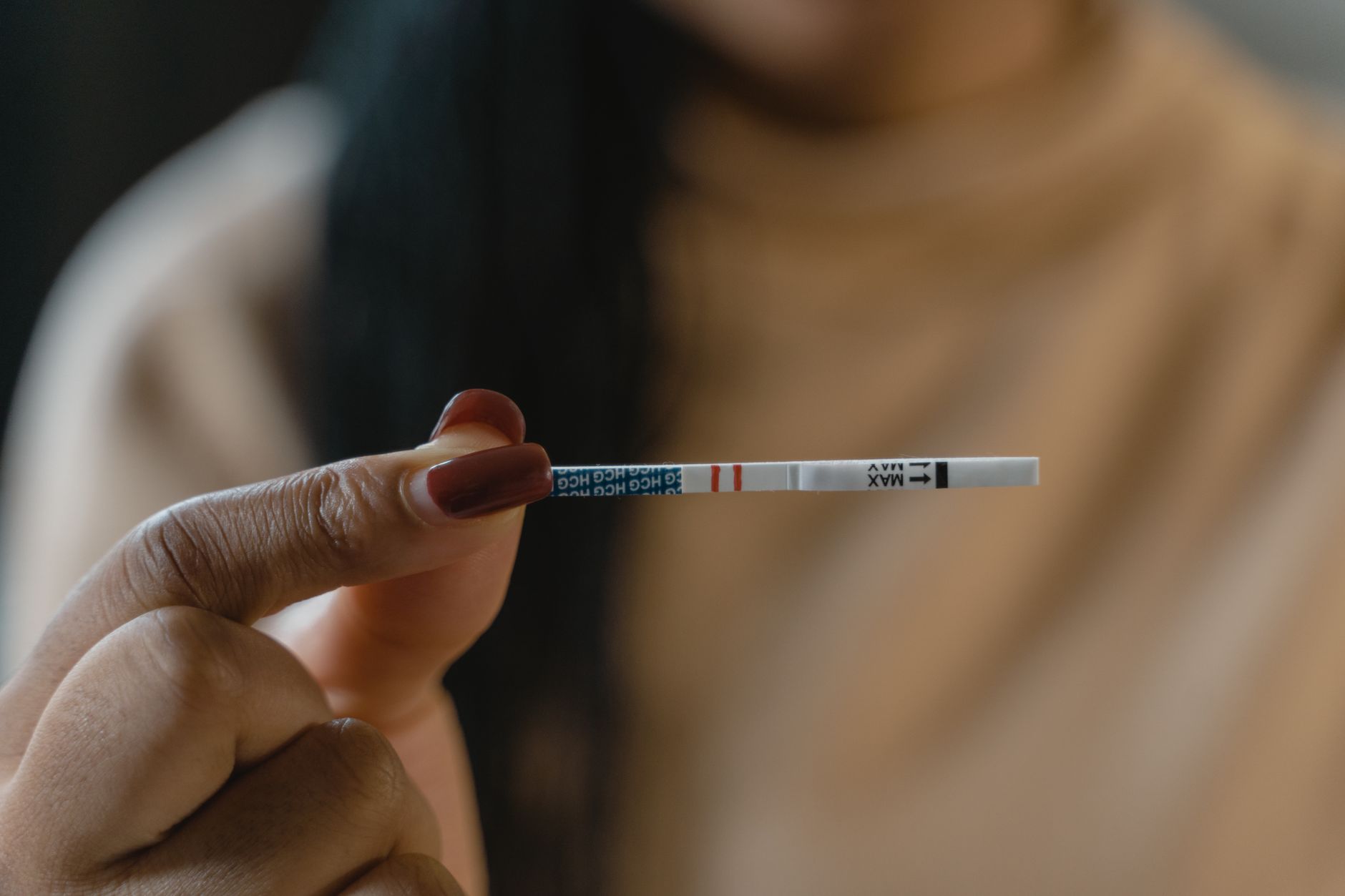
That faint second line can feel like a whisper—here’s how to know if it’s telling you yes.
How soon after conception can a pregnancy test detect pregnancy?
You’ve just had unprotected sex, or your period is late, and you’re wondering: How soon can I test? The answer depends on how pregnancy tests work—and what’s happening inside your body in those first few weeks.
Pregnancy tests detect a hormone called human chorionic gonadotropin (hCG). Your body starts producing hCG after a fertilized egg implants in your uterus—usually about 6–12 days after conception. That’s when the hormone begins to rise, doubling roughly every 48 hours in early pregnancy. But here’s the catch: not all tests can detect hCG at the same level.
Most home pregnancy tests claim to detect pregnancy as early as the first day of your missed period—about 14 days after conception. Some “early detection” tests promise results up to 6 days before your missed period. But here’s the reality: testing that early often leads to false negatives. Why? Because your hCG levels may still be too low for the test to pick up.
One reader, Sarah, shared her experience: “I tested five days before my period was due—negative. I tested again two days later, and there it was: a faint line. I’d been pregnant the whole time, but my hCG just hadn’t risen enough yet.”
Current evidence suggests that for the most reliable result, it’s best to wait until at least the day your period is due—or even a day or two after. That’s when hCG levels are typically high enough for most tests to detect. If you test earlier and get a negative, it doesn’t necessarily mean you’re not pregnant—it may just mean you tested too soon.
When is the best time to take a pregnancy test for early detection?
Timing isn’t just about the day—it’s also about the time of day. And if you’re trying to detect pregnancy as early as possible, when you test can make all the difference.
The best time to take a pregnancy test is first thing in the morning, with your first urine of the day. Why? Because that’s when your urine is most concentrated, and hCG levels are at their highest. If you’re testing early—before your missed period—this is especially important. A diluted urine sample (from drinking lots of water) can lower hCG concentration and lead to a false negative.
If you can’t test in the morning, try to hold your urine for at least 4 hours before testing. Avoid drinking large amounts of fluids right before you test. And if you’re using an early detection test, follow the instructions carefully—some are more sensitive than others and may give accurate results earlier in the day.
Here’s a quick timeline to guide you:
6–8 days after ovulation (about a week before your period): Possible to get a positive, but most women will still test negative. hCG levels are just beginning to rise.
10–12 days after ovulation (about 2–4 days before your period): Some early detection tests may pick up hCG, but false negatives are still common.
14 days after ovulation (the day your period is due): Most standard pregnancy tests will give an accurate result. If you test now and it’s negative, wait 48 hours and retest.
15+ days after ovulation (1+ days after your missed period): A negative result at this point is more reliable. If you still haven’t gotten your period, it’s time to call your provider.
If you’re tracking ovulation (using basal body temperature, ovulation predictor kits, or cervical mucus), you can use that data to time your test more precisely. But remember: even with perfect timing, a negative test before your missed period doesn’t rule out pregnancy.
hCG levels rise quickly in early pregnancy—but not all tests can detect them at the same time.
How accurate are home pregnancy tests in the first trimester?
You’ve probably seen the claims: “99% accurate!” “Results as early as 6 days before your missed period!” But how accurate are home pregnancy tests really—especially in those first few weeks?
The truth is, home pregnancy tests are highly accurate when used correctly. Most standard tests claim 99% accuracy from the day of your missed period. But that number drops significantly if you test earlier. For example, one study found that tests used 4 days before the missed period detected only about 50% of pregnancies. By the day of the missed period, that number jumped to 90%. And by one week after the missed period, accuracy was close to 99%.
So why the gap? It comes down to hCG levels and test sensitivity. All pregnancy tests measure hCG, but they don’t all measure it at the same threshold. Most standard tests detect hCG at 20–50 mIU/mL (milli-international units per milliliter). Early detection tests can pick up levels as low as 10–20 mIU/mL. The lower the number, the earlier the test can detect pregnancy—but also the more likely it is to give a false positive or faint line.
Here’s what affects accuracy in the first trimester:
Timing: Testing too early is the #1 reason for false negatives. If you test before hCG levels are high enough, the test may not pick it up.
Dilution: Drinking lots of water before testing can dilute your urine and lower hCG concentration, leading to a false negative.
User error: Not following instructions—like reading the test too early or too late—can affect the result. Most tests need to be read within 5–10 minutes.
Expired or faulty tests: Always check the expiration date. Store tests in a cool, dry place, and don’t use them if the packaging is damaged.
Ectopic pregnancy or miscarriage: In rare cases, hCG levels may rise more slowly or drop unexpectedly. If you have symptoms like severe pain or bleeding, seek medical care immediately.
If you get a positive result, it’s almost certainly correct. False positives are rare, but they can happen due to chemical pregnancies (very early miscarriages), fertility medications containing hCG, or certain medical conditions. If you get a negative result but still think you might be pregnant, wait 48 hours and retest. If your period still doesn’t arrive, call your provider.
What are the signs of a false negative first trimester pregnancy test?
You’re sure you’re pregnant. Your period is late, your breasts are tender, you’re exhausted, and you’ve been nauseous for days. But the pregnancy test says negative. What’s going on?
A false negative happens when you’re actually pregnant, but the test doesn’t detect it. It’s more common than you might think—especially in the first trimester. Here are the most common signs that your negative result might be a false negative:
Your period is late, but the test is negative. If you’re usually regular and your period is more than a few days late, it’s worth retesting—especially if you have other pregnancy symptoms.
You tested too early. If you tested before your missed period, hCG levels may not have risen enough for the test to detect. Wait 48 hours and try again.
Your urine was diluted. If you drank a lot of water before testing, your urine may not have enough hCG to trigger a positive result. Test first thing in the morning for the most accurate result.
You read the test too early or too late. Most tests need to be read within 5–10 minutes. Reading too early can miss a faint line; reading too late can show an evaporation line (a colorless streak that can be mistaken for a positive).
You’re using a less sensitive test. Not all tests are created equal. If you’re testing early, use a test with a sensitivity of 20 mIU/mL or lower.
Your hCG levels are rising slowly. In most pregnancies, hCG doubles every 48 hours. But in some cases—like ectopic pregnancies or early miscarriages—hCG levels may rise more slowly or even drop. If you have symptoms like severe pain or bleeding, seek medical care.
One mom, Jamie, described her experience: “I tested negative three days after my missed period. I was so sure I was pregnant—I could feel it. I waited two more days and tested again, and there it was: a clear positive. Turns out, my hCG just took a little longer to rise.”
If you think you might be pregnant but keep getting negative results, don’t lose hope. Wait a few days, retest with first-morning urine, and if your period still doesn’t arrive, call your provider. A blood test can confirm pregnancy even earlier than a urine test—and give you the answers you need.
Best pregnancy test brands for early first trimester results
Not all pregnancy tests are created equal—especially when you’re testing early. Some are more sensitive, easier to read, or less prone to evaporation lines. If you’re trying to detect pregnancy as soon as possible, here are the brands our medical team and readers recommend most often:
Brand & Test Name
Sensitivity (mIU/mL)
Earliest Detection
Pros
Cons
First Response Early Result
6.3
6 days before missed period
Most sensitive test on the market; detects hCG at very low levels. Easy-to-read "+" or "-" result.
More expensive than standard tests; can be prone to evaporation lines if read too late.
Clearblue Early Detection
10
6 days before missed period
Digital and non-digital options; clear "Pregnant" or "Not Pregnant" result. Less prone to evaporation lines.
Digital version is more expensive; some users report faint lines on non-digital version.
Pregmate
20
Day of missed period
Affordable bulk packs; reliable and easy to read. Good for retesting.
Not as sensitive as First Response or Clearblue; not ideal for very early testing.
Easy@Home
25
Day of missed period
Budget-friendly; comes with ovulation tests. Good for tracking cycles.
Less sensitive than premium brands; can be harder to interpret faint lines.
ClinicalGuard
25
Day of missed period
Very affordable; no-frills, reliable results. Good for frequent testing.
Not as sensitive for early detection; strips can be harder to read.
If you’re testing early—before your missed period—First Response Early Result is the most sensitive and reliable option. But if you’re on a budget or planning to test multiple times, Pregmate or Easy@Home are good choices. For the clearest results, Clearblue Digital removes the guesswork (though it’s pricier).
Avoid cheap, no-name tests from dollar stores or unknown brands. They’re often less sensitive and more prone to errors. And remember: no matter which test you choose, follow the instructions carefully. Read the result within the recommended time frame (usually 5–10 minutes), and if you’re unsure, retest in 48 hours.
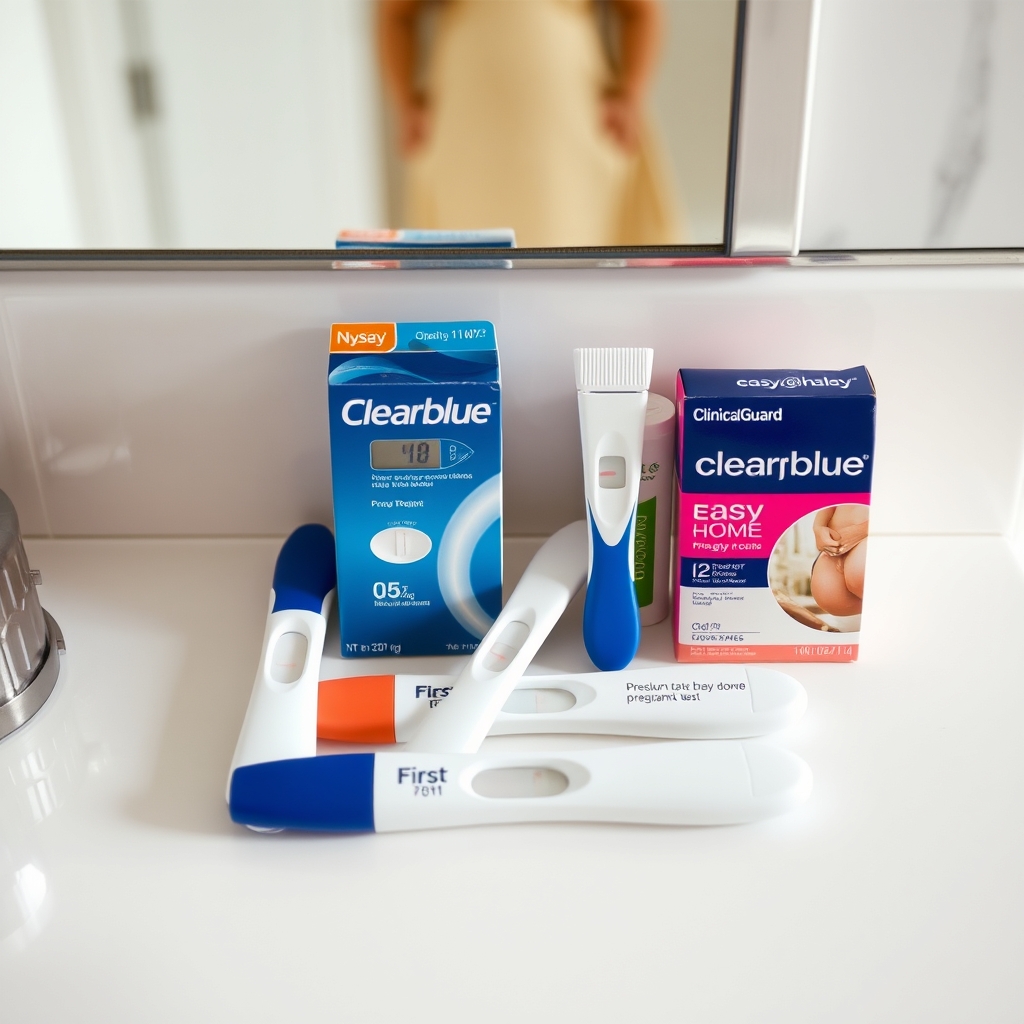
Not all pregnancy tests are created equal—here’s how to choose the right one for early detection.
Differences between urine and blood tests in the first trimester
You’ve peed on a stick, but now you’re wondering: Should I get a blood test? What’s the difference, and which one is right for you?
Both urine and blood tests detect hCG, but they do it in different ways—and with different levels of sensitivity. Here’s how they compare:
Early detection (before missed period); monitoring hCG trends; suspected ectopic pregnancy or miscarriage
Blood tests are the gold standard for early pregnancy detection. Because they measure the exact amount of hCG in your blood, they can detect pregnancy even sooner than urine tests—sometimes as early as 6–8 days after conception. They’re also more precise: a blood test can tell you not just whether you’re pregnant, but how much hCG is in your system. This is especially useful if your provider suspects an ectopic pregnancy, miscarriage, or other complication.
But blood tests aren’t always necessary. For most women, a home urine test is enough to confirm pregnancy—especially if you wait until the day of your missed period. Blood tests are typically reserved for situations where timing is critical (like after IVF) or when there’s a concern about the pregnancy’s viability.
One scenario where a blood test is particularly helpful: if you’ve had fertility treatments like IVF. Because you know exactly when conception occurred, your provider may order a blood test as early as 9–12 days after embryo transfer to confirm pregnancy before a urine test would detect it.
If you’re unsure whether you need a blood test, talk to your provider. They can help you decide based on your medical history, symptoms, and timing.
Factors that affect first trimester pregnancy test results
You’ve taken the test, but now you’re second-guessing: Did I do something wrong? Could something have messed with the result?
Several factors can influence whether your pregnancy test gives an accurate result—especially in the first trimester. Here’s what you need to know:
1. Timing of the test
Testing too early is the most common reason for a false negative. hCG levels double every 48 hours in early pregnancy, so if you test before they’ve risen enough, the test may not pick it up. Wait until at least the day of your missed period for the most reliable result.
2. Dilution of urine
Drinking lots of water before testing can dilute your urine and lower hCG concentration. For the most accurate result, test first thing in the morning with your first urine of the day. If you can’t test in the morning, hold your urine for at least 4 hours before testing.
3. Medications
Most medications—including birth control, antibiotics, and pain relievers—do not affect pregnancy test results. But there are a few exceptions:
Fertility medications containing hCG: Drugs like Pregnyl, Novarel, or Ovidrel can cause a false positive if you test too soon after taking them. hCG from these medications can stay in your system for up to 14 days.
Other fertility drugs: Clomid and letrozole don’t contain hCG, so they won’t cause a false positive. But they can increase your chance of pregnancy, so a positive test is more likely to be real.
Diuretics or antihistamines: These can dilute your urine and potentially lead to a false negative.
4. Medical conditions
Certain health conditions can affect hCG levels and test results:
Ectopic pregnancy: hCG levels may rise more slowly than in a normal pregnancy. If you have symptoms like severe pain, dizziness, or shoulder pain, seek medical care immediately.
Molar pregnancy: A rare condition where abnormal tissue grows in the uterus. hCG levels can be very high, leading to a positive test even if the pregnancy isn’t viable.
Ovarian cysts or tumors: Some cysts and tumors can produce hCG, leading to a false positive.
Perimenopause: hCG levels can rise slightly during perimenopause, but they’re usually too low to trigger a positive test. False positives from perimenopause are rare.
5. Evaporation lines
An evaporation line is a colorless streak that can appear on a pregnancy test after the urine dries. It’s not a positive result—it’s just a mark left by the test’s dye. Evaporation lines are more common if you read the test too late (after the recommended 5–10 minutes). To avoid confusion, read the test within the time frame specified in the instructions.
6. Chemical pregnancy
A chemical pregnancy is a very early miscarriage that happens before the fifth week of pregnancy. It can cause a positive test followed by a negative test a few days later. Chemical pregnancies are common—up to 50% of all pregnancies may end this way—and they’re often a sign that your body is capable of conceiving.
7. User error
Even the best pregnancy test won’t work if you don’t use it correctly. Common mistakes include:
Not using enough urine (the test needs to be fully saturated).
Reading the test too early or too late.
Using an expired test.
Storing the test in a humid or hot place (like a bathroom).
If you’re unsure about your result, retest in 48 hours. If you still have questions, call your provider. They can help you interpret the result and decide if you need a blood test or ultrasound.
What does a faint line on a first trimester pregnancy test mean?
You’ve taken the test, and there it is: a faint second line. Is it real? Are you pregnant? Or is it just your imagination?
A faint line on a pregnancy test almost always means you’re pregnant. Here’s why: pregnancy tests work by detecting hCG, and even a small amount of hCG is enough to trigger a positive result. A faint line simply means that your hCG levels are still low—common in very early pregnancy, when the hormone is just starting to rise.
But there are a few other possibilities:
You’re testing very early: If you tested before your missed period, hCG levels may not have risen enough for a bold line. Wait 48 hours and retest—you’ll likely see a darker line as hCG doubles.
Your urine is diluted: If you drank a lot of water before testing, your urine may not have enough hCG to produce a strong line. Test first thing in the morning for the most accurate result.
You’re using a less sensitive test: Some tests require higher hCG levels to show a bold line. If you’re testing early, use a test with a sensitivity of 20 mIU/mL or lower.
It’s an evaporation line: If you read the test too late (after the recommended 5–10 minutes), a colorless evaporation line can appear. This isn’t a positive result—it’s just a mark left by the test’s dye. Always read the test within the time frame specified in the instructions.
You’re experiencing a chemical pregnancy: A very faint line followed by a negative test a few days later could indicate a chemical pregnancy (an early miscarriage). This is common and doesn’t mean you won’t have a healthy pregnancy in the future.
One mom, Lisa, shared her story: “I tested five days before my period and got a faint line. I was so excited, but then I started spotting. I tested again the next day—negative. I was devastated. But my doctor explained it was likely a chemical pregnancy, and that my body was capable of conceiving. Three months later, I got a clear positive, and now I have a healthy baby.”
If you see a faint line, here’s what to do:
Wait 48 hours and retest. If you’re pregnant, the line should get darker as hCG rises.
Use first-morning urine for the most accurate result.
If the line stays faint or disappears, call your provider. They can order a blood test to check your hCG levels.
Don’t panic if the line fades. It doesn’t always mean something is wrong—hCG levels can fluctuate in early pregnancy.
And remember: a faint line is still a positive. It counts!
From our medical team: A faint line on a pregnancy test is almost always a true positive—especially if you see it within the test’s recommended reading time. hCG levels double every 48 hours in early pregnancy, so if you retest in two days, you’ll likely see a darker line. If you’re unsure, a blood test can give you a definitive answer. And if you’re experiencing symptoms like pain or bleeding, don’t wait—call your provider right away.
Myth vs. fact
Pregnancy tests are simple in theory, but myths and misinformation can make them feel confusing. Let’s clear up some of the most common misconceptions:
Myth: If you’re pregnant, you’ll always get a bold, dark line on a pregnancy test. Fact: A faint line is still a positive result. hCG levels rise quickly in early pregnancy, but they start low. A faint line simply means you’re testing early—or that your urine is diluted. Wait 48 hours and retest; the line will likely get darker.
Myth: You can’t get a false positive on a pregnancy test. Fact: False positives are rare, but they can happen. Causes include fertility medications containing hCG, chemical pregnancies, ectopic pregnancies, or certain medical conditions like ovarian cysts. If you get a positive result but aren’t sure it’s real, retest in 48 hours or call your provider for a blood test.
Myth: Drinking lots of water before testing will help you get a clearer result. Fact: Drinking too much water can dilute your urine and lower hCG concentration, leading to a false negative or faint line. For the most accurate result, test first thing in the morning with your first urine of the day.
Myth: If you’re pregnant, you’ll feel symptoms right away. Fact: Every woman—and every pregnancy—is different. Some women feel symptoms as early as a week after conception; others don’t feel anything until weeks later. A missed period is often the first sign, but even that can be misleading if your cycles are irregular.
Myth: Blood tests are always more accurate than urine tests. Fact: Blood tests are more sensitive and can detect pregnancy earlier, but both tests are highly accurate when used correctly. Urine tests are sufficient for most women—especially if you wait until the day of your missed period. Blood tests are typically reserved for early detection (like after IVF) or when there’s a concern about the pregnancy’s viability.
Key takeaways
Home pregnancy tests can detect pregnancy as early as 10–14 days after conception—but accuracy improves the longer you wait. For the most reliable result, test on or after the day your period is due.
A faint line on a pregnancy test usually means you’re pregnant. hCG levels are still low, but they’ll rise quickly. Wait 48 hours and retest for a darker line.
Blood tests are more sensitive than urine tests and can detect pregnancy even sooner. They’re also more precise, measuring the exact amount of hCG in your system. But for most women, a home urine test is enough to confirm pregnancy.
False negatives are more common than false positives—especially if you test too early, drink lots of water before testing, or use a less sensitive test. If your period is late and your test is negative, wait 48 hours and retest.
Several factors can affect test results, including timing, urine dilution, medications, and medical conditions like ectopic pregnancy or ovarian cysts. If you’re unsure about your result, call your provider.
If you have symptoms like severe pain, dizziness, or heavy bleeding, seek medical care immediately. These could be signs of an ectopic pregnancy or miscarriage.
Frequently asked questions
How early can you take a pregnancy test?
Most home pregnancy tests can detect pregnancy as early as the first day of your missed period—about 14 days after conception. Some “early detection” tests promise results up to 6 days before your missed period, but false negatives are common at this stage. For the most reliable result, wait until at least the day your period is due.
What does a faint line on a pregnancy test mean?
A faint line on a pregnancy test almost always means you’re pregnant. It simply means your hCG levels are still low—common in very early pregnancy. Wait 48 hours and retest; the line should get darker as hCG rises. If you’re unsure, call your provider for a blood test.
Can a blood test detect pregnancy earlier than a urine test?
Yes. Blood tests are more sensitive than urine tests and can detect pregnancy as early as 6–8 days after conception. They measure the exact amount of hCG in your blood, making them more precise. But for most women, a home urine test is sufficient to confirm pregnancy—especially if you wait until the day of your missed period.
Why is my pregnancy test negative when I think I'm pregnant?
A negative test when you think you’re pregnant is usually due to testing too early. hCG levels may not have risen enough for the test to detect. Other causes include diluted urine (from drinking lots of water), using a less sensitive test, or reading the test too early or too late. If your period is late and your test is negative, wait 48 hours and retest. If you still don’t get your period, call your provider.
Can certain medications affect pregnancy test results?
Most medications—including birth control, antibiotics, and pain relievers—do not affect pregnancy test results. However, fertility medications containing hCG (like Pregnyl or Ovidrel) can cause a false positive if you test too soon after taking them. Other medications, like diuretics or antihistamines, can dilute your urine and potentially lead to a false negative.
How long does it take for hCG levels to rise enough for a positive test?
hCG levels start rising after a fertilized egg implants in your uterus—usually about 6–12 days after conception. In most pregnancies, hCG doubles every 48 hours. By the day of your missed period (about 14 days after conception), hCG levels are typically high enough for most home pregnancy tests to detect. If you test earlier, you may get a false negative.
When to call your doctor
Pregnancy tests are a great first step, but they’re not a substitute for medical care. Here’s when to pick up the phone and call your provider:
Your period is more than a week late, and your pregnancy test is negative.
You get a positive test followed by a negative test a few days later (this could indicate a chemical pregnancy or miscarriage).
You have symptoms of pregnancy but keep getting negative tests.
You experience severe pain, dizziness, or heavy bleeding (these could be signs of an ectopic pregnancy or miscarriage).
You have a positive test but aren’t sure about the result (your provider can order a blood test for confirmation).
You’re trying to conceive and have questions about timing, fertility, or next steps.
Remember: this article is for informational purposes only and is not a substitute for professional medical advice, diagnosis, or treatment. Always seek the advice of your physician or other qualified health provider with any questions you may have regarding a medical condition.
References
American College of Obstetricians and Gynecologists (ACOG).How Your Fetus Grows During Pregnancy
Not sure about the label on First Trimester Pregnancy Tests products?
Snap the ingredients list and SafeFilter checks every ingredient for your stage — only 3 free scans this month, then you're locked until reset. Unlimited from $7/mo or $50/yr.
When Shubhra Mishra was expecting her first child in 2016, she was overwhelmed by conflicting food advice — one site said yes, another said never. By the time her second baby arrived in 2019, she realized millions of mothers face the same confusion.
That sparked a five-year journey through clinical nutrition papers, cultural diets, and expert conversations — all leading to BumpBites: a calm, compassionate space where science meets everyday motherhood.
Her long-term vision is to build a global community ensuring safe, supported, and free deliveriesfor every mother — because no woman should face pregnancy alone or uninformed. 🌿
🌍 Stand with mothers, shape safer guidance
Join a small circle of experts who review BumpBites articles so expecting parents everywhere can decide with confidence.