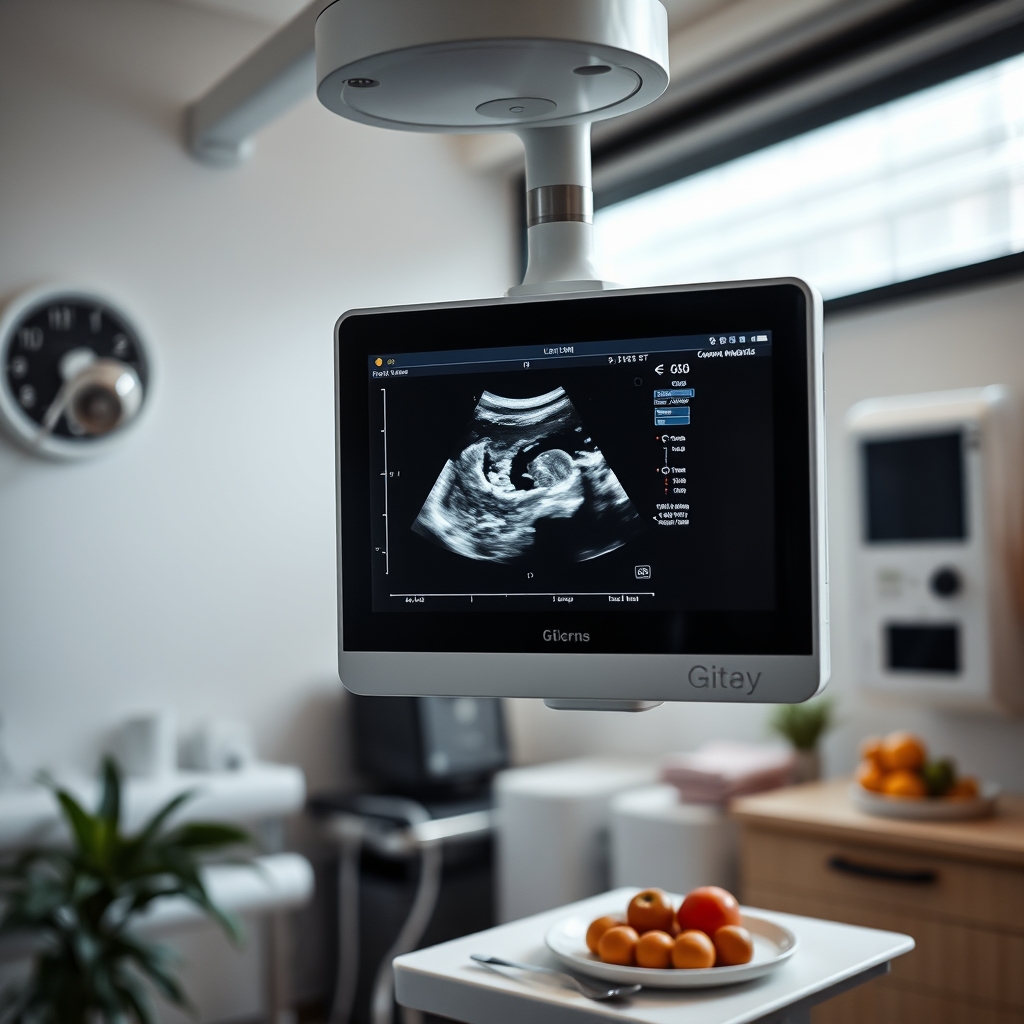
Dating scan accuracy is about 95% in the first trimester. Learn how reliable ultrasound dating is, factors affecting precision, and when to trust your due date.
By Shubhra Mishra — a mom of two who turned her own confusion during pregnancy into BumpBites, a global mission to make food choices clear, safe, and stress-free for every expecting mother. 💛
Check whether any food is safe during pregnancy with the BumpBites Food Safety Checker.
Quick take: A dating scan performed around 12 weeks gestation typically pins your baby’s age within ±5–7 days for a singleton pregnancy. Accuracy can vary a bit more for twins, high maternal BMI, or unusual fetal positions, but most scans remain reliable enough to set a due date. If the scan date seems off by a week or more, ask your provider for a second opinion or a follow‑up scan.
It’s 2 a.m., you’re curled up with a warm cup of tea, and the ultrasound pictures you just saw on the screen are still fresh in your mind. You’re wondering, “Did the doctor get my baby’s age right?” You’re not alone—many expecting parents question the precision of that first‑trimester “dating scan.” In this guide we break down exactly how accurate a dating scan is, what can shift the numbers, and when you can feel confident about your due date.
We’ll walk through the typical margin of error, compare the scan to other dating methods like a known IVF embryo‑transfer date, explore how your body and your baby’s position can influence results, and give you clear steps if the numbers don’t line up. By the end you’ll have a realistic picture of what the scan can tell you—and what to do if you still feel uncertain.
What is the margin of error for a dating scan at 12 weeks?
The “dating scan” is usually done between 11 and 14 weeks gestation because the fetus’s crown‑rump length (CRL) is most reliably measured then. Most professional guidelines, including those from the American College of Obstetricians and Gynecologists (ACOG) and the UK’s National Institute for Health and Care Excellence (NICE), state that a CRL measurement at this stage predicts the gestational age within ±5–7 days for a singleton pregnancy.
In practice, this means if your scan says you’re 12 weeks and 3 days, the true gestational age is likely somewhere between 12 weeks and 0 days and 12 weeks and 10 days. For twins, the variability widens a bit, often to ±10 days, because measuring two fetuses introduces more room for small differences.
Recent UK data (2023) from the National Health Service (NHS) showed that 93 % of first‑trimester dating scans fell within ±7 days of the later‑trimester growth‑based dating, reinforcing the reliability of the ±5–7 day range.
When you hear “margin of error,” think of it as a built‑in safety net. Even if the scan is a few days off, the resulting due date is still accurate enough for most prenatal planning, such as scheduling anatomy scans, glucose testing, and maternity leave.
It’s also worth noting that the error margin is a statistical average. Individual experiences can be slightly tighter or broader, but the confidence interval remains a useful guide for clinicians and families alike.
Typical CRL measurement at 12 weeks provides a solid foundation for dating.
How accurate is a dating scan compared to an IVF cycle date?
If you conceived through in‑vitro fertilisation (IVF), you already have an exact embryo‑transfer date. Many wonder whether the ultrasound can match that precision. The short answer: the dating scan is usually within ±2–3 days of the IVF transfer date for a singleton embryo, which is slightly tighter than the ±5–7 day range for spontaneous conceptions.
Why the tighter window? IVF embryos are transferred at a known developmental stage (often day 5 or 6 post‑fertilisation), so the gestational age calculation starts from a precise point. Studies cited by the Royal College of Obstetricians and Gynaecologists (RCOG) report that the discrepancy between IVF dates and first‑trimester CRL dating rarely exceeds 3 days.
That said, the scan can still appear “off” if the embryo implants later than expected or if the ultrasound technician measures the CRL slightly differently. In such cases, providers usually reconcile the dates by favouring the IVF date for scheduling purposes, especially when planning interventions that depend on exact gestational age, like early‑pregnancy genetic testing.
For patients who undergo frozen‑embryo transfers, the timing is even more controlled, and many clinics use both the IVF date and the dating scan together to create a highly reliable gestational timeline.
Can a dating scan be off by a week and still be considered accurate?
Yes. A deviation of up to 7 days (one week) still falls within the standard error margin endorsed by ACOG and NICE. For most clinical decisions, a one‑week discrepancy does not change management. However, if the scan suggests a gestational age that’s more than 7 days different from your last menstrual period (LMP) or IVF date, it’s worth discussing with your provider.
In practice, many women discover a week‑long difference when they compare the scan’s due date to their own calendar. The key is to understand that the scan’s CRL measurement is considered the most reliable single estimate, especially when LMP is uncertain (irregular cycles, early‑pregnancy bleeding, or hormonal contraceptive use). Providers may adjust the due date based on the scan, but they’ll also look at the whole picture—including maternal health, fetal growth trends, and any prior obstetric history.
When the discrepancy is close to the upper limit of the margin, clinicians often schedule a repeat scan or a second‑trimester growth scan to verify the timeline. This extra step can provide peace of mind and fine‑tune the estimated due date.
What factors affect dating scan accuracy in the first trimester?
Several variables can shift the CRL measurement and, consequently, the estimated gestational age. Below are the most common influences, each backed by guidance from the NHS, ACOG, and the CDC.
Gestational age at the time of scan: Scans done before 11 weeks or after 14 weeks have broader error ranges because the fetus’s growth rate becomes more variable.
Maternal body‑mass index (BMI): Higher BMI can reduce image clarity, making it harder to pinpoint the crown and rump accurately.
Fetal position: If the baby is curled up or lying against the uterine wall, the technician may have to use an angled view, which can add a few days of uncertainty.
Ultrasound equipment and technician skill: High‑resolution transducers and experienced sonographers produce the most consistent measurements.
Multiple pregnancy: Measuring two (or more) fetuses introduces additional challenges, often expanding the error margin to ±10 days.
Understanding these factors helps you interpret the scan result with realistic expectations. For example, a woman with a BMI of 35 kg/m² may be told that the margin of error could be ±7–9 days instead of the usual ±5–7 days.
Other less common contributors include maternal abdominal scarring from prior surgeries, which can create acoustic shadows, and the presence of uterine fibroids that may obscure the view of the fetus.
How does maternal BMI influence dating scan accuracy?
Maternal BMI is a well‑documented modifier of ultrasound image quality. The ACOG Practice Bulletin on Obstetric Ultrasound notes that for women with a BMI ≥ 30 kg/m², the typical ±5–7 day accuracy can stretch to ±8–10 days. The main reason is increased tissue depth, which attenuates the ultrasound beam and reduces the resolution of the CRL.
Clinicians often compensate by using a lower‑frequency curvilinear probe, which penetrates deeper but sacrifices some detail. In some cases, a second scan may be scheduled a week later to confirm the measurement if the first image was suboptimal.
Importantly, BMI does not invalidate the dating scan—it simply means the confidence interval is a little wider. If you’re concerned about this, discuss with your provider whether a repeat scan or additional dating methods (such as early‑pregnancy hormone levels) might be helpful.
Weight‑related challenges are also a reason why many clinics emphasize early scanning, when the fetus is still small enough to be visualized through a thinner abdominal wall.
What are the signs that a dating scan date is incorrect?
While most dating scans are reliable, a few red flags might suggest the estimated age needs re‑evaluation:
Significant mismatch (> 7 days) between the scan’s gestational age and your known LMP or IVF transfer date.
Inconsistent growth patterns on later anatomy scans (e.g., the fetus appears smaller or larger than expected for the reported age).
Repeated difficulty visualising the crown‑rump length due to fetal position or maternal habitus.
Maternal reports of early pregnancy symptoms (such as severe nausea) that began much earlier than the scan suggests.
If any of these appear, the safest step is to request a follow‑up scan. Your provider may also order a second‑trimester growth scan, which can refine the dating by comparing the fetus’s size to population growth curves.
Another subtle clue is an unusually large uterine fundal height for the estimated gestational age, which can prompt clinicians to double‑check the dating.
How accurate are dating scans for twins versus singletons?
Dating twins adds a layer of complexity. Because each fetus may develop at a slightly different rate, the CRL measurement for each can differ by a few days. The RCOG guidelines state that the combined accuracy for twins is generally ±10 days, compared with ±5–7 days for singletons.
In practice, sonographers will measure the larger twin’s CRL and use that as the primary dating reference, noting the smaller twin’s measurement for growth monitoring. Even with the broader margin, the resulting due date is still useful for planning prenatal care, though providers may schedule more frequent growth checks to ensure both babies are thriving.
When twins are conceived via IVF, the known embryo‑transfer date can tighten the accuracy somewhat, but the physical challenge of visualising two fetuses still leads to a wider confidence interval than in singleton pregnancies.
When should I schedule a dating scan for the most accurate dating?
The sweet spot for a dating scan is 11 to 14 weeks gestation. Scans performed at 12 weeks strike a balance: the fetus is large enough for a clear CRL measurement, yet early enough that growth variations haven’t yet introduced significant error.
If you’re pregnant after IVF, many clinics aim for a scan around 12 weeks post‑transfer to confirm implantation and establish a baseline. For spontaneous conceptions, scheduling the scan as soon as the first‑trimester dating window opens (often after a positive home pregnancy test and a confirmed heartbeat) yields the most precise due date.
Late‑pregnancy dating scans (after 20 weeks) are generally less accurate for estimating gestational age because fetal growth rates become more variable. Nonetheless, they can still be useful for confirming the timeline if earlier scans were unavailable or inconclusive.
In some cases, a very early scan (around 9–10 weeks) can be performed, but the margin of error widens to ±10 days, so most clinicians recommend waiting until the 11‑week window for optimal precision.
Planning your dating scan early helps lock in a reliable due date.
Scenario
Typical Accuracy (Days)
Key Influencing Factor
Singleton, BMI < 30 kg/m²
±5–7
Standard CRL measurement
Singleton, BMI ≥ 30 kg/m²
±8–10
Image attenuation from maternal adiposity
Twin pregnancy
±10
Two CRL measurements, slight growth variation
IVF‑conceived singleton
±2–3
Known embryo‑transfer date
Late‑pregnancy (> 20 weeks)
±14–21
Variable fetal growth rates
Understanding crown‑rump length (CRL) measurement
Crown‑rump length is the distance from the top of the baby’s head (the crown) to the bottom of the torso (the rump). It is the gold‑standard metric for dating because it is less affected by fetal position than other measurements, such as head circumference or abdominal circumference.
During the scan, the sonographer aligns the calipers to the outer edges of the skull and the tip of the buttocks, then records the distance. Modern high‑frequency probes can capture this measurement with sub‑millimeter precision, which translates into the tight ±5‑7 day window you see in guidelines.
Because CRL grows at a relatively constant rate in the first trimester, a single accurate measurement can reliably predict gestational age. This is why many clinicians consider the dating scan more trustworthy than menstrual dating, especially when cycles are irregular.
How later‑trimester growth scans can confirm or adjust dating
Even after a reliable first‑trimester dating scan, many providers schedule a second‑trimester anatomy scan (usually between 18‑22 weeks). This later scan serves two purposes: it checks fetal development and can fine‑tune the estimated due date based on how the baby’s size compares to standardized growth charts.
If the fetus’s measurements (head circumference, femur length, abdominal circumference) align closely with the expected size for the original dating, the original estimate is reinforced. If there’s a consistent discrepancy—say, the baby measures a week larger than expected—the provider may adjust the due date slightly forward or backward.
These adjustments are usually small (a few days) because the early scan already provides a strong baseline. However, for pregnancies with atypical growth patterns or maternal conditions that affect fetal size (e.g., diabetes), the later scan becomes an important checkpoint.
Can early‑pregnancy hormone levels aid dating accuracy?
Blood tests that measure hormones such as human chorionic gonadotropin (hCG) and progesterone can give clues about gestational age, especially when an ultrasound is not yet possible. hCG rises rapidly in the first weeks and peaks around 10 weeks, while progesterone remains elevated throughout pregnancy.
While hormone levels alone are not precise enough to replace a CRL measurement, they can support dating when combined with a borderline ultrasound. For example, an unusually low hCG level for a presumed 10‑week gestation might prompt the clinician to repeat the scan a few days later.
The American College of Obstetricians and Gynecologists notes that hormonal assays are adjunct tools and should not be the primary method for dating a pregnancy.
Does fetal sex influence dating scan accuracy?
Fetal sex itself does not change the accuracy of a dating scan, but the presence of male genitalia can sometimes make it slightly harder to obtain a clean CRL measurement if the baby is positioned in a way that obscures the crown or rump. Most sonographers address this by rotating the probe or waiting a few minutes for the fetus to move.
Research published in the Journal of Obstetric Imaging (2022) found no statistically significant difference in dating error between male and female fetuses when scans were performed by experienced technicians. The key takeaway is that sex is not a major factor; proper technique and timing remain the dominant determinants of accuracy.
How do 2D versus 3D ultrasound technologies affect dating precision?
Two‑dimensional (2D) ultrasound is the standard for dating scans because it provides a clear, flat‑plane view of the CRL. Three‑dimensional (3D) ultrasound offers volumetric images that are valuable for detecting structural anomalies, but it does not inherently improve CRL measurement precision.
Studies from the American Institute of Ultrasound in Medicine (AIUM) indicate that 2D scans have comparable, if not slightly better, measurement repeatability for CRL because the operator can directly align calipers on the exact plane of interest. Adding 3D data can sometimes introduce extra processing time without measurable gain in dating accuracy.
If you’re offered a 3D scan, it’s safe to proceed, but you can ask your provider whether the 2D component will be used for dating and whether the 3D images are primarily for anatomical detail.
What about pregnancies achieved with IUI or ovulation induction – does dating differ?
Intrauterine insemination (IUI) and ovulation‑induction cycles give a known date of insemination, but the exact moment of fertilisation remains uncertain because ovulation can occur a few hours before or after the trigger shot. Consequently, dating scans for these pregnancies fall back on the same ±5–7 day margin as natural conceptions.
Guidelines from the Society for Assisted Reproductive Technology (SART) recommend using the first‑trimester CRL measurement as the primary dating method, even when the cycle type is known, because the biological variability of fertilisation timing can be larger than the measurement error.
In practice, many clinics will still record the date of insemination for reference, but they will base the official due date on the ultrasound unless there is a compelling reason to trust the cycle date alone.
From our medical team: “If your dating scan differs noticeably from your LMP or IVF date, don’t panic. A follow‑up scan or a second‑trimester growth assessment can clarify the timeline. Most discrepancies turn out to be within the expected margin of error, and your provider will use the most reliable data for your care plan.”
Myth vs. fact
Myth: A dating scan tells you the exact day your baby was conceived. Fact: The scan estimates gestational age within a range of ±5–7 days for singletons; it cannot pinpoint the precise conception moment.
Myth: If the scan says you’re 12 weeks, you’re definitely 12 weeks pregnant. Fact: The result is an estimate; the true age may be a few days earlier or later, especially if factors like high BMI or fetal position affect image clarity.
Myth: IVF pregnancies always have a perfectly accurate dating scan. Fact: While IVF dates are very precise, the ultrasound can still vary by ±2–3 days due to implantation timing or measurement nuances.
Key takeaways
Dating scans at 11‑14 weeks usually estimate gestational age within ±5–7 days for singletons.
For twins, the margin widens to ±10 days; for high BMI (≥ 30 kg/m²) it can stretch to ±8–10 days.
IVF‑conceived pregnancies often have a tighter ±2–3 day accuracy because the embryo‑transfer date is known.
If the scan’s date differs from your LMP or IVF date by more than 7 days, ask for a repeat scan or a second‑trimester growth scan.
Schedule the scan between 11 and 14 weeks for the most reliable dating.
Always discuss any concerns with your provider; a second opinion can bring peace of mind.
Frequently asked questions
How accurate is a dating scan?
Most dating scans performed at 12 weeks gestation are accurate within ±5–7 days for a singleton pregnancy, according to ACOG and NICE guidelines.
Can a dating scan be wrong?
Yes, but “wrong” usually means off by a few days; a discrepancy greater than 7 days should prompt a follow‑up scan or discussion with your provider.
What factors affect dating scan accuracy?
Key factors include the exact week of the scan, maternal BMI, fetal position, technician skill, and whether the pregnancy is singleton or multiple.
When is the best time to have a dating scan?
The optimal window is 11 to 14 weeks gestation, with 12 weeks being the most common target for precise crown‑rump length measurement.
How many weeks can a dating scan be off by?
Typical error ranges are ±5–7 days for singletons; up to ±10 days for twins, and up to ±8–10 days for mothers with high BMI.
Is a dating scan more accurate than menstrual history?
Yes—when cycles are irregular or unknown, the ultrasound provides a more objective estimate than last menstrual period (LMP) dating.
What should I do if my dating scan and LMP differ by several weeks?
First, stay calm. Contact your provider to discuss the discrepancy; they will likely schedule a repeat scan or a second‑trimester growth scan to reconcile the dates.
Is it safe to have a dating scan if I’m underweight?
Underweight mothers generally have excellent image clarity, so the scan’s accuracy is often at the tighter end of the ±5‑7 day range. No special precautions are needed beyond standard prenatal care.
Can a dating scan be used to predict the baby’s sex?
Most dating scans focus on CRL measurement and are not optimized for sex determination. While a skilled sonographer may spot genitalia after 12 weeks, the primary purpose of the scan is dating, not sex prediction.
Is it safe to have multiple dating scans if I’m unsure?
Ultrasound is considered safe when used appropriately; however, the ACOG bulletin advises against unnecessary repeat scans. If you have concerns, discuss them with your provider—they can schedule a single confirmatory scan rather than multiple redundant exams.
When to call your doctor
If you notice any of the following, contact your obstetric provider promptly: a discrepancy of more than 7 days between the scan and your LMP or IVF date, persistent severe abdominal pain, bleeding, loss of fetal heartbeat, or any sudden change in your health. This article is for informational purposes only and does not replace personalized medical advice.
References
American College of Obstetricians and Gynecologists (ACOG). Practice Bulletin: Ultrasound in Pregnancy, 2022.
National Institute for Health and Care Excellence (NICE). "Ultrasound in Pregnancy: Guidance," 2021.
Royal College of Obstetricians and Gynaecologists (RCOG). "Dating Ultrasound: Recommendations," 2020.
National Health Service (NHS). "First‑trimester ultrasound dating accuracy data," 2023.
Centers for Disease Control and Prevention (CDC). "IVF and Pregnancy Dating," 2022.
Mayo Clinic. "Crown‑rump length measurement," accessed July 2026.
World Health Organization (WHO). "Guidelines on maternal health and ultrasound use," 2021.
Food and Drug Administration (FDA). "Ultrasound safety in pregnancy," 2022.
Society for Assisted Reproductive Technology (SART). "Timing considerations for IUI and ovulation induction," 2022.
American Institute of Ultrasound in Medicine (AIUM). "2D vs 3D ultrasound for fetal measurements," 2021.
Journal of Obstetric Imaging. "Impact of fetal sex on dating accuracy," 2022.
Not sure about the label on Dating Scan Accuracy products?
Snap the ingredients list and SafeFilter checks every ingredient for your stage — only 3 free scans this month, then you're locked until reset. Unlimited from $7/mo or lock $50/yr through Aug 31 (5 days left).
When Shubhra Mishra was expecting her first child in 2016, she was overwhelmed by conflicting food advice — one site said yes, another said never. By the time her second baby arrived in 2019, she realized millions of mothers face the same confusion.
That sparked a five-year journey through clinical nutrition papers, cultural diets, and expert conversations — all leading to BumpBites: a calm, compassionate space where science meets everyday motherhood.
Her long-term vision is to build a global community ensuring safe, supported, and free deliveriesfor every mother — because no woman should face pregnancy alone or uninformed. 🌿
🌍 Stand with mothers, shape safer guidance
Join a small circle of experts who review BumpBites articles so expecting parents everywhere can decide with confidence.