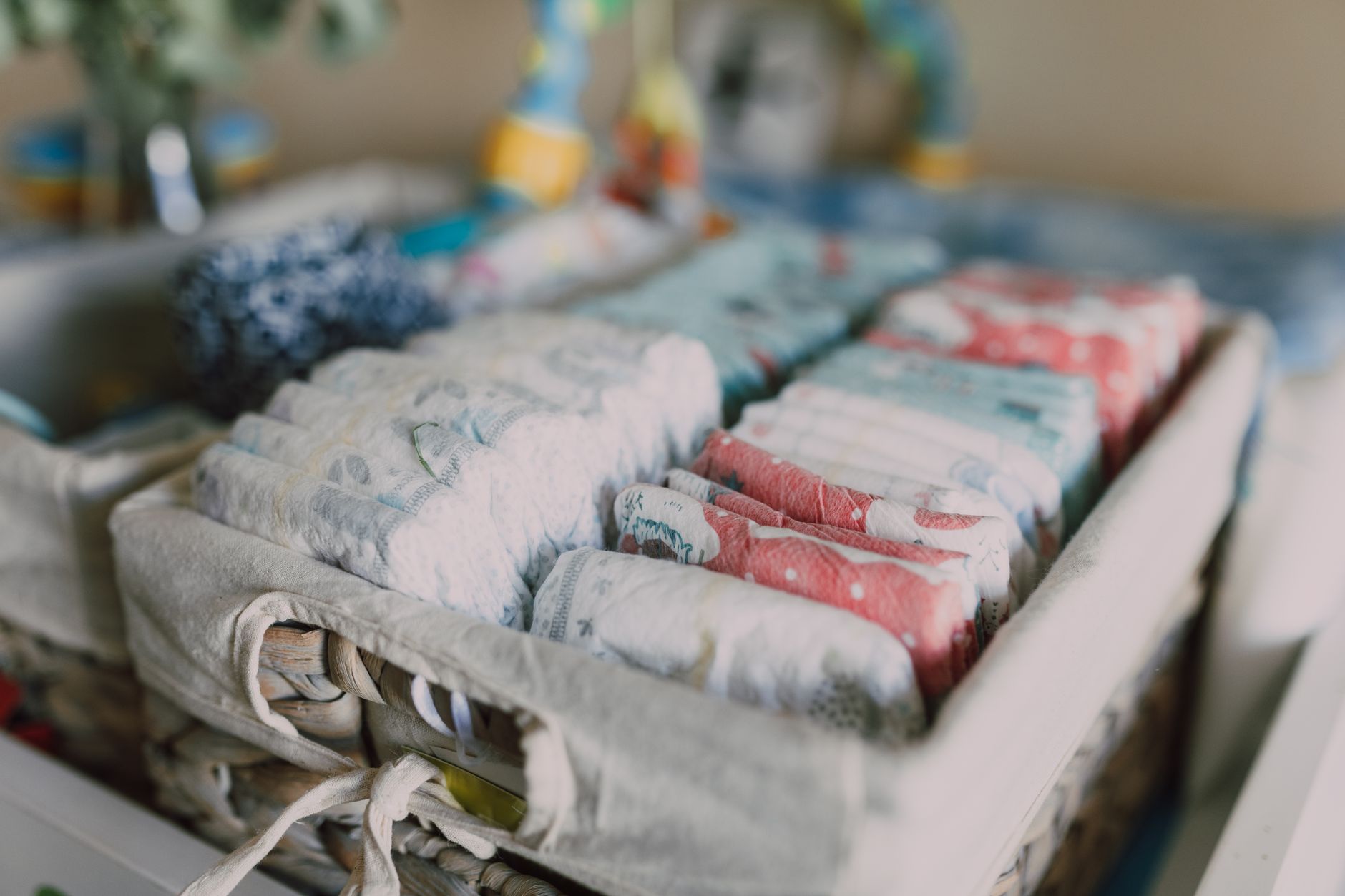
Newborns are little “wet‑and‑mess” machines. On average, a baby uses:
- 0–2 months: 10 – 12 diapers per day.
- 3–5 months: 8 – 10 diapers per day.
- 6–12 months: 6 – 8 diapers per day.
This translates to roughly 3,400 – 4,200 diapers in the first year. The variation depends on feeding method (breast‑fed babies often have more frequent, lighter stools) and the infant’s weight gain.
To visualize the daily rhythm, imagine a typical night‑time routine: you’re up at 2 a.m., change a diaper, soothe a cry, and settle back to sleep. Those moments add up quickly, and each change is a tiny budget line item.
Understanding the usage pattern helps you forecast how many packs you’ll need at each size. Below, we outline the average number of diapers per month by size, which is essential for calculating a realistic cost of diapers first year budget.
These numbers are averages; your baby may fall a few diapers above or below the chart. When budgeting, round up to avoid running out mid‑month.
Budgeting for cloth vs disposable diapers in 2026
Choosing between cloth and disposable isn’t just an environmental decision—it’s a financial one. Below is a side‑by‑side cost comparison that factors in purchase price, laundry, and occasional replacements.
Disposable diapers remain the most convenient option, especially for parents who travel often or lack in‑home laundry facilities. Cloth diapers, while requiring upfront investment and a dedicated laundry routine, can shave $500‑$800 off the yearly expense.
Hybrid systems—combining reusable covers with disposable inserts—sit in the middle, offering a modest cost reduction (about $1,100 – $1,300) while preserving some of the convenience of disposables.
When building your cost of diapers first year budget, ask yourself:
- Do you have a reliable laundry setup?
- Will you be home enough to change diapers frequently?
- Does your budget favor a lower up‑front cost or lower long‑term spend?
Answering these will guide you toward the option that aligns with both your lifestyle and your financial goals.
Best cost‑effective diaper brands for newborns 2026
Even within the disposable category, prices and performance vary widely. We surveyed retailer listings, manufacturer pricing, and consumer reviews to pinpoint the most budget‑friendly brands that still meet safety standards.
For cloth options, the top‑rated budget brands include Bambino Mio, Thirsties, and Charlie Banana. A starter set of 20‑30 pieces typically costs $500‑$800, and many families find that a single set lasts the whole first year with proper laundering.
When comparing, look beyond price per diaper. Leak protection, skin‑friendly materials, and the number of diapers per pack all influence the true cost of ownership. The “best” brand for a cost of diapers first year budget is often the one that balances affordability with a low leak‑rate, because fewer leaks mean fewer extra changes.
How to calculate diaper expenses month by month
Creating a month‑by‑month view turns a vague annual estimate into an actionable plan. Below is a step‑by‑step guide you can copy into Excel, Google Sheets, or a free budgeting app.
- Set up columns: Month, Diaper size, Diapers needed, Cost per diaper, Total cost.
- Enter diaper counts: Use the monthly totals from the size chart (e.g., 330 diapers for newborn months 0‑2).
- Apply price per diaper: Insert the average price you expect to pay. For bulk purchases, you might use a lower price for months 3‑12.
- Calculate: Multiply diapers needed by cost per diaper. Add a 5 % buffer for unexpected price changes.
- Sum the column: This gives your projected total for each month and the grand total for the year.
Here’s a sample excerpt of what the first three months could look like:
Repeat the pattern through month 12, adjusting the cost per diaper as you move to larger packs or switch to cloth. The spreadsheet automatically highlights months where costs spike—often when you transition to a new size—so you can plan ahead.
Downloadable templates are available on major parenting sites, but the above structure is simple enough to build from scratch. Remember to update the “cost per diaper” column as you find sales or bulk deals.
Impact of diaper size changes on yearly diaper cost
Each time your baby outgrows a size, the diaper count per month typically drops by 20 – 30 percent. However, the price per diaper can rise because larger packs often contain fewer diapers per pound.
Let’s break down the math using average prices for 2026:
- Newborn (NB) pack: 140 diapers for $0.45 each → $63 per pack.
- Size 1 pack: 150 diapers for $0.44 each → $66 per pack.
- Size 2 pack: 140 diapers for $0.43 each → $60 per pack.
- Size 3 pack: 130 diapers for $0.42 each → $55 per pack.
Even though the per‑diaper price falls slightly, the total number of diapers needed for each size shrinks, resulting in a net cost reduction of about $100‑$150 between each size transition.
For cloth diapers, size changes are less dramatic because most cloth systems are adjustable. A standard set of 24 pieces can be used from newborn through toddler, meaning you pay the upfront cost just once. This is why cloth options often appear cheaper over the full year despite higher upfront pricing.
When planning your cost of diapers first year budget, plot the expected size change months (usually around 2, 5, 8, and 12 months) and allocate a slightly higher budget for the transition months to accommodate the larger pack sizes.
Savings tips for diaper subscriptions and bulk purchases
Many families report saving 10 % – 25 % simply by tweaking how they buy diapers. Below are proven strategies that work in 2026.
- Subscribe & save: Retailers like Amazon, Target, and Walmart offer 5 % – 15 % discounts on auto‑ship orders. Set the subscription to pause when you’re low on stock, then resume.
- Buy in bulk: Purchasing 12‑pack or 24‑pack boxes reduces the per‑diaper price. Look for “family pack” deals that bundle multiple sizes.
- Use coupons: Manufacturer websites often release printable or digital coupons. Combine a coupon with a bulk discount for maximum savings.
- Join loyalty programs: Stores such as CVS and Walgreens give points for diaper purchases that can be redeemed for future discounts.
- Shop outlet stores: Over‑stock or discontinued packs can be found at outlet malls for up to 40 % off.
- Consider hybrid use: Using a small number of disposable inserts with cloth covers for nighttime can cut the disposable count by half.
Remember to track expiration dates—diapers have a shelf life of about 2 years. Buying too far ahead can lead to waste, which defeats the purpose of budgeting.

Cost of diapers first year budget spreadsheet template & calculator
To make the budgeting process hands‑free, we’ve created a free spreadsheet template that includes built‑in formulas for monthly totals, tax deductions, and a “what‑if” scenario for cloth vs disposable.
Features of the template:
- Monthly tracker: Columns for each size, diapers needed, and cost per diaper.
- Tax deduction calculator: In many regions, diaper expenses are not directly deductible, but you can claim them as a medical expense if your child has a diagnosed condition that requires specialized diapers (e.g., severe dermatitis). The template includes a toggle to apply a 5 % deduction where applicable.
- Bulk‑purchase optimizer: Input the number of packs you plan to buy; the sheet automatically calculates the lowest‑cost combination.
- Eco‑impact estimate: Roughly translates the number of disposable diapers avoided when using cloth, expressed in pounds of waste saved.
Download the template from the BumpBites resource center (link below) and customize it with your local prices. The built‑in calculator will instantly show you your projected cost of diapers first year budget and highlight any months where you’re over or under budget.
Download Diaper Budget Spreadsheet (free)
Eco‑friendly diaper cost vs disposable in the first year
Eco‑friendly diapers—whether they’re organic disposables or reusable cloth—carry a different price profile. Let’s compare the three main categories:
While organic disposables appeal to families seeking chemical‑free options, they are generally 15 % – 20 % more expensive than conventional brands. Cloth diapers, on the other hand, reduce the per‑diaper cost dramatically once the initial set is purchased. The environmental benefit is also clear: a full year of cloth use avoids roughly 3,000 disposable diapers, saving about 60 % of landfill waste.
If your primary goal is financial, the cost of diapers first year budget favors cloth. If you prioritize convenience and are willing to pay a premium for organic materials, the extra cost may be justified for your family’s values.
Diaper budgeting tips for low‑income families
For families on a tight budget, every dollar counts. Here are practical, evidence‑based ways to keep diaper expenses manageable:
- Apply for assistance programs: In the U.S., the Women, Infants, and Children (WIC) program may provide vouchers for diapers in some states. Check local eligibility.
- Use community resources: Many churches, food banks, and nonprofit groups run diaper banks that distribute free or low‑cost diapers.
- Buy generic store brands: Retailer‑owned brands like “Target Up & Up” or “Kroger Simple Truth” often meet safety standards at a fraction of the name‑brand price.
- Share bulk purchases: Team up with a neighbor or a parent group to buy large packs and split the cost.
- Consider hybrid use: Use cloth covers for nighttime and disposable inserts for daytime. This hybrid approach can cut the disposable count by up to 50 % while limiting laundry.
Even with limited resources, the right combination of coupons, community support, and smart buying can keep the cost of diapers first year budget under $1,000.
How to choose the right diaper size for cost savings
Buying the correct size the first time prevents waste and extra purchases. A diaper that’s too small will leak, prompting you to change it more often; a diaper that’s too large may not fit snugly, also leading to leaks.
Measure your baby’s weight and compare it to the manufacturer’s size chart before each purchase. Most brands recommend moving up a size when the baby gains 1–2 pounds. By staying on size, you avoid buying oversized packs that sit unused in the pantry.
In addition, some retailers allow you to exchange unopened packs for a different size within a limited window—check the return policy before you stock up.
Understanding diaper absorbency and its impact on costs
Absorbency ratings (often listed as “ml” or “hours”) indicate how long a diaper can stay dry. Higher absorbency can reduce the number of changes per day, especially overnight, which translates into lower overall usage.
When comparing brands, look for “overnight” or “extra‑absorb” variants for the later months when your baby starts sleeping longer stretches. Although these diapers may cost a few cents more per piece, the reduction in daily changes can offset the price difference.
Clinical guidance from the FDA (2026) emphasizes that any diaper marketed for “high absorbency” must meet specific leakage‑test standards, so you can trust the claims on reputable brands.
Diaper budgeting for twins or multiples
Having more than one baby multiplies diaper usage, but the per‑diaper cost can be lowered through bulk buying. Many manufacturers offer “twin packs” that contain enough diapers for two infants at a discounted per‑unit price.
Plan to purchase at least a 24‑pack of each size to cover the first six months for both babies. Use the same spreadsheet method described earlier, but double the “diapers needed” column. Remember to factor in additional laundry loads if you choose cloth diapers—this can add $100‑$150 to the annual cost.
Don’t forget to look for community diaper banks that often have special provisions for families with multiples.
Myth vs. fact
Myth: “Cloth diapers are always cheaper than disposables.”
Fact: Cloth diapers can be less expensive over a full year, but only if you have access to affordable laundry facilities and use them consistently. If you must outsource laundry or replace many pieces due to wear, the cost advantage narrows.
Myth: “Buying the cheapest disposable diaper saves the most money.”
Fact: Very low‑priced diapers often leak more, leading to extra changes and higher overall spend. Mid‑range brands with good absorbency usually provide the best cost‑per‑use balance.
Myth: “You can’t claim diaper expenses on taxes.”
Fact: While everyday diaper purchases are not deductible, families with a medically‑necessary diaper requirement (e.g., eczema, incontinence) may claim them as a medical expense on federal tax returns, subject to the 7.5 % AGI threshold.
Key takeaways
- The average cost of diapers first year budget ranges from $1,200 – $1,800 for disposables and $800 – $1,200 for cloth.
- Newborns use about 10‑12 diapers per day; usage drops to 6‑8 per day by month 12.
- Size changes reduce total diaper count but can increase per‑diaper price; plan for a modest cost spike during each transition.
- Bulk buying, subscription discounts, and coupons can shave up to 25 % off the yearly total.
- Cloth diapers have lower long‑term costs but require laundry resources; hybrids offer a middle ground.
- Use a simple spreadsheet or our free calculator to track monthly expenses and stay on budget.
Frequently asked questions
How many diapers does a baby use in the first year?
On average, a baby goes through 3,400 – 4,200 diapers in the first 12 months, which breaks down to roughly 10‑12 diapers per day for the first two months, then 8‑10 for months 3‑5, and 6‑8 for the remainder of the year.
What is the average cost of diapers for the first year?
For disposable diapers, the average cost sits between $1,450 – $1,900. Cloth diaper systems typically cost $800 – $1,250 when you include laundry expenses. Hybrid systems fall in the middle at about $1,100 – $1,300.
Are cloth diapers cheaper than disposable diapers over a year?
Yes, if you have access to inexpensive laundry facilities and use the same set of cloth diapers throughout the year, the total cost can be $500‑$800 less than disposables. However, the upfront expense is higher, and savings diminish if you need to replace many pieces.
Can I save money by buying diapers in bulk?
Absolutely. Bulk packs, subscription services, and retailer loyalty programs can reduce the per‑diaper price by 10‑25 %. Just watch expiration dates to avoid waste.
How often should I change a newborn’s diaper?
Newborns typically need a diaper change every 2‑3 hours, amounting to about 10‑12 changes per day. Frequent changes help prevent diaper rash and keep the baby comfortable.
Do diaper subscription services reduce overall costs?
Subscriptions often provide a modest discount (5‑15 %) and guarantee you never run out. The savings can be offset if you receive more diapers than you need, so match the subscription size to your projected monthly usage.
Are there tax deductions for diaper expenses in 2026?
Standard diaper purchases are not tax‑deductible. However, if a pediatrician prescribes a specific medical diaper (e.g., for severe eczema), you may claim the expense as a medical deduction on your federal return, subject to the 7.5 % AGI threshold.
What factors should I consider when choosing a diaper size to avoid waste?
Measure your baby’s weight regularly and compare it to the brand’s size chart. Buying the correct size reduces leaks and extra changes, which keeps both your baby comfortable and your budget in check.
How does diaper absorbency affect my overall diaper budget?
Higher‑absorbency diapers can cut the number of daily changes, especially at night. While they may cost a few cents more per piece, the reduced usage often balances out the higher price.
When to see a doctor / specialist
Most diaper‑related concerns are routine, but seek professional help if you notice any of the following:
- Severe or persistent diaper rash that doesn’t improve after 48 hours of proper skin care.
- Frequent urinary tract infections (UTIs) or fungal infections.
- Unusual discharge, blood, or a foul odor.
- Signs of constipation or abnormal stool patterns that could indicate underlying digestive issues.
- Allergic reactions to diaper material (redness, swelling, itching).
For these symptoms, schedule an appointment with your pediatrician or a pediatric dermatologist. They can assess whether a change in diaper type, skin barrier, or medical treatment is needed.
References
- American Academy of Pediatrics. “Diapering and Skin Care.” 2024 clinical guidance.
- U.S. Consumer Price Index, Bureau of Labor Statistics. “Diaper Price Index 2026.”
- National Association of Diaper Manufacturers. “Annual Market Report 2026.”
- Academy of Nutrition and Dietetics. “Budgeting for Baby Essentials.” 2025.
- U.S. Department of Agriculture. “WIC Program Benefits for Diaper Assistance.” 2025.
- Harvard T.H. Chan School of Public Health. “Environmental Impact of Disposable vs. Cloth Diapers.” 2024.
- Internal Revenue Service. “Medical Expense Deduction Publication 502.” 2026.
- American Cleaning Institute. “Laundry Energy Use and Costs.” 2025.
- Consumer Reports. “Best Diaper Brands for Value 2026.”
- U.S. Food and Drug Administration. “Diaper Safety Standards.” Updated 2026.
- National Health Service (UK). “Diaper Rash Guidance.” 2025.