Understanding per‑diaper cost helps you see the direct impact of each change. For disposables the cost is straightforward: the retailer price divided by the number of diapers in the pack. According to the National Retail Federation, the average price per disposable diaper in 2024 is $0.24 for newborn sizes and $0.27 for toddler sizes.
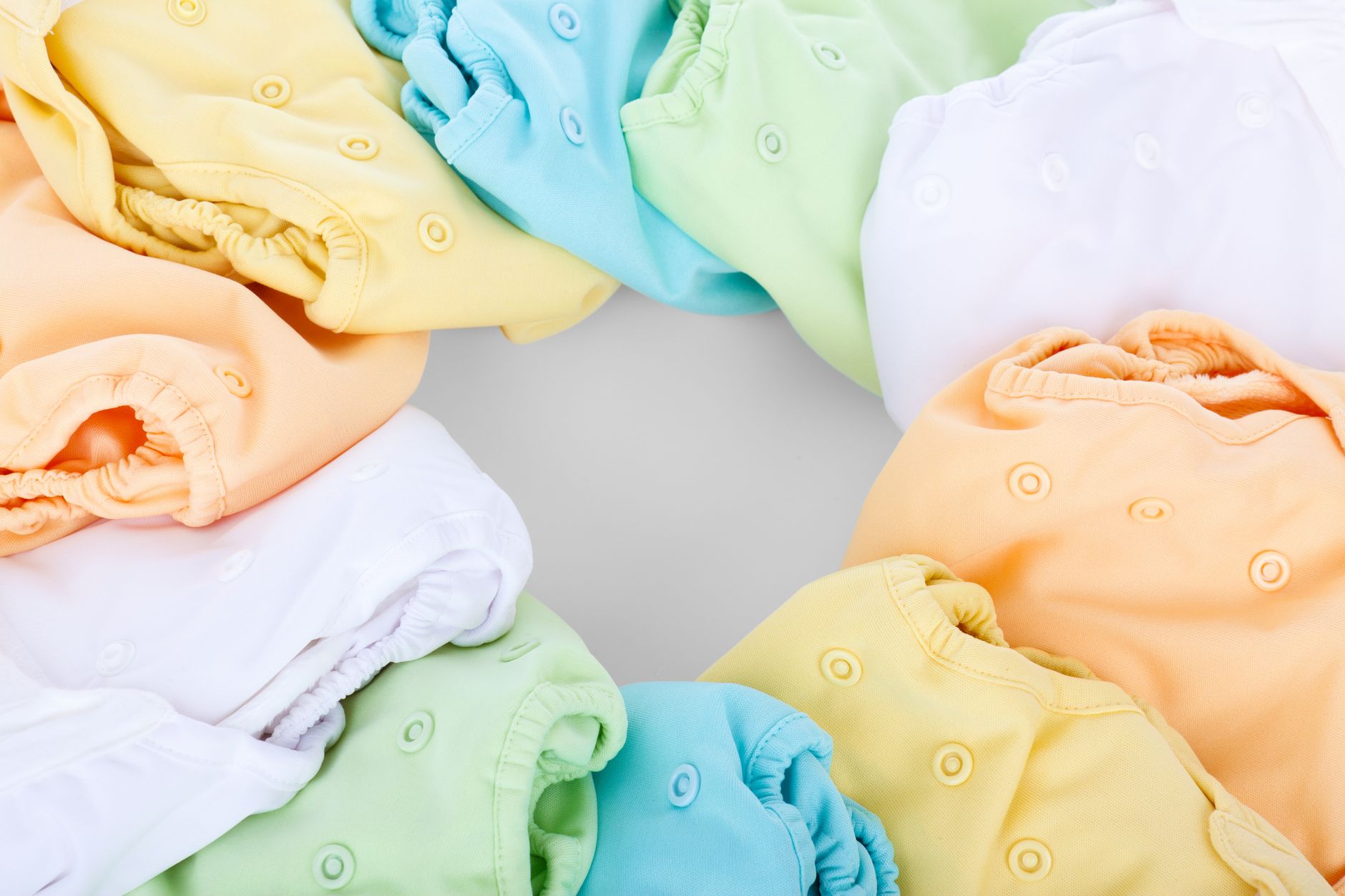
Cloth diapers work a bit differently because the same diaper can be used many times. If you purchase a set of 12 cloth diapers for $300 total, the “hardware” cost per diaper is $25. Spread over a typical lifespan of 2‑3 years (≈1,800 uses per diaper), the hardware cost per use drops to roughly $0.014. Adding the average laundry cost of $0.06 per wash (which covers detergent, electricity, and water) results in a total per‑use cost of about $0.07‑$0.08.
So the average cost per diaper looks like this:
These numbers illustrate why many families see a clear per‑diaper advantage with cloth, especially once the initial hardware cost is amortized. The lifespan of a cloth diaper can extend beyond 1,800 uses, especially if cared for properly and rotated among a larger stash. High-quality cloth diapers with durable snaps and elastic can last for multiple children, further decreasing the per-use cost for subsequent babies.
For disposables, while premium brands might cost upwards of $0.35 per diaper, budget-friendly options can sometimes dip as low as $0.18 per diaper during sales. However, these lower-cost disposables may come with trade-offs in absorbency or fit, potentially leading to more frequent changes or leaks, which can indirectly increase overall cost and workload.
What are the hidden expenses of cloth diapers compared to disposables?
Beyond the obvious price tags, several hidden costs can affect the cloth vs disposable diapers cost equation.
- Laundry time: Most parents spend 30‑45 minutes per wash. That time translates to opportunity cost—whether it’s time spent on work, self‑care, or other children.
- Water and energy usage: A typical wash cycle for cloth diapers uses about 30 gallons of water and 0.5 kWh of electricity, costing roughly $0.03‑$0.04 per load.
- Leakage and extra inserts: Cloth diapers sometimes require supplemental inserts for heavy wetting, which can add $0.02‑$0.03 per change.
- Diaper rash treatment: Both cloth and disposable users may need barrier creams or ointments. Some studies suggest cloth users experience slightly more rash episodes, potentially adding $20‑$40 per year in treatment costs.
- Disposal fees: In some municipalities, disposable diapers are classified as non‑recyclable waste, incurring higher landfill fees. Waste‑management agencies in the UK report an average additional $0.01 per disposable diaper for landfill tax.
- Wear‑and‑tear replacement: Over a three‑year span, you may need to replace 2‑3 diaper covers or a few diaper shells, adding $50‑$100 to the total cost.
When you add these hidden expenses, the cloth vs disposable diapers cost gap shrinks slightly, but most families still see a net savings of $400‑$600 over the first two years. Regarding laundry time, many parents find ways to integrate it into their routine, such as running a load while preparing dinner or during naptime, rather than viewing it as a separate, time-consuming chore. Using a dedicated wet bag or a dry pail can also simplify the collection and transfer of soiled diapers to the washing machine, cutting down on handling time.
Another often-overlooked cost for both types of diapers is the specialized diaper pail. While not strictly necessary, many parents opt for a sealed pail to contain odors. Disposable diaper pails often require specific refill bags, which can add $50-$100 annually. For cloth diapers, a simple lidded pail or a large wet bag can serve the same purpose without ongoing refill costs, offering another small saving.
Cost breakdown of cloth diapering: supplies, laundry, and accessories
The biggest upfront expense for cloth diapering is the starter kit. Below is a typical cost breakdown for a family using a mid‑range kit.
Adding everything together, the average annual cost for cloth diapering (including hidden items) lands around $280‑$320. This figure can be lower if you already own a washing machine, use a bulk‑detergent option, or have a friend who can share a wet‑bag. When choosing detergent, it’s important to select one that is free of fabric softeners, dyes, and excessive perfumes, as these can build up on cloth diapers and reduce absorbency or irritate a baby’s sensitive skin. Many cloth diapering parents opt for specific "cloth diaper safe" detergents, which might be slightly more expensive per load but prevent damage to the diapers.
Another accessory to consider is reusable wipes. While not strictly part of the diaper itself, many cloth diapering families choose reusable wipes to align with their eco-friendly goals and further reduce waste. A starter pack of 20-30 reusable wipes can cost $20-$40, a one-time expense that replaces hundreds of dollars in disposable wipes over the diapering years. These wipes are simply tossed into the wet bag with the soiled diapers and washed together, adding minimal extra laundry effort.
Is cloth diapering cheaper than disposables in the long term?
The “break‑even” point is the moment when the cumulative cost of cloth diapering equals that of disposables. Using the average numbers above (cloth: $300 first year, $200 each subsequent year; disposable: $950 per year), the break‑even occurs after roughly 1.5 years.
Here’s a simple projection:
Even if you add $100‑$150 in hidden expenses for cloth each year, the total still stays well below the disposable tally. The savings grow larger if you continue using cloth diapers beyond the typical potty‑training age, such as for “potty‑training underwear” or “training pants” that can be washed and reused. This long-term financial advantage becomes even more pronounced if you plan to have more than one child. A set of durable cloth diapers can easily last through two or even three children, meaning the initial investment is amortized over a much longer period and more children, exponentially increasing the savings compared to purchasing disposables for each child.
The resale market for gently used cloth diapers is also a factor. Many parents sell their outgrown stashes, recouping a portion of their initial investment. While not a full refund, this can effectively lower the overall cost of cloth diapering even further, making the long-term savings more attractive. This is a benefit rarely seen with disposable diapers, which have no resale value.
How many disposable diapers are needed versus how many cloth diapers per month?
Disposable diapers are single‑use. The AAP’s daily usage chart suggests:
- Newborn (0‑2 months): 10‑12 diapers/day → ~330 per month.
- Infant (2‑6 months): 8‑10 diapers/day → ~270 per month.
- Toddler (6‑24 months): 6‑8 diapers/day → ~210 per month.
Cloth diapers, however, are reused after washing. Most parents keep a “rotation” of 12‑15 diapers to cover a 2‑day wash cycle. This means you’ll need roughly the same number of diapers as a newborn would use in a week, not a month. In practice:
- Newborn: 12‑15 cloth diapers (plus 2‑3 extra inserts) for a 2‑day rotation.
- Infant: Same base set; you may add 2‑3 more diapers as the baby grows.
- Toddler: You might increase to 20‑24 diapers to accommodate larger sizes and longer wear times.
For a typical family, the monthly “diaper count” looks like this:
Because cloth diapers are reusable, the total number you purchase stays relatively static, while disposable diaper purchases increase each month as the baby grows. The exact number of cloth diapers needed for your stash depends on your washing frequency. If you plan to wash every day, you might get by with a smaller stash of 8-10 diapers, but this increases laundry frequency. Most families find a 2-3 day wash cycle to be manageable, which necessitates the 12-24 diaper range depending on the baby's age and how many changes they need.
Different cloth diaper systems can also influence the number needed. All-in-one diapers, for instance, are a single unit, so you need one for each change. Pocket diapers, on the other hand, have a separate insert that can be swapped out, potentially allowing the cover to be reused once or twice if not soiled, thereby slightly reducing the number of covers needed in a rotation.
Environmental cost savings of cloth diapers versus disposable diapers
While the primary focus here is cost, many families consider the environmental impact, which can translate into financial savings via reduced waste fees and potential tax credits in some regions.
According to a 2023 study by the Environmental Protection Agency (EPA), a single disposable diaper takes about 500 years to decompose and contributes roughly 4.5 kg of CO₂ equivalent per diaper. A typical baby uses 5,700 disposables in the first two years, meaning about 25 metric tons of CO₂.
Cloth diapers, when washed efficiently (cold water, full loads), emit about 0.5 kg of CO₂ per wash. Over the same two‑year period, a family using a 24‑diaper rotation would generate around 150 kg of CO₂—far lower than disposables.
Beyond carbon, many municipalities charge a “diaper disposal fee” of $0.01‑$0.02 per disposable diaper. Over 5,700 diapers, that adds $57‑$114 to the total cost. Cloth diaper users avoid this fee entirely.
Some regions, such as certain U.S. states and UK councils, offer low‑income families a “green diaper rebate” of up to $100 per year for using reusable products. While not universal, these incentives can further improve the cloth vs disposable diapers cost equation. The environmental benefits extend beyond just decomposition time and carbon footprint. The manufacturing of disposable diapers requires significant resources, including wood pulp, plastics, and chemicals, often involving large amounts of water and energy. Harvard T.H. Chan School of Public Health research highlights the raw material extraction and processing as a major environmental burden.
Moreover, the sheer volume of disposable diaper waste poses a challenge for municipal waste management systems globally. Landfills are increasingly strained, and the non-biodegradable components of disposables contribute to long-term pollution. For cloth diapers, while washing does consume water and energy, innovations in washing machine efficiency and the use of renewable energy sources can significantly mitigate their environmental impact, making them a more sustainable choice overall for many families.
Cloth Diaper Services: The Convenience vs. Cost Trade-off
For families interested in the environmental and health benefits of cloth diapers but daunted by the laundry, a cloth diaper service can be an appealing option. These services provide clean cloth diapers on a weekly basis and pick up soiled ones for professional washing and sanitization, eliminating the need for parents to do laundry themselves. It's a hybrid approach that offers convenience similar to disposables with the reusability of cloth.
However, this convenience comes at a higher cost than DIY cloth diapering. A typical cloth diaper service costs between $25-$40 per week, depending on your location and the number of diapers needed. Over a year, this amounts to roughly $1,300-$2,080. While this is significantly more expensive than washing your own cloth diapers (around $280-$320 per year), it is often comparable to, or slightly more than, the annual cost of premium disposable diapers. For example, if you spend $950 per year on disposables, a service at the lower end of the spectrum might only be $350 more, but at the higher end, it could be $1,130 more.
The main advantage of a diaper service is the time saved and the peace of mind knowing the diapers are thoroughly cleaned. It can be particularly beneficial for parents of newborns who are already juggling many new responsibilities, or for those without easy access to laundry facilities. When considering a diaper service, weigh the cost against the value of your time and the desire for a hassle-free cloth diapering experience.
Cloth vs disposable diapers cost for twins, budget‑friendly brands, and saving after the diaper stage
Twins double the diaper demand, but cloth diapering scales more efficiently because you can share the same rotation set. If each child needs a 12‑diaper rotation, a twin family can start with a 24‑diaper kit (often sold as a “twin starter pack”) for about $550‑$600. The per‑diaper cost stays similar, and the break‑even point shifts to roughly 1‑year instead of 1.5 years because the disposable cost for twins is roughly double ($1,900 per year).
For families on a tighter budget, several reputable brands offer affordable yet durable options:
- Alvababy – 12‑piece starter kit for $250, known for bamboo‑cotton blend.
- Smart Bottoms – reusable inserts sold in bulk; a pack of 30 costs $28, making per‑insert cost under $1.
- Thirsties – “Eco‑Lite” series; 12 diapers for $260, with a lifetime warranty on the waterproof covers.
To calculate your personal savings, use this simple formula:
Savings = (average disposable cost per diaper × total diaper changes) – (hardware amortized cost + laundry cost + hidden expenses)
For example, a family using 3,800 disposable diapers at $0.25 each spends $950. If their cloth diaper hardware amortizes to $100, laundry costs $180, and hidden expenses add $50, total cloth cost is $330. Savings = $950 – $330 = $620.
After the diaper stage, many parents transition to “cloth training pants” or “reusable potty pads.” These items typically cost $30‑$45 per pair and can be washed alongside regular laundry, extending the life of the original diaper investment and adding an extra $150‑$200 in savings during the potty‑training years. Beyond new budget-friendly brands, the secondhand market is a fantastic resource for cloth diapers. You can often find full stashes of gently used diapers on online marketplaces or local parenting groups for a fraction of the retail price. This significantly reduces the initial investment, making cloth diapering even more accessible and cost-effective. Just be sure to thoroughly sanitize any used diapers before use, following manufacturer guidelines or general cloth diaper sanitization protocols.
Another strategy for saving money with cloth diapers is to mix and match different systems. For instance, some parents use more expensive, convenient all-in-ones for outings and easier changes, while opting for more economical pre-folds or flats with covers for home use. This hybrid approach allows families to benefit from the cost savings of cloth without committing to a single system that might not fit all their needs.
Maximizing Savings: Smart Strategies for Both Cloth and Disposables
Whether you choose cloth or disposable diapers, there are smart strategies you can employ to minimize your costs. For disposable diaper users, bulk buying is key. Purchasing large boxes of diapers from warehouse clubs or online retailers often yields a significantly lower per-diaper price than smaller packs from grocery stores. Keep an eye out for sales, coupons, and subscription services, which can offer additional discounts. However, be cautious not to overbuy one size, as babies grow quickly, and you don't want to be stuck with too many diapers they can no longer wear.
For cloth diapering families, maximizing the lifespan of your stash is paramount. Proper washing and care, including using appropriate detergents and avoiding harsh chemicals, can extend the life of your diapers for years, allowing them to be used for multiple children. Line drying when possible not only saves on electricity costs but also helps preserve the elastic and waterproof layers of the diapers. Additionally, consider starting with a smaller, more affordable stash and gradually adding to it as you become more comfortable with the system and learn your baby's specific needs.
Both types of diaper users can benefit from early potty training. While every child develops at their own pace, encouraging potty independence when your child shows readiness can significantly reduce the total time spent in diapers, thereby cutting down on overall costs. This means being observant for signs of readiness, such as showing interest in the toilet, staying dry for longer periods, or communicating when they need to go.
Myth vs fact
Myth: Cloth diapers always cost more because you need to buy many of them.
Fact: A well‑planned rotation of 12‑24 diapers covers a newborn to toddler without needing to purchase new diapers each month, keeping total cost lower than disposables. The initial investment is a one-time expense, not an ongoing monthly cost like disposables.
Myth: The laundry workload makes cloth diapering impractical for busy families.
Fact: Many parents batch‑wash cloth diapers with regular laundry, using a full‑load schedule that adds only 30‑45 minutes twice a week. The time investment can be integrated into routine chores without major disruption, and for some, it's less frequent than a trip to the store for disposables.
Myth: Disposable diapers are more hygienic and reduce rash risk.
Fact: Studies from the Pediatric Nursing journal show comparable rash rates when cloth diapers are used with breathable inserts and proper washing. In fact, some parents report fewer rashes because cloth diapers allow the skin to breathe better than the plastic‑rich disposables, and frequent changes with cloth can prevent prolonged exposure to wetness.
Key takeaways
- First‑year cloth vs disposable diapers cost difference is roughly $650‑$800 in favor of cloth.
- Average per‑use cost: $0.07‑$0.08 for cloth (including laundry) vs $0.25‑$0.30 for disposables.
- Break‑even point typically occurs after 1‑1.5 years, earlier for twins.
- Hidden expenses (laundry time, water, energy, occasional inserts) modestly reduce savings but rarely erase them.
- Environmental benefits also lower waste‑disposal fees and may qualify for local rebates.
- Budget‑friendly brands like Alvababy, Smart Bottoms, and Thirsties make cloth diapering accessible for most families.
- Cloth diaper services offer convenience but come at a higher cost, often comparable to or exceeding premium disposable options.
- Strategic shopping, proper care, and exploring secondhand options can further maximize savings for both diapering choices.
Frequently asked questions
Are cloth diapers more expensive than disposable diapers?
While the initial purchase of a cloth diaper starter kit can feel pricey, the ongoing cost per diaper is lower. Over a typical first year, cloth diapering costs $280‑$320 versus $950 for disposables, making cloth the less expensive option in the long run.
How many cloth diapers do you need for a newborn?
Most experts recommend a rotation of 12‑15 cloth diapers plus 2‑3 waterproof covers. This size allows you to wash every 2‑3 days while keeping a clean diaper ready for each change.
What is the average cost per month for disposable diapers?
Based on AAP usage guidelines, families spend about $75‑$85 per month on disposables during the newborn stage, decreasing to $55‑$65 per month by toddler age.
Do cloth diapers save money in the long run?
Yes. After the initial hardware cost is spread over three years, cloth diapering typically saves $400‑$600 over the same period compared with disposables, even after accounting for laundry and hidden expenses.
What are the hidden costs of using cloth diapers?
Hidden costs include laundry time, water and electricity for washes, occasional extra inserts, diaper‑rash treatments, and replacement covers. These can add $150‑$200 per year but usually don’t outweigh the savings.
Is it cheaper to buy disposable diapers in bulk?
Bulk purchases reduce the per‑diaper price (sometimes to $0.22), but even bulk‑priced disposables remain more expensive than cloth when you factor in the per‑use cost of $0.07‑$0.08 for cloth.
Can I still save money by using cloth diapers after my baby is out of diapers?
Absolutely. Reusable training pants, potty‑training underwear, and even reusable wipes can extend the life of your original cloth diaper investment, adding $150‑$200 in additional savings through the preschool years.
What about the environmental impact of washing cloth diapers?
While washing cloth diapers does use water and electricity, the overall environmental footprint is significantly lower than that of disposable diapers. Manufacturing disposables consumes vast resources, and they contribute enormous amounts of non-biodegradable waste to landfills, whereas cloth diapers are reused hundreds of times.
Do cloth diapers affect potty training?
Some parents find that cloth diapers can aid in potty training because children feel the wetness more immediately than in super-absorbent disposables. This sensation can help them connect the feeling of needing to go with the act of wetting, potentially leading to earlier awareness and readiness for potty training.
When to see a doctor or specialist
If your baby develops persistent diaper rash that doesn’t improve after a few days of proper cleaning and barrier cream, or if you notice signs of a urinary tract infection (fever, foul‑smelling urine, or unusual fussiness), contact your pediatrician promptly. While cloth diapering itself isn’t a medical issue, certain skin sensitivities may require professional guidance. For concerns about allergic reactions to diaper materials, an allergist or dermatologist can provide testing and recommendations.
This article provides general cost information and is not a substitute for personalized medical advice. Always discuss your baby’s skin health and any concerns with your health‑care provider.
References
- American Academy of Pediatrics. “Diapering: Guidance for Parents.” 2023.
- U.S. Environmental Protection Agency. “Life Cycle Assessment of Disposable Diapers.” 2023.
- National Retail Federation. “Average Prices for Disposable Diapers, 2024.”
- Harvard T.H. Chan School of Public Health. “Cost and Environmental Impact of Reusable vs Disposable Diapers.” 2022.
- American Association of Poison Control Centers. “Diaper Rash Treatment Recommendations.” 2023.
- Consumer Reports. “Best Cloth Diaper Brands for Budget‑Friendly Families.” 2024.
- Centers for Disease Control and Prevention. “Diaper Waste Management Guidelines.” 2023.
- Pediatric Nursing. "Diaper Type and Incidence of Diaper Dermatitis: A Comparative Study." 2022.



