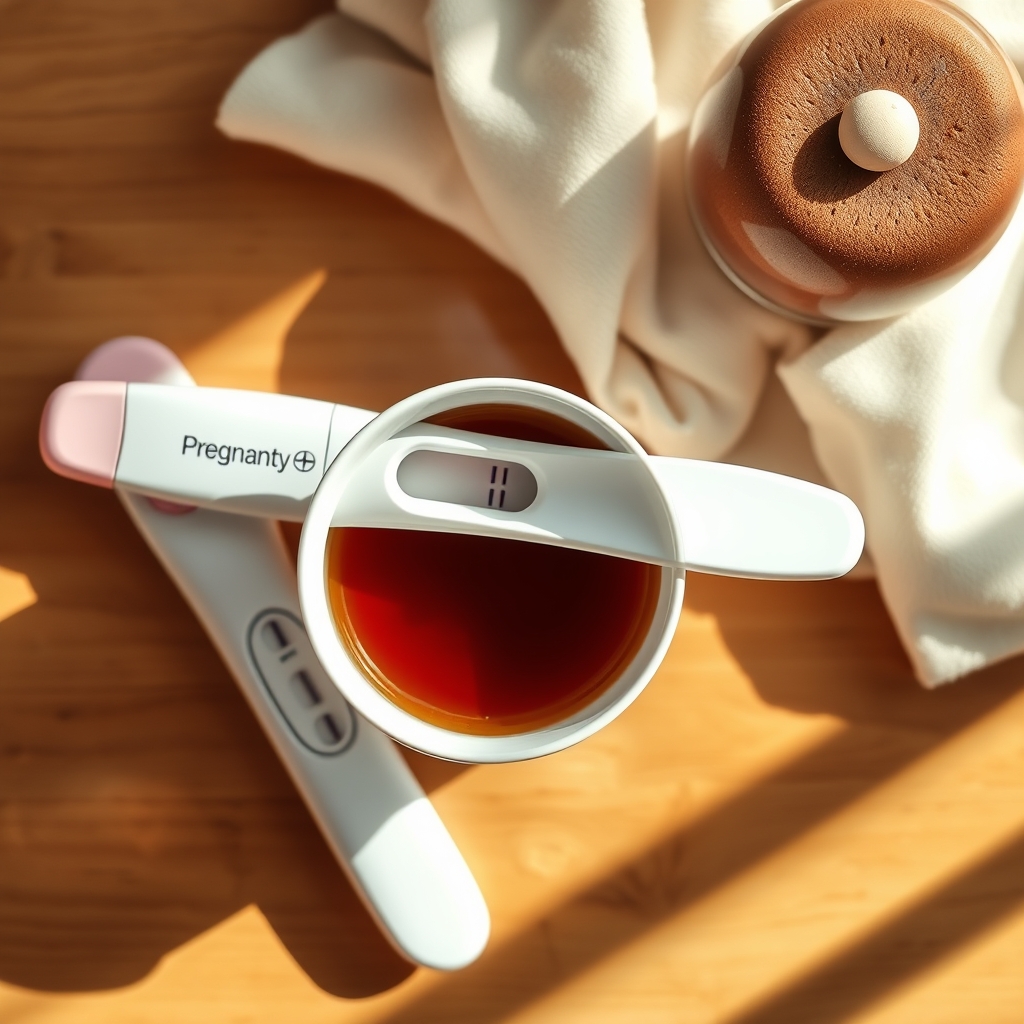
A chemical pregnancy shows early signs like a positive test that quickly fades, mild cramping, light spotting, and a brief rise then drop in hCG levels.
By Shubhra Mishra — a mom of two who turned her own confusion during pregnancy into BumpBites, a global mission to make food choices clear, safe, and stress-free for every expecting mother. 💛
Check whether any food is safe during pregnancy with the BumpBites Food Safety Checker.
Quick take: A chemical pregnancy is a very early loss that often shows up as a positive home pregnancy test followed by bleeding that looks like a period. Typical signs include mild cramping, spotting, and a brief rise in hCG that drops within a week. It’s usually harmless, but it can be emotionally painful; talk to your provider if bleeding is heavy, pain is severe, or you have any concerns about future fertility.
It’s 2 a.m., you’re curled up with a cup of tea, and the line on your home pregnancy test has turned dark. A rush of hope is quickly followed by a surprise—by the next morning you notice light spotting that looks just like a normal period. You wonder: “Was this a false alarm, a miscarriage, or something else?” You’re not alone. Many expecting parents face this confusing scenario, often called a chemical pregnancy.
In this article we’ll explain exactly what a chemical pregnancy is, how it differs from a regular period or an early miscarriage, what hormonal signals to look for, how long it typically lasts, and what you can do to protect your emotional wellbeing. We’ll also cover practical steps for you and your partner, answer common “what‑if” questions, and give you clear guidance on when to reach out to a medical professional.
By the end of the read you’ll have a concise checklist of signs, a timeline of what to expect, and a toolbox of coping strategies—so you can move forward with confidence, no matter what your test shows.
What are the early signs of a chemical pregnancy?
A chemical pregnancy usually reveals itself within the first 4–6 weeks after conception, often before an ultrasound can see a gestational sac. The most common early signs include:
Positive home pregnancy test: A sudden rise in the hormone human chorionic gonadotropin (hCG) triggers a dark line on a urine test. This can happen as early as 7–10 days after fertilization.
Light spotting or bleeding: Often described as “period‑like” bleeding, it may be pink, brown, or bright red and usually lasts 1–3 days.
Mild cramping: Similar to menstrual cramps, these are usually low‑grade and located in the lower abdomen.
Subtle pregnancy‑like symptoms: Some people notice breast tenderness, nausea, or increased urination, but these symptoms are usually mild and short‑lived.
Because these signs overlap with a normal period, the key differentiator is the timing of the positive test relative to the bleeding. If you see a positive result and bleeding within a week, a chemical pregnancy is a strong possibility.
Seeing a positive line can feel like a miracle—until the spotting starts.
Most people experience a chemical pregnancy only once, but it can happen repeatedly, especially if underlying risk factors—such as advanced maternal age, certain hormonal imbalances, or lifestyle factors—are present. Understanding the early signs helps you recognize the pattern and seek appropriate reassurance.
It’s also useful to note that stress or a sudden change in routine does not cause a chemical pregnancy; the loss is driven by biological factors that are often beyond anyone’s immediate control. If you notice these signs, keep a simple log of dates, test results, and any symptoms. This record can be valuable when you discuss the episode with your provider.
How can I tell a chemical pregnancy from a normal period or early miscarriage?
Distinguishing a chemical pregnancy from a regular period or an early miscarriage can feel like decoding a cryptic message. Below is a side‑by‑side comparison that highlights the main differences in timing, symptoms, and test results.
Feature
Normal period
Chemical pregnancy
Early miscarriage (clinical loss)
Timing of bleeding
Usually 28‑35 days after the last period
Bleeding occurs 7‑14 days after a positive pregnancy test
Bleeding after a confirmed intrauterine pregnancy (usually >5 weeks)
Pregnancy test
Negative
Positive (often faint) then negative within days
Positive, often with higher hCG; may stay positive longer
Bleeding characteristics
Bright red, flow similar to menstrual
Light spotting, pink/brown, often shorter duration
Heavier flow, clots, possible tissue passage
Cramps
Typical menstrual cramps
Mild, similar to period cramps
Stronger, often localized to one side
Hormone levels (hCG)
Undetectable
Transient rise then rapid drop
Elevated, may plateau before falling
In practice, the most reliable way to differentiate a chemical pregnancy from a normal period is to repeat a home pregnancy test 48 hours after the first positive result. If the second test turns negative while bleeding continues, a chemical pregnancy is likely. If the test remains positive and bleeding intensifies, an early miscarriage should be evaluated by a clinician.
It’s also helpful to consider the quality of bleeding. Spotting that looks like a light “pink‑brown” discharge is more typical of a chemical pregnancy, whereas a heavier flow with clots leans toward a miscarriage. Additionally, an ultrasound performed after 5 weeks of gestation can confirm whether a gestational sac is present; its absence combined with a positive test points strongly toward a chemical pregnancy.
Can a chemical pregnancy cause cramping, spotting, and other symptoms?
Yes. The hormonal surge that triggers the pregnancy test also stimulates the uterine lining, which can lead to uterine contractions and mild cramping. Spotting occurs when the lining begins to shed after the embryo stops developing.
Typical symptom profile:
Cramping: Low‑grade, often similar to menstrual cramps; may be relieved with heat or gentle movement.
Spotting or light bleeding: Usually pink or brown, lasting 1–3 days; heavy bleeding is uncommon.
Breast tenderness: Mild swelling or tingling, which usually resolves within a few days.
Nausea or food aversions: May appear briefly, but are generally less intense than later‑stage pregnancy symptoms.
Because these symptoms overlap with many other early‑pregnancy experiences, they can feel confusing. The key is the rapid change in hCG levels—once the hormone drops, most of these symptoms fade. If you notice a sudden relief of symptoms after a few days, that often signals that the pregnancy hormone has already declined.
For those who have a history of hormonal irregularities, such as luteal phase defects, the cramping may be slightly more pronounced. In those cases, a brief course of progesterone under medical supervision can sometimes help, but this should only be done after a thorough discussion with your provider.
How long does a chemical pregnancy last and when is it usually detected?
A chemical pregnancy commonly lasts between 5 and 12 days after implantation. The majority are identified within the first two weeks after a missed period, often when a woman takes a home pregnancy test and then notices bleeding.
Typical timeline:
Fertilization: Day 0‑1 after intercourse.
Implantation: Around day 6‑10, when the embryo attaches to the uterine lining.
hCG rise: Detectable in urine by day 10‑14, leading to a positive home test.
Bleeding onset: Usually 2‑7 days after the positive test.
Resolution: hCG levels fall, bleeding stops, and menstrual‑like flow returns.
Because the window is short, many chemical pregnancies are never recognized—they resolve before a test is taken. When they are detected, the loss often occurs before an ultrasound can confirm a gestational sac, which is why the term “chemical” (referring to the hormone test) is used.
For those undergoing assisted reproductive technologies (ART) such as in‑vitro fertilization (IVF), the timeline is similar, though the detection may be a bit earlier because clinicians often monitor hCG levels closely after embryo transfer. In IVF cycles, a chemical pregnancy can be identified by a rise in serum hCG on day 9‑12 post‑transfer, followed by a rapid decline.
When a chemical pregnancy is suspected, many clinicians recommend a repeat serum hCG test 48 hours later. If the level fails to rise by at least 66 percent, the likelihood of a non‑viable pregnancy is high, and patients are counseled on next steps.
Which hormone levels and test results indicate a chemical pregnancy?
The hormone most associated with early pregnancy is human chorionic gonadotropin (hCG). In a chemical pregnancy, hCG rises enough to produce a positive urine test but then falls quickly.
Typical laboratory patterns:
Urine test: Positive on day 10‑14 post‑ovulation, then negative within 48‑72 hours.
Serum hCG: A single quantitative measurement might show a low‑to‑moderate level (e.g., 50‑150 mIU/mL) that does not double every 48 hours as expected in a viable pregnancy.
Progesterone: May be slightly lower than in a normal early pregnancy, but values vary widely; a level below 5 ng/mL can suggest a failing pregnancy.
Guidance from the American College of Obstetricians and Gynecologists (ACOG) recommends a repeat quantitative hCG test 48 hours after the initial draw if a loss is suspected. A rise of less than 66 percent (instead of the expected ~66 percent increase) often points to a non‑viable pregnancy, including a chemical pregnancy.
For those who prefer home testing, a faint plus sign that fades or disappears after a couple of days is a practical indicator. However, a definitive diagnosis should involve a serum hCG measurement and, if needed, a transvaginal ultrasound once the gestational age reaches 5‑6 weeks.
It’s worth noting that some over‑the‑counter pregnancy tests have a “early detection” threshold that can read positive as early as 6 days post‑ovulation. This can lead to earlier detection of a chemical pregnancy, but it also increases the chance of a false‑positive result if implantation has not yet occurred.
What should I do after a chemical pregnancy loss—tests, timing, and next steps?
After the bleeding stops and a home test turns negative, most clinicians advise a short period of rest and monitoring. Here’s a practical checklist:
Confirm the loss: Take a second home pregnancy test 48 hours after the first negative result. If it stays negative, the loss is likely complete.
Consider a serum hCG test: If you have lingering bleeding or uncertainty, a blood test can verify that hCG has returned to baseline (< 5 mIU/mL).
Allow your body to reset: Most providers suggest waiting at least one full menstrual cycle before trying to conceive again. This gives the uterine lining time to heal and hormone levels to normalize.
Discuss any underlying causes: If you’ve had multiple chemical pregnancies, ask your provider about possible factors—such as luteal phase defects, thyroid issues, or lifestyle influences.
Plan for future attempts: For many, the next cycle proceeds without special intervention. If you’re using IVF or other assisted methods, your reproductive specialist will tailor timing based on your individual response.
It’s also important to address emotional health. A brief loss can still feel like a grief episode. Allow yourself time to mourn, talk openly with your partner, and seek support from a counselor or support group if needed.
Take a moment to rest and hydrate—gentle self‑care can aid both body and mind.
If you are taking any prenatal vitamins or supplements, you can continue them as long as you feel comfortable; they do not interfere with the natural resetting of hormone levels. However, discuss any medication changes with your provider to avoid unnecessary interruptions.
Emotional signs and coping tips for you and your partner after a chemical pregnancy
The emotional fallout of a chemical pregnancy can be intense, even though the physical loss is brief. Common feelings include shock, disappointment, guilt, and anxiety about future pregnancies. Partners may experience confusion, helplessness, or fear of saying the wrong thing.
Here are evidence‑based coping strategies:
Acknowledge the grief: Treat the loss like any other miscarriage—allow yourself to feel sadness, and avoid minimizing the experience.
Communicate openly: Share your thoughts and listen without judgment. Simple phrases like “I’m here for you” or “I’m feeling this too” foster connection.
Maintain routine: Normal daily activities—work, meals, gentle exercise—can provide a sense of stability.
Seek professional support: A therapist who specializes in perinatal loss can offer coping tools and a safe space to process emotions.
Connect with community: Online forums or local support groups (e.g., “Pregnancy Loss Support”) let you hear from others who have walked the same path.
Practice self‑compassion: Replace self‑criticism with kind statements. Remind yourself that a chemical pregnancy is usually beyond your control.
For partners, the same principles apply. Encourage them to express their feelings, involve them in any counseling sessions, and give them permission to grieve. A shared approach strengthens the relationship and reduces feelings of isolation.
Physical self‑care—adequate sleep, balanced nutrition, and gentle movement—can also help regulate mood. Even a short walk in daylight triggers serotonin release, which may ease anxiety and improve sleep quality.
Does a chemical pregnancy affect future fertility and what to expect in later pregnancies?
Most research, including guidance from the National Institute for Health and Care Excellence (NICE) and the Centers for Disease Control and Prevention (CDC), indicates that a single chemical pregnancy does not impair a woman’s ability to conceive again. The uterus and ovaries remain physiologically normal after the brief loss.
Key points to convey:
Recurrence rate: Roughly 20‑30 % of women who experience a chemical pregnancy will have another early loss, but the majority go on to have successful pregnancies.
Impact on IVF outcomes: In IVF cycles, a chemical pregnancy is not considered a failure; many patients achieve a live birth in subsequent transfers.
Long‑term fertility: No evidence suggests that a chemical pregnancy leads to infertility, diminished ovarian reserve, or uterine scarring.
Nevertheless, if you’ve had multiple early losses—chemical or otherwise—your provider may recommend further evaluation, such as hormonal testing, hysterosalpingography, or genetic screening. Early identification of underlying issues can improve future pregnancy success.
When you feel ready to try again, most clinicians advise waiting until your menstrual cycle returns to its usual pattern and your hCG levels are undetectable. This typically means a waiting period of 4‑6 weeks, though individual circumstances may vary.
From our medical team: A chemical pregnancy is usually a one‑time event and rarely signals a serious problem. If you’ve had repeated early losses, however, it’s worth discussing a full work‑up with your OB‑GYN. In the meantime, focus on gentle self‑care, keep hydrated, and lean on your support network. Remember, you are not alone, and many families move from a chemical pregnancy to a healthy, full‑term baby.
Risk factors and ways to reduce the chance of a chemical pregnancy
While many chemical pregnancies happen without an identifiable cause, research points to several modifiable and non‑modifiable risk factors. Understanding these can help you make informed choices for future cycles.
Age: Women over 35 years have a higher incidence of early pregnancy loss, including chemical pregnancies, due in part to reduced egg quality (CDC, 2023).
Hormonal imbalances: Low progesterone or thyroid dysfunction can prevent the uterine lining from sustaining an early embryo. Routine screening is recommended if you have a history of early loss.
Lifestyle factors: Smoking, excessive caffeine (>300 mg/day), and high alcohol intake are linked to early pregnancy loss. The NHS advises limiting caffeine to 200 mg/day when trying to conceive.
Body mass index (BMI): Both underweight (BMI < 18.5) and obesity (BMI > 30) increase the risk of early miscarriage. Achieving a healthy weight before conception can improve outcomes.
Stress: While acute stress alone is not proven to cause a chemical pregnancy, chronic high stress can affect hormone balance. Techniques such as mindfulness, gentle yoga, or counseling may be beneficial.
Proactive steps you can take include: scheduling a preconception appointment to check thyroid and progesterone levels, quitting smoking, moderating caffeine and alcohol, and aiming for a balanced diet rich in folate, iron, and omega‑3 fatty acids. These measures do not guarantee prevention, but they align with the recommendations of ACOG and NICE for optimizing early pregnancy health.
When is it safe to try again after a chemical pregnancy?
After a chemical pregnancy, most clinicians advise waiting until the next natural menstrual cycle begins. This “reset” period allows the uterine lining to fully regenerate and hormone levels to return to baseline. According to the American College of Obstetricians and Gynecologists (ACOG), a minimum of one full cycle—typically 4‑6 weeks—is sufficient for most women.
If you are eager to try again sooner, you can discuss “natural cycle” attempts with your provider. In some cases, especially when using fertility medications, a short “waiting” period may be recommended to avoid overstimulation of the ovaries.
Key considerations before trying again:
Bleeding resolved: Ensure that spotting has stopped and you have returned to a normal menstrual flow.
hCG baseline: A serum hCG below 5 mIU/mL confirms the previous pregnancy has cleared.
Physical readiness: You feel emotionally and physically ready to conceive again—stress and anxiety can impact ovulation.
Medical clearance: If you have underlying conditions (e.g., thyroid disease), ensure they are well‑controlled before attempting conception.
When you decide to try again, consider tracking ovulation with basal body temperature or ovulation predictor kits. This can help you time intercourse or insemination for the most fertile window, potentially reducing the chance of another early loss.
Choosing nutrient‑dense foods can support hormonal balance before trying again.
Myth vs. fact
Myth: A chemical pregnancy means you’re infertile. Fact: Most women who experience a single chemical pregnancy go on to have successful pregnancies later.
Myth: You can’t get pregnant again for several months after a chemical pregnancy. Fact: Once bleeding stops and hCG returns to baseline, ovulation can resume as early as the next cycle.
Myth: Spotting after a positive test always means a miscarriage. Fact: Light spotting can be part of a chemical pregnancy, a normal implantation bleed, or a harmless hormonal change.
Key takeaways
A chemical pregnancy is an early loss that shows a positive test followed by period‑like bleeding.
Typical signs include a faint positive home test, mild cramping, and light spotting lasting 1–3 days.
Serum hCG that rises less than 66 % in 48 hours, or a rapid drop after a positive test, points to a chemical pregnancy.
Most losses occur within 5‑12 days after implantation; they often resolve before an ultrasound can confirm a gestational sac.
Allow one full menstrual cycle before trying again, and consider a repeat hCG test if bleeding persists.
Emotional support for you and your partner is essential—talk openly, seek counseling, and join support groups.
A single chemical pregnancy does not usually affect future fertility, but repeated losses merit further evaluation.
Modifiable risk factors such as smoking, excess caffeine, and extreme BMI can increase early loss risk; addressing them may improve outcomes.
When you feel ready, track ovulation and ensure hCG is undetectable before attempting conception again.
Frequently asked questions
What is a chemical pregnancy?
A chemical pregnancy is an early pregnancy loss that occurs before the embryo can be seen on an ultrasound, typically identified by a positive home pregnancy test followed by bleeding that resembles a period.
How can I tell if I had a chemical pregnancy?
If you had a positive test, then experienced light spotting or bleeding within a week and a subsequent negative test, you most likely had a chemical pregnancy; a serum hCG that rises minimally and then falls confirms it.
Do chemical pregnancies cause bleeding?
Yes—most people notice light pink or brown spotting that lasts a few days, often looking like a normal period, though the flow is usually less heavy.
Is it normal to feel pregnancy symptoms during a chemical pregnancy?
Mild symptoms such as breast tenderness, nausea, or increased urination can occur, but they are usually brief and less intense than later‑stage pregnancy signs.
Can a chemical pregnancy be detected with a blood test?
Yes—a quantitative serum hCG test can show a modest rise that fails to double every 48 hours, indicating a non‑viable early pregnancy.
What should I do if I suspect a chemical pregnancy?
Take a second home test 48 hours after the first positive, consider a serum hCG measurement, and contact your provider if bleeding is heavy, pain is severe, or you have concerns about future fertility.
Is spotting after a positive test the same as implantation bleeding?
Spotting can be either implantation bleeding—a normal, harmless sign of the embryo attaching to the uterine wall—or a signal of a chemical pregnancy. The difference often lies in the timing and whether a subsequent pregnancy test stays positive.
Can birth control pills cause a chemical pregnancy?
Birth control pills are designed to prevent pregnancy; however, if a pill is missed or a pregnancy occurs despite contraception, a very early loss may be labeled a chemical pregnancy. The key factor is the hormonal environment, not the pill itself.
When to call your doctor
If you experience any of the following, seek medical attention promptly:
Heavy bleeding (soaking a pad every hour) or passing large clots.
Severe abdominal pain that does not improve with rest.
Fever, chills, or foul‑smelling discharge.
Persistent positive pregnancy test beyond two weeks after the initial positive.
Any concerns about future fertility or repeated early losses.
This article is for informational purposes only and does not replace personalized medical advice. Always consult your healthcare provider for guidance specific to your situation.
References
American College of Obstetricians and Gynecologists (ACOG). “Early Pregnancy Loss.” Practice Bulletin No. 200, 2023.
National Institute for Health and Care Excellence (NICE). “Early Pregnancy Loss.” NG126, 2022.
Centers for Disease Control and Prevention (CDC). “Pregnancy Loss.” Updated 2023.
Royal College of Obstetricians and Gynaecologists (RCOG). “Management of Early Pregnancy Failure.” Green‑top Guideline No. 71, 2022.
World Health Organization (WHO). “Guidelines on Reproductive Health.” 2023.
National Health Service (NHS). “Early Pregnancy Loss.” 2023.
U.S. Food and Drug Administration (FDA). “Pregnancy‑Related Information for Over‑the‑Counter Tests.” 2022.
British Pregnancy Advisory Service (BPAS). “Lifestyle Factors and Early Pregnancy Loss.” 2021.
Not sure about the label on Chemical Pregnancy Signs products?
Snap the ingredients list and SafeFilter checks every ingredient for your stage — only 3 free scans this month, then you're locked until reset. Unlimited from $7/mo or lock $50/yr through Aug 31 (5 days left).
When Shubhra Mishra was expecting her first child in 2016, she was overwhelmed by conflicting food advice — one site said yes, another said never. By the time her second baby arrived in 2019, she realized millions of mothers face the same confusion.
That sparked a five-year journey through clinical nutrition papers, cultural diets, and expert conversations — all leading to BumpBites: a calm, compassionate space where science meets everyday motherhood.
Her long-term vision is to build a global community ensuring safe, supported, and free deliveriesfor every mother — because no woman should face pregnancy alone or uninformed. 🌿
🌍 Stand with mothers, shape safer guidance
Join a small circle of experts who review BumpBites articles so expecting parents everywhere can decide with confidence.