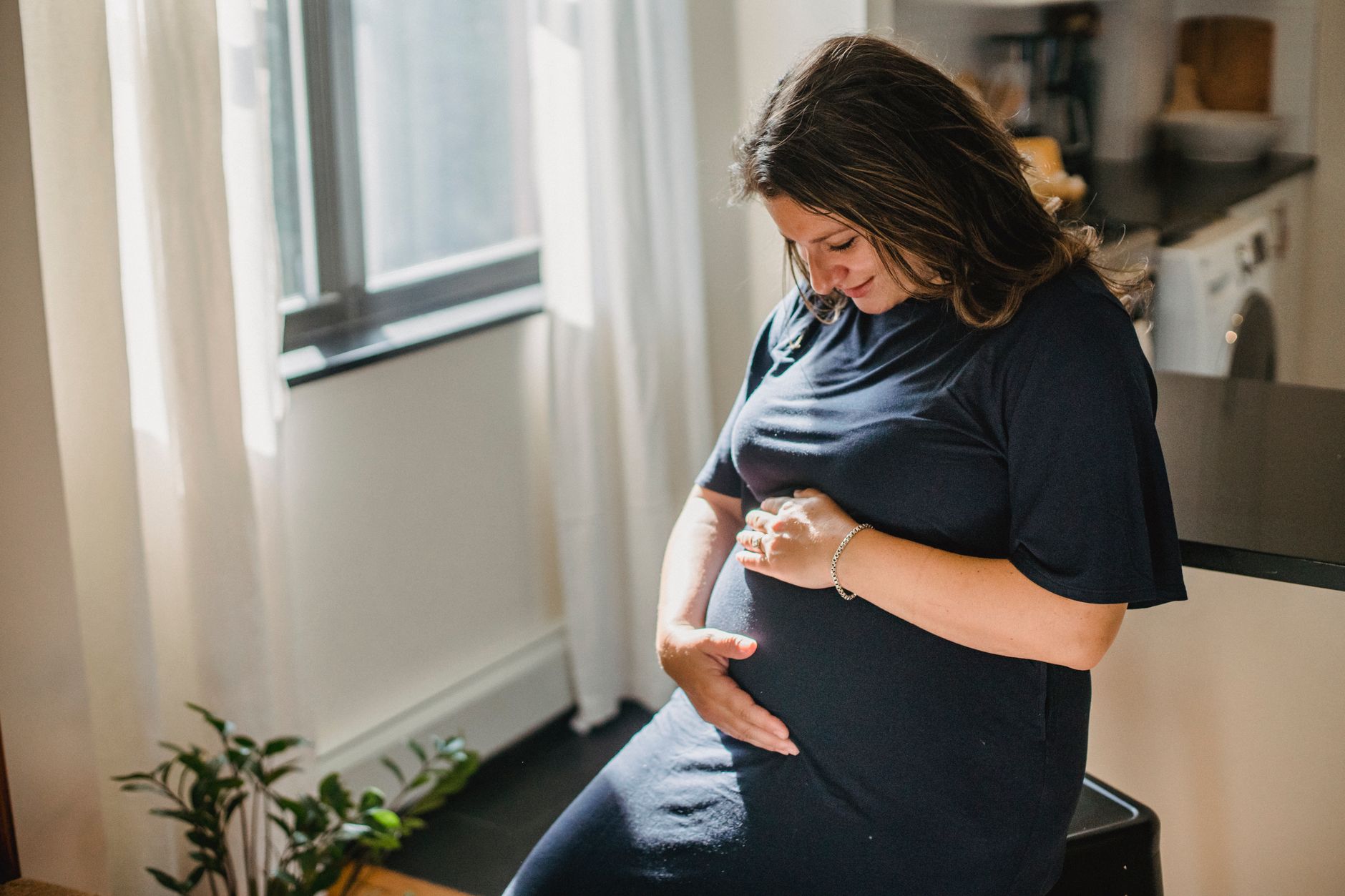
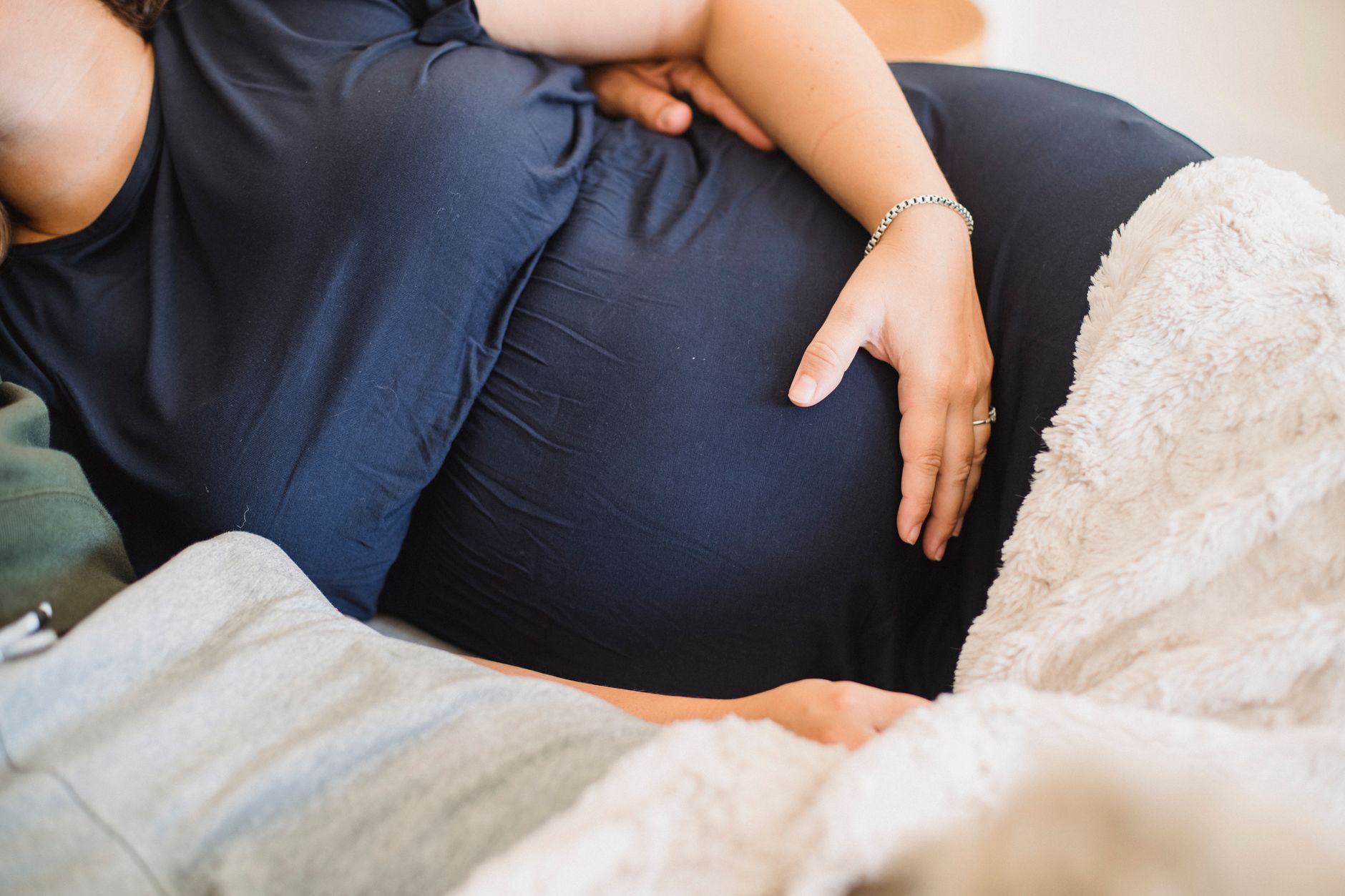
Lying down in a quiet space is often the best position to feel baby move at 14 weeks. Learn optimal postures, tips for detecting early flutters, and what to expect as your baby grows.
By Shubhra Mishra — a mom of two who turned her own confusion during pregnancy into BumpBites, a global mission to make food choices clear, safe, and stress-free for every expecting mother. 💛
Check whether any food is safe during pregnancy with the BumpBites Food Safety Checker.
Quick take: Feeling your baby move at 14 weeks pregnant is possible, especially if you've been pregnant before, but it's still very early. These first movements, called quickening, often feel like gentle flutters, bubbles, or a rumbling sensation, easily mistaken for gas. The best way to detect these subtle movements is usually when you're lying down, relaxed, and in a quiet environment. Don't worry if you haven't felt anything yet; most first-time moms typically feel movement between 18 and 24 weeks.
That moment you first feel your baby move inside you is often described as one of the most magical experiences of pregnancy. It’s a tangible connection, a tiny hello from the little person growing within. If you're 14 weeks pregnant, you might be eagerly anticipating this milestone, perhaps pressing your hands to your belly, wondering what it will feel like and when it will happen.
The truth is, feeling your baby move at 14 weeks is on the early side, and it's completely normal if you haven't felt anything yet. These initial movements are incredibly subtle, often described as flutters or bubbles, and can be easily confused with other bodily sensations like gas. But for some women, especially those who've been pregnant before, these whispers of movement can indeed begin to make an appearance.
This guide will walk you through what to expect when it comes to feeling baby movement at 14 weeks, exploring the best positions to increase your chances of noticing those first gentle nudges, and helping you understand the many factors that influence this exciting milestone. We’ll also cover how to tell the difference between baby kicks and other sensations, and when it’s common for most women to feel their baby move.
What Does Baby Movement Feel Like at 14 Weeks Pregnant?
At 14 weeks, your baby is still very small, measuring about 3.5 inches long and weighing around 1.5 ounces – roughly the size of a lemon. While they're already quite active inside your womb, performing flips and stretches, their movements are often too gentle for you to feel consistently. The very first sensations of fetal movement are known as "quickening," and they are notoriously subtle.
Many women describe quickening at 14 weeks as:
Gentle flutters: Like butterflies dancing in your stomach, or a tiny bird flapping its wings.
Bubbles or gas: A light popping or gurgling sensation, similar to gas moving through your intestines. This is why it's so often mistaken for digestive activity.
A "swishing" or "rolling" feeling: Like a goldfish swimming gently in a bowl.
A "thump" or "tap": Very light and infrequent, almost like a muscle twitch.
Popcorn popping: A very distinct, light, and quick popping sensation that comes and goes.
These early movements are rarely strong kicks or jabs. Instead, they're more like internal whispers, and they often occur low in your abdomen or around your belly button. Because they are so faint and inconsistent, it's easy to second-guess whether what you're feeling is truly your baby or just your digestive system at work. Don't worry if you're unsure; it's a common experience for expectant mothers.
The early weeks of pregnancy are filled with anticipation, including the first flutter of movement.
Is It Normal to Feel Baby Move at 14 Weeks?
When you're 14 weeks pregnant, feeling your baby move is absolutely within the realm of normal, but it's important to understand that it's not the most common time for this to happen, especially for first-time mothers. The average timeframe for feeling quickening is generally between 18 and 24 weeks of pregnancy, according to the American College of Obstetricians and Gynecologists (ACOG).
However, there's a significant individual variation. Some women, particularly those who have been pregnant before (multiparous women), report feeling movement as early as 13 or 14 weeks. This isn't because their babies are more active, but often because they know exactly what to look for and can distinguish these subtle sensations from other bodily functions. Their uterus and abdominal muscles may also be more relaxed and sensitive from previous pregnancies.
So, if you're feeling flutters at 14 weeks, celebrate it! It's a wonderful sign of your baby's activity. If you're not feeling anything yet, that's perfectly normal too, and there's no cause for concern. Your baby is still growing rapidly, and those more noticeable movements will likely come in the next few weeks. What's most important at this stage is to avoid comparing your experience to others, as every pregnancy journey is unique.
Why might some women feel movement earlier than others?
Prior pregnancies: As mentioned, experienced mothers often recognize quickening sooner.
Body type: Women with a lower body mass index (BMI) may feel movements earlier due to less abdominal tissue cushioning the sensations.
Placenta position: The location of your placenta can significantly impact when and where you feel movement. (More on this later).
Awareness and quiet time: Those who are more attuned to their bodies or take quiet time to focus on sensations may notice quickening sooner.
Rest assured, whether you're feeling faint flutters or nothing at all, your baby is likely thriving. Your healthcare provider will monitor your baby's growth and development at your prenatal appointments, providing reassurance about their well-being.
What Are the Best Positions to Feel Baby Kicks Early?
When you're trying to detect those incredibly subtle first baby movements at 14 weeks, the position of your body can make a significant difference. Early quickening isn't strong enough to be felt when you're busy or upright; gravity and your own movements tend to mask them.
The optimal positions for detecting early fetal movements are those that allow you to be completely relaxed, still, and focused. Here are the best approaches:
Lying Down on Your Back or Side
This is often considered the gold standard for feeling early movements. When you lie down, gravity isn't pulling your abdominal organs in the same way, and your uterus is in a more stable position. This allows your baby's tiny movements to be transmitted more directly to your abdominal wall.
On your back: Lie flat on your back, with a pillow under your head. Place your hands gently on your abdomen, just below your belly button. This position provides a large, flat surface for your baby's movements to be felt. However, as you progress further into pregnancy (after 20 weeks), lying flat on your back for prolonged periods can compress a major blood vessel (the vena cava), so it's best to switch to your side as pregnancy advances. For 14 weeks, short periods are fine.
On your side (especially left side): Many women find lying on their left side particularly helpful. This position is also recommended later in pregnancy for optimal blood flow to the uterus and baby. Find a comfortable pillow for your head and possibly one between your knees. Gently place your hands on your lower abdomen.
Quiet, Relaxed Environment
Beyond your physical position, your mental state and surroundings play a crucial role. The early flutters are so faint that they are easily missed amidst noise or distractions.
Eliminate distractions: Turn off the TV, put your phone away, and ask others in your household for a few minutes of quiet time.
Relax your body: Take a few deep breaths to release any tension in your shoulders, neck, and abdomen. A relaxed body is more attuned to subtle sensations.
Wait for a calm moment: Often, the best time is when you're winding down for the day, perhaps in bed before falling asleep, or first thing in the morning before the day's hustle begins.
Remember, patience is key. You might not feel anything the first few times you try, and that's perfectly normal. Keep trying at different times and in these relaxed positions. Over time, as your baby grows and their movements become stronger, you'll start to recognize those unique little nudges more consistently.
Tips to Encourage Baby Movement at 14 Weeks
While you can't force your baby to move, there are a few gentle strategies you can try that might encourage a bit of activity, making it easier for you to detect those early flutters at 14 weeks. Babies often have periods of wakefulness and sleep, and these tips are aimed at catching them during a more active phase.
1. Have a Snack or Drink
Just like adults, babies can get a boost of energy from food. A small snack can sometimes stimulate movement.
Sweet snack: A piece of fruit, a small juice, or a piece of toast with jam can cause a slight rise in your blood sugar, which might give your baby a burst of energy.
Cold drink: A glass of ice water or a very cold juice can sometimes prompt a reaction from your baby due to the sudden temperature change.
Wait about 15-30 minutes after your snack or drink, then find a quiet, relaxed position (like lying down) and focus on your abdomen.
2. Gentle Nudges and Pressure
Sometimes, a light external stimulus can encourage your baby to respond.
Light pressure: Gently press on your abdomen with your hands. Don't press hard, just a soft, encouraging touch. Your baby might respond by shifting or pushing back.
Talk or sing: Your baby can hear sounds from outside the womb, and they might react to the familiar sound of your voice or your partner's.
3. Relaxation and Quiet Time
As mentioned earlier, your baby's movements are easiest to detect when you're not distracted.
Take a warm bath: The warmth and relaxation can help you become more attuned to your body's sensations, and your baby might enjoy the soothing environment.
Listen to music: Some babies seem to respond to music. Play some calming tunes and see if your little one reacts.
Rest after activity: Often, babies are lulled to sleep by your own movements during the day. When you finally sit or lie down after being active, they might "wake up" and become more active themselves.
Remember, these are just suggestions to help you feel more connected and aware. If your baby doesn't respond, it doesn't mean anything is wrong. They might simply be in a deep sleep or in a position where their movements are harder to detect. The goal is to gently encourage, not to stress about, movement at this early stage.
Gentle touches and a calm environment can sometimes help you tune into your baby's early movements.
Factors Affecting When You Feel Baby Move in Early Pregnancy
The timing of when you first feel your baby move, known as quickening, isn't a one-size-fits-all experience. Several factors can influence when you'll notice those initial flutters, especially in early pregnancy around 14 weeks.
1. Parity (Number of Previous Pregnancies)
This is perhaps the biggest factor.
First-time mothers (primigravidas): It's common for first-time moms to feel quickening later, typically between 18 and 24 weeks. They're learning to distinguish these new sensations from everyday bodily functions, and their abdominal muscles are often tighter.
Experienced mothers (multiparous women): Women who have had previous pregnancies often feel movement earlier, sometimes as early as 13 or 14 weeks. They are familiar with the sensation and can more easily recognize it. Their uterine and abdominal muscles may also be more relaxed and sensitive.
2. Placenta Position
The location where your placenta attaches inside your uterus can significantly impact when and how you feel movement.
Anterior placenta: If your placenta is located on the front wall of your uterus, between your baby and your abdomen, it acts like a cushion. This can make it harder to feel movements, especially early on, as the placenta absorbs some of the impact of the kicks. You might feel movements later or only on the sides of your belly.
Posterior placenta: If your placenta is located on the back wall of your uterus, closer to your spine, there's less cushioning between your baby and your abdomen. This often allows for earlier and more distinct perception of movements.
Your doctor or midwife will be able to tell you your placenta's position during your anatomy scan, usually around 18-22 weeks.
3. Body Type and Weight
Your body composition can also play a role.
Lower BMI: Women with a lower body mass index (BMI) or less abdominal fat may feel movements earlier because there's less tissue to dampen the sensations.
Higher BMI: Women with a higher BMI or more abdominal tissue may feel movements later or find them more subtle initially, as there's more padding between the uterus and the outside.
4. Baby's Position and Activity Level
Even at 14 weeks, your baby has periods of sleep and wakefulness.
Baby's orientation: If your baby is facing your spine, their kicks might be directed inward, making them harder to feel. If they're facing your abdomen, movements might be more discernible.
Active periods: Babies are not constantly moving. You're more likely to feel movement during their active phases, which often coincide with times when you are resting.
5. Your Own Activity Level and Focus
When you're busy and active, your own movements and distractions can easily mask the subtle sensations of quickening. You're far more likely to notice movement when you're still, relaxed, and focused on your body.
Understanding these factors can help manage your expectations and reduce any anxiety if you haven't felt movement by 14 weeks. Every pregnancy is unique, and your healthcare provider can offer personalized reassurance based on your specific circumstances.
How to Tell the Difference Between Gas and Baby Movement at 14 Weeks
This is one of the most common questions and sources of confusion for expectant mothers in early pregnancy! The sensations of quickening at 14 weeks can be so subtle that they are incredibly difficult to distinguish from normal digestive activity, especially gas. Here’s how you can try to tell the difference:
Observe the Nature of the Sensation
While challenging, there are subtle differences in how these sensations feel:
Feature
Baby Movement (Quickening)
Gas/Digestion
Feeling
Often described as flutters, bubbles popping, light tapping, swishing, or a gentle "thump." Can be very localized.
More like gurgles, rumbling, cramping, bloating, or a generalized pressure that moves around.
Location
Typically felt lower in the abdomen, around or below the belly button, or sometimes off to one side.
Can be felt anywhere in the abdomen, often higher up or across a wider area.
Pattern
May be irregular at first, but tends to become more consistent over days/weeks. Can be rhythmic.
Often accompanied by other digestive symptoms (burping, passing gas, bowel movements). Less rhythmic.
Relief
Doesn't usually provide relief like passing gas would.
Often followed by burping or passing gas, leading to a feeling of relief.
External factors
May be more noticeable after eating, drinking something cold, or when you are resting quietly.
Often linked to specific foods, meal times, or digestive upset.
Progression
Over time, these sensations will grow stronger, more frequent, and more distinct until they are undeniably baby kicks.
Stays relatively consistent in nature; doesn't evolve into stronger "kicks."
Tips for Distinguishing
Pay attention to consistency and repetition: While irregular at first, true quickening tends to become more frequent and consistent in a pattern over time. If you feel the same fluttery sensation in the same spot, regularly, over a few days, it's more likely to be your baby. Gas tends to be more random and fleeting.
Focus on a quiet moment: Lie down in a relaxed, quiet environment. If you feel a distinct flutter that isn't accompanied by other digestive rumblings, it might be your baby.
Consider timing: Gas can happen at any time, but some women report feeling baby movements more often after a meal or when they’ve been resting after activity.
Trust your gut (eventually): While it's hard early on, many women describe an "aha!" moment where they suddenly realize, "This isn't gas; this is different." You'll eventually recognize a unique quality to your baby's movements.
Don't be discouraged if you're still unsure at 14 weeks. It's a very common experience. As your baby grows and gets stronger, their movements will become more pronounced and unmistakable, making the distinction much clearer. For now, enjoy the mystery and the anticipation!
Can You Feel Baby Move at 14 Weeks With an Anterior Placenta?
Yes, it is possible to feel your baby move at 14 weeks with an anterior placenta, but it can be more challenging and you might feel it later than someone with a posterior placenta. This is one of the most common concerns we hear from expectant parents.
What is an Anterior Placenta?
The placenta is the organ that develops in your uterus during pregnancy, providing oxygen and nutrients to your growing baby and removing waste products. An anterior placenta simply means that it is implanted on the front wall of your uterus, closest to your abdomen. This is a normal and healthy variation in placenta placement and does not typically pose any risks to your pregnancy or baby.
How Does an Anterior Placenta Affect Feeling Movement?
When the placenta is positioned at the front, it acts like a natural cushion or a "muffler" between your baby and your abdominal wall. This padding can absorb some of the force of your baby's early kicks and movements, making them harder to detect. Think of it like trying to feel a gentle tap through a thick blanket versus directly on your skin.
Delayed quickening: Many women with an anterior placenta report feeling quickening a few weeks later than the average, often closer to 20-24 weeks, even if they're multiparous.
Different locations: You might feel movements more prominently on the sides of your abdomen, or very low down, rather than directly in the center, as these areas are less likely to be cushioned by the placenta.
Subtler sensations: The movements you do feel might be softer or less distinct initially.
What to Expect
If you know you have an anterior placenta (which you might learn from an early ultrasound or your anatomy scan later on), try not to worry if you don't feel movement as early as others. It's a completely normal variation. You will eventually feel your baby move, and as they grow stronger, their movements will become unmistakable, even with the placenta in front.
It's important to remember that an anterior placenta doesn't mean your baby isn't moving or isn't healthy. It simply affects your perception of those movements. Your healthcare provider will monitor your baby's growth and well-being through ultrasounds and prenatal check-ups, regardless of your placenta's position. When you start feeling regular movements later in pregnancy, your provider will guide you on how to do kick counts, which is still important even with an anterior placenta, though you might start them a little later or notice fewer movements overall.
When Do First-Time Moms Typically Feel Baby Move?
For first-time mothers, the anticipation of feeling that first baby kick, often called quickening, is a significant milestone. While some experienced moms might report flutters as early as 13 or 14 weeks, the timeline is generally a bit later for those on their first pregnancy journey.
Most first-time moms typically begin to feel their baby move between **18 and 24 weeks of pregnancy**. This window is considered the average, and it's important to remember that there's a wide range of normal within these weeks.
Why the Later Timing for First-Time Moms?
Learning to interpret sensations: When you've never felt fetal movement before, it's hard to know what you're looking for. The early flutters are so subtle they can easily be dismissed as gas, hunger pangs, or muscle twitches. It takes time and repetition to learn to distinguish these new sensations from everyday bodily functions.
Tighter abdominal muscles: For many first-time mothers, the abdominal muscles are firmer and less stretched than in subsequent pregnancies. This can make it more difficult for the subtle movements to be transmitted through to the outer abdominal wall where they can be felt.
Lack of prior experience: Unlike multiparous women who have a "memory" of what quickening feels like, first-time moms are experiencing this completely new phenomenon. It's a process of discovery.
The "Aha!" Moment
Many first-time moms describe an "aha!" moment when they suddenly realize what they've been feeling. It might be a sensation they've had a few times before, but then one time it's distinct enough, or happens frequently enough, that they confidently identify it as the baby. This often happens when they are relaxed, lying down, and specifically focusing on their body.
If you're a first-time mom at 14 weeks and haven't felt anything yet, please don't be concerned. This is completely normal and expected. Your baby is still very small and has plenty of room to move around without you necessarily feeling every flutter. As your pregnancy progresses and your baby grows, their movements will become stronger, more frequent, and undeniable. Focus on enjoying the other milestones of your second trimester, and those precious first movements will come when they're ready.
The 18-24 week mark is a common timeframe for first-time moms to feel their baby's movements.
Myth vs. Fact About Early Baby Movement
There are many ideas circulating about pregnancy, and early baby movement is no exception. Let's clear up some common myths with scientific facts.
Myth: If you don't feel your baby move by 14 weeks, something is wrong.
Fact: Absolutely not. While some women do feel movement this early, it's considered quite early in pregnancy. Most first-time mothers don't feel quickening until 18 to 24 weeks, and even experienced mothers often feel it closer to 16-18 weeks. A lack of movement at 14 weeks is completely normal and not a sign of any problem. Your healthcare provider will monitor your baby's health at your regular appointments.
Myth: Strong early movements mean you'll have a very active baby after birth.
Fact: While it's fun to imagine, there's no scientific evidence to suggest that the intensity or timing of early fetal movements correlates with a baby's personality or activity level after birth. Fetal movement patterns in the womb are about growth and development, not a preview of their future temperament. Babies have sleep-wake cycles in the womb, just like they do once they're born.
Myth: You should feel your baby move every day by 14 weeks.
Fact: This is incorrect. At 14 weeks, movements are typically infrequent and inconsistent. Your baby is still very small and has a lot of room to move without you noticing. Kick counts, which involve monitoring your baby's movements, are generally not recommended until much later in pregnancy, usually around 28 weeks, when movements become more regular and stronger. Before then, any occasional flutter is a bonus!
Key Takeaways
Feeling baby movement at 14 weeks is possible, especially for experienced mothers, but it's still considered very early.
Quickening often feels like gentle flutters, bubbles, or light tapping, easily mistaken for gas.
For first-time moms, feeling movement typically starts between 18 and 24 weeks.
Lying down, relaxed, and in a quiet environment are the best positions to detect subtle early movements.
Factors like placenta position (anterior vs. posterior) and body type can influence when you feel movement.
Don't worry if you haven't felt movement by 14 weeks; it's completely normal and expected for many.
Frequently Asked Questions
Is it normal to feel baby move at 14 weeks?
Yes, it can be normal to feel your baby move at 14 weeks, particularly if you've been pregnant before. These early movements, called quickening, are very subtle, often described as flutters or bubbles. However, it's also completely normal not to feel movement at this stage, especially for first-time mothers, who typically feel it between 18 and 24 weeks.
What does a baby kick feel like at 14 weeks?
At 14 weeks, a "baby kick" is usually not a strong, distinct kick. Instead, it feels more like gentle flutters, a light popping sensation (like popcorn), soft bubbles, or a faint swishing. These sensations are often so subtle that they can be easily confused with gas or other digestive movements. They are rarely strong enough to be felt externally by a partner at this early stage.
What position should I lay in to feel my baby move?
To increase your chances of feeling your baby move at 14 weeks, the best position is to lie down in a quiet, relaxed environment. Lying flat on your back or comfortably on your side (especially your left side) can help. This minimizes distractions and allows you to focus on the subtle sensations in your abdomen without your own movements or gravity interfering.
How can I encourage my baby to move at 14 weeks?
You can try a few gentle strategies to encourage movement. Having a small, sweet snack or a very cold drink can sometimes give your baby an energy boost. Then, lie down in a quiet place and focus. Gently pressing on your abdomen or talking to your baby might also encourage a response. Remember, these are just suggestions, and it's okay if your baby doesn't respond immediately.
Why can't I feel my baby move at 14 weeks?
There are several normal reasons why you might not feel your baby move at 14 weeks. Your baby is still very small, making movements subtle and inconsistent. If it's your first pregnancy, you might not yet recognize the sensations. An anterior placenta (where the placenta is at the front of your uterus) can also cushion movements. Rest assured, not feeling movement at 14 weeks is very common and usually not a cause for concern.
What does an anterior placenta mean for feeling movement?
An anterior placenta is located on the front wall of your uterus, between your baby and your abdomen. This acts as a cushion, which can make it harder to feel your baby's movements, especially in early pregnancy. You might feel quickening later than average or primarily on the sides of your abdomen. It's a normal and healthy placenta position, and you will still feel your baby's movements as they grow stronger, just possibly a bit later.
When to See a Doctor or Specialist
At 14 weeks, not feeling your baby move is completely normal, and there's usually no need to contact your doctor specifically about a lack of movement at this early stage. Consistent fetal movement monitoring (kick counts) is typically not recommended until much later in pregnancy, usually around 28 weeks, when movements become more regular and distinct.
However, if you have any concerns about your pregnancy, including general worries about your baby's well-being, or if you experience any concerning symptoms such as:
Vaginal bleeding
Severe abdominal pain or cramping
Sudden gush of fluid from your vagina
Fever or chills
Persistent nausea and vomiting that prevents you from keeping fluids down
Please contact your OB/GYN or midwife immediately. They are your best resource for personalized medical advice and can offer reassurance or further evaluation if needed.
This article is for informational purposes only and is not a substitute for professional medical advice, diagnosis, or treatment. Always seek the advice of your physician or other qualified health provider with any questions you may have regarding a medical condition.
References
American College of Obstetricians and Gynecologists (ACOG). (2020). Fetal Movement. Retrieved from https://www.acog.org/
Mayo Clinic. (2023). Fetal movement: What's normal? Retrieved from https://www.mayoclinic.org/healthy-lifestyle/pregnancy-week-by-week/in-depth/fetal-movement/art-20045233
National Institutes of Health (NIH). (2023). Pregnancy. Retrieved from https://www.nih.gov/health-information/pregnancy
Cleveland Clinic. (2022). Fetal Movement (Quickening). Retrieved from https://my.clevelandclinic.org/health/articles/22464-fetal-movement-quickening
Not sure about the label on Best Position To Feel Baby Move At 14 Weeks products?
Snap the ingredients list and SafeFilter checks every ingredient for your stage — only 3 free scans this month, then you're locked until reset. Unlimited from $7/mo or lock $50/yr through Aug 31 (5 days left).
When Shubhra Mishra was expecting her first child in 2016, she was overwhelmed by conflicting food advice — one site said yes, another said never. By the time her second baby arrived in 2019, she realized millions of mothers face the same confusion.
That sparked a five-year journey through clinical nutrition papers, cultural diets, and expert conversations — all leading to BumpBites: a calm, compassionate space where science meets everyday motherhood.
Her long-term vision is to build a global community ensuring safe, supported, and free deliveriesfor every mother — because no woman should face pregnancy alone or uninformed. 🌿
🌍 Stand with mothers, shape safer guidance
Join a small circle of experts who review BumpBites articles so expecting parents everywhere can decide with confidence.