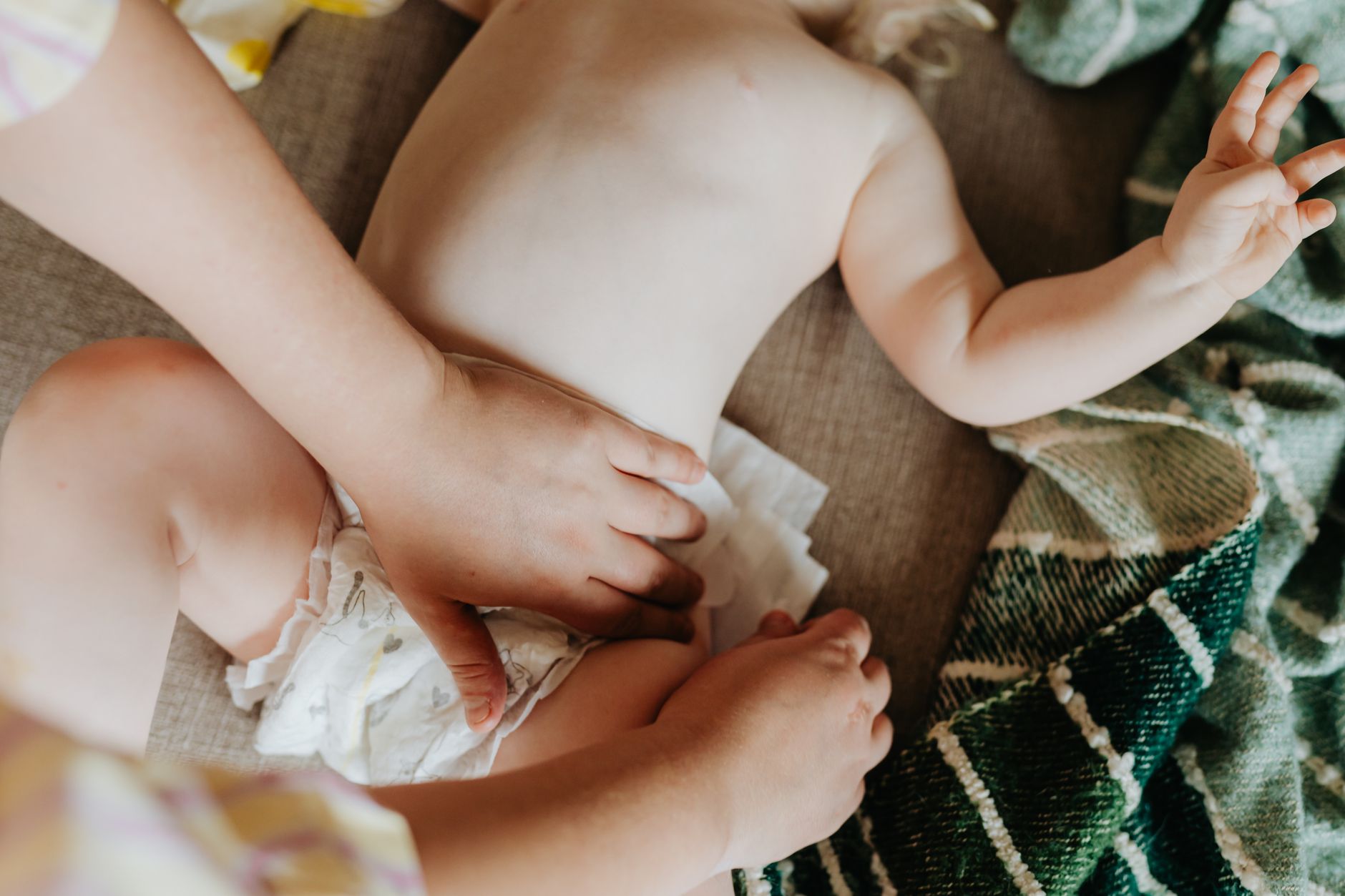
Yeast doesn’t respond to regular diaper creams (zinc oxide or petrolatum). It needs an antifungal. Here’s the step-by-step plan that pediatricians recommend:
-
Clean gently, no scrubbing.
Use warm water and a soft washcloth or a fragrance-free wipe labeled “sensitive.” Pat—don’t rub—until the skin is completely dry. If the rash is raw, a quick rinse in the sink or a sitz bath (2–3 inches of warm water) can be less painful than a wipe.
-
Apply antifungal cream.
Use clotrimazole 1% (Lotrimin AF) or nystatin (prescription or OTC) as directed—usually 2–3 times a day. A thin layer is enough; don’t glob it on. If you’re using a prescription, follow the label exactly.
-
Air it out.
After each diaper change, give your baby 5–10 minutes of naked time on a waterproof pad or towel. No diaper = less moisture = faster healing.
-
Barrier cream on top.
Once the antifungal is absorbed, apply a thin layer of zinc oxide (like Desitin or Boudreaux’s) to protect the skin from urine and stool. Think of it as a shield, not a treatment.
-
Change diapers frequently.
Aim for every 2 hours during the day, and at least once overnight. If your baby is in overnight diapers, switch to a high-absorbency disposable (like Huggies Overnites or Pampers Swaddlers) until the rash clears.
-
Wash hands before and after.
Yeast can spread to your hands, then to other parts of your baby’s body (or yours). Soap and water for 20 seconds is all it takes.
Most babies show improvement in 2–3 days and heal completely in 7–10. If the rash isn’t better after 3 days of antifungal treatment, call your pediatrician—you may need a stronger prescription or a culture to rule out bacterial infection.
What does a yeast diaper rash look like vs. regular diaper rash?
Not all red bottoms are created equal. Here’s how to tell them apart:
If you’re still unsure, take a photo and text it to your pediatrician. Many offices can give you a quick verdict without an appointment.
Best antifungal cream for baby yeast diaper rash (pediatrician recommended)
Not all antifungals are safe for babies. Here’s what pediatricians reach for first:
-
Clotrimazole 1% (Lotrimin AF, generic).
Over-the-counter, safe for babies 2 months and older. Apply 2–3 times a day for 7–10 days, even if the rash looks better. Stopping too soon can cause a rebound.
-
Nystatin (prescription or OTC).
Often prescribed for infants; works well but can take a day longer than clotrimazole. Apply 2–3 times a day. If you’re using the oral suspension (for thrush), you can also dab a small amount on the diaper rash.
-
Miconazole 2% (Monistat-Derm).
Another OTC option, but check with your pediatrician before using on babies under 6 months. Apply 2 times a day.
Avoid combination creams that mix antifungals with steroids (like Lotrisone) unless specifically prescribed. Steroids can make yeast infections worse if used incorrectly.
If you’re unsure which to choose, call your pediatrician’s nurse line. Most will recommend clotrimazole for mild cases and nystatin for moderate to severe.
How long does yeast diaper rash take to heal with treatment?
With consistent treatment, most babies follow this timeline:
-
Days 1–2: Rash looks the same or slightly worse (yeast can flare before it improves). Baby may still be fussy during changes.
-
Days 3–4: Redness starts to fade. Satellite spots shrink. Baby tolerates diaper changes better.
-
Days 5–7: Rash is mostly gone, but skin may still be pink. Continue antifungal for the full 7–10 days to prevent recurrence.
-
Days 7–10: Skin returns to normal. You can switch back to your usual diaper cream.
If the rash isn’t improving by day 4, or if it’s spreading or oozing, call your pediatrician. You may need an oral antifungal (like fluconazole) or a culture to check for resistant yeast or bacterial infection.
Can breastfed babies get yeast diaper rash from mom’s diet?
Short answer: no, not directly. Yeast diaper rash isn’t caused by what mom eats. But there are a few indirect connections:
-
Antibiotics in mom’s breast milk.
If you’re taking antibiotics (for mastitis, a UTI, or any other infection), traces can pass into your milk and disrupt your baby’s gut flora. Less healthy bacteria = more room for yeast to grow. If you’re on antibiotics, ask your doctor about probiotics (like Lactobacillus rhamnosus GG) to protect both of you.
-
High-sugar diet.
Yeast thrives on sugar. If your diet is heavy on refined carbs (white bread, pasta, sweets), it can change the pH of your breast milk slightly, which might make your baby more prone to yeast overgrowth. But this is a small effect—don’t blame yourself if your baby gets a rash.
-
Thrush in mom or baby.
If you have nipple thrush (painful, shiny, or flaky nipples), you and your baby can pass yeast back and forth. Treat both of you at the same time to break the cycle. Your doctor can prescribe nystatin or fluconazole for you, and nystatin oral suspension for your baby.
For formula-fed babies, yeast diaper rash isn’t linked to formula type. But if your baby is on antibiotics (for an ear infection, for example), they’re at higher risk. Ask your pediatrician about a probiotic made for infants (like Culturelle Baby or Gerber Soothe).
Natural remedies for yeast diaper rash (safe for newborns)
If you prefer to start with gentler options, or if the rash is mild, these remedies can help—but they’re not a substitute for antifungal cream if the rash is severe or spreading.
-
Breast milk.
A 2013 study in Pediatric Dermatology found that applying expressed breast milk to diaper rash was as effective as hydrocortisone 1% cream. Dab a few drops on the rash after each diaper change. Safe for newborns.
-
Coconut oil.
Has mild antifungal properties (thanks to lauric acid). Apply a thin layer after cleaning. Choose unrefined, virgin coconut oil. Safe for newborns.
-
Plain yogurt with live cultures.
The probiotics can help crowd out yeast. Apply a thin layer to the rash, let it sit for 5–10 minutes, then rinse off. Use plain, unsweetened yogurt. Safe for babies 6 months and older.
-
Oatmeal baths.
Soothes itching and inflammation. Use colloidal oatmeal (like Aveeno Baby) in lukewarm water. Limit to 10 minutes. Safe for newborns.
-
Baking soda soak.
Helps restore pH balance. Add 2 tablespoons of baking soda to a shallow bath. Soak for 5–10 minutes. Safe for babies 1 month and older.
Avoid these common “natural” remedies—they can make yeast diaper rash worse:
- Apple cider vinegar (too harsh, can burn baby’s skin).
- Tea tree oil (toxic if ingested, can cause allergic reactions).
- Cornstarch or talc (can feed yeast).
- Honey (risk of botulism in infants).
If you’re using a natural remedy and the rash isn’t improving in 2–3 days, switch to an antifungal cream.
When to see a doctor for baby yeast diaper rash (warning signs)
Most yeast diaper rashes clear up with home treatment. But call your pediatrician right away if you notice any of these red flags:
-
The rash spreads beyond the diaper area.
Yeast can travel to the thighs, belly, or back. If it reaches the mouth (thrush) or face, it needs oral treatment.
-
The rash oozes pus or has yellow crusting.
This could signal a bacterial infection (like impetigo) that needs antibiotics.
-
Your baby has a fever (100.4°F or higher).
Fever isn’t typical with yeast diaper rash and could mean a more serious infection.
-
The rash bleeds or cracks.
Open skin is more prone to infection.
-
Your baby seems unusually fussy or refuses to eat.
Pain from the rash can make babies irritable, but extreme fussiness could mean the infection is spreading.
-
The rash doesn’t improve after 3 days of antifungal treatment.
You may need a stronger prescription or a culture to check for resistant yeast.
-
You see white patches in your baby’s mouth or on your nipples.
This could be thrush, which needs oral treatment for both of you.
If you’re unsure, err on the side of caution. Pediatricians would rather you call for a mild rash than wait until it’s severe.
Preventing yeast diaper rash after antibiotics in infants
Antibiotics are a common trigger for yeast diaper rash because they kill off the good bacteria that keep yeast in check. Here’s how to protect your baby:
-
Ask about probiotics.
Studies show that giving infants probiotics (like Lactobacillus rhamnosus GG or Saccharomyces boulardii) during and after antibiotics can reduce the risk of yeast infections by up to 70%. Ask your pediatrician for a brand and dose.
-
Change diapers frequently.
Wetness feeds yeast. Aim for every 2 hours during the day and at least once overnight.
-
Use a barrier cream.
Apply a thin layer of zinc oxide (like Desitin or Boudreaux’s) at every diaper change to protect the skin.
-
Let the skin breathe.
Give your baby 10–15 minutes of naked time after each diaper change. Lay them on a waterproof pad or towel.
-
Wash cloth diapers properly.
If you use cloth, strip them of detergent buildup (use 1/2 cup of baking soda in hot water) and add 1/2 cup of white vinegar to the rinse cycle to kill yeast.
-
Sterilize pacifiers and bottles.
Boil them for 5 minutes or run them through the dishwasher’s sanitize cycle to kill yeast.
-
Watch for thrush.
If your baby has white patches in their mouth, call your pediatrician. Thrush can spread to the diaper area.
If your baby has had yeast diaper rash before, your pediatrician may recommend starting an antifungal cream preventively when antibiotics are prescribed.
Myth vs. fact: yeast diaper rash edition
Let’s clear up some common misconceptions:
Myth: Yeast diaper rash is caused by poor hygiene.
Fact: Yeast is a normal part of your baby’s skin flora. It only becomes a problem when it overgrows—usually due to moisture, antibiotics, or a weakened immune system. Even the most diligent parents deal with yeast diaper rash.
Myth: You can use hydrocortisone on yeast diaper rash.
Fact: Hydrocortisone is a steroid, and steroids can make yeast infections worse. Only use it if your pediatrician specifically recommends it (for example, if there’s also eczema).
Myth: Yeast diaper rash is contagious to other babies.
Fact: Yeast is already present on everyone’s skin. Your baby isn’t “giving” it to other babies. But if another baby has a weakened immune system (like a preemie), they could be more susceptible.
Myth: You need to throw away all your baby’s diapers and clothes.
Fact: Yeast doesn’t live long on fabric. Wash diapers, clothes, and bedding in hot water with detergent. No need to toss anything.
Key takeaways
- Yeast diaper rash is bright red with tiny satellite spots, often in skin folds. It doesn’t respond to regular diaper cream.
- Treat it with an antifungal cream (clotrimazole or nystatin) 2–3 times a day, plus air time and frequent diaper changes.
- Most rashes improve in 2–3 days and heal completely in 7–10 days with treatment.
- Breastfed babies can’t get yeast diaper rash from mom’s diet, but antibiotics in breast milk can increase the risk.
- Natural remedies like breast milk, coconut oil, and oatmeal baths can help mild rashes, but severe cases need antifungal cream.
- Call your pediatrician if the rash spreads, oozes, bleeds, or doesn’t improve after 3 days of treatment.
- Prevent recurrence by using probiotics during and after antibiotics, changing diapers frequently, and letting the skin breathe.
Frequently asked questions
What kills yeast diaper rash fast?
The fastest way to kill yeast is with an antifungal cream (clotrimazole or nystatin) applied 2–3 times a day, combined with keeping the area clean and dry. Most babies show improvement in 2–3 days. Skip the wipes with alcohol or fragrance—they can irritate the skin and slow healing.
Can I use Lotrimin on my baby’s yeast diaper rash?
Yes, Lotrimin AF (clotrimazole 1%) is safe for babies 2 months and older. Apply a thin layer 2–3 times a day for 7–10 days. If your baby is younger than 2 months, check with your pediatrician first.
How do I know if my baby’s diaper rash is fungal?
Yeast diaper rash has three telltale signs: (1) bright, beefy red color, (2) tiny red dots or pimples outside the main rash (called satellite lesions), and (3) location in skin folds (groin, thighs, buttocks). If the rash doesn’t improve with zinc oxide cream, it’s likely yeast.
Why does my baby keep getting yeast diaper rash?
Recurrent yeast diaper rash usually has one of these causes:
- Not treating long enough (stopping antifungal cream too soon).
- Using antibiotics frequently (which kill good bacteria and allow yeast to overgrow).
- Not changing diapers often enough (moisture feeds yeast).
- Using cloth diapers that aren’t properly sanitized.
- Having thrush (oral yeast) that keeps reinfecting the diaper area.
If your baby keeps getting yeast diaper rash, ask your pediatrician about probiotics and preventive antifungal cream.
Is yeast diaper rash contagious to other babies?
No, yeast diaper rash isn’t contagious. Yeast is already present on everyone’s skin. Your baby isn’t “giving” it to other babies, and you don’t need to keep them away from daycare or playdates.
Can I use hydrocortisone on yeast diaper rash?
No, hydrocortisone can make yeast infections worse. Only use it if your pediatrician specifically recommends it—for example, if your baby also has eczema. For yeast, stick to antifungal creams.
Baby yeast diaper rash not going away with nystatin—what should I do?
If nystatin isn’t working after 3–4 days, call your pediatrician. You may need a stronger antifungal (like fluconazole) or a culture to check for resistant yeast. In the meantime, make sure you’re:
- Applying the cream 2–3 times a day (not just once).
- Giving your baby plenty of air time.
- Changing diapers frequently.
- Avoiding wipes with alcohol or fragrance.
When to see a pediatrician
Yeast diaper rash is common and treatable, but it’s not something to ignore. Call your pediatrician if:
- The rash spreads beyond the diaper area (to the thighs, belly, or back).
- The rash oozes pus or has yellow crusting.
- Your baby has a fever (100.4°F or higher).
- The rash bleeds or cracks.
- Your baby seems unusually fussy or refuses to eat.
- The rash doesn’t improve after 3 days of antifungal treatment.
- You see white patches in your baby’s mouth or on your nipples (signs of thrush).
This article is for informational purposes only and is not a substitute for professional medical advice, diagnosis, or treatment. Always seek the advice of your pediatrician with any questions about your baby’s health.
References
- American Academy of Pediatrics. (2021). Diaper Rash. HealthyChildren.org. https://www.healthychildren.org
- American Academy of Dermatology. (2022). Diaper Rash: Diagnosis and Treatment. https://www.aad.org
- Centers for Disease Control and Prevention. (2023). Candidiasis. https://www.cdc.gov
- Mayo Clinic. (2023). Diaper Rash: Symptoms and Causes. https://www.mayoclinic.org
- National Health Service. (2023). Nappy Rash. https://www.nhs.uk
- Pediatric Dermatology. (2013). Efficacy of Topical Breast Milk in the Treatment of Diaper Dermatitis. https://onlinelibrary.wiley.com
- The Menopause Society. (2022). Vulvovaginal Candidiasis. https://www.menopause.org
- World Health Organization. (2021). Candidiasis. https://www.who.int