Quick take: If a baby isn’t breathing or has no pulse, start CPR right away—check responsiveness, call 911, then give 30 chest compressions followed by 2 rescue breaths. The depth and rate differ by age: newborns need a gentle 1‑inch compression, infants 1‑2 inches, toddlers about 2 inches. Keep the cycle going until help arrives or the baby shows signs of life.
It’s terrifying to hear a tiny gasp stop or feel a limp infant in your arms. You might wonder, “Did I do the right thing?” You’re not alone. Many parents first learn CPR in a classroom, then wonder how to apply it when the moment arrives. This guide walks you through the baby CPR steps by age, from a newborn’s first weeks to a curious toddler. We’ll break down the latest 2026 guidelines, show you where to find video demos, and give you practical tips you can practice at home.
We’ll cover how to recognize when CPR is needed, the exact hand placement and compression depth for each age group, how to give rescue breaths safely, and what to do if the baby is choking versus simply not breathing. By the end, you’ll feel more prepared to act confidently, and you’ll know exactly when to call emergency services.

Newborns are tiny, delicate, and require a gentler touch than older infants. The 2026 American Heart Association (AHA) and Red Cross updates stress a “one‑hand” technique to avoid compressing the ribcage too forcefully.
Step‑by‑step newborn CPR
- Check responsiveness. Gently tap the foot and shout the baby’s name. If there is no movement or crying, assume unresponsiveness.
- Call for help. If you’re alone, shout “Help! Call 911!” and begin CPR while a bystander dials.
- Open the airway. Place a finger on the chin and gently tilt the head back. For newborns, a slight tilt is enough; avoid over‑extension.
- Give 2 rescue breaths. Cover the baby’s mouth and nose with your mouth, delivering a gentle puff of air that makes the chest rise. Each breath should last about 1 second.
- Start chest compressions. Use two fingers (index and middle) placed just below the nipple line on the sternum. Press down about 1 inch (≈2.5 cm) at a rate of 100‑120 compressions per minute.
- Compression‑breath cycle. Perform 30 compressions, then 2 breaths. Continue until professional help arrives or the baby shows signs of life.
Because newborn skin is fragile, keep your fingers flat and avoid “pinching” the chest. A quick visual cue—watch the chest rise with each breath—helps confirm you’re delivering enough air without over‑inflating.
Baby CPR steps by age with video demonstration
Many health organizations host short, free videos. The AHA’s official site offers a 2‑minute clip that shows the exact hand placement and timing for newborns. You can also find step‑by‑step reels on the Red Cross YouTube channel; just search “newborn CPR 2026”. Watching these videos repeatedly helps build muscle memory.
Can you do CPR on a baby with a cold or fever?
Yes. A cold or fever does not change the need for CPR if the baby stops breathing or has no pulse. Fever can actually increase the urgency, as high temperatures can cause rapid heart rate changes. Proceed with the same steps, but note the fever as part of the information you’ll give to emergency responders.
Infant CPR steps for babies 1‑12 months old (2026 updated guidelines)
Infants between one month and one year have a larger chest cavity than newborns, allowing deeper compressions but still requiring gentle technique.
Step‑by‑step infant CPR
- Assess responsiveness. Gently shake the baby’s foot and call their name. No response means you need to act.
- Call 911. If you’re alone, shout for help while dialing. If another adult is present, have them call while you start compressions.
- Open the airway. Use the “head‑tilt, chin‑lift” method. For infants, a neutral head position works best.
- Give 2 rescue breaths. Cover the baby’s mouth and nose with your mouth, delivering a breath that makes the chest rise. Each breath lasts about 1 second.
- Chest compressions. Use two fingers placed on the lower half of the sternum, just below the nipples. Press down 1‑2 inches (≈2.5‑5 cm) at a rate of 100‑120 per minute.
- Cycle. Perform 30 compressions followed by 2 breaths. Continue until help arrives.
How deep should chest compressions be for a 6‑month‑old?
For a six‑month‑old, aim for about 1½‑2 inches (≈4‑5 cm) of depth. The AHA states that compressing at least one third of the chest depth is effective; for most infants this translates to roughly 1‑2 inches.
What to do if the baby stops breathing but has a pulse?
If you feel a pulse (which can be hard to locate), focus on rescue breaths only. Give a breath every 3‑5 seconds (about 12‑20 breaths per minute) and monitor the pulse. If the pulse disappears, switch to compressions immediately.
Baby CPR steps for premature infants by corrected age
Premature infants often have more fragile ribs. Use the same two‑finger technique, but aim for the shallower end of the range—about 0.5‑1 inch (≈1‑2.5 cm). The “corrected age” (chronological age minus weeks of prematurity) guides how deep you compress. For a corrected age of 2 months, stick to the lower end of the infant range.
Toddler CPR instructions: what to do for a 1‑3 year old choking or not breathing
Toddlers can cough, speak, and even attempt to clear an obstruction themselves, but they also need a slightly stronger compression technique.
When the toddler is choking
- Assess. If the child can’t cough, speak, or breathe, they are likely choking.
- Back blows. Give up to 5 back blows, using the heel of your hand, between the shoulder blades.
- Chest thrusts. If the obstruction remains, give up to 5 chest thrusts using two fingers placed on the lower half of the sternum.
- Alternate. Continue alternating back blows and chest thrusts until the object is expelled or the child becomes unresponsive.
If the toddler becomes unresponsive
- Call 911. Shout for help while dialing.
- Start CPR. Use one hand (or two if you’re larger) to compress the chest about 2 inches (≈5 cm) at 100‑120 compressions per minute.
- Rescue breaths. Give 2 breaths after every 30 compressions, ensuring the chest rises.
How long should you do CPR on a baby before stopping?
Continue CPR until professional help arrives, the child shows signs of life (movement, coughing, breathing), or you become physically unable to continue. The AHA does not set a fixed time limit; the priority is persistence.
Baby CPR vs adult CPR: key differences parents must know
Many people think “CPR is CPR,” but the technique changes dramatically with size. Below is a side‑by‑side comparison of the most important distinctions.
Notice the similarity in rate and ratio, but the depth and hand placement are dramatically smaller for babies. Using adult force on an infant can cause rib fractures or internal injury, while too‑light compressions on an adult may be ineffective.
Myth vs fact
Myth: “You should give a lot of air when rescuing a baby.”
Fact: Over‑inflating can cause air‑filled lungs to rupture; a gentle puff that just makes the chest rise is enough.
Myth: “If a baby is breathing, CPR isn’t needed.”
Fact: A baby can be breathing but still be in cardiac arrest if the pulse is absent. In that case, chest compressions are essential.
Myth: “You need a special CPR kit for babies.”
Fact: Most infant mannequins are designed for both newborn and older infant practice; the same kit works across the age range.
When to call 911 vs start CPR on a baby by age group
Deciding whether to call first or start compressions depends on the baby’s responsiveness and your surroundings.
Newborn (0‑1 mo)
- If you see no breathing and no pulse, start CPR immediately and shout for help.
- If another adult is present, have them call 911 while you begin compressions.
Infant (1‑12 mo)
- Unresponsive + no breathing → start CPR, call 911 if alone.
- Unresponsive + weak breathing → give rescue breaths, monitor pulse.
Toddler (1‑3 yr)
- Choking with inability to cough → give back blows and chest thrusts, then call 911.
- Unresponsive + no pulse → start CPR immediately; if another adult is present, they should call 911.
Remember: “If you’re unsure, start CPR and call 911.” The time you spend trying to decide can cost precious seconds.
Common mistakes to avoid during baby CPR at different ages
Even well‑meaning parents can slip up under pressure. Here are the most frequent errors and how to prevent them.
- Using too much force. Pressing too hard on a newborn’s chest can fracture ribs. Practice on a mannequin to gauge the right depth.
- Wrong hand placement. Placing hands too high (near the neck) can compress the airway. Always locate the nipple line first.
- Skipping breaths. The 30:2 ratio is crucial; delivering compressions without breaths reduces oxygen delivery.
- Not checking pulse correctly. Feeling for a pulse on an infant’s brachial artery (inside the upper arm) is often missed. If you can’t locate it quickly, assume it’s absent and start compressions.
- Delaying rescue breaths. Babies need oxygen quickly. Start breaths right after the first 30 compressions, even if you think the baby might be breathing.
- Stopping CPR too early. Do not stop after a few minutes unless professional help arrives or the baby shows clear signs of life.
How to practice baby CPR at home with a mannequin or doll
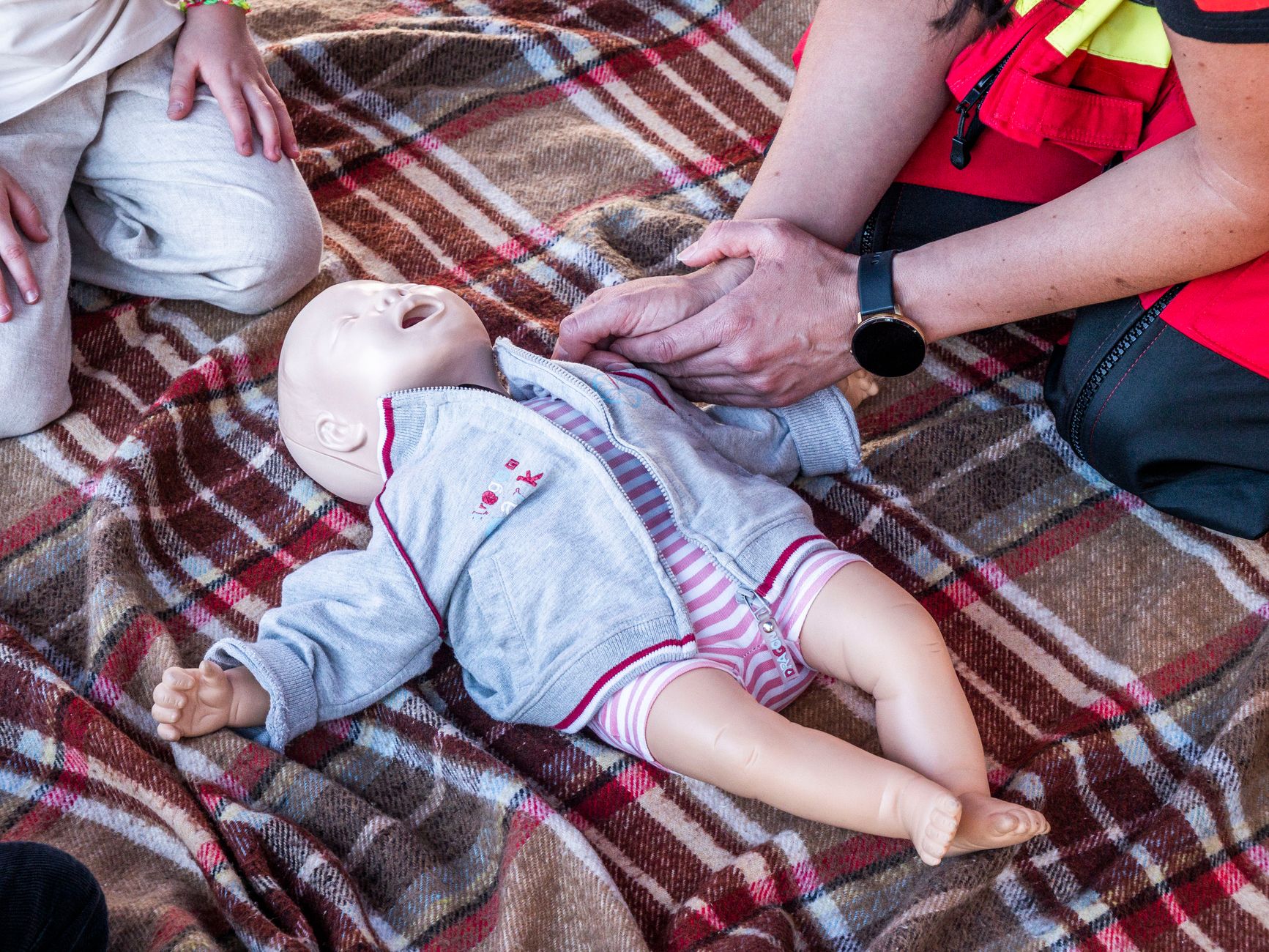
You don’t need an expensive trainer. A simple infant CPR doll—available at most pharmacies—has marked landmarks for hand placement. Follow these steps:
- Set the doll on a firm surface.
- Locate the “nipple line” printed on the torso.
- Place two fingers just below that line and practice 30 compressions, counting out loud to keep the rhythm.
- Switch to rescue breaths using a small mask that fits the doll’s mouth.
- Repeat the cycle three times, then time yourself to see if you stay within the 100‑120 compressions per minute range.
Practicing twice a month keeps the skill fresh. Many community centers also host free refresher workshops; check local listings for “baby CPR certification near me for parents 2026”.
Myth vs fact
Myth: “If the baby is cold, CPR won’t work.”
Fact: Temperature does not affect the mechanics of chest compressions; you should still perform CPR.
Myth: “You need to give five breaths before starting compressions.”
Fact: The current guideline is 2 rescue breaths after 30 compressions, not five.
Myth: “A baby’s heartbeat can be felt easily.”
Fact: In emergencies, it’s often impossible to locate the pulse quickly; treat the baby as if there is no pulse and start compressions.
Key takeaways
- Start CPR if a baby is unresponsive and not breathing or has no pulse—don’t wait for help.
- Use two fingers for newborns (≈1 inch depth) and infants (1‑2 inches), and one hand for toddlers (≈2 inches).
- Maintain a rate of 100‑120 compressions per minute and a 30:2 compression‑to‑breath ratio.
- Rescue breaths should be gentle puffs that make the chest rise; avoid over‑inflating.
- Practice on a mannequin regularly and review video demos from the AHA or Red Cross.
- Call 911 immediately if you’re alone; if another adult is present, have them call while you begin CPR.
Frequently asked questions
What are the 5 steps of infant CPR?
Check responsiveness, call 911, open the airway, give 2 rescue breaths, then perform 30 chest compressions. Repeat the cycle until help arrives.
Is baby CPR different from child CPR?
Yes. Baby CPR uses two fingers and a shallower compression depth (1‑2 inches), while child CPR (age 1‑8) uses one hand and deeper compressions (≈2 inches). The rate and 30:2 ratio stay the same.
How many compressions per minute for baby CPR?
Current 2026 guidelines recommend 100‑120 compressions per minute for both newborns and infants. A metronome or a song with a steady beat (e.g., “Stayin’ Alive”) can help maintain the rhythm.
Can you do CPR on a baby who is breathing but unconscious?
If the baby has a pulse and is breathing, chest compressions are not needed. Focus on keeping the airway open, monitoring breathing, and seeking immediate medical help.
What is the ratio of breaths to compressions for infant CPR?
The recommended ratio is 30 compressions followed by 2 rescue breaths (30:2). This applies to both newborns and older infants.
How do I know if my baby needs CPR?
Key signs include no breathing, no pulse, limp or blue‑tinged skin, and unresponsiveness to gentle shaking or calling the baby’s name.
Where can I find a baby CPR certification near me for 2026?
Search “baby CPR certification near me 2026” on the American Red Cross or local health department websites. Many community centers, hospitals, and parenting groups offer free or low‑cost classes.
When to see a doctor or specialist
If your baby experiences any of the following, seek immediate medical attention:
- Sudden loss of consciousness or breathing.
- Persistent limpness or bluish skin after an emergency.
- Repeated choking episodes or difficulty swallowing.
- Any concerns about heart rhythm after a CPR event.
For cardiac‑related concerns, consult a pediatric cardiologist. For choking or airway issues, an ENT (ear, nose, throat) specialist can evaluate structural problems. Remember, this article provides general information only and is not a substitute for professional medical advice.
References
- American Heart Association. “2026 Highlights of Pediatric Basic Life Support.” AHA Guidelines, 2026.
- American Red Cross. “Infant and Child CPR.” Red Cross Training Resources, 2026.
- National Institute of Child Health and Human Development. “Neonatal Resuscitation Guidelines.” NIH, 2026.
- World Health Organization. “Emergency Care for Children.” WHO, 2025.
- Harvard T.H. Chan School of Public Health. “First Aid and CPR for Parents.” Harvard Health Publishing, 2025.



