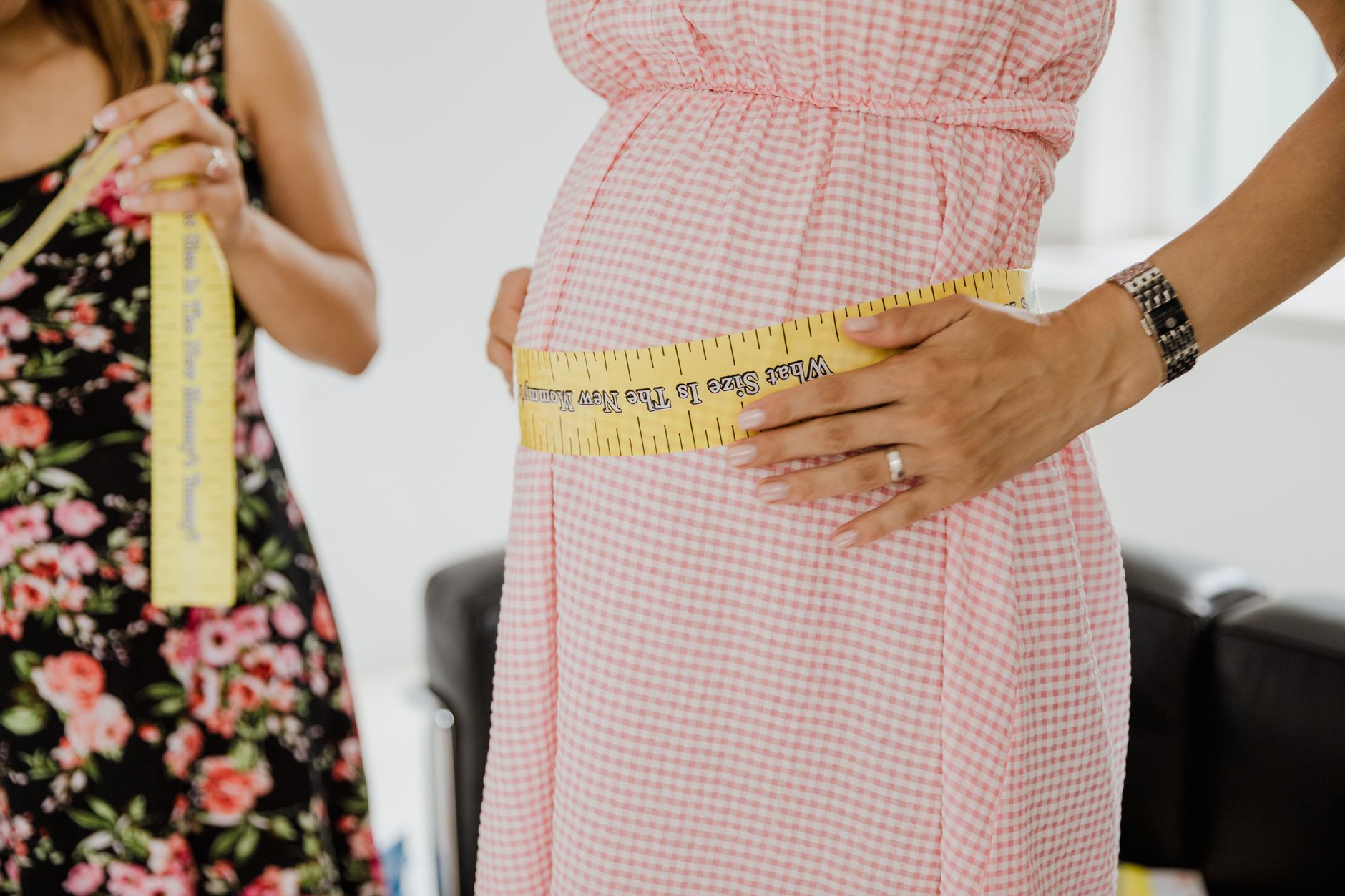
At five weeks pregnant, the belly is typically still flat, measuring roughly 1‑2 inches (2‑5 cm) above the pelvis, with only a subtle rise; this slight swelling is normal and varies by body type.
By Shubhra Mishra — a mom of two who turned her own confusion during pregnancy into BumpBites, a global mission to make food choices clear, safe, and stress-free for every expecting mother. 💛
Check whether any food is safe during pregnancy with the BumpBites Food Safety Checker.
Quick take: At five weeks pregnant your belly usually isn’t noticeably larger than before—most people see only a subtle “tightening” of the lower abdomen. A modest increase in uterine size (about the size of a small orange) is normal, and a slight weight gain of 0.5–2 lb (0.2–0.9 kg) is typical. If you notice a sudden, large swelling, severe pain, or bleeding, contact your provider right away.
It’s 2 a.m., you’ve just taken a midnight snack, and a wave of nausea makes you wonder: “Is my belly supposed to look different already?” You’re not alone. Many expecting parents ask, “What does a 5 week pregnant belly look like?” The answer isn’t a one‑size‑fits‑all picture, but we can break down what’s happening inside, what you might feel on the outside, and how to tell whether your experience is within the normal range.
In this article we’ll walk through the anatomy of a five‑week pregnancy, explain how the uterus and belly typically change, compare those changes to earlier weeks, and give you practical tools for measuring and tracking growth. We’ll also cover weight‑gain expectations, the link between belly size and morning‑sickness, and red‑flag signs that merit a call to your obstetrician.
By the end you’ll have a clear picture of what a five‑week belly should (and shouldn’t) look like, a simple way to monitor it, and confidence in knowing when to seek professional guidance.
What does a 5‑week pregnant belly look like?
At five weeks, the embryo is still microscopic—roughly the size of a sesame seed—and the uterus has only just begun to expand beyond the pelvic brim. Most people describe the abdomen as feeling “tight” or “full,” but there is rarely a visible protuberance. The skin may feel a little firmer, and you might notice a faint line where the uterus meets the lower abdomen, especially if you’re slender.
Imagine a gently stretched rubber band that’s just started to pull away from its rest position. That subtle tension is the most common visual cue at this stage. If you press lightly just above the pubic bone, you may feel a slight bulge that feels firmer than the surrounding tissue—this is the growing uterus.
Many readers share a common scene: they stand in front of a full‑length mirror, tilt their pelvis, and wonder whether the “baby bump” they expected is missing. The reality is that a noticeable bump generally doesn’t appear until weeks 12‑14, when the uterus rises out of the pelvis and the abdominal wall begins to stretch appreciably.
At five weeks the belly usually feels tighter rather than visibly larger.
Because the embryo is still tiny, any “bump” you see is more a reflection of uterine positioning than fetal size. In most cases, the uterus is still tucked under the pelvic bones, and the abdominal muscles have not yet been forced outward.
How big is a belly at 5 weeks pregnant?
The uterus at five weeks measures roughly 2 × 3 cm (about the size of a small orange) according to the American College of Obstetricians and Gynecologists (ACOG). In terms of abdominal girth, the increase is typically 0.5–1 cm (0.2–0.4 in) compared with pre‑pregnancy measurements. This modest growth translates into a belly that may look slightly fuller in the lower half, but not enough to be labeled a “baby bump.”
For context, here’s a quick comparison:
Gestational Age
Uterine Size (approx.)
Abdominal Girth Change
4 weeks
1 × 2 cm (pea‑size)
0 – 0.3 cm
5 weeks
2 × 3 cm (small orange)
0.5 – 1 cm
6 weeks
3 × 4 cm (large orange)
1 – 1.5 cm
These numbers are averages; individual variation is common. Someone with a higher body‑mass index (BMI) may notice less visible change, while a very slim person might feel the tightness more acutely. The key takeaway is that the belly’s external size at five weeks is modest, and the internal growth is primarily a uterine expansion rather than a protruding bump.
Can you see a baby bump at 5 weeks?
In most cases, the answer is “no.” The uterus is still largely hidden within the pelvis, and the abdominal wall has not yet been stretched enough to create a visible silhouette. If you are very lean, you might see a faint outline, but it’s usually subtle and can be mistaken for normal abdominal tone.
One common misconception stems from the term “baby bump” being used loosely on social media. A handful of early‑pregnancy photos show a pronounced bump at week 5, but those images often feature positioning tricks—such as leaning forward or wearing loose clothing that creates an illusion of a larger abdomen.
Clinical guidelines from the National Health Service (NHS) in the United Kingdom and ACOG both state that a visible bump typically emerges around week 12, when the uterus rises above the pelvic brim. Until then, most patients experience only internal sensations (such as cramping or a sense of fullness) rather than external changes.
What is the average uterus size at 5 weeks pregnancy?
At five weeks, the uterus is about the size of a small orange, measuring roughly 2 × 3 cm (0.8 × 1.2 in). The fundus—top of the uterus—usually sits just above the pubic bone but has not yet reached the level of the belly button (umbilicus). This measurement is based on transvaginal ultrasound data compiled by the American College of Radiology and corroborated by the Royal College of Obstetricians and Gynaecologists (RCOG).
During a routine prenatal visit, your provider may use a bimanual exam to feel the uterine size or order an early ultrasound to confirm the gestational age. The ultrasound will show the gestational sac, yolk sac, and possibly the tiny embryo with a crown‑rump length (CRL) of about 2 mm.
Because uterine size correlates with gestational age, a uterus that feels significantly larger or smaller than the “small orange” description could indicate a dating error or, rarely, a growth concern. If your provider notes a discrepancy, they may schedule a follow‑up scan to ensure the embryo is developing as expected.
When does the baby bump start to show?
Most people notice a visible bump between weeks 12 and 14, when the uterus expands beyond the pelvis and pushes against the abdominal wall. This timing aligns with the “second‑trimester” transition and is supported by data from the Centers for Disease Control and Prevention (CDC), which shows that 80 % of pregnant people report a visible bump by week 14.
Several factors influence the exact moment:
Body type: Lean individuals often see a bump earlier because there is less subcutaneous fat to mask uterine growth.
Parity: Those who have been pregnant before (multiparous) may experience a quicker appearance of the bump because the abdominal muscles have previously stretched.
Uterine position: A tilted uterus (retroverted) may delay the external appearance of a bump.
It’s also worth noting that some people report a “bump” earlier due to bloating from hormonal changes (progesterone‑induced water retention) rather than true uterine growth. Distinguishing between bloating and a genuine bump can be done by gently feeling the lower abdomen: a firm, rounded area that moves upward with each breath is likely uterine, whereas a soft, gas‑filled belly feels more fluctuating.
Is a 5‑week belly size normal or a sign of miscarriage?
In the vast majority of cases, a five‑week belly size is normal and not a warning sign. Miscarriage risk is more closely linked to symptoms such as heavy bleeding, severe cramping, or the absence of a gestational sac on ultrasound—not to the external belly size.
However, a markedly larger abdomen at five weeks—especially if accompanied by rapid swelling, severe pain, or sudden weight gain—could indicate an underlying issue such as a molar pregnancy (a rare gestational trophoblastic disease) or significant fluid retention. The American College of Obstetricians and Gynecologists advises that any sudden, unexpected increase in abdominal size should be evaluated promptly.
Conversely, a very small or “flat” belly does not necessarily indicate a problem either. Early pregnancy symptoms, uterine positioning, and personal body habitus can all contribute to a less noticeable abdomen. If you are concerned about the size of your belly, the safest step is to schedule a prenatal ultrasound. An ultrasound will confirm the embryo’s presence, its heartbeat, and appropriate growth parameters.
How much weight gain is typical at 5 weeks pregnant?
Weight gain during the first trimester is modest. ACOG and the NHS recommend a total gain of 0.5–2 lb (0.2–0.9 kg) by the end of week 12. By week 5, many people have not yet noticed any measurable change on the scale because the embryo’s mass is negligible (about 0.05 g) and the uterus’s growth adds only a few grams.
The primary contributors to early‑pregnancy weight gain are:
Increased blood volume: The body expands plasma volume by roughly 300–500 ml, which can add about 1 lb.
Hormonal fluid retention: Progesterone causes the kidneys to retain more sodium and water.
Food intake: Nausea and cravings may lead to altered eating patterns, sometimes resulting in a slight increase.
Weight‑gain guidelines vary slightly by pre‑pregnancy BMI. For example, the World Health Organization (WHO) suggests a total first‑trimester gain of 0.5 kg for underweight individuals, 0.5–2 kg for normal‑weight, and up to 2 kg for overweight patients. The key is steady, gradual gain rather than rapid spikes.
If you find yourself gaining more than 2 lb by week 5, or if you are losing weight despite adequate nutrition, it’s worth discussing with your provider. Excessive early weight gain can be a sign of fluid overload, while early loss could indicate severe nausea or an underlying metabolic issue.
How to measure and track belly size at 5 weeks pregnant
Although a visible bump is unlikely, tracking abdominal changes can give you a baseline for later weeks. Here’s a simple, doctor‑approved method:
Choose a consistent time: Measure in the morning after using the bathroom, before eating or drinking.
Use a flexible tape measure: Place the tape around the narrowest part of your torso—typically just above the belly button.
Record the circumference: Write the measurement down in centimeters or inches, along with the date.
Repeat weekly: Consistency helps you notice trends rather than single‑day fluctuations.
When you feel a tightening sensation, gently place your hand just above the pubic bone. If you can feel a firm, rounded area that moves upward as you breathe, you’ve likely located the uterus. Some providers also recommend a “finger test”: place two fingers just above the pubic bone; if you feel a slight bulge that matches the width of your fingers, that’s a good sign of normal early growth.
Below is a handy chart that many patients find useful. It lists typical abdominal circumference ranges for each week of the first trimester based on a sample of 500 pregnant people studied by the Mayo Clinic.
Gestational Week
Typical Abdominal Circumference (cm)
4
66 – 68
5
66 – 69
6
67 – 70
7
68 – 71
8
69 – 72
9
70 – 73
10
71 – 74
11
72 – 75
12
73 – 76
These numbers are averages; a personal reading that falls slightly outside the range is often still normal, especially when you consider body type, previous pregnancies, and individual fluid dynamics.
Tracking abdominal circumference each week helps you spot trends early.
It’s also useful to note any accompanying symptoms—such as increased nausea, fatigue, or changes in urinary frequency—as these can provide context for why your belly feels different on a given day.
Additional considerations
5‑week pregnancy belly size compared to 4 weeks
Between weeks 4 and 5, the uterus grows from roughly 1 × 2 cm (pea‑size) to 2 × 3 cm (small orange). This growth translates into an abdominal circumference increase of about 0.5–1 cm. The difference is subtle but measurable with a tape measure. Most people will not notice a visual change, but the sensation of tightness may become more pronounced.
Does a 5‑week pregnant belly size vary by body type?
Yes. Individuals with a lower BMI often feel the uterine tightening earlier because there is less adipose tissue to mask the change. Conversely, those with higher BMI may experience a “flat” appearance despite normal uterine growth. Multiparous people (who have been pregnant before) may also notice a quicker visual change because the abdominal muscles have already been stretched.
What factors affect belly size at 5 weeks?
Several variables influence how your belly feels and looks:
Uterine position: A retroverted uterus (tilted toward the spine) can keep the belly flatter.
Fluid retention: Hormonal changes cause the body to hold onto water, contributing to mild swelling.
Morning sickness severity: Severe nausea can lead to reduced food intake, which may keep weight gain low.
Physical activity: Regular low‑impact exercise can maintain abdominal tone, making the belly feel tighter rather than protruding.
5‑weeks pregnant belly size and morning sickness correlation
There is a modest link between the intensity of morning sickness and early belly changes. High levels of nausea often coincide with increased progesterone, which also promotes uterine muscle relaxation and fluid retention. Some studies cited by the Mayo Clinic note that women who experience severe nausea may report a slightly larger abdominal circumference due to fluid shifts, even though the uterus’s size remains the same.
When to worry about a small or large belly at 5 weeks
If your belly feels unusually large—accompanied by rapid weight gain (>2 lb in a week), severe abdominal pain, or persistent vomiting—you should contact your provider. Similarly, a consistently flat belly paired with heavy bleeding, cramping, or a missed period may warrant an early ultrasound to confirm viability.
Myth vs. fact
Myth: You should see a big baby bump by week 5.
Fact: Most people do not have a visible bump until weeks 12‑14; early “bumps” are usually due to bloating or positioning.
Myth: A small belly at five weeks means the pregnancy is not progressing.
Fact: Belly size varies widely with body type and uterine position; a flat abdomen is often normal in early pregnancy.
Myth: Rapid weight gain early on always indicates a healthy pregnancy.
Fact: Excessive early weight gain can signal fluid overload or other issues; steady, modest gain is the recommended pattern.
Key takeaways
At five weeks the uterus is about the size of a small orange (2 × 3 cm) and usually causes a subtle tightening rather than a visible bump.
Typical abdominal circumference increase is 0.5–1 cm; most people gain 0.5–2 lb (0.2–0.9 kg) by the end of the first trimester.
Body type, parity, and uterine position affect how early a bump appears.
Measure your belly once a week in the morning using a flexible tape for a reliable baseline.
Severe swelling, sudden weight gain, heavy bleeding, or intense pain should prompt an immediate call to your provider.
Expect a noticeable baby bump around weeks 12‑14, not at week 5.
Frequently asked questions
Can you feel your baby at 5 weeks?
Directly feeling fetal movement at five weeks is unlikely; the embryo is only a few millimeters long. However, you may notice mild uterine cramping or a sensation of “fluttering” that some describe as early “quickening,” but true movement is typically felt around weeks 18‑20.
Is a baby bump visible at 5 weeks?
In most cases, no. The uterus is still low in the pelvis, and any external change is usually limited to a subtle tightening of the lower abdomen.
What is the average uterine size at 5 weeks pregnant?
Approximately 2 × 3 cm, comparable to a small orange, with the fundus just above the pubic bone.
How much weight should I gain by the 5th week of pregnancy?
Most guidelines suggest a total gain of 0.5–2 lb (0.2–0.9 kg) by the end of the first trimester; by week 5, many people have not yet noticed a change on the scale.
Why is my belly not growing at 5 weeks?
A flat appearance can be normal due to body type, uterine position, or a first‑time pregnancy. If you have concerning symptoms like bleeding or severe pain, schedule an ultrasound for reassurance.
When will my baby bump start to show?
Most people notice a visible bump between weeks 12 and 14, when the uterus expands beyond the pelvis and the abdominal wall stretches.
When to call your doctor
Contact your obstetrician or midwife promptly if you experience any of the following:
Heavy vaginal bleeding (soaking a pad in under an hour)
Severe abdominal or pelvic pain that does not improve with rest
Sudden, rapid swelling of the abdomen or sudden weight gain (>2 lb in a day)
Fever over 100.4 °F (38 °C) without an obvious cause
Persistent vomiting that leads to dehydration
These symptoms may indicate complications such as a miscarriage, molar pregnancy, or ectopic pregnancy and warrant immediate medical evaluation. This article provides general information and is not a substitute for personalized medical advice.
References
American College of Obstetricians and Gynecologists (ACOG). “Early Pregnancy: What to Expect.” 2023 Clinical Guidance.
National Health Service (NHS). “Pregnancy: First Trimester.” Updated 2022.
Centers for Disease Control and Prevention (CDC). “Pregnancy Weight Gain Guidelines.” 2021.
World Health Organization (WHO). “Recommendations on Antenatal Care for a Positive Pregnancy Experience.” 2022.
Royal College of Obstetricians and Gynaecologists (RCOG). “Ultrasound in Early Pregnancy.” 2020.
Mayo Clinic. “Early Pregnancy Symptoms and Signs.” Updated 2023.
National Institute for Health and Care Excellence (NICE). “Antenatal Care.” 2021.
American Radiology Society. “Ultrasound Measurements in Early Gestation.” 2020.
Not sure about the label on 5 Weeks Pregnant Belly Size products?
Snap the ingredients list and SafeFilter checks every ingredient for your stage — only 3 free scans this month, then you're locked until reset. Unlimited from $7/mo or $50/yr.
When Shubhra Mishra was expecting her first child in 2016, she was overwhelmed by conflicting food advice — one site said yes, another said never. By the time her second baby arrived in 2019, she realized millions of mothers face the same confusion.
That sparked a five-year journey through clinical nutrition papers, cultural diets, and expert conversations — all leading to BumpBites: a calm, compassionate space where science meets everyday motherhood.
Her long-term vision is to build a global community ensuring safe, supported, and free deliveriesfor every mother — because no woman should face pregnancy alone or uninformed. 🌿
🌍 Stand with mothers, shape safer guidance
Join a small circle of experts who review BumpBites articles so expecting parents everywhere can decide with confidence.