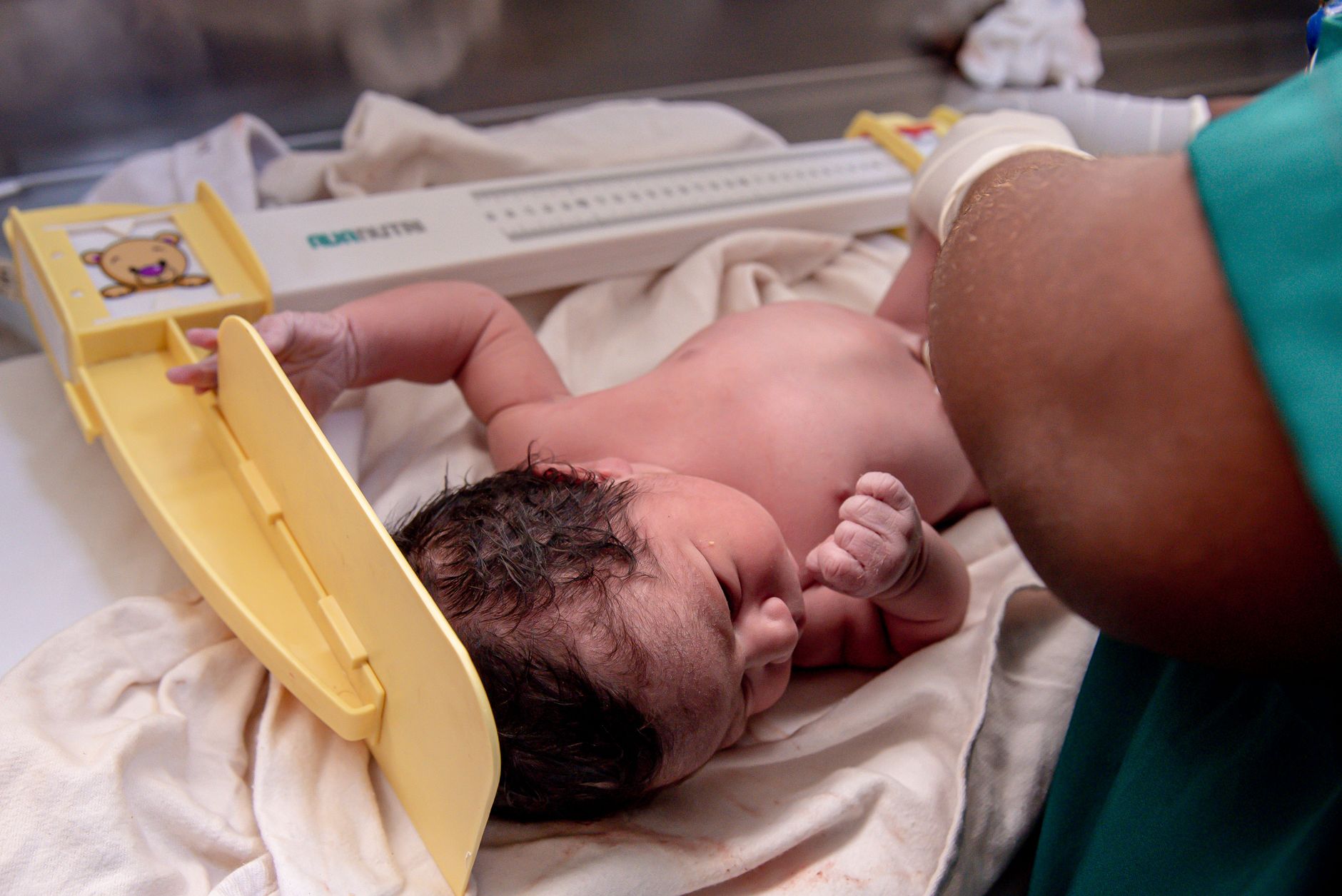
At 42 weeks pregnant, your baby is about the size of a pumpkin, averaging 20 inches long and 7.5–9 pounds. Learn about growth, risks, and what to expect now.
By Shubhra Mishra — a mom of two who turned her own confusion during pregnancy into BumpBites, a global mission to make food choices clear, safe, and stress-free for every expecting mother. 💛
Check whether any food is safe during pregnancy with the BumpBites Food Safety Checker.
Quick take: At 42 weeks pregnant, your baby is about the size of a small pumpkin—typically 20 to 22 inches (51 to 56 cm) long and weighing 7.5 to 9.5 pounds (3.4 to 4.3 kg). While some babies are larger at this stage, most are still within a healthy range. However, post-term pregnancies (42 weeks or beyond) do carry risks, so your provider will monitor your baby’s size and well-being closely with ultrasounds and non-stress tests. If your baby is measuring large (macrosomia), your team may recommend induction or a planned cesarean to reduce complications.
At 42 weeks, your baby is roughly the size of a small pumpkin—ready to meet the world.
You’ve been counting the days, the kicks, the contractions that fizzle out. Now, at 42 weeks pregnant, you’re officially in the "post-term" zone, and every little twinge makes you wonder: Is my baby okay? Are they too big? What happens now?
First, take a deep breath. Reaching 42 weeks isn’t uncommon—about 5–10% of pregnancies go this long. But it does mean your provider will be keeping a closer eye on your baby’s size and well-being. That’s because, while many 42-week babies are perfectly healthy, others may grow larger than average, which can complicate delivery. The good news? Modern medicine has clear ways to monitor and manage this stage safely.
In this guide, we’ll walk you through everything you need to know about your baby’s size at 42 weeks—how big they are, how that compares to full-term averages, the risks of a larger baby, and what your medical team will be watching for. We’ll also cover what you can do to support your baby (and yourself) in these final days, and when it’s time to make a plan for delivery. No sugarcoating, no alarmism—just the facts, so you can feel informed and empowered.
What’s the Average Baby Size at 42 Weeks Pregnant?
At 42 weeks, your baby is fully cooked—literally. They’ve had extra time to grow, and while every baby is different, there are some general size ranges to expect. Here’s what the averages look like:
Length: About 20 to 22 inches (51 to 56 centimeters). That’s roughly the length of a standard ruler or a small baguette.
Weight: Around 7.5 to 9.5 pounds (3.4 to 4.3 kilograms). For reference, that’s about the weight of a gallon of milk or a large bag of flour.
Head circumference: Approximately 13.5 to 14.5 inches (34 to 37 cm). That’s roughly the size of a softball.
But here’s the thing: these numbers are averages. Some babies will be smaller, some larger, and most will still fall within a healthy range. What matters more than the exact measurements is how your baby is growing over time and how they’re tolerating the extra days in the womb. Your provider will track this with ultrasounds and other tests (more on that later).
One mom, Sarah, shared her experience: "At my 42-week ultrasound, my baby measured 9 pounds, 2 ounces. I panicked—would I even be able to deliver vaginally? My doctor reassured me that as long as the baby wasn’t showing signs of distress, we’d try for a vaginal birth. Turns out, my son was born at 9 pounds, 4 ounces, and while it was a long labor, it went smoothly. The size was less scary than I thought."
Sarah’s story isn’t uncommon. Many women worry about delivering a "big baby," but the reality is that most babies at 42 weeks are still within a manageable size range. That said, there are some signs that your baby might be larger than average—and those are worth knowing about.
Average Baby Length in Centimeters at 42 Weeks Pregnant
If you’re more comfortable thinking in centimeters (or your provider uses metric measurements), here’s the breakdown for baby length at 42 weeks:
Average length: 51 to 56 cm (about 20 to 22 inches).
Range: Some babies may be as short as 49 cm or as long as 58 cm and still be considered healthy.
To put that into perspective, 51 cm is about the length of a standard loaf of bread, while 56 cm is closer to the height of a large wine bottle. Your baby’s length at this stage is mostly determined by genetics—taller parents tend to have longer babies—but nutrition and overall health during pregnancy can also play a role.
It’s worth noting that length isn’t usually the biggest concern for providers at 42 weeks. Weight and head circumference tend to get more attention because they can impact delivery. But if your baby is measuring on the longer side, your provider might keep an eye on how they’re positioned in the womb. A longer baby in a breech (feet-first) position, for example, could complicate a vaginal delivery.
If you’re curious about how your baby’s length compares to earlier weeks, here’s a quick reference:
Week of Pregnancy
Average Baby Length (cm)
37 weeks (early term)
48 cm
40 weeks (full term)
50–51 cm
42 weeks (post-term)
51–56 cm
As you can see, the jump from 40 to 42 weeks isn’t huge—usually just a centimeter or two. But those extra days can make a difference in other ways, like weight and head size.
Average Baby Weight in Ounces at 42 Weeks Gestation
Weight is often the measurement that gets the most attention at 42 weeks—and for good reason. A baby’s weight can influence everything from delivery method to how they regulate their temperature after birth. Here’s what you need to know about average weights at this stage:
Average weight: 7.5 to 9.5 pounds (3,400 to 4,300 grams, or 120 to 152 ounces).
Range: Some babies may weigh as little as 6.5 pounds (2,950 grams) or as much as 10.5 pounds (4,760 grams) and still be considered healthy.
To give you a better sense of what these numbers mean, here’s how they compare to everyday objects:
7.5 pounds = a large bag of sugar or a small bowling ball.
9 pounds = a gallon of paint or a medium-sized turkey.
10 pounds = a large bag of potatoes or a small watermelon.
If your baby is measuring on the higher end of this range (or above), your provider might use the term macrosomia (pronounced mak-roh-SOH-mee-uh). This simply means "large body" and is typically defined as a baby weighing more than 8 pounds, 13 ounces (4,000 grams) at birth. About 9% of babies born in the U.S. meet this definition, and the number is slightly higher for post-term pregnancies.
One important thing to remember: ultrasound weight estimates aren’t always precise. Studies show that ultrasounds can be off by as much as 10–15% in either direction. So if your baby is estimated to be 9 pounds at 42 weeks, they might actually weigh 8 or 10 pounds at birth. That’s why providers don’t rely solely on weight estimates when making decisions about delivery.
Here’s a weight comparison table to show how your baby’s size at 42 weeks stacks up against full-term averages:
Week of Pregnancy
Average Baby Weight (pounds/ounces)
Average Baby Weight (grams)
37 weeks
6 lbs 5 oz
2,870 g
40 weeks
7 lbs 8 oz
3,400 g
42 weeks
8 lbs 8 oz
3,860 g
As you can see, the average baby gains about a pound between 40 and 42 weeks. That might not sound like much, but when you’re pushing a baby out, every ounce counts!
Ultrasound estimates can be off by a pound or more—your baby's true weight will be revealed at birth.
Signs That a 42-Week Baby Is Larger Than Average
So, how can you tell if your baby might be larger than average at 42 weeks? While you can’t know for sure without an ultrasound or birth, there are some signs and clues your provider will look for:
1. Fundal Height Measurements
Your provider has likely been measuring your fundal height (the distance from your pubic bone to the top of your uterus) at every prenatal visit. At 42 weeks, if your fundal height is measuring larger than expected (usually more than 2 centimeters above the number of weeks pregnant you are), it could be a sign of a larger baby. However, fundal height can also be affected by factors like your body shape, the amount of amniotic fluid, or even how your baby is positioned.
2. Ultrasound Estimates
If your fundal height is measuring large, your provider will likely order an ultrasound to get a more accurate estimate of your baby’s size. During the ultrasound, the technician will measure your baby’s head, abdomen, and thigh bone to calculate an estimated weight. If the estimate is above the 90th percentile for gestational age, your baby may be considered large for gestational age (LGA).
3. Your Own Body Clues
Some women feel like they’re carrying a larger baby. You might notice:
Your belly feels tighter or more stretched than expected.
Your baby’s movements feel more "crowded" or less frequent (though you should still feel regular movement—more on that later).
You’re experiencing more discomfort, like back pain or pelvic pressure, as your baby takes up more space.
That said, these feelings aren’t always accurate. Some women carry small babies and feel huge, while others carry larger babies and feel relatively comfortable. Your body’s cues are worth mentioning to your provider, but they’re not a substitute for medical measurements.
4. Family History
Genetics play a big role in baby size. If you or your partner were large babies, or if you have a history of delivering larger babies, your provider might suspect your 42-week baby could be on the bigger side. Similarly, if you have gestational diabetes (which can cause babies to grow larger), your provider will be extra vigilant about monitoring your baby’s size.
5. Amniotic Fluid Levels
At 42 weeks, your provider will also check your amniotic fluid levels. Too much fluid (polyhydramnios) can sometimes be associated with larger babies, though it can also occur for other reasons. Low fluid (oligohydramnios) is more common at this stage and can be a sign that your baby is ready for delivery.
One mom, Priya, shared her experience with a larger-than-average baby at 42 weeks: "I was induced at 42 weeks because my baby was measuring big—9 pounds, 12 ounces on the ultrasound. I was terrified of a C-section, but my doctor said we could try for a vaginal birth as long as the baby wasn’t showing signs of distress. My son ended up being 10 pounds, 2 ounces at birth, and while it was a tough delivery, I was able to push him out. The pediatrician said he was perfectly healthy—just a big guy!"
Priya’s story highlights an important point: a larger baby doesn’t always mean a C-section. Many women deliver larger babies vaginally without complications. But it does mean your provider will be extra cautious and may recommend induction or other interventions to reduce risks.
How Does a 42-Week Baby Size Compare to Full-Term Averages?
If you’re at 42 weeks, you’ve probably spent the last few weeks comparing your baby’s size to full-term averages. Here’s how the numbers stack up:
Measurement
40 Weeks (Full Term)
42 Weeks (Post-Term)
Difference
Length
50–51 cm (20 in)
51–56 cm (20–22 in)
+1–5 cm (+0.5–2 in)
Weight
3,400 g (7 lbs 8 oz)
3,860 g (8 lbs 8 oz)
+460 g (+1 lb)
Head Circumference
34 cm (13.4 in)
35–37 cm (13.8–14.6 in)
+1–3 cm (+0.4–1.2 in)
As you can see, the differences aren’t enormous, but they can feel significant when you’re the one carrying the baby. Here’s what those extra centimeters and grams might mean for you and your baby:
Length
The extra length at 42 weeks is usually just a centimeter or two. For most babies, this won’t make a big difference in delivery, but it could mean your baby has less room to move around in the womb. You might notice fewer big kicks or rolls, though you should still feel regular movement. If you’re concerned about decreased movement, contact your provider right away.
Weight
The extra pound (or more) is where things get interesting. A heavier baby can mean:
A longer labor, especially if you’re a first-time mom.
A higher chance of needing interventions like forceps, vacuum extraction, or a C-section.
A slightly increased risk of shoulder dystocia (when the baby’s shoulders get stuck during delivery).
A greater likelihood of low blood sugar (hypoglycemia) after birth, especially if you have diabetes.
That said, many women deliver 9- or 10-pound babies vaginally without any issues. Your provider will weigh the risks and benefits based on your specific situation.
Head Circumference
A larger head circumference can make delivery more challenging, especially if your baby is in a position where their head isn’t well-aligned with your pelvis. Your provider will check your baby’s position with an ultrasound or manual exam to see how they’re "presenting" (which part of their body is leading the way out). If your baby’s head is measuring large, your provider might recommend induction to reduce the risk of complications.
Here’s another way to think about the size difference: at 40 weeks, your baby is roughly the size of a small watermelon. At 42 weeks, they’re closer to a large watermelon or a small pumpkin. It’s not a huge difference, but it’s enough that your provider will want to monitor things closely.
The size difference between a 40-week and 42-week baby is like going from a small watermelon to a large pumpkin.
Risks of a Post-Term Pregnancy When the Baby Is Large at 42 Weeks
Reaching 42 weeks pregnant isn’t inherently dangerous, but the combination of a post-term pregnancy and a larger-than-average baby does come with some increased risks. Here’s what your provider will be watching for:
1. Shoulder Dystocia
Shoulder dystocia is a rare but serious complication where the baby’s head is delivered, but their shoulders get stuck behind your pubic bone. This can happen with any baby, but it’s more common with larger babies (especially those over 9 pounds, 15 ounces or 4,500 grams). Shoulder dystocia can lead to:
Injury to the baby’s nerves (like brachial plexus injuries, which can cause temporary or permanent arm weakness).
Fractures to the baby’s collarbone or arm.
Low oxygen levels for the baby if delivery is delayed.
Heavy bleeding or tearing for the mother.
If your provider suspects your baby is large, they may recommend delivery in a hospital setting (rather than a birth center) where emergency interventions are readily available. They’ll also talk to you about techniques to reduce the risk, like changing positions during labor or having a provider who’s experienced in managing shoulder dystocia.
2. Birth Injuries
Larger babies are at higher risk for birth injuries, even if shoulder dystocia doesn’t occur. These can include:
Cephalohematoma: A collection of blood between the baby’s skull and scalp, usually caused by pressure during delivery. It’s usually harmless and resolves on its own.
Fractures: The baby’s collarbone or arm may break during delivery, especially if forceps or vacuum extraction are used. These usually heal quickly.
Nerve injuries: Pressure on the baby’s nerves during delivery can cause temporary weakness or paralysis, most commonly in the arm (Erb’s palsy). Most babies recover fully, but some may need physical therapy.
3. Low Blood Sugar (Hypoglycemia)
Babies who are large for gestational age (LGA) are at higher risk for low blood sugar after birth. This is especially true if you have diabetes (gestational or pre-existing), because your baby’s pancreas has been producing extra insulin to handle the high sugar levels in your blood. After birth, when the sugar supply is cut off, their blood sugar can drop too low. Symptoms of hypoglycemia in newborns include:
Jitteriness or tremors.
Lethargy or difficulty waking.
Poor feeding.
Pale or bluish skin.
Seizures (in severe cases).
If your baby is at risk for hypoglycemia, the hospital staff will check their blood sugar levels shortly after birth and may recommend early or frequent feedings. In some cases, your baby might need a sugar solution through an IV.
4. Meconium Aspiration
At 42 weeks, your baby is more likely to pass their first stool (meconium) while still in the womb. If they inhale the meconium-stained amniotic fluid, it can cause breathing problems after birth (meconium aspiration syndrome). This is more common in post-term pregnancies because the placenta becomes less efficient over time, which can stress the baby. Symptoms include:
Rapid or labored breathing.
A bluish tint to the skin (cyanosis).
A barrel-shaped chest (from trapped air).
A low Apgar score (a quick test to assess a newborn’s health).
If your provider suspects meconium aspiration, they may recommend suctioning your baby’s airway immediately after birth or providing oxygen or other respiratory support.
5. Stillbirth
The risk of stillbirth increases slightly after 40 weeks, and the risk is higher for larger babies. While the overall risk is still low (about 1 in 1,000 at 42 weeks, compared to 1 in 3,000 at 37 weeks), it’s one of the reasons providers recommend close monitoring at this stage. If your baby shows signs of distress (like an abnormal heart rate), your provider may recommend induction or a C-section to deliver your baby safely.
6. Maternal Complications
A larger baby can also increase your risk of complications during delivery, including:
Perineal tears: Larger babies can cause more stretching of the vaginal and perineal tissues, leading to tears. Severe tears (third- or fourth-degree) can extend into the rectum and may require surgical repair.
Postpartum hemorrhage: The uterus may have a harder time contracting after delivering a larger baby, which can lead to heavy bleeding.
Infection: Longer labors or interventions like forceps or vacuum extraction can increase the risk of infection for both you and your baby.
C-section: If your baby is very large or shows signs of distress, your provider may recommend a C-section to avoid complications.
It’s important to remember that these risks are potential risks—not guarantees. Many women deliver large, post-term babies without any complications. The key is working closely with your provider to monitor your baby’s well-being and make a plan that’s right for you.
One mom, Jamie, shared her experience with a post-term, large baby: "I was induced at 42 weeks because my baby was measuring 10 pounds on the ultrasound. I was terrified of a C-section, but my doctor said we could try for a vaginal birth. My son ended up being 9 pounds, 14 ounces—smaller than expected—and my labor was long but uncomplicated. The hardest part was the recovery, but I was so relieved to have him safely in my arms. Looking back, I wish I’d trusted my provider’s advice sooner instead of worrying so much."
Jamie’s story is a good reminder that while the risks are real, they’re also manageable with the right care. Your provider’s job is to help you weigh those risks and make the best decision for you and your baby.
Ultrasound Measurements That Indicate a Baby Is Ready for Delivery at 42 Weeks
At 42 weeks, your provider will likely recommend an ultrasound to check on your baby’s size, position, and well-being. Here are the key measurements they’ll look at to determine if your baby is ready for delivery:
1. Estimated Fetal Weight (EFW)
This is the ultrasound’s best guess at how much your baby weighs. It’s calculated using measurements of your baby’s head, abdomen, and thigh bone. While EFW isn’t always precise (it can be off by up to 15%), it gives your provider a general idea of whether your baby is average-sized, small, or large for gestational age.
If your baby’s EFW is above the 90th percentile, they may be considered large for gestational age (LGA).
If the EFW is below the 10th percentile, your baby may be small for gestational age (SGA), which can also be a concern at 42 weeks.
Your provider will use this information to decide whether to recommend induction or continued monitoring.
2. Amniotic Fluid Index (AFI)
The amniotic fluid index measures the amount of amniotic fluid in your uterus. At 42 weeks, low amniotic fluid (oligohydramnios) is common because the placenta becomes less efficient over time. An AFI of less than 5 cm is considered low and may be a sign that your baby is ready for delivery. Here’s what the numbers mean:
Normal AFI: 5–25 cm.
Low AFI (oligohydramnios): Less than 5 cm.
High AFI (polyhydramnios): More than 25 cm.
If your AFI is low, your provider may recommend induction to reduce the risk of complications like cord compression or meconium aspiration.
3. Biophysical Profile (BPP)
A biophysical profile is a more detailed ultrasound that assesses your baby’s well-being. It includes five components:
Fetal breathing movements: Your baby should show at least one episode of breathing movements lasting 30 seconds.
Fetal movements: Your baby should make at least three body or limb movements.
Fetal tone: Your baby should extend and then flex at least one limb or open and close their hand.
Amniotic fluid volume: There should be at least one pocket of amniotic fluid measuring 2 cm or more.
Non-stress test (NST): Your baby’s heart rate should accelerate with movement (this is usually done separately with a fetal monitor).
Each component is scored as 0 (absent) or 2 (present), for a total possible score of 10. A score of 8–10 is normal, while a score of 6 or below may indicate that your baby is stressed and needs to be delivered soon.
4. Doppler Ultrasound
A Doppler ultrasound measures blood flow through your baby’s umbilical cord and brain. This can help your provider assess whether your baby is getting enough oxygen and nutrients. If the blood flow is abnormal, it may be a sign that your baby is stressed and needs to be delivered.
5. Head Circumference and Abdominal Circumference
Your provider will also measure your baby’s head and abdominal circumference to see how they’re growing. If your baby’s head is measuring large, your provider may recommend induction to reduce the risk of complications during delivery. If your baby’s abdomen is measuring large, it could be a sign of macrosomia (a very large baby), which may also prompt a discussion about induction or C-section.
Here’s a quick reference table for what these measurements might mean at 42 weeks:
Measurement
Normal Range at 42 Weeks
What It Might Mean If Outside Range
Estimated Fetal Weight (EFW)
3,400–4,300 g (7.5–9.5 lbs)
Above 90th percentile: LGA, possible macrosomia. Below 10th percentile: SGA, possible growth restriction.
Amniotic Fluid Index (AFI)
5–25 cm
Below 5 cm: oligohydramnios, possible induction. Above 25 cm: polyhydramnios, possible further testing.
Biophysical Profile (BPP)
8–10
6 or below: possible fetal distress, may need delivery.
Head Circumference
35–37 cm (13.8–14.6 in)
Above average: possible cephalopelvic disproportion (CPD), may need C-section.
Abdominal Circumference
34–38 cm (13.4–15 in)
Above average: possible macrosomia, may need induction or C-section.
If your ultrasound shows that your baby is measuring large or showing signs of stress, your provider will likely recommend induction. Induction at 42 weeks is a common and safe option for most women, and it can help reduce the risks associated with post-term pregnancies.
One mom, Lisa, shared her experience with induction at 42 weeks: "I was terrified of induction—I’d heard so many horror stories about long, painful labors. But my doctor explained that at 42 weeks, the risks of waiting were higher than the risks of inducing. I was induced with Pitocin, and my labor progressed quickly. My daughter was born at 8 pounds, 12 ounces, and she was perfectly healthy. I wish I’d trusted the process sooner."
Lisa’s story is a good reminder that induction isn’t something to fear. It’s a tool that can help keep you and your baby safe when you’ve reached the 42-week mark.
What Head Circumference Is Typical for a Baby at 42 Weeks?
Your baby’s head circumference is one of the most important measurements at 42 weeks because it can influence how easily they’ll fit through your birth canal. Here’s what you need to know:
Average head circumference at 42 weeks: 35 to 37 cm (13.8 to 14.6 inches).
Range: Some babies may measure as small as 33 cm or as large as 39 cm and still be considered healthy.
To put that into perspective, 35 cm is about the size of a grapefruit, while 37 cm is closer to the size of a small cantaloupe. Your baby’s head is the largest part of their body, so if it’s measuring large, your provider will want to make sure it can pass through your pelvis safely.
Here’s how head circumference is measured during an ultrasound:
The technician will measure the distance around your baby’s head at the widest part (just above the eyebrows and ears).
This measurement is called the biparietal diameter (BPD) and is used to estimate head circumference.
The ultrasound machine will then calculate the head circumference based on the BPD.
If your baby’s head circumference is measuring large (above the 90th percentile), your provider may recommend an induction to reduce the risk of complications during delivery. A large head can increase the risk of:
Cephalopelvic disproportion (CPD): This is when your baby’s head is too large to fit through your pelvis. CPD can lead to a prolonged labor or the need for a C-section.
Prolonged labor: A larger head can make it harder for your baby to descend through the birth canal, which can lengthen your labor.
Forceps or vacuum extraction: If your baby’s head is large, your provider may need to use forceps or a vacuum to help guide them out.
Perineal tears: A larger head can cause more stretching of your vaginal
Not sure about the label on 42 Weeks Pregnant Baby Size products?
Snap the ingredients list and SafeFilter checks every ingredient for your stage — only 3 free scans this month, then you're locked until reset. Unlimited from $7/mo or $50/yr.
When Shubhra Mishra was expecting her first child in 2016, she was overwhelmed by conflicting food advice — one site said yes, another said never. By the time her second baby arrived in 2019, she realized millions of mothers face the same confusion.
That sparked a five-year journey through clinical nutrition papers, cultural diets, and expert conversations — all leading to BumpBites: a calm, compassionate space where science meets everyday motherhood.
Her long-term vision is to build a global community ensuring safe, supported, and free deliveriesfor every mother — because no woman should face pregnancy alone or uninformed. 🌿
🌍 Stand with mothers, shape safer guidance
Join a small circle of experts who review BumpBites articles so expecting parents everywhere can decide with confidence.