At 40 weeks, a baby measures about 19‑21 inches long and weighs 6‑9 pounds. Learn the typical size range and what to expect in the final weeks of pregnancy.
By Shubhra Mishra — a mom of two who turned her own confusion during pregnancy into BumpBites, a global mission to make food choices clear, safe, and stress-free for every expecting mother. 💛
Check whether any food is safe during pregnancy with the BumpBites Food Safety Checker.
Quick take: At 40 weeks, a full‑term baby is typically about 20 inches (50 cm) long and weighs roughly 6½ pounds (≈3 000 g), which is a size many compare to a small watermelon. Most babies fall within a modest range, but genetics, maternal health, and conditions like diabetes can shift the size a bit higher or lower. Your provider will use ultrasounds, fundal‑height checks, and other measurements to gauge growth and plan a safe delivery.
It’s 2 a.m., you’re scrolling through a baby‑size chart while a tiny kick reminds you that your little one is almost ready to meet the world. You wonder, “How big is my baby really going to be?” That question is as common as the cravings that keep you up at night.
Below you’ll find the most up‑to‑date, evidence‑based answers to every size‑related question that pops up at 40 weeks. We’ll walk through inches, centimeters, ounces, head circumference, and even how a full‑term baby stacks up against a watermelon. You’ll also learn why some babies grow a little bigger, what signs point to a larger baby, and how your care team measures everything in the final week.
By the end of this guide you’ll have a clear picture of what “average” looks like, what factors can push the numbers up or down, and what you can do now to feel prepared for the big day.
How many inches is a baby at 40 weeks?
The average length of a baby at 40 weeks is about 20 inches, which translates to roughly 50 centimeters. This measurement runs from the top of the head to the heel, not just the head‑to‑butt distance. Most newborns fall within a 19‑ to 21‑inch range, so a few centimeters above or below the mean is perfectly normal.
Why the range? Fetal length is influenced by genetics (parents’ heights), the baby’s sex (boys tend to be a hair longer), and the intra‑uterine environment. Even with a perfectly healthy pregnancy, a baby can be a full inch longer or shorter than the average without any cause for concern.
In practical terms, a 20‑inch baby fits comfortably inside the womb, yet it still leaves a little room for the baby to wiggle before birth. That space is part of why many providers measure fundal height (the distance from the pubic bone to the top of the uterus) at each prenatal visit—an extra inch or two can be a helpful clue that growth is on track.
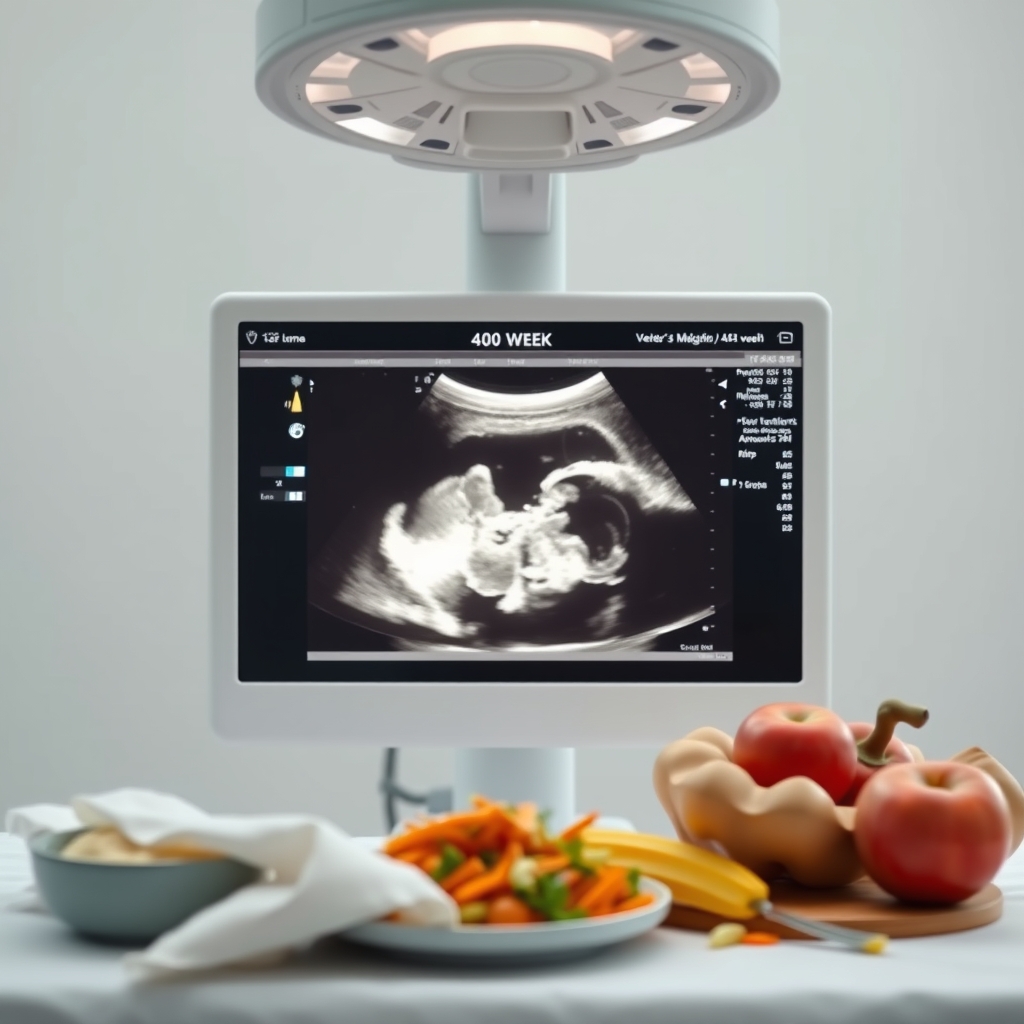
Typical ultrasound measurement of a 40‑week baby’s length.
What is the baby’s length in centimeters at 40 weeks?
When you convert the average 20 inches to the metric system, you get approximately 50 centimeters. The exact conversion is 1 inch = 2.54 cm, so 20 inches × 2.54 = 50.8 cm. Most clinicians round to the nearest whole number, reporting a length of 50 cm for a full‑term baby.
Because growth is not linear in the last few weeks, some babies may measure a centimeter or two longer (up to 53 cm) or shorter (down to 48 cm). The key is that the measurement stays within the expected growth curve for the mother’s gestational age, which your provider will confirm with an ultrasound or fundal‑height assessment.
What is the average weight of a 40‑week fetus in ounces?
Weight is commonly reported in pounds, but the conversion to ounces helps when you’re looking at baby‑size charts that list ounces. A typical 40‑week baby weighs about 6½ pounds, which equals roughly 104 ounces (since 1 pound = 16 ounces).
Studies from the American College of Obstetricians and Gynecologists (ACOG) and the UK’s National Health Service (NHS) show that the normal weight range at term is roughly 5.5 pounds (88 oz) to 8 pounds (128 oz). Babies at the upper end of that range are still considered normal unless other risk factors (like maternal diabetes) are present.
Weight tends to increase most rapidly between weeks 34 and 40, with an average gain of about ½ pound (8 oz) per week. That’s why a sudden jump in fundal height during the final weeks often prompts an ultrasound to verify that the baby’s growth remains within a healthy trajectory.
What is the average head circumference of a 40‑week fetus?
Head circumference (HC) is a critical indicator of brain development. At 40 weeks, the average HC measures about 34 centimeters, which is roughly 13½ inches. The typical range is 33–35 cm (13–13.8 inches).
Clinicians compare the HC to established growth charts, such as those from the World Health Organization (WHO) and the Centers for Disease Control and Prevention (CDC). A head circumference outside the 10th–90th percentile may raise a flag for further evaluation, but mild variations are common and usually benign.
What size is a full‑term baby compared to a watermelon?
Many expectant parents love the watermelon analogy because it gives a vivid visual cue. A full‑term baby is roughly the size of a small to medium watermelon, which typically measures 12‑15 inches in length and weighs about 5‑15 pounds. Your baby’s 20‑inch length and 6½‑pound weight place it at the lower end of that spectrum, but the comparison still helps convey the overall bulk of a newborn.
Think of a watermelon sliced in half: the curved shape of the baby, the round head, and the soft “pulp” of the body all fit the mental picture. This analogy is especially handy when you’re trying to explain fetal size to friends or family who haven’t seen an ultrasound.
How does a 40‑week baby’s size compare to a newborn?
At birth, a baby’s length usually shortens by about 0.5‑1 inch (1.3‑2.5 cm) because the spine compresses during the delivery process. Weight may drop slightly in the first few days due to fluid loss, but most newborns remain within the same weight range measured in utero.
For example, a baby measured at 20 inches (50 cm) and 6½ pounds (≈3 000 g) in the womb will likely be about 19‑19.5 inches (48‑49 cm) and weigh roughly 6‑6½ pounds on the delivery table. The difference is subtle, and growth charts account for this natural “shrinkage” when tracking post‑natal growth.
After birth, babies typically gain about 5‑7 ounces (140‑200 g) per week for the first few months, so the size you see on the nursery wall will quickly evolve.
Is it normal for a 40‑week baby to be larger than average?
Yes, it is normal. “Larger than average” simply means the baby falls above the 50th percentile on the growth curve, which could be anywhere from the 60th to the 90th percentile. As long as the baby’s measurements are proportionate and the mother’s health is stable, a larger baby does not automatically signal a problem.
Factors that push size upward include:
Genetics—taller parents often have larger babies.
Maternal diabetes or gestational diabetes, which can increase fetal insulin and promote growth.
Male sex—boys tend to be a few grams heavier.
Higher maternal BMI before pregnancy.
If the baby’s weight exceeds 8 pounds (≈3 600 g) or the abdominal circumference is markedly above the 90th percentile, clinicians may label it “macrosomia,” a term we’ll explore in a later section.
What factors affect baby size at 40 weeks?
Several inter‑related factors shape how big a baby is at term:
Genetic inheritance: Parental height, weight, and even foot size give clues about fetal size. A study by the Mayo Clinic highlighted that children often fall within the mid‑range of parental measurements.
Maternal health conditions: Diabetes (pre‑existing or gestational) raises the risk of a larger baby due to excess glucose crossing the placenta, which triggers fetal insulin production—a growth‑promoting hormone.
Nutrition and weight gain: Gaining more than the recommended amount (about 25‑35 lb for a normal‑BMI mother, per ACOG) can correlate with higher birth weight.
Placental efficiency: A highly efficient placenta can deliver more nutrients, supporting faster growth.
Smoking and substance use: Conversely, smoking often leads to smaller babies because of reduced oxygen and nutrient delivery.
Multiple pregnancies: Twins or higher-order multiples usually share resources, resulting in smaller individual sizes.
Understanding these contributors helps you discuss any concerns with your provider and, if needed, adjust prenatal care plans.
How to measure baby size during the last week of pregnancy?
In the final week, clinicians rely on three main tools:
Ultrasound biometry: An abdominal ultrasound measures the head circumference (HC), abdominal circumference (AC), femur length (FL), and overall estimated fetal weight (EFW). The ACOG recommends a targeted ultrasound if fundal height deviates by more than 2 cm from the expected range.
Fundal height: This is the distance from the pubic bone to the top of the uterus, measured in centimeters. At 40 weeks, a typical fundal height is about 36 cm (≈14 inches). A difference of > 2 cm may prompt further imaging.
Maternal weight gain tracking: Your provider charts how much weight you added in the last month; a rapid gain can hint at a larger baby.
When an ultrasound is scheduled, the sonographer will capture a series of images that feed into a standardized formula (such as the Hadlock equation) to estimate weight. While the estimate can have a ±10‑15 % margin of error, it’s useful for planning delivery mode (vaginal vs. cesarean) and anticipating potential complications.
Ultrasound measurements for 40‑week baby size
During a 40‑week scan, the sonographer will typically report these key metrics:
Measurement
Typical 40‑week value
Units
Head circumference (HC)
34 cm
Centimeters (≈13.5 in)
Abdominal circumference (AC)
32 cm
Centimeters (≈12.6 in)
Femur length (FL)
7.5 cm
Centimeters (≈3 in)
Estimated fetal weight (EFW)
3 000 g
Grams (≈6.6 lb)
These numbers help your provider confirm that the baby’s growth follows the expected pattern. If any value falls significantly outside the 10th‑90th percentile range, further evaluation or monitoring may be recommended.
What are the signs of a large baby at 40 weeks?
While you can’t feel the exact size of the baby, certain clinical signs can hint at a larger-than‑average fetus:
Fundal height higher than expected: A measurement exceeding the gestational age by more than 2 cm.
Rapid maternal weight gain: Gaining more than 2 lb (≈0.9 kg) in the last month without a clear reason.
Decreased fetal movement: In some cases, a very large baby may have less room to move, leading to fewer kicks.
Difficulty estimating fetal position: A larger abdomen can make it harder for the provider to feel the baby’s head‑down position.
If you notice any of these signs, your provider will likely schedule an ultrasound to assess the estimated fetal weight and decide whether a delivery plan change (e.g., induction or cesarean) is advisable.
What is considered macrosomia at 40 weeks?
Macrosomia is a clinical term for a newborn whose birth weight exceeds a certain threshold. In the United States, the most common definition is a weight of **≥ 4,500 g (9 lb 15 oz)**. In the United Kingdom, the cutoff is often **≥ 4,000 g (8 lb 13 oz)**.
At 40 weeks, a baby weighing 9 lb or more is classified as macrosomic. This condition is associated with higher rates of shoulder dystocia, birth‑tube injuries, and the need for cesarean delivery, especially if the mother has diabetes.
While macrosomia is relatively uncommon—affecting roughly 5‑10 % of term births—recognizing risk factors early (maternal obesity, gestational diabetes, prior large infant) allows clinicians to manage growth and delivery method proactively.
Difference between baby size at 38 weeks vs 40 weeks
Between weeks 38 and 40, the baby’s growth slows but still adds meaningful size:
Length: Gains about 0.5 inch (1.3 cm) on average, moving from roughly 19.5 inches (49.5 cm) to 20 inches (50.8 cm).
Weight: Increases by about 0.5‑0.75 pound (8‑12 oz), meaning a baby at 38 weeks may weigh around 5.5‑6 lb (≈2 500‑2 700 g) and reach 6‑6.5 lb (≈2 800‑3 000 g) by week 40.
Head circumference: Grows roughly 0.2 cm (0.08 in), from about 33.5 cm to 34 cm.
These incremental changes are why many obstetricians recommend a final ultrasound around week 39‑40—to capture the most accurate estimate before labor begins.
When does baby stop growing in utero?
Most babies continue to gain weight and length up until the moment of birth. However, growth rate decelerates after week 38. By week 40, many babies have reached their “plateau” in terms of length, but they still accrue a modest amount of weight—usually ½ pound (≈225 g) per week—until delivery.
In rare cases, a baby may stop growing earlier due to placental insufficiency, maternal hypertension, or other complications. That is why routine monitoring of fundal height, fetal movement, and, when indicated, ultrasound biometry remains essential throughout the third trimester.
How much weight gain in the last month of pregnancy?
For a mother with a pre‑pregnancy BMI in the normal range (18.5‑24.9 kg/m²), the American College of Obstetricians and Gynecologists (ACOG) recommends a total gestational weight gain of 25‑35 lb (≈11‑16 kg). By the final month (weeks 36‑40), most of that gain is already achieved, and the expected additional weight is roughly **2‑4 lb (≈0.9‑1.8 kg)**.
Weight gain in the last month reflects not only fetal growth but also increased blood volume, amniotic fluid, and uterine enlargement. Excessive gain—more than 5 lb (2.3 kg) in the final four weeks—can be a red flag for macrosomia or gestational diabetes, prompting closer surveillance.
Baby size chart week 40 vs week 39
The table below summarizes the typical differences you might see between week 39 and week 40, based on data from the WHO fetal growth standards and ACOG guidelines.
Metric
Week 39 (average)
Week 40 (average)
Typical change
Length
19.5 in (49.5 cm)
20 in (50.8 cm)
+0.5 in (1.3 cm)
Weight
5.8 lb (≈2 630 g)
6.5 lb (≈2 950 g)
+0.7 lb (≈320 g)
Head circumference
33.8 cm (13.3 in)
34 cm (13.5 in)
+0.2 cm (0.08 in)
Abdominal circumference
31.5 cm (12.4 in)
32 cm (12.6 in)
+0.5 cm (0.2 in)
These modest shifts illustrate why many obstetricians schedule a final ultrasound at week 39‑40—to capture the most precise estimate before labor begins.
Comparing a newborn’s size to a small watermelon helps visualize the average dimensions.
Doctor’s note
From our medical team: The measurements we discuss—length, weight, head circumference—are averages that guide care, not strict cut‑offs. If your provider notes a measurement that falls a bit outside the typical range, they’ll consider your overall health, any risk factors, and the trend over time before deciding on a delivery plan. Always feel empowered to ask your clinician how they interpret your specific numbers.
Myth vs. fact
Myth: A baby that’s “the size of a watermelon” always means it’s too big.
Fact: The watermelon analogy is a visual aid; most full‑term babies fall within a safe weight range, and size alone isn’t a reason for concern unless other risk factors exist.
Myth: If the baby’s length is 20 inches, it must weigh over 8 pounds.
Fact: Length and weight are related but not directly proportional; a long, slender baby can weigh less than a shorter, stockier one.
Myth: All babies stop growing at exactly 40 weeks.
Fact: Growth slows after week 38, but babies continue to gain weight and, in rare cases, length until delivery.
Key takeaways
At 40 weeks, the average baby is about 20 inches (50 cm) long and weighs roughly 6½ pounds (≈3 000 g).
Conversions: 20 in ≈ 50 cm; 6½ lb ≈ 104 oz; head circumference ≈ 34 cm (13.5 in).
Genetics, maternal diabetes, and weight‑gain patterns are the biggest drivers of size variations.
Providers assess size with ultrasound biometry, fundal‑height checks, and maternal weight tracking.
Macrosomia (≥ 4 500 g in the US) can increase delivery‑related risks, but most larger babies deliver safely.
If you notice rapid weight gain, a higher fundal height, or reduced fetal movement, discuss an ultrasound with your provider promptly.
Frequently asked questions
How big is a baby at 40 weeks?
A baby at 40 weeks typically measures about 20 inches (50 cm) in length and weighs roughly 6½ pounds (≈3 000 g), with a head circumference near 34 cm (13.5 in).
What is the average weight of a full‑term baby?
The average birth weight for a full‑term infant is around 7 pounds (≈3 200 g), but most babies fall between 5.5 pounds (2 500 g) and 8 pounds (3 600 g).
Can a baby be too big at 40 weeks?
Yes. A baby weighing 9 pounds (≈4 500 g) or more is considered macrosomic, which can raise the risk of shoulder dystocia and the need for cesarean delivery, especially if the mother has diabetes.
How is baby size measured during pregnancy?
Providers use ultrasound biometry (head, abdomen, femur measurements), fundal‑height checks, and maternal weight‑gain tracking to estimate fetal size, especially in the last weeks.
What are the risks of a large baby at full term?
Potential risks include shoulder dystocia, birth‑tube injuries, postpartum hemorrhage, and a higher likelihood of cesarean delivery. Monitoring maternal blood sugar and growth trends helps mitigate these risks.
When should I schedule my 40‑week ultrasound?
Most clinicians recommend a targeted ultrasound between weeks 38‑40 if fundal height is more than 2 cm above the expected line, if there’s rapid maternal weight gain, or if there are other risk factors such as diabetes.
When to call your doctor
If you notice any of the following, contact your obstetric provider right away: sudden, severe abdominal pain; vaginal bleeding; a noticeable drop in fetal movements; swelling of your hands or face; or a rapid weight gain of more than 2 lb (≈0.9 kg) in a few days. This article is for informational purposes only and does not replace personalized medical advice.
References
American College of Obstetricians and Gynecologists (ACOG). “Weight Gain During Pregnancy.” Practice Bulletin No. 204, 2022.
National Health Service (NHS). “Fetal growth charts and measurements.” Updated 2023.
World Health Organization (WHO). “WHO fetal growth charts.” 2021.
Mayo Clinic. “Fetal development: Third trimester.” 2022.
Centers for Disease Control and Prevention (CDC). “Birth weight and gestational age.” 2022.
Royal College of Obstetricians and Gynaecologists (RCOG). “Management of diabetes in pregnancy.” 2023.
National Institute for Health and Care Excellence (NICE). “Antenatal care guidelines.” 2022.
U.S. Food and Drug Administration (FDA). “Guidance for ultrasound safety in pregnancy.” 2021.
Not sure about the label on 40 Weeks Pregnant Baby Size products?
Snap the ingredients list and SafeFilter checks every ingredient for your stage — only 3 free scans this month, then you're locked until reset. Unlimited from $7/mo or $50/yr.
When Shubhra Mishra was expecting her first child in 2016, she was overwhelmed by conflicting food advice — one site said yes, another said never. By the time her second baby arrived in 2019, she realized millions of mothers face the same confusion.
That sparked a five-year journey through clinical nutrition papers, cultural diets, and expert conversations — all leading to BumpBites: a calm, compassionate space where science meets everyday motherhood.
Her long-term vision is to build a global community ensuring safe, supported, and free deliveriesfor every mother — because no woman should face pregnancy alone or uninformed. 🌿
🌍 Stand with mothers, shape safer guidance
Join a small circle of experts who review BumpBites articles so expecting parents everywhere can decide with confidence.