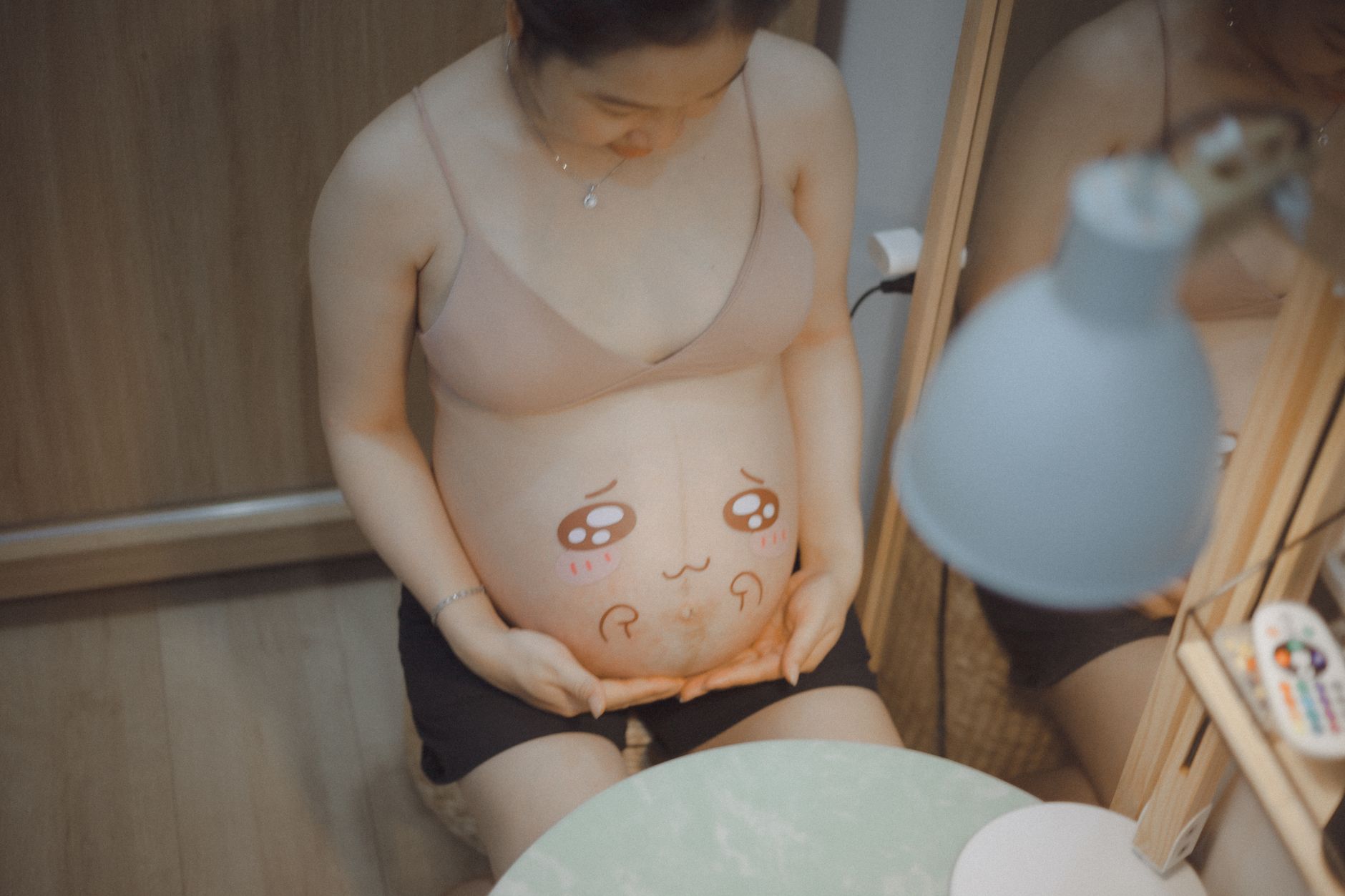
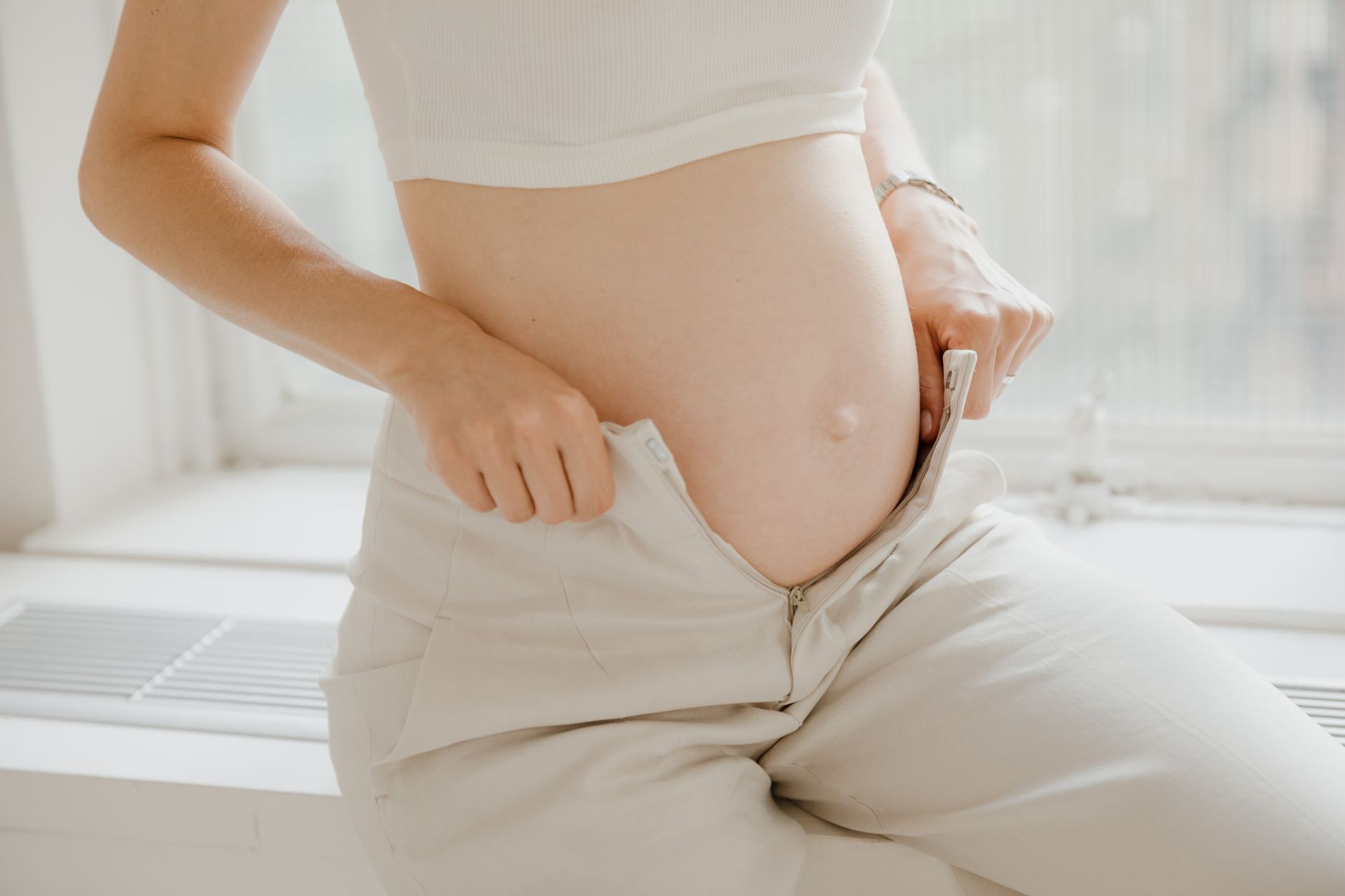
At 4 weeks pregnant belly size is usually small, find out what to expect and how your body will change during this period of pregnancy
By Shubhra Mishra — a mom of two who turned her own confusion during pregnancy into BumpBites, a global mission to make food choices clear, safe, and stress-free for every expecting mother. 💛
Check whether any food is safe during pregnancy with the BumpBites Food Safety Checker.
Quick take: At 4 weeks pregnant, it's very unlikely you'll have a visible baby bump, as your baby is still tiny, and your uterus hasn't significantly expanded yet. Any changes you notice in your belly size or feel are most likely due to early pregnancy bloating, gas, or mild uterine cramping, all of which are perfectly normal hormonal symptoms.
It's official: you're 4 weeks pregnant! This is often around the time you first get that positive pregnancy test, and suddenly, every little change in your body feels magnified. You might find yourself constantly checking your belly, wondering, "Is it bigger? Does it feel different?" It's a natural worry, especially with so much excitement and uncertainty swirling around.
The truth is, at 4 weeks, your baby is incredibly small – about the size of a poppy seed – and your uterus has barely begun to change. So, while you might *feel* pregnant, it's highly improbable you'll be "showing" in the traditional sense. Any belly changes you're experiencing are almost certainly due to the powerful hormonal shifts happening in your body, leading to common early pregnancy symptoms like bloating and gas.
In this article, we'll dive into what's really going on with your body at 4 weeks, what you can expect your belly to look and feel like, and why those early pregnancy symptoms can sometimes mimic a baby bump. We'll also cover when you can typically expect to see a true bump and what to do if you have any concerns.
At 4 weeks, any changes you feel are likely due to early hormonal shifts, not a visible baby bump.
What does your belly look and feel like at 4 weeks pregnant?
At 4 weeks pregnant, your belly is likely to look pretty much the same as it did before you conceived. You won't have a visible "baby bump" yet, as your uterus is still tucked deep within your pelvis and hasn't expanded enough to push outwards. Think of it this way: your uterus is still about the size and shape of a small pear, and it's protected by your pelvic bones.
However, while your belly won't *look* different, it might *feel* different. Many women report a sensation of their belly feeling full, soft, or even a bit distended. This isn't your baby growing, but rather your body reacting to the surge of pregnancy hormones, primarily progesterone. Progesterone relaxes smooth muscles throughout your body, including those in your digestive tract. This slowdown can lead to increased gas and bloating, making your abdomen feel larger or firmer than usual.
You might also notice mild cramping, which can feel like light period pain. This is often due to your uterus beginning to prepare for its big job, as well as the implantation of the embryo into the uterine wall. Some women describe it as a dull ache or a pulling sensation. It's generally not intense or constant, but it can certainly make you more aware of your belly area. Your belly won't feel "hard" in the way a later-term bump does; any firmness is usually related to gas or general muscle tension.
Bloating vs. a true baby bump at 4 weeks
It's easy to confuse early pregnancy bloating with a baby bump, especially when you're hyper-aware of your body. Bloating is characterized by a general distension of the abdomen, often feeling gassy and sometimes uncomfortable. It can come and go throughout the day, often worse after meals or in the evening. A true baby bump, on the other hand, is a firm, consistent outward protrusion of the uterus that develops gradually over weeks and months as the baby grows. At 4 weeks, any "bump" you perceive is almost certainly bloating.
Is it normal to have a visible baby bump at 4 weeks pregnant?
No, it is generally not normal or expected to have a visible baby bump at 4 weeks pregnant. If you feel like you have a bump, it's almost certainly due to something else, most commonly bloating or other digestive changes related to early pregnancy hormones. While every body is different, the physiological changes required for a visible bump simply haven't occurred yet at this very early stage.
At 4 weeks, pregnancy is confirmed by a positive pregnancy test, meaning the embryo has just implanted in your uterus. Your tiny embryo is still microscopic, and your uterus has not yet begun the significant expansion that would push it out of your pelvis and create a noticeable bump. The uterus is still nestled safely behind your pubic bone, protected by your pelvic structure.
It's common for expecting parents to be eager to see physical signs of pregnancy, but the reality is that a true baby bump takes time to develop. Most women don't start to show a noticeable bump until well into their second trimester, typically between 12 and 20 weeks. If you're feeling larger, it's a sign that your body is already hard at work adjusting to pregnancy hormones, but it's not a sign of the baby's size or the uterus expanding beyond its pelvic confines.
Many moms tell us the same thing: in those first few weeks, they were convinced they were showing, only to realize later it was just bloat. One reader described feeling "so big" at 6 weeks, then looking back at photos and seeing no difference at all. It's a testament to how sensitive we become to our bodies during this time, and how powerful those early hormonal shifts can be.
Why am I bloated at 4 weeks pregnant, but not showing a bump?
If you're feeling bloated at 4 weeks pregnant but aren't seeing a traditional baby bump, you're experiencing one of the most common early pregnancy symptoms. This sensation of fullness, tightness, or a distended abdomen is almost universally caused by the powerful hormonal changes that begin right after conception, primarily the surge in progesterone.
Here's why progesterone is the main culprit for that early pregnancy bloat:
Relaxation of Smooth Muscles: Progesterone's primary role is to help maintain your pregnancy by relaxing the smooth muscles of the uterus, preventing contractions. However, this relaxation effect isn't limited to the uterus; it also affects other smooth muscles throughout your body, including those in your digestive tract.
Slowed Digestion: When the muscles of your intestines and stomach relax, the process of digestion slows down considerably. Food moves through your system more sluggishly, leading to a build-up of gas and stool. This slower transit time gives bacteria in your gut more time to ferment food, producing more gas.
Increased Gas Production: The combination of slowed digestion and increased fermentation often results in more intestinal gas. This gas can get trapped, causing that uncomfortable, swollen feeling in your abdomen that mimics a "bump."
Beyond progesterone, other factors can contribute to bloating:
Water Retention: Hormonal changes can also lead to increased water retention in your body, which can contribute to a feeling of puffiness and fullness, including in your abdominal area.
Constipation: With slowed digestion, constipation is a very common early pregnancy complaint. A build-up of stool in your colon can also make your belly feel and look larger.
Dietary Factors: Certain foods that are known to produce gas (like beans, broccoli, carbonated drinks, or sugary foods) can exacerbate existing bloating, especially with a slower digestive system.
So, while you might feel like you have a "4 weeks pregnant no belly" situation in terms of a bump, you're likely experiencing significant internal changes that manifest as bloating. This is a completely normal and healthy sign that your body is adapting to pregnancy.
Understanding the differences between bloating and a baby bump can help ease early pregnancy worries.
How big is the baby at 4 weeks pregnant?
At 4 weeks pregnant, your "baby" is still in its earliest stages of development, often referred to as an embryo. It's incredibly tiny, measuring only about 0.04 inches (1 millimeter) long – roughly the size of a poppy seed or a tiny grain of rice. To put that into perspective, it's smaller than the period at the end of this sentence!
Even though it's minuscule, a tremendous amount of development is happening at this stage. At 4 weeks, your embryo has just implanted itself into the lining of your uterus. This week marks the beginning of rapid cell division and differentiation, where the three main germ layers start to form:
Ectoderm: This outermost layer will develop into the brain, spinal cord, nerves, skin, hair, and nails.
Mesoderm: The middle layer will become the heart, blood vessels, muscles, and bones.
Endoderm: The innermost layer will form the lungs, digestive system, liver, and pancreas.
Crucially, at 4 weeks, the neural tube, which will become your baby's brain and spinal cord, begins to form. This is why it's so important to be taking a prenatal vitamin with folic acid, even before you know you're pregnant, as folic acid plays a vital role in preventing neural tube defects.
While your baby is undergoing these miraculous changes, it's still far too small to cause any outward changes to your belly. The growth is internal and microscopic. You won't feel its movements, and it certainly won't be visible on an ultrasound yet, though a gestational sac might be seen if you have an early scan.
Can you feel your uterus or baby at 4 weeks pregnant?
At 4 weeks pregnant, it's generally not possible to feel your uterus or your baby through your abdomen. Your baby, as we've discussed, is still a microscopic embryo nestled within the uterine wall. Your uterus, while beginning to prepare for its massive growth, is still relatively small – about the size of a small pear or a clenched fist – and remains tucked deep within your pelvis, behind your pubic bone.
The uterine changes at this stage are primarily internal. The lining of your uterus (the endometrium) thickens to provide a nourishing environment for the implanted embryo. Blood flow to the uterus increases, which can contribute to sensations of fullness or mild cramping, but these are not due to the uterus expanding visibly or becoming palpable from the outside.
You might, however, be more *aware* of your pelvic area. The mild cramping or pulling sensations that many women experience at 4 weeks are signals from your uterus as it adjusts to pregnancy. This is often described as feeling like very mild period cramps. While you're feeling your uterus at work, you're not actually able to physically touch or press on your uterus itself through your abdominal wall at this stage.
For most women, the uterus doesn't begin to rise out of the pelvis and become palpable above the pubic bone until around 12 weeks of pregnancy. Even then, it's usually only felt by a healthcare provider during a pelvic exam, not by self-palpation. Feeling your baby's movements (quickening) typically doesn't happen until much later, usually between 16 and 25 weeks, with first-time moms often feeling it later than those who have been pregnant before.
What are other common early pregnancy symptoms at 4 weeks?
While a visible baby bump isn't on the list, your body is definitely sending signals at 4 weeks pregnant! The surge in pregnancy hormones, particularly human chorionic gonadotropin (hCG) and progesterone, triggers a host of other common early pregnancy symptoms. These can range from subtle to quite noticeable, and they vary greatly from person to person. Some women feel nothing at all, while others experience several of these:
Missed Period: This is often the first and most obvious sign that prompts you to take a pregnancy test. By 4 weeks, your period is typically due or slightly overdue.
Fatigue: Feeling unusually tired or exhausted, even if you're getting enough sleep, is incredibly common. Your body is working overtime to create a new life, and hormone changes contribute to this profound tiredness.
Nausea and Vomiting (Morning Sickness): While often associated with the term "morning sickness," nausea can strike at any time of day or night. It typically starts between weeks 4 and 9, so you might be just starting to feel queasy.
Breast Changes: Your breasts might feel tender, swollen, heavy, or tingly. The nipples can become more sensitive, and the areola (the colored area around the nipple) might darken or appear more prominent.
Frequent Urination: You might find yourself needing to pee more often. This is due to increased blood volume and your kidneys working harder to filter waste, as well as the uterus beginning to put mild pressure on the bladder.
Mood Swings: The rollercoaster of hormones can lead to emotional ups and downs. You might feel more irritable, anxious, or weepy than usual.
Food Cravings or Aversions: Suddenly loving foods you once disliked, or being repulsed by your favorites, is a classic early pregnancy symptom.
Heightened Sense of Smell: Everyday odors might become overpowering or even trigger nausea.
Light Spotting or Cramping (Implantation Bleeding): A small amount of pink or brown spotting, along with mild cramping, can occur around the time the embryo implants in the uterus (about 6-12 days after conception). This is usually lighter and shorter than a period.
Headaches: Hormonal shifts and increased blood volume can sometimes trigger mild headaches.
It's important to remember that experiencing some, all, or none of these symptoms is normal. Each pregnancy is unique, and the presence or absence of symptoms doesn't necessarily indicate anything about the health of your pregnancy. If you're concerned about any symptoms, or the lack thereof, always reach out to your healthcare provider.
Staying hydrated and eating small, frequent meals can help manage early pregnancy symptoms like nausea and fatigue.
When do most pregnant women start to show a baby bump?
The timing of when a pregnant woman starts to show a noticeable baby bump varies quite a bit, but for most first-time mothers, it typically happens later in the first trimester or early in the second trimester. You can generally expect to start seeing a true baby bump emerge somewhere between 12 and 20 weeks of pregnancy.
Here's a breakdown of factors influencing when you might start to show:
First Pregnancy vs. Subsequent Pregnancies: Women carrying their first baby often show later. This is because their abdominal muscles haven't been stretched before and tend to be firmer, holding the uterus in more tightly. In subsequent pregnancies, abdominal muscles are often more relaxed, and the uterus tends to "pop" out earlier, sometimes as early as 10-12 weeks.
Uterine Position: The natural tilt of your uterus can play a role. If you have an anteverted uterus (tilted forward), you might show slightly earlier than someone with a retroverted uterus (tilted backward), though this difference is usually minor.
Body Type and Build: Women with a longer torso or a higher BMI might show later, as there's more space for the uterus to grow internally before it pushes outwards. Conversely, those with a shorter torso or a smaller frame might show earlier.
Bloating: As we've discussed, early bloating can make you *feel* like you're showing, but it's not a true baby bump. This can sometimes make it seem like you're showing earlier than you actually are.
Multiple Pregnancy: If you're carrying twins or more, your uterus will expand more rapidly, and you'll likely start to show much earlier than with a single pregnancy.
Amniotic Fluid Levels: The amount of amniotic fluid also contributes to overall uterine size, though this typically becomes a more significant factor in later trimesters.
By 12 weeks, your uterus has grown to about the size of a grapefruit and typically rises out of the pelvis, becoming palpable just above your pubic bone. This is often when a very subtle bump might begin to form. By 16-20 weeks, the uterus is usually midway between the pubic bone and the belly button, and for many, this is when the bump becomes distinctly visible to others.
Try not to compare your bump to others. Every pregnancy journey is unique, and your body will change at its own pace. The most important thing is that your baby is growing healthy inside, regardless of what your outer belly looks like.
What if I have no belly changes or symptoms at 4 weeks pregnant?
If you're 4 weeks pregnant and have no noticeable belly changes, no bloating, and perhaps even no other classic pregnancy symptoms, take a deep breath – this is completely normal and no cause for alarm! In fact, many women experience very few, if any, symptoms this early in pregnancy.
As we've covered, a visible baby bump is not expected at 4 weeks, so a lack of belly changes is actually the norm. Any "4 weeks pregnant no belly" situation is perfectly fine.
Regarding a lack of other symptoms, here's why it's not a concern:
Individual Variation: Every woman and every pregnancy is different. Some women are incredibly sensitive to hormonal changes, while others are not. Your body might be adjusting to the pregnancy hormones without producing strong external signals.
Timing of Symptoms: Many classic pregnancy symptoms, like morning sickness and fatigue, often don't kick in until closer to 6-8 weeks of pregnancy. You might simply be in the calm before the storm, or you might be one of the lucky few who experiences very mild symptoms throughout.
Normal Pregnancy: A lack of symptoms does not mean your pregnancy isn't healthy. Many women have perfectly healthy pregnancies with minimal or no symptoms, especially in the very early weeks. The presence or intensity of symptoms is not a reliable indicator of pregnancy viability.
It's natural to feel anxious when you don't have symptoms, especially if you've heard stories of intense morning sickness or early fatigue. You might even worry if you *feel* pregnant enough. This is a common concern among new parents, but rest assured, your body is doing incredible work behind the scenes, whether you feel it or not.
The most important confirmation of your pregnancy's health will come from your healthcare provider through blood tests (to check hCG levels) and later, an ultrasound scan (typically around 8-12 weeks) to confirm viability and gestational age. Until then, try to relax and enjoy this quiet time before symptoms potentially ramp up. If you have any persistent worries, however, always feel free to discuss them with your doctor or midwife.
From our medical team: "It's completely understandable to feel anxious about every little change – or lack thereof – in early pregnancy. What we often see clinically is that the earliest physical changes, like bloating, are due to your body's amazing hormonal adjustments, not the size of your tiny embryo. Focus on taking your prenatal vitamins, staying hydrated, and managing any mild discomforts. If you're concerned, don't hesitate to reach out; that's what we're here for."
Myth vs. Fact
Myth: If you don't have morning sickness at 4 weeks, it means your pregnancy isn't healthy.
Fact: Many women have perfectly healthy pregnancies with little to no morning sickness, especially at 4 weeks. Symptoms vary widely, and their absence is generally not a cause for concern this early.
Myth: You can tell if you're having twins because you'll have a visible bump at 4 weeks.
Fact: It's impossible to have a visible bump at 4 weeks, even with twins. While a multiple pregnancy will cause you to show earlier eventually, it won't be noticeable at this microscopic stage.
Myth: Feeling bloated means you're gaining too much weight too fast.
Fact: Bloating is a normal pregnancy symptom caused by hormones slowing digestion and increasing gas. It's not typically related to early weight gain and doesn't indicate an unhealthy weight trajectory.
Key takeaways
At 4 weeks pregnant, a visible baby bump is not expected; your baby is still incredibly tiny.
Any changes in your belly size or feel are most likely due to early pregnancy bloating and gas, caused by the hormone progesterone.
Your uterus is still small and tucked deep within your pelvis at 4 weeks.
Common early pregnancy symptoms include fatigue, breast tenderness, nausea, and frequent urination, but experiencing none of these is also normal.
Most women start to show a noticeable baby bump between 12 and 20 weeks, with subsequent pregnancies often showing earlier.
A lack of belly changes or other symptoms at 4 weeks is usually not a cause for concern and is a normal variation of early pregnancy.
Frequently asked questions
Can you feel your stomach at 4 weeks pregnant?
You generally cannot feel your stomach (uterus) through your abdomen at 4 weeks pregnant. Your uterus is still small and deep within your pelvis. However, you might feel mild cramping or a sensation of fullness in your lower abdomen, which is due to your uterus preparing for pregnancy and common early bloating, not its physical expansion. You're feeling the *effects* of your uterus at work, not the uterus itself.
What is happening at 4 weeks pregnant?
At 4 weeks pregnant, a tiny embryo, about the size of a poppy seed, has just implanted in your uterine wall. This is a crucial week for early development, as the three main germ layers that will form all of your baby's organs and tissues begin to differentiate. Your body is also experiencing a surge in pregnancy hormones, which can trigger early symptoms like bloating, fatigue, and breast tenderness.
What are the symptoms of 4 weeks pregnant?
Common symptoms at 4 weeks pregnant include a missed period, mild cramping or spotting (implantation bleeding), bloating and gas, breast tenderness, fatigue, and mood swings. Some women also begin to experience nausea or food aversions. However, it's also perfectly normal to have no noticeable symptoms at all at this very early stage.
Is it normal to have a bump at 4 weeks?
No, it is not normal to have a visible baby bump at 4 weeks pregnant. Any perceived bump is almost certainly due to bloating, gas, or water retention caused by early pregnancy hormones. Your baby is still microscopic, and your uterus has not expanded enough to create an outward protrusion from your abdomen.
How big is a baby at 4 weeks?
At 4 weeks pregnant, your baby is incredibly tiny, measuring approximately 0.04 inches (1 millimeter) long. This is about the size of a poppy seed or a grain of rice. Despite its minuscule size, it's undergoing rapid cell division and the formation of the foundational structures for its major organ systems.
What does 4 weeks pregnant feel like?
Four weeks pregnant can feel different for everyone. For some, it feels like mild period cramps, bloating, and increased fatigue. Others might experience breast tenderness, nausea, or mood swings. Many women feel no specific symptoms beyond a missed period. It's a time of intense internal change, even if outward signs are subtle or absent.
When to call your doctor
While most early pregnancy symptoms are normal, it's always important to listen to your body and contact your healthcare provider if you have any concerns. Call your doctor or midwife immediately if you experience:
Heavy vaginal bleeding (more than light spotting, soaking a pad, or passing clots).
Severe abdominal pain or cramping, especially if it's one-sided or persistent.
Severe nausea and vomiting that prevents you from keeping down food or liquids, leading to dehydration.
Fever (over 100.4°F or 38°C).
Pain or burning during urination, which could indicate a urinary tract infection.
This article is for informational purposes only and is not a substitute for professional medical advice, diagnosis, or treatment. Always seek the advice of your physician or other qualified health provider with any questions you may have regarding a medical condition.
Not sure about the label on 4 Weeks Pregnant Belly Size products?
Snap the ingredients list and SafeFilter checks every ingredient for your stage — only 3 free scans this month, then you're locked until reset. Unlimited from $7/mo or $50/yr.
When Shubhra Mishra was expecting her first child in 2016, she was overwhelmed by conflicting food advice — one site said yes, another said never. By the time her second baby arrived in 2019, she realized millions of mothers face the same confusion.
That sparked a five-year journey through clinical nutrition papers, cultural diets, and expert conversations — all leading to BumpBites: a calm, compassionate space where science meets everyday motherhood.
Her long-term vision is to build a global community ensuring safe, supported, and free deliveriesfor every mother — because no woman should face pregnancy alone or uninformed. 🌿
🌍 Stand with mothers, shape safer guidance
Join a small circle of experts who review BumpBites articles so expecting parents everywhere can decide with confidence.