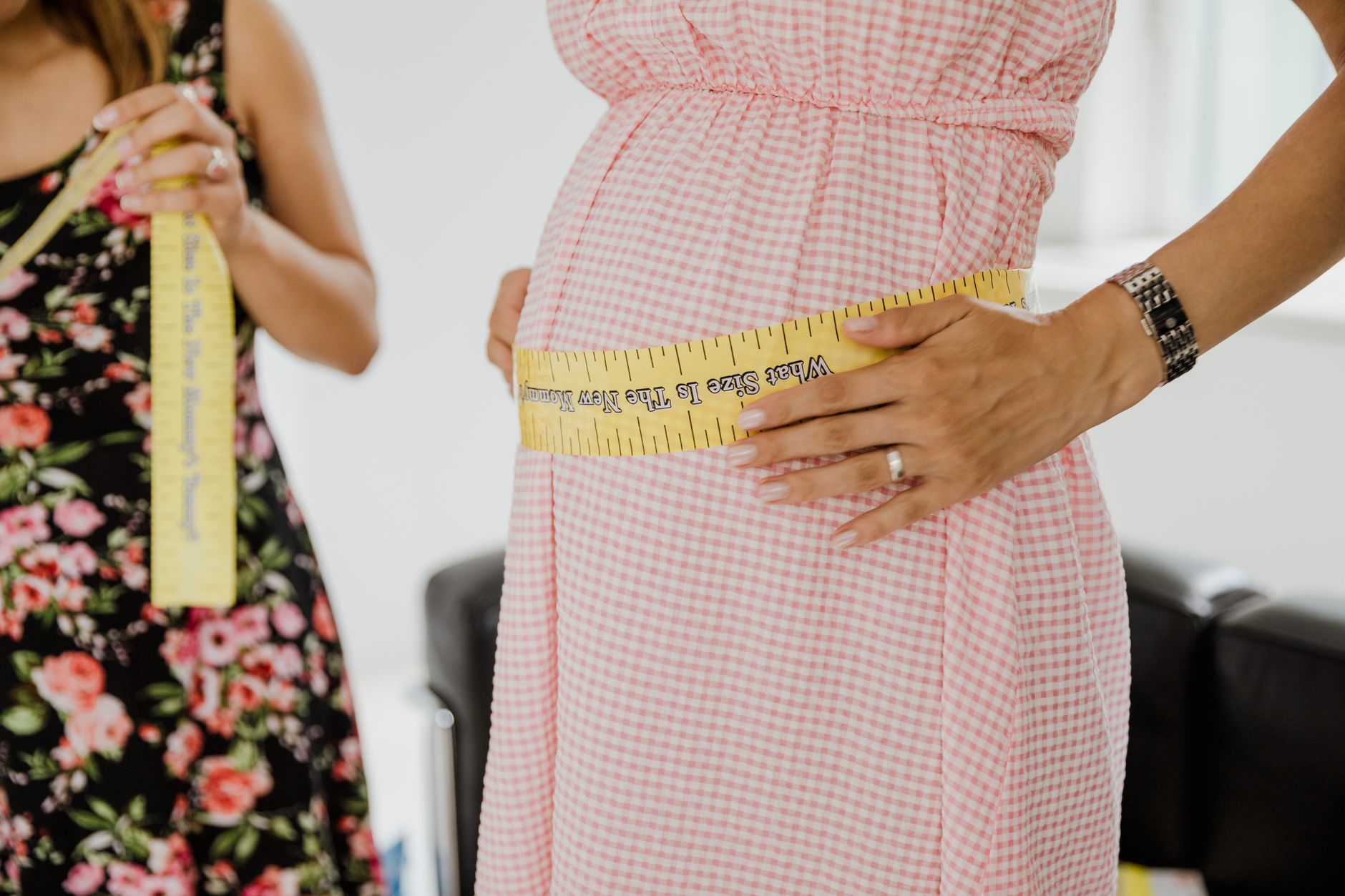
Your 34 weeks pregnant belly size varies greatly. Most women measure 32-36 cm fundal height. Discover what's normal for your 34 weeks pregnant belly and when to discuss concerns with your doctor.
By Shubhra Mishra — a mom of two who turned her own confusion during pregnancy into BumpBites, a global mission to make food choices clear, safe, and stress-free for every expecting mother. 💛
Check whether any food is safe during pregnancy with the BumpBites Food Safety Checker.
Quick take: At 34 weeks pregnant, a belly that measures roughly 16‑18 inches (41‑46 cm) is typical, but healthy ranges can vary from about 14 to 20 inches. Size alone isn’t a definitive sign of baby size or health—track growth trends, listen to your body, and consult your provider if you notice sudden changes.
It’s 3 a.m.; you’ve just felt a gentle kick and you’re wondering whether your belly “looks” the right size for 34 weeks. You’re not alone—most expectant parents spend a few minutes each day checking measurements, Googling the numbers, and trying to make sense of the swelling.
In this guide we’ll walk through exactly what the average 34‑week belly looks like, how to measure it accurately, why the numbers can differ from one pregnancy to the next, and when a change might signal a need for a professional check‑in. We’ll also cover how baby gender, twins, and your own body type influence the curve, plus practical tips for tracking growth throughout the third trimester.
By the end you’ll have a clear, evidence‑based picture of what “normal” means for a 34‑week belly and a step‑by‑step plan you can use at home.
What is the average belly size at 34 weeks pregnant?
The term “belly size” usually refers to the circumference measured around the fullest part of the abdomen, expressed in inches or centimeters. At 34 weeks gestation, most clinicians expect a measurement between 16 and 18 inches (41–46 cm). This range captures the majority of pregnancies when measured at the level of the belly button or just above the hips.
Why that range? By the start of the third trimester the uterus has expanded well beyond the pelvis, pushing the belly outward. The baby’s head, shoulders, and limbs, together with the growing amniotic fluid volume, create the bulk of the circumference. The American College of Obstetricians and Gynecologists (ACOG) notes that individual measurements can differ by a few inches without indicating a problem.
It’s also helpful to think of “average” as a moving target. A mother who is petite may sit at the lower end of the range, while someone with a larger frame or higher pre‑pregnancy weight may naturally be on the higher end. The most reassuring sign is a steady, proportional increase week after week, not a single static number.
How many inches is a 34 week pregnant belly?
I
f you’re looking for a single, concrete figure, health authorities in the United States and United Kingdom commonly cite about 17 inches (43 cm) as the midpoint for a 34‑week belly. This figure comes from pooled data across thousands of pregnancies collected by the UK’s NHS and the U.S. CDC.
However, the “normal” spread is wide. A 14‑inch belly (35 cm) can still be perfectly healthy if growth charts show a consistent upward trend. Conversely, a 20‑inch measurement (51 cm) is not automatically a cause for alarm; it may reflect a larger baby, extra fluid, or simply a mother’s body habitus.
What matters most is change over time. A sudden jump of more than an inch in a single week should prompt a call to your provider, while a gradual half‑inch increase every two weeks aligns with typical growth patterns.
34 weeks pregnant belly measurement chart
Below is a reference chart that aligns common belly circumference ranges with typical fetal weight estimates and amniotic fluid volumes. Use it as a guide, not a diagnostic tool—your provider will interpret your individual numbers.
Measurement (inches)
Measurement (cm)
Estimated fetal weight
Typical scenario
14‑15
35‑38
1.9‑2.2 lb (860‑1000 g)
Smaller baby, limited amniotic fluid, or petite mother
16‑18
41‑46
2.2‑2.5 lb (1000‑1150 g)
Average range for most singleton pregnancies
19‑20
48‑51
2.5‑2.8 lb (1150‑1270 g)
Large baby, twins, or higher fluid volume
>20
>51
>2.8 lb (1270 g+)
Potential polyhydramnios, macrosomia, or maternal habitus
Is a 34 week belly size of 20 inches normal?
A 20‑inch (51 cm) belly at 34 weeks falls at the upper edge of the typical range but is still considered normal in many cases. Several factors can push the measurement upward:
Multiple gestation: Twins often add 2‑4 inches to the maternal circumference.
Amniotic fluid volume: Polyhydramnios—excess fluid—can stretch the uterus.
Baby’s size or position: A baby that’s already leaning forward or has a larger head circumference can increase the girth.
Maternal body type: Women with broader pelvises or higher pre‑pregnancy BMI may naturally have larger measurements.
If you’re at 20 inches, the safest next step is to schedule a routine ultrasound or discuss the measurement at your next prenatal visit. Your provider will assess growth curves, fluid levels, and any other signs that might warrant closer monitoring.
How to measure belly size at 34 weeks pregnancy
Accurate measurement is simple, but a few small details make a big difference. Follow this step‑by‑step guide:
Gather a flexible measuring tape: A cloth or plastic tape used for sewing works best.
Pick a consistent time of day: Measure after you’ve emptied your bladder and before a large meal, ideally in the morning.
Find the right spot: Stand upright, relax your abdomen, and locate the fullest part of your belly—usually just above the belly button.
Wrap the tape: Encircle the tape around that point, keeping it level and snug but not compressing the skin.
Read the number: Note the measurement to the nearest 0.1 inch (or 0.1 cm). Write it down in a pregnancy journal.
Repeat weekly: Consistency helps you spot trends and share accurate data with your provider.
Tip: If you’re unsure whether you’ve found the “fullest” point, ask a partner or friend to help locate the spot that feels most rounded.
Measuring at the same time each day gives the most reliable trend.
34 week pregnant belly size vs baby growth
The belly circumference does not directly equal fetal weight, but it correlates with overall growth. As the baby’s head, torso, and limbs expand, the uterus stretches, and the external measurement rises. Most clinicians use a combination of ultrasound and fundal height (the same measurement you take at home) to gauge whether the baby is on track.
Typical growth patterns show a 0.5‑inch (1.3 cm) increase every 1‑2 weeks** after 30 weeks. If your belly grew from 16 inches at 30 weeks to 17.5 inches at 34 weeks, that aligns with average growth. A slower increase—say, staying at 15 inches—might suggest growth restriction, especially if accompanied by reduced fetal movement.
Conversely, a rapid jump of 2+ inches in a short span could hint at excess fluid (polyhydramnios) or a large baby (macrosomia). Either scenario warrants a focused ultrasound to confirm the cause.
When should I be concerned about my 34 week belly size?
Most variations are harmless, but certain red‑flag signs call for a prompt check‑in:
Sudden increase of more than an inch in a week.
Sudden decrease of more than an inch without a clear reason.
Persistent belly size well below 14 inches (35 cm) after 30 weeks.
Accompanying symptoms such as severe abdominal pain, rapid swelling, or decreased fetal movement.
Signs of pre‑eclampsia (high blood pressure, headaches, vision changes).
When any of these appear, contact your obstetrician, midwife, or go to the nearest urgent care. Early evaluation can catch issues like intra‑uterine growth restriction (IUGR) or polyhydramnios before they become more serious.
34 weeks pregnant belly size differences for first vs subsequent pregnancies
Parity—whether this is your first, second, or later pregnancy—affects belly measurements. In a first pregnancy, the abdominal muscles and skin have not been stretched before, so the uterus may feel tighter and the circumference may be slightly smaller for a given fetal size. By the second or third pregnancy, the abdominal wall is more compliant, often resulting in a 1‑2‑inch larger measurement at the same gestational age.
Research from the Royal College of Obstetricians and Gynaecologists (RCOG) shows that, on average, multiparous women have a 5‑10 % larger fundal height at 34 weeks compared with nulliparous women, even after adjusting for fetal weight. This doesn’t imply a problem; it’s simply the body’s “memory” of previous stretching.
Still, every pregnancy is unique. If you’re a first‑time mom and notice a smaller measurement, keep tracking weekly. If you’re a seasoned mom and see a larger belly, it may be due to a larger baby or extra fluid—both worth monitoring.
Even small changes in belly shape can tell you a lot about how your pregnancy is progressing.
34 weeks pregnant belly size and weight gain
Weight gain and belly circumference move together but not in a one‑to‑one ratio. The National Institute of Child Health and Human Development (NICHD) recommends a total pregnancy weight gain of 25‑35 lb (11‑16 kg) for women with a normal pre‑pregnancy BMI. By 34 weeks, most mothers have gained about 80‑90 % of that target.
Typical weight gain in the third trimester is 0.5‑1 lb (0.2‑0.5 kg) per week. This incremental increase often reflects both the growing baby and the expansion of amniotic fluid, not just abdominal girth. If you notice that your weight is climbing faster than expected but your belly measurement stays the same, it might be fluid retention or increased breast tissue—both common and usually benign.
Conversely, if you’re gaining the expected amount of weight but your belly measurement isn’t changing, it could indicate a smaller baby or low amniotic fluid. Discuss both metrics with your provider to get a complete picture.
Average waist circumference at 34 weeks gestation
While “belly size” and “waist circumference” are often used interchangeably, clinicians sometimes measure waist circumference just above the belly button to assess abdominal fat distribution. The average waist circumference at 34 weeks is roughly **16‑17 inches (41‑43 cm)** for women with a normal BMI before pregnancy. This measurement is slightly smaller than the full belly circumference because it excludes the lower uterine fundus that sits above the pelvis.
Tracking waist circumference can be useful for women who are monitoring postpartum weight loss, as it provides a baseline for abdominal muscle tone and fat. However, during pregnancy the focus remains on overall fundal height rather than waist‑specific numbers.
How much does a belly grow each week after 30 weeks?
From 30 weeks onward, the uterus expands more slowly than in earlier months because the pelvic outlet limits how fast the baby can descend. On average, the belly circumference increases by **0.4‑0.6 inch (1‑1.5 cm) every 1‑2 weeks**. This means a typical progression from 30 to 34 weeks might look like:
30 weeks: 15.5 inches
31 weeks: 16.0 inches
32 weeks: 16.5 inches
33 weeks: 17.0 inches
34 weeks: 17.5 inches
Individual curves can be steeper or flatter. The key is consistency—rapid spikes or drops are more concerning than a modest, steady rise.
34 weeks pregnant belly size in twins
Carrying twins adds roughly **2‑4 inches** to the average belly measurement at any given week. At 34 weeks, a twin pregnancy might measure **18‑20 inches (46‑51 cm)**, though some twins fall within the singleton range if both babies are smaller or fluid volume is low.
Because twins share the uterine space, the belly can feel tighter and the shape may be more rounded. Routine ultrasounds are especially important in twin pregnancies to monitor each baby’s growth and amniotic fluid levels. If you’re expecting twins and notice a belly size outside the 18‑20 inch range, bring the measurement to your next appointment for a detailed assessment.
What does a small belly at 34 weeks indicate?
A smaller-than‑average belly—under 14 inches (35 cm) at 34 weeks—can point to several possibilities:
Intra‑uterine growth restriction (IUGR): The baby may be receiving less nutrients, often reflected in slower weight gain.
Low amniotic fluid (oligohydramnios): Less fluid reduces uterine volume.
Maternal factors: Very low pre‑pregnancy BMI, high physical activity, or certain medical conditions.
When a small belly is observed, clinicians typically order an ultrasound to assess fetal size, placental health, and fluid volume. Early detection allows for interventions such as closer monitoring, nutritional counseling, or, in some cases, early delivery.
How to track belly growth during third trimester
Consistent tracking helps you and your provider spot trends early. Here’s a practical plan:
Choose a day and time: Same day each week, preferably mornings after emptying the bladder.
Record the number: Write it in a notebook or a pregnancy app that lets you chart the data.
Note baby kicks: Count movements for a minute; a drop in activity paired with a size change deserves attention.
Take a photo: A weekly side‑profile photo can help you see visual changes that numbers alone miss.
Share with your provider: Bring the log to appointments; they can compare it to ultrasound findings.
Technology can help—many apps automatically calculate the weekly growth percentiles based on your inputs, giving you a quick visual cue if you’re trending above or below the 50th percentile.
Difference in belly size between male and female baby at 34 weeks
While it’s tempting to guess a baby’s gender from belly shape, scientific evidence shows only a modest difference. Studies referenced by the NHS indicate that male fetuses tend to be slightly larger on average, translating to an average belly size about **0.2‑0.4 inch (0.5‑1 cm) larger** than with a female fetus at 34 weeks. This difference is usually imperceptible without precise measurement tools.
Therefore, while a marginally larger belly might hint at a boy, it’s far from a reliable method. Ultrasound remains the gold standard for gender determination.
From our medical team: “Your belly’s circumference is a useful visual cue, but it’s just one piece of the puzzle. If you keep a weekly log, notice any sudden changes, and stay in touch with your prenatal caregiver, you’ll have the best chance of catching issues early. Remember, a range of sizes is normal—what matters most is steady, proportional growth and how you feel.”
Myth vs. fact
Myth: A belly that’s bigger than the average means the baby will be huge and cause a difficult delivery. Fact: Size alone doesn’t predict birth weight. Factors like maternal height, pelvic shape, and fetal position influence delivery more than circumference.
Myth: If your belly is small, something is definitely wrong with the baby. Fact: A smaller measurement can be normal for you, especially if you have a smaller frame or low pre‑pregnancy weight. Always consider trends and professional assessments.
Myth: You can tell the baby’s gender by the shape of your belly. Fact: The difference between male and female fetal size at 34 weeks is minimal—ultrasound is the reliable way to know.
Key takeaways
Typical belly size at 34 weeks is 16‑18 inches (41‑46 cm), but 14‑20 inches can still be healthy.
Measure consistently in the morning after emptying your bladder, using a flexible tape at the fullest point.
Track weekly changes; a steady increase of about 0.5 inch every 1‑2 weeks is normal.
Sudden jumps, drops, or accompanying symptoms (pain, reduced movement) warrant a prompt call to your provider.
Twins, baby gender, and whether this is your first pregnancy can shift the range by a few inches.
Use a simple log or app to record measurements, kicks, and photos throughout the third trimester.
Frequently asked questions
What is the average belly size at 34 weeks pregnant?
The average circumference is about 17 inches (43 cm), with most measurements falling between 16 and 18 inches. This range captures the majority of singleton pregnancies.
How many inches should a 34 week pregnant belly be?
Most health guidelines cite roughly 17 inches as the midpoint, but a normal span stretches from 14 inches (35 cm) up to 20 inches (51 cm) depending on maternal body type and other factors.
Is it normal for a 34 week pregnant belly to be larger than expected?
Yes. Larger measurements can result from twins, extra amniotic fluid, a larger baby, or simply a broader maternal frame. Unless the growth is sudden or accompanied by concerning symptoms, it’s usually benign.
How do I measure my belly size at 34 weeks?
Use a soft measuring tape, wrap it snugly around the fullest part of your abdomen after emptying your bladder, and record the number to the nearest 0.1 inch. Do this at the same time each week for consistency.
Can belly size indicate baby's size or health at 34 weeks?
Belly size gives a rough estimate of fetal growth, but it isn’t precise. Ultrasound provides accurate baby weight and fluid assessments. Consistent, proportional growth is a reassuring sign.
When should I be concerned about my belly size at 34 weeks?
Contact your provider if you notice a sudden increase or decrease of more than an inch in a week, if the measurement is persistently below 14 inches, or if you experience pain, swelling, or reduced fetal movement.
When to call your doctor
If you experience any of the following, seek medical attention promptly: sudden belly size change >1 inch in a week, severe abdominal pain, rapid swelling, decreased fetal movements, signs of pre‑eclampsia (headache, visual changes, high blood pressure), or any bleeding. This article provides general information and is not a substitute for personalized medical advice.
References
American College of Obstetricians and Gynecologists (ACOG). “Fundal Height Measurement.” Clinical Guidance, 2022.
National Health Service (NHS). “Measuring Your Belly During Pregnancy.” Patient Information, 2023.
Centers for Disease Control and Prevention (CDC). “Gestational Weight Gain Recommendations.” 2021.
Royal College of Obstetricians and Gynaecologists (RCOG). “Parity and Fundal Height.” Clinical Practice Guidelines, 2020.
National Institute of Child Health and Human Development (NICHD). “Third Trimester Growth Standards.” Research Summary, 2022.
Mayo Clinic. “Polyhydramnios and Oligohydramnios.” Patient Care Articles, 2023.
World Health Organization (WHO). “Maternal Weight Gain and Pregnancy Outcomes.” Global Health Report, 2021.
American Academy of Pediatrics (AAP). “Twin Pregnancy Management.” Clinical Updates, 2022.
Not sure about the label on 34 Weeks Pregnant Belly Size products?
Snap the ingredients list and SafeFilter checks every ingredient for your stage — only 3 free scans this month, then you're locked until reset. Unlimited from $7/mo or $50/yr.
When Shubhra Mishra was expecting her first child in 2016, she was overwhelmed by conflicting food advice — one site said yes, another said never. By the time her second baby arrived in 2019, she realized millions of mothers face the same confusion.
That sparked a five-year journey through clinical nutrition papers, cultural diets, and expert conversations — all leading to BumpBites: a calm, compassionate space where science meets everyday motherhood.
Her long-term vision is to build a global community ensuring safe, supported, and free deliveriesfor every mother — because no woman should face pregnancy alone or uninformed. 🌿
🌍 Stand with mothers, shape safer guidance
Join a small circle of experts who review BumpBites articles so expecting parents everywhere can decide with confidence.