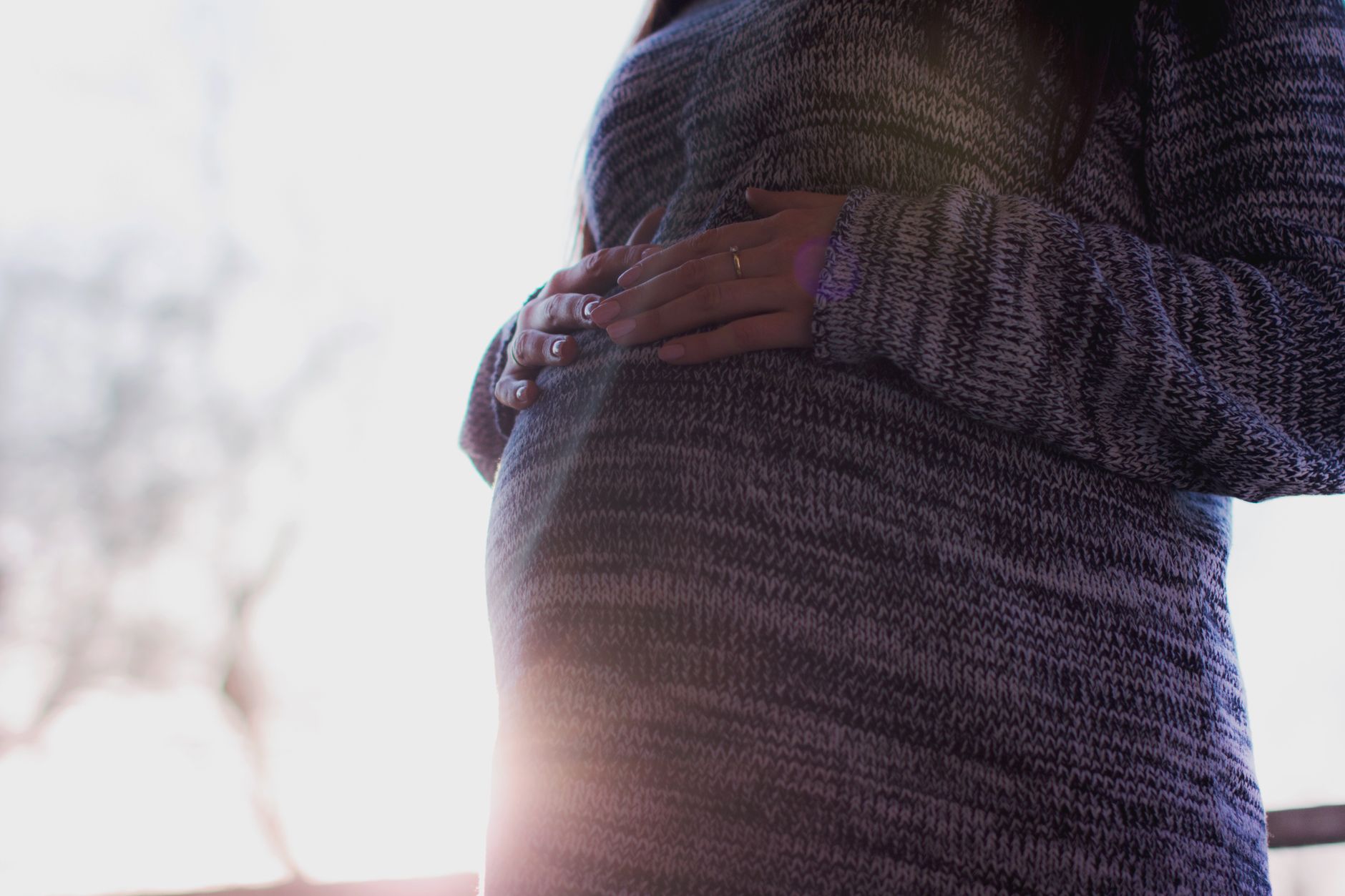
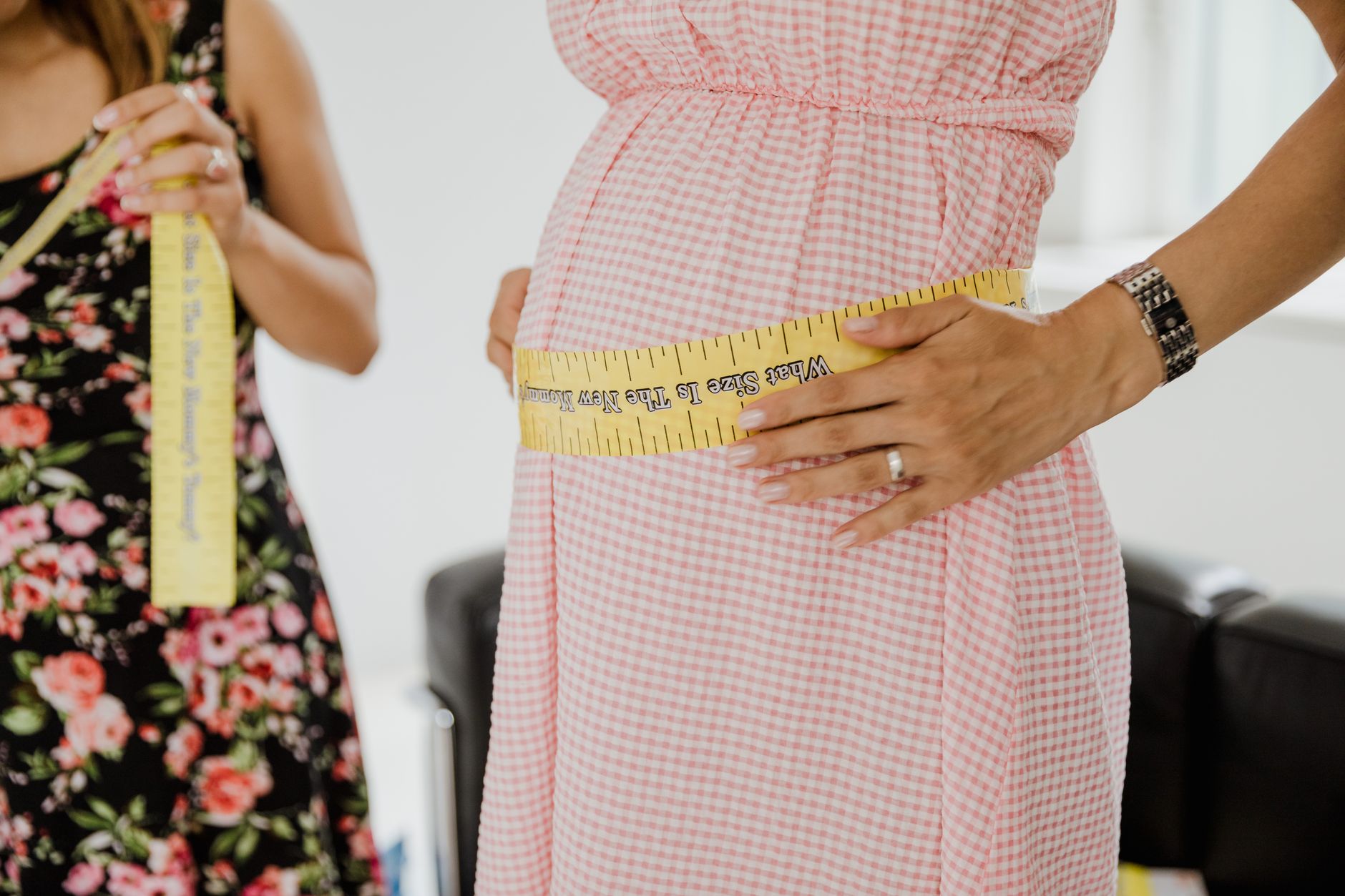
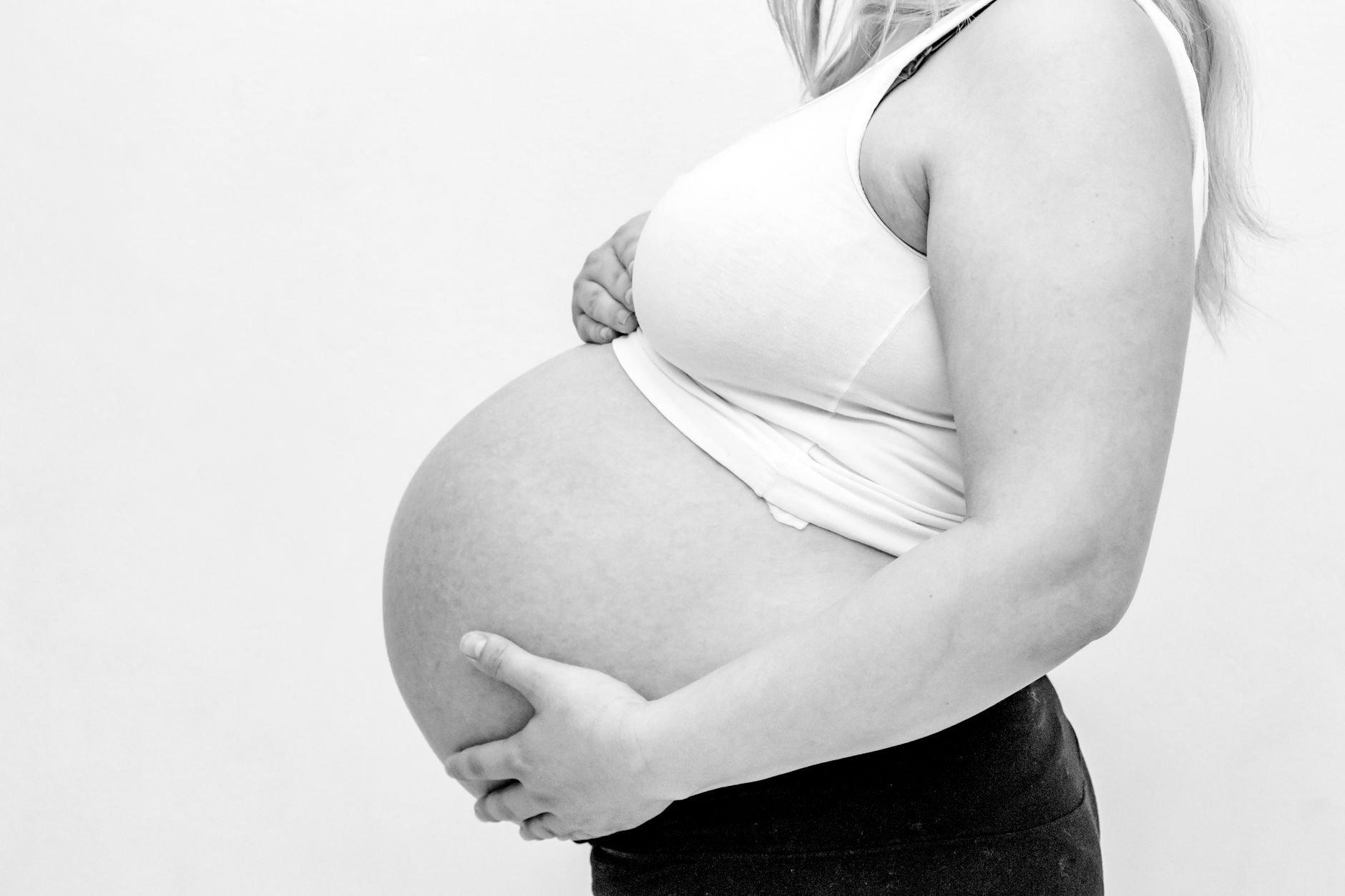
At 17 weeks, the pregnant belly is usually about 12‑14 inches (30‑35 cm) around, resembling a small grapefruit; it continues to grow steadily each week.
By Shubhra Mishra — a mom of two who turned her own confusion during pregnancy into BumpBites, a global mission to make food choices clear, safe, and stress-free for every expecting mother. 💛
Check whether any food is safe during pregnancy with the BumpBites Food Safety Checker.
Quick take: At 17 weeks pregnant, your belly is typically about 16–18 centimeters (6–7 inches) above your pubic bone — roughly the size of a small melon. But every body is different: some bellies pop early, others stay small until later. What matters most isn’t the number on the tape measure, but whether your baby is growing steadily and you’re feeling well. If you’re worried, your provider can check with an ultrasound.
You’re standing in front of the mirror, hands on your hips, wondering: Is this normal? The bump that was just a hint a few weeks ago now feels undeniably there — but is it the "right" size? Maybe your best friend’s belly was bigger at 17 weeks, or maybe yours seems smaller than you expected. You’ve Googled "17 weeks pregnant belly size" a dozen times, hoping for a clear answer.
Here’s the truth: there’s no single "correct" belly size at 17 weeks. Your bump is as unique as your fingerprint, shaped by your body, your baby, and even how you’re carrying. What does matter is that your little one is growing steadily and you’re feeling healthy. In this guide, we’ll walk you through what’s typical, what’s not, and when to reach out to your provider — so you can stop stressing and start enjoying this special time.
Your 17-week belly might feel like a small melon — but it’s uniquely yours.
What is the average belly size at 17 weeks pregnant?
At 17 weeks, most women’s bellies measure about 16–18 centimeters (6–7 inches) from the top of the pubic bone to the top of the uterus — a measurement called the fundal height. This is roughly the size of a small cantaloupe or a large grapefruit. But remember: "average" is just a middle point. Some bellies will be smaller, others larger, and all can be perfectly normal.
One reader, Sarah, told us: "At my 17-week checkup, my fundal height was 17 cm — right in the middle. But my sister-in-law’s was 20 cm at the same stage! Our babies were both healthy, but her belly looked huge next to mine. It’s wild how different we all are."
Here’s a quick reference for what’s typical at 17 weeks:
Measurement
Average at 17 weeks
Notes
Fundal height (pubic bone to top of uterus)
16–18 cm (6–7 inches)
Measured by your provider at prenatal visits
Waist circumference (around the belly button)
85–95 cm (33–37 inches)
Varies widely based on pre-pregnancy size
Visible bump (clothes fit)
Most women start showing
First-time moms may show later
If you’re measuring at home, don’t stress over exact numbers. What’s more important is the trend — is your belly growing steadily week to week? If it is, you’re likely on the right track.
How many inches does a belly grow by week 17 of pregnancy?
By 17 weeks, most women’s bellies have grown about 2–4 inches (5–10 cm) in fundal height since the start of pregnancy. But here’s the thing: belly growth isn’t linear. Some weeks, you might not notice a change at all. Other weeks, it might feel like your bump popped overnight.
Here’s a rough week-by-week guide to how bellies typically grow in the second trimester:
12 weeks: Uterus is just above the pubic bone (fundal height ~12 cm). Most women don’t show yet.
14 weeks: Uterus is about halfway between the pubic bone and belly button (fundal height ~14 cm). Some women start to show.
16 weeks: Uterus is about 2–3 finger-widths below the belly button (fundal height ~15–16 cm). Many women have a noticeable bump.
17 weeks: Uterus is about 1–2 finger-widths below the belly button (fundal height ~16–18 cm). Most women are clearly showing.
18 weeks: Uterus is at or just below the belly button (fundal height ~18–20 cm). Bump is usually obvious.
One mom, Priya, shared: "I didn’t really show until 17 weeks, and then suddenly — boom! — my belly was there. My provider said it was totally normal. Some women carry small until later, especially if they have strong core muscles."
If you’re tracking your belly size at home, use a soft tape measure and note the numbers over time. But don’t compare yourself to others. Your baby and your body are on their own timeline.
Is a 17-week pregnant belly size considered normal?
Yes — as long as your baby is growing well and you’re feeling healthy, your belly size at 17 weeks is almost certainly normal. "Normal" covers a wide range: some bellies are barely there, while others look like they’re carrying twins. What matters is that your provider isn’t concerned after checking your fundal height and, if needed, an ultrasound.
The American College of Obstetricians and Gynecologists (ACOG) notes that fundal height measurements can vary by up to 3 centimeters in either direction and still be considered normal. So at 17 weeks, a fundal height of 13–21 cm is typically fine — as long as your baby is growing steadily.
Here’s what’s not normal and warrants a call to your provider:
Your belly hasn’t grown at all in 2–3 weeks (no change in fundal height or waist measurement).
Your belly grows much faster than expected (e.g., fundal height jumps from 17 cm to 22 cm in a week).
You’re not gaining weight, or you’re losing weight without trying.
You have severe pain, bleeding, or sudden swelling in your belly.
If you’re ever unsure, trust your instincts. One reader, Maria, told us: "At 17 weeks, my belly felt smaller than I expected. I almost didn’t mention it, but my midwife checked and found my baby was measuring small. We did extra monitoring, and everything turned out fine. I’m so glad I spoke up."
Measuring your belly at home? Focus on the trend, not the exact number.
Factors that affect belly size at 17 weeks pregnant
Your belly size at 17 weeks isn’t just about your baby’s growth — it’s also shaped by your body, your lifestyle, and even your genes. Here are the biggest factors that influence how big (or small) your bump looks and feels:
1. Your pre-pregnancy body shape and weight
Women with a higher body mass index (BMI) often show later because their abdominal muscles and fat pad can "hide" the bump longer. Conversely, women with a lower BMI or a petite frame might show earlier. Your height matters too: taller women often carry their bumps higher and may appear smaller at the same stage.
2. Muscle tone and core strength
Strong abdominal muscles can hold the uterus in place longer, delaying the "pop." If you’ve had a baby before, your muscles are more relaxed, so you might show earlier in subsequent pregnancies. One mom, Lisa, said: "I was a Pilates instructor before my first pregnancy, and I didn’t show until 20 weeks! With my second, I had a bump by 14 weeks."
3. Baby’s position and size
At 17 weeks, your baby is about the size of a pear — but their position can make your belly look bigger or smaller. If your baby is curled up or facing your spine, your bump might look smaller. If they’re stretched out or facing forward, it might look bigger. Baby’s size matters too, but remember: at this stage, most babies are within a similar range, and your provider will monitor growth closely.
4. Amniotic fluid levels
Amniotic fluid surrounds and cushions your baby. The amount varies from woman to woman and can change slightly day to day. If you have more fluid (a condition called polyhydramnios), your belly might look larger. If you have less (oligohydramnios), it might look smaller. Both conditions are usually mild and monitored by your provider.
5. Your posture and how you carry
Some women carry their bumps high (near the ribs), while others carry low (near the pelvis). This doesn’t affect your baby’s health, but it can make your belly look bigger or smaller. Your posture plays a role too: slouching can make your bump look smaller, while standing tall can make it more noticeable.
6. Bloating and digestion
Pregnancy hormones slow down your digestion, which can cause bloating — especially after meals. This can make your belly look bigger temporarily. Drinking plenty of water, eating fiber-rich foods, and staying active can help reduce bloating.
7. Number of pregnancies
If this is your first pregnancy, your abdominal muscles are tighter, so you might show later. In subsequent pregnancies, your muscles are more relaxed, so your bump might appear earlier and look bigger at the same stage. This is completely normal!
8. Genetics and family history
How your mom or sisters carried their pregnancies can give you a clue about how you might carry yours. If they showed early, you might too — and vice versa. It’s not a guarantee, but it’s a fun thing to ask about at family gatherings!
Remember: none of these factors mean your baby is too big or too small. Your provider will monitor your baby’s growth with ultrasounds and fundal height measurements to make sure everything is on track.
How to measure your belly size at 17 weeks
Measuring your belly at home can be a fun way to track your pregnancy journey — but it’s not a substitute for your provider’s measurements. Here’s how to do it accurately and safely:
Step 1: Gather your tools
A soft, flexible tape measure (the kind used for sewing).
A notebook or pregnancy app to record your measurements.
A helper (optional, but it can be tricky to measure yourself!).
Step 2: Find the right spot
You’ll measure your fundal height, which is the distance from the top of your pubic bone to the top of your uterus. Here’s how to find these landmarks:
Pubic bone: Place your hands on your lower belly, just above your pubic hair. You’ll feel a hard, flat bone — that’s your pubic bone.
Top of the uterus (fundus): Starting at your pubic bone, gently press upward with your fingertips until you feel the top of your uterus. It should feel firm but not hard. At 17 weeks, it’s usually about 1–2 finger-widths below your belly button.
Step 3: Measure
Stand up straight and relax your belly. Don’t suck in or push out — just breathe normally.
Place the zero end of the tape measure on the top of your pubic bone.
Stretch the tape measure up to the top of your uterus (the fundus).
Read the number where the tape meets the fundus. This is your fundal height in centimeters.
Step 4: Record and track
Write down your measurement in your notebook or app. Note the date and how you’re feeling (e.g., "17 cm, feeling bloated today").
Measure at the same time of day, ideally after you’ve emptied your bladder (a full bladder can make your belly look bigger).
Don’t stress over small fluctuations. Your belly size can vary by a centimeter or two from day to day due to bloating, baby’s position, or how you’re standing.
Step 5: Know the limits
Home measurements are not as accurate as your provider’s. They’re a fun way to track your journey, but they shouldn’t replace prenatal visits.
If your measurements seem off (e.g., no growth for 2+ weeks or sudden large jumps), mention it to your provider. They can check with an ultrasound if needed.
Don’t compare your numbers to other women’s. Every belly is different!
One mom, Jess, shared: "I measured my belly every week just for fun. It was a great way to connect with my baby and see the progress. But I never freaked out if the number didn’t match what I expected — I just focused on how I felt."
What does a small or large belly at 17 weeks indicate?
At 17 weeks, a small or large belly can mean many things — most of them perfectly normal. But it’s also good to know when to check in with your provider. Here’s what your belly size might (or might not) be telling you:
If your belly is smaller than expected
A small belly at 17 weeks is usually nothing to worry about. Common reasons include:
Strong abdominal muscles: If you have a toned core, your muscles may hold your uterus in place longer, delaying the "pop."
First pregnancy: First-time moms often show later because their abdominal muscles are tighter.
Baby’s position: If your baby is curled up or facing your spine, your bump might look smaller.
Your body shape: Women with a higher BMI or a petite frame might not show as much at this stage.
Less amniotic fluid: Some women naturally have lower fluid levels, which can make the belly look smaller.
However, in rare cases, a small belly can be a sign of:
Intrauterine growth restriction (IUGR): This is when a baby isn’t growing at the expected rate. It’s usually diagnosed with an ultrasound and managed with extra monitoring.
Oligohydramnios: Low amniotic fluid levels, which can sometimes affect baby’s growth. Your provider can check fluid levels with an ultrasound.
One reader, Aisha, told us: "At 17 weeks, my belly was barely there. I was convinced something was wrong. My provider did an ultrasound and found my baby was just small but perfectly healthy. She said, ‘Some babies are just compact, like little potatoes!’ It put my mind at ease."
If your belly is larger than expected
A big belly at 17 weeks is also usually normal. Common reasons include:
Subsequent pregnancies: If this isn’t your first baby, your abdominal muscles are more relaxed, so your bump might appear earlier and look bigger.
Baby’s position: If your baby is stretched out or facing forward, your belly might look larger.
More amniotic fluid: Some women naturally have higher fluid levels, which can make the belly look bigger.
Your body shape: Women with a shorter torso might carry their bumps lower and wider, making them look bigger at this stage.
Bloating: Pregnancy hormones can cause extra gas and bloating, which can temporarily make your belly look larger.
In rare cases, a large belly can be a sign of:
Polyhydramnios: High amniotic fluid levels, which can sometimes be associated with conditions like gestational diabetes. Your provider can check fluid levels with an ultrasound.
Macrosomia: A larger-than-average baby, which is usually monitored with ultrasounds.
Multiple pregnancy: If you’re carrying twins or more, your belly will naturally be larger. This is usually confirmed with an early ultrasound.
Another reader, Maya, shared: "My belly at 17 weeks was huge — like, ‘are you sure it’s not twins?’ huge. My provider laughed and said, ‘Nope, just one big baby!’ Turns out, I had polyhydramnios, but it was mild and my baby was fine. Still, it was a relief to know what was going on."
When to talk to your provider
Trust your instincts. If something feels off, don’t hesitate to reach out. Here are the signs that warrant a call:
Your belly hasn’t grown at all in 2–3 weeks (no change in fundal height or waist measurement).
Your belly grows much faster than expected (e.g., fundal height jumps from 17 cm to 22 cm in a week).
You’re not gaining weight, or you’re losing weight without trying.
You have severe pain, bleeding, or sudden swelling in your belly.
You’re leaking fluid or feel a sudden decrease in baby’s movements (though at 17 weeks, movements are still subtle).
Remember: your provider is there to support you. It’s always better to ask a question than to worry in silence.
Comparison of 17-week belly size to 16 and 18 weeks
At 17 weeks, your belly is in a sweet spot of growth: it’s noticeably bigger than at 16 weeks but not yet as prominent as it will be at 18 weeks. Here’s how belly size typically changes between these weeks:
Week
Fundal Height (cm)
Waist Circumference (cm)
What It Looks Like
What’s Happening
16 weeks
15–16 cm
82–92 cm
Small bump, just starting to show. May still fit into pre-pregnancy clothes with a stretchy waistband.
Uterus is about 2–3 finger-widths below the belly button. Many women start to "pop" around this time.
17 weeks
16–18 cm
85–95 cm
Noticeable bump, roughly the size of a small melon. Most women are clearly showing.
Uterus is about 1–2 finger-widths below the belly button. Baby is growing rapidly, and your bump is becoming more defined.
18 weeks
18–20 cm
88–98 cm
Obvious bump, about the size of a large grapefruit. Maternity clothes are often needed.
Uterus is at or just below the belly button. Your bump is now hard to miss, and you might start feeling baby’s movements more clearly.
One mom, Elena, described the transition: "At 16 weeks, I could still hide my bump with a loose shirt. By 17 weeks, it was undeniable — I had to start shopping for maternity jeans. And by 18 weeks, I was like, ‘Okay, this is real now!’ It felt like my belly grew overnight."
Here’s what’s driving these changes:
Baby’s growth: At 16 weeks, your baby is about 4.5 inches long (the size of an avocado). By 18 weeks, they’re about 5.5 inches long (the size of a bell pepper). That extra inch makes a difference!
Uterus expansion: Your uterus is growing to accommodate your baby, and it’s rising higher in your abdomen. This is what creates the visible bump.
Weight gain: By 17 weeks, most women have gained about 5–10 pounds. Some of this weight goes to your belly, breasts, and other areas.
Amniotic fluid: The amount of amniotic fluid increases during the second trimester, adding to your belly’s size.
If your belly growth feels slower or faster than this timeline, don’t panic. Every pregnancy is unique. What’s important is that your baby is growing steadily and you’re feeling well. Your provider will monitor your progress at each prenatal visit.
Your belly grows steadily between 16 and 18 weeks — but every bump has its own pace.
Doctor's note
From our medical team:
"At 17 weeks, we expect to see a wide range of belly sizes — and that’s perfectly okay. What we’re looking for during your prenatal visits is steady growth, not a specific number on the tape measure. When we measure your fundal height, we’re checking that your uterus is growing at a pace that matches your baby’s development. If we have any concerns, we’ll follow up with an ultrasound to get a clearer picture.
Remember, your belly size isn’t a report card. It doesn’t reflect your baby’s health, your parenting skills, or how ‘good’ your pregnancy is. Some women carry small and have big babies; others carry large and have petite ones. What matters is that you’re taking care of yourself, attending your prenatal visits, and listening to your body. If you ever feel worried, don’t hesitate to reach out — that’s what we’re here for."
Myth vs. fact
When it comes to belly size at 17 weeks, there’s a lot of misinformation floating around. Let’s clear up some common myths:
Myth: A bigger belly means a bigger baby. Fact: Belly size isn’t a reliable indicator of baby’s size. Factors like your body shape, muscle tone, and amniotic fluid levels play a much bigger role. Your provider will estimate your baby’s size with ultrasounds, not by looking at your bump.
Myth: If you’re not showing by 17 weeks, something is wrong. Fact: Many women don’t show much at 17 weeks, especially if it’s their first pregnancy. Strong abdominal muscles, a petite frame, or a retroverted uterus (where the uterus tilts backward) can all delay the "pop." As long as your baby is growing steadily, there’s usually no cause for concern.
Myth: You can predict the sex of your baby by how you’re carrying (e.g., high belly = girl, low belly = boy). Fact: How you carry your bump has nothing to do with your baby’s sex. It’s determined by your body shape, muscle tone, and baby’s position. The only way to know your baby’s sex for sure is with genetic testing or an ultrasound.
Myth: Measuring your belly at home is just as accurate as your provider’s measurements. Fact: While measuring at home can be a fun way to track your pregnancy, it’s not as accurate as your provider’s measurements. They’re trained to measure fundal height consistently, and they’ll use an ultrasound if they have any concerns. Home measurements are a supplement, not a replacement.
Key takeaways
At 17 weeks, the average belly measures about 16–18 cm (6–7 inches) in fundal height — roughly the size of a small melon. But "normal" covers a wide range.
Belly size is influenced by many factors, including your body shape, muscle tone, baby’s position, and amniotic fluid levels. None of these mean your baby is too big or too small.
You can measure your belly at home for fun, but focus on the trend (steady growth) rather than the exact number. Home measurements aren’t as accurate as your provider’s.
A small or large belly at 17 weeks is usually normal. But if your belly hasn’t grown in 2–3 weeks, grows much faster than expected, or you have other concerning symptoms, talk to your provider.
Between 16 and 18 weeks, your belly grows steadily as your baby and uterus expand. By 18 weeks, most women have a clearly visible bump.
Your belly size isn’t a reflection of your baby’s health or your parenting skills. What matters is that your baby is growing steadily and you’re feeling well.
If you’re ever worried, trust your instincts and reach out to your provider. It’s always better to ask a question than to worry in silence.
Frequently asked questions
How big should a belly be at 17 weeks pregnant?
At 17 weeks, most bellies measure about 16–18 centimeters (6–7 inches) in fundal height — the distance from your pubic bone to the top of your uterus. This is roughly the size of a small melon. But remember, every belly is different. Some women measure smaller, others larger, and all can be perfectly normal as long as your baby is growing steadily.
Is it normal for the belly to be small at 17 weeks?
Yes, it’s completely normal for your belly to be small at 17 weeks. Many factors can delay the "pop," including strong abdominal muscles, a petite frame, or it being your first pregnancy. What matters is that your baby is growing steadily. If you’re concerned, your provider can check with an ultrasound.
Can I measure my belly size accurately at 17 weeks?
You can measure your belly at home for fun, but it’s not as accurate as your provider’s measurements. To measure, use a soft tape measure to find the distance from your pubic bone to the top of your uterus (fundal height). Focus on the trend — steady growth is what’s important. If you’re worried, mention it to your provider at your next visit.
What factors influence belly size during the 17th week?
Many factors influence belly size at 17 weeks, including your body shape, muscle tone, baby’s position, amniotic fluid levels, bloating, and whether it’s your first pregnancy. None of these mean your baby is too big or too small. Your provider will monitor your baby’s growth with ultrasounds and fundal height measurements.
When should I contact my doctor about belly size?
Contact your provider if your belly hasn’t grown at all in 2–3 weeks, grows much faster than expected, or if you have other concerning symptoms like severe pain, bleeding, sudden swelling, or not gaining weight. Trust your instincts — if something feels off, it’s always better to check in.
How does belly size change week to week in pregnancy?
Belly size changes steadily throughout pregnancy as your baby and uterus grow. Between 16 and 18 weeks, most women’s bellies grow about 1–2 centimeters in fundal height per week. By 18 weeks, the uterus is usually at or just below the belly button, and the bump is clearly visible. But remember, every pregnancy is unique, and growth can vary.
When to call your doctor
While belly size at 17 weeks is usually nothing to worry about, there are a few signs that mean you should call your provider right away:
Your belly hasn’t grown at all in 2–3 weeks (no change in fundal height or waist measurement).
Your belly grows much faster than expected (e.g., fundal height jumps from 17 cm to 22 cm in a week).
You’re not gaining weight, or you’re losing weight without trying.
You have severe pain, cramping, or tenderness in your belly.
You experience vaginal bleeding or spotting.
You notice sudden swelling in your belly, hands, or face.
You feel a sudden decrease in baby’s movements (though at 17 weeks, movements are still subtle).
You have a fever, chills, or signs of infection.
Remember: this article is for informational purposes only and isn’t a substitute for professional medical advice. Always talk to your provider if you have questions or concerns about your belly size or your pregnancy.
References
American College of Obstetricians and Gynecologists (ACOG). (2021). How Your Fetus Grows During Pregnancy.
National Health Service (NHS). (2023). Your Pregnancy Week by Week.
Mayo Clinic. (2022). Fundal Height: An Accurate Way to Monitor Fetal Growth?.
Cleveland Clinic. (2023). Pregnancy: Physical Changes After Delivery.
Royal College of Obstetricians and Gynaecologists (RCOG). (2020). Your Pregnancy: Week 17.
American Pregnancy Association. (2023). Measuring Fundal Height.
Not sure about the label on 17 Weeks Pregnant Belly Size products?
Snap the ingredients list and SafeFilter checks every ingredient for your stage — only 3 free scans this month, then you're locked until reset. Unlimited from $7/mo or $50/yr.
When Shubhra Mishra was expecting her first child in 2016, she was overwhelmed by conflicting food advice — one site said yes, another said never. By the time her second baby arrived in 2019, she realized millions of mothers face the same confusion.
That sparked a five-year journey through clinical nutrition papers, cultural diets, and expert conversations — all leading to BumpBites: a calm, compassionate space where science meets everyday motherhood.
Her long-term vision is to build a global community ensuring safe, supported, and free deliveriesfor every mother — because no woman should face pregnancy alone or uninformed. 🌿
🌍 Stand with mothers, shape safer guidance
Join a small circle of experts who review BumpBites articles so expecting parents everywhere can decide with confidence.