OAT syndrome diagnosis involves evaluating sperm concentration, motility, and morphology. Learn the specific criteria for oligo-astheno-teratozoospermia and essential next steps for treatment and management.
By Shubhra Mishra — a mom of two who turned her own confusion during pregnancy into BumpBites, a global mission to make food choices clear, safe, and stress-free for every expecting mother. 💛
Check whether any food is safe during pregnancy with the BumpBites Food Safety Checker.
Quick take: OAT syndrome—short for oligo‑asteno‑teratozoospermia—is diagnosed when a semen analysis falls below World Health Organization (WHO) thresholds for sperm count, motility, and morphology. The diagnosis typically requires two separate tests, followed by hormone or genetic work‑up, and leads to a range of options from lifestyle tweaks to assisted reproductive technologies.
It’s 2 a.m., you’ve just finished a restless night of reading about “low sperm count” and feel a knot in your stomach. Your partner’s recent semen analysis report sits on the kitchen table, and the words “oligo‑asteno‑teratozoospermia” stare back at you like a foreign language. You’re not alone—many couples hit this exact moment of uncertainty, wondering whether the numbers mean you’re “out of luck” or simply need a plan.
🔢 Calculate it for your situation: Use our Semen Analysis (WHO 2021) for a personalized result in seconds.
In this guide we’ll break down exactly what OAT syndrome is, how doctors arrive at the diagnosis, what the numbers mean, and—most importantly—what steps you can take next. We’ll cover the semen analysis criteria, additional lab tests, lifestyle factors you can control, medical treatments, and the outlook for natural conception and assisted reproduction. By the end you’ll have a clear roadmap to discuss with your fertility specialist.
Whether you’re looking at the Semen Analysis (WHO 2021) calculator to see how your numbers stack up, or you’re preparing for your next appointment, we’ve gathered the evidence‑based answers you need—without the jargon.
What is OAT syndrome and what do its three parts mean?
OAT syndrome is a collective term for three distinct abnormalities found in a man’s semen:
Oligo‑ refers to a low sperm concentration (the “oligo” part of the name). The WHO defines this as fewer than 15 million sperm per milliliter of semen.
Astheno‑ describes reduced sperm motility, meaning fewer sperm are swimming forward effectively. The WHO threshold for progressive motility is at least 40 % of the total sperm count.
Terato‑ indicates abnormal sperm morphology—the shape of the head, midpiece, or tail. WHO sets the normal morphology cut‑off at 4 % of sperm with a typical, “normal” appearance.
When any two or all three of these parameters fall below the WHO cut‑offs, the condition is labeled OAT syndrome. The three components often overlap; a man with low count may also have motility and shape issues, which together lower the chance of a single sperm reaching and fertilising an egg.
Understanding each piece helps you and your doctor decide whether the problem is primarily a production issue (oligo), a function issue (astheno), a structural issue (terato), or a combination. This classification guides treatment—some men benefit from hormonal therapy, others need surgical correction of a blockage, and many move straight to assisted reproductive technologies (ART) like IVF or ICSI.
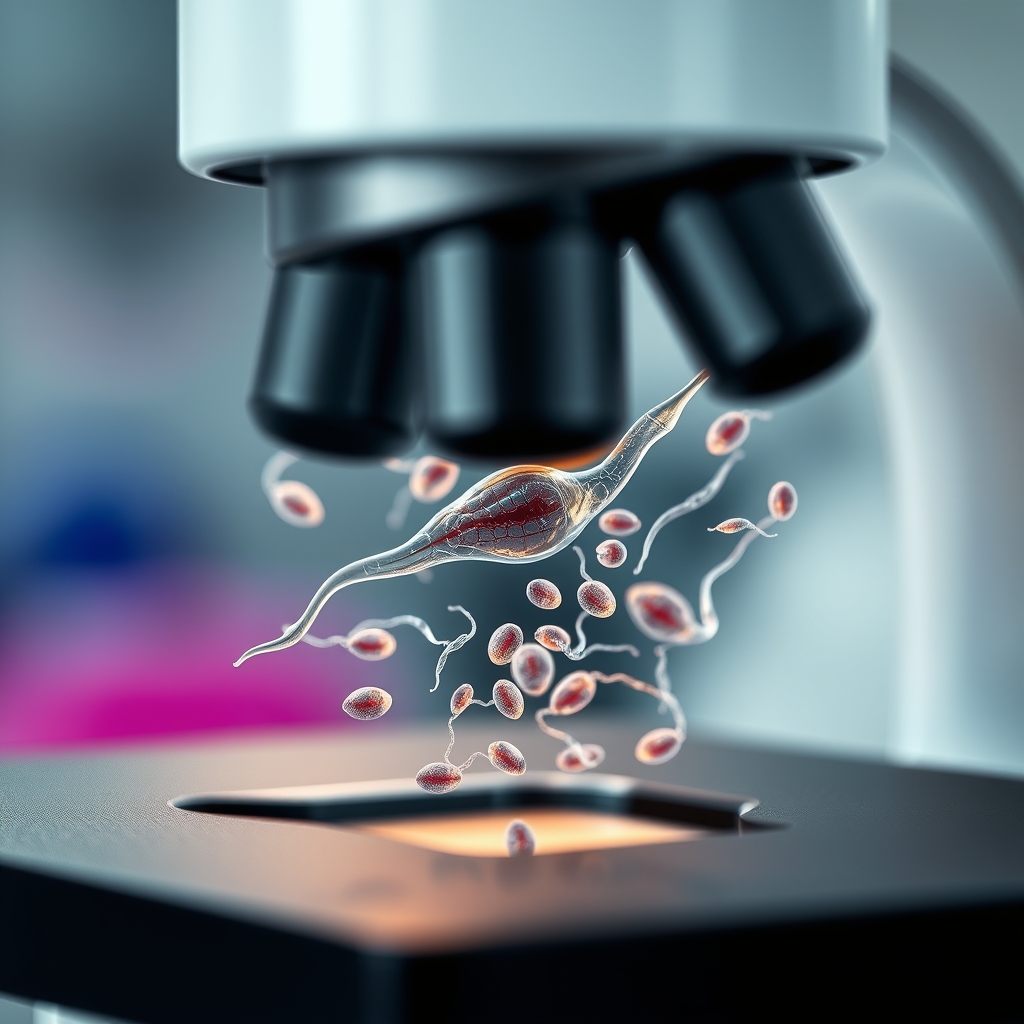
Microscopic view of a semen sample that reveals low count, poor motility, and abnormal shapes typical of OAT syndrome.
How is OAT syndrome diagnosed in the lab?
The c
ornerstone of diagnosis is a semen analysis performed according to WHO’s 2021 reference manual. Here’s the step‑by‑step process most clinics follow:
Sample collection: You’ll be asked to abstain from ejaculation for 2–7 days, then provide a sample by masturbation into a sterile container. The sample should be kept at body temperature and delivered to the lab within an hour.
Initial analysis: Technicians measure volume, pH, liquefaction time, then count sperm concentration, assess motility (progressive vs non‑progressive), and examine morphology using strict Kruger criteria.
Repeat testing: Because semen quality can vary day‑to‑day, a second sample is usually collected 1–2 weeks later. Both results must meet OAT criteria for a definitive diagnosis.
Quality control: Labs follow strict internal standards, calibrated equipment, and WHO‑approved staining methods to ensure the numbers are reliable.
The WHO thresholds that define OAT are shown in the table below. If any two of the three parameters are below these cut‑offs, the diagnosis of OAT syndrome is made.
Parameter
WHO 2021 Threshold
Typical OAT Finding
Sperm concentration (oligo)
< 15 million/mL
Often 5–10 million/mL
Progressive motility (astheno)
< 40 %
Often 20–30 %
Normal morphology (terato)
< 4 %
Often 1–2 %
In practice, many men present with a “mixed” picture—slightly low count, borderline motility, and a few abnormal forms. The lab report will list each value and note whether each parameter meets the WHO reference range. Your physician will use these numbers to classify the severity (mild, moderate, or severe) and decide on next steps.
Because the semen analysis is sensitive to temperature, abstinence period, and even stress, clinicians often repeat the test under slightly different conditions to confirm consistency. This double‑testing approach minimizes the risk of a false‑positive OAT diagnosis and aligns with ACOG’s recommendation for repeat testing when a male factor abnormality is first identified.
What additional tests accompany a semen analysis?
While the semen analysis provides the primary data, fertility specialists often order extra investigations to uncover underlying causes:
Hormone panel: Blood tests for follicle‑stimulating hormone (FSH), luteinising hormone (LH), testosterone, estradiol, and prolactin help identify endocrine disorders that can affect sperm production.
Genetic testing: Karyotype analysis and Y‑chromosome microdeletion screening are recommended for men with severe OAT, especially when a hormonal imbalance is not evident. These tests can detect conditions such as Klinefelter syndrome or AZF deletions that influence treatment choice.
Scrotal ultrasound: Imaging can reveal varicoceles (enlarged veins), epididymal cysts, or obstructive lesions that may be surgically correctable.
Infection screening: Tests for sexually transmitted infections (chlamydia, gonorrhea) and prostatitis markers are performed if there’s a history of fever, urethritis, or pelvic pain.
Oxidative stress assay: Some labs assess reactive oxygen species (ROS) levels, which can damage sperm DNA and contribute to teratozoospermia.
The combination of semen analysis, hormonal profiling, and genetic testing paints a comprehensive picture. For example, a man with low sperm count and high FSH likely has primary testicular failure, whereas normal hormone levels with a detectable varicocele may point toward a surgically correctable cause.
In the United Kingdom, the NHS recommends that all men with a confirmed severe male factor infertility undergo genetic testing before proceeding to IVF/ICSI, to inform both treatment planning and counselling about potential hereditary risks.
Interpreting the results: severity and what they mean for you
Once the lab reports are in, doctors classify OAT severity based on how far the values fall below the WHO cut‑offs:
Mild OAT: One parameter is slightly below threshold (e.g., 12 million/mL sperm concentration) while the other two are near normal. Natural conception is still possible, though it may take longer.
Moderate OAT: Two parameters are below threshold (e.g., 8 million/mL concentration and 30 % progressive motility). The chance of pregnancy without assistance drops to roughly 10–20 % per year.
Severe OAT: All three parameters are markedly reduced (e.g., 3 million/mL, 15 % motility, 1 % normal morphology). Natural conception rates fall below 5 % per year, and ART is usually recommended.
These categories aren’t rigid; they serve as a communication tool between you and your care team. They also help decide whether lifestyle changes alone might be enough, or if you need to move quickly toward medically assisted options.
It’s worth noting that the same absolute values can have different implications depending on the female partner’s age and ovarian reserve. A younger woman with a robust egg supply may have a higher chance of achieving pregnancy even with moderate OAT, while an older partner may require more aggressive intervention. This interplay is why many clinics adopt a “couple‑based” assessment rather than evaluating the male factor in isolation.
Immediate next steps after an OAT diagnosis
Receiving an OAT diagnosis can feel overwhelming, but a structured plan can restore a sense of control. Here’s a typical roadmap you can discuss with your provider:
Schedule a counseling session: A fertility specialist or reproductive endocrinologist will review the results, explain the underlying causes, and set realistic expectations.
Address reversible factors: If varicocele, infection, or hormonal imbalance is identified, those issues can often be treated before moving to ART.
Implement lifestyle modifications: Simple changes—smoking cessation, weight management, heat avoidance, and antioxidant‑rich diet—can improve sperm quality over 3–6 months.
Consider repeat semen analysis: After a period of lifestyle change or medical treatment, a follow‑up test confirms whether parameters have improved.
Explore treatment options: Depending on severity, you may be advised to try medication, surgery, or proceed directly to IVF/ICSI.
Throughout this phase, keep a symptom journal—note any fevers, medication changes, or stressors. This record helps your doctor pinpoint triggers that may be affecting sperm production.
A nutrient‑dense breakfast supports sperm health—antioxidants, zinc, and omega‑3s are key.
Treatment options: medication, surgery, and assisted reproduction
What you choose depends on the underlying cause and how much you want to rely on natural conception. Below is a concise overview of the most common interventions.
Medical therapies
Clomiphene citrate or aromatase inhibitors: These oral agents stimulate the pituitary to release more FSH and LH, potentially boosting sperm production in men with low testosterone.
Selective estrogen receptor modulators (SERMs): For men with elevated estradiol, SERMs can rebalance hormone levels and improve count.
Antioxidant supplementation: Vitamins C and E, coenzyme Q10, selenium, and zinc have modest evidence for improving motility and morphology, especially when oxidative stress is high.
Antibiotics: If infection is identified, a targeted course of antibiotics can restore normal parameters within weeks.
Surgical interventions
Varicocelectomy: Repairing an enlarged scrotal vein can raise sperm concentration by 20–50 % in many men, especially those with moderate OAT.
Vas deferens reconstruction (vasovasostomy) or epididymal sperm aspiration: For obstructive causes, microsurgical techniques can restore the pathway for sperm to mix with seminal fluid.
Assisted reproductive technologies (ART)
Intrauterine insemination (IUI): Suitable for mild OAT when motility is above 30 % after washing and concentrating sperm. Success rates hover around 10–15 % per cycle.
In vitro fertilisation (IVF) with intracytoplasmic sperm injection (ICSI): The gold standard for severe OAT. A single sperm is injected directly into the egg, bypassing motility and morphology challenges. Live‑birth rates for couples where the male partner has OAT range from 35–45 % per IVF cycle, according to recent ACOG data.
Donor sperm: When OAT is irreversible or genetic abnormalities are present, using donor sperm remains a safe, effective option for achieving pregnancy.
Choosing among these options is a shared decision. Your doctor will weigh factors such as the severity of OAT, female partner’s age and ovarian reserve, time constraints, and personal preferences.
Can lifestyle changes improve OAT syndrome?
Yes—multiple studies suggest that targeted lifestyle adjustments can modestly improve semen parameters, especially when the baseline abnormalities are mild‑to‑moderate. Here are evidence‑backed recommendations:
Quit smoking and limit alcohol: Smoking reduces sperm count by up to 30 % and motility by 20 % (CDC). Alcohol above two drinks per day can impair testosterone production.
Maintain a healthy weight: BMI > 30 kg/m² is associated with lower sperm concentration and higher DNA fragmentation (WHO). Aim for gradual weight loss through balanced diet and regular exercise.
Reduce heat exposure: Frequent hot tubs, saunas, or tight underwear raise scrotal temperature, which can impair spermatogenesis. Keep temperatures below 35 °C for optimal sperm production.
Eat antioxidant‑rich foods: Berries, leafy greens, nuts, and fatty fish supply vitamins C, E, selenium, and omega‑3 fatty acids that protect sperm DNA.
Manage stress: Chronic stress elevates cortisol, which may disrupt the hypothalamic‑pituitary‑testicular axis. Mindfulness, yoga, or counseling can help restore hormonal balance.
Limit exposure to environmental toxins: Pesticides, heavy metals, and endocrine‑disrupting chemicals (e.g., phthalates in plastics) have been linked to reduced sperm quality. Choose organic produce when possible and avoid prolonged contact with chemicals.
Improvement takes time. Sperm develop over roughly 74 days, so you’ll typically see measurable changes after 3 months of consistent lifestyle effort. Keep track of any changes with repeat semen analyses to gauge progress.
Prognosis: natural conception and IVF success rates for men with OAT
While OAT does lower the odds of spontaneous pregnancy, many couples still achieve a successful pregnancy—either naturally or with ART.
Natural conception: For mild OAT, the chance of pregnancy within a year is about 30 % (NICE guidelines). Moderate OAT reduces this to roughly 10–15 % per year, and severe OAT falls below 5 %.
IVF/ICSI outcomes: A 2022 meta‑analysis of 12 studies found that couples where the male partner had OAT achieved a live‑birth rate of 38 % per IVF‑ICSI cycle—comparable to couples with other male factor infertility and only slightly lower than those with normal semen parameters (≈45 %).
Impact of treatment timing: Early intervention—addressing reversible causes and optimizing health before IVF—improves embryo quality and may increase the likelihood of a single‑embryo transfer success.
Overall, the prognosis is encouraging when a comprehensive approach is taken. Discussing your specific numbers with a reproductive endocrinologist will clarify the most realistic expectations for you and your partner.
How long does it take to get OAT results and what follow‑up testing is needed?
Standard semen analysis results are typically available within 3–5 business days after the sample is received. If your clinic orders hormonal or genetic testing, those reports can take an additional 1–3 weeks. Most fertility centres schedule a follow‑up appointment within two weeks of receiving all results, giving you time to ask questions and plan the next steps.
Because repeat semen analysis is a cornerstone of the diagnostic pathway, many clinics will ask you to provide a third sample if the first two are discordant or if you’ve started a new treatment (e.g., varicocele surgery). This ensures that any improvement—or lack thereof—is accurately captured before moving forward.
When should you consider referring to a specialist?
If your semen analysis shows any two parameters below WHO thresholds, or if you have a known risk factor (varicocele, prior testicular trauma, or a family history of infertility), it’s advisable to see a reproductive urologist or fertility specialist promptly. Early specialist involvement can identify treatable causes and shorten the time to conception.
In the UK, NHS guidelines suggest that men with a confirmed severe male factor (including OAT) be referred within 6 weeks of the initial abnormal result, to reduce delays in accessing assisted reproduction if needed.
Understanding the impact on your partner and timing of conception
Male factor infertility does not exist in a vacuum. The health of your partner, especially ovarian reserve and age, heavily influences the overall chance of pregnancy. For couples where the female partner is under 35, even moderate OAT may still allow natural conception within a year. When the female partner is over 38, the window narrows, and many clinicians recommend moving to ART sooner rather than later.
Timing also matters. If you plan to try natural conception, aim for intercourse every 1–2 days around ovulation, using ovulation predictor kits or basal body temperature charts to pinpoint fertile days. For couples opting for IUI, the sperm preparation is performed on the day of the ovulation trigger, maximizing the chance that the best‑quality sperm are present when the egg is released.
Emotional and relationship considerations
Infertility can strain even the strongest relationships. Feelings of guilt, blame, or anxiety are common, especially when a male factor is identified. Studies published by the American Society for Reproductive Medicine (ASRM) show that couples who engage in joint counseling report higher satisfaction and better coping during treatment.
Practical steps include scheduling regular “check‑in” conversations with your partner, setting realistic expectations together, and seeking support from a therapist who specializes in fertility issues. Remember, you are a team; sharing the emotional load often leads to better adherence to lifestyle changes and medical recommendations.
Emerging therapies and future research
Research into male infertility is rapidly evolving. A few promising areas include:
MicroRNA profiling: Early studies suggest that specific microRNA signatures in semen may predict sperm quality more accurately than traditional parameters alone (published in *Human Reproduction* 2023).
Stem‑cell‑derived spermatogenesis: Experimental work in mice has demonstrated the ability to generate functional sperm from induced pluripotent stem cells. While still far from clinical use, this could eventually offer a treatment for men with non‑obstructive azoospermia.
Targeted antioxidant therapy: New formulations that combine coenzyme Q10 with novel delivery systems aim to increase sperm intracellular uptake, a focus of several ongoing clinical trials (NCT04567890).
While none of these options are standard care yet, staying informed about clinical trial opportunities can be empowering. Your specialist can help you evaluate whether participation is appropriate for your situation.
Doctor’s note
From our medical team: An OAT diagnosis is a signal to look deeper rather than a verdict of hopelessness. Many men see measurable improvement with targeted lifestyle changes, hormone optimisation, or varicocele repair, and modern ART offers excellent success rates when needed. We encourage you to keep an open dialogue with your provider, ask about repeat testing after lifestyle modifications, and explore all options before making a final decision.
🔢 Ready to crunch your numbers? Use our Semen Analysis (WHO 2021) for a personalized result in seconds.
Myth vs. fact
Myth: OAT means you will never have a biological child. Fact: Even severe OAT can be overcome with ICSI, and many men improve enough for natural conception after lifestyle and medical interventions.
Myth: A single abnormal semen test is enough for a definitive diagnosis. Fact: WHO guidelines require at least two separate semen analyses, because sperm parameters can fluctuate day‑to‑day.
Myth: Supplements alone will fix OAT. Fact: Antioxidants may help, but they work best when combined with broader health changes and, when indicated, medical treatment.
Key takeaways
OAT syndrome is diagnosed when at least two semen parameters (count, motility, morphology) fall below WHO 2021 thresholds.
Two separate semen analyses are required, followed by hormone panels, genetic testing, and scrotal ultrasound when indicated.
Mild OAT may allow natural conception; moderate‑to‑severe OAT often benefits from assisted reproductive technologies like IVF‑ICSI.
Varicocele repair and targeted hormonal therapy are effective medical options for many men.
Live‑birth rates with IVF‑ICSI for OAT range from 35‑45 % per cycle, offering a realistic path to parenthood.
Emotional support and joint counseling improve coping and treatment adherence for couples facing male factor infertility.
Frequently asked questions
What does OAT syndrome stand for?
OAT stands for oligo‑asteno‑teratozoospermia—low sperm count (oligo), reduced sperm motility (astheno), and abnormal sperm shape (terato).
How is OAT syndrome diagnosed in a lab?
The diagnosis is based on two semen analyses that fall below WHO 2021 thresholds for at least two of the three parameters: < 15 million/mL concentration, < 40 % progressive motility, and < 4 % normal morphology.
What are the normal sperm parameters for OAT?
Normal values according to WHO are ≥ 15 million/mL sperm concentration, ≥ 40 % progressive motility, and ≥ 4 % normal morphology. Anything below these on two separate tests meets OAT criteria.
What treatment options are available for OAT syndrome?
Treatment ranges from lifestyle modification and antioxidant supplements to hormonal therapy, varicocele surgery, and assisted reproductive technologies such as IUI, IVF, and ICSI.
Can OAT syndrome be reversed with lifestyle changes?
Yes—studies show that quitting smoking, losing excess weight, avoiding heat, and eating antioxidant‑rich foods can improve semen parameters, especially in mild‑to‑moderate OAT.
What is the success rate of IVF for men with OAT syndrome?
Live‑birth rates for IVF‑ICSI in couples where the male partner has OAT average around 38 % per cycle, which is comparable to other forms of male factor infertility.
Can I use an at‑home semen test to monitor OAT?
At‑home kits can give a rough estimate of sperm concentration, but they lack the precision needed for a formal OAT diagnosis. For reliable results, a clinic‑performed analysis following WHO standards is still required.
Does OAT increase the risk of genetic abnormalities in a child?
Most men with OAT have normal DNA integrity, especially when oxidative stress is low. However, severe teratozoospermia can be associated with higher DNA fragmentation, which some labs assess with a sperm DNA fragmentation test. Discuss any concerns with your specialist, who can recommend testing if indicated.
When to call your doctor
If you experience any of the following, contact your fertility specialist or emergency services immediately: sudden testicular pain or swelling, high fever, painful urination, a sudden drop in semen volume, or signs of hormonal imbalance such as breast tenderness or severe fatigue. Remember, this article provides general information and is not a substitute for personalized medical advice.
References
World Health Organization. WHO Laboratory Manual for the Examination and Processing of Human Semen, 6th edition, 2021.
American College of Obstetricians and Gynecologists (ACOG). Guidelines for Infertility Evaluation and Treatment, 2022.
Centers for Disease Control and Prevention (CDC). Male Infertility: A Public Health Perspective, 2020.
National Institute for Health and Care Excellence (NICE). Infertility: Assessment and Treatment, NG126, 2022.
International Committee for Monitoring Assisted Reproductive Technology (ICMART) & European IVF Monitoring (EIM) Consortium. IVF Success Rates by Male Factor, 2022.
European Society of Human Reproduction and Embryology (ESHRE). Guidelines on the Management of Varicocele in Infertility, 2021.
American Society for Reproductive Medicine (ASRM). Practice Committee Report on the Use of Antioxidants in Male Infertility, 2023.
World Health Organization. Guidelines on Lifestyle Factors Affecting Reproductive Health, 2020.
American Urological Association (AUA). Evaluation and Management of Male Infertility, 2021.
Human Reproduction. MicroRNA signatures as predictors of sperm quality, 2023.
National Clinical Trial (NCT04567890). Targeted Coenzyme Q10 Delivery for Male Infertility, ongoing.
Not sure about the label on Oat Syndrome Diagnosis Oligo Asteno Teratozoospermia Criteria Next Ste products?
Snap the ingredients list and SafeFilter checks every ingredient for your stage — only 3 free scans this month, then you're locked until reset. Unlimited from $7/mo or lock $50/yr through Aug 31 (5 days left).
When Shubhra Mishra was expecting her first child in 2016, she was overwhelmed by conflicting food advice — one site said yes, another said never. By the time her second baby arrived in 2019, she realized millions of mothers face the same confusion.
That sparked a five-year journey through clinical nutrition papers, cultural diets, and expert conversations — all leading to BumpBites: a calm, compassionate space where science meets everyday motherhood.
Her long-term vision is to build a global community ensuring safe, supported, and free deliveriesfor every mother — because no woman should face pregnancy alone or uninformed. 🌿
🌍 Stand with mothers, shape safer guidance
Join a small circle of experts who review BumpBites articles so expecting parents everywhere can decide with confidence.