Safe with limits: Spin class or Peloton is generally safe during pregnancy if modified for intensity, especially after the first trimester. Avoid overheating
By Shubhra Mishra — a mom of two who turned her own confusion during pregnancy into BumpBites, a global mission to make food choices clear, safe, and stress-free for every expecting mother. 💛
Check whether any food is safe during pregnancy with the BumpBites Food Safety Checker.
Quick verdict: ⚠️ Peloton spin class can be safe during pregnancy if modified for intensity, duration, and comfort. Most obstetricians agree that indoor cycling is a low-impact, joint-friendly cardio option, but high-intensity or long rides should be avoided—especially after the first trimester. Always check with your provider first, and listen to your body: if you feel dizzy, overheated, or overly fatigued, it’s time to stop.
You’re staring at your Peloton screen at 6 a.m., heart pounding from last night’s ride, and suddenly it hits you: Is this still okay now that I’m pregnant? Maybe you just finished a 45-minute Power Zone ride and are wondering if you should’ve skipped the last sprint. Or maybe you’re scrolling through the app, trying to decide if you should even clip in today. If you’ve ever Googled is spin class Peloton safe during pregnancy, you’re not alone—and you’re in the right place.
Here’s the good news: you don’t have to give up your Peloton bike entirely. But you do need to make some smart adjustments. We’ll walk you through exactly how to modify your rides, which classes to choose, and when to take a break—so you can keep moving safely, without the 3 a.m. panic.
Peloton Spin Class Safety During Pregnancy: Trimester by Trimester
Trimester
Verdict
Notes
First trimester
⚠️ Safe with modifications
Low to moderate intensity is generally fine, but avoid high resistance, sprints, and long rides. Stay hydrated and stop if you feel nauseous or dizzy.
Second trimester
⚠️ Safe with caution
Focus on comfort: adjust seat height, avoid standing climbs, and keep resistance low. Heart rate should stay below 140 bpm (or use the "talk test").
Third trimester
⚠️ Proceed with caution
Short, low-impact rides only. Avoid anything that strains your pelvic floor or causes discomfort. Consider switching to prenatal yoga or walking.
Breastfeeding
✅ Generally safe
Resistance and intensity can gradually increase, but stay hydrated to support milk supply. Listen to your body as you recover.
What is Peloton spin class?
Peloton spin class is a guided indoor cycling workout streamed live or on-demand through the Peloton app or bike. Classes range from 10 to 90 minutes and include everything from endurance rides to high-intensity interval training (HIIT), music-themed rides, and scenic tours. Instructors lead you through resistance changes, cadence (speed), and sometimes standing climbs or sprints—all while tracking metrics like output, cadence, and heart rate.
Unlike outdoor cycling, Peloton rides are low-impact (easy on joints) and climate-controlled (no weather risks). But they can also be intense: some classes push heart rates into the anaerobic zone, which may not be ideal during pregnancy. The key difference? You’re in control of the resistance and speed—so you can always dial it back.
Is Peloton spin class safe during pregnancy?
Current guidance from the American College of Obstetricians and Gynecologists (ACOG) and the UK’s National Health Service (NHS) supports moderate exercise during pregnancy for most women—including indoor cycling. The ACOG specifically lists stationary biking as a safe, low-impact cardio option, as long as you avoid overheating, dehydration, and excessive intensity.
But here’s the catch: not all Peloton rides are created equal. A 20-minute low-impact ride? Generally fine. A 60-minute Power Zone ride with max resistance? Not recommended—especially after the first trimester. The main concerns aren’t the bike itself, but how you use it: intensity, duration, and body position (like standing climbs) can increase risks like overheating, pelvic floor strain, or dizziness.
Most obstetricians agree that if you were already spinning before pregnancy, you can continue—with modifications. If you’re new to Peloton, pregnancy isn’t the time to start high-intensity rides. Instead, opt for beginner-friendly, low-impact classes and focus on consistency over intensity.
Is it safe to do Peloton spin class in the first trimester of pregnancy?
Yes—with modifications. The first trimester is often the trickiest for exercise because of fatigue, nausea, and the body’s shifting hormones. But if you feel up to it, low to moderate-intensity Peloton rides can be a great way to maintain fitness and manage stress.
Here’s what to watch for:
Avoid overheating: Keep the room cool and hydrate before, during, and after. Overheating in early pregnancy has been linked to neural tube defects in some studies, though the risk is small with short, moderate workouts.
Skip the sprints: High-intensity intervals can spike your heart rate and core temperature. Stick to steady-state rides with low resistance.
Listen to nausea: If you feel queasy, it’s okay to skip a ride or shorten your session. Motion sickness can worsen in the first trimester, even on a stationary bike.
Adjust your seat: As your body changes, your bike fit might too. A seat that was comfortable pre-pregnancy may now feel too low or too far forward.
If you’ve already done a few rides and feel fine, there’s no need to panic. But if you’re new to Peloton, start slow—think 15-20 minutes at a conversational pace.
Can I continue Peloton spin class in the second trimester?
Yes, but this is where modifications become non-negotiable. The second trimester is often called the "golden period" of pregnancy—energy returns, nausea fades, and you might feel stronger than ever. But your body is also changing rapidly: your center of gravity shifts, your joints loosen (thanks, relaxin!), and your blood volume increases by up to 50%.
Here’s how to ride safely:
Ditch the standing climbs: Standing while pedaling increases pressure on your pelvic floor and can strain your lower back. Stick to seated rides only.
Lower the resistance: High resistance can overwork your glutes and hips, leading to discomfort or even sciatica. Aim for a resistance level where you can maintain a steady cadence without straining.
Monitor your heart rate: ACOG recommends keeping your heart rate below 140 bpm during pregnancy, though newer guidance suggests the "talk test" (being able to speak in full sentences) is a better gauge. If you can’t chat comfortably, slow down.
Shorten your rides: 20-30 minutes is plenty. Long rides increase the risk of overheating and fatigue.
Use a fan: Overheating is a bigger risk now. Keep a fan on and wear moisture-wicking clothes.
If you’re used to high-output rides, this might feel frustrating. But remember: the goal isn’t to set PRs—it’s to stay active safely. Think of it as maintenance mode for your fitness.
Is Peloton spin class safe during the third trimester of pregnancy?
This is where things get trickier. By the third trimester, your growing belly can make balance harder, your joints are looser, and your pelvic floor is under more pressure. While short, low-impact rides are still generally safe, you’ll need to be extra cautious.
Here’s what to prioritize:
Keep it short: 15-20 minutes max. Even if you feel great, your body is working harder than you think.
Avoid anything that strains your core: No heavy resistance, no out-of-the-saddle work. If you feel any pulling or pressure in your abdomen, stop immediately.
Focus on comfort: Adjust your seat height and handlebar position to avoid hunching. A cushion or padded seat cover can help if your sit bones are sore.
Watch for warning signs: Dizziness, shortness of breath, vaginal bleeding, or contractions mean it’s time to stop—and call your doctor.
Consider switching to prenatal classes: Peloton’s prenatal yoga or walking workouts might feel better as your due date approaches.
If you’re experiencing pelvic girdle pain (PGP), sciatica, or round ligament pain, spinning might not be the best choice. Talk to your provider about alternatives like swimming or prenatal Pilates.
How intense can my Peloton spin workouts be while pregnant?
This is the million-dollar question—and the answer depends on your pre-pregnancy fitness level, how you’re feeling, and which trimester you’re in. But here’s the general rule: if you can’t hold a conversation during your ride, you’re working too hard.
Here’s a trimester-by-trimester intensity guide:
Peloton Spin Class Intensity Guidelines During Pregnancy
Trimester
Recommended Intensity
Heart Rate Guidance
Resistance Level
Duration
First
Low to moderate
Below 140 bpm or "talk test"
Light to moderate (3-6/10)
20-30 minutes
Second
Low
Below 140 bpm or "talk test"
Light (2-5/10)
20-30 minutes
Third
Very low
Below 130 bpm or "talk test"
Very light (1-3/10)
15-20 minutes
Peloton’s Low Impact and Beginner rides are your best friends during pregnancy. These classes focus on steady-state cardio with minimal resistance changes, no sprints, and no standing climbs. Avoid classes labeled HIIT, Power Zone, Climb, or Intervals—they’re designed to push your limits, which isn’t the goal right now.
If you’re used to tracking output or PRs, try shifting your focus to consistency instead. Aim for 3-4 short rides per week, and celebrate showing up—not the numbers on the screen.
What are the risks of doing Peloton spin class while pregnant?
Like any exercise during pregnancy, Peloton spin class comes with some risks—but most are manageable with the right precautions. Here’s what to watch for:
Overheating: Pregnant women are more prone to overheating because their core temperature is already slightly elevated. Long or intense rides can raise it further, which may increase the risk of neural tube defects in early pregnancy or dehydration later on. Symptoms include dizziness, nausea, or feeling flushed. Solution: Keep rides short, use a fan, and hydrate well.
Pelvic floor strain: The repetitive motion of cycling, especially with high resistance or standing climbs, can put pressure on your pelvic floor. This may contribute to issues like incontinence or prolapse postpartum. Solution: Keep resistance low and avoid standing.
Joint stress: The hormone relaxin loosens your ligaments during pregnancy, making joints less stable. High-impact moves (like jumps or sprints) or excessive resistance can increase the risk of injury. Solution: Stick to low-impact, seated rides.
Dizziness or lightheadedness: Your blood pressure drops during pregnancy, and sudden changes in position (like standing up quickly) can make you feel faint. Solution: Move slowly, stay hydrated, and stop if you feel woozy.
Round ligament pain: Sharp pains in your lower abdomen or groin can happen when your ligaments stretch to support your growing uterus. High-resistance rides or standing climbs can aggravate this. Solution: Lower the resistance and avoid sudden movements.
Increased risk of falls: As your belly grows, your center of gravity shifts, making balance harder. While the Peloton bike is stationary, losing your balance could still lead to injury. Solution: Avoid standing climbs and keep resistance light.
Most of these risks are low if you modify your rides, but it’s important to know the signs that something’s off. If you experience any of the following, stop exercising and call your provider:
Vaginal bleeding or fluid leakage
Regular, painful contractions
Chest pain or shortness of breath before exercising
Headache, dizziness, or faintness
Muscle weakness affecting balance
Calf pain or swelling
Are there pregnancy-safe alternatives to Peloton spin class?
If you’re looking to mix up your routine—or if spinning just doesn’t feel right anymore—there are plenty of pregnancy-safe alternatives that still give you a great workout. Here are some of the best options, all available on the Peloton app or at most gyms:
Peloton prenatal yoga classes: Gentle on joints, great for flexibility and relaxation. Helps with back pain and pelvic floor strength. Look for classes labeled "Prenatal" or "Yoga for Pregnancy."
Peloton walking workouts: Low-impact, easy to modify, and safe for all trimesters. You can do these indoors on a treadmill or outdoors. Try the 20-30 minute "Power Walk" or "Outdoor Walk" classes.
Peloton low-impact cardio: These classes (like "Low Impact Ride" or "Low Impact Cardio") are designed to keep your heart rate up without jarring your joints. Perfect for days when you want to move but don’t feel up for a full spin class.
Stationary bike with low resistance: If you have access to a gym bike, you can control the intensity even more than on a Peloton. Keep resistance light and focus on steady pedaling.
Swimming: Zero impact, full-body workout. The water supports your joints and helps prevent overheating. Many women find swimming especially comfortable in the third trimester.
Prenatal Pilates: Focuses on core strength (safely), pelvic floor, and posture. Look for classes that avoid deep twists or lying flat on your back after the first trimester.
Brisk walking: Simple, free, and effective. Aim for 30 minutes a day, either outside or on a treadmill. Add hills or intervals if you want to increase intensity.
Elliptical machine: Low-impact cardio that’s easier on your joints than running. Keep the resistance light and avoid leaning too far forward.
Prenatal strength training: Light weights or resistance bands can help maintain muscle tone. Focus on upper body, legs, and glutes—avoid heavy lifting or exercises that strain your core.
Peloton meditation and breathing exercises: Not a workout, but a great way to manage stress and connect with your body. Try the 5-10 minute "Meditations for Pregnancy" or "Breathing Exercises."
If you’re not sure where to start, check out our guide on safe exercise during pregnancy, which breaks down the best workouts for each trimester.
Can I use the Peloton bike for low-impact workouts during pregnancy?
Absolutely! In fact, the Peloton bike is one of the best tools for low-impact cardio during pregnancy—as long as you use it correctly. The key is to focus on low resistance, seated rides that keep your heart rate in a safe zone.
Here’s how to make your Peloton bike pregnancy-friendly:
Adjust your seat and handlebars: As your belly grows, you may need to raise the handlebars or move the seat back for a more upright position. This reduces strain on your lower back and makes breathing easier.
Choose the right classes: Stick to Low Impact Ride, Beginner Ride, or Recovery Ride classes. These are designed to be joint-friendly and avoid high-intensity intervals.
Keep resistance light: Aim for a resistance level where you can pedal comfortably without straining. If you’re used to high resistance, this might feel too easy—but that’s the point! Think of it as active recovery.
Monitor your heart rate: Use the "talk test" to gauge intensity. If you can’t speak in full sentences, slow down. The Peloton bike’s heart rate monitor can help, but don’t rely on it exclusively—some women’s heart rates naturally run higher during pregnancy.
Stay hydrated: Keep a water bottle nearby and sip throughout your ride. Dehydration can lead to dizziness or contractions.
Use a fan: Overheating is a real risk, especially in the second and third trimesters. A fan can help regulate your body temperature.
Listen to your body: If you feel any pain, pressure, or discomfort, stop immediately. It’s not worth pushing through.
If you’re new to Peloton, start with 10-15 minute rides and gradually increase to 20-30 minutes as you feel comfortable. And remember: it’s okay to skip a ride if you’re not feeling up to it. Pregnancy isn’t the time to push your limits.
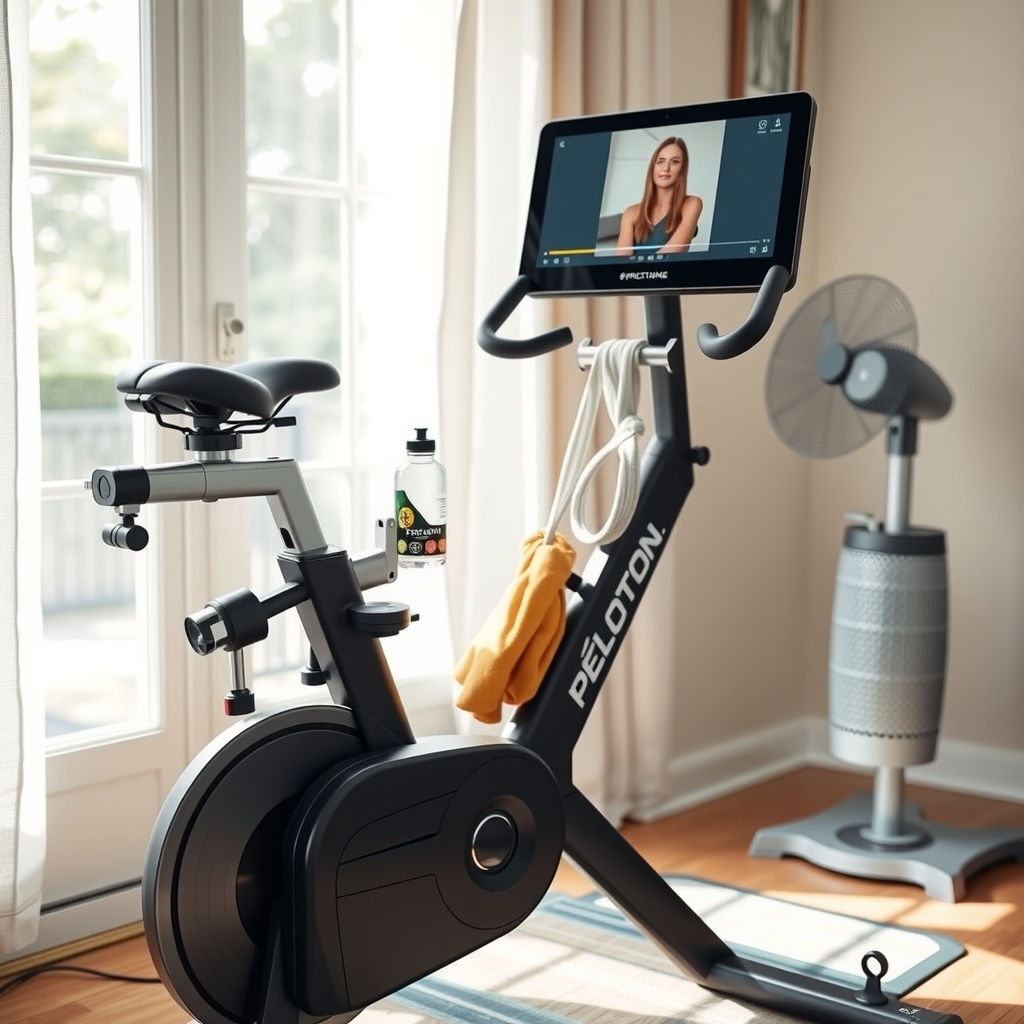
Set up your Peloton bike for comfort: keep water, a towel, and a fan nearby to stay cool and hydrated during low-impact rides.
What modifications should I make for Peloton spin class when pregnant?
Modifying your Peloton rides is the key to staying safe and comfortable throughout pregnancy. Here’s a trimester-by-trimester breakdown of the adjustments you should make:
First Trimester Modifications
Shorten your rides: 20-30 minutes max. Long rides increase the risk of overheating and fatigue.
Avoid sprints and jumps: These high-intensity moves can spike your heart rate and core temperature. Stick to steady-state pedaling.
Lower the resistance: Keep it light to moderate (3-6/10). High resistance can strain your joints and pelvic floor.
Stay seated: Avoid standing climbs or out-of-the-saddle work, which can increase pressure on your pelvic floor.
Hydrate well: Drink water before, during, and after your ride to prevent dehydration and overheating.
Listen to nausea: If you feel sick, it’s okay to skip a ride or shorten your session. Motion sickness can worsen in early pregnancy.
Second Trimester Modifications
Ditch the standing climbs: Standing while pedaling increases pressure on your pelvic floor and can strain your lower back. Stay seated for the entire ride.
Keep resistance low: Aim for 2-5/10. High resistance can overwork your glutes and hips, leading to discomfort.
Monitor your heart rate: Use the "talk test" to gauge intensity. If you can’t speak in full sentences, slow down.
Adjust your bike fit: As your belly grows, you may need to raise the handlebars or move the seat back for a more upright position.
Use a fan: Overheating is a bigger risk now. Keep a fan on and wear moisture-wicking clothes.
Avoid long rides: 20-30 minutes is plenty. Even if you feel great, your body is working harder than you think.
Third Trimester Modifications
Keep rides very short: 15-20 minutes max. Your body is under more strain, and even low-impact exercise can feel exhausting.
Avoid anything that strains your core: No heavy resistance, no out-of-the-saddle work. If you feel any pulling or pressure in your abdomen, stop immediately.
Focus on comfort: Adjust your seat height and handlebar position to avoid hunching. A cushion or padded seat cover can help if your sit bones are sore.
Watch for warning signs: Dizziness, shortness of breath, vaginal bleeding, or contractions mean it’s time to stop—and call your doctor.
Consider switching to prenatal classes: Peloton’s prenatal yoga or walking workouts might feel better as your due date approaches.
Move slowly: Your balance is off, so avoid sudden changes in position or speed.
If you’re not sure how to modify a specific class, check the instructor’s notes or look for rides labeled Low Impact or Beginner. And remember: it’s always okay to pause or stop a ride if something doesn’t feel right.
Is indoor cycling better than outdoor cycling during pregnancy?
Both indoor and outdoor cycling can be safe during pregnancy, but indoor cycling—like Peloton—has some clear advantages, especially as your pregnancy progresses. Here’s how they compare:
Indoor vs. Outdoor Cycling During Pregnancy
Factor
Indoor Cycling (Peloton)
Outdoor Cycling
Impact on joints
✅ Low-impact, easy on knees and hips
✅ Low-impact, but uneven terrain can increase joint stress
⚠️ Harder to regulate body temperature, especially in heat or humidity
Intensity control
✅ Easy to adjust resistance and speed
⚠️ Harder to control (hills, wind, traffic)
Convenience
✅ Ride anytime, no weather concerns
⚠️ Weather-dependent, requires gear and planning
Balance
✅ No balance required (stationary bike)
⚠️ Balance becomes harder as your belly grows
Pelvic floor pressure
⚠️ Can increase with high resistance or standing climbs
⚠️ Can increase with hills or rough terrain
Best for
All trimesters, especially second and third
First trimester (if comfortable) or early second trimester
If you love outdoor cycling, you don’t have to give it up entirely—just be extra cautious. Stick to flat, smooth paths, avoid busy roads, and stop if you feel unstable or overheated. But if you’re looking for the safest option, indoor cycling wins, hands down.
What do OB-GYNs say about Peloton spin class and pregnancy?
Most obstetricians agree that Peloton spin class can be a safe and effective way to stay active during pregnancy—if done correctly. But they also emphasize that every pregnancy is different, and what works for one woman might not work for another. Here’s what the experts say:
Dr. Jane van Dis, OB-GYN and medical advisor for Maven Clinic, told us: "Indoor cycling is a great low-impact option for pregnant women, especially those who were already spinning before pregnancy. The key is to keep the intensity moderate, avoid standing climbs, and listen to your body. If you feel dizzy, short of breath, or experience any pain, it’s time to stop."
The American College of Obstetricians and Gynecologists (ACOG) includes stationary biking on its list of safe exercises during pregnancy, noting that it’s "easy on the joints and helps maintain cardiovascular fitness." However, ACOG also cautions that pregnant women should avoid activities that increase the risk of falling or abdominal trauma—so no outdoor cycling on rough terrain or indoor rides with standing jumps.
The UK’s National Health Service (NHS) echoes this advice, recommending that pregnant women "keep up their normal daily physical activity or exercise for as long as they feel comfortable." They specifically mention cycling as a safe option, but advise women to "be careful" as their bump grows and their balance changes.
So, what’s the bottom line? Most OB-GYNs give Peloton spin class the green light—with modifications. But they also stress the importance of checking in with your provider, especially if you have a high-risk pregnancy or complications like placenta previa, preeclampsia, or a history of preterm labor.
Adjusting your bike fit is key: as your body changes, you may need to raise the seat or handlebars for comfort and safety.
Safer alternatives to Peloton spin class during pregnancy
If you’re looking to switch things up—or if spinning just doesn’t feel right anymore—here are 10 pregnancy-safe alternatives that still give you a great workout. Each of these is low-impact, joint-friendly, and easy to modify for your trimester:
Peloton prenatal yoga classes: Gentle on joints, great for flexibility, and designed specifically for pregnant women. Helps with back pain, pelvic floor strength, and relaxation. Look for classes labeled "Prenatal" or "Yoga for Pregnancy."
Peloton walking workouts: Low-impact, easy to modify, and safe for all trimesters. You can do these indoors on a treadmill or outdoors. Try the 20-30 minute "Power Walk" or "Outdoor Walk" classes for a mood-boosting cardio session.
Peloton low-impact cardio: These classes (like "Low Impact Ride" or "Low Impact Cardio") keep your heart rate up without jarring your joints. Perfect for days when you want to move but don’t feel up for a full spin class.
Stationary bike with low resistance: If you have access to a gym bike, you can control the intensity even more than on a Peloton. Keep resistance light and focus on steady pedaling. This is a great option if you want to ride without the pressure of a class.
Swimming: Zero impact, full-body workout. The water supports your joints and helps prevent overheating. Many women find swimming especially comfortable in the third trimester, as it relieves pressure on the pelvis and lower back.
Prenatal Pilates: Focuses on core strength (safely), pelvic floor, and posture. Look for classes that avoid deep twists or lying flat on your back after the first trimester. Peloton’s "Pilates" classes can be modified for pregnancy with a few adjustments.
Brisk walking: Simple, free, and effective. Aim for 30 minutes a day, either outside or on a treadmill. Add hills or intervals if you want to increase intensity, but keep it comfortable. Walking is one of the safest exercises for all trimesters.
Elliptical machine: Low-impact cardio that’s easier on your joints than running. Keep the resistance light and avoid leaning too far forward. The elliptical mimics the motion of walking or running without the impact.
Prenatal strength training: Light weights or resistance bands can help maintain muscle tone. Focus on upper body, legs, and glutes—avoid heavy lifting or exercises that strain your core. Peloton’s "Strength" classes can be modified by reducing weight and avoiding moves like crunches or planks.
Peloton meditation and breathing exercises: Not a workout, but a great way to manage stress and connect with your body. Try the 5-10 minute "Meditations for Pregnancy" or "Breathing Exercises" to relax and prepare for labor.
If you’re not sure where to start, talk to your provider or a prenatal fitness specialist. They can help you choose the best workouts for your trimester and fitness level. And remember: it’s okay to mix and match! Some days you might feel like a walk, others like a swim or a yoga class. The goal is to stay active safely, not to stick to a rigid routine.
Related exercises: safety at a glance
Wondering how Peloton spin class stacks up against other popular workouts during pregnancy? Here’s a quick comparison of 10 common exercises and their safety verdicts:
Pregnancy Exercise Safety Comparison
Exercise
Verdict
Notes
Hot yoga during pregnancy
❌ Best avoided
High temperatures increase the risk of overheating and dehydration. Opt for regular or prenatal yoga instead.
Not sure about the label on Is Spin Class Peloton Safe During Pregnancy products?
Snap the ingredients list and SafeFilter checks every ingredient for your stage — only 3 free scans this month, then you're locked until reset. Unlimited from $7/mo or $50/yr.
When Shubhra Mishra was expecting her first child in 2016, she was overwhelmed by conflicting food advice — one site said yes, another said never. By the time her second baby arrived in 2019, she realized millions of mothers face the same confusion.
That sparked a five-year journey through clinical nutrition papers, cultural diets, and expert conversations — all leading to BumpBites: a calm, compassionate space where science meets everyday motherhood.
Her long-term vision is to build a global community ensuring safe, supported, and free deliveriesfor every mother — because no woman should face pregnancy alone or uninformed. 🌿
🌍 Stand with mothers, shape safer guidance
Join a small circle of experts who review BumpBites articles so expecting parents everywhere can decide with confidence.