Limit rowing crew during pregnancy, especially in the first trimester. Low-impact sessions with doctor approval are safest—avoid high intensity or risk of
By Shubhra Mishra — a mom of two who turned her own confusion during pregnancy into BumpBites, a global mission to make food choices clear, safe, and stress-free for every expecting mother. 💛
Check whether any food is safe during pregnancy with the BumpBites Food Safety Checker.
Quick verdict: ⚠️ Rowing crew can be safe during pregnancy if you were already experienced before conceiving, your pregnancy is low-risk, and you adjust intensity, duration, and technique. Most obstetricians recommend switching to indoor rowing or lower-impact alternatives after the first trimester to reduce risks like abdominal trauma, joint strain, and overheating.
You’re staring at your rowing machine at 6 a.m., heart pounding—not just from the workout. You’re 12 weeks pregnant, and suddenly every stroke feels like a question mark. Is rowing crew safe during pregnancy? What if you’ve been doing it for years? What if you’re brand new? And what about that nagging worry: could this cause a miscarriage?
Take a breath. You’re not alone. Many pregnant athletes and fitness lovers face the same uncertainty. The good news? Rowing crew isn’t automatically off-limits—but it’s not risk-free either. The key is knowing how to row safely, when to adjust, and what signs mean it’s time to stop. In this guide, we’ll break down the latest guidance from obstetricians and sports medicine experts, so you can make an informed choice—without the panic.
Is rowing crew safe during pregnancy? A trimester-by-trimester snapshot
Trimester
Verdict
Notes
First trimester
⚠️ Caution advised
Generally safe if you were already rowing before pregnancy, but avoid high intensity or new technique changes. Risk of overheating is highest in early pregnancy.
Second trimester
⚠️ Caution advised
Switch to indoor rowing if possible. Avoid aggressive strokes or team drills that could cause abdominal trauma. Joint laxity increases risk of injury.
Third trimester
❌ Best avoided
Balance and center of gravity shift significantly. Risk of falls, abdominal trauma, and overexertion is higher. Most providers recommend stopping outdoor rowing.
Breastfeeding
✅ Generally safe
Resume rowing gradually after clearance from your provider. Hydration is critical to maintain milk supply.
Switching to an indoor rower can help you stay active while reducing risks like falls or abdominal trauma.
What is rowing crew?
Rowing crew—also called competitive rowing—is a full-body, high-intensity sport that involves propelling a boat (or a machine) using oars. It’s known for its cardiovascular benefits, core strength, and teamwork. There are two main types:
Outdoor rowing: Done on open water in single, double, or team boats. It requires balance, coordination, and often early-morning practices in variable weather.
Indoor rowing: Done on a stationary machine (like a Concept2 rower) in a gym or at home. It mimics the motion of outdoor rowing but without the balance or weather risks.
Rowing is a low-impact sport in terms of joint stress (compared to running), but it’s high-impact in terms of cardiovascular demand and core engagement. During pregnancy, that combination can be both a benefit and a risk.
Is rowing crew safe during pregnancy?
The short answer: it depends. The American College of Obstetricians and Gynecologists (ACOG) and the UK’s Royal College of Obstetricians and Gynaecologists (RCOG) both state that most pregnant women can continue exercising during pregnancy, including activities they were already doing before conception. However, they also caution that contact sports, activities with a high risk of falling, or those that involve rapid changes in direction or abdominal trauma should be avoided.
Rowing crew falls into a gray area. It’s not a contact sport, but outdoor rowing carries risks of falls, collisions, or abdominal trauma from the oar handle. Indoor rowing eliminates some of those risks but still involves intense core engagement and cardiovascular demand, which can be problematic in later pregnancy.
Here’s what the evidence says:
ACOG (2020): “Women who were engaged in rowing before pregnancy may continue, but should avoid activities that increase the risk of abdominal trauma or falls.” They specifically mention outdoor rowing as a higher-risk activity due to balance changes.
NHS (UK): Recommends avoiding sports with a risk of being hit in the abdomen, which includes rowing in team boats where oars could collide.
Sports Medicine Australia: Notes that rowing is generally safe in the first trimester for experienced athletes but advises switching to stationary or indoor rowing after 16 weeks to reduce fall risk.
Bottom line: If you were a regular rower before pregnancy and your pregnancy is low-risk, rowing crew can be safe in the first trimester with adjustments. After that, indoor rowing is a safer choice. If you’re new to rowing, pregnancy isn’t the time to start.
Is rowing crew safe in the first trimester of pregnancy?
Yes—with caveats. The first trimester (weeks 1–12) is the most critical period for fetal development, but it’s also the time when many women feel well enough to exercise. If you were rowing regularly before pregnancy, continuing at a moderate intensity is generally considered safe by most obstetricians.
However, there are two major risks to watch for:
Overheating: Your core body temperature rises more easily during pregnancy, and overheating in the first trimester has been linked to neural tube defects in some animal studies. ACOG recommends avoiding activities that raise your core temperature above 102°F (38.9°C).
Abdominal trauma: While rare, a sudden jolt or impact to the abdomen (like from an oar handle) could potentially cause complications. Outdoor rowing in team boats increases this risk.
What to do:
Stick to indoor rowing if possible.
Keep your heart rate below 140 bpm (or use the “talk test”—you should be able to carry on a conversation).
Hydrate before, during, and after rowing.
Avoid rowing in hot or humid conditions.
Stop immediately if you feel dizzy, short of breath, or experience any abdominal pain or cramping.
If you’re new to rowing, now isn’t the time to start. Your body is adjusting to pregnancy, and learning a new sport increases the risk of injury.
Can you continue rowing crew in the second trimester?
Yes, but with more adjustments. The second trimester (weeks 13–27) is often called the “honeymoon phase” of pregnancy—many women feel their best during this time. However, your body is also undergoing significant changes that affect rowing safety:
Joint laxity: The hormone relaxin loosens your ligaments to prepare for childbirth, which increases the risk of joint injuries (especially in the knees, hips, and lower back).
Balance shifts: Your center of gravity moves forward as your belly grows, making balance on a boat or machine trickier.
Cardiovascular changes: Your blood volume increases by up to 50%, which can make intense exercise feel harder.
What to do:
Switch to indoor rowing. The risk of falling or abdominal trauma is higher outdoors.
Shorten your stroke and reduce intensity. Focus on form over speed.
Avoid aggressive team drills or sprints.
Wear a supportive belly band if needed to reduce strain on your lower back.
Listen to your body. If you feel any pulling in your abdomen or pelvis, stop.
Most providers recommend stopping outdoor rowing by the end of the second trimester due to balance and fall risks.
Hydration is critical during pregnancy—especially if you're continuing to row.
Is it safe to row crew during the third trimester of pregnancy?
Most obstetricians recommend avoiding rowing crew in the third trimester (weeks 28–40). Here’s why:
Balance and coordination: Your center of gravity shifts dramatically, increasing the risk of falls—especially on a boat or slippery dock.
Abdominal pressure: The intense core engagement in rowing can put pressure on your pelvic floor and abdomen, which is already under strain.
Overheating: Your body has a harder time regulating temperature in late pregnancy, making overheating more likely.
Joint stress: Relaxin makes your joints even looser, increasing the risk of injury.
If you’re determined to stay active, indoor rowing at a very low intensity may be an option—but only with your provider’s approval. Even then, most experts recommend switching to gentler activities like walking, swimming, or prenatal yoga.
If you choose to row in the third trimester:
Keep sessions short (10–15 minutes max).
Use the lowest resistance setting.
Avoid any core engagement—focus only on arm and leg movement.
Stop immediately if you feel any pelvic pressure, contractions, or dizziness.
How many times a week is rowing crew safe while pregnant?
If you’re continuing rowing during pregnancy, frequency matters as much as intensity. Here’s what the experts recommend:
Trimester
Recommended Frequency
Notes
First trimester
3–4 times per week
If you were rowing regularly before pregnancy. Reduce to 2–3 times if new to rowing.
Second trimester
2–3 times per week
Switch to indoor rowing. Reduce duration to 20–30 minutes per session.
Third trimester
0–1 time per week
Only with provider approval. Keep sessions very short and low-intensity.
General guidelines:
Aim for 150 minutes of moderate-intensity exercise per week (ACOG’s recommendation for pregnant women). Rowing can count toward this, but mix it with lower-impact activities.
Never row on consecutive days. Your body needs time to recover.
If you feel fatigued, sore, or notice any unusual symptoms (like spotting or contractions), skip your session and rest.
What are the risks of rowing crew during pregnancy?
Rowing crew isn’t risk-free during pregnancy. Here are the main concerns, ranked by severity:
Abdominal trauma:
Risk: A sudden jolt or impact to the abdomen (e.g., from an oar handle or collision in a team boat) could potentially cause placental abruption (a serious condition where the placenta separates from the uterus).
When it’s most likely: Outdoor rowing, especially in team boats or rough water.
How to reduce risk: Switch to indoor rowing and avoid aggressive strokes.
Falls and balance issues:
Risk: Your center of gravity shifts as your belly grows, making falls more likely—especially on a boat or slippery dock. Falls can lead to injury to you or the baby.
When it’s most likely: Second and third trimesters.
How to reduce risk: Stick to indoor rowing and use a machine with a stable base.
Overheating:
Risk: Overheating in the first trimester has been linked to neural tube defects in animal studies. Later in pregnancy, it can cause dehydration or dizziness.
When it’s most likely: First trimester, hot/humid conditions, or intense sessions.
How to reduce risk: Hydrate well, wear breathable clothing, and avoid rowing in extreme heat.
Joint and muscle injuries:
Risk: The hormone relaxin loosens your ligaments, increasing the risk of strains or sprains—especially in the knees, hips, and lower back.
When it’s most likely: Second and third trimesters.
How to reduce risk: Shorten your stroke, reduce intensity, and avoid sudden movements.
Pelvic floor strain:
Risk: The intense core engagement in rowing can put pressure on your pelvic floor, which is already under strain during pregnancy. This can contribute to issues like incontinence or prolapse.
When it’s most likely: Third trimester.
How to reduce risk: Avoid aggressive strokes and focus on controlled movements.
Can rowing crew cause miscarriage or preterm labor?
There’s no evidence that rowing crew directly causes miscarriage or preterm labor in low-risk pregnancies. However, certain factors associated with rowing could potentially increase the risk:
Abdominal trauma: While rare, a severe impact to the abdomen (like from an oar handle) could theoretically cause placental abruption, which is a risk factor for miscarriage or preterm labor. This is why most providers recommend avoiding outdoor rowing after the first trimester.
Overexertion: Pushing yourself too hard—especially in hot conditions—can lead to dehydration or overheating, which may increase the risk of complications. ACOG advises keeping your heart rate below 140 bpm and staying well-hydrated.
Pelvic pressure: Intense core engagement (like in rowing) can put pressure on your cervix, which theoretically could contribute to preterm labor in high-risk pregnancies. However, this hasn’t been proven in studies.
Bottom line: If your pregnancy is low-risk and you row safely (indoors, at moderate intensity), the risk of miscarriage or preterm labor is very low. But if you’re high-risk (e.g., history of preterm labor, placenta previa, or cervical insufficiency), your provider will likely recommend avoiding rowing altogether.
Is indoor rowing safer than outdoor rowing during pregnancy?
Yes—indoor rowing is significantly safer than outdoor rowing during pregnancy. Here’s why:
Risk Factor
Outdoor Rowing
Indoor Rowing
Fall risk
High (balance changes, slippery docks, waves)
Low (stable machine, no balance required)
Abdominal trauma
Moderate (oar handle collisions, team drills)
Low (controlled environment)
Overheating
Moderate (weather-dependent, hard to cool down)
Low (can control temperature, hydrate easily)
Joint stress
High (uneven water surface, sudden movements)
Moderate (smooth, controlled motion)
Pelvic floor strain
High (intense core engagement, bumpy water)
Moderate (can adjust resistance and form)
When to choose indoor rowing:
If you’re in your second or third trimester.
If you’re new to rowing (pregnancy isn’t the time to learn outdoor rowing).
If you have any balance issues or joint concerns.
If you’re rowing in hot or humid weather.
Even indoor rowing has risks, so always:
Keep intensity moderate.
Shorten your stroke to reduce core engagement.
Hydrate well and avoid overheating.
Stop if you feel any pain, dizziness, or contractions.
What precautions should pregnant women take when rowing crew?
If you’re continuing rowing during pregnancy, these precautions can help you stay safe:
Get clearance from your provider. This is non-negotiable, especially if you have a high-risk pregnancy or any complications.
Switch to indoor rowing by the second trimester. Outdoor rowing’s fall and abdominal trauma risks aren’t worth it.
Reduce intensity and duration.
First trimester: Keep sessions under 30 minutes, heart rate below 140 bpm.
Second trimester: Reduce to 20–25 minutes, lower resistance.
Third trimester: Only with provider approval, 10–15 minutes max at very low intensity.
Modify your technique.
Shorten your stroke to reduce core engagement.
Avoid aggressive finishes or sprints.
Focus on controlled, smooth movements.
Hydrate before, during, and after. Dehydration can cause contractions or dizziness. Aim for at least 8–10 cups of water daily, plus extra during workouts.
Wear supportive gear.
A belly band can help support your lower back and abdomen.
Wear a well-fitting sports bra to reduce breast discomfort.
Choose breathable, moisture-wicking clothing to prevent overheating.
Listen to your body. Stop immediately if you experience:
Dizziness or shortness of breath.
Vaginal bleeding or spotting.
Contractions or abdominal pain.
Pelvic pressure or back pain.
Fluid leaking from your vagina.
Avoid rowing in extreme conditions. Skip your session if it’s too hot, humid, or cold.
Don’t row on an empty stomach. Eat a light snack (like a banana or toast) 30–60 minutes before rowing to maintain energy and prevent dizziness.
Is rowing crew safe for high-risk pregnancies?
No—rowing crew is not recommended for high-risk pregnancies. If you have any of the following conditions, your provider will likely advise you to avoid rowing (and most other moderate-to-intense exercises):
History of preterm labor or premature birth.
Placenta previa (placenta covers the cervix).
Cervical insufficiency (weak cervix).
Preeclampsia or gestational hypertension.
Severe anemia.
Heart or lung disease.
Multiple gestation (twins, triplets, etc.).
Unexplained vaginal bleeding.
Intrauterine growth restriction (IUGR).
If you’re high-risk but still want to stay active, ask your provider about gentler alternatives like walking, swimming, or prenatal yoga. Even these may need to be modified based on your condition.
What are the side effects and risks of rowing crew during pregnancy?
Even if you row safely, you might experience some side effects. Here’s what to watch for:
Common (but usually not serious) side effects
Fatigue: Your body is working harder to support the pregnancy, so rowing may feel more exhausting than usual.
Shortness of breath: Your growing uterus pushes up on your diaphragm, making it harder to catch your breath.
Back or pelvic pain: Relaxin loosens your joints, and rowing’s core engagement can strain your lower back or pelvis.
Round ligament pain: Sharp pains in your lower abdomen or groin, caused by stretching ligaments. This is normal but can be triggered by sudden movements in rowing.
Breast tenderness: Rowing’s arm movement can make breast discomfort worse, especially in the first trimester.
Serious risks (stop rowing and call your provider if you experience these)
Vaginal bleeding or spotting: Could indicate placental abruption or other complications.
Contractions: Regular, painful contractions before 37 weeks could signal preterm labor.
Fluid leaking from your vagina: Could be amniotic fluid, which requires immediate medical attention.
Dizziness or fainting: Could indicate low blood pressure or dehydration.
Severe headache or vision changes: Could be a sign of preeclampsia.
Decreased fetal movement: If you notice your baby moving less after rowing, call your provider.
Safer alternatives to rowing crew during pregnancy
If you’re looking to stay active but want to reduce the risks of rowing, these alternatives are generally considered safe during pregnancy (with your provider’s approval):
Walking: Low-impact, easy to modify, and safe in all trimesters. Aim for 30 minutes most days.
Swimming: The water supports your joints and reduces overheating. Great for all trimesters.
Prenatal yoga: Improves flexibility, strength, and relaxation. Avoid hot yoga and poses that involve lying on your back after the first trimester.
Stationary cycling: Low-impact and safe if you avoid high resistance or standing up on the pedals.
Low-impact aerobics: Look for prenatal-specific classes that avoid jumps or sudden movements.
Elliptical machine: Mimics running without the impact. Keep resistance low and avoid leaning forward too much.
Pilates for pregnancy: Focuses on core strength and pelvic floor health. Avoid advanced moves that strain your abdomen.
Water aerobics: Gentle on joints and great for staying cool. Many pools offer prenatal classes.
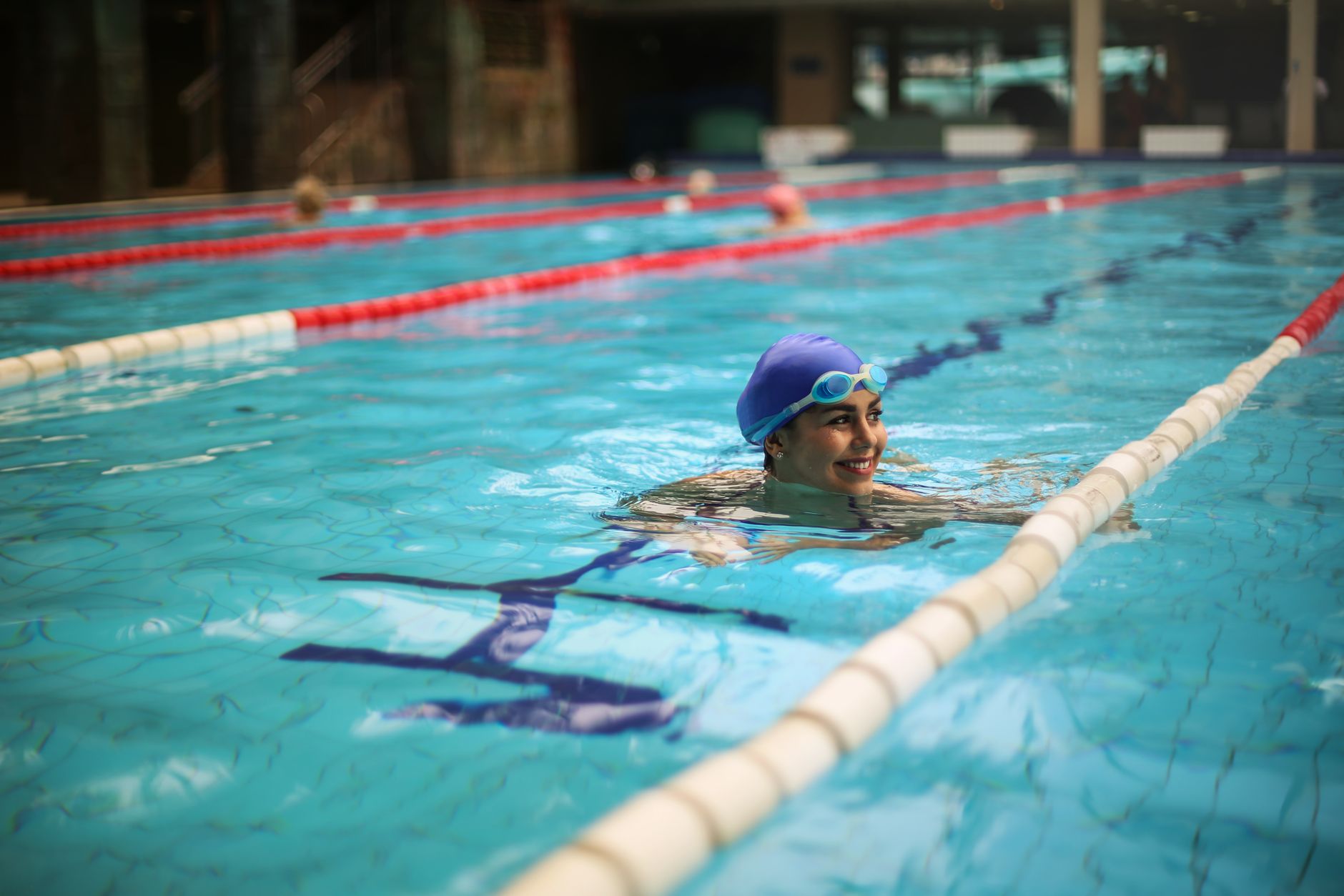
Swimming is one of the safest and most effective exercises during pregnancy—it supports your joints and keeps you cool.
Related exercises: Safety at a glance
Wondering how rowing crew compares to other popular exercises during pregnancy? Here’s a quick safety breakdown:
Exercise
Verdict
Notes
Running during pregnancy
⚠️ Safe with limits
Safe if you were running before pregnancy, but reduce intensity and duration in the third trimester.
Cycling while pregnant
⚠️ Safe with limits
Stationary cycling is safest. Outdoor cycling carries fall risks, especially in the third trimester.
Weightlifting during pregnancy
⚠️ Safe with limits
Avoid heavy lifting, Valsalva maneuver, or exercises that strain your abdomen (e.g., sit-ups).
CrossFit and pregnancy
❌ Best avoided
High-intensity, high-impact, and often involves movements that strain the abdomen or risk falls.
High-intensity interval training (HIIT) while pregnant
❌ Best avoided
Can cause overheating, dehydration, and joint stress. Modify to low-impact movements if continuing.
Horseback riding during pregnancy
❌ Best avoided
High risk of falls and abdominal trauma. Not recommended after the first trimester.
Skiing while pregnant
❌ Best avoided
High risk of falls and collisions. Not recommended after the first trimester.
Scuba diving during pregnancy
❌ Best avoided
Risk of decompression sickness, which can harm the baby. Avoid entirely during pregnancy.
Hot yoga and pregnancy
❌ Best avoided
Risk of overheating, which can cause neural tube defects in the first trimester.
Contact sports during pregnancy
❌ Best avoided
High risk of abdominal trauma or falls (e.g., soccer, basketball, hockey).
Myth vs. fact: Rowing crew during pregnancy
There’s a lot of misinformation out there about rowing crew and pregnancy. Let’s clear up some common myths:
Myth: Rowing crew is completely safe during pregnancy because it’s low-impact. Fact: While rowing is low-impact on your joints, it’s high-impact in terms of cardiovascular demand and core engagement. Outdoor rowing also carries risks of falls and abdominal trauma. It’s not automatically safe—it depends on your experience, trimester, and pregnancy risk level.
Myth: If you rowed before pregnancy, you can keep doing it at the same intensity. Fact: Pregnancy changes your body in ways that affect your performance and safety. Your heart rate, joint stability, and balance all shift, so you’ll need to reduce intensity, shorten sessions, and modify your technique. Listen to your body—not your pre-pregnancy fitness level.
Myth: Rowing crew is safer than running during pregnancy. Fact: Both have risks and benefits. Running is higher-impact on your joints but doesn’t carry the same fall or abdominal trauma risks as outdoor rowing. Indoor rowing is generally safer than outdoor rowing, but neither is “better” than the other—it depends on your individual pregnancy and fitness level.
Key takeaways
✅ Rowing crew can be safe during pregnancy if: You were already experienced before conceiving, your pregnancy is low-risk, and you adjust intensity, duration, and technique.
⚠️ Switch to indoor rowing by the second trimester to reduce risks of falls and abdominal trauma.
❌ Avoid outdoor rowing in the third trimester due to balance and fall risks.
🚫 Rowing crew is not safe for high-risk pregnancies. If you have complications, opt for gentler activities like walking or swimming.
💧 Hydration and overheating are major concerns. Drink plenty of water and avoid rowing in hot or humid conditions.
🚨 Stop rowing immediately if you experience: Dizziness, contractions, vaginal bleeding, fluid leakage, or decreased fetal movement.
🔄 Safer alternatives to rowing crew include: Walking, swimming, prenatal yoga, stationary cycling, and water aerobics.
Frequently asked questions
Can you row while pregnant?
Yes, but with adjustments. If you were rowing regularly before pregnancy, you can continue in the first trimester with reduced intensity and a focus on safety. Switch to indoor rowing by the second trimester, and avoid rowing altogether in the third trimester unless your provider approves very low-intensity sessions. If you’re new to rowing, pregnancy isn’t the time to start.
What exercises should be avoided during pregnancy?
Avoid exercises with a high risk of falls, abdominal trauma, or overheating. This includes contact sports (e.g., soccer, basketball), activities with a high fall risk (e.g., skiing, horseback riding, outdoor cycling), scuba diving, hot yoga, and high-intensity interval training (HIIT). Also avoid exercises that involve lying flat on your back after the first trimester (e.g., sit-ups, certain yoga poses).
Is rowing safe in early pregnancy?
Generally yes, if you were already rowing before pregnancy. The first trimester is the safest time to continue rowing, but you should reduce intensity, avoid overheating, and switch to indoor rowing if possible. If you’re new to rowing, wait until after pregnancy to start—your body is already adjusting to major changes, and learning a new sport increases injury risk.
What are the best exercises for pregnant women?
The best exercises for pregnancy are low-impact, safe for all trimesters, and easy to modify. Top recommendations include
Not sure about the label on Is Rowing Crew Safe During Pregnancy products?
Snap the ingredients list and SafeFilter checks every ingredient for your stage — only 3 free scans this month, then you're locked until reset. Unlimited from $7/mo or $50/yr.
When Shubhra Mishra was expecting her first child in 2016, she was overwhelmed by conflicting food advice — one site said yes, another said never. By the time her second baby arrived in 2019, she realized millions of mothers face the same confusion.
That sparked a five-year journey through clinical nutrition papers, cultural diets, and expert conversations — all leading to BumpBites: a calm, compassionate space where science meets everyday motherhood.
Her long-term vision is to build a global community ensuring safe, supported, and free deliveriesfor every mother — because no woman should face pregnancy alone or uninformed. 🌿
🌍 Stand with mothers, shape safer guidance
Join a small circle of experts who review BumpBites articles so expecting parents everywhere can decide with confidence.