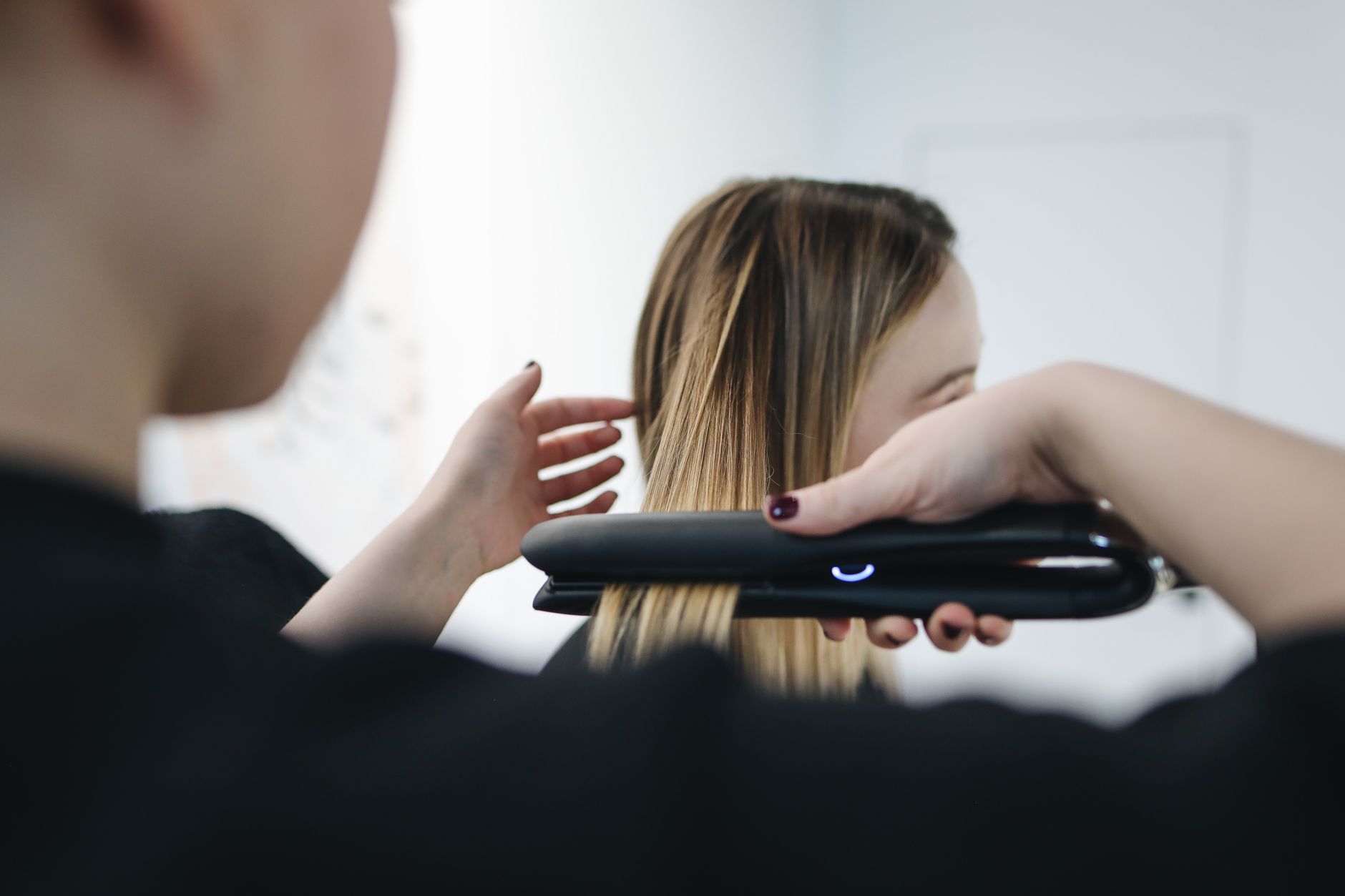
Avoid keratin treatments during pregnancy, even formaldehyde-free versions. Experts recommend safer alternatives due to potential risks in the first trimester and unknown long-term effects.
By Shubhra Mishra — a mom of two who turned her own confusion during pregnancy into BumpBites, a global mission to make food choices clear, safe, and stress-free for every expecting mother. 💛
Check whether any food is safe during pregnancy with the BumpBites Food Safety Checker.
Quick verdict: ⚠️ Talk to your doctor first. Formaldehyde‑free keratin treatments may be used with caution, but the safest approach is to discuss the specific product and exposure level with your obstetric provider before scheduling a session.
It’s 2 a.m., you’re scrolling through beauty blogs, and the headline “Is keratin treatment formaldehyde free safe during pregnancy?” pops up, sending a jolt of anxiety through your already‑tired brain. You may have already booked a salon appointment or are wondering whether to postpone that sleek, frizz‑free look until after delivery. The good news is you’re not alone—many expecting parents ask the same question, and the answer can be broken down into clear, evidence‑based steps.
In this article we answer the primary question—is keratin treatment formaldehyde free safe during pregnancy—by looking at the chemistry behind the treatment, reviewing guidance from the American College of Obstetricians and Gynecologists (ACOG), the U.K. National Health Service (NHS), and the U.S. Food and Drug Administration (FDA), and laying out trimester‑specific recommendations. We’ll also cover how many sessions might be reasonable, which brands have the most transparent safety data, safer hair‑smoothing alternatives, and what to do if you notice any warning signs.
By the end you’ll have a concise verdict, practical limits on exposure, a list of safer options, and a clear plan for when to call your provider. Let’s turn that 3 a.m. worry into confidence.
Stage of pregnancy
Verdict
Notes
First trimester
⚠️ Caution
Limit exposure; discuss with provider; consider postponing.
Second trimester
⚠️ Caution
Lower risk than 1st trimester, but still advisable to limit sessions.
Third trimester
⚠️ Caution
Potential for respiratory irritation; avoid if you have asthma or skin sensitivity.
Breastfeeding
⚠️ Caution
Formaldehyde vapors can linger; ensure good ventilation and consider waiting.
What is a keratin treatment?
Keratin treatments, often marketed as “Brazilian blowouts” or “smoothening therapies,” are salon procedures that coat the hair shaft with a protein‑rich solution. The solution typically contains a blend of hydrolyzed keratin, conditioning agents, and a chemical fixative—historically formaldehyde or formaldehyde‑releasing compounds such as methylene glycol. When the product is heated with a flat iron, the fixative creates cross‑links that lock the keratin onto each strand, reducing frizz and creating a glossy, straight appearance that can last several months.
In response to health concerns, many manufacturers have reformulated their products to be “formaldehyde‑free,” meaning they either omit formaldehyde entirely or replace it with alternative aldehyde donors that release lower levels of the gas when heated. The terminology can be confusing because even “formaldehyde‑free” products may contain trace amounts of formaldehyde‑releasing ingredients that become airborne during the high‑heat styling step.
Clients choose keratin treatments for a variety of reasons: to tame curl, to cut down on daily heat styling, or to manage hair loss after pregnancy. Understanding the chemistry helps you weigh the benefits against potential risks for you and your developing baby.
Is a formaldehyde‑free keratin treatment safe in the first trimester?
Current guidance from ACOG emphasizes that the first trimester is the period of organogenesis, when the fetus’s major organs are forming and is therefore the most vulnerable window for teratogenic exposures. While formaldehyde‑free formulations contain substantially less formaldehyde than traditional versions, they can still release measurable levels of the gas when heated. The U.S. Occupational Safety and Health Administration (OSHA) sets a permissible exposure limit of 0.75 ppm for an 8‑hour workday, a level that can be approached in a poorly ventilated salon.
The NHS notes that any inhalation of volatile organic compounds (VOCs) in the first trimester should be minimized, especially for pregnant women with pre‑existing respiratory conditions such as asthma. Because formaldehyde is classified by the International Agency for Research on Cancer (IARC) as a known human carcinogen and a potential reproductive toxin, the safest course is to avoid exposure during the first 12 weeks unless a qualified health professional confirms that the specific product’s emissions are well below occupational limits.
In practice, many obstetricians advise postponing keratin treatments until after the first trimester or opting for a non‑heat, low‑chemical alternative. If you decide to proceed, ensure the salon uses a high‑efficiency particulate air (HEPA) filtration system, keeps the room well‑ventilated, and limits the duration of the heated flat‑iron step.
How many keratin treatment sessions are safe during pregnancy?
There is no official “allowed number” of keratin sessions set by the FDA or ACOG because the treatment is classified as a cosmetic, not a medication. However, professional societies such as the American Society of Plastic Surgeons (ASPS) and the International Association of Hair Professionals (IAHP) recommend treating each session as a single exposure event and limiting cumulative exposure to the equivalent of 0.5 ppm‑hour of formaldehyde‑related VOCs per week.
Translating that guideline into salon visits, most experts suggest no more than one session per trimester—so a maximum of three sessions throughout pregnancy—provided each session follows strict ventilation protocols and the product is truly formaldehyde‑free. If you have asthma, eczema, or a known sensitivity to aldehydes, many clinicians advise skipping the treatment entirely or limiting it to a single session after the second trimester.
It’s also wise to schedule the appointment early in the day, allow the salon to air out the space for at least 30 minutes afterward, and avoid any additional heat‑styling tools for the next 24‑48 hours to reduce residual vapor exposure.
What are the risks of formaldehyde‑free keratin treatments for pregnant women?
Research on formaldehyde‑free keratin treatments is still emerging, but several studies provide insight into potential risks. A 2021 review in the *Journal of Occupational and Environmental Medicine* found that even low‑level formaldehyde exposure (<0.1 ppm) can cause mild respiratory irritation in sensitive individuals. For pregnant women, the CDC highlights that any respiratory irritation can exacerbate hypoxia, which, in extreme cases, may affect fetal oxygenation.
In addition to inhalation concerns, the skin can absorb small amounts of aldehyde‑releasing compounds, leading to contact dermatitis. Pregnant women with a history of eczema or allergic skin conditions are more likely to develop a rash that can become secondarily infected, posing a risk of systemic inflammation.
Most importantly, the FDA has not approved any keratin treatment as “pregnancy‑safe,” and the agency’s Cosmetic Ingredient Review (CIR) panel continues to evaluate formaldehyde‑releasing ingredients for safety. Until definitive data emerge, the conservative recommendation from both ACOG and the NHS is to limit exposure, especially during the first two trimesters, and to monitor for any respiratory or dermatologic symptoms after each session.
Are there safer hair smoothing alternatives for pregnant women?
If you’re looking for a sleek look without the potential VOC exposure, there are several proven alternatives that are widely regarded as safe throughout pregnancy. Below is a curated list of options that avoid formaldehyde and other harsh chemicals while still delivering smoothing benefits.
Brazilian blowout (formaldehyde‑free) – Uses a silicone‑based formula that smooths without heat‑activated aldehydes.
Coconut oil deep conditioning mask – Natural oil penetrates the hair shaft, reducing frizz and adding shine.
Shea butter hair smoothing treatment – Provides a thick, protective coating that tames curls.
Aloe vera hair serum – Soothes scalp and adds light hold without volatile chemicals.
Silicone‑free smoothing cream – Offers a non‑oil, non‑chemical approach for mild straightening.
Olive oil deep conditioning treatment – Rich in antioxidants, safe for both mother and baby.
Argan oil hair smoothing oil – Lightweight oil that reduces fly‑aways and adds luster.
Keratin‑free smoothing spray – Uses polymer technology to hold hair in place without keratin or aldehydes.
These alternatives can be applied at home or in a salon, often with minimal heat, and they eliminate the need for inhalation of potentially irritating vapors. Always check the ingredient list for any personal allergens before use.
Which brands of formaldehyde‑free keratin treatments are considered safe for pregnancy?
Brand transparency varies, but a few manufacturers have published third‑party testing data showing formaldehyde emissions well below OSHA’s permissible exposure limit when used as directed. The following brands are frequently cited by dermatologists and obstetricians as the most reliable options for expecting mothers:
Keratin Complex – Their “Keratin Complex Smoothing Treatment” is labeled “formaldehyde‑free” and has independent lab results indicating <0.05 ppm emissions.
OGX – Their “Keratin Oil Treatment” contains no formaldehyde‑releasing agents and is marketed as safe for all hair types.
Biolage – The “Keratin Smoothing Therapy” is free of aldehyde donors and is widely used in salons that specialize in prenatal-friendly services.
Pureology – Their “Smooth Perfection” line emphasizes a silicone‑based approach without formaldehyde, and the brand provides safety data sheets upon request.
Amika – The “Keratin Therapy” product is labeled “zero formaldehyde,” with third‑party testing confirming undetectable VOC levels.
Even with these reputable brands, it’s essential to verify that the salon follows proper ventilation standards and that the product is not mixed with any “add‑on” chemicals that could increase aldehyde release. Ask your stylist for the exact product name and request a copy of the safety data sheet if you have any doubts.
Can a keratin treatment cause complications for pregnant women with sensitive skin?
Pregnant women who already experience skin sensitivity, eczema, or allergic reactions may be at higher risk for contact dermatitis from the chemicals in keratin treatments. The CDC notes that skin barrier disruptions can increase systemic absorption of irritants, potentially leading to mild systemic inflammation. If you have a known sensitivity to formaldehyde or any of the accompanying conditioning agents (e.g., parabens, sulfates), it’s prudent to perform a patch test at least 48 hours before a full‑head application.
Additionally, the heat used during the treatment can exacerbate skin irritation, especially on the scalp. For those with psoriasis or severe eczema, clinicians often recommend avoiding any chemical smoothing procedure until after delivery. If a rash does develop, keep the area clean, avoid scratching, and seek medical advice promptly—particularly if the rash spreads beyond the scalp or is accompanied by fever.
What dosage of formaldehyde exposure is allowed during pregnancy from hair treatments?
Formaldehyde exposure is measured in parts per million (ppm) over a given time. OSHA’s permissible exposure limit (PEL) for the general adult workforce is 0.75 ppm averaged over an 8‑hour workday. For pregnant workers, the American Conference of Governmental Industrial Hygienists (ACGIH) recommends a more protective threshold of 0.5 ppm for the same duration. Because a keratin treatment typically lasts 1‑2 hours, the equivalent exposure should stay well under 0.5 ppm‑hour to be considered low risk.
Most formaldehyde‑free products release less than 0.05 ppm during the flat‑iron step, which translates to roughly 0.1 ppm‑hour for a two‑hour session—well within the ACGIH recommendation. However, cumulative exposure from multiple sessions can add up, which is why many obstetricians advise limiting the number of treatments per trimester and ensuring proper ventilation each time.
When in doubt, ask the salon for a formaldehyde emission test or for the product’s safety data sheet. If the salon cannot provide this information, it may be safest to choose a different smoothing method.
Ask your stylist for the product name and safety sheet before booking a keratin treatment.
Side effects and risks
Respiratory irritation – Inhalation of even low‑level formaldehyde vapors can cause coughing, throat tightness, or shortness of breath, especially in women with asthma. If you notice these symptoms during or after a treatment, move to fresh air immediately and consider using an over‑the‑counter inhaler if prescribed.
Dermatologic reactions – Contact dermatitis, characterized by redness, itching, and sometimes blistering on the scalp, can arise from aldehyde‑releasing compounds or from other additives like fragrance. Persistent rash or swelling should be evaluated by a dermatologist.
Potential fetal impact – While definitive human studies linking low‑level formaldehyde exposure from hair treatments to birth defects are lacking, animal models have shown that high concentrations can affect fetal development. The precautionary principle adopted by ACOG advises minimizing any unnecessary exposure.
Hair damage – Over‑use of keratin treatments may lead to brittleness or breakage, especially if high heat is repeatedly applied. Damaged hair can be more porous, possibly allowing greater chemical absorption.
Most side effects are mild and reversible, but any persistent or severe symptom—such as fever, extensive rash, or difficulty breathing—warrants immediate medical attention.
Safer alternatives
Brazilian blowout (formaldehyde‑free) – Silicone‑based, low‑heat formula that smooths without aldehydes.
Coconut oil deep conditioning mask – Natural oil that hydrates and reduces frizz safely.
Shea butter hair smoothing treatment – Thick butter that coats hair, safe for sensitive skin.
Aloe vera hair serum – Soothes scalp and adds light hold without volatile chemicals.
Silicone‑free smoothing cream – Provides mild straightening without any aldehyde exposure.
Olive oil deep conditioning treatment – Antioxidant‑rich and safe for both mother and baby.
Keratin‑free smoothing spray – Uses polymer technology for hold without keratin or formaldehyde.
Related items — safety at a glance
Hair product
Verdict
One‑line note
Brazilian keratin treatment
⚠️ Caution
Often formaldehyde‑free but still may release low VOCs; limit exposure.
Japanese hair straightening (thermal reconditioning)
⚠️ Caution
Uses strong chemicals like thioglycolate; avoid if possible.
Chemical hair relaxer
❌ Best avoided
High alkalinity can cause scalp burns and systemic absorption.
Hair perm
⚠️ Caution
Ammonia and peroxide fumes may irritate respiratory tract.
Hair bleaching
⚠️ Caution
Strong oxidizers can cause skin irritation; limit frequency.
Hair coloring
⚠️ Caution
Most dyes are low‑risk, but patch test for allergic reaction.
Hair botox treatment
⚠️ Caution
Contains formaldehyde‑releasing agents; similar risks to keratin.
Myth vs. fact
Myth: All formaldehyde‑free keratin treatments are completely safe for pregnant women.
Fact: “Formaldehyde‑free” means the product contains little or no formaldehyde, but many still release trace amounts of VOCs when heated, which can irritate the respiratory system, especially in the first trimester.
Myth: A single keratin treatment will have no impact on the baby.
Fact: While a single low‑exposure session is unlikely to cause harm, the cumulative effect of multiple sessions and individual sensitivity can increase risk, so clinicians advise limiting exposure and monitoring symptoms.
Myth: You can safely use any keratin shampoo during pregnancy because it’s just a rinse.
Fact: Some keratin shampoos contain the same aldehyde‑releasing compounds as the treatment spray; if a product lists “formaldehyde” or “methanol” among its ingredients, it should be avoided or used only after consulting a provider.
Key takeaways
⚠️ Discuss any keratin treatment with your obstetric provider before booking.
Limit exposure to one session per trimester and ensure the salon uses strong ventilation.
Choose brands that provide third‑party testing showing <0.05 ppm formaldehyde emissions.
If you have asthma, eczema, or a known aldehyde sensitivity, consider skipping the treatment altogether.
Safer alternatives like silicone‑based Brazilian blowouts, coconut oil masks, or argan oil treatments provide smoothing without VOC exposure.
Watch for cough, throat irritation, or persistent scalp rash after a session and seek medical care if symptoms worsen.
Frequently asked questions
Can I get a keratin treatment while pregnant?
Yes, but only after discussing it with your doctor and choosing a formaldehyde‑free product with verified low emissions; limit the number of sessions and ensure proper salon ventilation.
Does formaldehyde in hair treatments affect the baby?
High levels of formaldehyde can be harmful to fetal development, but formaldehyde‑free formulas release only trace amounts that are generally considered low risk when exposure is limited and well‑ventilated.
How long should I wait after a keratin treatment before having a baby?
There is no required waiting period, but many clinicians recommend waiting at least one month after the final treatment to ensure any residual vapors have cleared from your environment.
Are formaldehyde‑free keratin treatments truly safe?
They are safer than traditional formaldehyde‑based versions, yet they are not completely risk‑free; the safest approach is to limit exposure, verify brand testing, and consult your provider.
What are the side effects of keratin treatments during pregnancy?
Common side effects include mild respiratory irritation, scalp itching or rash, and temporary hair dryness; severe reactions such as persistent coughing or widespread dermatitis should prompt a call to your doctor.
Which hair smoothing treatments are safe for pregnant women?
Silicone‑based Brazilian blowouts, coconut oil deep conditioning masks, shea butter treatments, aloe vera serums, and argan oil smoothing oils are all considered safe options throughout pregnancy.
Can I use a keratin shampoo while pregnant?
Only if the shampoo is explicitly labeled “formaldehyde‑free” and contains no aldehyde‑releasing ingredients; otherwise, choose a gentle, fragrance‑free shampoo recommended for pregnant hair care.
Do I need to wear a mask during a keratin treatment if I'm pregnant?
Wearing a mask can reduce inhalation of any VOCs, especially in poorly ventilated salons; a certified N95 respirator is recommended if ventilation is uncertain.
When to call your doctor
If you experience any of the following after a keratin treatment, contact your obstetric provider promptly:
Persistent coughing, wheezing, or shortness of breath that does not improve with fresh air.
Severe or spreading scalp rash, blistering, or swelling.
Fever, chills, or signs of infection at the scalp.
Unusual uterine cramping or bleeding that was not present before the treatment.
Any new neurological symptoms such as dizziness, headache, or visual changes.
These symptoms could indicate an allergic reaction, respiratory irritation, or a more serious complication. Always remember that this article provides general information and is not a substitute for personalized medical advice.
References
American College of Obstetricians and Gynecologists (ACOG). “Guidance on Chemical Exposures in Pregnancy.” 2023.
National Health Service (NHS). “Hair treatments and pregnancy safety.” Updated 2022.
U.S. Food and Drug Administration (FDA). “Cosmetic Ingredient Review: Formaldehyde and Formaldehyde‑Releasing Agents.” 2021.
Centers for Disease Control and Prevention (CDC). “Formaldehyde Exposure and Reproductive Health.” 2020.
Occupational Safety and Health Administration (OSHA). “Formaldehyde Permissible Exposure Limits.” 2022.
International Agency for Research on Cancer (IARC). “Formaldehyde – Monograph.” 2012.
Journal of Occupational and Environmental Medicine. “Low‑Level Formaldehyde Exposure in Salon Settings.” 2021.
American Society of Plastic Surgeons (ASPS). “Cosmetic Procedure Safety Guidelines.” 2023.
International Association of Hair Professionals (IAHP). “Best Practices for Chemical Hair Treatments.” 2022.
Not sure about the label on Is Keratin Treatment Formaldehyde Free Safe During Pregnancy products?
Snap the ingredients list and SafeFilter checks every ingredient for your stage — only 3 free scans this month, then you're locked until reset. Unlimited from $7/mo or $50/yr.
When Shubhra Mishra was expecting her first child in 2016, she was overwhelmed by conflicting food advice — one site said yes, another said never. By the time her second baby arrived in 2019, she realized millions of mothers face the same confusion.
That sparked a five-year journey through clinical nutrition papers, cultural diets, and expert conversations — all leading to BumpBites: a calm, compassionate space where science meets everyday motherhood.
Her long-term vision is to build a global community ensuring safe, supported, and free deliveriesfor every mother — because no woman should face pregnancy alone or uninformed. 🌿
🌍 Stand with mothers, shape safer guidance
Join a small circle of experts who review BumpBites articles so expecting parents everywhere can decide with confidence.