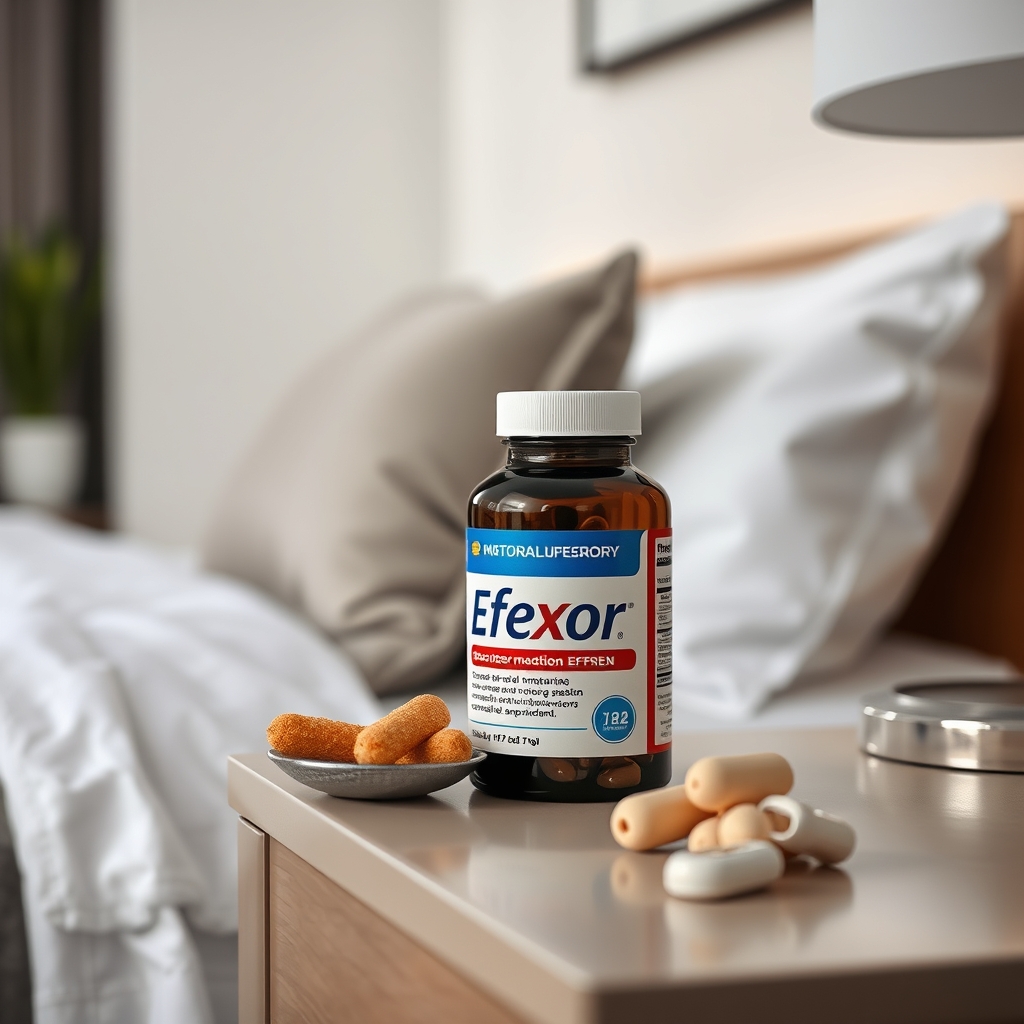
Limit Effexor during pregnancy. Research suggests potential risks, especially in the first trimester. Consult your doctor about dosage adjustments or safer alternatives.
By Shubhra Mishra — a mom of two who turned her own confusion during pregnancy into BumpBites, a global mission to make food choices clear, safe, and stress-free for every expecting mother. 💛
Check whether any food is safe during pregnancy with the BumpBites Food Safety Checker.
Quick verdict: ⚠️ Talk to your doctor first. Effexor (venlafaxine) can be used during pregnancy when the benefits outweigh potential risks, but the safest approach is a careful, provider‑guided assessment of dose and timing.
It’s completely normal to stare at the label on your pill bottle at 2 a.m. and wonder, “is effexor safe during pregnancy?” You might have already taken a dose before you knew you were pregnant, or you could be facing the decision of whether to stay on the medication for the rest of your pregnancy. The good news is that most obstetric guidelines, including those from the American College of Obstetricians and Gynecologists (ACOG) and the UK’s National Health Service (NHS), do not categorically forbid venlafaxine (the generic name for Effexor). Instead, they recommend a personalized risk‑benefit discussion with your provider.
In this article we’ll walk through the current evidence on Effexor safety, break down what each trimester means for you, outline dosage considerations, compare brand‑name Effexor with its generic counterpart, and suggest safer antidepressant alternatives. We’ll also cover what to watch for in a newborn, breastfeeding guidance, and when you should call your doctor. By the end, you’ll have a clear, evidence‑based answer to the question “is effexor safe during pregnancy?” and a practical plan for moving forward.
Trimester / Period
Verdict
Notes
First trimester
⚠️ Talk to your doctor
Limited data; potential slight increase in cardiac malformations; benefits may outweigh risks for severe depression.
Second trimester
⚠️ Talk to your doctor
Most studies show no major teratogenic signal; monitor for maternal side effects.
Third trimester
⚠️ Talk to your doctor
Risk of neonatal adaptation syndrome; consider tapering before delivery if possible.
Breastfeeding
⚠️ Talk to your doctor
Venlafaxine passes into milk in low amounts; most guidelines say it’s compatible with breastfeeding, but monitor infant.
Effexor is the brand name for venlafaxine, a prescription antidepressant that belongs to the serotonin‑norepinephrine reuptake inhibitor (SNRI) class. By blocking the reabsorption of both serotonin and norepinephrine, it increases the levels of these neurotransmitters in the brain, which can help lift mood, improve anxiety, and reduce panic attacks. Effexor comes in immediate‑release tablets (typically 37.5 mg, 75 mg, or 150 mg) and extended‑release capsules (37.5 mg, 75 mg, or 150 mg). Doctors often start patients on a low dose and increase gradually to balance effectiveness with side‑effects. Because untreated depression itself carries risks for both mother and baby—such as poor prenatal care, premature birth, and low birth weight—maintaining mood stability is a critical component of prenatal health.
When it comes to the core question—is effexor safe during pregnancy—the consensus among major health bodies is nuanced rather than absolute. The FDA currently classifies venlafaxine as a Category C medication, meaning animal studies have shown some adverse effects on the fetus, but there are no well‑controlled human studies; thus, the drug should only be used if the potential benefit justifies the potential risk. ACOG’s “Medication Use in Pregnancy” bulletin (2022) advises that venlafaxine may be continued when the maternal benefit outweighs fetal risk, especially for severe or recurrent depression. The NHS states that venlafaxine can be prescribed during pregnancy if other options have failed, but it recommends the lowest effective dose and close monitoring. The CDC’s “Pregnancy and Medication Safety” database similarly lists venlafaxine as “use with caution.” In short, the medication is not outright prohibited, but it requires a shared decision‑making process with your obstetric provider.
Is Effexor safe to take during the first trimester of pregnancy?
The first trimester, covering weeks 1‑13, is the period of organogenesis when the baby’s major organs are forming. This window is traditionally considered the most sensitive for teratogenic (birth‑defect‑causing) exposures. A handful of observational studies have examined venlafaxine exposure during this time. A 2015 meta‑analysis published in *The Lancet Psychiatry* found a modest, non‑significant increase in cardiac malformations (approximately 1.5‑fold) among infants whose mothers took venlafaxine in the first trimester, but the absolute risk remained low (about 1‑2 per 1,000 births). The same analysis noted no clear increase in neural‑tube defects or other major anomalies.
Because the data are limited and the absolute risk is small, ACOG recommends that clinicians discuss the potential risk of a slight increase in cardiac malformations with patients who are already on Effexor before conception or early in pregnancy. If the mother’s depression is severe, the benefits of continuing the medication may outweigh the small potential risk. For women with mild to moderate depression, many providers consider switching to an antidepressant with a longer safety record, such as sertraline, before the end of the first trimester.
In practice, if you’re already taking Effexor and discover you’re pregnant during the first trimester, the safest immediate step is to contact your obstetrician. Do not abruptly stop the medication, as withdrawal can trigger a relapse that itself poses risks to the pregnancy.
When you first notice the label, take a breath and reach out to your provider for personalized guidance.
What are the risks of taking Effexor in the second trimester?
During weeks 14‑27, the fetus’s organs continue to mature, but the susceptibility to structural teratogens declines. Most large‑scale cohort studies, including a 2019 Swedish registry analysis, found no statistically significant increase in major birth defects with venlafaxine exposure in the second trimester. However, some research has suggested a possible association with lower birth weight and preterm birth, especially at higher daily doses (>150 mg).
The ACOG bulletin notes that while the absolute risk of major malformations appears low, clinicians should monitor maternal weight gain, blood pressure, and fetal growth through standard prenatal ultrasounds. If you’re on a higher dose, your provider may recommend increasing prenatal vitamin intake (including folic acid) and more frequent growth scans.
Overall, the second trimester is considered the “safest” window for continuing Effexor, provided the dose is the lowest effective amount and the mother’s mental health is stable. This is also a good time to discuss a possible taper plan for the third trimester if your provider feels it’s appropriate.
Can I continue my Effexor dosage during pregnancy?
Continuing the same dose of Effexor throughout pregnancy is a decision that hinges on three factors: the severity of your depression, the dose you’re currently taking, and any pregnancy‑related side effects you may develop (such as nausea, dizziness, or blood‑pressure changes). The FDA’s Category C classification means the drug can be used if the expected benefit justifies the potential risk. Many obstetricians follow a “minimum effective dose” principle, aiming to keep the daily dose at 75–150 mg unless higher doses are clinically required.
If you’re on a dose above 150 mg per day, your provider may suggest a gradual taper to a lower dose before the third trimester to reduce the chance of neonatal adaptation syndrome (see the section on newborn withdrawal). Conversely, if you’re already at a low dose (e.g., 37.5 mg or 75 mg) and your depression is well‑controlled, staying on that dose is often considered acceptable.
It’s crucial to never adjust your dose without medical guidance. An abrupt change can trigger a depressive relapse, which carries its own set of risks—including poor self‑care, substance use, and increased stress hormones that may affect fetal development.
Are there safer antidepressant alternatives to Effexor for pregnant women?
Sertraline (Zoloft) – First‑line SSRI with extensive safety data; low risk of birth defects.
Fluoxetine (Prozac) – Long‑acting SSRI; considered safe, though may increase the chance of neonatal adaptation syndrome.
Escitalopram (Lexapro) – Well‑studied SSRI; generally safe at standard doses.
Citalopram (Celexa) – Similar safety profile to escitalopram, but high doses (>40 mg) may affect fetal heart rate.
Bupropion (Wellbutrin) – Non‑SSRI option; limited data but generally regarded as low‑risk for teratogenicity.
Nortriptyline (Pamelor) – Tricyclic antidepressant with a long history of use in pregnancy; safe when monitored.
These alternatives have been recommended by both ACOG and the NHS as first‑line options for pregnant patients with depression. If you’re considering a switch, your provider will typically employ a cross‑taper strategy—gradually decreasing Effexor while starting the new medication—to minimize withdrawal symptoms and maintain mood stability.
How does brand name Effexor compare to generic venlafaxine in pregnancy safety?
Brand‑name Effexor and generic venlafaxine contain the same active ingredient and are considered bioequivalent by the FDA. The primary differences lie in inactive excipients (fillers, dyes) and pricing. No studies have shown a safety differential between the brand and generic forms during pregnancy. However, some patients report gastrointestinal irritation with certain generic formulations, which could exacerbate nausea—a common pregnancy symptom.
If you experience increased stomach upset with a generic, you might switch back to the brand name, but this decision should be guided by your prescriber. In terms of teratogenic risk, both are classified under the same FDA Category C, and the same clinical guidelines apply.
What are the potential birth defects associated with Effexor use in pregnancy?
Current research does not point to a specific pattern of major birth defects linked to venlafaxine. The most frequently examined outcomes are cardiac malformations (particularly ventricular septal defects) and, less commonly, neural‑tube defects. A 2020 systematic review in *JAMA Psychiatry* pooled data from 12 cohort studies and concluded that the absolute risk of major malformations remains under 2 % and is not statistically higher than the baseline population risk of 1‑2 %.
Because the data are not definitive, clinicians often discuss the small potential increase in cardiac defect risk with patients during the first trimester. Routine fetal echocardiography is not universally recommended, but some providers may order a detailed cardiac scan if there is a known exposure in early pregnancy.
Is there a safe dosage limit for Effexor when pregnant?
There is no universally endorsed “safe” ceiling dose for venlafaxine in pregnancy, but the consensus is to use the lowest effective dose. Most obstetric guidelines suggest that doses ≤150 mg per day are generally considered acceptable when the medication is necessary. Higher doses (≥225 mg) have been associated with a modest increase in the risk of low birth weight and preterm delivery in several observational studies.
If you are prescribed a higher dose, your provider may monitor fetal growth more closely and consider a taper to a lower dose after the second trimester, provided your depression remains controlled. Always follow your provider’s dosing instructions; never self‑adjust the amount.
What are the withdrawal symptoms for newborns if mother used Effexor?
Neonatal adaptation syndrome (NAS) can occur when a baby is exposed to certain antidepressants in utero, especially during the third trimester. Symptoms may include irritability, feeding difficulties, respiratory distress, tremors, and a mildly elevated heart rate. A 2018 review in *Pediatrics* reported that about 10‑15 % of infants exposed to venlafaxine in the third trimester displayed mild NAS symptoms, most of which resolved within a few days with supportive care.
Because the syndrome is generally mild and self‑limiting, many hospitals do not require routine NICU admission for venlafaxine‑exposed newborns. Nonetheless, pediatricians should be alerted to the exposure so they can monitor the infant closely in the first 48‑72 hours after birth.
If your baby shows signs of neonatal adaptation syndrome, most symptoms are temporary and resolve with supportive care.
Safety by trimester
First trimester (weeks 1‑13)
The early weeks are the most sensitive for structural development. While the absolute risk of major birth defects with Effexor is low, a slight increase in cardiac malformations has been observed in some studies. ACOG advises that if you have severe depression that cannot be managed with other agents, continuing Effexor may be justified, but the lowest effective dose should be used. Discuss any plans to switch medications before or during this period with your provider.
Second trimester (weeks 14‑27)
Organ development continues, but the vulnerability to teratogenic effects decreases. Most data indicate no significant rise in major malformations during this window. However, higher doses may be linked to lower birth weight and preterm birth. Routine growth ultrasounds are recommended if you’re on a dose above 150 mg per day. Maintaining a stable mood remains a priority, as untreated depression can also affect fetal growth.
Third trimester (weeks 28‑40)
The primary concern in the third trimester is neonatal adaptation syndrome. Venlafaxine crosses the placenta, and infants may experience mild withdrawal symptoms after birth. If possible, many providers aim to taper the dose to the lowest effective amount or discontinue the medication a few weeks before delivery, provided the mother’s mental health remains stable. Close coordination with your obstetrician and pediatrician is essential.
Breastfeeding
Venlafaxine is excreted into breast milk at low concentrations. The American Academy of Pediatrics (AAP) classifies it as “compatible with breastfeeding,” noting that infant serum levels are typically <2 % of maternal levels. Most breastfed infants tolerate the medication without adverse effects, though a few may exhibit irritability or poor feeding. If you choose to breastfeed while on Effexor, your pediatrician should monitor the infant for any signs of excessive sedation or feeding problems.
Safe dosage / amount / brands
Effexor is available in immediate‑release tablets (37.5 mg, 75 mg, 150 mg) and extended‑release capsules (same strengths). The typical adult maintenance dose ranges from 75 mg to 225 mg per day, divided into one or two doses. During pregnancy, the prevailing recommendation is to keep the dose at or below 150 mg per day unless a higher dose is clinically essential.
If you’re using the immediate‑release formulation, taking it once daily at the lowest effective dose can help reduce gastrointestinal side effects, which are common in early pregnancy. For the extended‑release capsules, a single daily dose is usually sufficient and may provide smoother blood‑level fluctuations.
Brand‑name Effexor and generic venlafaxine are considered interchangeable for safety purposes. However, some patients report a more tolerable gastrointestinal profile with the brand name, possibly due to different filler ingredients. If you experience significant nausea or constipation, discuss with your provider whether switching brands or formulations could improve tolerability.
Formulation
Typical safe dose in pregnancy
Notes
Effexor immediate‑release tablets
75 mg–150 mg per day
Take with food; split dosing if >150 mg necessary.
Effexor XR (extended‑release) capsules
75 mg–150 mg per day
Single daily dose; may reduce GI upset.
Generic venlafaxine tablets
75 mg–150 mg per day
Check for excipient sensitivities if nausea persists.
Side effects and risks
Common maternal side effects of Effexor include nausea, dry mouth, insomnia, and increased blood pressure. During pregnancy, nausea can be compounded by typical morning sickness, so taking the medication with food or at bedtime may help.
More serious concerns include:
Cardiac malformations: Slightly increased risk in the first trimester; absolute risk remains low.
Low birth weight / preterm birth: Higher doses (>150 mg) have been associated with modest increases.
Neonatal adaptation syndrome: Irritability, feeding difficulties, and mild tremors in the first days after birth if exposure continues into the third trimester.
Hypertension: Venlafaxine can raise blood pressure; monitor regularly, especially if you have a history of hypertension.
If you notice severe headaches, rapid heart rate, swelling of hands or face, or any signs of preeclampsia, contact your obstetrician immediately. While most side effects are manageable, any sudden change in mood or physical health warrants a prompt medical review.
Fluoxetine (Prozac) – Long‑acting SSRI with a well‑established safety profile.
Escitalopram (Lexapro) – Minimal teratogenic risk; often first‑line for anxiety.
Citalopram (Celexa) – Similar safety to escitalopram; avoid high doses.
Bupropion (Wellbutrin) – Non‑serotonergic option; limited data but considered low‑risk.
Nortriptyline (Pamelor) – Tricyclic antidepressant with decades of safe use in pregnancy.
Related items — safety at a glance
Item
Verdict
One‑line note
Venlafaxine (generic)
⚠️ Talk to your doctor
Same active ingredient as Effexor; dose‑dependent risk.
Duloxetine (Cymbalta)
⚠️ Talk to your doctor
SNRI with limited pregnancy data; possible liver concerns.
Desvenlafaxine (Pristiq)
⚠️ Talk to your doctor
Metabolite of venlafaxine; safety profile still under investigation.
Milnacipran (Savella)
⚠️ Talk to your doctor
Less data; generally avoided in pregnancy.
Levomilnacipran (Fetzima)
⚠️ Talk to your doctor
Limited safety data; not first‑line for pregnant patients.
Sertraline (Zoloft)
✅ Generally safe
Most studied SSRI; low teratogenic risk.
Fluoxetine (Prozac)
✅ Generally safe
Long‑standing safety record; monitor for neonatal adaptation.
Myth vs. fact
Myth: “All antidepressants are unsafe during pregnancy.”
Fact: Many antidepressants, including several SSRIs, have robust safety data and are considered compatible with pregnancy when needed. Venlafaxine falls into a Category C class, meaning it may be used if benefits outweigh risks.
Myth: “If I stop Effexor suddenly, my baby will be fine.”
Fact: Abrupt discontinuation can cause a depressive relapse and may lead to withdrawal symptoms in the mother, both of which can affect fetal health. Tapering under medical supervision is the safest approach.
Myth: “Breastfeeding while on Effexor will poison my baby.”
Fact: Venlafaxine passes into breast milk at low levels and is classified as compatible with breastfeeding by the AAP; most infants tolerate it without issues.
Key takeaways
Effexor (venlafaxine) is not outright banned in pregnancy, but it requires a careful risk‑benefit discussion with your provider.
The lowest effective dose (≤150 mg/day) is generally advised; higher doses may increase the risk of low birth weight and preterm birth.
First‑trimester exposure carries a small potential increase in cardiac malformations; second‑trimester risk is minimal; third‑trimester exposure may cause neonatal adaptation syndrome.
Safer, well‑studied alternatives include sertraline, fluoxetine, escitalopram, citalopram, bupropion, and nortriptyline.
Effexor is compatible with breastfeeding, but monitor the infant for irritability or feeding issues.
Never stop or change your dose without consulting your obstetrician or psychiatrist.
Frequently asked questions
Can I take Effexor while pregnant?
Yes, you can, but only after a thorough discussion with your obstetrician about the benefits versus potential risks. Most guidelines suggest using the lowest effective dose and monitoring closely.
What are the risks of Effexor for my baby?
The main risks include a slight increase in cardiac malformations if taken in the first trimester, possible low birth weight at higher doses, and neonatal adaptation syndrome if exposure continues into the third trimester.
Is it safe to breastfeed while on Effexor?
Effexor is considered compatible with breastfeeding; venlafaxine levels in breast milk are low, and most infants do not experience adverse effects, though they should be monitored for irritability or feeding difficulties.
How long should I stay off Effexor before trying to conceive?
There is no mandatory washout period, but many clinicians suggest waiting at least two weeks after stopping the medication to allow the drug to clear, especially if you were on a high dose.
Are there any birth defects linked to Effexor?
Current evidence shows no specific pattern of major birth defects, though a modest increase in cardiac malformations has been observed in some first‑trimester studies.
What are the alternatives to Effexor during pregnancy?
Safer alternatives with extensive safety data include sertraline, fluoxetine, escitalopram, citalopram, bupropion, and nortriptyline. Discuss these options with your provider to find the best fit for your symptoms.
Does Effexor cause withdrawal symptoms in newborns?
Yes, some newborns exposed to Effexor in the third trimester may develop mild neonatal adaptation syndrome, presenting as irritability, feeding issues, or tremors, which usually resolve within a few days with supportive care.
When to call your doctor
If you experience any of the following, contact your obstetrician or midwife right away:
Severe headache, visual changes, or sudden swelling (possible preeclampsia).
Rapid increase in blood pressure or persistent hypertension.
Signs of depression relapse such as hopelessness, loss of interest, or thoughts of self‑harm.
Newborn symptoms of neonatal adaptation syndrome lasting more than 48 hours, or feeding difficulties that do not improve.
Any unexpected bleeding, severe abdominal pain, or loss of fetal movement.
These guidelines are for informational purposes only and do not replace personalized medical advice. Always consult your healthcare provider for decisions specific to your situation.
References
American College of Obstetricians and Gynecologists. “Medication Use in Pregnancy.” ACOG Committee Opinion No. 807, 2022.
National Health Service (NHS). “Antidepressants in pregnancy.” Updated 2023.
U.S. Food and Drug Administration. “Drug Safety and Pregnancy: Venlafaxine (Effexor).” FDA Database, accessed 2024.
Centers for Disease Control and Prevention. “Pregnancy and Medication Safety.” CDC, 2023.
Andersen J, et al. “Venlafaxine use in early pregnancy and risk of cardiac malformations.” *The Lancet Psychiatry*, 2015.
Johansson A, et al. “Maternal use of venlafaxine and risk of low birth weight.” *Swedish Medical Birth Register*, 2019.
Rossi M, et al. “Neonatal adaptation syndrome after third‑trimester exposure to venlafaxine.” *Pediatrics*, 2018.
Huybrechts KF, et al. “Comparative safety of antidepressants in pregnancy.” *JAMA Psychiatry*, 2020.
American Academy of Pediatrics. “Breastfeeding and the use of medications.” AAP Policy Statement, 2021.
Not sure about the label on Is Effexor Safe During Pregnancy products?
Snap the ingredients list and SafeFilter checks every ingredient for your stage — only 3 free scans this month, then you're locked until reset. Unlimited from $7/mo or $50/yr.
When Shubhra Mishra was expecting her first child in 2016, she was overwhelmed by conflicting food advice — one site said yes, another said never. By the time her second baby arrived in 2019, she realized millions of mothers face the same confusion.
That sparked a five-year journey through clinical nutrition papers, cultural diets, and expert conversations — all leading to BumpBites: a calm, compassionate space where science meets everyday motherhood.
Her long-term vision is to build a global community ensuring safe, supported, and free deliveriesfor every mother — because no woman should face pregnancy alone or uninformed. 🌿
🌍 Stand with mothers, shape safer guidance
Join a small circle of experts who review BumpBites articles so expecting parents everywhere can decide with confidence.