

Quick verdict: ⚠️ Archery is generally safe during pregnancy with modifications, but it’s not risk-free. The biggest concerns are abdominal trauma from the bowstring, repetitive strain on your back and shoulders, and the risk of falling or being hit by an arrow. Most obstetricians recommend avoiding archery in the first trimester (when miscarriage risk is highest) and switching to lighter draw weights or safer alternatives as your pregnancy progresses. If you’re an experienced archer, you can likely continue with precautions—but if you’re new to the sport, this isn’t the time to start.
You’re standing at the range, bow in hand, when it hits you: Is archery safe during pregnancy? Maybe you’ve already taken a few shots this week, or maybe you’re just wondering if your favorite hobby is still an option now that you’re expecting. The good news? You don’t have to hang up your quiver just yet—but you do need to make some adjustments.
Archery is a low-impact sport, and for many pregnant women, it’s a great way to stay active. But pregnancy changes your body in ways that can make even familiar activities riskier. Your center of gravity shifts, your joints loosen, and your belly becomes more vulnerable to impact. So, how much is too much? Which trimester is safest? And what are the red flags that mean you should stop? We’ll cover all of that—and give you safer alternatives if archery starts to feel like more trouble than it’s worth.
Archery during pregnancy: Safety snapshot
| Trimester | Verdict | Notes |
|---|---|---|
| First trimester | ⚠️ Avoid if possible | Highest risk of miscarriage; avoid repetitive strain and abdominal impact. If you choose to shoot, use a very light draw weight (under 20 lbs) and stop at the first sign of cramping or spotting. |
| Second trimester | ✅ Generally safe with modifications | Lower miscarriage risk, but your belly is growing. Use a lighter draw weight, avoid twisting motions, and stop if you feel any abdominal tightness or back pain. |
| Third trimester | ⚠️ Proceed with caution | Balance and coordination are off; risk of falling or straining your back increases. Stick to stationary targets at close range, reduce draw weight further, and avoid shooting if you feel off-balance. |
| Breastfeeding | ✅ Safe to resume | No known risks to breastfeeding, but ease back into your pre-pregnancy draw weight gradually to avoid shoulder strain. |
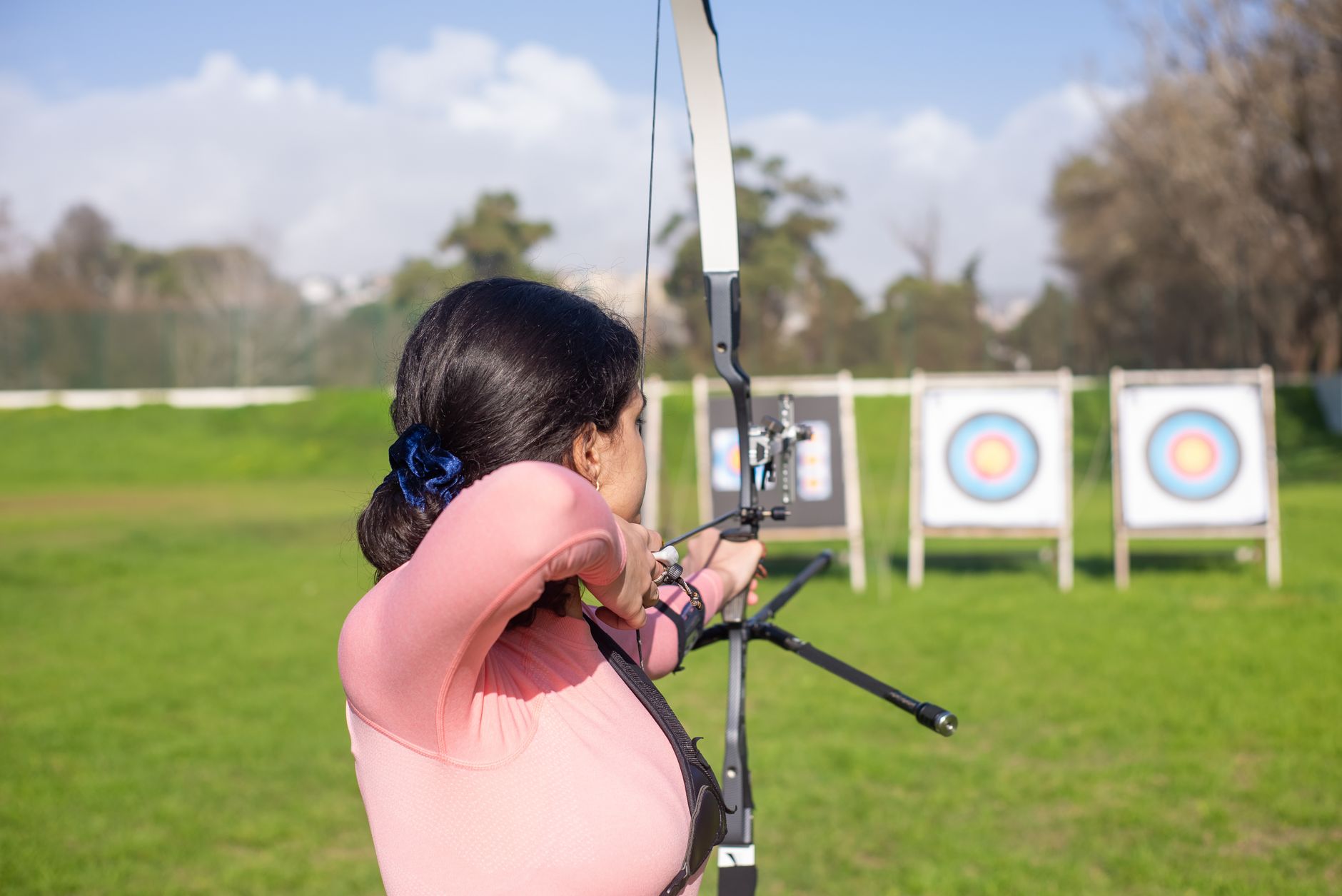
What is archery—and why do people keep doing it while pregnant?
- Target archery: Shooting at stationary targets, often in a controlled range setting. This is the most common type for casual and competitive archers.
- Field archery: Shooting at targets placed at varying distances in natural terrain, which can involve walking and uneven ground.
- 3D archery: Shooting at life-sized animal targets in outdoor courses, often with uphill or downhill angles.
- Bowhunting: Using a bow to hunt game, which involves stealth, patience, and often carrying gear over long distances.
People love archery for its focus, precision, and the way it engages both the body and mind. It’s also a low-impact sport, which makes it appealing during pregnancy—at least in theory. The repetitive motion of drawing and releasing a bow can be meditative, and the physical demands are adjustable based on the bow’s draw weight (how much force it takes to pull the string back).
But here’s the catch: even though archery doesn’t involve running or jumping, it does require core stability, shoulder strength, and balance—all of which change dramatically during pregnancy. The bowstring itself can be a hazard if it snaps back against your belly, and the act of drawing a heavy bow can strain your back and abdominal muscles, which are already working overtime to support your growing baby.
Is archery safe during pregnancy?
The short answer? It depends. Most obstetricians agree that archery isn’t inherently dangerous during pregnancy, but it’s not without risks. The American College of Obstetricians and Gynecologists (ACOG) and the UK’s National Health Service (NHS) both classify archery as a moderate-risk activity for pregnant women—not because of the sport itself, but because of the potential for abdominal trauma, falls, and repetitive strain.
Here’s what the research and expert guidance say:
- Abdominal trauma is the biggest concern. A bowstring can snap back with enough force to cause bruising or, in rare cases, more serious injury to your belly. The CDC notes that any direct impact to the abdomen during pregnancy increases the risk of placental abruption (when the placenta separates from the uterus) or fetal injury, especially in the second and third trimesters.
- Repetitive motion can strain your back and shoulders. Pregnancy hormones like relaxin loosen your joints and ligaments, making you more prone to strains and sprains. Drawing a bow repeatedly—especially with poor form—can lead to overuse injuries in your shoulders, neck, and lower back.
- Balance and coordination change as your belly grows. Your center of gravity shifts forward, which can throw off your aim and increase your risk of falling. The NHS warns that activities requiring precise balance (like archery) become riskier in the third trimester.
- There’s no evidence that archery increases miscarriage risk—if you avoid abdominal trauma. Most miscarriages in the first trimester are caused by chromosomal abnormalities, not physical activity. However, ACOG recommends avoiding activities with a high risk of falling or abdominal impact during early pregnancy as a precaution.
So, is archery safe during pregnancy? For experienced archers with proper modifications, yes—but it’s not risk-free. If you’re new to archery, this isn’t the time to start. If you’re a seasoned archer, you can likely continue with adjustments (more on those later). But if you feel any discomfort, dizziness, or abdominal tightness, it’s time to stop.
Is archery safe in the first trimester of pregnancy?
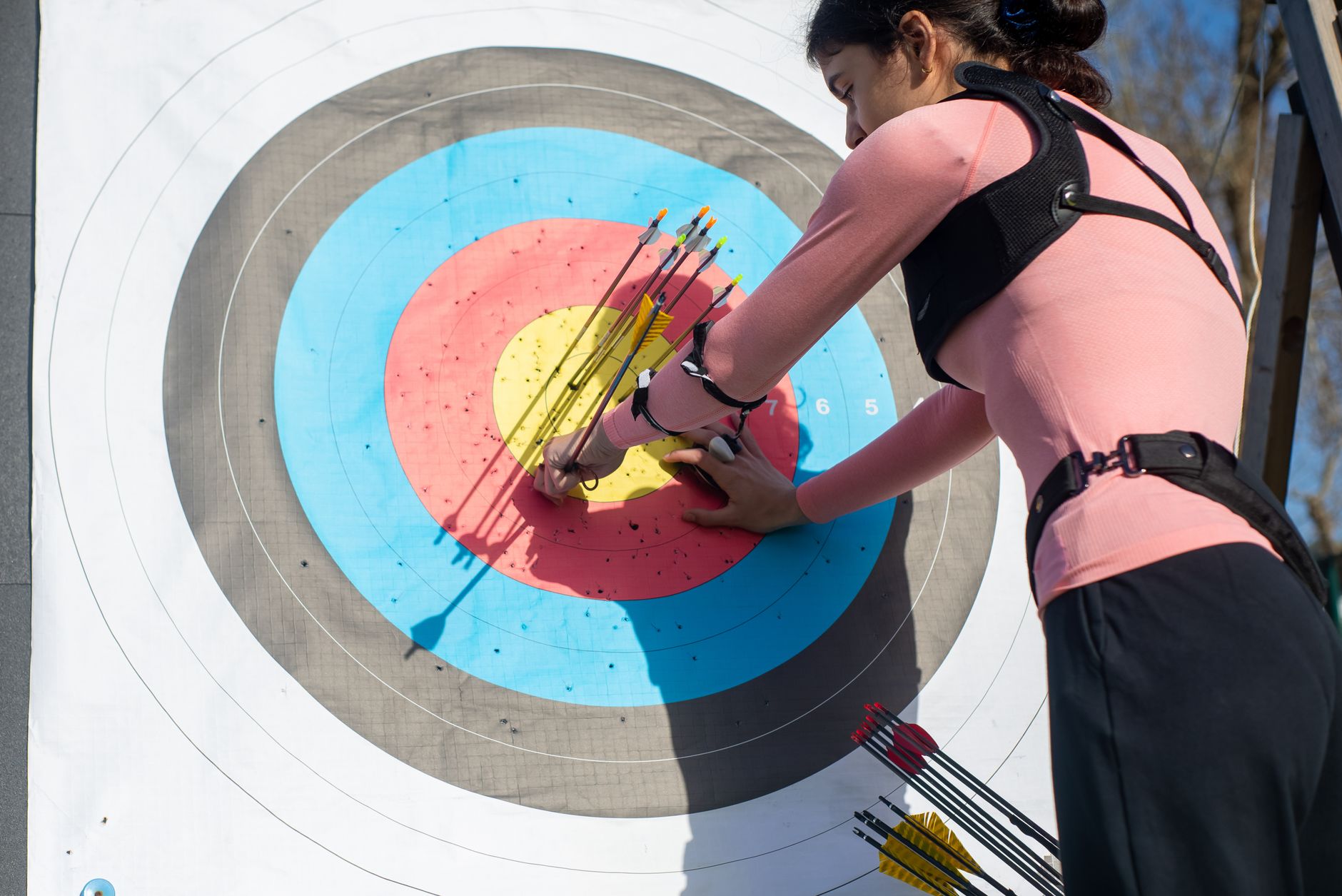
The first trimester is the riskiest time for archery—not because the sport itself is dangerous, but because this is when your baby is most vulnerable. During the first 12 weeks, your baby’s organs are forming, and the risk of miscarriage is highest. While most miscarriages are caused by chromosomal issues, ACOG recommends avoiding activities with a risk of abdominal trauma or falls during this time as a precaution.
Here’s what to consider if you’re shooting in your first trimester:
- Avoid heavy draw weights. Your joints are already looser thanks to relaxin, and your abdominal muscles are stretching to accommodate your growing uterus. Drawing a heavy bow (over 25-30 lbs) can strain your back and shoulders, increasing your risk of injury.
- Skip field or 3D archery. Walking on uneven terrain increases your risk of falling, which is the last thing you want in early pregnancy. Stick to a controlled range with flat ground.
- Watch for cramping or spotting. If you experience any pelvic pain, cramping, or vaginal bleeding after shooting, stop immediately and call your doctor. These can be early signs of miscarriage.
- Stay hydrated and take breaks. Dehydration and overheating can increase the risk of complications, so drink plenty of water and shoot in short sessions (20-30 minutes max).
If you’re an experienced archer, you can continue shooting in the first trimester—but with caution. If you’re new to the sport, it’s best to wait until after your baby is born. The learning curve (and the risk of poor form) isn’t worth it right now.
Can you do archery in the second trimester?
The second trimester is often called the “honeymoon phase” of pregnancy—your energy is back, morning sickness has (hopefully) faded, and your belly isn’t so big that it’s getting in the way. For many women, this is the safest time to continue archery, but you’ll still need to make adjustments.
Here’s what to keep in mind:
- Your belly is growing—protect it. By 16-20 weeks, your uterus is rising out of your pelvis, making your belly more vulnerable to impact. The bowstring can snap back with enough force to cause bruising or, in rare cases, more serious injury. To reduce this risk:
- Use a bow with a lower draw weight (under 20-25 lbs).
- Stand sideways to the target (not facing it head-on) to minimize the chance of the string hitting your belly.
- Consider wearing a belly guard (a padded shield that attaches to your bow or belt).
- Your balance is shifting. As your belly grows, your center of gravity moves forward, which can throw off your aim. You might find yourself wobbling more than usual, increasing your risk of falls. To stay steady:
- Widen your stance for better stability.
- Avoid shooting on uneven or slippery surfaces.
- Skip field or 3D archery—stick to a flat, controlled range.
- Repetitive strain is a real risk. Drawing a bow repeatedly can strain your shoulders, neck, and lower back, especially as your joints loosen. To prevent overuse injuries:
- Take frequent breaks (every 10-15 arrows).
- Stretch your shoulders and back before and after shooting.
- Stop if you feel any pain or discomfort.
Most obstetricians agree that archery is safe in the second trimester with these modifications. But if you feel off-balance, fatigued, or experience any abdominal tightness or pain, it’s time to take a break.
Is it safe to shoot a bow in the third trimester?
The third trimester is when archery becomes trickiest. Your belly is at its largest, your balance is off, and your joints are at their loosest. The risk of falls, strain, and abdominal trauma is higher than ever—and while there’s no evidence that archery directly causes preterm labor, ACOG recommends avoiding activities that could lead to falls or impact as you get closer to your due date.
Here’s what to consider if you’re shooting in the third trimester:
- Your balance is compromised. Your center of gravity is now way forward, which can make even simple movements feel unsteady. To reduce your risk of falling:
- Shoot at close-range targets only (10-15 yards max).
- Avoid shooting on uneven or slippery surfaces.
- Skip field or 3D archery—stick to a flat, controlled range.
- Consider using a stool or chair for support if you feel unsteady.
- Your belly is more vulnerable than ever. A bowstring snap or an accidental arrow hit could cause bruising or, in rare cases, more serious injury. To protect yourself:
- Use a very light draw weight (under 15-20 lbs).
- Stand sideways to the target to minimize the chance of the string hitting your belly.
- Wear a belly guard or padded clothing.
- Repetitive strain is a bigger risk. Your joints are at their loosest, and your back is under more strain than ever. Drawing a bow repeatedly can lead to overuse injuries. To prevent this:
- Take frequent breaks (every 5-10 arrows).
- Stretch your shoulders and back before and after shooting.
- Stop if you feel any pain, dizziness, or abdominal tightness.
Most obstetricians recommend stopping archery by the third trimester—or at least switching to a very modified version. If you choose to continue, listen to your body. If you feel off-balance, fatigued, or experience any contractions or pain, it’s time to hang up your bow until after delivery.
How much archery is too much during pregnancy?
There’s no one-size-fits-all answer to how much archery is safe during pregnancy, but most obstetricians recommend limiting your sessions to 20-30 minutes and sticking to light draw weights (under 20-25 lbs in the first and second trimesters, under 15-20 lbs in the third). Here’s a trimester-by-trimester breakdown of what’s generally considered safe:
| Trimester | Recommended Draw Weight | Session Length | Frequency | Notes |
|---|---|---|---|---|
| First trimester | Under 20-25 lbs | 20-30 minutes | 1-2 times per week | Avoid if you have a history of miscarriage or experience cramping/spotting. |
| Second trimester | Under 20-25 lbs | 20-30 minutes | 1-2 times per week | Use a belly guard and stand sideways to the target. |
| Third trimester | Under 15-20 lbs | 15-20 minutes | 1 time per week | Shoot at close range only; stop if you feel off-balance. |
Beyond time and draw weight, here are some general guidelines to follow:
- Avoid shooting to exhaustion. If you’re breathing heavily, sweating excessively, or feeling fatigued, it’s time to stop. Overheating and dehydration can be dangerous during pregnancy.
- Listen to your body. If you feel any pain, dizziness, abdominal tightness, or contractions, stop immediately. These could be signs that archery isn’t safe for you right now.
- Skip competitions or high-pressure sessions. Now isn’t the time to push your limits. Stick to casual, low-stress shooting.
- Stay hydrated and cool. Drink plenty of water before, during, and after shooting, and avoid shooting in extreme heat.
If you’re unsure whether your routine is safe, talk to your obstetrician. They can help you tailor your archery practice to your specific pregnancy.
What are the risks of archery while pregnant?
Archery isn’t the riskiest sport during pregnancy, but it’s not without its hazards. Here are the biggest risks to be aware of—and how to minimize them:
1. Abdominal trauma
The bowstring can snap back with enough force to bruise your belly or, in rare cases, cause more serious injury. In the second and third trimesters, your uterus is more exposed, increasing the risk of placental abruption (when the placenta separates from the uterus) or fetal injury. The CDC notes that abdominal trauma is a leading cause of pregnancy complications, including preterm labor.
How to reduce the risk:
- Use a lighter draw weight (under 20-25 lbs).
- Stand sideways to the target to minimize the chance of the string hitting your belly.
- Wear a belly guard or padded clothing.
- Avoid shooting if you’re feeling off-balance or unsteady.
2. Repetitive strain injuries
Drawing a bow repeatedly can strain your shoulders, neck, and lower back—areas that are already under extra stress during pregnancy. The hormone relaxin loosens your joints and ligaments, making you more prone to sprains and strains.
How to reduce the risk:
- Take frequent breaks (every 10-15 arrows).
- Stretch your shoulders and back before and after shooting.
- Use a lighter draw weight to reduce strain.
- Stop if you feel any pain or discomfort.
3. Falls
Your balance shifts as your belly grows, increasing your risk of falls. Falling during pregnancy can lead to abdominal trauma, placental abruption, or even preterm labor. The NHS warns that activities requiring precise balance (like archery) become riskier in the third trimester.
How to reduce the risk:
- Shoot at close-range targets only (10-15 yards max).
- Avoid shooting on uneven or slippery surfaces.
- Skip field or 3D archery—stick to a flat, controlled range.
- Consider using a stool or chair for support if you feel unsteady.
4. Overheating and dehydration
Pregnancy increases your body’s core temperature, making you more susceptible to overheating. Shooting in hot or humid conditions can lead to dehydration, dizziness, or even heat exhaustion, which can be dangerous for you and your baby.
How to reduce the risk:
- Shoot in short sessions (20-30 minutes max).
- Drink plenty of water before, during, and after shooting.
- Avoid shooting in extreme heat or direct sunlight.
- Wear lightweight, breathable clothing.
5. Preterm labor (indirect risk)
There’s no evidence that archery directly causes preterm labor, but activities that lead to falls, abdominal trauma, or excessive strain can increase the risk. The March of Dimes recommends avoiding activities with a high risk of impact or injury in the third trimester.
How to reduce the risk:
- Avoid archery if you have a history of preterm labor or other pregnancy complications.
- Stop shooting if you experience contractions, abdominal pain, or vaginal bleeding.
- Listen to your body—if something feels off, take a break.
Are there pregnancy-safe archery alternatives?
If archery starts to feel risky or uncomfortable—or if your doctor advises against it—there are plenty of safer ways to stay active during pregnancy. The goal is to maintain your fitness without putting undue stress on your body or your baby. Here are some pregnancy-safe alternatives to archery, all of which are low-impact, joint-friendly, and adaptable to your changing body:
- Walking
Walking is one of the safest and most accessible forms of exercise during pregnancy. It keeps your heart healthy, improves circulation, and can even help reduce swelling in your legs and feet. Aim for 30 minutes a day, and choose flat, even surfaces to reduce your risk of falls. If you’re used to walking long distances, you can continue—but listen to your body and take breaks as needed.
- Prenatal yoga
Prenatal yoga focuses on gentle stretching, breathing, and relaxation—all of which can help ease pregnancy aches and prepare your body for labor. It’s also a great way to improve your balance and flexibility, which can be helpful as your belly grows. Look for a prenatal-specific class (either in-person or online) to ensure the poses are safe for pregnancy. Avoid hot yoga, which can lead to overheating.
- Swimming
Swimming is a zero-impact way to stay active during pregnancy. The water supports your joints and reduces swelling, and the resistance helps build strength without strain. It’s also a great way to cool off if you’re feeling overheated. Stick to moderate-intensity laps or join a prenatal water aerobics class for a gentler workout.
- Stationary cycling
Cycling on a stationary bike is a safe way to get your heart rate up without the risk of falling. It’s low-impact, easy on your joints, and you can adjust the resistance to match your energy levels. Avoid outdoor cycling, which comes with a higher risk of accidents. If you’re new to cycling, start with 10-15 minutes and gradually increase your time.
- Light stretching
Gentle stretching can help relieve pregnancy-related aches and pains, especially in your back, hips, and shoulders. Focus on slow, controlled movements and avoid overstretching, which can strain your loosened joints. Prenatal stretching routines are widely available online, or you can ask your doctor or a physical therapist for recommendations.
- Pilates for pregnancy
Prenatal Pilates focuses on core strength, posture, and pelvic floor health—all of which are important during pregnancy and postpartum recovery. Look for a class led by a certified prenatal Pilates instructor, and avoid exercises that involve lying flat on your back after the first trimester. Pilates can also help improve your balance, which may make archery feel safer if you choose to continue.
- Meditation
If you love the focus and mindfulness of archery, meditation can be a great way to maintain that mental clarity without the physical strain. Pregnancy can be stressful, and meditation can help reduce anxiety, improve sleep, and prepare you for labor. Try a guided prenatal meditation or simply sit quietly for 10-15 minutes a day, focusing on your breath.
- Gentle hiking
If you enjoy being outdoors, gentle hiking can be a great alternative to archery. Stick to well-maintained trails with minimal elevation gain, and avoid rocky or uneven terrain to reduce your risk of falls. Bring plenty of water, wear supportive shoes, and take breaks as needed. Hiking can also help improve your mood and reduce stress.
Before starting any new exercise routine during pregnancy, check with your obstetrician—especially if you have any complications or concerns. And remember: the goal isn’t to push yourself, but to stay active in a way that feels good for you and your baby.
Can you use a compound bow while pregnant?
Compound bows are popular for their adjustable draw weight and let-off (the reduction in weight you feel when the bow is fully drawn), which can make them easier to shoot for long periods. But are they safe during pregnancy? The answer depends on the draw weight and your experience level.
Here’s what to consider:
- Draw weight matters more than bow type. A compound bow set to a light draw weight (under 20-25 lbs in the first and second trimesters, under 15-20 lbs in the third) is generally safe for experienced archers. However, if the bow is set to a heavy draw weight (30+ lbs), it can strain your back, shoulders, and abdominal muscles—all of which are already under extra stress during pregnancy.
- Let-off can be helpful—but don’t rely on it. The let-off feature of a compound bow reduces the weight you feel when the bow is fully drawn, which can make it easier to hold steady. However, this doesn’t eliminate the risk of repetitive strain or abdominal trauma. Even with let-off, you’re still engaging your muscles and putting pressure on your joints.
- Compound bows are bulkier. They’re often heavier than recurve bows, which can make them harder to maneuver as your belly grows. If you’re using a compound bow, opt for a lighter model and avoid carrying it long distances.
- Mechanical releases can reduce finger strain. Many compound bow archers use a mechanical release aid (a device that attaches to the bowstring and releases it with a trigger), which can reduce strain on your fingers and wrist. This can be helpful during pregnancy, as your joints are already loosened by relaxin.
If you’re an experienced compound bow archer, you can likely continue shooting with modifications—as long as you reduce your draw weight and take precautions to protect your belly. If you’re new to archery, it’s best to wait until after pregnancy to start. Compound bows have a steeper learning curve, and poor form can increase your risk of injury.
Does archery increase the risk of miscarriage?
This is one of the biggest concerns for pregnant women considering archery—and the good news is that there’s no evidence that archery directly increases the risk of miscarriage. Most miscarriages in the first trimester are caused by chromosomal abnormalities, not physical activity. However, ACOG recommends avoiding activities with a high risk of abdominal trauma or falls during early pregnancy as a precaution.
Here’s what you need to know:
- Abdominal trauma is the real risk. A direct impact to your belly—whether from a bowstring snap, a fall, or an accidental arrow hit—can increase the risk of miscarriage, especially in the first trimester. To reduce this risk:
- Use a lighter draw weight (under 20-25 lbs).
- Stand sideways to the target to minimize the chance of the string hitting your belly.
- Wear a belly guard or padded clothing.
- Repetitive strain can cause cramping. Drawing a heavy bow repeatedly can strain your abdominal muscles, which may lead to cramping or discomfort. While cramping doesn’t always indicate a problem, it’s best to stop shooting if you experience it.
- Listen to your body. If you feel any pelvic pain, cramping, or vaginal bleeding after shooting, stop immediately and call your doctor. These can be early signs of miscarriage.
If you’re an experienced archer with no history of miscarriage, you can likely continue shooting in the first trimester with caution. But if you’re new to archery or have a history of pregnancy complications, it’s best to avoid it until after your baby is born.
Is recurve bow archery safe during pregnancy?
Recurve bows are the most traditional type of bow, and they’re often recommended for beginners because of their simplicity. But are they safe during pregnancy? The answer depends on the draw weight and your experience level.
Here’s what to consider:
- Recurve bows are lighter and simpler. Unlike compound bows, recurve bows don’t have mechanical parts or let-off, which means they’re often lighter and easier to maneuver. This can be an advantage during pregnancy, as you won’t have to deal with the bulk or complexity of a compound bow.
- Draw weight is still the biggest factor. A recurve bow set to a light draw weight (under 20-25 lbs in the first and second trimesters, under 15-20 lbs in the third) is generally safe for experienced archers. However, if the bow is set to a heavy draw weight (30+ lbs), it can strain your back, shoulders, and abdominal muscles.
- Recurve bows require more finger strength. Because recurve bows don’t have mechanical releases, you’ll need to use your fingers to draw and release the string. This can strain your fingers and wrist, especially as your joints loosen during pregnancy. To reduce this risk:
- Use a finger tab or glove to protect your fingers.
- Take frequent breaks to avoid overuse injuries.
- Stop if you feel any pain or discomfort in your fingers or wrist.
- Recurve bows are easier to adjust. Many recurve bows allow you to change the draw weight by swapping out the limbs, which can be helpful as your pregnancy progresses. If you’re using a recurve bow, consider starting with a lighter set of limbs and adjusting as needed.
If you’re an experienced recurve bow archer, you can likely continue shooting with modifications—as long as you reduce your draw weight and take precautions to protect your belly. If you’re new to archery, it’s best to wait until after pregnancy to start. Recurve bows require good form

