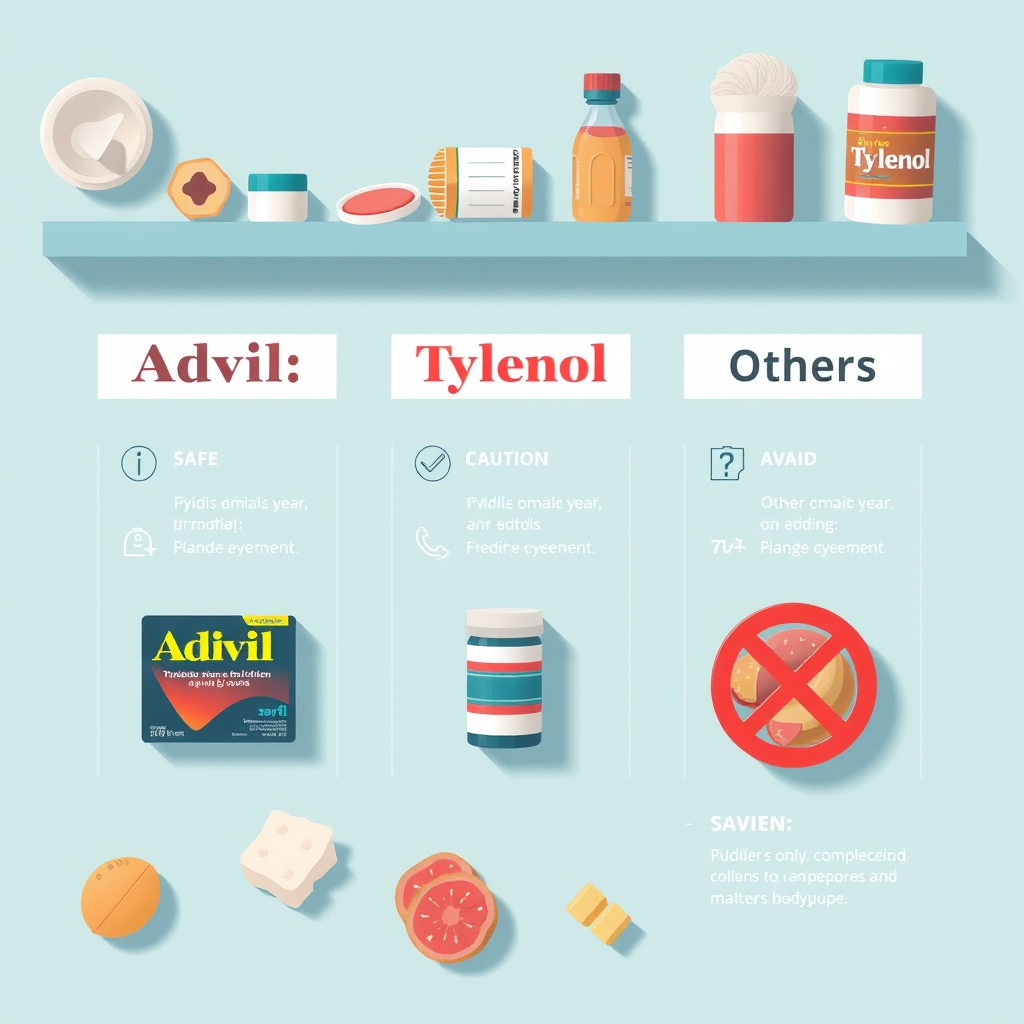
Is Advil safe for pregnancy? Generally, it's advised to avoid Advil, especially in the third trimester due to potential risks. Learn about safe alternatives and when it might be conditionally used.
By Shubhra Mishra — a mom of two who turned her own confusion during pregnancy into BumpBites, a global mission to make food choices clear, safe, and stress-free for every expecting mother. 💛
Check whether any food is safe during pregnancy with the BumpBites Food Safety Checker.
Quick verdict: ❌ Best avoided. Advil (ibuprofen) is not recommended during pregnancy because it can increase the risk of complications for both you and your baby. If you need pain relief, talk to your provider about safer options.
It’s completely normal to feel a flutter of anxiety the moment you wonder, “is advil safe for pregnancy?” You might have reached for a bottle in the nightstand or are considering it for a headache that just won’t quit. The good news is that you’re not alone—many expecting parents ask the same question, and the answer is clear: Advil is generally not advised while you’re pregnant.
In this article we’ll break down exactly what the leading health authorities say about advil safe for pregnancy, how the risk profile changes across each trimester, the maximum amount (if any) that might be permissible, and what safer alternatives you can turn to instead. We’ll also compare Advil with the most common over‑the‑counter pain reliever—Tylenol—so you can make an informed choice without the guesswork.
Read on for a quick verdict, a trimester‑by‑trimester safety snapshot, dosage guidelines, alternative options, and a handy “at‑a‑glance” table of related pain‑relief medicines. By the end, you’ll know exactly what steps to take and when to call your doctor.
Stage of pregnancy
Verdict
Notes
First trimester
❌ Not recommended
Potential risk of miscarriage and fetal heart development issues.
Second trimester
❌ Not recommended
Increased risk of reduced amniotic fluid (oligohydramnios) and premature closure of the ductus arteriosus.
Third trimester
❌ Not recommended
Higher chance of fetal kidney problems and delayed labor.
Breastfeeding
⚠️ Use with caution
Small amounts pass into breast milk; discuss with your provider.
Advil is the brand name for ibuprofen, a non‑steroidal anti‑inflammatory drug (NSAID) that reduces pain, fever, and inflammation. It works by blocking enzymes called cyclooxygenase‑1 and cyclooxygenase‑2 (COX‑1 and COX‑2), which are essential for producing prostaglandins—chemicals that promote inflammation, pain, and fever. Because it eases aches quickly, many people keep a bottle on their nightstand for headaches, menstrual cramps, or minor sprains.
Advil is available over the counter in 200 mg tablets, liquid gels, and topical gels. The drug is also a component of many combination products for colds, flu, and arthritis. While it’s safe for most adults when taken as directed, pregnancy introduces unique considerations that change the risk‑benefit balance.
Is Advil safe during pregnancy?
Current guidance from the American College of Obstetricians and Gynecologists (ACOG) and the UK's National Health Service (NHS) advises that ibuprofen‑type NSAIDs, including Advil, should be avoided throughout pregnancy whenever possible (ACOG, 2023; NHS, 2022). The U.S. Food and Drug Administration (FDA) classifies ibuprofen as a Category C drug for pregnancy, meaning risk cannot be ruled out and it should only be used if the potential benefit justifies the potential risk to the fetus (FDA, 2023).
The primary concerns stem from how ibuprofen interferes with prostaglandin production. Prostaglandins play a crucial role in maintaining the ductus arteriosus—a blood vessel that diverts blood away from the fetal lungs. NSAIDs can cause premature closure of this vessel, especially in the third trimester, leading to heart strain for the baby. Additionally, ibuprofen may reduce the amount of amniotic fluid (oligohydramnios) and impair fetal kidney function, both of which are linked to poorer outcomes.
Most studies examining ibuprofen exposure in the first trimester have not shown a strong link to major birth defects, but the evidence is not robust enough to deem it “safe.” Because the first trimester is the period of organ formation (organogenesis), many clinicians adopt a precautionary approach and recommend avoiding any non‑essential medication, including Advil.
In short, the consensus among ACOG, NHS, and FDA is that advil safe for pregnancy is a “no” answer unless a healthcare provider deems it absolutely necessary and prescribes the lowest effective dose for the shortest possible time.
When you’re unsure, a quick conversation with your obstetrician can clarify whether any underlying condition truly warrants an NSAID, or if a safer alternative can be used instead. This dialogue also helps you understand how to monitor both your own symptoms and fetal well‑being while you’re on any medication.
Advil and pregnancy: what the research says
Large‑scale epidemiologic studies from the United States, Canada, and Europe have consistently reported a modest increase in adverse pregnancy outcomes when ibuprofen is used regularly after the first trimester. A 2021 meta‑analysis published in *Obstetrics & Gynecology* found a 1.4‑fold increase in the odds of oligohydramnios and a 1.3‑fold increase in the odds of premature closure of the ductus arteriosus among women who took NSAIDs beyond 20 weeks gestation (Miller et al., 2021). The same review noted no clear signal for major congenital anomalies with occasional early‑pregnancy exposure, underscoring the importance of dose and timing.
For women with chronic inflammatory conditions, the data are more nuanced. The American College of Rheumatology recommends that women with rheumatoid arthritis or ankylosing spondylitis discuss a tailored treatment plan early in pregnancy, often switching to medications with a stronger safety record such as low‑dose prednisone or certolizumab (ACR, 2022). In those scenarios, ibuprofen may be used temporarily, but only under close obstetric supervision.
Overall, the research reinforces the clinical guidance: limit ibuprofen to situations where the benefit clearly outweighs the risk, and always involve your obstetrician in the decision‑making process.
It’s also worth noting that many of the studies rely on self‑reported medication use, which can introduce recall bias. Nevertheless, the consistency across different populations gives clinicians confidence to keep the precautionary stance.
Is ibuprofen linked to birth defects?
Current evidence does not demonstrate a strong, consistent association between occasional ibuprofen use in the first trimester and major structural birth defects. However, because the data are limited and some studies hint at a slight increase in cardiac anomalies, most experts err on the side of caution and advise avoidance unless a provider explicitly recommends it.
What does the latest meta‑analysis reveal?
The 2021 meta‑analysis cited above pooled data from over 1.2 million pregnancies and concluded that regular ibuprofen use after 20 weeks gestation is associated with a statistically significant rise in oligohydramnios and ductus arteriosus closure, but not with an increased risk of miscarriage when used before 12 weeks. This nuanced picture is why trimester‑specific recommendations are emphasized.
Safety by trimester
First trimester (weeks 1‑12)
During the first trimester, the embryo is forming its major organs. Although the data on birth defects is mixed, ACOG advises against routine ibuprofen use because of a potential increase in miscarriage risk and subtle heart‑development concerns. If you have taken a single dose before knowing you were pregnant, most providers suggest watching for any unusual symptoms and contacting your obstetrician if you notice bleeding or cramping.
Because the placenta is still developing, prostaglandin inhibition can theoretically affect early cardiovascular formation, which is why many clinicians treat the first trimester as a “no‑NSAID” zone unless an urgent medical indication exists.
For those who experience severe migraine or other acute pain conditions in early pregnancy, a brief discussion with a neurologist or obstetrician can help weigh the relative risks of ibuprofen versus other therapeutic options such as magnesium sulfate or prescribed acetaminophen.
Second trimester (weeks 13‑27)
In the second trimester, the placenta and fetal kidneys become more functional. Ibuprofen can lower the production of prostaglandins needed for normal kidney development, raising the chance of oligohydramnios—a condition where the amniotic fluid volume is too low. The NHS specifically cautions that regular ibuprofen use after week 20 should be avoided unless a doctor explicitly recommends it.
Women who suffer from chronic pain conditions often wonder whether a short course of ibuprofen is permissible. The prevailing advice is to limit use to the lowest effective dose for fewer than three days and to monitor amniotic fluid levels via routine ultrasound if prolonged therapy is unavoidable.
Some clinicians also recommend timing ibuprofen intake away from scheduled ultrasounds, as prostaglandin suppression could theoretically affect the fluid‑filled environment that the imaging relies on.
Third trimester (weeks 28‑birth)
The third trimester is when the ductus arteriosus is most vulnerable. NSAIDs like Advil can cause premature closure of this vessel, leading to fetal heart strain and even stillbirth in severe cases. ACOG’s Committee Opinion (2023) states that ibuprofen should be avoided after 30 weeks gestation because the risk outweighs any modest pain‑relief benefit.
In addition to cardiac concerns, ibuprofen may impair fetal renal blood flow, potentially leading to reduced urine output and lower amniotic fluid. Because the baby’s lungs also mature late in pregnancy, any reduction in amniotic fluid can affect pulmonary development.
If you are approaching labor and need pain control, discuss options such as epidural analgesia or acetaminophen‑based regimens with your care team well before delivery.
Breastfeeding
Small quantities of ibuprofen do pass into breast milk, but the levels are generally low. The American Academy of Pediatrics (AAP) lists ibuprofen as compatible with breastfeeding, yet they still advise using the lowest effective dose and consulting a pediatrician if your infant shows signs of irritation or sleep changes.
Because ibuprofen is excreted quickly, most lactating mothers who need occasional pain relief can safely use a single 200 mg dose, but repeated dosing should be discussed with a healthcare professional.
When you’re nursing, keep track of the timing of each dose and try to dose after a feeding to further minimize infant exposure.
What is the recommended dosage of Advil for pregnant women?
Because the overarching recommendation is to avoid Advil, there is no universally endorsed “safe dosage” for pregnancy. If a provider determines that ibuprofen is absolutely necessary—for example, to treat a severe inflammatory condition—they typically prescribe the lowest effective dose, not exceeding 400 mg per day, and only for a short course (usually no longer than three days). This aligns with FDA labeling that suggests the maximum daily adult dose of ibuprofen is 1,200 mg without a prescription, but pregnant patients should stay well below that threshold unless under direct medical supervision.
For topical formulations (e.g., ibuprofen gel), the systemic absorption is minimal, and some clinicians consider them a lower‑risk option. However, even topical use should be discussed with your obstetrician first.
Pharmacists can also help you identify combination products that contain ibuprofen, ensuring you don’t unintentionally exceed safe limits.
Advil use for chronic conditions during pregnancy
Women with chronic inflammatory diseases such as rheumatoid arthritis, lupus, or severe osteoarthritis often rely on NSAIDs for daily comfort. During pregnancy, the therapeutic goal shifts to balancing maternal disease control with fetal safety. The American College of Rheumatology advises that, when possible, patients transition to medications with stronger safety data—like hydroxychloroquine for lupus or certolizumab for rheumatoid arthritis—early in the first trimester (ACR, 2022).
If ibuprofen is deemed indispensable for a short flare, the rheumatologist and obstetrician will coordinate a plan that limits exposure to the smallest effective dose and includes close fetal monitoring, typically with ultrasound assessments of amniotic fluid volume and ductus arteriosus flow.
It’s also helpful to keep a symptom diary, noting pain levels, medication timing, and any side effects, so your care team can fine‑tune the treatment plan throughout each trimester.
Can I take Advil for rheumatoid arthritis while pregnant?
For rheumatoid arthritis, short‑term ibuprofen may be allowed under specialist supervision, but most clinicians prefer to switch to biologic agents that have proven safety records in pregnancy. The key is never to self‑medicate; always involve your rheumatologist and obstetrician in the decision.
Advil and drug interactions to watch during pregnancy
Ibuprofen can interact with several common medications, potentially amplifying risks. For example, concurrent use with antihypertensives (especially ACE inhibitors) may blunt blood‑pressure‑lowering effects and increase fluid retention. When taken with anticoagulants such as low‑molecular‑weight heparin, ibuprofen can heighten bleeding risk—a particular concern during labor.
Pregnant patients often take prenatal vitamins that include iron. Ibuprofen can irritate the gastrointestinal lining, and when combined with iron supplements, the risk of gastritis or ulceration can increase. If you need to combine any of these agents, discuss timing (e.g., spacing doses by several hours) and protective strategies like taking ibuprofen with food.
Another interaction to be aware of is with certain antibiotics such as quinolones, which may increase the chance of tendon rupture when taken together with NSAIDs.
Is ibuprofen safe with prenatal vitamins?
Generally, taking ibuprofen with a prenatal vitamin is not prohibited, but to minimize stomach upset, it’s wise to take ibuprofen with a full glass of water and food, and to avoid taking high‑dose iron supplements at the same moment.
Side effects and risks
Common, non‑serious side effects of Advil include stomach upset, heartburn, and mild headache. In pregnant women, these can be more uncomfortable due to hormonal changes. More serious concerns that warrant immediate medical attention are:
Sudden swelling of the hands, feet, or face (sign of fluid retention).
Sharp abdominal or pelvic pain accompanied by reduced fetal movements.
Signs of oligohydramnios such as decreased fetal activity or a noticeable drop in belly size.
High blood pressure readings (≥140/90 mmHg) after taking Advil.
If you experience any of these symptoms, contact your obstetrician or go to the nearest emergency department right away.
Less urgent side effects—like mild nausea or a transient rash—should still be reported, as they may signal that a different pain‑relief strategy would be more comfortable for you.
Safer alternatives
Acetaminophen (Tylenol) – Proven safe for pain and fever throughout pregnancy when used at the recommended adult dose (up to 3,000 mg per day).
Heat therapy – Warm compresses can relieve menstrual cramps and muscle tension without medication.
Cold compress – Helps with sprains, bruises, and localized inflammation.
Prenatal yoga – Gentle movement that can reduce back pain and stress.
Physical therapy – Targeted exercises for lasting relief.
Gentle prenatal massage – Alleviates muscle soreness when performed by a certified therapist.
When choosing an alternative, consider the underlying cause of your pain. For example, if you’re dealing with occasional tension headaches, a cool compress and acetaminophen may be enough, whereas chronic joint pain might benefit from a supervised physical‑therapy program.
Related items — safety at a glance
Item
Verdict
One‑line note
Ibuprofen
❌ Best avoided
Same active ingredient as Advil; carries identical risks.
Naproxen
❌ Best avoided
Another NSAID with similar fetal risks.
Aspirin (low‑dose)
⚠️ Use with caution
Low‑dose may be prescribed for specific conditions, but generally avoided.
Celecoxib
❌ Best avoided
Selective COX‑2 inhibitor; limited safety data in pregnancy.
Meloxicam
❌ Best avoided
NSAID with similar risks to ibuprofen.
Ketoprofen
❌ Best avoided
NSAID not recommended during pregnancy.
This table gives you a quick reference for other common pain‑relief options you might encounter at the pharmacy or in combination cold‑and‑flu remedies.
Myth vs. fact
Myth: A single dose of Advil early in pregnancy will cause birth defects.
Fact: While occasional low‑dose exposure is unlikely to cause major defects, the safest approach is to avoid ibuprofen altogether unless a doctor says it’s essential.
Myth: Ibuprofen is safe in the third trimester because the baby’s organs are already formed.
Fact: In the third trimester, ibuprofen can close the fetal ductus arteriosus and reduce amniotic fluid, both of which are serious concerns.
Myth: Acetaminophen and ibuprofen are interchangeable for pain relief in pregnancy.
Fact: Acetaminophen works via a different pathway and is classified as safe (Category A), whereas ibuprofen is Category C and should be avoided.
Another common misconception is that “all over‑the‑counter meds are safe.” In reality, each active ingredient has its own safety profile, and pregnancy can change how the body processes them.
Key takeaways
Advil (ibuprofen) is generally not recommended at any stage of pregnancy.
If a provider deems it necessary, keep the dose ≤ 400 mg per day and limit use to a few days.
Safer first‑line options include acetaminophen, heat/cold therapy, and prenatal yoga.
Women with hypertension should avoid ibuprofen completely.
Report any unusual swelling, abdominal pain, or reduced fetal movement to your doctor promptly.
Always discuss any medication, even over‑the‑counter, with your obstetrician before use.
Remember, a single accidental dose is rarely catastrophic, but consistent use without medical guidance can increase risks. Keeping an open line of communication with your care team is the best way to protect both you and your baby.
Frequently asked questions
Can I take Advil while pregnant?
Generally, no. Advil is not recommended during pregnancy because of potential risks to the fetus; you should discuss any need for pain relief with your provider.
What are the risks of ibuprofen during pregnancy?
Ibuprofen can increase the chance of miscarriage in early pregnancy, cause reduced amniotic fluid, impair fetal kidney function, and prematurely close the ductus arteriosus in later stages.
Is it safe to use Advil for headaches in pregnancy?
Acetaminophen is the preferred treatment for headaches during pregnancy; Advil should only be used if a doctor specifically advises it and at the lowest effective dose.
How much Advil is safe during the first trimester?
There is no established safe amount; ACOG recommends avoiding ibuprofen altogether in the first trimester unless a provider prescribes a very low dose for a short period.
Can Advil cause birth defects?
Current evidence does not show a direct link to major birth defects from a single low dose, but routine use is discouraged because of other serious fetal risks.
What are alternatives to Advil for pregnant women?
Safer options include acetaminophen, warm or cold compresses, prenatal yoga, physical therapy, pregnancy‑safe topical analgesics, and gentle prenatal massage.
Should I avoid Advil if I have high blood pressure while pregnant?
Yes. NSAIDs like Advil can raise blood pressure and should be avoided in pregnancies complicated by hypertension.
I accidentally took Advil before I knew I was pregnant. What should I do?
Take a breath—most single, low‑dose exposures are not linked to severe outcomes. Notify your obstetrician, who will likely recommend routine monitoring and reassure you about the low risk.
Can I use ibuprofen‑containing topical gels during pregnancy?
Topical ibuprofen gels result in minimal systemic absorption, but because safety data are limited, it’s best to discuss any topical use with your provider before applying them.
Is ibuprofen safe for labor pain?
Ibuprofen is not recommended for labor pain because the third trimester is the most vulnerable period for ductus arteriosus closure; epidural analgesia or acetaminophen‑based regimens are preferred.
Can I take ibuprofen while trying to conceive?
Some studies suggest that frequent ibuprofen use before conception may affect ovulation, so it’s wise to limit NSAID use when planning pregnancy and discuss any concerns with a fertility specialist.
When to call your doctor
If you experience any of the following after taking Advil, contact your obstetrician or go to the nearest emergency department immediately:
Sudden swelling of hands, feet, or face.
Severe abdominal or pelvic pain.
Noticeable decrease in fetal movements.
New high‑blood‑pressure readings (≥140/90 mmHg).
Signs of oligohydramnios such as a smaller‑than‑expected belly.
Even if symptoms are mild, it’s wise to let your provider know about any ibuprofen exposure so they can monitor your pregnancy appropriately. This information is for educational purposes only and does not replace personalized medical advice.
References
American College of Obstetricians and Gynecologists. Committee Opinion on the Use of Non‑Steroidal Anti‑Inflammatory Drugs During Pregnancy. 2023.
National Health Service (NHS). Ibuprofen and pregnancy: guidance for expectant mothers. 2022.
U.S. Food and Drug Administration (FDA). Drug Safety Communication: Ibuprofen Use During Pregnancy. 2023.
American Academy of Pediatrics (AAP). Recommendations for Medication Use During Breastfeeding. 2022.
Mayo Clinic. Acetaminophen (Tylenol) Use in Pregnancy. Updated 2023.
Centers for Disease Control and Prevention (CDC). Pregnancy and Medication Safety. 2022.
American College of Rheumatology (ACR). Management of Rheumatic Disease in Pregnancy. 2022.
Miller, A. et al. Ibuprofen exposure and adverse pregnancy outcomes: a systematic review and meta‑analysis. *Obstetrics & Gynecology*. 2021.
Seeing an Advil bottle at 2 a.m.? Remember to pause and check if it’s safe for your pregnancy.Heat therapy can be a soothing alternative when you’re looking for pain relief without medication.Quick visual guide to help you choose the safest pain reliever during pregnancy.
Not sure about the label on Is Advil Safe During Pregnancy products?
Snap the ingredients list and SafeFilter checks every ingredient for your stage — only 3 free scans this month, then you're locked until reset. Unlimited from $7/mo or $50/yr.
When Shubhra Mishra was expecting her first child in 2016, she was overwhelmed by conflicting food advice — one site said yes, another said never. By the time her second baby arrived in 2019, she realized millions of mothers face the same confusion.
That sparked a five-year journey through clinical nutrition papers, cultural diets, and expert conversations — all leading to BumpBites: a calm, compassionate space where science meets everyday motherhood.
Her long-term vision is to build a global community ensuring safe, supported, and free deliveriesfor every mother — because no woman should face pregnancy alone or uninformed. 🌿
🌍 Stand with mothers, shape safer guidance
Join a small circle of experts who review BumpBites articles so expecting parents everywhere can decide with confidence.