Find out exactly how many ounces of formula your baby should get per feed each month with our easy calculator—quick, accurate, and based on pediatric guidelines.
By Shubhra Mishra — a mom of two who turned her own confusion during pregnancy into BumpBites, a global mission to make food choices clear, safe, and stress-free for every expecting mother. 💛
Check whether any food is safe during pregnancy with the BumpBites Food Safety Checker.
Quick take: Most babies need about 2½ ounces of formula per pound of body weight each day, spread across 6–8 feedings. That works out to roughly 2–4 ounces per feed for newborns, 4–5 ounces by two months, and 6–8 ounces by six months. Use a simple calculator—like our Infant Formula Calculator—to fine‑tune the numbers for your child’s weight, age, and growth pattern.
It’s 2 a.m., you’ve just finished another late‑night diaper change, and you’re staring at the tiny, half‑full bottle in your hand wondering, “Is this enough? Did I give too much?” You’re not alone. New parents often feel a mix of anxiety and uncertainty about how much formula their baby really needs. The good news is that, although each infant is unique, pediatric guidelines give clear, evidence‑based ranges that can serve as a reliable starting point.
🔢 Calculate it for your situation: Use our Infant Formula Calculator for a personalized result in seconds.
In this guide we’ll walk you through the recommended formula amounts by month, explain how to calculate the perfect volume for your child, and share practical tips for adjusting feeds as your baby grows. You’ll also learn how to spot signs of over‑ or under‑feeding, avoid common measurement mistakes, and keep formula safe from preparation to storage. By the end, you’ll have a handy reference you can return to whenever a feeding question pops up.
How much formula does a baby need? Recommended intake by age
Most health authorities agree on a simple rule of thumb: 2½ ounces of formula per pound of baby weight each day. This translates into a daily total that can be divided by the number of feeds you plan for the day. Below is a month‑by‑month snapshot of typical ranges, based on guidance from the American Academy of Pediatrics (AAP), the World Health Organization (WHO), and the UK’s National Health Service (NHS).
Age (months)
Average weight* (lb)
Daily formula (oz)
Feeds per day
Ounces per feed (range)
0–1
7‑9
18‑25
8‑12
2‑3
1‑2
9‑12
22‑30
6‑8
3‑5
2‑3
12‑14
30‑35
5‑7
4‑5
3‑4
14‑16
35‑40
5‑6
5‑6
4‑5
16‑18
40‑45
4‑6
6‑8
5‑6
18‑20
45‑50
4‑5
7‑9
6‑9 (including solids start)
20‑23
50‑60
4‑5
8‑12
*Weight ranges are typical averages; individual babies may weigh more or less.
These numbers are not rigid prescriptions. A newborn who weighs 6 lb may need as little as 15 oz per day, while a thriving six‑month‑old at 22 lb could comfortably handle 55 oz. The key is to watch your baby’s growth curve, diaper output, and overall contentment. If they’re gaining weight steadily on the WHO growth chart and producing 6‑8 wet diapers a day, you’re likely in the right zone.
Because growth is not perfectly linear, many clinicians suggest checking the daily total at each well‑baby visit (usually at 1, 2, 4, and 6 months). Small adjustments—adding or subtracting a half‑ounce—are normal and help you stay aligned with your baby’s evolving needs. Remember, the goal is to match intake to the baby’s energy expenditure, not to hit a precise number every single day.
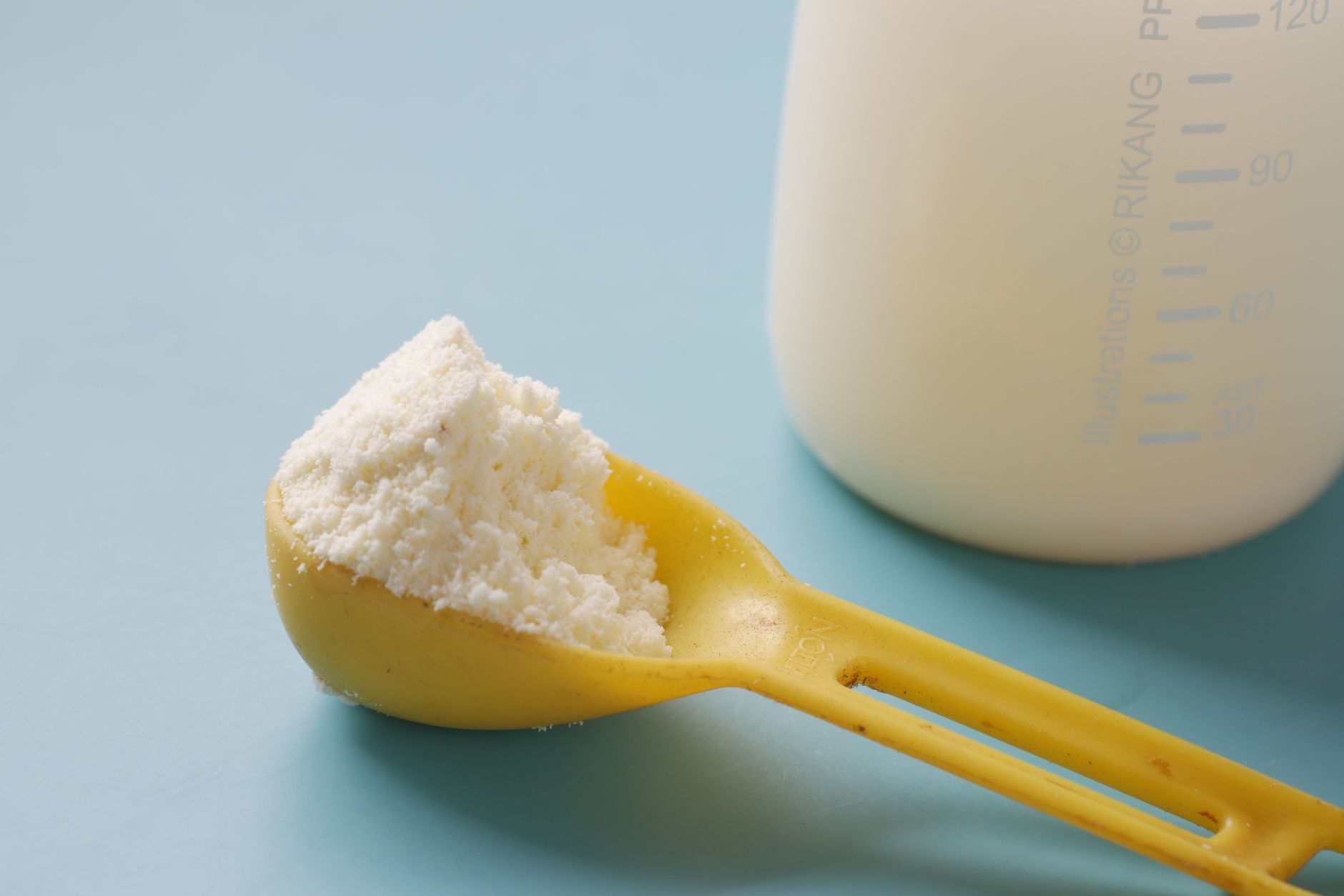
Measuring formula with a proper scoop helps keep the volume accurate.
Step‑by‑step: Using the formula feeding calculator
Even
with the chart above, translating weight and age into a precise daily volume can feel like math homework. That’s why we built the Infant Formula Calculator. Here’s how to get the most out of it:
Gather your baby’s latest weight. A recent well‑baby checkup (within the past week) gives the most reliable number. If you only have a home‑scale estimate, round to the nearest half‑pound.
Select the baby’s age. The calculator asks for months and weeks; enter the exact age to capture growth spurts.
Enter the recommended daily ounces. The tool automatically applies the 2½ oz per pound rule, but you can adjust the multiplier if your pediatrician suggests a different target (for example, 2 oz per pound for a preterm infant).
Choose the number of feeds per day. Most infants between 1–4 months thrive on 6–8 feeds; older babies often consolidate to 4–5.
Calculate. The calculator splits the daily total into equal portions, giving you the ounces per feed. It also displays the total calories (≈20 kcal per ounce), which can be handy if you’re tracking nutrition.
Write it down. Keep a feeding log on your phone or a printable chart. Note any adjustments you make, and compare against weight gain at each well‑check.
Remember, the calculator provides a starting point. If your baby seems hungry after a feed, add 0.5–1 ounce to the next one; if they’re consistently leaving formula in the bottle, reduce the amount slightly. The goal is a smooth, steady pattern—not a perfect number on the first try.
Many parents find it helpful to revisit the calculator after each growth spurt (usually every 2–3 weeks in the first three months). By entering the new weight, the tool instantly updates the per‑feed volume, saving you from manual calculations and reducing guesswork.
Feeding frequency and schedule guidelines by month
Beyond volume, the timing of feeds matters for digestion, sleep, and bonding. Below is a month‑by‑month guide that pairs recommended ounces per feed with typical feeding intervals.
0–1 month (newborn): 2–3 oz per feed, 8–12 times a day (roughly every 2–3 hours). Newborns have tiny stomachs—about the size of a walnut—so they need frequent, small meals.
1–2 months: 3–5 oz per feed, 6–8 feeds daily. As the stomach grows to the size of a plum, feedings can stretch to every 3–4 hours.
2–3 months: 4–5 oz per feed, 5–7 feeds. Many babies start to develop a more predictable pattern, often sleeping longer at night.
3–4 months: 5–6 oz per feed, 5–6 feeds. At this stage, you might notice a “growth spurt” week where the baby wants an extra ounce or two.
4–5 months: 6–8 oz per feed, 4–6 feeds. Some infants can go 4–5 hours between feeds, especially if they’re beginning to sleep through the night.
5–6 months: 7–9 oz per feed, 4–5 feeds. This is a common window for introducing iron‑fortified cereals or pureed fruits, while still maintaining formula as the primary nutrition source.
6–9 months (with solids): 8–12 oz per feed, 4–5 feeds. As solids become a larger part of the diet, formula intake may slowly taper, but many babies still need at least 24‑30 oz of formula daily for adequate calories.
These intervals are flexible. Babies may naturally cluster feed (multiple feeds close together) during growth spurts, then stretch out longer periods between meals. The most reliable indicator of a good schedule is your baby’s satisfaction: they should appear content after a feed, have regular wet diapers, and gain weight steadily.
If you’re aiming for a more predictable nighttime routine, consider a “dream feed” (a quiet feed around 10 p.m.) once the baby is a few months old. This can help bridge the longest stretch of sleep and reduce early‑morning hunger cries, but it’s optional and should be tailored to your baby’s cues.
Factors that influence how much formula you give
While age and weight are the primary drivers, several other variables can shift the ideal volume:
Growth spurts. Typically occurring around 2‑3 weeks, 6 weeks, 3 months, and 6 months, these periods can increase appetite by 20‑30 percent for a few days.
Prematurity. Preterm infants (born before 37 weeks) often require a lower ounce‑per‑pound ratio (about 2 oz per pound) and may need fortified formula. Always follow the neonatologist’s guidance.
Health conditions. Babies with reflux, congenital heart disease, or certain metabolic disorders may have specific fluid restrictions or need more frequent, smaller feeds.
Activity level. A particularly active baby (e.g., one who’s already rolling or crawling) may burn more calories and request a little extra.
Introduced solids. Once solids become regular, formula needs can decrease modestly. Watch for a gradual reduction rather than an abrupt cut.
When any of these factors come into play, the best approach is to adjust gradually—adding or subtracting about 0.5 ounce every few days—and monitor weight gain and diaper output. For example, during a documented growth spurt, a 4‑month‑old may benefit from an extra ounce per feed for 3–5 days, then return to the baseline amount.
Another often‑overlooked factor is the baby’s feeding environment. A calm, dimly lit room can help a fussy infant finish a feed more peacefully, whereas a noisy, overstimulating setting may lead to interrupted feeds and apparent “under‑eating.”
Signs of overfeeding and underfeeding
Even with a solid calculator, it’s essential to recognize when the amount you’re offering isn’t matching your baby’s needs. Here’s what to look for:
Overfeeding signs: Persistent spit‑up, frequent vomiting, excessive gassiness, unusually tight or hard stools, and rapid weight gain that jumps more than one centile on the growth chart.
Underfeeding signs: Fewer than 6 wet diapers a day after the first two weeks, sluggishness or difficulty waking for feeds, weight loss or a drop of two centiles, and persistent hunger cues (rooting, hand‑to‑mouth) after each feed.
If you notice any of these patterns for more than a few days, reassess the volume and consult your pediatrician. Small adjustments—like trimming 0.5 ounce from each feed or adding a half‑ounce—can often correct the issue quickly.
In addition to the physical signs, pay attention to your baby’s behavior during feeds. A baby who consistently turns their head away, pushes the bottle, or becomes increasingly fussy despite a full bottle is likely signalling fullness, even if they haven’t “finished” the feed.
Tips for transitioning formula amounts as your baby grows
Growth is a moving target, and your feeding plan should evolve with it. Here are practical steps to keep the transition smooth:
Track weight weekly. Use a chart or app to see whether the baby is gaining about 0.5‑1 oz (15‑30 g) per day, which is the typical rate for healthy infants.
Adjust in small increments. Increase or decrease the per‑feed volume by no more than 0.5 oz every 3–4 days. This gives the digestive system time to adapt.
Introduce solids gradually. Start with 1‑2 tablespoons of iron‑fortified rice cereal mixed with formula, and watch how the baby responds. As solids become a regular part of meals, you can taper formula by 1‑2 ounces per day.
Watch for “fullness cues.” Babies will turn their heads away, push the bottle away, or become fussy when they’ve had enough. Respect these signals; they’re a natural regulator.
Stay consistent with bottle size. Use a measured bottle that matches the ounce amount you intend to give. This avoids “eyeballing” which can lead to over‑ or under‑estimation.
For families with multiple children, keep each baby’s feeding log separate. Even twins can have different needs, especially if one is a bit heavier or has a slightly earlier growth spurt.
Finally, remember that feeding is also a bonding time. If you find yourself rushing or feeling pressured to “finish the bottle,” pause, take a breath, and consider a brief cuddle break. A relaxed atmosphere often leads to smoother feeds and better digestion.
Safety basics: mixing, storage, and temperature
Accurate measurement is only half the story; how you prepare and store formula matters for your baby’s health.
Water temperature. Use boiled water that’s been cooled to about 70 °F (21 °C) before mixing. This kills any potential bacteria without scalding the formula.
Correct powder‑to‑water ratio. Follow the manufacturer’s instructions precisely—usually one scoop (≈8.7 g) per 2 oz of water. Adding extra water to stretch a formula can dilute nutrients, while adding extra powder can concentrate calories and minerals beyond safe levels.
Mixing technique. Fill the bottle with the measured water first, then add the powder. Cap and shake gently until the powder fully dissolves; avoid vigorous shaking that can create air bubbles.
Storage limits. Prepared formula can be stored at room temperature for up to 2 hours, in the refrigerator for up to 24 hours, and in a cooler bag with ice packs for up to 12 hours on outings. Discard any leftover formula after a feed; bacteria can multiply quickly in warm milk.
Temperature check. Before feeding, test a few drops on the inside of your wrist. It should feel lukewarm, not hot or cold.
Following these steps helps ensure each ounce you give is both nutritionally complete and microbiologically safe. The FDA’s Infant Formula Guidance (2023) emphasizes that any deviation from the recommended preparation method can increase the risk of infection, especially in infants under six months.
When traveling, carry pre‑measured scoops in a clean container and use insulated bottles to keep water at the right temperature. If you’re ever unsure whether a bottle is still safe, it’s better to discard it and prepare a fresh one.
Pour formula into the bottle after adding the powder for a smooth mix.
From our medical team: “If you’re ever unsure whether your baby’s intake is adequate, focus first on weight gain and diaper output. Those are the most reliable, objective signs. Adjust volumes slowly, and always keep a log so you can share precise data with your pediatrician.”
Understanding formula nutrition: calories, protein, and vitamins
Formula isn’t just “milk”; it’s a carefully engineered blend of calories, protein, fats, vitamins, and minerals designed to mirror breast milk as closely as possible. A typical infant formula provides about 20 kcal per ounce, but the exact caloric density can vary by brand and type. Knowing the calorie content helps you gauge whether your baby is meeting their energy needs, especially when you start adding solids.
Protein in formula is usually derived from whey and casein, with a whey‑dominant ratio (around 60 % whey) to aid digestion. Iron is added to prevent anemia, which is why many pediatricians recommend iron‑fortified formula for babies who are exclusively formula‑fed after four months. Vitamin D is another critical addition; the American Academy of Pediatrics advises a daily supplement of 400 IU for all infants, whether breast‑ or formula‑fed, because formula alone may not provide enough.
When you switch between standard, soy, or hypoallergenic formulas, the nutrient profile can shift slightly. For example, soy‑based formulas often contain a bit more iron, while hypoallergenic (e.g., extensively hydrolyzed) formulas may have a lower protein load to reduce allergenic potential. Always check the label for the exact calorie‑per‑ounce figure, and adjust your per‑feed volume if you’re using a formula with a different caloric density than the 20 kcal standard.
Choosing the right formula: standard, soy, hypoallergenic, and specialty options
Most babies thrive on standard cow‑milk‑based formula, which meets the nutritional needs outlined by the FDA’s Infant Formula Regulations (2023). However, some infants require alternatives:
Soy‑based formula: Suitable for families who prefer a plant‑based option or have mild lactose intolerance. It provides comparable calories and iron, but some infants may develop soy protein sensitivity.
Hypoallergenic (extensively hydrolyzed) formula: Recommended for babies with cow‑milk protein allergy or eczema‑related food sensitivities. The proteins are broken down into tiny peptides, reducing allergenic potential but often requiring a slightly higher volume to meet protein needs.
Protein‑hydrolyzed (partial) formula: Often used for infants with moderate milk protein sensitivity. It’s less aggressive than an extensively hydrolyzed product but still may need careful monitoring.
Specialty formulas: Includes pre‑term, low‑birth‑weight, and metabolic‑disorder formulas that contain added calories, medium‑chain triglycerides, or specific amino acid blends. These are prescribed by a neonatologist or pediatric gastroenterologist.
Switching formulas can temporarily alter how much your baby wants to drink, because taste, texture, and nutrient density differ. When you change brands, give your baby a few days to adjust and monitor weight gain closely. The same calculator can be used, but remember to update the calorie‑per‑ounce value if the new formula differs from the standard 20 kcal/oz.
Practical tips for feeding on the go
Life with a newborn rarely stays at home. Whether you’re heading to a pediatric appointment, visiting family, or taking a short vacation, having a reliable on‑the‑go feeding routine can reduce stress.
Pre‑measure scoops. Pack a clean, dry container with the exact number of formula scoops you’ll need for the day. This eliminates the need to count in the car seat.
Use insulated bottles. A double‑wall bottle keeps prepared formula at a safe temperature for up to 4 hours. If you need to warm the bottle, a portable bottle warmer (USB‑powered) can bring it to body temperature without boiling.
Carry a small cooler bag. Include an ice pack to keep water cool for mixing. Remember the 2‑hour rule for room‑temperature formula; the cooler bag extends that window.
Sanitize on the road. Wipe bottle rims and nipples with an alcohol‑free wipe before each use. A quick rinse with boiled water (cooled) is ideal if you have access to a kitchen.
Plan for emergencies. Keep a spare bottle and an extra scoop in your diaper bag. If something spills, you’ll have a backup without scrambling for a new formula container.
Finally, keep a copy of your baby’s feeding schedule (a one‑page printout or a note on your phone) handy. In a new environment, a clear visual cue helps you stay consistent and reassures any caregivers who might be feeding your baby for the first time.
🔢 Ready to crunch your numbers? Use our Infant Formula Calculator for a personalized result in seconds.
Myth vs. fact
Myth: “All babies need the same exact amount of formula at each age.”
Fact: While guidelines give a helpful range, individual needs vary based on weight, metabolism, and growth patterns. Use the range as a baseline, then fine‑tune for your baby.
Myth: “You can dilute formula with extra water to stretch it out.”
Fact: Diluting formula reduces essential nutrients, especially iron and calories, and can lead to hyponatremia. Always follow the manufacturer’s powder‑to‑water ratio.
Myth: “If a baby finishes the bottle, they’re getting enough.”
Fact: Some babies may over‑eat out of habit or comfort. Watch for signs of satiety, such as turning away or pushing the bottle away, rather than relying solely on bottle emptiness.
Key takeaways
Start with 2½ oz of formula per pound of body weight each day; split it across 6‑8 feeds for newborns, decreasing to 4‑5 feeds by six months.
Use the Infant Formula Calculator to convert weight and age into precise per‑feed volumes.
Adjust formula amounts by no more than 0.5 oz every few days, watching weight gain and diaper output for feedback.
Look for over‑feeding signs (excessive spit‑up, rapid weight gain) and under‑feeding signs (fewer wet diapers, sluggishness).
Follow strict mixing ratios, use cooled boiled water, and store prepared formula safely—no more than 24 hours in the fridge.
When in doubt, keep a feeding log and discuss trends with your pediatrician.
Frequently asked questions
How many ounces of formula should a newborn drink per feeding?
Newborns typically need 2–3 ounces per feed, about 8–12 times a day. This amount satisfies the 2½ oz per pound daily rule for most infants weighing 7‑9 lb.
What is the recommended number of formula feeds per day for a 3‑month‑old?
A three‑month‑old usually has 5‑7 feeds daily, with each feed ranging from 4 to 6 ounces, depending on weight and appetite.
How do I calculate the right amount of formula for my baby’s age?
Multiply your baby’s current weight (in pounds) by 2½ ounces to get the daily total, then divide by the number of feeds you plan (usually 6–8 for newborns, 4–5 for older infants). Our Infant Formula Calculator automates this math.
Can I use a formula feeding calculator to adjust portions as my baby grows?
Yes. The calculator lets you input updated weight and age, instantly recalculating the daily and per‑feed volumes. It’s a handy tool for tracking changes during growth spurts.
What signs indicate my baby is getting too much or too little formula?
Too much formula may cause frequent spit‑up, gassiness, or rapid weight gain; too little often shows as fewer wet diapers, sluggishness, or weight loss on the growth chart. Adjust volumes gradually and monitor.
Is it safe to mix formula with water to change the ounce amount?
No. Diluting formula reduces essential nutrients and can create an unsafe electrolyte balance. Always follow the manufacturer’s exact powder‑to‑water ratio.
How should I store formula when traveling?
Prepared formula can stay in a cooler bag with an ice pack for up to 12 hours. If you need to reheat a bottle on the road, use a portable bottle warmer rather than a microwave, which can create hot spots.
Do different formula types affect how much my baby should drink?
Yes. Formulas with a higher calorie density (e.g., some hypoallergenic or pre‑term products) may require a slightly smaller volume to meet the same energy needs. Check the label for kcal/oz and adjust the per‑feed amount accordingly.
When to call your doctor
If your baby shows any of the following, reach out to your pediatrician promptly: persistent vomiting or spit‑up, fewer than 6 wet diapers a day after the first two weeks, sudden weight loss or a drop of two growth‑chart centiles, signs of dehydration (dry mouth, sunken fontanelle), or a fever above 100.4 °F (38 °C) that coincides with feeding changes.
Remember, this article provides general information and does not replace personalized medical advice. Always discuss feeding plans and any concerns with your health care provider.
References
American Academy of Pediatrics. “Feeding and Nutrition of Infants and Young Children.” AAP Guidelines, 2023.
World Health Organization. “Infant and Young Child Feeding.” WHO Recommendations, 2022.
National Health Service (UK). “Feeding your baby – formula feeding.” NHS, 2023.
Centers for Disease Control and Prevention. “Infant Nutrition.” CDC, 2024.
U.S. Food and Drug Administration. “Infant Formula: Safety and Nutritional Requirements.” FDA, 2023.
American College of Obstetricians and Gynecologists. “Nutrition During Pregnancy and Lactation.” ACOG Committee Opinion, 2022.
Not sure about the label on Formula Feeding Guide Ounces Per Feed By Month Calculator products?
Snap the ingredients list and SafeFilter checks every ingredient for your stage — only 3 free scans this month, then you're locked until reset. Unlimited from $7/mo or $50/yr.
When Shubhra Mishra was expecting her first child in 2016, she was overwhelmed by conflicting food advice — one site said yes, another said never. By the time her second baby arrived in 2019, she realized millions of mothers face the same confusion.
That sparked a five-year journey through clinical nutrition papers, cultural diets, and expert conversations — all leading to BumpBites: a calm, compassionate space where science meets everyday motherhood.
Her long-term vision is to build a global community ensuring safe, supported, and free deliveriesfor every mother — because no woman should face pregnancy alone or uninformed. 🌿
🌍 Stand with mothers, shape safer guidance
Join a small circle of experts who review BumpBites articles so expecting parents everywhere can decide with confidence.