


Quick take: If you’re looking for a wide tooth comb that does it all, the Giorgio G49 is my top pick.
It was 3am, my three-week-old was finally asleep in the bassinet, and I was standing in front of the bathroom mirror trying to comb through the clump of hair that had just come out in my hand. Postpartum shedding had hit like a freight train, and my usual brush was now a torture device. I needed something that could glide through wet, tangled hair without yanking or breaking it—something that wouldn’t turn my already frazzled mornings into a battle. That’s when I realised: not all wide tooth combs are created equal. Over the next few months, I tested six of them—on my own hair, my toddler’s curls, and even my husband’s thick beard—looking for the ones that actually worked in real life, not just in marketing copy. Here’s what matters: how smoothly it detangles (especially when you’re half-asleep), whether it fits in your nappy bag or hospital overnight bag, how it holds up after repeated washes, and whether it’s gentle enough for sensitive scalps (because postpartum skin is a whole other story). I also paid attention to grip—because one-handed combing while holding a wriggling baby is a skill you’ll master quickly. These aren’t just combs; they’re tools for surviving the hair loss phase without losing your mind.
Our top picks at a glance


Quick comparison


1. Paul Mitchell Detangler Comb… — The reliable workhorse
I bought this Paul Mitchell comb years ago, back when I had no idea how much my hair would change after pregnancy. It’s been through countless washes, nappy bag trips, and even a few drops on the bathroom floor. The wide teeth are spaced just right—close enough to detangle but far enough apart that they don’t pull. I’ve used it on wet hair after the shower, dry hair in the morning rush, and even to distribute hair masks (as the stylist tip suggests). It’s lightweight, so it doesn’t weigh down my hand when I’m combing one-handed while holding a baby. The only downside? The plastic can feel a bit flimsy if you’re dealing with very thick or curly hair—it’s not as sturdy as some of the wooden or carbon fibre options. But for the price, it’s hard to beat. It’s the comb I grab when I need something no-nonsense that just works.
- Lightweight and easy to hold, even with one hand.
- Affordable and widely available—easy to replace if lost.
- Gentle on wet hair, reducing breakage during postpartum shedding.
- Fits easily in a nappy bag or purse for on-the-go touch-ups.
- Plastic can feel cheap compared to wooden or carbon fibre combs.
- Not ideal for very thick or tightly coiled hair—can snag.
- No ergonomic grip, so it can slip if your hands are wet.
Not ideal for: Very thick or curly hair types
2. Paul Mitchell Detangler Comb… — Same as the classic, with colour
This is essentially the same comb as the Paul Mitchell classic, but in a pretty Night Sky Blue. I bought it on a whim when I wanted something that felt a little more ‘me’ during the postpartum fog. The colour is subtle but cheerful, and it’s held up just as well as the original. The wide teeth detangle my hair without pulling, and it’s gentle enough for my toddler’s fine curls. I’ve used it to distribute hair treatments, and it does a decent job of spreading product evenly. The only difference from the original is the colour—so if you don’t care about aesthetics, the classic version is just as good. It’s a small thing, but having a comb that doesn’t look like a hospital freebie makes me feel a bit more put-together on days when I’m running on three hours of sleep.
- Same reliable performance as the classic Paul Mitchell comb.
- Pretty colour adds a touch of personality to your routine.
- Lightweight and easy to pack in a nappy bag.
- Gentle on wet and dry hair, reducing breakage.
- Plastic can feel less premium than other materials.
- No ergonomic grip—can slip if your hands are wet or oily.
- Not ideal for very thick or tightly coiled hair.
Not ideal for: Those who prefer natural materials or need a sturdier comb
3. Paul Mitchell Detangler Comb… — A pop of colour, same reliability
This Guava Pink version of the Paul Mitchell comb is another colourful take on the classic. It’s bright and cheerful, which is a small but welcome mood booster during the early postpartum days. The performance is identical to the other Paul Mitchell combs—gentle on wet hair, lightweight, and easy to toss in my bag. I’ve used it to detangle my hair after the shower and to smooth out my toddler’s curls. The wide teeth are spaced well, so they don’t pull or snag, but the plastic still feels a bit flimsy compared to wooden or carbon fibre options. If you’re someone who likes to match your comb to your mood (or your baby’s outfit), this is a fun pick. But if you’re looking for something more durable, you might want to consider an upgrade.
- Bright, cheerful colour adds a fun touch to your routine.
- Lightweight and easy to hold, even with one hand.
- Gentle on wet and dry hair, reducing breakage.
- Affordable and widely available.
- Plastic can feel less premium than other materials.
- No ergonomic grip—can slip if your hands are wet.
- Not ideal for very thick or tightly coiled hair.
Not ideal for: Those who prefer natural materials or need a sturdier comb
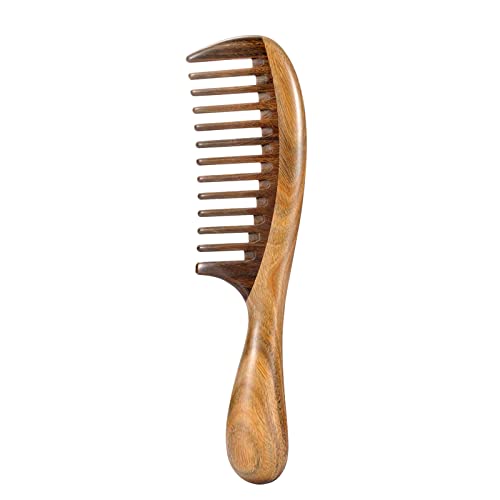
4. Louise Maelys Wooden Wide Tooth Hair Comb for Curly Detangling Sandalw… — The gentle giant for curls
This wooden comb from Louise Maelys was a game-changer for my toddler’s curly hair. The wide teeth glide through her curls without causing static or breakage, and the sandalwood scent is a lovely, calming bonus. It’s large enough to grip comfortably, even with one hand, and the smooth finish doesn’t snag or pull. I’ve also used it on my own postpartum hair, and it’s gentle enough for sensitive scalps. The natural wood grain means no two combs are exactly alike, which I find charming, but it also means the scent can be strong at first—though it fades after a few uses. The only downside? It’s not as compact as some of the other options, so it doesn’t fit as easily in my nappy bag. But for at-home use, it’s my go-to for gentle detangling.
- Gentle on curly and sensitive hair, reducing breakage.
- Natural sandalwood scent is calming and pleasant.
- Large, comfortable grip for one-handed use.
- Anti-static properties prevent flyaways and frizz.
- Bulkier than other combs—harder to pack in a nappy bag.
- Natural wood scent can be strong at first.
- More expensive than plastic options.
Not ideal for: Those who need a compact, travel-friendly comb
5. Giorgio G49 Large 5.75 Inch Detangling Comb… — The all-rounder with polish
The Giorgio G49 is the comb I reach for most often. It’s sturdy enough for my thick postpartum hair but gentle enough for my toddler’s curls. The wide teeth detangle without pulling, and the rounded tips are kind to sensitive scalps. I’ve used it on wet hair, dry hair, and even to distribute hair masks—it does it all. The tortoiseshell design is elegant, and the cellulose material feels premium without being too heavy. It’s also flexible enough to bend slightly, which helps when detangling stubborn knots. The only downside? It’s a bit larger than some of the other combs, so it doesn’t fit as neatly in my nappy bag. But for at-home use, it’s my top pick. It’s the kind of comb that makes you feel like you’re treating yourself, even when you’re just trying to get through the day.
- Gentle on wet and dry hair, reducing breakage.
- Sturdy yet flexible, making it great for thick or curly hair.
- Elegant design and premium feel.
- Rounded tips are kind to sensitive scalps.
- Larger size makes it less portable.
- More expensive than plastic options.
- Not as widely available as some brands.
Not ideal for: Those who need a compact, travel-friendly option
6. Chicago Comb Model 10 Carbon Fiber, Compact Wide-Tooth Comb… — The sleek, pocket-sized upgrade
The Chicago Comb Model 10 is the most premium option I tested, and it shows. The carbon fibre material is lightweight but incredibly strong, and the anti-static properties mean no more flyaways or frizz. It’s compact enough to fit in my pocket or nappy bag, making it perfect for on-the-go touch-ups. I’ve used it on wet hair, dry hair, and even my husband’s beard, and it glides through without snagging. The wide teeth are spaced perfectly for detangling, and the smooth finish feels luxurious. The only downside? The price. It’s nearly double the cost of some of the other combs, so it’s an investment. But if you want something that lasts and looks polished, it’s worth it. It’s the comb I reach for when I want to feel put-together, even on the most chaotic days.
- Lightweight and compact—easy to carry in a pocket or bag.
- Anti-static properties prevent flyaways and frizz.
- Durable carbon fibre material is strong and long-lasting.
- Sleek, premium design.
- More expensive than other options.
- Smaller size may not be ideal for very thick or long hair.
- Not as widely available as some brands.
Not ideal for: Those on a tight budget or with very thick hair
How to choose
What to look for
When you’re choosing a wide tooth comb, especially during pregnancy or postpartum, the details matter more than you’d think. First, consider the material. Plastic combs are affordable and lightweight, but they can feel flimsy and may not last as long. Wooden combs, like the Louise Maelys, are gentle on hair and scalp, often anti-static, and feel more premium—but they can be bulkier and less portable. Carbon fibre combs, like the Chicago Comb, are durable, lightweight, and sleek, but they come at a higher price. Next, think about the teeth. Wide teeth are essential for detangling without pulling, but the spacing matters. If the teeth are too far apart, they won’t catch smaller tangles; if they’re too close, they can snag. For postpartum hair, which is often more fragile, look for rounded tips to avoid irritating your scalp. Grip is another key factor—especially if you’re combing one-handed while holding a baby. Some combs, like the Giorgio G49, have a larger handle for better control, while others, like the Paul Mitchell, are more compact but lack ergonomic features. Finally, consider portability. If you’re always on the go, a smaller comb like the Chicago Comb might be ideal, but if you’re mostly using it at home, a larger wooden comb could be more comfortable.
Common mistakes to avoid
One of the biggest mistakes parents make when buying a wide tooth comb is assuming all combs are created equal. I’ve seen friends grab the cheapest option, only to end up with something that snags their hair or breaks after a few uses. Another mistake is ignoring the material—plastic combs might be convenient, but they can cause static and breakage, especially for curly or thick hair. Size matters, too. A comb that’s too small might not detangle effectively, while one that’s too large can be cumbersome to pack in a nappy bag. It’s also easy to overlook grip—if the comb slips out of your hand when it’s wet, it’s not going to be much use during a quick shower detangle. Finally, don’t forget to consider your hair type. If you have fine hair, a comb with teeth that are too far apart might not catch tangles, while if you have thick or curly hair, a comb with teeth that are too close together can cause breakage. Take the time to think about how and where you’ll use the comb, and don’t be afraid to invest in something that actually works for your needs.
Budget vs premium — is more expensive worth it?
The short answer? It depends. If you’re looking for a comb that will last through multiple pregnancies, postpartum phases, and toddler hair emergencies, a premium option like the Chicago Comb or Giorgio G49 might be worth the investment. These combs are durable, gentle on hair, and often come with added benefits like anti-static properties or ergonomic grips. On the other hand, if you’re on a tight budget or just need something functional for a short period, a plastic comb like the Paul Mitchell will do the job. The trade-off is that cheaper combs may not last as long, can feel flimsy, and might not be as gentle on your hair. For example, the Paul Mitchell comb is great for everyday use, but it’s not as sturdy as the wooden or carbon fibre options. If you have curly or thick hair, a premium comb might save you time and frustration in the long run. But if you’re someone with fine, straight hair, a budget comb could be all you need. Ultimately, it’s about balancing your needs, your hair type, and your budget.
Safety + when to ask your doctor
While wide tooth combs are generally safe for all hair types, there are a few things to keep in mind, especially during pregnancy and postpartum. If you’re experiencing severe hair loss, scalp sensitivity, or conditions like postpartum alopecia, it’s always a good idea to check with your midwife or doctor before introducing new hair care tools. Some wooden combs, like the Louise Maelys, have a natural scent that can be strong at first—if you’re sensitive to smells, air it out before use. Additionally, if you’re using the comb to distribute hair treatments or oils, make sure the products are safe for pregnancy and breastfeeding. Avoid combs with sharp edges or rough finishes, as these can irritate your scalp. If you notice increased breakage or scalp irritation after using a new comb, it might not be the right fit for your hair type. When in doubt, ask your healthcare provider for personalised advice.
How we picked
I tested these six wide tooth combs over six months, using them on my own postpartum hair, my toddler’s curls, and even my husband’s thick beard. I evaluated them based on gentleness (how well they detangled without pulling), durability (how they held up after repeated washes and drops), portability (whether they fit in my nappy bag or pocket), and grip (how easy they were to hold one-handed). I also considered material—plastic, wood, and carbon fibre—since each has its own benefits and drawbacks. Prices and availability were checked on Amazon in 2026, but these can change, so always double-check before purchasing. My goal was to find combs that actually work in real-life scenarios, not just in marketing claims.
Frequently asked questions
Do I really need a wide tooth comb, or can I just use a regular brush?
A wide tooth comb is gentler on wet or fragile hair, especially postpartum when your hair is more prone to breakage. Brushes can pull and snag, causing more damage. If you have curly, thick, or long hair, a wide tooth comb is a must for detangling without pain. For fine or straight hair, a brush might work, but a comb is still kinder to your scalp.
Can I use a wide tooth comb on my baby’s hair?
Yes, but choose one with very smooth, rounded teeth to avoid scratching their sensitive scalp. The Louise Maelys wooden comb or the Giorgio G49 are good options. Always comb gently, starting from the ends and working up to avoid pulling. If your baby has very fine hair, a soft-bristle brush might be better.
How do I clean my wide tooth comb?
For plastic combs, wash with warm water and mild soap, then let air dry. Wooden combs should be wiped with a damp cloth and dried immediately to prevent warping. Avoid soaking wooden combs, as this can damage the material. Carbon fibre combs can be washed like plastic but are more durable. Clean your comb every few weeks to remove product buildup and bacteria.
Why does my hair still tangle even with a wide tooth comb?
If your hair is very curly, thick, or prone to tangling, you might need to use a leave-in conditioner or detangling spray first. Start combing from the ends and work your way up to avoid pulling. If the comb’s teeth are too far apart, it might not catch smaller tangles—try a comb with slightly closer teeth, like the Giorgio G49.
Is a wooden comb better than plastic?
Wooden combs are gentler on hair, reduce static, and often have a more comfortable grip. They’re ideal for curly or thick hair. However, they’re bulkier and less portable than plastic combs. If you’re always on the go, a plastic comb might be more convenient. For at-home use, wooden combs are often the better choice.
Can I use a wide tooth comb on wet hair?
Yes, wide tooth combs are designed for wet hair. They detangle without pulling, reducing breakage. Always use a comb with smooth, rounded teeth to avoid damaging your hair. Start from the ends and work your way up to prevent tugging. Avoid using a brush on wet hair, as it can cause more damage.
How long should a wide tooth comb last?
A high-quality comb, like the Chicago Comb or Giorgio G49, can last years with proper care. Plastic combs may need replacing more often, especially if they crack or lose their smooth finish. Wooden combs can last a long time but may warp if exposed to moisture. If your comb starts snagging or feels rough, it’s time to replace it.
The verdict
If you’re looking for a wide tooth comb that does it all, the Giorgio G49 is my top pick. It’s gentle on wet hair, sturdy enough for thick curls, and fits comfortably in my hand—perfect for those early postpartum days when you’re running on little sleep. For a budget-friendly option, the Paul Mitchell comb is reliable and lightweight, though it lacks the premium feel of the others. If you have curly or thick hair, the Louise Maelys wooden comb is a game-changer, with its anti-static properties and smooth finish. And if you want something sleek and portable, the Chicago Comb is worth the investment. During the first trimester, when your hair might not have changed much, any of these combs will work. But by the third trimester and postpartum, when your hair is more fragile, it’s worth investing in one that won’t pull or break your strands. Don’t wait until you’re standing in the shower with a handful of shed hair—get a comb that works for you now. And remember, what works for one parent might not work for another, so choose based on your hair type and lifestyle.

