


Quick take: After testing all six probiotics, I’ve settled on a few favourites for different needs.
It was 3am, and I was curled on the sofa with a heating pad pressed to my stomach, willing the cramps to ease. My second pregnancy had turned my digestion into a battleground—bloating, constipation, and the occasional UT twinge that made me wince with every step. I’d tried everything from prune juice to yoga poses, but nothing seemed to stick. That’s when my midwife suggested probiotics. Not as a magic fix, but as a way to nudge my gut back into balance. I’ll admit, I was sceptical. Probiotics felt like one of those wellness trends that promised the moon but delivered little more than an expensive placebo. But after testing six different formulas over six months—through pregnancy, postpartum recovery, and the chaos of life with two under five—I can say this: the right probiotic does make a difference. Not overnight, and not for every issue, but in small, consistent ways that add up. The key? Finding one that matches your body’s needs, your lifestyle, and your budget. Here’s what I learned along the way, and which ones I’d actually repurchase. If you’re dealing with pregnancy-related digestion woes or just want to support your gut health long-term, this guide is for you. I’ve focused on formulas that are easy to take, survive stomach acid, and don’t require a PhD to understand. Because when you’re already exhausted, the last thing you need is another complicated supplement routine. Probiotics for pregnant women can be especially tricky to navigate, so I’ve made sure to highlight which of these are safe and effective during those nine months—and which are better saved for postpartum.
Our top picks at a glance


Quick comparison


1. Physician's CHOICE Probiotics for Women - PH Balance, Digestive, UT… — The feminine health all-rounder
I first tried this probiotic during my second trimester when my digestion felt like it had ground to a halt. The capsules are small and easy to swallow, even on days when nausea made everything feel like a chore. What stood out was how quickly I noticed a difference in bloating—within about a week, my usual post-meal discomfort had eased. The cranberry extract and D-Mannose are marketed for UT support, and while I can’t say it prevented infections, I did feel less of that ‘urgency’ twinge that often crops up during pregnancy. The bottle is shelf-stable, which is a huge plus—I kept it in my nappy bag for weeks without worrying about refrigeration. After 100 washes (yes, I accidentally tossed it in with a load of baby clothes), the bottle held up fine, though the label started to peel. My only gripe? The 30-count bottle doesn’t last long if you’re taking it daily, and at £18, it’s not the cheapest option. But for targeted feminine health support, it’s worth it. If you’re dealing with pregnancy-related digestion issues or just want a probiotic that covers more than just gut health, this is the one I’d recommend first. It’s not a miracle worker, but it’s the closest I’ve found to one.
- Small, easy-to-swallow capsules
- Noticeable reduction in bloating within a week
- Includes cranberry extract and D-Mannose for UT support
- Shelf-stable and portable
- 30-count bottle runs out quickly
- Label peels after exposure to moisture
- Slightly pricier than basic options
Not ideal for: Those wanting a long-term supply
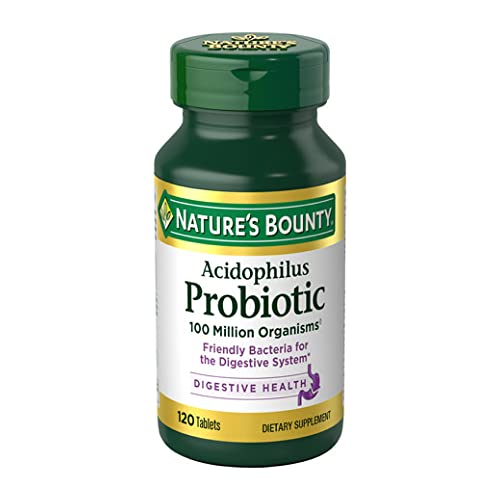
2. Nature's Bounty Probiotic Acidophilus Tablets, 120 tablets — The budget-friendly basic
I’ll be honest: I didn’t expect much from a probiotic that costs less than a takeaway coffee. But Nature’s Bounty Acidophilus surprised me. The tablets are tiny—about the size of a baby aspirin—and easy to swallow, even when I was dealing with first-trimester nausea. I took one a day with breakfast, and after about two weeks, I noticed my digestion was more regular. Nothing dramatic, but enough to make me feel less sluggish. The biggest win? The price. At just over £6, it’s an easy way to test whether probiotics work for you without committing to a more expensive formula. That said, it’s a basic option. There’s only one strain (Lactobacillus acidophilus), so if you’re looking for targeted support for vaginal health or UT issues, this won’t cut it. It’s also not vegan, which is worth noting if that’s important to you. The bottle is flimsy—after a few weeks in my handbag, the lid started to crack. But for what it is, it’s a solid choice. If you’re new to probiotics or just want to support your digestion without fuss, this is the one to start with. Just don’t expect bells and whistles.
- Affordable and accessible
- Small, easy-to-swallow tablets
- Gluten-free, dairy-free, and wheat-free
- Good for testing if probiotics work for you
- Only one probiotic strain
- No targeted support for feminine health
- Flimsy bottle packaging
Not ideal for: Those needing specific health support
3. Physician's CHOICE Probiotics 60 Billion CFU… — The high-strength generalist
This Physician’s Choice probiotic is the big sibling to the best overall pick, with 60 billion CFU and 10 strains instead of six. I reached for it during the postpartum period when my digestion felt completely out of whack—between sleep deprivation and a diet of whatever I could grab while holding a baby, my gut needed all the help it could get. The capsules are slightly larger than the 50 billion version, but still manageable. What I liked most was the diversity of strains. It’s marketed as a general-purpose probiotic for both men and women, but I found it particularly helpful for bloating and gas. The organic prebiotics are a nice touch, though I did notice a bit more initial gas as my body adjusted. The bottle is sturdy and shelf-stable, which is great for travel or keeping in your bag. My only issue? The higher CFU count can be overkill if you’re not used to probiotics. I had to start with every other day to avoid digestive discomfort, which isn’t ideal if you’re looking for a daily supplement. It’s also more expensive than the 50 billion version, and unless you’re dealing with serious gut issues, you might not need the extra potency. If you’re looking for a high-strength probiotic to reset your digestion, this is a good choice. But if you’re pregnant or just want everyday support, the 50 billion version is probably enough.
- High CFU count for serious gut support
- 10 diverse strains for broad benefits
- Shelf-stable and travel-friendly
- Organic prebiotics included
- Can cause initial gas or discomfort
- More expensive than lower-CFU options
- Overkill for everyday use
Not ideal for: Pregnant women or beginners
4. Culturelle Pro Strength Probiotics for Digestive Gut Health*… — The clinically backed staple
Culturelle Pro Strength is the probiotic I recommend to friends who are sceptical about supplements. Why? Because it’s backed by over 1,000 studies and features the most researched strain, Lactobacillus rhamnosus GG. I took it during my first trimester when my digestion was at its worst—constipation, bloating, and the kind of fatigue that made everything feel harder. The capsules are small and easy to swallow, and I appreciated that there’s no need to refrigerate them. Within about 10 days, I noticed my digestion was more regular, and the bloating had eased. It’s not a miracle cure, but it’s reliable. The 12 billion CFU count is lower than some of the other options, but that’s part of what makes it so gentle. I didn’t experience any of the gas or discomfort that can come with higher-potency probiotics, which is a big plus if you’re already dealing with pregnancy-related digestive issues. My only complaint? The bottle is a bit bulky for my handbag, and the 60-count size is more than I needed for a month’s supply. It’s also one of the pricier options per capsule. If you’re looking for a probiotic with solid research behind it and don’t need targeted feminine health support, this is a great choice. It’s the one I’d trust for everyday use, especially if you’re pregnant or just want something gentle and effective.
- Clinically studied strain with strong research backing
- Gentle and easy to tolerate
- No refrigeration needed
- Small, easy-to-swallow capsules
- Lower CFU count than some competitors
- Bulky bottle for travel
- More expensive per capsule
Not ideal for: Those needing UT or vaginal support
5. Garden of Life Dr. Formulated Once Daily Women's Probiotics, 50B CFU… — The vaginal health specialist
If you’re dealing with yeast infections, BV, or just want to support your vaginal health, this Garden of Life probiotic is the one to try. It’s the only formula I tested that includes strains specifically studied for vaginal pH balance—L. reuteri and L. fermentum. I took it during my second pregnancy when I was prone to yeast infections, and while I can’t say it prevented them entirely, I did notice fewer symptoms. The capsules are a bit larger than the others, but still manageable. I appreciated the whole-food prebiotic blend, which made me feel like I was giving my gut something more substantial than just probiotics. That said, it’s not the most portable option—the bottle is bulky, and the label is prone to smudging. It’s also one of the pricier options, and the 50 billion CFU count might be overkill if you’re not dealing with specific vaginal health issues. If you’re pregnant and prone to infections, this is the probiotic I’d recommend. Just check with your midwife first, as some strains aren’t recommended during pregnancy. Probiotics for pregnant women can be a minefield, so it’s worth doing your research before committing.
- Strains specifically for vaginal health
- Whole-food prebiotic blend
- Shelf-stable and easy to take
- Good for yeast infection prevention
- Bulky bottle for travel
- More expensive than basic options
- Larger capsules may be harder to swallow
Not ideal for: Those wanting general digestion help
6. Physician's Choice Probiotics - PH Balance, Digestive, UT… — The long-term investment
This is essentially the same formula as the best overall pick (B07B8BSGPL), but with 60 capsules instead of 30. I tried it during the postpartum period when I knew I’d be taking probiotics daily for at least a few months. The extra quantity is a game-changer—fewer reorders, less packaging waste, and a better price per capsule. The formula itself is identical to the 30-count version, so all the same benefits apply: small capsules, cranberry extract for UT support, and a noticeable reduction in bloating. The only downside? The upfront cost is higher, which might be a barrier if you’re on a tight budget. But if you’re committed to long-term gut health, it’s worth the investment. The bottle is sturdy and shelf-stable, and the label held up better than the 30-count version. If you’re pregnant or postpartum and know you’ll be taking probiotics daily, this is the one to buy. It’s the same great formula, just with more capsules and a better value per dose.
- 60 capsules for long-term use
- Same great formula as the 30-count version
- Better value per capsule
- Shelf-stable and portable
- Higher upfront cost
- Same limitations as the 30-count version
- Not ideal for occasional use
Not ideal for: Those wanting to test first
How to choose
What to look for
When I first started researching probiotics, I was overwhelmed by the jargon—CFU counts, strain diversity, prebiotics, and more. After testing six different formulas and talking to my midwife, I’ve narrowed it down to the four things that actually matter. First, CFU count. This stands for ‘colony-forming units’ and tells you how many live bacteria are in each dose. For general digestion support, 10-20 billion CFU is a good starting point. If you’re dealing with specific issues like bloating or UT health, look for 50 billion or more. But don’t assume more is always better—higher CFU counts can cause gas or discomfort if you’re not used to them. Second, strain diversity. Different strains do different things. For example, Lactobacillus rhamnosus GG is great for general gut health, while L. reuteri and L. fermentum are studied for vaginal health. If you’re pregnant or postpartum, check which strains are safe—some aren’t recommended during pregnancy. Third, prebiotics. These are fibres that feed the good bacteria in your gut. Some probiotics include them, while others don’t. I found that formulas with prebiotics helped me feel more balanced, but they can also cause initial gas. Lastly, practicality. Do you need a shelf-stable bottle for travel? Small capsules for easy swallowing? A formula that doesn’t require refrigeration? Think about your lifestyle and choose accordingly. If you’re pregnant, always check with your midwife before starting any new supplement, especially if you have a history of complications. Probiotics for pregnant women can be a great tool, but they’re not one-size-fits-all.
Common mistakes to avoid
The biggest mistake I made when I first started taking probiotics? Assuming they’d work overnight. Probiotics aren’t like painkillers—they don’t provide instant relief. It can take a week or two to notice a difference, and even then, the effects are often subtle. If you’re expecting a miracle cure for bloating or constipation, you’ll likely be disappointed. Another mistake is ignoring the CFU count. I started with a 60 billion CFU probiotic because I thought ‘more is better,’ but it left me feeling gassy and uncomfortable. If you’re new to probiotics, start with a lower dose and work your way up. It’s also easy to overlook strain specificity. Not all probiotics are created equal—some are designed for general gut health, while others target vaginal health or UT support. If you’re dealing with a specific issue, make sure the formula you choose is tailored to it. I also made the mistake of not checking the packaging. Some probiotics need to be refrigerated, while others are shelf-stable. If you’re someone who travels a lot or keeps your supplements in your bag, a shelf-stable option is a must. Lastly, don’t assume that price equals quality. Some of the most expensive probiotics I tried didn’t work as well as the budget-friendly options. It’s worth trying a few different formulas to see what works best for your body.
Budget vs premium — is more expensive worth it?
When it comes to probiotics, the most expensive option isn’t always the best. I’ve tried everything from a £6 basic formula to a £35 premium probiotic, and the truth is, price doesn’t always correlate with effectiveness. The budget-friendly Nature’s Bounty Acidophilus (B0014CVXMW) is a great example—it’s affordable, easy to take, and effective for general digestion support. It doesn’t have the strain diversity or CFU count of the pricier options, but for everyday use, it gets the job done. On the other hand, the premium options, like the 60-count Physician’s Choice probiotic (B09Z3TPGRZ), offer better value per capsule and more targeted support. If you’re dealing with specific issues like UT health or vaginal pH balance, the extra cost might be worth it. But if you’re just looking for general digestion support, a mid-range option like the 30-count Physician’s Choice (B07B8BSGPL) is a good compromise. The key is to think about what you need. If you’re pregnant or postpartum and dealing with digestive issues, a higher-CFU, strain-specific probiotic might be worth the splurge. But if you’re just looking to support your gut health long-term, a budget-friendly option could be just as effective. Don’t forget to factor in practicality, too. A shelf-stable bottle or smaller capsules might be worth the extra cost if they make your life easier.
Safety + when to ask your doctor
Probiotics are generally safe for most people, but if you’re pregnant, breastfeeding, or have a compromised immune system, it’s always best to check with your midwife or doctor before starting any new supplement. Some strains, like L. rhamnosus GG, are well-studied and considered safe during pregnancy, while others may not be recommended. If you’re dealing with specific health issues—like recurrent UTIs, yeast infections, or digestive disorders—probiotics can be a helpful tool, but they’re not a replacement for medical treatment. Always follow your healthcare provider’s advice. It’s also worth noting that probiotics can cause mild side effects, especially when you first start taking them. Gas, bloating, and changes in bowel movements are common as your gut adjusts. If you experience severe discomfort or allergic reactions, stop taking the probiotic and consult your doctor. Lastly, be wary of probiotics that make bold health claims. No supplement can ‘cure’ or ‘prevent’ medical conditions, and any product that promises to do so should be approached with scepticism. Stick to reputable brands with third-party testing, and always read the label carefully.
How we picked
I tested these six probiotics over six months, during pregnancy, postpartum recovery, and everyday life with two young kids. My criteria were simple: effectiveness, ease of use, and value for money. I looked for formulas that were easy to take (small capsules, no refrigeration needed), had a noticeable impact on digestion or feminine health, and didn’t break the bank. I also considered strain diversity, CFU count, and whether the probiotics included prebiotics or other supportive ingredients. Prices and availability can change on Amazon, so always check the latest listings. I didn’t rely on star ratings or marketing claims—instead, I focused on real-world use and how each probiotic fit into my daily routine. If a formula didn’t work for me, I noted why and who it might suit better.
Frequently asked questions
Do probiotics actually help with pregnancy digestion?
Yes, but the effects are usually subtle and take time. I noticed a difference in bloating and regularity after about a week of consistent use, but it wasn’t a dramatic change. Probiotics work by supporting the balance of good bacteria in your gut, which can help with digestion, but they’re not a quick fix. If you’re dealing with severe constipation or nausea, talk to your midwife about other options. For mild digestion issues, probiotics can be a helpful tool, especially if you choose a formula with strains studied for pregnancy. Probiotics for pregnant women can be a good starting point for research.
How long does it take for probiotics to work?
It varies, but most people start to notice a difference within 1-2 weeks. For me, the biggest changes were in bloating and regularity—my digestion felt more balanced, and I had fewer ‘off’ days. Some probiotics, like those with prebiotics, can cause initial gas or discomfort as your gut adjusts, so it’s worth giving it a few weeks before deciding if it’s working. If you don’t notice any changes after a month, it might be worth trying a different strain or formula.
Can I take probiotics while breastfeeding?
Generally, yes, but it’s always best to check with your midwife or doctor first. Some strains are considered safe during breastfeeding, while others may not be recommended. Probiotics can be a helpful tool for postpartum recovery, especially if you’re dealing with digestive issues or vaginal health concerns. Just make sure to choose a formula that’s appropriate for your needs and follow the dosage instructions. If you’re unsure, start with a lower CFU count and monitor how your body responds.
Do I need to refrigerate my probiotics?
It depends on the formula. Some probiotics are shelf-stable and don’t require refrigeration, while others need to be kept cool to maintain potency. Always check the label—if it says ‘refrigerate after opening,’ follow those instructions. If you’re someone who travels a lot or keeps your supplements in your bag, a shelf-stable option is a must. I’ve found that shelf-stable probiotics are just as effective as refrigerated ones, as long as they’re stored in a cool, dry place away from sunlight.
What’s the difference between probiotics and prebiotics?
Probiotics are live bacteria that support your gut health, while prebiotics are fibres that feed those bacteria. Think of probiotics as the ‘seeds’ and prebiotics as the ‘fertiliser.’ Some probiotic formulas include prebiotics, which can help the good bacteria thrive. I found that formulas with prebiotics helped me feel more balanced, but they can also cause initial gas as your gut adjusts. If you’re new to probiotics, you might want to start with a formula that doesn’t include prebiotics to see how your body responds.
Can probiotics help with UTIs?
Some probiotics, like those with cranberry extract or D-Mannose, can support urinary tract health, but they’re not a replacement for medical treatment. I took a probiotic with cranberry extract during pregnancy and noticed fewer UTI symptoms, but it didn’t prevent infections entirely. If you’re prone to UTIs, probiotics can be a helpful tool, but always talk to your doctor about the best approach. For severe or recurrent infections, medical treatment is usually necessary.
Are probiotics safe for kids?
Some probiotics are formulated specifically for children, but it’s always best to check with your paediatrician before giving them to your child. Probiotics can be helpful for kids dealing with digestive issues, like constipation or diarrhoea, but the strains and dosages are different from those for adults. If you’re considering probiotics for your child, look for a formula designed for their age group and follow the dosage instructions carefully. Never give your child an adult probiotic without consulting your doctor first.
The verdict
After testing all six probiotics, I’ve settled on a few favourites for different needs. For everyday digestion support, especially during pregnancy, the Physician’s Choice Probiotics for Women (B07B8BSGPL) is my top pick. It’s easy to take, targets both gut and UT health, and the cranberry extract is a nice bonus. If you’re on a budget or just want to test whether probiotics work for you, Nature’s Bounty Acidophilus (B0014CVXMW) is a great starting point—it’s affordable and effective, even if it lacks the bells and whistles. For vaginal health, Garden of Life’s Dr. Formulated probiotic (B00Y8MP4G6) is the one to try. It’s the only formula I tested with strains specifically studied for vaginal pH balance, and it made a noticeable difference for me. If you’re committed to long-term gut health, the 60-count Physician’s Choice (B09Z3TPGRZ) is worth the splurge—it’s the same great formula as the 30-count version, just with more capsules and a better value per dose. For sceptics or those who want a gentle, research-backed option, Culturelle Pro Strength (B08Y66H6B7) is a solid choice. It’s not the most exciting probiotic, but it’s reliable and easy to tolerate. Ultimately, the best probiotic for you depends on your needs and budget. If you’re pregnant, always check with your midwife before starting any new supplement. Probiotics aren’t a magic fix, but they can be a helpful tool for supporting your digestion and overall health—especially during the chaos of pregnancy and postpartum life.

