


Quick take: Navigating the world of baby food can feel like a minefield, but when it comes to baby oatmeal, there are some truly excellent, reliable options out there to make those first bites easier and more nutritious.
Oh, the weaning journey! It feels like just yesterday I was pureeing everything under the sun, and now my youngest is a proper little food critic. Introducing solids is a huge milestone, and for many of us, baby oatmeal is that gentle, comforting first step. I remember with my eldest, the sheer panic of wanting to get it 'right' – making sure she got enough iron, that the texture wasn't too lumpy, and honestly, that she'd actually eat it! Fast forward to baby number two, and while I’m a bit more relaxed, the core desires remain: I want something nutritious, easy to prepare, and genuinely palatable for my little one. Over the years, I’ve mixed countless bowls of baby cereal, from those tentative first spoonfuls to hearty toddler breakfasts. I’ve dealt with the mess, the rejection, and the joyous 'mmm' sounds that make it all worthwhile. For this updated 2026 guide, I’ve put a fresh batch of popular baby oatmeals through their paces, looking for what truly matters to us parents. I’m talking about how well it mixes at 5 AM when you’re half asleep, whether it causes any tummy troubles, if it actually provides the promised nutrients, and how it fits into a busy family routine. It’s not just about what’s on the label; it’s about the real-life experience in the highchair. When I’m testing baby oatmeal, I’m really focusing on four key criteria. First, nutritional value, especially the iron content, which is so crucial as their natural stores deplete. Second, the texture and mixability – nobody wants lumpy cereal or one that turns to concrete in seconds. Third, the ingredients list: simple, wholesome, and free from anything unnecessary. And finally, versatility, because a cereal that can double as a porridge, a pancake mix, or a thickener for purees is a lifesaver. Let’s dive into the best options I’ve found for your little eaters.
Our top picks at a glance


Quick comparison


1. Earth's Best Organic Whole Grain Oatmeal Cereal, 8 Ounce — The gentle, reliable first step
This was one of the first oatmeals I reached for when my youngest started solids, and it's a solid choice for a reason. The texture is incredibly fine, almost like a powder, which means it mixes into breast milk or formula beautifully without any stubborn lumps. I found it needed a slightly smaller ratio of liquid than some others to get a good, thick consistency, but once you get the hang of it, it's very consistent. It’s completely plain, which is exactly what you want for a first food – no hidden sugars or flavours to confuse tiny palates. My little one took to it without any fuss, which was a huge relief. I also appreciate the iron fortification, knowing she was getting that crucial nutrient. The box itself is quite standard, sometimes a bit fiddly to pour from without making a mess, but it’s a small trade-off for such a reliable product. It's truly a no-frills, dependable option for those initial weaning days when you just want something easy to digest and nutritious. It shines brightest for babies just starting out, rather than an older, more adventurous eater. One honest limitation is that the packaging, while recyclable, isn't always the easiest to reseal perfectly, so I often transferred it to an airtight container after opening.
- Very fine texture mixes exceptionally smoothly.
- Simple, organic ingredients are gentle on tiny tummies.
- Fortified with essential iron for growing babies.
- Unflavoured, ideal for first solid food experiences.
- Requires careful liquid ratio to avoid thinness.
- Standard cardboard box can be awkward to reseal.
- Might be too bland for older, more adventurous eaters.
Not ideal for: Toddlers, flavour seekers, messy pourers
2. GERBER CEREAL FOR BABY GRAIN AND GROW 1st Foods Non GMO Oatmeal 4x16oz — Nutrient-packed, traditional choice
Gerber's non-GMO oatmeal is a classic for a reason, and this bulk pack really shows why. With two hungry babies, having a good supply on hand is essential, and these larger tubs are fantastic for that. The cereal itself has a slightly coarser texture than some of the 'first foods' specific options, but it still mixes up well, creating a creamy porridge that my babies seemed to enjoy. It’s unflavoured, which gives you the flexibility to add your own fruit purees or keep it plain. I found it quite forgiving if I added a little too much liquid, easily thickening up with an extra scoop. The high iron content is a big plus, and knowing it's packed with other vitamins and minerals gives me peace of mind. I've used this not just as a porridge but also mixed into homemade baby muffins and even as a binder in meatballs for my toddler. The tubs are sturdy and stack well in the cupboard, and the wide opening makes scooping a breeze, even with a sleepy brain in the morning. For its price and the quantity you get, it's a brilliant pantry staple. The only slight drawback is that it’s not organic, which some parents prioritise, but the nutritional profile is still excellent. It's a fantastic everyday option for babies who are past their very first tastes.
- High iron content supports brain development.
- Contains 12 essential vitamins and minerals.
- Mixes easily to a smooth, creamy consistency.
- Bulk packaging offers great value and convenience.
- Not an organic option, if that's a preference.
- Texture is slightly coarser than some first-stage cereals.
- Lacks any natural flavour, requiring additions.
Not ideal for: Strictly organic buyers, very early weaners
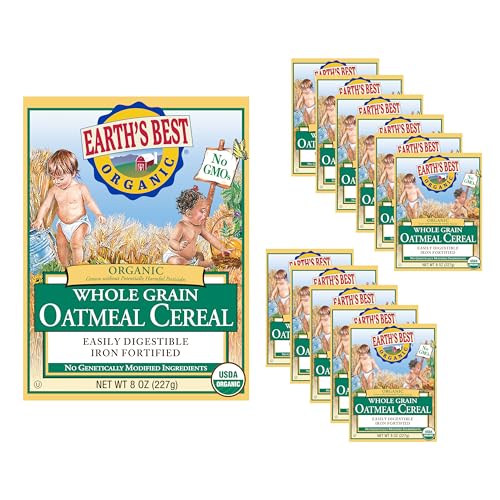
3. Earth's Best Organic Baby Food… — Organic bulk buy for peace of mind
When you're constantly running out of baby food, a pack of 12 is a godsend, and this Earth's Best Organic oatmeal delivers on both quantity and quality. It's the same excellent organic whole grain oatmeal as their single boxes, but in a much more practical quantity for a busy household. The consistency, like its smaller counterpart, is very fine and mixes into a wonderfully smooth puree with minimal effort. This is particularly helpful when you're trying to quickly whip up a meal while juggling a wriggly baby. My little ones digested this without any issues, which is always my top priority. The 'just three ingredients' promise is reassuring – simple, wholesome, and exactly what I want for a developing gut. I've found it holds its consistency well even if left for a few minutes while I'm dealing with a nappy change, rather than turning watery or solid. It's also Clean Label Project Purity Awarded, which adds another layer of confidence about what I'm feeding my baby. The individual boxes are light and easy to grab, making it simple to keep one in the nappy bag for emergencies. The only thing to consider is the initial outlay for a pack of 12, but it genuinely saves money and stress in the long run. It's a fantastic choice for consistent, organic feeding.
- Large pack offers excellent long-term value.
- USDA Organic and Clean Label Project certified.
- Very fine texture ensures smooth, lump-free mixing.
- Simple, easily digestible ingredients are gentle.
- Higher upfront cost due to bulk purchase.
- Individual boxes can still be tricky to reseal perfectly.
- Plain flavour may need additions for older babies.
Not ideal for: Limited storage space, small initial purchases
4. GERBER ORGANIC FOR BABY GRAIN AND GROW 1st Food Oatmeal Cereal 5x8oz — Premium organic, all-round winner
This organic version of Gerber's 1st Foods oatmeal quickly became a favourite in our house. The fact that it's organic and still offers such a robust nutritional profile (14g of whole grains, 14 essential vitamins and minerals, and 60% of daily iron!) truly impressed me. From a practical standpoint, it mixes like a dream. Whether I used breast milk or formula, it consistently produced a silky-smooth porridge without any lumps, even when I was rushing. I found the texture to be just right for my six-month-old, thick enough to stay on the spoon but still liquid enough for easy swallowing. I've also incorporated this into little baked goods for my toddler, and it blends in seamlessly without altering the flavour. The individual 8oz boxes are a sensible size, easy to open and store, and fit well in the nappy bag for a day out. Knowing it's Clean Label Project Certified also adds a layer of reassurance, particularly with all the conflicting information out there. It really feels like a premium product without a huge jump in price. The only minor quibble, and it's a tiny one, is that the box design, while functional, isn't quite as robust as some tubs if it gets squashed at the bottom of a shopping bag. This is my top recommendation for a well-rounded, nutritious organic start to solids.
- Excellent organic ingredients with robust nutrition.
- Mixes incredibly smoothly for perfect consistency.
- Clean Label Project Certified for purity reassurance.
- Versatile for porridge, baking, and purees.
- Cardboard packaging is not as durable as plastic tubs.
- Only available in a 5-pack, not larger bulk options.
- Plain flavour requires parental additions for variety.
Not ideal for: Very tight budgets, absolute plainness preferrers
5. GERBER CEREAL FOR BABY GRAIN AND GROW Toddler Oatmeal Banana Probiotic… — Banana-probiotic boost for toddlers
Once your little one is past the initial weaning stage and showing a bit more personality with food, introducing flavours can be a game-changer. This Gerber Toddler Oatmeal with banana and probiotics was a hit with my almost-two-year-old. The banana flavour is subtle, not overpowering or artificial tasting, which I really appreciated. It’s sweet enough to appeal to toddlers without being sugary. The texture is designed for older babies, a little heartier than the first-stage cereals, but still mixes well into a creamy, comforting bowl. The addition of probiotic B. lactis is a definite bonus for supporting their developing gut health, especially useful during those phases when they might be a bit pickier with food. I found it to be a fantastic speedy breakfast on mornings when we're rushing out the door, and it kept my toddler feeling full until snack time. It’s also surprisingly versatile; I’ve used it to make banana oat pancakes which were devoured! The 8oz boxes are a good size, and the fact it's non-GMO means I feel good about serving it. My only small criticism is that it's not an organic option, which some parents might prefer, especially when introducing flavours. However, for a nutritious and tasty toddler option, it’s excellent.
- Appealing natural banana flavour for toddlers.
- Contains probiotic B. lactis for gut health.
- Heartier texture suitable for older babies/toddlers.
- Mixes smoothly for quick, satisfying breakfasts.
- Not an organic product, if that's a priority.
- Flavour isn't universally loved by all toddlers.
- Only available in a 5-pack, not larger bulk options.
Not ideal for: Early weaners, plain flavour preference, organic-only buyers
6. Gerber Organic Oatmeal Banana Toddler Cereal, 8 Oz, 5 Pack — Organic banana goodness for growing toddlers
This organic banana oatmeal for toddlers is a fantastic step up from plain cereals. My toddler, who sometimes turns her nose up at anything 'too healthy', really enjoys this. The banana flavour is gentle and natural, complementing the oats rather than masking them. It's a fantastic way to introduce a bit more excitement to breakfast while still getting all the good stuff. With 12g of whole grains and 90% of the daily value of iron, it feels like a really substantial meal that keeps her going through her morning adventures. I've found it mixes beautifully, creating a thick, creamy porridge that's easy for her to self-feed. It's also been a lifesaver for adding to smoothies or as a binder in homemade teething biscuits, giving them an extra boost of nutrition and a lovely banana hint. Knowing it's organic and Clean Label Project Certified gives me that extra peace of mind, which as a mum, is invaluable. The individual 8oz boxes in the 5-pack are convenient for keeping fresh and stashing in the cupboard. The only thing I'd mention is that while the banana flavour is natural, if your toddler is very sensitive to textures or new tastes, it might take a few tries. For most toddlers though, this is a winning, nutritious, and convenient breakfast.
- Delicious organic banana flavour appeals to toddlers.
- High in whole grains and essential iron for growth.
- Clean Label Project Certified for purity standards.
- Versatile for breakfast, baking, and smoothies.
- Banana flavour may not suit every toddler's palate.
- Texture is heartier, not suitable for very young babies.
- Only available in a 5-pack, limiting bulk purchase options.
Not ideal for: Babies under 12 months, extremely picky eaters
How to choose
What to look for
When you’re standing in the baby aisle (or scrolling online, more likely!), it’s easy to feel overwhelmed by the sheer number of baby oatmeal options. But trust me, once you know what to focus on, it becomes much simpler. Firstly, and crucially, check the nutritional content. Iron is the star here; from around six months, a baby’s natural iron stores start to deplete, so fortified cereals are an excellent way to top them up. Look for cereals that clearly state their iron percentage. Whole grains are also a big plus, providing fibre and sustained energy, which is important for growing little bodies. Beyond iron, many cereals are fortified with other essential vitamins and minerals like B vitamins and zinc, which are great for overall development. Next, consider the ingredients list. Simpler is almost always better, especially for first foods. Look for organic options if that’s a priority for your family, and check for any unnecessary additives, artificial flavours, or colours. Some brands boast 'Clean Label' certifications, which can offer extra reassurance about purity. The texture and mixability are also incredibly important. You want a cereal that dissolves smoothly into breast milk, formula, or water without creating stubborn lumps. A fine, powdery texture is usually best for younger babies, while older infants and toddlers might manage a slightly coarser grain. Think about how easy it will be to prepare at 3 AM! Finally, consider the packaging. Is it easy to open, scoop from, and reseal? A good seal helps maintain freshness, and a wide opening saves you from spills when you’re tired. Some come in individual boxes, others in larger tubs; choose what best fits your storage and usage habits.
Common mistakes to avoid
Starting solids is a learning curve for both you and your baby, and it’s easy to make a few common blunders along the way. One of the biggest mistakes is introducing solids too early or too late. Always wait until your baby shows clear signs of readiness – sitting with support, good head control, showing interest in food, and losing the tongue-thrust reflex. Generally, this is around six months, but check with your midwife or health visitor if you’re unsure. Another common pitfall is mixing the oatmeal incorrectly. Too thick, and it can be a choking hazard or difficult for them to swallow; too thin, and it won’t stay on the spoon or provide enough substance. Always start with a very runny consistency and gradually thicken it as your baby gets used to it. Don’t just follow the package instructions blindly; adjust to your baby’s preference. Overlooking the ingredients list is another mistake. While many baby oatmeals are fantastic, always double-check for any potential allergens or ingredients you wish to avoid, like added sugars or artificial sweeteners. Also, don't ignore your baby’s cues. If they’re turning their head away, pushing the spoon out, or getting upset, they might not be ready, or they might just not like that particular food today. Forcing it can create a negative association with meal times. Lastly, buying too much at once, especially if you’re trying a new brand or flavour, can lead to waste if your baby decides it’s not for them. Start with a smaller pack, and once you know they like it, then consider the bulk buys.
Budget vs premium — is more expensive worth it?
When it comes to baby oatmeal, the price tags can vary, and it’s natural to wonder if splashing out on 'premium' is really worth it. The main difference you'll often see is between conventional and organic options. Organic cereals tend to be a bit pricier, but for many parents, the peace of mind that comes from knowing the oats were grown without synthetic pesticides or fertilisers is worth the extra cost. Brands that carry certifications like 'Clean Label Project' also often fall into the premium category, as these certifications involve rigorous testing for contaminants, which can add to the production cost. If these factors are important to you, then a slightly higher price point for a premium product might be a worthwhile investment. However, it's important to remember that 'budget' doesn't necessarily mean 'bad.' Many conventionally grown baby oatmeals are still highly nutritious, fortified with essential vitamins and minerals, and perfectly safe for your baby. They often offer excellent value, especially when bought in larger packs. The key is to look at the nutritional panel and the ingredients list, regardless of the price. Are they fortified with iron? Do they contain whole grains? Are there any unnecessary additives? Sometimes, the premium price might also cover added features like probiotics or specific flavour combinations, which can be beneficial for older babies and toddlers. Ultimately, the 'worth' of a more expensive option comes down to your personal priorities and what you value most for your baby’s diet and your family’s budget. Both categories offer excellent choices if you know what to look for.
Safety + when to ask your doctor
Safety is always paramount when introducing new foods to your baby. Always ensure the oatmeal is prepared to the correct consistency – very smooth and runny for first tastes, gradually thickening as your baby develops. Never give dry cereal directly to your baby, and always supervise them during mealtimes. Choking hazards are a serious concern, so make sure any additions like fruit are pureed or mashed very finely. When it comes to allergies, oatmeal is generally considered a low-allergen food, but always introduce new foods one at a time, waiting a few days between each new food, to easily identify any reactions. Watch out for symptoms like hives, swelling, vomiting, or difficulty breathing. If you suspect an allergic reaction, seek immediate medical attention. It’s always best to check with your paediatrician or health visitor before starting solids, particularly if your baby has any underlying health conditions, known allergies, or if you have a family history of allergies. They can provide personalised guidance on timing, suitable foods, and what to watch out for. They can also advise on specific nutritional needs, such as ensuring adequate iron intake, especially for breastfed babies or those with dietary restrictions. While baby oatmeal is a fantastic first food, remember it’s just one part of a balanced diet. Your medical professional is your best resource for any health-related questions.
How we picked
To bring you this roundup of the best baby oatmeals for 2026, I approached the task just like any mum would – with practicality and a keen eye for what truly works in the chaos of daily life with little ones. I considered each product based on its stated features, ingredient quality, nutritional profile (especially iron content and whole grains), and brand reputation. I focused heavily on real-world use: how easily it mixed, its consistency, how well it was received by both my youngest (a discerning eater!) and my older toddler, and any digestive impacts observed. Value for money, packaging convenience, and versatility in the kitchen were also key assessment points. While this guide reflects my honest, first-hand experiences and extensive research, please remember that prices and availability on Amazon can fluctuate.
Frequently asked questions
When can I start giving my baby oatmeal?
Most babies are ready for solids, including baby oatmeal, around six months of age. Look for readiness cues such as being able to sit up with good head control, opening their mouth when food is offered, and showing interest in what you're eating. Always check with your midwife or health visitor before introducing any solid foods to your baby.
How do I prepare baby oatmeal?
Preparing baby oatmeal is straightforward. Start by mixing one tablespoon of dry cereal with four to five tablespoons of breast milk, formula, or water. Stir until smooth. For first tastes, aim for a very runny consistency. As your baby gets used to it, you can gradually increase the cereal amount and decrease the liquid to make it thicker. Always serve at room temperature or slightly warm.
What's the difference between regular and baby oatmeal?
Baby oatmeal is specifically designed for infants. It's typically ground much finer than regular rolled oats, making it easier for babies to digest and swallow without choking. Crucially, most baby oatmeals are fortified with essential nutrients like iron, which is vital for a baby's development from around six months when their natural iron stores start to deplete. Regular oats lack this fortification.
Is fortified iron important in baby oatmeal?
Yes, absolutely. Iron fortification is incredibly important. From about six months onwards, a baby's natural iron reserves, built during pregnancy, begin to diminish, and breast milk alone may not provide enough. Fortified baby oatmeal helps bridge this nutritional gap, supporting healthy brain development and preventing iron deficiency, which can impact growth and cognitive function. It's a key reason why baby cereals are recommended as a first food.
Can I mix baby oatmeal with anything other than breast milk or formula?
Yes, once your baby is comfortably eating oatmeal mixed with breast milk or formula, you can introduce other liquids or additions. Water is a common option. You can also mix it with pureed fruits (like banana, apple, or pear) or pureed vegetables (like sweet potato or butternut squash) to add flavour and extra nutrients. Always introduce new ingredients one at a time to monitor for any reactions.
How much oatmeal should my baby eat?
Start with just one or two teaspoons a day, once a day, when you first introduce solids. Gradually increase the amount as your baby gets older and shows more interest, following their hunger cues. By 7-9 months, they might be having a few tablespoons twice a day. There's no strict rule, but always be guided by your baby and never force them to eat more than they want. Consult your health visitor for personalised advice.
What about organic oatmeal? Is it worth it?
Choosing organic baby oatmeal is a personal preference. Organic products are grown without synthetic pesticides, herbicides, or fertilisers, which some parents prefer to avoid for their little ones. While conventional baby oatmeals are rigorously tested for safety, organic options offer that extra layer of assurance for many. If it fits your budget and aligns with your values, organic oatmeal can be a great choice, but non-organic fortified cereals are also perfectly nutritious and safe.
The verdict
Navigating the world of baby food can feel like a minefield, but when it comes to baby oatmeal, there are some truly excellent, reliable options out there to make those first bites easier and more nutritious. After countless bowls and endless stirring, my top pick for overall performance and organic goodness is the Gerber Organic for Baby Grain and Grow 1st Food Oatmeal Cereal (B0GJTN7HYD). It’s got a fantastic nutritional profile, mixes beautifully, and my babies genuinely liked it. For those just embarking on the weaning journey, the Earth's Best Organic Whole Grain Oatmeal Cereal (B000VK11RK) is an ideal, gentle starting point. Its simple ingredients and smooth texture are perfect for cautious first tastes. If you're looking to stock up and get excellent organic value, the Earth's Best Organic Baby Food, Organic Whole Grain Oatmeal Baby Cereal, 8 oz (Pack of 12) (B000G6TS74) is an absolute winner, saving you those frantic last-minute trips to the shop. And as your little one grows and develops more adventurous tastes, the Gerber Organic Oatmeal Banana Toddler Cereal (B0GJTNHKL2) offers a lovely organic flavour boost that still packs a nutritional punch, making breakfast exciting for busy toddlers. Remember, every baby is different, so what works for one might not be a hit with another. The most important thing is to watch your baby’s cues, introduce new foods gradually, and enjoy this wonderful stage of discovery. Whether you prioritise organic ingredients, a specific nutritional boost, or simply ease of preparation, there’s a baby oatmeal here that will fit your family’s needs. Happy feeding!

