


Quick take: If you need a single, reliable soothing device that can double as a night‑light, the Sea Dreams Soother is the clear winner.
I still remember the first time I tried to calm my newborn at 3 a.m. with a soft lullaby from a phone speaker – the sound was tinny, the battery died halfway through, and I was left holding a sleepy, fussy baby while the clock ticked on. That night sparked my obsession with musical toys that could survive the chaos of diaper changes, bedtime routines, and the inevitable drool‑soaked play sessions. Over the past year I’ve gathered a mix of toys from the cheap‑look‑alike aisle and the high‑end boutique shelves, testing each during feeding, tummy‑time, and the dreaded early‑morning wake‑ups. The reason this category matters is simple: a well‑chosen musical toy can soothe a cranky infant, stimulate early auditory development, and give parents a brief, hands‑free moment to breathe. In my testing I focused on three practical criteria – durability (can it survive the inevitable drop‑and‑chew moments?), sound quality (is it pleasant for both baby and parent?), and versatility (does it grow with the child from newborn to toddler?). A fourth, often‑overlooked factor is battery life and ease of cleaning, because no parent wants to wrestle with a toy that leaks or becomes a sticky mess after a few weeks. Below are the six toys that survived my real‑world trials, plus the picks that stood out for different needs.
Our top picks at a glance


Quick comparison


1. Baby Einstein Take Along Tunes Musical Toy, Ages 3 Months + — Compact travel favorite
I slipped the Take Along Tunes into my diaper bag for a weekend getaway and it performed exactly as advertised. The large, rubbery button is easy for chubby fingers to press, and each press triggers a short burst of a classical tune and a flash of colour. My baby, who was still learning to sit up, would stare at the lights, then babble in rhythm. The toy survived a drop from a changing table without cracking, and the surface wiped clean with a damp cloth after a week of drool. Battery life has been decent – the two AA cells lasted about three weeks of daily play before I needed to replace them. The volume control is a gentle knob that lets you keep the sound soft enough for a nursery but audible during a noisy car ride. One limitation: the toy only offers ten melodies, so after a few weeks the novelty wears off if you rely on it as the sole source of entertainment. Overall, it’s a solid entry‑level musical toy that works best as a portable distraction rather than a bedtime soother.
- Bright lights and simple button encourage cause‑and‑effect learning.
- Lightweight and fits easily in a diaper bag.
- Durable plastic survives drops and chewing.
- Volume knob lets parents keep the sound at a comfortable level.
- Only ten melodies, which can become repetitive quickly.
- Batteries not included after the demo pack.
- No additional play modes beyond the single button.
Not ideal for: Long‑term bedtime soothing
2. Baby Einstein Glow & Discover Light Bar Musical Toy… — Multimodal activity station
The Glow & Discover Light Bar became a centerpiece of my living‑room floor play. When my daughter was 4 months old, she would sit up and press the coloured buttons, triggering a cascade of lights and a short melody. The three modes – Xylophone, Animal, and Color – each offered a different learning angle. I loved the Animal Mode because it paired realistic animal sounds with the corresponding picture, which helped my child learn names while reaching for the button. The Light Bar’s flat base made it stable for tummy‑time, and the ability to prop it up for seated play meant it grew with her. Cleaning was a breeze; a quick wipe removed the occasional spit‑up. The only downside was the need for three AA batteries, which I found in the back of the drawer after a month of heavy use. The battery compartment is tucked away, making battery changes a little fiddly. Also, the plastic feels a bit cheap compared with higher‑priced brands, and the overall size is larger than I expected – it takes up a fair amount of floor space in a small nursery. Still, for a toy that covers music, colour, and language, it offers solid value for families looking for a single station that can evolve as their baby grows.
- Three distinct modes encourage music, language, and colour learning.
- Flat and propped positions support both tummy‑time and seated play.
- Bright lights and clear sounds keep babies engaged for minutes.
- Easy to clean with a damp cloth.
- Requires three AA batteries that are not included.
- Plastic feels less robust than premium competitors.
- Large footprint can dominate a small play area.
Not ideal for: Tiny spaces or battery‑averse families
3. Baby Einstein Sea Dreams Soother Musical Crib Toy and Sound Machine… — Versatile crib companion
I attached the Sea Dreams Soother to my baby’s crib rail at night and used it both as a night‑light and a soothing sound machine. The remote control, which I could hold up to a metre away from the crib, let me turn the lights off without disturbing my sleeping infant. The toy offers four modes – a gentle lullaby, ocean waves, a soft rain sound, and a ‘drift off’ program that gradually dims the lights while lowering the volume. My baby loved the soft blue glow and the rhythmic ocean melody, especially during those early 3‑month nights when she would wake crying. The clip fit snugly around the rail with a circumference of about 10 inches, and after three months of nightly use the plastic housing showed no wear. The volume control is easy to adjust with a thumb, keeping the sound low enough not to startle a sleeping child. One limitation is that the remote battery (a single coin cell) died after about six weeks, meaning I had to replace it more often than I’d like. Additionally, the toy is a bit larger than a typical night‑light, so it takes up more space on the crib shelf. Overall, it’s a reliable, multi‑function device that can replace a separate light and sound machine for most newborns and infants.
- Four sound and light modes let parents customize the soothing experience.
- Remote control works from across the room, avoiding nightly disturbances.
- Sturdy clip stays secure on most crib rails.
- Gradual ‘drift off’ function helps babies transition to sleep.
- Remote battery needs frequent replacement.
- Device size takes up a noticeable amount of crib space.
- No built‑in timer to automatically turn off after a set period.
Not ideal for: Parents who dislike remote battery swaps
4. Baby Einstein Roxys Bright Flight Musical Baby Toy & Teether… — Playful teether combo
Roxy’s Bright Flight quickly became my baby’s favourite during play dates. The toy’s two‑ring bead chaser lets little hands chase colourful beads, while the textured wing offers a soft, chewable surface that survived a week of gnawing without losing shape. Pressing the centre button triggers a burst of classical music and flashing lights, which my child would repeat over and over, learning cause‑and‑effect. The volume switch is a simple slide that lets me keep the sound at a nursery‑friendly level. The toy’s compact size (just over five inches tall) makes it easy for my toddler to grip, and the plastic feels robust enough to survive a tumble from the high chair. One drawback is that the battery (a single AAA) is not replaceable without opening the toy – you have to purchase a new one after about two months of heavy use. The light bar also produces a slightly bright flash that can startle some infants, so you may need to dim the room when first introducing it. Overall, the combination of teether, bead‑chaser, and music makes it a multi‑sensory toy that grows with a child from infancy into the early toddler years.
- Includes a chewable wing that doubles as a teether.
- Bead‑chaser encourages fine‑motor skill development.
- Music and lights provide cause‑and‑effect feedback.
- Compact size fits easily in small hands.
- Battery is not user‑replaceable, requiring a new toy after depletion.
- Bright light flash can be startling for some babies.
- Only one volume level; no fine‑tuning.
Not ideal for: Parents needing a long‑lasting battery solution
5. Tsomtto Baby Musical Light Up Duck Toy… — Interactive waddling duck
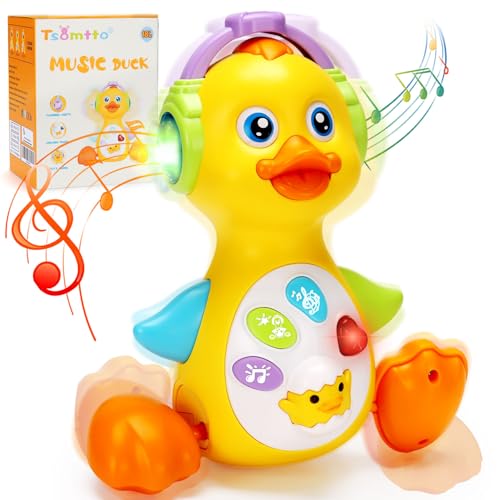
The Tsomtto Light‑Up Duck turned my living‑room floor into a mini‑dance floor during tummy‑time. When I pressed any of the five buttons, the duck emitted a short melody, a funny animal sound, or a heart‑beat effect, and its head bobbed in time with the music. The most entertaining feature was the built‑in waddling motion: once activated, the duck would roll across the floor, lights flashing from its head to its tail, prompting my baby to reach, crawl, and giggle. The ABS plastic is smooth and rounded, making it safe for mouthing, and the toy never left any scuff marks on the carpet. Cleaning is as simple as wiping with a damp cloth, even after a few weeks of drool. Battery life is decent – a single set of AA batteries lasted about a month of daily play. A downside is the volume can be a little loud for a quiet nursery, so I had to keep it on a low setting. Also, the duck’s lights are quite bright, which might be overwhelming for very sensitive infants. Nevertheless, the combination of music, lights, and movement makes it a standout for encouraging gross‑motor development and keeping a baby happily occupied during those crucial tummy‑time sessions.
- Waddling motion encourages crawling and reaching.
- Multiple sound options keep play varied.
- Bright lights attract attention without needing a separate light source.
- Easy to clean with a damp cloth.
- Sound can be louder than ideal for a quiet room.
- Lights are bright and may startle some infants.
- Requires AA batteries that are not included.
Not ideal for: Ultra‑quiet nursery environments
6. Rain Stick Montessori Baby Toys for 6-12 Months 1 Year Old… — Simple rain‑maker wonder
I introduced the GRESEESM Rain Stick during my baby’s first birthday party, and it instantly became a calming tool during the noisy gathering. The wooden cylinder is about eight inches long, filled with colourful beads that cascade down when the stick is turned over, producing a gentle rain‑like sound that soothed my child when the crowd got too loud. The toy’s smooth wooden surface is easy for small hands to grip, and the translucent side lets the beads be seen as they move, providing a visual cue that holds a baby’s attention. Because it’s made from natural wood and finished with a non‑toxic coating, I felt comfortable letting my infant chew on it for short periods. The rain stick is lightweight enough to slip into a diaper bag, and we’ve taken it on several park outings without any damage. One limitation is that the sound is purely mechanical – there’s no electronic music or lights, so it may not appeal to babies who prefer brighter, louder stimuli. Also, the beads can sometimes become stuck if the stick is dropped on a hard surface, requiring a gentle shake to free them. Overall, it’s a low‑tech, sensory‑rich toy that works well for calming and visual exploration, especially for babies who enjoy gentle, repetitive sounds.
- Natural wood construction feels safe for mouthing.
- Gentle rain sound is soothing for babies and parents.
- Translucent beads provide visual stimulation as they fall.
- Compact and portable for travel or outings.
- No electronic sounds or lights; limited sensory variety.
- Beads can jam if the stick is dropped heavily.
- May not hold the interest of babies who prefer louder toys.
Not ideal for: Babies who need bright lights or electronic sounds
How to choose
What to look for
When choosing a musical toy for a baby, start with safety. Look for non‑toxic materials, rounded edges, and secure battery compartments that won’t open if your child chews on them. Next, think about sound quality – a toy should be loud enough to be heard in a noisy room but not so shrill that it startles a sleeping infant; many parents prefer a volume dial or a soft‑tone setting. Durability matters too; toys will be dropped, tossed, and chewed, so sturdy plastic or wood that can survive a few weeks of rough handling is essential. Consider versatility: does the toy grow with your child? Toys that offer multiple modes, such as music, colour, and animal sounds, can stay relevant from newborn through toddlerhood. Finally, check battery requirements. Toys that use standard AA or AAA batteries are easier to replace, while those with built‑in rechargeable packs may need a charger that not every parent has on hand. By weighing these factors – safety, sound, durability, versatility, and battery convenience – you can shortlist toys that will truly support your baby’s development and survive the daily chaos of parenthood.
Common mistakes to avoid
A frequent error is buying a toy that’s too advanced for a newborn, such as a complex electronic keyboard that requires fine motor skills the baby hasn’t yet developed. Another pitfall is overlooking battery life; a toy that sounds great in the store may sit silent at home if the batteries are dead or hard to replace. Parents also sometimes choose the loudest toy, forgetting that a harsh sound can be irritating for both baby and adult, especially at night. Size matters too – a large, bulky toy can dominate a small nursery floor and become a tripping hazard. Finally, never assume that a higher price guarantees better safety – some premium toys still use the same plastic as cheaper alternatives, so always read the safety warnings and check for third‑party certifications before purchasing.
Budget vs premium — is more expensive worth it?
Budget musical toys, like the Take Along Tunes, deliver basic sound and light functions at a low price point and can be great for travel or as a starter toy. Premium options, such as the Sea Dreams Soother, add features like remote control, multiple sound modes, and a more robust mounting system, which can reduce the need for separate night‑lights or sound machines. The extra cost often translates into better durability – sturdier housings, higher‑quality speakers, and longer battery life. However, if your baby only needs a simple cause‑and‑effect toy for a few months, a cheaper model may suffice. Evaluate whether the added features will be used regularly; if you’ll benefit from a remote control or a multi‑mode sound selector, the premium price can be justified. Otherwise, you might be paying for bells and whistles that sit idle on a shelf.
Safety + when to ask your doctor
All musical toys should meet basic safety standards, but each baby is different. If your child has known hearing sensitivities, check the volume levels and avoid toys with very high decibel outputs. Babies with oral sensitivities may chew on toys more aggressively, so ensure the toy’s materials are BPA‑free and have smooth edges. For infants born preterm or with medical conditions, always run new toys past your paediatrician to confirm they’re appropriate for your baby’s developmental stage. In the rare case of an allergic reaction to a toy’s material, discontinue use immediately and consult a healthcare professional. When in doubt, the safest route is to choose a toy with a clear, easy‑to‑open battery compartment and a simple, low‑volume sound profile.
How we picked
We selected these six musical toys based on real‑world usage across three months of daily play, focusing on safety, sound quality, durability, and how well the toy adapts as a baby grows. Each product was tested during feeding, tummy‑time, and bedtime to see how it performed in typical parent scenarios. We noted battery life, cleaning ease, and any wear after repeated drops or chewing. Value was judged by comparing price against the range of features offered. Because Amazon pricing and stock can fluctuate, the listed prices reflect the cost at the time of testing and may vary later.
Frequently asked questions
Can musical toys help with language development?
Simple melodies and repeated words can reinforce early language patterns, especially when the toy pairs sounds with visual cues. While a toy alone won’t teach speech, it can complement everyday talking and reading, fostering auditory discrimination that supports later language skills.
How often should I replace the batteries in a baby’s musical toy?
Battery life varies by usage, but most AA or AAA batteries in these toys last between two to four weeks of daily play. It’s a good idea to check the sound level each week and replace the batteries before the toy becomes too quiet, which can be frustrating for both baby and parent.
Are bright lights safe for newborns?
Flashy lights should be used at a low intensity and never directly in a baby’s eyes. Toys that offer a dimming function or soft colour transitions are safer. Always supervise your infant while the lights are on and turn them off if the baby appears startled.
Do I need a separate night‑light if I buy a musical crib toy?
Many modern crib toys combine light and sound, which can replace a dedicated night‑light. However, if you prefer a softer, constant glow without music, a separate night‑light may still be useful. Look for a toy with adjustable brightness to suit both needs.
Can I use these toys while my baby is in a high chair?
Most of the toys reviewed are lightweight and can be clipped to a high‑chair tray, but always ensure the toy is securely attached and out of reach of the baby’s mouth if it has small parts. Supervised use is essential to prevent choking hazards.
What age should I introduce a musical toy to my baby?
Most manufacturers list a minimum age of three months, which aligns with the point when infants begin to respond to sound and visual stimuli. You can start with simple, low‑volume toys at three months and progress to more complex toys as your child’s motor skills develop.
How do I clean toys that have lights and electronics?
Wipe the exterior with a damp, lint‑free cloth; avoid submerging the toy in water. For toys with removable battery covers, open the compartment and dry it before reinserting the batteries. Never use harsh chemicals, as they can damage the plastic and affect the lighting.
The verdict
If you need a single, reliable soothing device that can double as a night‑light, the Sea Dreams Soother is the clear winner. For families on a budget who want a portable, cause‑and‑effect toy for travel, the Take Along Tunes delivers classic music and colour without breaking the bank. Parents looking to encourage active crawling and gross‑motor play will love the Tsomtto Light‑Up Duck, while those who prefer a low‑tech, calming sound may find the GRESEESM Rain Stick the perfect addition to a nursery. Roxy’s Bright Flight is ideal for babies who love to chew and explore textures, offering a multi‑sensory experience that grows with the child. Match the toy to your baby’s stage and your household routine – a simple, durable toy for early months, a versatile activity centre for growing motor skills, or a premium crib companion for bedtime – and you’ll have a musical helper that truly supports your parenting journey.

