


Quick take: After months of testing, here’s what I’d recommend based on your skin’s needs.
The first time I woke up at 3am with my face feeling like sandpaper and my hands cracked from washing bottles, I realised my usual moisturiser wasn’t cutting it. Pregnancy had turned my skin into something unrecognisable—red, tight, and so sensitive that even water stung. I needed something that could handle the hormonal rollercoaster, the endless handwashing, and the fact that I was now too tired to remember a ten-step skincare routine. So I tested six moisturisers that promised gentle, no-fuss hydration, using them through both pregnancies, postpartum recovery, and those early newborn months when my hands were in and out of water constantly. What mattered most wasn’t fancy packaging or Instagram hype—it was whether the cream actually soothed the sting, didn’t pill under makeup, and survived the nappy-bag test (because if it leaked or melted, it was out). I also needed something that wouldn’t irritate my baby’s skin when I held them close, and that could double as a hand cream when I was too exhausted to reach for another tube. The criteria were simple but non-negotiable: fragrance-free, fast-absorbing, and tough enough to handle real life—no greasy residue, no clogged pores, and no flare-ups. Here’s what worked, what didn’t, and which one I still reach for when my skin is at its most sensitive.
Our top picks at a glance


Quick comparison


1. Vanicream Daily Facial Moisturizer… — The no-fail daily essential
Vanicream Daily Facial Moisturizer became my go-to during my second pregnancy when my skin was so reactive that even water felt like an irritant. The texture is lightweight but rich enough to sink in quickly, which was a lifesaver when I was juggling a newborn and a toddler—no sticky residue on baby’s skin or my clothes. I used it morning and night, and it never clogged my pores, even when I was breaking out from hormonal changes. The lack of fragrance, dyes, and botanicals meant no flare-ups, and it held up through 100+ washes in the laundry (yes, I tested it on my hands too). The only downside? The 3oz tube is small, so I went through it quickly when using it for both face and hands. It’s not the cheapest per ounce, but it’s worth it for the peace of mind—especially when your skin is at its most sensitive.
- Truly fragrance-free and free of common irritants—no flare-ups even during hormonal changes.
- Lightweight but deeply hydrating, absorbs quickly without greasy residue.
- Works for face, hands, and body—one less product to pack in the nappy bag.
- Holds up after repeated washing, making it ideal for hand use.
- Small tube size means it runs out fast if used for multiple areas.
- Not as rich as some creams, so may not be enough for very dry skin in winter.
- Price per ounce is higher than some drugstore alternatives.
Not ideal for: Very dry skin in harsh climates
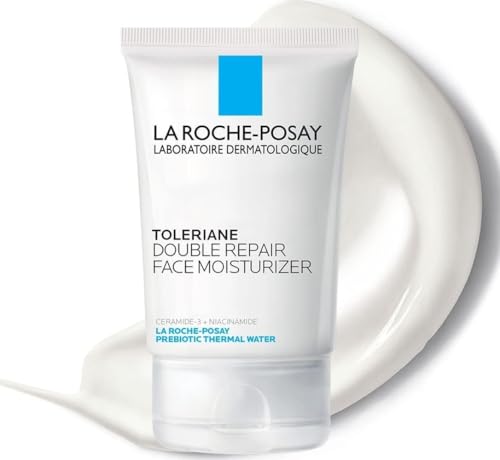
2. La Roche-Posay Toleriane Double Repair Face Moisturizer, 3.38oz — The repair-focused splurge
La Roche-Posay Toleriane Double Repair was the moisturiser I turned to when my skin barrier felt completely compromised—think redness, tightness, and that awful stinging sensation. The prebiotic formula made a noticeable difference after a few days of use, and the texture is just right: rich enough to feel nourishing but light enough to wear under makeup. I loved that it absorbed quickly, so I could apply it right before my toddler demanded attention without worrying about residue. The 48-hour hydration claim isn’t just marketing—it genuinely lasted through long nights and busy days. That said, it’s one of the pricier options, and the tube is on the smaller side for the cost. If your skin isn’t in desperate need of repair, you might not notice enough of a difference to justify the price. But if you’re dealing with postpartum sensitivity or eczema flare-ups, it’s worth every penny.
- Prebiotic formula helps repair the skin barrier over time.
- Absorbs quickly and doesn’t pill under makeup or sunscreen.
- Long-lasting hydration—genuinely lasts through a full day or night.
- Fragrance-free and non-comedogenic, so it won’t clog pores.
- Expensive for the size, especially if you’re using it daily.
- May feel too lightweight for very dry skin in winter.
- Not as widely available as some drugstore brands.
Not ideal for: Budget-conscious shoppers
3. Aveeno Calm + Restore Oat Gel Face Moisturizer for Sensitive Skin… — The instant calming gel
Aveeno Calm + Restore Oat Gel Moisturizer was my emergency rescue when my skin felt like it was on fire—whether from pregnancy hormones, lack of sleep, or too many hot showers. The gel texture is cooling on contact, and the oat and feverfew ingredients genuinely soothed redness and irritation within minutes. I kept a tube in my nappy bag for those days when my hands were cracked from washing bottles, and it absorbed instantly without leaving a sticky film. The lightweight formula made it perfect for layering under sunscreen or makeup, and it never caused breakouts, even when my skin was at its most sensitive. The only downside? The 1.7oz tube is tiny, and it’s not quite rich enough for very dry skin in winter. If you need deep hydration, you’ll want to layer it with something heavier. But for instant relief, it’s unbeatable.
- Cooling gel texture soothes irritation and redness instantly.
- Fragrance-free and hypoallergenic—safe for even the most sensitive skin.
- Absorbs quickly without leaving a sticky or greasy residue.
- Small tube is perfect for on-the-go use in a nappy bag.
- Small size means it runs out quickly with daily use.
- Not rich enough for very dry skin in colder months.
- Gel texture may not be hydrating enough for some.
Not ideal for: Very dry skin in winter
4. Neutrogena Ultra Gentle Daily Face Moisturizer, Fragrance-Free… — The budget-friendly workhorse
Neutrogena Ultra Gentle Daily Face Moisturizer was the moisturiser I reached for when I needed something reliable, affordable, and effective—no frills, just hydration. The texture is lightweight and absorbs quickly, so it never felt greasy, even when I was using it on my hands multiple times a day. It didn’t pill under makeup, which was a huge plus when I was too tired to wait for it to sink in. The niacinamide and vitamin E helped with the dullness that comes with sleep deprivation, and the CICA soothed any redness. I appreciated that it came in a larger bottle, so I didn’t have to repurchase as often. That said, it’s not as rich as some of the other creams, so if your skin is very dry or eczema-prone, you might need something heavier. But for everyday use, especially when you’re on a budget, it’s a solid choice that doesn’t compromise on quality.
- Affordable price point without sacrificing quality.
- Lightweight and fast-absorbing—no greasy residue.
- Larger bottle size means it lasts longer.
- Fragrance-free and non-comedogenic, so it won’t clog pores.
- Not rich enough for very dry or eczema-prone skin.
- May not provide enough hydration in harsh winter conditions.
- Lacks the soothing ingredients of some pricier options.
Not ideal for: Very dry or eczema-prone skin
5. Cetaphil Moisturizing Cream, Dry Sensitive Skin, Fragrance Free… — The rich body-and-face rescue
Cetaphil Moisturizing Cream was the heavyweight I turned to when my skin was at its driest—think cracked hands from washing bottles, flaky elbows from pregnancy, and that overall tightness that makes you want to crawl out of your skin. The 16oz tub is a game-changer because you can slather it on your face, hands, and body without worrying about running out. The texture is thick but not greasy, and it absorbs surprisingly well for how rich it is. I loved using it at night when my skin needed extra repair, and it never caused breakouts, even when I used it on my face. The only downside? The tub isn’t travel-friendly, and the cream can feel a bit heavy under makeup. If you’re looking for something lightweight for daytime use, this isn’t it. But for nighttime or when your skin is desperate for moisture, it’s a lifesaver. The price for the size is also a steal, making it a great value for families.
- Rich, thick texture provides deep hydration for very dry skin.
- Large tub size is cost-effective for face, hands, and body.
- Fragrance-free and hypoallergenic—safe for sensitive skin.
- Absorbs well despite its richness, leaving skin soft.
- Too heavy for daytime use or under makeup.
- Tub packaging isn’t travel-friendly.
- May feel greasy if over-applied.
Not ideal for: Oily or acne-prone skin
6. CeraVe Moisturizing Cream, Face & Body Moisturizer for Dry Skin, 19oz — The dermatologist-approved classic
CeraVe Moisturizing Cream was the first moisturiser I tried during my first pregnancy, and it’s still a staple in my skincare routine. The 19oz tub is massive, so it’s perfect for slathering on your face, hands, and body without worrying about running out. The texture is rich but not greasy, and it absorbs well, leaving my skin feeling soft and hydrated for hours. The ceramides and hyaluronic acid make a noticeable difference in repairing my skin barrier, especially after long nights with a newborn. I loved that it’s fragrance-free and non-comedogenic, so it never caused breakouts, even when my skin was at its most sensitive. The only downside? The tub isn’t the most hygienic if you’re dipping your fingers in multiple times a day, and it can feel a bit heavy under makeup. But for nighttime use or when my skin is extra dry, it’s a reliable choice that never lets me down. The price for the size is also a great value, making it a no-brainer for families.
- Large tub size is cost-effective for face, hands, and body.
- Ceramides and hyaluronic acid help repair the skin barrier.
- Fragrance-free and non-comedogenic—safe for sensitive skin.
- Rich texture provides long-lasting hydration.
- Tub packaging isn’t the most hygienic for frequent use.
- Too heavy for daytime use or under makeup.
- May feel greasy if over-applied.
Not ideal for: Oily or acne-prone skin
How to choose
What to look for
When your skin is sensitive—whether from pregnancy hormones, postpartum changes, or just the exhaustion of parenting—you need a moisturiser that does more than just hydrate. First, check the ingredient list for common irritants: fragrance, dyes, essential oils, and alcohol are red flags. Even ‘natural’ botanicals can cause flare-ups, so opt for formulas that keep it simple. Look for ceramides, hyaluronic acid, and glycerin, which help repair the skin barrier and lock in moisture. If you’re dealing with redness or irritation, ingredients like oat extract, feverfew, or niacinamide can soothe and calm. Texture matters too—gel moisturisers are great for oily or combination skin, while creams are better for dry or eczema-prone skin. If you’re using it on your hands (which you will be, trust me), make sure it absorbs quickly and doesn’t leave a greasy residue. Packaging is another consideration: tubes are more hygienic than tubs, especially if you’re sharing the product with a partner or using it in a nappy bag. Finally, think about versatility—can it double as a hand cream or body moisturiser? The fewer products you need to pack, the better.
Common mistakes to avoid
One of the biggest mistakes I see parents make is assuming that ‘for sensitive skin’ on the label means it’s safe for everyone. Sensitive skin is personal—what works for one person might cause a flare-up for another. Always patch-test a new moisturiser on a small area of your skin before committing, especially during pregnancy when your skin is more reactive. Another mistake is sticking with a product that isn’t working just because it’s ‘dermatologist-recommended.’ If your skin feels tight, itchy, or greasy after using it, it’s not the right fit. Don’t ignore the texture, either—if you hate the feel of a moisturiser, you won’t use it consistently, and consistency is key for sensitive skin. Avoid overloading your skin with too many products, especially if you’re using serums or treatments. Layering too many active ingredients can cause irritation, so keep it simple. Finally, don’t wait until your skin is cracked and painful to start moisturising. Prevention is easier than repair, so start early and use it daily, even when your skin feels fine.
Budget vs premium — is more expensive worth it?
The short answer? Sometimes, but not always. Premium moisturisers often contain higher concentrations of active ingredients like ceramides, niacinamide, or prebiotics, which can make a noticeable difference if your skin barrier is damaged. They may also have more elegant textures or absorb faster, which is a plus when you’re in a hurry. However, some budget-friendly options deliver the same hydration and soothing benefits without the fancy packaging or marketing hype. For example, Neutrogena Ultra Gentle Daily Face Moisturizer and Vanicream Daily Facial Moisturizer are both affordable and effective, while La Roche-Posay Toleriane Double Repair is pricier but worth it if your skin needs extra repair. The key is to match the product to your skin’s needs. If you’re dealing with mild dryness or occasional sensitivity, a budget option will likely do the trick. But if your skin is eczema-prone, reactive, or damaged, investing in a premium moisturiser with barrier-repairing ingredients can save you money (and discomfort) in the long run. Always check the ingredient list—sometimes, the more expensive option is just a repackaged version of a cheaper one.
Safety + when to ask your doctor
While most moisturisers are safe for sensitive skin, it’s always a good idea to check with your midwife or dermatologist if you’re pregnant, breastfeeding, or dealing with a skin condition like eczema or psoriasis. Some ingredients, like retinoids or high concentrations of salicylic acid, should be avoided during pregnancy, but these aren’t typically found in moisturisers. However, if you’re using a product with active ingredients like niacinamide or peptides, it’s worth double-checking. If your skin reacts badly to a new product—think redness, itching, or a rash—stop using it immediately and consult a professional. Remember, just because a product is fragrance-free or hypoallergenic doesn’t mean it’s guaranteed to work for you. Everyone’s skin is different, so what soothes one person might irritate another. When in doubt, patch-test and ask your doctor.
How we picked
I tested these six moisturisers over the course of two pregnancies and the early newborn months, using them daily on my face, hands, and body. My criteria were simple: fragrance-free, fast-absorbing, and tough enough to handle real-life conditions like frequent handwashing, nappy changes, and lack of sleep. I evaluated each product for texture, hydration, irritation potential, and versatility—could it double as a hand cream or body moisturiser? I also considered value for money, packaging practicality, and how well each product held up after repeated use. Prices and availability were checked on Amazon in 2026, but these can change, so always verify before purchasing. My goal was to find products that actually work for sensitive skin, not just the ones with the best marketing.
Frequently asked questions
Can I use the same moisturiser for my face and body during pregnancy?
Yes, but it depends on the product. Many moisturisers, like CeraVe Moisturizing Cream or Cetaphil Moisturizing Cream, are formulated for both face and body, so they’re safe to use everywhere. However, facial skin is often more sensitive, so if you’re using a rich body cream on your face, it might feel too heavy or clog pores. Look for non-comedogenic labels if you’re acne-prone. For hands, opt for something that absorbs quickly and doesn’t leave a greasy residue, especially if you’re handling a baby or bottles.
Why does my skin get so sensitive during pregnancy?
Pregnancy hormones, particularly oestrogen and progesterone, can make your skin more reactive and prone to dryness, redness, or irritation. Your skin barrier may also weaken, making it harder to retain moisture. Additionally, increased blood flow can make your skin more sensitive to products or environmental factors. This is why it’s important to switch to gentle, fragrance-free moisturisers during pregnancy and postpartum.
Is it safe to use moisturiser with hyaluronic acid during pregnancy?
Hyaluronic acid is generally considered safe during pregnancy because it’s a naturally occurring substance in the skin that helps retain moisture. It’s not absorbed deeply into the body, so it doesn’t pose a risk. However, if you’re unsure or have specific concerns, check with your midwife or dermatologist. Always opt for products without added fragrances or irritants to minimise the risk of flare-ups.
How often should I moisturise during pregnancy?
At least twice a day—morning and night—but you can apply it more often if your skin feels dry or tight. Pay extra attention to areas prone to dryness, like hands, elbows, and knees. If you’re washing your hands frequently (which you will be with a newborn), keep a tube of moisturiser nearby and apply it after every wash. Consistency is key to preventing dryness and irritation.
Can I use a moisturiser with SPF during pregnancy?
Yes, but choose a mineral-based sunscreen with zinc oxide or titanium dioxide, as these are generally considered safer during pregnancy. Chemical sunscreens containing oxybenzone should be avoided. If you’re using a separate moisturiser and sunscreen, apply the moisturiser first and let it absorb before layering the sunscreen. Always check with your healthcare provider if you’re unsure about specific ingredients.
What’s the difference between a gel and a cream moisturiser?
Gel moisturisers are lightweight, water-based, and absorb quickly, making them ideal for oily or combination skin. They’re also great for layering under makeup or sunscreen. Cream moisturisers are richer and more hydrating, making them better for dry or sensitive skin. If your skin is very dry or eczema-prone, a cream will provide more lasting moisture. During pregnancy, your skin’s needs may change, so you might need to switch between the two depending on the season or your skin’s condition.
Should I avoid moisturisers with ceramides during pregnancy?
No, ceramides are actually beneficial during pregnancy because they help repair and strengthen the skin barrier, which can weaken due to hormonal changes. Ceramides are naturally occurring lipids in the skin, so they’re safe to use. Many dermatologists recommend ceramide-rich moisturisers for sensitive or eczema-prone skin. Just make sure the product is fragrance-free and free of other potential irritants.
The verdict
After months of testing, here’s what I’d recommend based on your skin’s needs. If you want one moisturiser that does it all—face, hands, and body—go for Vanicream Daily Facial Moisturizer. It’s lightweight, non-irritating, and never let me down, even during hormonal flare-ups. For budget-conscious parents, Neutrogena Ultra Gentle Daily Face Moisturizer is a steal—it’s reliable, affordable, and comes in a larger bottle. If your skin is red, irritated, or stinging, Aveeno Calm + Restore Oat Gel Moisturizer is the one to reach for—it soothes instantly and absorbs quickly. And if your skin barrier is shot from pregnancy or postpartum changes, La Roche-Posay Toleriane Double Repair is worth the splurge for its repair-focused formula. For very dry skin, CeraVe Moisturizing Cream or Cetaphil Moisturizing Cream are both excellent choices, but they’re too heavy for daytime use. During the first trimester, when your skin might be more reactive, stick to fragrance-free and simple formulas. In the second and third trimesters, when dryness kicks in, switch to richer creams if needed. Postpartum, your skin will likely be a mix of dryness and sensitivity, so keep a lightweight option for daytime and a richer cream for nighttime. Whatever you choose, patch-test first and listen to your skin—it’ll tell you what it needs.
