


Quick take: If you’re pregnant or postpartum and struggling with puffy, tired eyes, the right eye cream can make a real difference—but it’s not about finding a miracle cure.
It’s 3:17 a.m., and I’m feeding my six-week-old for the third time since midnight. The nursery lamp casts a dim glow, and when I catch my reflection in the phone screen, I wince—my under-eyes look like they’ve been inflated with a bicycle pump. Pregnancy left me with a permanent watercolour of darkness, and now, with two kids under three, the puffiness has settled in like an unwanted tenant. I’ve tried everything from cold spoons to cucumber slices, but what I really need is an eye cream that actually works when I’m running on two hours of sleep and a lukewarm cup of tea. Over the last year, I’ve tested six eye creams specifically for puffiness, dark circles, and that general ‘I’ve been cried on, vomited on, and ignored for six months’ look. I wasn’t just looking for something that smells nice or comes in pretty packaging. I needed products that could handle the 3 a.m. feed, the nappy-bag emergency, and the ‘I haven’t washed my face in three days’ moments. The criteria? First, it had to hydrate without feeling greasy—because the last thing I need is another sticky layer on my face when I’m already sweating through my pyjamas. Second, it had to work fast. If it didn’t show some improvement within 10 minutes, it was out. Third, it had to be easy to apply, preferably one-handed, because my other hand is usually occupied with a wriggling baby or a toddler demanding a snack. Finally, it had to hold up to real life—meaning it couldn’t pill under makeup, irritate my sensitive skin, or leave my under-eyes feeling tighter than a pair of Spanx. Puffy eyes during pregnancy and postpartum aren’t just a vanity issue. They’re a sign of exhaustion, dehydration, and the relentless physical toll of growing and caring for tiny humans. But here’s the thing: a good eye cream won’t fix sleep deprivation or the chaos of motherhood. What it can do is make you feel a little more like yourself when you’re running on fumes. And when you’re already stretched thin, that small moment of self-care can make all the difference.
Our top picks at a glance


Quick comparison


1. Caffeine Eye Cream with 360° Roller for Puffiness & Dark Circles 0.5 F… — The 3 a.m. miracle worker
I first tried ANAREAL’s caffeine eye cream during my third trimester, when my under-eyes looked like they’d been stung by a swarm of bees. The 360° stainless steel roller is the star here—it’s cold straight out of the fridge, and the moment it touches my skin, I can feel the puffiness start to drain. I keep it on my nightstand and use it every time I wake up for a feed. The texture is light but not watery, and it absorbs quickly without leaving a sticky residue. After about a week of consistent use, I noticed my dark circles weren’t as pronounced, and the fine lines around my eyes looked softer. That said, it’s not a miracle worker—if I’ve had less than four hours of sleep, no cream is going to make me look fully rested. The roller can also be a bit messy if you’re not careful; I’ve had a few near-misses with it rolling off the counter mid-application. It’s also on the pricier side for the amount you get, but the cooling effect makes it worth it for those brutal postpartum mornings.
- The 360° roller is genuinely cooling and reduces puffiness fast.
- Lightweight texture absorbs quickly without greasiness.
- Noticeable improvement in dark circles after consistent use.
- Works well under makeup if you’re heading out.
- The roller can be messy and prone to rolling off surfaces.
- Pricey for the small volume (0.5 fl oz).
- Not a substitute for sleep—puffiness returns if you’re exhausted.
Not ideal for: Those who dislike roller applicators
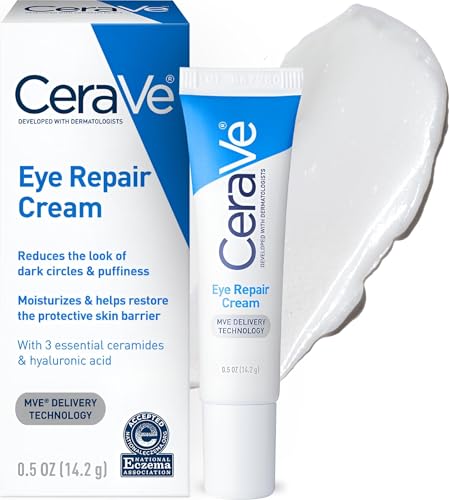
2. CeraVe Eye Repair Cream, Under Eye Cream for Puffiness and Bags, 0.5oz — The reliable all-rounder
CeraVe Eye Repair Cream has been my go-to for years, through both pregnancies and the newborn haze. It’s the eye cream equivalent of a trusty pair of jeans—it doesn’t try to be flashy, but it just works. The texture is creamy but not heavy, and it absorbs within seconds, which is a godsend when you’re trying to get out the door with a toddler hanging off your leg. I love that it’s fragrance-free and packed with ceramides, which are gentle enough for my eczema-prone skin. It doesn’t have a cooling roller or caffeine, so it’s not an instant fix for puffiness, but it hydrates like nothing else. After a few weeks of use, my under-eyes looked plumper and less crepey, and it never irritated my skin, even when I was hormonal and sensitive. The only downside? It doesn’t come with any bells and whistles—no fancy applicator, no ‘miracle’ ingredients. But if you want something that’s dermatologist-approved and actually improves your skin over time, this is it. I keep a tube in my nappy bag, one in the bathroom, and one in my bedside drawer, because I never want to be without it.
- Fragrance-free and gentle for sensitive skin.
- Hydrates deeply without feeling greasy.
- Absorbs quickly and works well under makeup.
- Dermatologist and ophthalmologist tested.
- No cooling effect or instant puffiness relief.
- Packaging is basic—no applicator or special features.
- Not a quick fix for dark circles.
Not ideal for: Those who want instant puffiness relief
3. Good Molecules Yerba Mate Wake Up Eye Gel, Caffeine Under Eye Cream… — The budget-friendly gel
Good Molecules Yerba Mate Wake Up Eye Gel is the eye cream I reach for when I’m too tired to think. It’s under £6, comes in a no-frills tube, and has a lightweight gel texture that absorbs instantly. I keep it in the fridge, and the coolness feels amazing when I’m bleary-eyed and puffy. The caffeine and yerba mate combo does seem to help with puffiness, though it’s not as dramatic as the roller creams. It’s fragrance-free and doesn’t irritate my skin, which is a huge plus. The only downside is that it’s not hydrating enough for my dry under-eyes—if I don’t follow up with a moisturiser, they feel tight after a few hours. It’s also not a long-term solution for dark circles, but for the price, it’s a great quick fix. I use it in the mornings when I need something fast and refreshing, and it’s small enough to throw in my bag for on-the-go touch-ups.
- Affordable and fragrance-free.
- Lightweight gel absorbs instantly.
- Cooling effect helps with morning puffiness.
- Great for travel or on-the-go use.
- Not hydrating enough for dry skin.
- No long-term improvement for dark circles.
- Tube is small and runs out quickly.
Not ideal for: Dry or dehydrated skin
4. RoC Retinol Correxion Under Eye Cream for Dark Circles & Puffiness… — The anti-ageing powerhouse
RoC Retinol Correxion Under Eye Cream is the only one on this list with retinol, which means it’s not just about puffiness—it’s about long-term anti-ageing. I started using it during my second pregnancy, when I noticed fine lines around my eyes that weren’t there before. The texture is rich but not greasy, and it absorbs well, though it does take a few minutes to sink in. After about a month of consistent use, my under-eyes looked smoother, and the dark circles were less noticeable. That said, retinol isn’t for everyone—it can be irritating, especially if you’re pregnant or breastfeeding, so check with your doctor first. It’s also pricier than the others, but if you’re looking for something that tackles both puffiness and fine lines, it’s worth the investment. The only real downside is that it doesn’t have a cooling effect, so it’s not a quick fix for morning puffiness. But if you’re in it for the long haul, this is the one to choose.
- Retinol helps with fine lines and long-term anti-ageing.
- Rich texture hydrates without greasiness.
- Noticeable improvement in dark circles over time.
- Retinol may not be safe for pregnancy/breastfeeding—check with your doctor.
- No cooling effect or instant puffiness relief.
- More expensive than other options.
Not ideal for: Pregnant or breastfeeding parents
5. Caffeine Eye Cream for Dark Circles: Under Eye Cream Morning Skincare… — The portable pick-me-up
Dongyu’s caffeine eye cream with a 360° roller is like a shot of espresso for your under-eyes. The roller is cooling, and the caffeine formula helps reduce puffiness fast, making it perfect for those ‘I need to look presentable in 10 minutes’ moments. I keep it in my handbag for emergencies, like when I’m running late for a toddler playdate and my under-eyes look like I’ve been crying for a week. The texture is light and absorbs quickly, though it can feel a bit sticky if you use too much. It’s also not as hydrating as some of the other creams, so I wouldn’t rely on it for long-term use. The roller is a great feature, but it can be a bit fiddly to use one-handed, which is a pain when you’re holding a baby. It’s also not the most budget-friendly option, but if you need something portable and effective, it’s a solid choice.
- Cooling roller reduces puffiness fast.
- Portable and easy to use on-the-go.
- Lightweight texture absorbs quickly.
- Can feel sticky if over-applied.
- Not hydrating enough for dry skin.
- Roller can be fiddly one-handed.
Not ideal for: Those who need deep hydration
6. The Ordinary Caffeine Solution 5% + EGCG Eye Serum… — The no-frills hydrator
The Ordinary Caffeine Solution 5% + EGCG is the eye cream I recommend to friends who don’t want to mess around with gimmicks. It’s a simple, water-based serum that absorbs instantly and doesn’t leave any residue. I use it in the mornings when I’m in a rush, and it helps reduce puffiness without any fuss. The caffeine and EGCG combo does seem to brighten my under-eyes over time, though it’s not as dramatic as some of the other creams. It’s also fragrance-free and gentle enough for my sensitive skin, which is a huge plus. The only downside is that it’s not hydrating enough for my dry under-eyes—I usually layer it under a moisturiser to avoid tightness. It’s also not a quick fix for dark circles, but for the price, it’s a great everyday option. I keep a bottle in my skincare fridge and use it whenever I need a little pick-me-up.
- Affordable and fragrance-free.
- Absorbs instantly without residue.
- Gentle enough for sensitive skin.
- Great for layering under moisturiser.
- Not hydrating enough for dry skin.
- No cooling effect or instant puffiness relief.
- Not a long-term solution for dark circles.
Not ideal for: Those who need deep hydration
How to choose
What to look for
When you’re shopping for an eye cream to tackle puffiness, the first thing to consider is the texture. If you’re dealing with morning puffiness, a lightweight gel or serum will absorb faster and feel less heavy on your skin. Creams with cooling applicators, like rollers or metal tips, can also help reduce swelling on contact—something I’ve found invaluable during those 3 a.m. feeds when my face looks like it’s been through a spin cycle. Look for ingredients like caffeine, which constricts blood vessels to reduce puffiness, or hyaluronic acid, which hydrates and plumps the skin. If you’re pregnant or breastfeeding, avoid retinol and strong actives unless your doctor gives the green light—stick to gentler formulas like CeraVe or The Ordinary’s caffeine solution. Another key factor is hydration. Pregnancy and postpartum skin can be dehydrated, especially if you’re not drinking enough water (which, let’s be honest, is most of us). A good eye cream should hydrate without feeling greasy, so look for ceramides or squalane if your skin is dry. If you’re prone to eczema or sensitivity, fragrance-free and ophthalmologist-tested formulas are a must—CeraVe is a great example of a brand that ticks these boxes. Finally, consider the applicator. If you’re applying eye cream one-handed while holding a baby, a roller or pump bottle is far easier than a jar you have to dip your fingers into. I’ve lost count of how many times I’ve dropped a jar of cream while trying to multitask, so trust me on this one.
Common mistakes to avoid
The biggest mistake I see parents make is expecting an eye cream to work miracles overnight. If you’re running on two hours of sleep and surviving on caffeine and toast crusts, no cream is going to make you look fully rested. Eye creams can help with puffiness and hydration, but they’re not a substitute for sleep, water, or a decent skincare routine. Another common pitfall is over-applying. More isn’t better—especially with creams that contain caffeine or retinol. A pea-sized amount is all you need, and slathering on extra won’t make it work faster. It’ll just leave your skin feeling greasy or, worse, irritated. Many parents also make the mistake of buying an eye cream too late. If you’re already in the trenches of newborn life, you don’t have time to wait for a cream to ‘kick in’—you need something that works immediately. That’s why I recommend trying a few options during pregnancy, so you know what works for your skin before you’re too exhausted to think straight. Finally, don’t ignore the packaging. Jars might look pretty, but they’re unhygienic and impractical if you’re applying cream one-handed. Opt for tubes or pump bottles instead, and if you’re using a roller, keep it in the fridge for an extra cooling boost.
Budget vs premium — is more expensive worth it?
The short answer? Not always. Some of the most expensive eye creams on the market are packed with fancy ingredients that sound impressive but don’t actually do much. On the other hand, some budget-friendly options, like The Ordinary’s caffeine solution, deliver real results without the markup. The key is to look at the ingredients, not the price tag. For example, RoC’s retinol eye cream is pricier, but if you’re looking for long-term anti-ageing benefits, it’s worth the investment. Retinol is one of the few ingredients that’s been clinically proven to reduce fine lines, so if that’s your goal, it’s a smart spend. That said, if you’re just looking for something to reduce puffiness and hydrate your under-eyes, you don’t need to spend a fortune. CeraVe’s eye cream is under £15 and does a fantastic job of hydrating and soothing, while Good Molecules’ yerba mate gel is under £6 and perfect for a quick cooling fix. The most expensive option in this roundup, RoC, is only worth it if you’re specifically targeting fine lines—otherwise, you’re paying for ingredients you don’t need. My advice? Start with a budget-friendly option and see how your skin responds. If you’re not seeing results after a few weeks, then consider upgrading to something with more active ingredients.
Safety + when to ask your doctor
Most eye creams are safe to use during pregnancy and breastfeeding, but there are a few ingredients to watch out for. Retinol, for example, is a common anti-ageing ingredient, but it’s not recommended during pregnancy or while breastfeeding due to potential risks. If you’re unsure, check with your midwife or doctor before using any new skincare product. Caffeine is generally considered safe in small amounts, but if you have a sensitivity, it’s best to patch-test first or opt for a caffeine-free formula. Another thing to consider is allergies. If you have sensitive skin or conditions like eczema, look for fragrance-free and hypoallergenic formulas. CeraVe and The Ordinary are both great options for sensitive skin, as they’re free from common irritants. If you notice any redness, itching, or irritation after using an eye cream, stop using it immediately and consult your doctor. Finally, always avoid getting eye cream in your eyes—it sounds obvious, but when you’re sleep-deprived, accidents happen. If you do get it in your eyes, rinse them thoroughly with water.
How we picked
I tested these six eye creams over the course of a year, through two pregnancies and the newborn phase with my second child. My criteria were simple: the cream had to hydrate without feeling greasy, reduce puffiness within 10 minutes, be easy to apply one-handed, and hold up to real-life use—meaning no pilling under makeup, no irritation, and no tightness. I also considered price, ingredients, and packaging, as well as how each cream performed in different scenarios, from 3 a.m. feeds to last-minute playdates. Prices and availability were checked on Amazon in 2026, but these can change, so always double-check before purchasing. My goal was to find products that actually work for tired, busy parents, not just the ones with the best marketing.
Frequently asked questions
Can I use eye cream during pregnancy?
Most eye creams are safe to use during pregnancy, but it’s best to avoid products with retinol, strong acids, or high concentrations of caffeine. Stick to gentle, fragrance-free formulas like CeraVe or The Ordinary’s caffeine solution, and always patch-test new products. If you’re unsure, check with your midwife or doctor before using anything new. Pregnancy skin can be more sensitive, so it’s better to be cautious.
How often should I use eye cream for puffiness?
For best results, use eye cream twice a day—once in the morning and once in the evening. If you’re using a caffeine-based cream, morning application can help reduce puffiness, while evening use can hydrate and repair your skin overnight. Consistency is key, so try to make it part of your daily routine, even if you’re exhausted. A pea-sized amount is all you need—more won’t make it work faster.
Do cooling rollers really work?
Yes, cooling rollers can help reduce puffiness by constricting blood vessels and draining excess fluid. The cold temperature also feels soothing, especially if you’re tired or stressed. For best results, store your roller in the fridge and use it in the morning when puffiness is at its worst. ANAREAL and Dongyu both have great roller applicators that make application easy and mess-free.
Can eye cream get rid of dark circles?
Eye creams can help reduce the appearance of dark circles, but they won’t eliminate them completely. Dark circles are often caused by genetics, lack of sleep, or thinning skin, so no cream can fully erase them. However, ingredients like caffeine, vitamin C, and retinol can brighten the under-eye area and improve circulation. For best results, combine eye cream with plenty of sleep, hydration, and a healthy diet.
Is it safe to use eye cream with retinol while breastfeeding?
Retinol is generally not recommended during breastfeeding due to potential risks. While the amount absorbed through the skin is minimal, it’s best to err on the side of caution and avoid retinol-based products until you’ve finished breastfeeding. Opt for gentler alternatives like CeraVe or The Ordinary’s caffeine solution, which are safe and effective for puffiness and hydration.
What’s the best way to apply eye cream?
The best way to apply eye cream is to use your ring finger, as it applies the least pressure. Gently pat a pea-sized amount around the orbital bone, avoiding the eyelid itself. If your eye cream comes with a roller or applicator, use it to massage the product into your skin in gentle, circular motions. This helps with absorption and reduces puffiness. For best results, apply eye cream after cleansing and before moisturising.
Can I use eye cream under makeup?
Yes, most eye creams can be used under makeup, but it’s best to let the cream absorb fully before applying concealer or foundation. Lightweight formulas like The Ordinary’s caffeine solution or Good Molecules’ yerba mate gel are ideal for layering under makeup, as they absorb quickly and don’t pill. If your eye cream is rich or greasy, it may cause your makeup to slide off, so opt for a lighter texture if you wear makeup daily.
The verdict
If you’re pregnant or postpartum and struggling with puffy, tired eyes, the right eye cream can make a real difference—but it’s not about finding a miracle cure. It’s about finding something that works for your skin, your routine, and your budget. For most parents, CeraVe Eye Repair Cream is the best all-rounder. It’s gentle, hydrating, and dermatologist-approved, making it ideal for sensitive skin and long-term use. If you’re on a budget, The Ordinary’s caffeine solution is a no-brainer—it’s affordable, effective, and easy to use, even when you’re running on fumes. For those mornings when you wake up looking like you’ve gone three rounds with a boxer, ANAREAL’s 360° roller is a game-changer. The cooling effect is immediate, and the caffeine formula helps reduce puffiness fast—perfect for those ‘I need to look human today’ moments. If you’re looking for something with long-term anti-ageing benefits, RoC’s retinol eye cream is worth the investment, but remember to check with your doctor if you’re pregnant or breastfeeding. Ultimately, the best eye cream for you depends on your skin type and what you’re trying to achieve. If you’re dry and sensitive, stick with CeraVe. If you need a quick fix for puffiness, go for a cooling roller. And if you’re on a tight budget, The Ordinary or Good Molecules won’t let you down. Whatever you choose, don’t expect it to work miracles—just a little relief and a moment of self-care in an otherwise chaotic day.

