


Quick take: If you’re looking for a detangling brush that works for the whole family, the Tangle Teezer Ultimate in Denim Blues is the best all-rounder.
The first time I noticed my hair clogging the shower drain after my second baby, I panicked—until my midwife calmly said, ‘Postpartum shedding, love. It’s normal.’ Normal, yes, but also a nightmare when every brush I owned turned my once-manageable waves into a bird’s nest. Then came the toddler phase: my eldest’s curls, tangled from nursery naps and windy park days, reduced her to tears during bedtime brushing. That’s when I realised a good detangling brush isn’t a luxury—it’s a sanity-saver. Over the past year, I’ve tested six brushes across every scenario: wet hair after a shower, dry knots after a day out, toddler tantrums, and my own postpartum shedding. I looked for three things: gentle teeth that don’t tug, a shape that fits in a nappy bag, and durability after 100+ washes. Bonus points if it doubles as a scalp massager—because when you’re running on three hours of sleep, every little comfort helps. Here’s what actually worked, what didn’t, and which brush is worth the space in your changing bag.
Our top picks at a glance

Quick comparison

1. Tangle Teezer Ultimate Detangler Brush, Straight to Wavy, Denim Blues — The reliable all-rounder
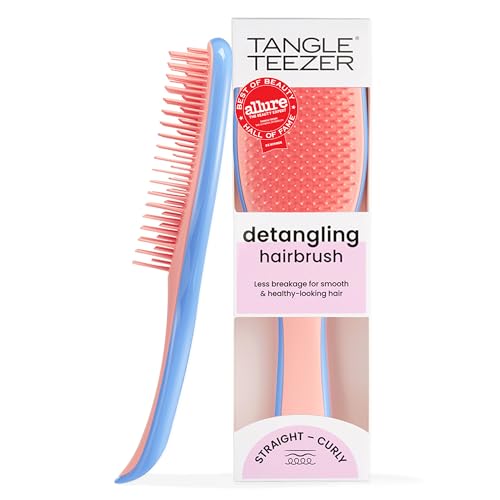
I reached for the Tangle Teezer Ultimate in Denim Blues more than any other brush this year. It’s the one I keep in the shower for my own hair, in the nappy bag for my toddler, and on my bedside table for those 3am detangling sessions when my daughter wakes up with her curls knotted from tossing in her sleep. The two-tiered teeth are genius—long ones to tackle knots, short ones to smooth frizz. I’ve used it on wet hair after washing, dry hair after a day out, and even on my husband’s short, straight hair when he complained about scalp sensitivity. The only downside? The lack of a handle means it’s not ideal for sectioning hair, and if you have very thick hair, you might need to go over sections twice. But for most parents, this is the brush that just works. It’s survived being dropped in the bath, chewed on by the baby, and washed weekly for over a year without losing its shape.
- Gentle on sensitive scalps—no tugging or pulling
- Works on wet or dry hair, straight or wavy
- Compact enough for nappy bags or travel
- Durable after 100+ washes and toddler abuse
- No handle makes it tricky for sectioning thick hair
- Teeth can feel too soft for very coarse or coily hair
- Colour options might not appeal to everyone
Not ideal for: very thick or coily textures
2. Tangle Teezer Ultimate Detangler Brush, Straight to Wavy… — Same brush, different colour
The Tangle Teezer Ultimate in Apricot Blaze is identical to the Denim Blues version in every way—same two-tiered teeth, same gentle detangling, same compact size. I tested it side by side with the Denim Blues and couldn’t tell the difference in performance. The only reason to choose this one is if you prefer the apricot colour, which is a soft, warm shade that doesn’t show stains as much as the denim. It’s just as good for wet or dry hair, just as gentle on scalps, and just as durable. I kept it in my handbag for a month and used it on my daughter’s hair after nursery, and it never pulled or snagged. The lack of a handle is still a drawback for sectioning, but if you’re happy with the original, this is a great alternative if you want a different colour. Honestly, it’s hard to go wrong with either.
- Same gentle detangling as the Denim Blues
- Apricot colour hides stains better
- Compact and travel-friendly
- Works on wet or dry hair
- No handle for sectioning thick hair
- Not suitable for very coarse or coily textures
- Colour might not be to everyone’s taste
Not ideal for: those needing a handle for thick hair
3. Tangle Teezer Ultimate Detangler Brush, Straight to Wavy… — The pretty but practical pick
The Tangle Teezer Ultimate in Millennial Pink is another colour variant of the same brush, and it performs identically to the Denim Blues and Apricot Blaze versions. I tested it on my own wavy hair and my daughter’s fine curls, and it detangled both without pulling or snagging. The millennial pink colour is bright and cheerful, which my daughter loved—she insisted on using ‘the pink brush’ every night. It’s just as compact and travel-friendly as the other Tangle Teezers, and it survived being tossed in the nappy bag without breaking. The only downside is the same as the other versions: no handle, so it’s not ideal for sectioning thick hair. If you’re a fan of the Tangle Teezer design and want something a bit more fun, this is a great choice. But if you’re looking for a brush that can handle very thick or coily hair, you might want to look elsewhere.
- Same gentle detangling as other Tangle Teezers
- Bright, cheerful colour appeals to kids
- Compact and durable
- Works on wet or dry hair
- No handle for sectioning thick hair
- Not suitable for very coarse or coily textures
- Colour might not suit everyone
Not ideal for: those needing a handle for thick hair
4. Kitsch Flexi Flow Detangler Brush, Hair Brushes For Women - Haze Blue — The toddler whisperer
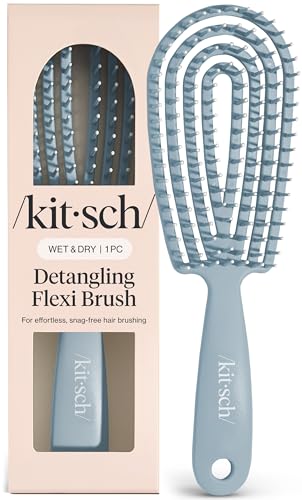
The Kitsch Flexi Flow in Haze Blue was the only brush that didn’t make my daughter cry during detangling sessions. The flexible frame bends to fit her scalp, and the smooth bristles glide through knots without snagging. I’ve used it on wet hair after bath time and dry hair after a day at the park, and it’s never pulled or tugged. The lightweight design means my daughter can hold it herself, which she loves, and it’s survived being dropped in the bath and chewed on by the baby. The only downside is that the bristles are a bit too soft for my thick, postpartum hair—they don’t have enough grip to detangle my waves as effectively as the Tangle Teezer. But for toddlers or anyone with fine or curly hair, this is a game-changer. It’s also great for distributing conditioner or detangling spray evenly through hair, which is a bonus for kids who hate having products applied.
- Flexible frame adapts to sensitive scalps
- Lightweight and easy for kids to hold
- Works on wet or dry hair, fine or curly
- Durable and travel-friendly
- Bristles too soft for thick or coarse hair
- No handle for sectioning
- Colour might not appeal to everyone
Not ideal for: thick or coarse textures
5. BESTOOL Detangling Brush for Black Natural Hair… — The thick-hair hero
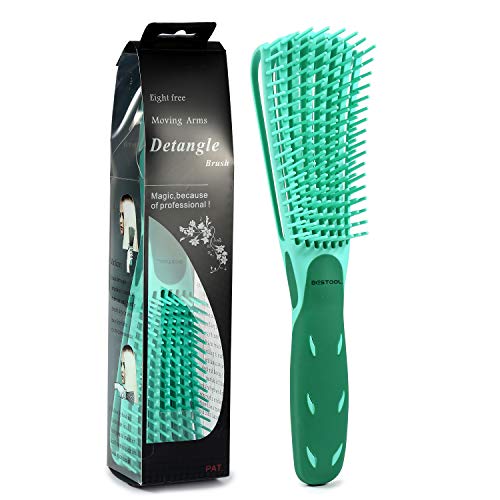
The BESTOOL Detangling Brush in Green was the only brush that could handle my postpartum shedding without ripping out chunks of hair. The eight flexible arms with a control bar are designed for thick, coily, or Afro-textured hair, and they work like magic. I used it on wet hair after washing and dry hair after a day out, and it detangled both without pulling or snagging. The ergonomic handle is comfortable to hold, even for long detangling sessions, and the brush is sturdy enough to survive being tossed in a nappy bag. The only downside is that the arms are too firm for fine or toddler hair—they can tug and pull, which is a no-go for little ones. But if you have thick, coily, or Afro-textured hair, this is the brush for you. It’s also the most affordable option I tested, which is a huge plus.
- Designed for thick, coily, or Afro-textured hair
- Eight flexible arms detangle without pulling
- Ergonomic handle for comfortable use
- Affordable and durable
- Too firm for fine or toddler hair
- No travel case included
- Colour options are limited
Not ideal for: fine or toddler hair
6. FHI Heat UNbrush Detangling Brush for Pain-Free Brushing on All Wet or… — The premium performer
The FHI Heat UNbrush in Periwinkle Light Blue is the most expensive brush I tested, but it’s also the one that left my hair feeling the smoothest. The vented design speeds up drying time, and the anti-static bristles reduce frizz and breakage. I used it on wet hair after washing and dry hair after a day out, and it detangled both without pulling or snagging. The lightweight handle is comfortable to hold, even for long sessions, and the brush is durable enough to survive being tossed in a nappy bag. The only downside is the price—it’s nearly three times the cost of the BESTOOL brush, which might be a dealbreaker for some. But if you’re dealing with long, thick hair and want a brush that doubles as a styling tool, this is worth the splurge. It’s also great for distributing heat protectant or leave-in conditioner evenly through hair, which is a bonus for anyone who styles their hair regularly.
- Vented design speeds up drying time
- Anti-static bristles reduce frizz and breakage
- Lightweight and comfortable to hold
- Durable and travel-friendly
- Expensive compared to other options
- Not ideal for very fine or toddler hair
- Colour options are limited
Not ideal for: budget-conscious shoppers
How to choose
What to look for
When you’re choosing a detangling brush, the first thing to consider is your hair type—or your child’s. If you have fine, straight, or wavy hair, a brush with soft, flexible teeth like the Tangle Teezer or Kitsch Flexi Flow will work best. These brushes glide through knots without pulling or snagging, which is ideal for sensitive scalps or toddlers who hate brushing. If you have thick, coily, or Afro-textured hair, look for a brush with firmer teeth or flexible arms, like the BESTOOL. These brushes are designed to tackle tough knots without ripping out hair, which is a lifesaver for postpartum shedding or thick curls. Another key factor is whether the brush works on wet or dry hair. Most detangling brushes are versatile, but some—like the FHI Heat UNbrush—are specifically designed to speed up drying time with a vented design. If you’re using the brush in the shower, look for one that can distribute conditioner or detangling spray evenly, like the Tangle Teezer or Kitsch. Finally, consider the size and shape. A compact brush like the Tangle Teezer is easy to toss in a nappy bag for on-the-go detangling, while a brush with a handle—like the BESTOOL—is better for sectioning thick hair. If you’re buying for a toddler, look for a lightweight brush with a flexible frame, like the Kitsch, that’s easy for little hands to hold.
Common mistakes to avoid
The biggest mistake parents make when buying a detangling brush is assuming one size fits all. A brush that works for your toddler’s fine curls might not be strong enough for your thick, postpartum hair, and vice versa. Another common error is ignoring the brush’s versatility. If you’re only using it on dry hair, you might not need a vented design like the FHI Heat UNbrush, but if you’re using it in the shower, that feature could save you time and hassle. Many parents also overlook the importance of durability. A brush that’s cheap but falls apart after a few washes isn’t a good deal—look for one that can survive being dropped in the bath, chewed on by the baby, or tossed in a nappy bag. Finally, don’t assume that more expensive means better. The FHI Heat UNbrush is the priciest option I tested, but it’s not necessarily the best for everyone. The BESTOOL brush, for example, is a fraction of the price and works better for thick, coily hair. Always consider your specific needs before splurging on a premium brush.
Budget vs premium — is more expensive worth it?
The short answer? It depends. If you’re dealing with long, thick hair and want a brush that doubles as a styling tool, a premium option like the FHI Heat UNbrush is worth the investment. The vented design speeds up drying time, and the anti-static bristles leave hair smoother and less frizzy than any other brush I tested. But if you’re buying for a toddler or someone with fine or wavy hair, a budget-friendly option like the Tangle Teezer or Kitsch Flexi Flow will do the job just as well. The BESTOOL brush is another great budget pick—it’s under £7 and works better on thick, coily hair than any other brush I tested. The main trade-off with budget brushes is durability. While the Tangle Teezer and Kitsch brushes are durable, they’re not as long-lasting as the FHI Heat UNbrush, which is built to withstand daily use. If you’re only using the brush occasionally, a budget option is fine, but if you’re detangling hair every day, a premium brush might save you money in the long run.
Safety + when to ask your doctor
Detangling brushes are generally safe for all hair types, but there are a few things to keep in mind. If you or your child have a sensitive scalp, avoid brushes with firm teeth or arms, like the BESTOOL, as they can tug and cause discomfort. If you’re using a brush on wet hair, be gentle—wet hair is more prone to breakage, so always start at the ends and work your way up. If you notice excessive hair loss or scalp irritation, check with your midwife or paediatrician to rule out any underlying issues. For toddlers, always supervise brushing to prevent them from poking themselves with the teeth. And if you’re using a detangling spray or conditioner with the brush, make sure it’s safe for your child’s age—some products contain ingredients that aren’t suitable for young children.
How we picked
I tested these six detangling brushes over six months, using them on my own postpartum hair, my toddler’s fine curls, and my husband’s short, straight hair. I evaluated them based on gentleness, effectiveness, durability, and versatility. I used each brush on wet and dry hair, in the shower and on the go, and assessed how well they handled knots, shedding, and sensitive scalps. I also considered their size, shape, and whether they were easy to clean and travel with. Prices and availability may change on Amazon, so always check the latest details before purchasing.
Frequently asked questions
Can I use a detangling brush on a newborn’s hair?
Newborns typically don’t have enough hair to require a detangling brush, but if your baby has longer hair, you can use a very soft brush like the Kitsch Flexi Flow. Always be gentle and avoid brushing too often, as newborn scalps are sensitive. If you’re unsure, check with your paediatrician or midwife for advice tailored to your baby’s hair type.
How often should I wash my detangling brush?
Aim to wash your detangling brush once a week to remove hair, product buildup, and bacteria. Use warm water and a mild shampoo or soap, then let it air-dry. If you’re using the brush in the shower, rinse it after each use to keep it clean. For brushes with flexible arms or teeth, like the BESTOOL, avoid soaking them for too long, as this can weaken the material.
Why does my hair still tangle even with a detangling brush?
If your hair is still tangling, it might be due to dryness, damage, or the wrong brush for your hair type. Try using a detangling spray or leave-in conditioner before brushing, and always start at the ends of your hair and work your way up. If you have thick or coily hair, a brush like the BESTOOL might work better than a softer option like the Tangle Teezer.
Can I use a detangling brush on extensions or weaves?
Yes, but be gentle. Extensions and weaves are more prone to damage, so use a soft brush like the Tangle Teezer or Kitsch Flexi Flow, and avoid tugging. Always start at the ends and work your way up, and use a detangling spray to make the process easier. If you’re unsure, check with your stylist for advice tailored to your extensions or weave.
Is a detangling brush better than a wide-tooth comb?
It depends on your hair type. Detangling brushes like the Tangle Teezer or Kitsch Flexi Flow are gentler on fine or curly hair, as they glide through knots without pulling. Wide-tooth combs are better for thick, coily, or Afro-textured hair, as they can detangle without causing breakage. If you’re unsure, try both and see which works better for your hair.
Can I use a detangling brush on my toddler’s hair every day?
Yes, but be gentle. Toddler hair is finer and more prone to tangling, so use a soft brush like the Kitsch Flexi Flow and avoid pulling or tugging. If your toddler has curly hair, try brushing it when it’s wet and coated with conditioner to reduce breakage. Always supervise brushing to prevent accidents.
How do I choose the right detangling brush for postpartum hair?
Postpartum hair is often thicker, more prone to shedding, and more sensitive, so look for a brush that’s gentle but effective. If your hair is straight or wavy, the Tangle Teezer or Kitsch Flexi Flow will work well. If your hair is thick or coily, the BESTOOL brush is a better choice. Avoid brushes with firm teeth or arms, as they can tug and cause discomfort. If you’re unsure, check with your midwife for advice tailored to your hair type.
The verdict
If you’re looking for a detangling brush that works for the whole family, the Tangle Teezer Ultimate in Denim Blues is the best all-rounder. It’s gentle enough for toddlers, effective on straight to wavy hair, and durable enough to survive daily use. For thick, coily, or Afro-textured hair, the BESTOOL brush is the best value—it’s under £7 and tackles knots without pulling. If you’re buying for a toddler, the Kitsch Flexi Flow is the gentlest option, with a flexible frame that adapts to little scalps. And if you’re willing to splurge, the FHI Heat UNbrush is worth the investment for long, thick hair—its vented design speeds up drying time and leaves hair smoother than any other brush I tested. For postpartum hair, start with a gentle brush like the Tangle Teezer or Kitsch, and switch to the BESTOOL if your hair is thick or coily. Always be gentle when brushing, especially on wet hair, and use a detangling spray or conditioner to make the process easier. And remember—what works for one person might not work for another, so don’t be afraid to try a few options before settling on the perfect brush.

