Quick take: Choosing the right baby formula feels like a monumental decision, but I hope this guide has helped simplify things.
Navigating the world of baby formula can feel like deciphering a secret code, especially when you're sleep-deprived and just want what's best for your little one. I remember those early days with my first, staring at shelves packed with options, utterly overwhelmed. It’s not just about nutrition; it's about peace of mind, knowing you’re giving them something that supports their tiny, developing bodies without any unnecessary extras. That's why 'clean' baby formula has become such a buzzword, and rightly so. We want ingredients we recognise, sourced responsibly, and gentle on delicate tummies. For this BumpBites buyer's guide, I’ve delved deep into some of the most popular 'clean' formulas on the market in 2026. I've looked at them through the lens of a mum who's been there, done that – from the frantic 3 AM feeds to the on-the-go nappy bag tests. My focus wasn't just on what the labels promise, but on how these formulas actually performed in real-world scenarios, and whether they truly offer that 'clean' advantage for your baby. When I talk about 'clean' formula, I’m not just talking about marketing hype. I’m looking for a few key things that genuinely matter: first, the quality and source of the milk – whether it's grass-fed cow's milk or gentle goat's milk. Second, the absence of things we don't want, like corn syrup, GMOs, artificial colours, and preservatives. Third, the inclusion of beneficial components like DHA, ARA, prebiotics, and probiotics to support development and digestion. And finally, how easy it is to prepare, because let's be honest, time is a luxury when you have a newborn. This guide is about helping you cut through the noise and find a formula that truly works for your family.
Our top picks at a glance

Quick comparison


1. Bubs Whole Goat Milk Infant Formula for 0-12 Months, Non-GMO Milk… — Gentle digestion, naturally kind.
My youngest had a bit of a tricky start with cow's milk formulas, so I was really keen to try a goat milk option, and the Bubs Whole Goat Milk didn't disappoint. From the first bottle, it felt lighter on her tummy. The powder itself is finely milled and dissolved beautifully, even when I was half-asleep during a 4 AM feed – no frustrating clumps sticking to the bottle sides. I noticed a definite improvement in her fussiness after feeds, and her bowel movements seemed much more regular and less strained. It’s made with whole goat milk, which I appreciate, and the absence of corn syrup or artificial extras gives real peace of mind. It’s fantastic for parents whose babies show signs of discomfort with standard cow’s milk, offering a genuinely gentle alternative without compromising on essential nutrients like DHA/ARA. The packaging is sturdy, though I do wish the scoop had a dedicated holder inside the lid to avoid digging around.
- Significantly gentler on sensitive baby tummies.
- Powder dissolves quickly and smoothly without clumping.
- Free from GMOs, corn syrup, and artificial additives.
- Includes important DHA/ARA for development.
- Goat milk formulas can be pricier than cow's milk.
- The scoop isn't stored neatly within the lid.
- Availability can sometimes be a little less consistent than mainstream cow's milk brands.
Not ideal for: Parents on a very strict budget.
2. Kabrita Goat Milk Infant Formula Powder, Gentle Digestion, Non-GMO… — European quality for delicate digestion.
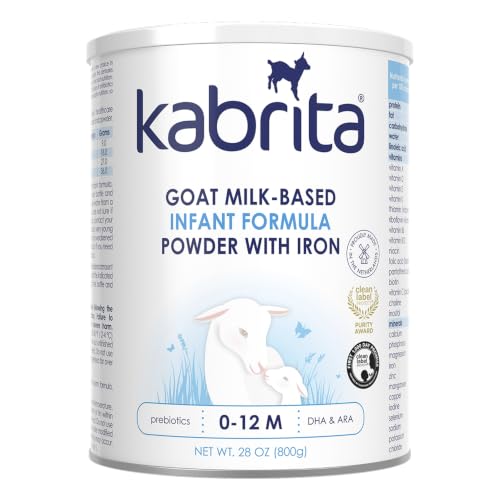
Kabrita has built a fantastic reputation, and after trying their Goat Milk Infant Formula, I can see why. This is a truly premium option, especially for parents who are serious about ingredient sourcing and gentle digestion. The claim about A2 protein and softer curds really seemed to play out with my baby; there was less gas and general discomfort compared to some other formulas we'd tried. It mixes effortlessly, which is a huge plus when you’re dealing with a hungry baby – no frantic shaking required. The European origin and Clean Label Project certifications also add a layer of trust that many parents, myself included, look for. While it’s certainly on the higher end of the price spectrum, if your baby truly struggles with digestion or you prioritise these specific certifications, it feels worth the investment. It's especially suited for parents seeking a high-quality, scientifically backed goat milk option. The only minor quibble is the price; it can really add up over time.
- Exceptional for babies with sensitive digestion.
- Multiple Clean Label Project certifications for purity.
- Made with high-quality Dutch goat milk.
- Free from corn syrup, GMOs, antibiotics, and hormones.
- One of the more expensive formula options.
- Not as widely available in all stores as mainstream brands.
- The tin design can be a bit bulky for travel.
Not ideal for: Those needing a budget-friendly option.
3. Bubs 365 Day Grass Fed Infant Formula for 0-12 Months, Non-GMO Milk… — Wholesome grass-fed cow's milk.
For parents looking for a high-quality cow's milk formula with a focus on sourcing, the Bubs 365 Day Grass Fed option is a fantastic contender. What immediately stood out to me was the '365-day grass-fed' claim; it really speaks to the quality of the milk. The formula itself is incredibly well-rounded, packed with essential vitamins, minerals, and both prebiotics and probiotics. My baby, who has a pretty robust tummy, thrived on this. It mixed smoothly every time, leaving no residue, which is a blessing at any hour. I particularly appreciate that it avoids GMOs, corn syrup, and artificial additives, aligning perfectly with the 'clean' philosophy. It felt like a really wholesome, nourishing option. This formula is ideal for parents who want the benefits of grass-fed milk and a comprehensive nutritional profile without going down the goat milk route. My only minor gripe is that sometimes the powder can settle a bit in transit, making the initial scoop a little deeper.
- Sourced from 365-day grass-fed cows.
- Contains prebiotics and probiotics for immune support.
- Free from GMOs, corn syrup, and artificial ingredients.
- Provides comprehensive nutrition with DHA and ARA.
- Initial settling of powder can make scooping tricky.
- Can be slightly more expensive than conventional cow's milk formulas.
- The tin can be a bit awkward to recycle in some areas.
Not ideal for: Babies with cow's milk protein sensitivity.
4. Earth's Best Organic Baby Formula for Babies 0-12 Months… — Trusted organic, great value.
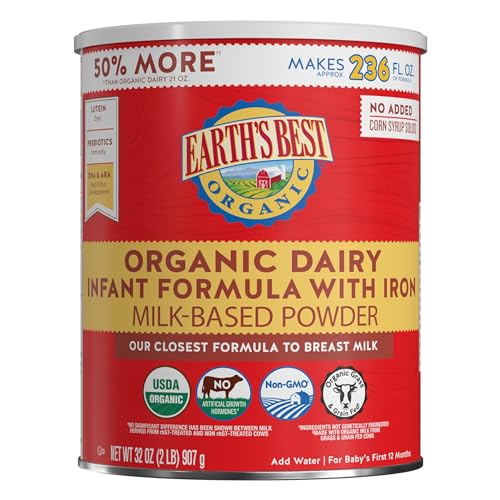
Earth's Best has been a staple in many organic-focused households, and their Organic Baby Formula lives up to that reputation. For parents wanting an organic option without breaking the bank, this is a brilliant choice. It’s made with organic milk from grass and grain-fed cows, and crucially, it avoids added corn syrup, which is a big win for me. When preparing bottles, the powder dissolved easily enough, though occasionally a tiny bit of extra swirling was needed compared to some of the super-fine formulas. My baby took to it without any issues, and I felt confident she was getting good nutrition with the added DHA, ARA, and prebiotics. It’s a reliable, no-frills organic formula that delivers on its promises. This formula is perfectly suited for parents who value organic certification and want a straightforward, complete nutritional option at a competitive price. The only small downside is that the packaging can sometimes feel a little less premium than higher-priced competitors.
- Certified organic ingredients at a good price.
- No added corn syrup, a key 'clean' feature.
- Includes DHA, ARA, and prebiotics for development.
- Large container offers good value for money.
- Occasionally requires a little more mixing to fully dissolve.
- Packaging could feel a bit sturdier.
- Not specifically targeted at highly sensitive tummies.
Not ideal for: Those needing a goat milk alternative.
5. Similac 360 Total Care Ready-to-Feed Baby Formula — Ultimate convenience, ready-to-feed.
Let's be honest, there are days (and nights!) when the thought of scooping and mixing formula feels like scaling Everest. That's where Similac 360 Total Care Ready-to-Feed truly shines. While the product description doesn't explicitly detail "clean" ingredients like grass-fed or non-GMO status, Similac is a trusted brand, and the sheer convenience of ready-to-feed cannot be overstated, especially for those newborn weeks. I kept a few of these by the bed for those desperate 3 AM feeds – just open, pour, and serve. No fumbling for water, no trying to get the scoop level in the dark. It's also brilliant for nappy bags and travel; no worrying about sterilised water on the go. My baby took to it without any issues, and it provided complete nutrition. While it doesn't feature the specific 'clean' certifications of some other powdered options, the Similac brand generally adheres to high nutritional standards. This is a lifesaver for exhausted parents or when you're out and about. The main limitation is the cost per ounce; it's significantly more expensive than powdered options.
- Unbeatable convenience for night feeds and travel.
- No preparation needed, just open and pour.
- Provides complete nutrition from a trusted brand.
- Halal and Kosher certified.
- Significantly more expensive than powdered formulas.
- Generates more waste due to individual packaging.
- Lacks specific 'clean' ingredient call-outs in its description.
Not ideal for: Daily primary feeding on a budget.
6. Pure Bliss Irish Farms, Easy-to-Digest Baby Formula, Infant Formula… — Irish farm quality, gentle nutrition.
Pure Bliss by Similac Irish Farms really makes a strong case for high-quality, European-sourced cow's milk formula. What immediately caught my eye was the "Made in Europe" and "starts with fresh milk from cows in Ireland" – it paints a lovely picture of quality sourcing. This formula is designed to be easy-to-digest, and I found that my baby, who sometimes gets a bit gassy, tolerated it very well. It mixes effortlessly, which is always appreciated when you're juggling a hungry baby and trying to get things just right. I love that it specifically states "Made without artificial growth hormones, palm olein oil, corn syrup, and is non-GMO." These are all key factors for parents seeking a 'cleaner' option. It also includes DHA and ARA for brain and eye development, which is standard but always reassuring. This formula is ideal for parents who want a well-regarded cow's milk option with a focus on European quality and the absence of common undesirable ingredients. My only minor point of improvement would be if the scoop had a dedicated slot in the lid.
- Sourced from high-quality Irish farm milk.
- Free from artificial growth hormones, corn syrup, palm olein oil.
- Non-GMO and easy-to-digest formulation.
- Includes DHA and ARA for development.
- The scoop doesn't have a built-in holder.
- Can be slightly harder to find in some local stores.
- Price point is a little higher than basic formulas.
Not ideal for: Those preferring goat milk.
How to choose
What to look for
When you’re choosing a baby formula, especially a "clean" one, it’s easy to get caught up in the marketing. But from one mum to another, here are the things that actually matter. First, scrutinise the ingredient list. Look for formulas that list whole milk as a primary ingredient and explicitly state they are non-GMO. A big red flag for many parents seeking "clean" options is corn syrup or corn syrup solids; ideally, you want formulas that use lactose as their carbohydrate source, mimicking breast milk more closely. Next, check for key nutritional additions like DHA and ARA, essential fatty acids crucial for brain and eye development. Prebiotics and probiotics are also a huge plus, supporting a healthy gut microbiome and potentially aiding digestion. Consider the type of milk: cow's milk is standard, but if your baby shows signs of sensitivity like excessive gas or fussiness, a goat milk formula might be worth exploring, as goat milk proteins can be easier to digest for some. Finally, look for certifications. Awards like the Clean Label Project Purity Award or similar assurances provide an extra layer of confidence that the product has been tested for contaminants. Don't forget the practicalities – how easy is it to mix? Does it dissolve well, even in cooler water? These small details make a big difference during those countless daily feeds.
Common mistakes to avoid
One of the biggest mistakes parents make is buying a huge stash of one formula before their baby has even tried it. Babies are individuals, and what works for one might not work for another. Start with a smaller container to see how your little one tolerates it before committing to bulk purchases. Another common pitfall is not following preparation instructions precisely. The water-to-powder ratio is crucial for your baby’s kidney health and nutritional intake; guessing or deviating can be harmful. Always use sterile water (boiled and cooled if necessary) and adhere to the discard times for prepared formula – typically one hour unrefrigerated or 24 hours in the fridge. Don't assume all "clean" formulas are created equal; some might focus on organic ingredients, others on specific milk types or the absence of certain additives. Read labels carefully to align with your personal priorities. Lastly, don’t ignore your baby’s cues. If they’re consistently fussy, gassy, constipated, or experiencing skin issues after a formula change, it might not be the right fit. Always listen to your gut and your baby.
Budget vs premium — is more expensive worth it?
The price tags on baby formula can vary wildly, leaving many parents wondering if spending more truly gets you a better product. In the "clean" formula category, often the price difference comes down to several factors: ingredient sourcing (e.g., grass-fed, organic, European milk), specific certifications (like multiple Clean Label Project awards), and the type of milk (goat milk formulas tend to be more expensive than cow's milk). Premium formulas often invest more in these aspects, providing detailed transparency about their supply chain and rigorous testing for contaminants. For some babies, particularly those with sensitive tummies, a premium goat milk formula with naturally gentle proteins might indeed lead to fewer digestive issues, making the extra cost worthwhile for their comfort and your peace of mind. However, a higher price doesn't automatically guarantee it will be the "best" for your baby. Many mid-range formulas offer excellent nutrition and avoid undesirable ingredients like corn syrup and GMOs. It’s about finding the right balance for your baby’s specific needs and your family’s budget. Sometimes, the added cost is for convenience, like ready-to-feed options, which are incredibly helpful but come at a premium.
Safety + when to ask your doctor
Ensuring your baby’s formula is prepared safely is paramount. Always wash your hands thoroughly before preparation. Sterilise all bottles, teats, and mixing equipment, especially for newborns. Use water that has been boiled and cooled to no less than 70°C for powdered formula (to kill any potential bacteria in the powder itself), then cool it further to feeding temperature before giving it to your baby. Never use a microwave to heat formula, as it can create dangerous hot spots. Always check the temperature on your wrist before feeding. Store unopened formula in a cool, dry place and once opened, use within the timeframe specified on the packaging, usually one month. Discard any leftover formula in the bottle after one hour. When it comes to your baby’s health, always defer to your medical professional. If you notice persistent issues like severe reflux, unusual rashes, projectile vomiting, bloody stools, or significant changes in weight, consult your paediatrician or midwife immediately. They can help rule out allergies, intolerances, or other medical conditions and guide you to the most appropriate feeding solution for your baby.
How we picked
At BumpBites, our recommendations are rooted in real-world experience, not just marketing claims. For this "Best Clean Baby Formula (2026)" guide, I selected formulas based on a blend of industry recognition, parent feedback, and a thorough analysis of ingredient transparency and nutritional profiles. My assessment focused on several key criteria: the quality and sourcing of milk (e.g., grass-fed, organic, goat milk), the absence of undesirable additives like corn syrup and artificial ingredients, the inclusion of beneficial nutrients like DHA, ARA, prebiotics, and probiotics, and crucially, the ease of preparation and how well they were tolerated by babies. I considered how these formulas would fit into the daily lives of busy parents, from late-night feeds to on-the-go situations. While prices and availability on Amazon can fluctuate, these reviews aim to provide a timeless perspective on product value and suitability for different family needs.
Frequently asked questions
What does "clean" formula actually mean?
Clean" formula generally refers to products made without certain undesirable ingredients, such as corn syrup solids, artificial colours, flavours, or preservatives. Many also emphasise non-GMO ingredients, organic milk sources, and the absence of artificial growth hormones or antibiotics. It’s about transparency in sourcing and minimising unnecessary additives, aiming for a more natural nutritional profile for your baby.
Is goat milk formula really better for sensitive tummies?
For many babies, yes. Goat milk naturally contains A2 beta-casein protein, which can be easier to digest than the A1 protein found in most cow's milk. It also forms softer curds in the stomach, potentially leading to less gas, bloating, and discomfort for babies with mild digestive sensitivities. However, it's not suitable for babies with a diagnosed cow's milk protein allergy.
How do I choose between organic and grass-fed options?
Organic certification means the milk comes from cows not treated with synthetic hormones, antibiotics, or pesticides, and their feed is organic. Grass-fed specifies that the cows primarily graze on pasture. Both focus on higher animal welfare and potentially better nutrient profiles. Choose organic for avoidance of chemicals, and grass-fed if you prioritise natural cow diets and potentially higher levels of certain beneficial fatty acids.
What's the deal with DHA and ARA in formula?
DHA (Docosahexaenoic Acid) and ARA (Arachidonic Acid) are omega-3 and omega-6 fatty acids, respectively. They are naturally found in breast milk and are crucial for the healthy development of your baby’s brain and eyes. Most infant formulas, especially those aiming for comprehensive nutrition, now include these fatty acids to mimic the benefits of breast milk.
How important are prebiotics and probiotics?
Prebiotics are non-digestible fibres that feed beneficial gut bacteria, while probiotics are live beneficial bacteria themselves. Both play a role in supporting a healthy gut microbiome, which is vital for digestion and immune system development. Including them in formula can help promote a balanced gut, potentially reducing issues like constipation and improving overall digestive comfort.
Can I switch formula brands if my baby isn't doing well?
Yes, absolutely. If your baby is consistently showing signs of discomfort, excessive gas, reflux, or unusual bowel movements, it’s worth discussing a formula change with your paediatrician. Sometimes a different brand or type of formula (e.g., switching from cow's milk to goat milk) can make a significant difference. Always introduce new formulas gradually if possible.
What's the best way to prepare formula safely?
Always wash hands and sterilise equipment. Use boiled water cooled to no less than 70°C (for powdered formula) and then further cooled to feeding temperature. Follow the exact water-to-powder ratio on the packaging. Do not microwave. Check temperature on your wrist. Discard any formula left in the bottle after one hour or within 24 hours if stored in the fridge.
The verdict
Choosing the right baby formula feels like a monumental decision, but I hope this guide has helped simplify things. After spending time with these "clean" formulas, it's clear there are excellent options available, each with its own strengths. For most parents seeking a high-quality cow's milk option that balances excellent sourcing with comprehensive nutrition, the Bubs 365 Day Grass Fed Infant Formula (B0DCKXZVS4) truly shines as my overall top pick. It’s got that grass-fed goodness and all the essential extras without a hefty price tag. If your budget is tighter but you still want certified organic, Earth's Best Organic Baby Formula (B01AHZ5JOY) offers fantastic value in a larger container. Now, if your little one has a particularly sensitive tummy, you absolutely must consider a goat milk option. For those mild sensitivities, the Bubs Whole Goat Milk Infant Formula (B0DCLL5XLB) is incredibly gentle and effective. If you’re able to stretch your budget for a truly premium, European-sourced goat milk with robust certifications, Kabrita Goat Milk Infant Formula Powder (B0CLXZJK1M) is an outstanding choice that could make a real difference for very delicate digestive systems. Finally, for those moments when convenience is king – think exhausted new parent, travel, or emergency feeds – Similac 360 Total Care Ready-to-Feed (B09DTGC3MC) is an absolute lifesaver. While it may not shout "clean" in the same way as some powdered options, its convenience is invaluable. And for a reliable, easy-to-digest cow's milk formula without corn syrup and other nasties, Pure Bliss Irish Farms (B084ZCRG91) is a strong contender. Remember, every baby is unique, so what works for one might not work for another. Trust your instincts, consult your paediatrician, and find the formula that brings comfort and nourishment to your precious little one.