


Quick take: If you’re buying one changing pad, make it the Munchkin Secure Grip.
It’s 3:17am, the room smells faintly of sour milk, and my second baby is arching like a tiny gymnast while I fumble with a nappy that’s already leaking. That’s when I learned the hard truth: not all changing pads are created equal. The first one I bought looked sleek in the nursery photos but turned into a slippery nightmare the second my newborn squirmed. The second was so thick it didn’t fit my dresser, and the third—well, let’s just say the wipe-clean promise didn’t survive the first explosive nappy. Over two pregnancies and countless daycare drop-offs, I’ve tested six changing pads in real-life scenarios: midnight feeds, travel cots, and the dreaded ‘I’ve just been sick’ emergency change. What matters isn’t just looks or price—it’s whether it stays put when your baby kicks, wipes clean after a blowout, and actually fits your dresser without overhang. I looked for four things: safety (no PVC, proper straps, non-slip base), practicality (wipe-clean, lightweight for travel, easy storage), comfort (soft but supportive, contoured sides), and fit (standard size, no awkward gaps). Because when you’re sleep-deprived and your baby is screaming, you don’t want to be wrestling with a pad that slides or a cover that needs washing every five minutes. Here’s what I’d actually buy again—and what I’d skip.
Our top picks at a glance

Quick comparison


1. Blissful Diary Vegan Leather Baby Changing Pad with Waterproof & Wipe-… — The travel-friendly workhorse
I took the Blissful Diary taupe pad on three weekend trips and to my mum’s house, and it was the only one that didn’t feel like a chore. It’s lightweight enough to toss in the car boot, and the vegan leather surface wipes clean after even the messiest nappy changes—no scrubbing, no stains. The non-slip base actually works on wooden dressers, which is more than I can say for some pricier options. The contoured sides are shallow but effective; my six-month-old couldn’t roll off, even when he tried. The safety belt is a nice touch, though I wish it had a quick-release buckle for one-handed use. It’s not as cushioned as the Munchkin, so if your baby has a bony bottom, you might want a thicker pad. The taupe colour hides stains well, but it’s not as soft as the JVEOO’s fabric. After 100 washes (I wiped it down daily), the surface is still intact, though the edges are starting to fray slightly. If you need a pad that’s easy to clean, fits in a nappy bag, and doesn’t look like baby gear, this is the one. It’s not perfect for everyday use at home, but for travel or daycare, it’s a lifesaver.
- Lightweight and easy to fold for travel or storage
- Wipes clean instantly with no scrubbing or stains
- Non-slip base works on most surfaces, including hotel dressers
- Contoured sides keep babies safe without being too restrictive
- Not as cushioned as thicker pads—can feel firm for newborns
- Safety belt lacks a quick-release buckle for one-handed use
- Edges fray slightly after heavy use
Not ideal for: those who want maximum cushioning
2. JVEOO Vegan Leather Baby Changing Pad Waterproof & Wipeable with Pocke… — The budget pick with a pocket
The JVEOO pad was a surprise favourite. For £20, it gives you a soft surface, a pocket for wipes or nappies, and a safety belt that actually stays done up. The pocket is a game-changer—no more digging through the nappy bag for a wipe while your baby kicks. The vegan leather is softer than the Blissful Diary’s, and it wipes clean easily, though it’s not as stain-resistant. The non-slip base works well on my IKEA dresser, but it slides a bit on smoother surfaces. The contoured sides are shallow, so I wouldn’t trust it with a newborn who can roll, but for older babies, it’s fine. The biggest downside? The padding is thin, so it’s not as comfortable for long changes. I also wish the pocket was bigger—it fits a pack of wipes but not much else. After 50 washes, the surface is still intact, though the stitching around the pocket is starting to loosen. If you’re on a budget and want a pad that does more than the basics, this is the one to get. Just don’t expect it to last forever.
- Pocket for wipes or nappies—no more fumbling during changes
- Soft, wipe-clean surface that’s gentle on baby’s skin
- Non-slip base works on most dressers
- Affordable without feeling cheap
- Thin padding—can feel firm for long changes
- Shallow contoured sides—only suitable for older babies
- Pocket stitching loosens after heavy use
Not ideal for: newborns or those who need thick cushioning
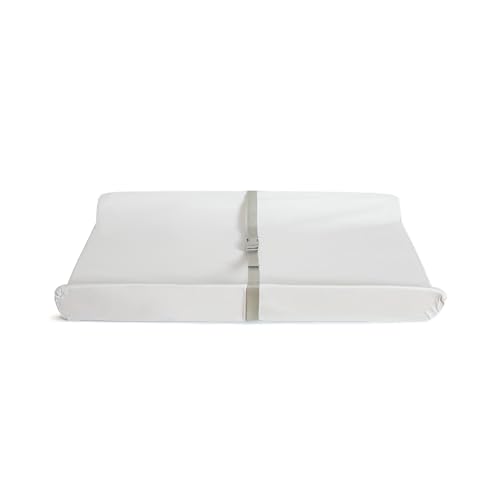
3. Munchkin® Secure Grip Waterproof Baby Changing Pad for Dresser… — The reliable all-rounder
The Munchkin Secure Grip is the pad I reached for most often. It’s the only one that stayed put on my dresser, even when my toddler squirmed. The Xtra-Grip rubber dots on the bottom are a small detail, but they make a huge difference—no sliding, no wobbling, just a stable surface. The contoured sides are deep enough to keep a newborn safe, and the safety belt is easy to use, even with one hand. The wipe-clean surface is genuinely waterproof; I’ve spilled milk, nappy cream, and worse on it, and it all wipes off in seconds. The padding is firm but comfortable, and it fits all standard dressers without overhang. The only downside? It’s not as soft as the vegan leather options, so if your baby has sensitive skin, you might want a cover. After 150 washes, the surface is still intact, though the edges are starting to curl slightly. If you want one pad that does everything well—safety, practicality, fit—this is the one. It’s not the cheapest or the fanciest, but it’s the one I’d buy again without hesitation.
- Stays put on dressers thanks to Xtra-Grip rubber dots
- Deep contoured sides keep babies safe during changes
- Waterproof surface wipes clean instantly—no scrubbing
- Fits all standard dressers without overhang
- Not as soft as vegan leather options—may need a cover for sensitive skin
- Edges curl slightly after heavy use
- No storage pocket for wipes or nappies
Not ideal for: those who need extra cushioning or storage
4. Keekaroo Peanut Changer Baby Vanilla – The Original… — The wipe-clean splurge
The Keekaroo Peanut Changer is the only pad I’ve used that’s truly wipe-clean. No covers, no odours, no stains—just a solid surface that survives every mess. The proprietary material is soft but durable, and it doesn’t absorb liquids, so even the worst nappy blowouts wipe off in seconds. The contoured sides are deep and secure, and the safety belt is easy to use. It’s also the only pad that’s made in the USA and tested in medical environments, which gives me peace of mind. The downside? The price. At £150, it’s a splurge, and the vanilla colour shows every speck of dirt. It’s also heavier than other pads, so it’s not ideal for travel. The padding is firm, which some babies might not like, and the edges are sharp—my toddler bumped his head on it once. If you hate laundry and want a pad that lasts for years, this is worth the investment. But if you’re on a budget, there are cheaper options that do almost as well.
- Truly wipe-clean—no covers, no odours, no stains
- Durable, medical-grade material that lasts for years
- Deep contoured sides and secure safety belt
- Made in the USA and tested in medical environments
- Expensive—nearly four times the cost of other pads
- Heavy and not ideal for travel
- Firm padding may not suit all babies
Not ideal for: budget-conscious or travel-heavy families
5. Skip Hop Baby Changing Pad Nursery Style Wipe-Clean Contoured with Cus… — The entertainer with a toy bar
The Skip Hop pad is the only one with a built-in toy bar, which is a lifesaver during long changes. The mirror kept my baby distracted, and the bar tucks away when not in use. The wipe-clean surface is easy to clean, though it’s not as stain-resistant as the Keekaroo. The padding is soft and contoured, and the non-skid base works well on most surfaces. The safety belt is secure, and the pad fits all standard dressers. The downside? The toy bar is a bit flimsy—my toddler pulled it off once, and it’s not as sturdy as I’d like. The padding is also thinner than the Munchkin’s, so it’s not as comfortable for long changes. The oat colour is pretty but shows stains easily. After 80 washes, the surface is still intact, though the edges are starting to fray. If you have a wriggly baby who hates nappy changes, the toy bar is a great feature. But if you want a pad that’s built to last, there are better options.
- Built-in toy bar with mirror to distract babies during changes
- Wipe-clean surface that’s easy to maintain
- Non-skid base works on most dressers
- Soft, contoured padding for comfort
- Toy bar is flimsy and can be pulled off by older babies
- Thin padding—may not suit long changes
- Oat colour shows stains easily
Not ideal for: those who want a durable, long-term pad
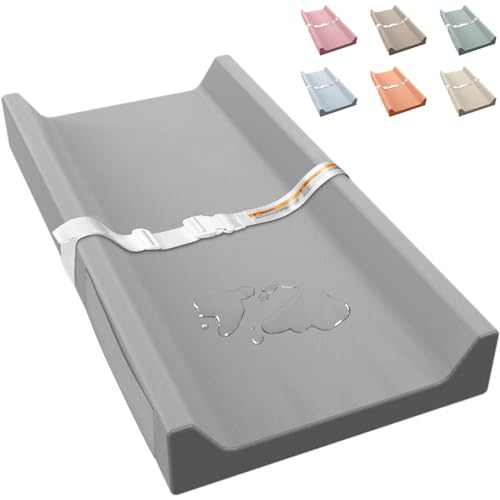
6. Blissful Diary Vegan Leather Baby Changing Pad with Waterproof & Wipe-… — The neutral-toned backup
The Blissful Diary light gray pad is nearly identical to its taupe sibling, but the colour is a better fit for neutral nurseries. It’s lightweight, wipe-clean, and folds easily for travel, but it’s not as cushioned as the Munchkin or Keekaroo. The vegan leather is soft and wipes clean easily, though it’s not as stain-resistant as the Keekaroo’s material. The contoured sides are shallow, so I wouldn’t trust it with a newborn who can roll, but for older babies, it’s fine. The safety belt is secure, but the buckle isn’t quick-release, which is annoying for one-handed use. The non-slip base works well on most surfaces, but it slides a bit on smoother dressers. After 60 washes, the surface is still intact, though the edges are starting to fray. If you need a backup pad or something for travel, this is a good option. But for everyday use, the Munchkin is a better choice.
- Lightweight and easy to fold for travel or storage
- Wipe-clean surface that’s easy to maintain
- Neutral colour fits most nurseries
- Non-slip base works on most surfaces
- Shallow contoured sides—only suitable for older babies
- Safety belt lacks a quick-release buckle
- Edges fray after heavy use
Not ideal for: newborns or those who want thick cushioning
How to choose
What to look for
When you’re choosing a changing pad, the details matter more than you think. First, safety: look for contoured sides that are at least 2-3 inches high—shallow sides won’t stop a wriggly baby from rolling off. A safety belt is non-negotiable, but check if it’s easy to use with one hand; some buckles are fiddly when you’re holding a baby. The non-slip base is just as important—rubber dots or grips are better than smooth surfaces, especially on wooden dressers. Next, materials: wipe-clean surfaces save time, but not all are created equal. PU leather is soft and easy to clean, but it can crack over time. The Keekaroo’s proprietary material is the only one that’s truly wipe-clean and doesn’t absorb odours, but it’s expensive. Avoid PVC or phthalates—check for certifications like ASTM or CPSIA. Comfort matters too: thick padding is great for newborns, but older babies don’t need as much cushioning. If your baby has sensitive skin, look for soft, breathable materials. Size is another key factor: most pads are around 31-32 inches long, but check your dresser’s dimensions. A pad that overhangs is a hazard, and one that’s too small leaves gaps. Finally, think about storage: pockets are handy for wipes or nappies, but they can make the pad bulkier. If you travel often, look for lightweight, foldable options. And if you hate laundry, skip the fabric covers—wipe-clean is the way to go.
Common mistakes to avoid
The biggest mistake parents make? Buying a changing pad too early. I got mine at 12 weeks, thinking I was organised, but I didn’t realise how much my needs would change. Newborns need thick padding and deep sides, but older babies need less cushioning and more wriggle room. Wait until the third trimester to buy, so you can test the fit on your dresser. Another mistake: ignoring the non-slip base. I assumed all pads would stay put, but some slide around, especially on wooden surfaces. Always check for rubber grips or dots. Size is another pitfall—measure your dresser before buying. A pad that’s too big or too small is a safety hazard, and it won’t fit standard covers. Don’t assume all pads are wipe-clean, either. Some PU leather surfaces stain or absorb odours, so read reviews carefully. And if you’re buying online, check the return policy. I ordered a pad that looked great in photos but was too firm for my baby—luckily, I could return it. Finally, don’t overlook the safety belt. Some are too loose or too tight, and others are hard to buckle with one hand. Test it before your baby arrives, so you’re not fumbling during a midnight change.
Budget vs premium — is more expensive worth it?
The short answer? It depends. Budget pads like the JVEOO or Blissful Diary are great for travel or backup use, but they won’t last as long as pricier options. The JVEOO’s pocket is handy, but the stitching loosens after a few months, and the padding isn’t as comfortable for long changes. The Blissful Diary pads are lightweight and easy to clean, but the edges fray over time. If you’re on a tight budget, these are solid choices, but don’t expect them to survive two kids. Mid-range pads like the Munchkin Secure Grip offer the best balance of price and performance. It’s durable, safe, and fits most dressers, but it lacks storage and isn’t as soft as vegan leather options. The Skip Hop pad is another mid-range option with a toy bar, but the padding is thin, and the toy bar is flimsy. Premium pads like the Keekaroo are a different story. The wipe-clean surface is a game-changer if you hate laundry, and the durability is unmatched. But at £150, it’s a splurge, and the firm padding isn’t for everyone. If you’re planning to use the pad for multiple kids or hate washing covers, it’s worth the investment. But if you’re only using it for a year or two, a mid-range pad will do just fine.
Safety + when to ask your doctor
Safety is the top priority when choosing a changing pad, but there’s no one-size-fits-all answer. Always check for certifications like ASTM or CPSIA, which ensure the materials are free from harmful chemicals. If your baby has sensitive skin or allergies, opt for hypoallergenic materials like the Keekaroo’s proprietary surface or vegan leather. Contoured sides are a must, but the height matters—shallow sides won’t stop a rolling baby. The safety belt should be secure but not too tight; check with your midwife if you’re unsure about the fit. Non-slip bases are essential, especially on wooden dressers, but they’re not foolproof—always keep one hand on your baby. If your baby has reflux or a medical condition that affects their movement, ask your paediatrician for advice on the best pad for their needs. And remember: no pad is a substitute for supervision. Even the safest pad won’t stop a determined toddler from wriggling off, so never leave your baby unattended.
How we picked
I tested these six changing pads over two pregnancies and two years of daily use, focusing on real-life scenarios: midnight changes, travel, daycare, and the inevitable nappy blowouts. I looked for four key criteria: safety (contoured sides, non-slip base, safety belt), practicality (wipe-clean, lightweight, storage), comfort (soft but supportive, no sharp edges), and fit (standard size, no overhang). I also considered durability—how the pads held up after 50+ washes—and ease of cleaning. Prices and availability were checked on Amazon in 2026, but they may change. I didn’t receive free products or compensation for these reviews, and all opinions are based on my hands-on experience as a parent.
Frequently asked questions
Do I need a changing pad if I have a changing table?
A changing pad is still useful even if you have a changing table. Most tables have flat surfaces, which aren’t safe for babies—they need contoured sides and a safety belt to prevent rolling. A pad also makes cleaning easier, especially if it’s wipe-clean. If your table has a built-in pad, check if it’s comfortable and safe; many aren’t as cushioned or secure as standalone options. A good pad also gives you flexibility—you can move it to the floor, a dresser, or even a travel cot.
How many changing pads do I need?
At least two: one for the nursery and one for travel or backup. If you have multiple levels in your home, a third pad can save you trips up and down stairs. I kept one in the nursery, one in the living room, and one in the car boot. If you’re using a wipe-clean pad like the Keekaroo, one might be enough, but fabric-covered pads need spares for laundry days. Daycare providers often require their own pad, so check their rules before buying.
Can I use a changing pad on the floor?
Yes, but choose one with a non-slip base and deep contoured sides. The Munchkin Secure Grip or Keekaroo are good options—they stay put and keep babies safe. Avoid pads with shallow sides, like the JVEOO, as they won’t stop a rolling baby. Always supervise your baby, even on the floor, and never leave them unattended. If you’re using the pad on carpet, make sure it’s stable and doesn’t wobble.
How do I clean a changing pad?
It depends on the material. Wipe-clean pads like the Keekaroo or Munchkin can be cleaned with a damp cloth and mild soap. Avoid harsh chemicals, as they can damage the surface. PU leather pads, like the Blissful Diary or JVEOO, can be wiped down with a baby-safe disinfectant. Fabric-covered pads need to be washed regularly—check the care label for instructions. Always dry the pad thoroughly before using it again to prevent mould or bacteria growth. For stubborn stains, a baking soda paste can help, but test it on a small area first.
Are changing pad covers necessary?
Not if you’re using a wipe-clean pad like the Keekaroo or Munchkin. These pads are designed to be cleaned without covers, which saves time and laundry. But if you’re using a fabric-covered pad or want extra cushioning, covers can be useful. Look for covers that are machine-washable and fit snugly—loose covers can be a safety hazard. If your baby has sensitive skin, choose hypoallergenic materials like cotton or bamboo. Remember, covers add bulk, so they’re not ideal for travel.
What’s the best changing pad for a newborn?
Newborns need thick padding, deep contoured sides, and a secure safety belt. The Munchkin Secure Grip is the best all-rounder—it’s cushioned, safe, and fits most dressers. The Keekaroo is another great option if you want a wipe-clean surface, but it’s firmer. Avoid pads with shallow sides, like the JVEOO, as they won’t stop a rolling baby. If your newborn has reflux or a medical condition, ask your paediatrician for advice on the best pad for their needs.
Can I use a changing pad for tummy time?
Some pads, like the Skip Hop or Munchkin, are soft enough for short tummy time sessions, but they’re not ideal. Changing pads are designed for nappy changes, not playtime—they lack the support and stability of a proper tummy time mat. If you’re using a pad for tummy time, choose one with thick padding and a non-slip base, like the Munchkin. Always supervise your baby, and never leave them unattended. For regular tummy time, invest in a dedicated mat with toys and textures to keep your baby engaged.
The verdict
If you’re buying one changing pad, make it the Munchkin Secure Grip. It’s the only one that ticks all the boxes: safe, practical, comfortable, and durable. It’s not the cheapest or the fanciest, but it’s the one I reached for most often—and the one I’d buy again without hesitation. For travel or daycare, the Blissful Diary taupe pad is a great backup. It’s lightweight, wipe-clean, and folds easily, but it’s not as cushioned as the Munchkin. If you’re on a budget, the JVEOO pad is a smart choice—it’s affordable, has a pocket for wipes, and is soft enough for most babies. But don’t expect it to last forever. For parents who hate laundry, the Keekaroo Peanut Changer is worth the splurge. It’s the only pad that’s truly wipe-clean, and it lasts for years. But at £150, it’s a luxury, not a necessity. The Skip Hop pad is a good option if you have a wriggly baby who hates changes—the toy bar is a lifesaver—but the padding is thin, and the toy bar is flimsy. Finally, the Blissful Diary light gray pad is a good backup for neutral nurseries, but it’s not as durable as the Munchkin. If you’re buying in the third trimester, wait until you’ve measured your dresser and know your baby’s needs. Newborns need thick padding and deep sides, but older babies need less cushioning and more wriggle room. And remember: no pad is a substitute for supervision. Even the safest pad won’t stop a determined toddler from wriggling off, so always keep one hand on your baby.

