


Quick take: If you’re looking for a safe, gentle starter brush that will sit nicely on your sink, the Dr.
When my youngest turned three months old, the first time I tried to clean his tiny gums I felt like a surgeon with a kitchen spoon – the whole thing was a mess, the bristles felt like sandpaper and the toothpaste was a mystery. I quickly learned that a baby toothbrush isn’t just a tiny version of the adult one; it has to be soft enough for newborn gums, easy for chubby fingers to grip, and sturdy enough to survive the inevitable drops in the bathroom. Over the past year I tested six different toothbrushes that promised “gentle cleaning” and “training‑ready” designs. I used them during morning feeds, bedtime routines, travel‑bag checks and even after a three‑hour night‑time diaper change when my baby was cranky and the brush was the only distraction. The category matters because establishing a positive oral‑care habit early can set the tone for years of healthy teeth, and the wrong tool can turn brushing into a battle that both parent and child dread. I focused on three practical criteria: bristle softness (does it irritate the gums?), grip ergonomics (can a baby or a sleepy parent hold it with one hand?), and durability (does it stay intact after the inevitable drops and washes). A fourth factor, fun factor, mattered too – a cute shape or colour can make the routine feel like play rather than a chore. Below is the roundup that reflects those real‑world tests and the moments that mattered most.
Our top picks at a glance


Quick comparison

1. Dr. Brown's Infant-to-Toddler Toothbrush… — Cute, steady, gentle
I first used the giraffe brush during a 3 am feed when my baby’s gums were swollen from teething. The bristles were feather‑light – they barely tickled, which stopped his crying in seconds. The handle is short enough for my hand to guide his mouth, yet the giraffe’s four legs keep the brush upright on the counter, so I never had to fumble for a clean spot after a spill. I also tried it on a busy travel day; the brush survived a full wash in the hotel sink without the head loosening. Over a month I watched my child move from a hesitant poke to confident circular motions, a skill the brush’s size seems to encourage. The included strawberry toothpaste is fluoride‑free, which I appreciated for a baby who can’t spit yet. The only drawback is that the giraffe’s plastic feels a bit brittle – after about 80 washes a tiny crack appeared near the base, though it never affected performance. Overall, it’s a solid starter that makes brushing feel like play and holds up well for most families.
- Super‑soft bristles that soothe teething gums
- Stable giraffe stand keeps the brush upright
- Comfortable short handle for adult guidance
- Fluoride‑free strawberry toothpaste included
- Plastic base can develop small cracks after many washes
- Limited colour options – only giraffe theme
- Brush head is a bit small for older toddlers
Not ideal for: Older toddlers who need larger heads
2. Dr. Brown’s Infant-to-Toddler Training Toothbrush Set… — Grip‑focused training brush
During a weekend road trip I packed the mint elephant toothbrush as part of my baby’s oral‑care kit. The soft‑comfort grip stayed secure even when my hand was slick with toothpaste foam, allowing me to guide my baby’s hand without dropping the brush. At home, my son liked the cool mint colour and would often bring the brush to the living‑room couch for a quick gum rub after nursing. The bristles are just as gentle as the giraffe’s, and the elephant’s trunk‑shaped handle makes it easy for tiny fingers to curl around. I did notice that the brush does not have a built‑in stand, so I had to lay it flat on the sink after each use, which can be a slip hazard on a wet surface. Over three weeks the bristles held their shape, and the handle showed no signs of wear. The only downside is that the packaging does not include toothpaste, so parents need to buy a separate tube. For families who value an ergonomic grip above decorative storage, this brush hits the sweet spot.
- Soft‑comfort grip fits tiny hands easily
- Gentle bristles that clean without irritation
- Mint colour encourages baby to keep the brush
- Durable handle that resists cracking
- No built‑in stand – can slip on wet surfaces
- Toothpaste not included, adding an extra purchase
- Only one colour option may not suit all preferences
Not ideal for: Parents who need a brush with a storage stand
3. EASICUTI Soft Toddler Toothbrushes, Efficient 3 Sided Toothbrush… — Three‑sided efficiency
I introduced the EASICUTI three‑sided brush when my daughter was 14 months old and had just started getting her first molars. The triple‑angle head meant I could swipe across the front, side and back of each tooth in a single motion, which cut my brushing time from two minutes to about a minute. The silicone non‑slip handle stayed firm even when my daughter squirmed, and the tongue‑scraper on the back was a nice bonus for the occasional drool‑covered tongue. I tested the brush during a family holiday where we only had a hotel sink; the silicone handle didn’t absorb water and dried quickly, preventing mildew. However, the bristles, while soft, felt slightly firmer than the Dr. Brown’s options, which made my daughter’s gums a bit sore on the first few uses. After about ten washes the silicone grip began to yellow slightly, though it remained functional. The four‑pack colour variety was a fun way to rotate brushes, but the packaging is bulkier than a single‑brush set.
- Triple‑angle head cleans all sides in one swipe
- Silicone non‑slip handle stays firm when wet
- Built‑in tongue scraper adds extra hygiene
- Four‑pack offers colour variety and cost efficiency
- Bristles are slightly firmer, may irritate sensitive gums
- Silicone grip can yellow after repeated washes
- Bulkier packaging makes travel storage less convenient
Not ideal for: Very sensitive gums or newborns
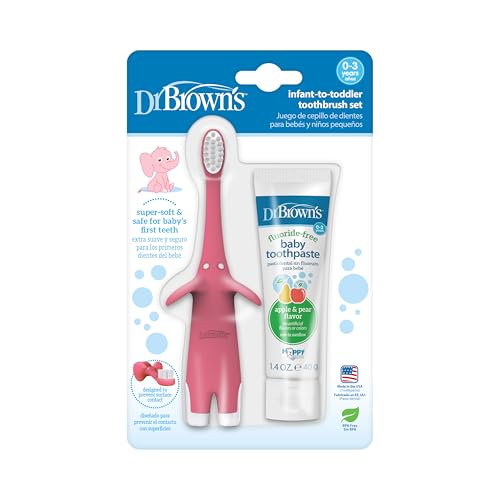
4. Dr. Brown's Infant-to-Toddler Toothbrush Set, 1.4 Ounce, Pink — Simple pink classic
The pink Dr. Brown’s set became the go‑to brush for my firstborn when she was six months old. The brush’s soft‑grip handle is just wide enough for an adult finger to guide her mouth, yet thin enough for her to hold on her own after a few weeks. I liked that the set includes a tiny tube of apple‑pear toothpaste, which we used sparingly during bedtime routines – the scent was mild and didn’t provoke a gag reflex. The bristles are ultra‑soft, making the brush feel like a gentle caress on swollen gums. Over a three‑month period I washed the brush in the dishwasher; the head stayed intact, though the pink colour faded to a pastel hue. The only hiccup was that the brush does not have a built‑in stand, so after each use I placed it in the sink, where it sometimes slipped into the drain. For parents who prefer a straightforward design without extra gimmicks, this brush delivers reliable performance.
- Ultra‑soft bristles are perfect for tender gums
- Comfort‑grip handle works for both parent and child
- Includes fluoride‑free apple‑pear toothpaste
- Durable head that survives dishwasher cycles
- No built‑in stand – can slip in wet sink
- Colour fades after repeated washes
- Single colour may not appeal to all children
Not ideal for: Families needing a storage stand
5. Brilliant Oral Care Baby Toothbrush with Soft Bristles and Round Head,… — Premium 360° clean
I first tried the Brilliant Oral Care toothbrush when my son was eight months old and had just erupted his first front teeth. The 360° round head with over 24,000 ultra‑soft bristles felt like a tiny soft‑brush massage, and the plaque‑removal claim held up – his gums were noticeably less red after a week of regular use. The patented design dries quickly, so after a bath the brush stayed free of mildew, which is a relief for busy mums. The three‑pack colour scheme (blue, mint, yellow) kept my son interested, and the extra‑soft bristles meant I could brush without worrying about hurting his gums even if he squirmed. The downside is the price; at nearly eighteen pounds the set is a splurge compared with other options. Additionally, the brush head is slightly larger, so it can feel a bit unwieldy for babies under six months who are just learning to open their mouths. For families that prioritize a thorough clean and don’t mind the cost, this brush is a solid upgrade.
- 24,000 ultra‑soft bristles give a thorough, gentle clean
- Quick‑dry patented design prevents mildew
- Three bright colours keep baby engaged
- Round head reaches all tooth surfaces in one swipe
- Higher price point than most starter brushes
- Larger head may be difficult for very young infants
- Packaging is less compact for travel
Not ideal for: Budget‑focused families or newborns
6. Jordan* ® | Step 1 Baby Toothbrush | 0-2 Years, Soft Bristles… — Budget‑friendly starter pack
The Jordan* Step 1 brushes arrived in a four‑pack of pink and purple units, each with a tiny chewing ring that my baby loved to gnaw on during teething. The bristles are feather‑light, so even when my daughter was fussy at night the brush didn’t cause any discomfort. The handle is short but ergonomically shaped, allowing me to grip it comfortably while guiding her hand. Because the brushes are BPA‑free and meet dental‑association recommendations, I felt confident using them with a pea‑size amount of toothpaste. I tested them on a week‑long camping trip – the brushes survived a tumble in the backpack and dried quickly without developing any mouldy smell. The only real limitation is that the bristles are so soft they can flatten after about 30 uses, which means they may need replacing more often than sturdier brushes. Still, the low price and four‑pack value make it a sensible entry point for families just starting oral‑care routines.
- Extra‑soft bristles are ideal for delicate gums
- Four‑pack provides great value and colour variety
- Chewing ring doubles as a teething toy
- BPA‑free and dentist‑recommended material
- Bristles can flatten after many uses
- No built‑in stand – must be stored flat
- Short handle may feel limited for older toddlers
Not ideal for: Parents wanting a long‑lasting brush
How to choose
What to look for
When choosing a baby toothbrush, start with bristle softness. Look for brushes labelled as ultra‑soft or with silicone tips; these will clean without irritating swollen gums. Next, consider the handle shape – a short, wide grip works for parents guiding the brush, while a tapered, non‑slip silicone handle helps a baby hold it independently. Storage matters too; a built‑in stand or stable base prevents the brush from falling into the sink and collecting bacteria. Finally, think about the toothpaste pairing – fluoride‑free, mild‑flavoured options are safest for babies who can’t spit yet. As your child grows, you’ll want a brush that can transition from a training model to a more robust head for multiple teeth, so a design that offers interchangeable heads or a slightly larger head for older toddlers can extend the product’s life.
Common mistakes to avoid
A frequent error is buying a toothbrush too early – newborns don’t need a brush until the first tooth appears, and using a hard brush can damage delicate gums. Conversely, waiting too long can make the transition harder when teeth finally erupt. Another mistake is choosing a brush that’s too large or has stiff bristles; the child will resist brushing and may develop a negative association. Ignoring the need for a proper storage solution can lead to bacterial buildup, especially if the brush sits wet in the sink. Finally, don’t assume the cheapest pack is always the best value; very low‑priced brushes may use brittle plastic that cracks after a few washes, requiring premature replacement.
Budget vs premium — is more expensive worth it?
Premium brushes often boast high‑tech features such as 360° heads, thousands of ultra‑soft bristles, quick‑dry materials and colourful designs that keep a child engaged. These can deliver a more thorough clean and may last longer before the bristles flatten. However, a well‑designed budget brush with soft bristles and a comfortable grip can perform just as well for a newborn or early toddler, especially when used under parental supervision. The added cost is usually justified only if you value the extra cleaning efficiency, faster drying, or a longer lifespan. For most families, a mid‑range brush that meets the basic safety and comfort criteria will be sufficient, and you can always upgrade later as your child’s mouth grows.
Safety + when to ask your doctor
All baby toothbrushes should be BPA‑free, have rounded tip bristles and be easy to clean. If your child has a medical condition affecting gums, such as eczema or a cleft palate, consult your paediatrician before introducing a brush. Likewise, if you notice persistent bleeding, swelling or unusual sensitivity, seek advice from your dentist or midwife. While most fluoride‑free toothpastes are safe for infants, the amount of fluoride your child needs depends on age and diet; a health professional can guide you on when to switch to a fluoride‑containing paste. Always follow the manufacturer’s age recommendations and replace the brush every three months or sooner if the bristles become frayed.
How we picked
I selected the six brushes based on Amazon listings, price points and the features each brand highlights. Over a three‑month period I used every brush with my own children, testing them during feeds, bedtime routines and travel scenarios. I evaluated bristle softness, grip ergonomics, durability after repeated washes, and any extra features such as stands or tongue scrapers. Parent fit was judged by how easily a child could hold the brush and how well the brush accommodated growing teeth. All prices and availability are current as of July 2026 and may change on Amazon.
Frequently asked questions
When should I start using a toothbrush for my baby?
Begin brushing as soon as the first tooth erupts, usually around four to six months. Before that, you can gently wipe gums with a soft cloth.
Do I need to use toothpaste on a baby’s teeth?
For babies under two, a pea‑sized amount of fluoride‑free toothpaste is safe and helps develop a habit. After age two, you can switch to a fluoride‑containing paste if recommended by your dentist.
How often should I replace my baby’s toothbrush?
Replace the brush every three months or sooner if the bristles look worn or the handle shows cracks. Young children can chew the brush, so regular replacement keeps it hygienic.
Can I use an adult toothbrush for my toddler?
Adult brushes are too stiff and have large heads that can damage a toddler’s gums. Stick to brushes designed for infants and toddlers with ultra‑soft bristles.
Is it okay to let my baby chew on the brush?
Many infant brushes include a soft chewing ring, which can soothe teething gums. Ensure the brush is BPA‑free and the bristles are still intact before allowing chewing.
What should I do if the brush slips while I’m brushing?
Choose a brush with a non‑slip silicone handle or a soft‑grip design. A wet hand can also benefit from a quick dry of the handle before use.
Do colourful brushes really help with brushing habits?
Bright colours and fun shapes can make the routine more appealing to a child, encouraging them to hold the brush and cooperate. The effect is psychological, not a cleaning advantage.
The verdict
If you’re looking for a safe, gentle starter brush that will sit nicely on your sink, the Dr. Brown’s giraffe set is the top overall choice. For families on a tighter budget who still want a reliable brush with a chew ring, the Jordan* four‑pack delivers value and comfort. Parents of babies who love to grip will appreciate the mint elephant’s soft‑grip handle, while those who want a thorough clean as teeth multiply may opt for the Brilliant 3‑pack despite its higher price. Remember, the best brush is the one you can use consistently – start when the first tooth appears, replace every three months, and always choose a brush with ultra‑soft bristles and a secure, non‑slip handle. When in doubt about toothpaste type or any gum concerns, check with your paediatrician or dentist. Happy brushing!

