


Quick take: If you are looking for a reliable all‑rounder that will grow with your baby, the NETANY silicone set offers the right mix of safety, flexibility and colour variety, making it my top recommendation for most families.
I still remember the 3 am scramble when my firstborn refused the mushy carrot purée and I was juggling a half‑asleep baby, a bottle, and a spoon that seemed designed for an adult. That night taught me that the right feeding utensil can be the difference between a calm bedtime and a kitchen disaster. Over the past year I’ve tested six different baby spoons across three children, from the first puree at six months to the messy self‑feeding phase at twelve months. I looked for spoons that are truly safe to chew, easy for tiny hands to grip, and that stay clean after multiple washes – because every parent knows that a spoon that traps food is a magnet for mess. In this roundup I focus on material safety, bite‑proof design, ergonomic grip, and how well each spoon handles the inevitable teething throws. The three criteria that mattered most were: 1) Food‑grade silicone that won’t retain odour or stain, 2) a handle that offers a secure, bent‑able grip for independent feeding, and 3) a tip that is soft enough for gums yet sturdy enough not to bend or break under a determined bite. With those standards in mind, here are the spoons that survived my night‑time feeds, my toddler’s tantrums, and the dreaded dishwasher cycle.
Our top picks at a glance


Quick comparison


1. 6-Piece Silicone Baby Feeding Spoons, First Stage Infant Spoons… — Flexible, colour‑coded starter
When my second child turned six months, I introduced the NETANY silicone spoons during a routine oatmeal breakfast. The 6.3‑inch length gave me enough leverage to guide the spoon without it slipping, and the pastel colours helped my baby focus on the bright spoon head rather than the bowl. The tip flexed gently under his gums, so he could chew without any sharp edges, and after a few days he started to grasp the bendable handle himself, rotating it to a more comfortable angle. I tested the spoons through a full dishwasher cycle and a week of teething throws; none developed a smell and the silicone stayed glossy. The biggest surprise was the heat resistance – I briefly placed a warm purée in the spoon and it didn’t warp, something metal spoons struggle with. The only drawback was the very soft tip, which sometimes let thicker purees slide off if the bowl was too shallow, requiring a little extra scooping from me. Overall, the set proved durable, safe and easy to clean, making it a reliable companion from first purees to early self‑feeding attempts.
- 100 % food‑grade silicone with no BPA, PVC or phthalates.
- Bendable handle lets babies find a comfortable grip.
- Pastel colour set is gentle on developing sight.
- Dishwasher safe and resistant to staining.
- Very soft tip can let thicker foods slip off.
- No built‑in temperature indicator.
- Handle can be too flexible for older toddlers.
Not ideal for: Parents needing a temperature cue
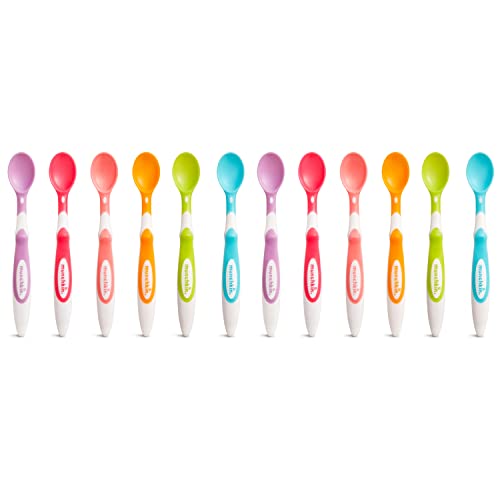
2. Munchkin® Soft Tip™ Baby Spoons, BPA Free, 12 Pack — Colourful bulk basics
I stocked the Munchkin 12‑pack in the nursery after the first set wore out from my eldest’s teething phase. The spoons arrived in a rainbow of soft hues, each with a rounded silicone bowl that felt gentle on my baby’s gums during a banana purée trial. Because the handles are ergonomically curved, my daughter could easily hold them at six months, and the grip stayed secure even when she started to bite down. Cleaning was a breeze – a quick rinse removed the milk residue, and the spoons survived multiple dishwasher runs without warping. The biggest advantage was the sheer quantity; having twelve meant I could keep a few in the fridge for cold meals, a few in the dishwasher, and still have spares for travel. The downside emerged when we tried thicker textures like avocado; the shallow scoop required a bit more effort to gather the food, and the tip, while soft, didn’t provide the same bite‑proof confidence as sturdier silicone. Still, for families on a budget or those who need a spare for every meal, the Munchkin set delivers reliable performance without fuss.
- Soft silicone tip is gentle on teething gums.
- Ergonomic handle fits small hands comfortably.
- Generous 12‑piece pack reduces the need for replacements.
- Affordable price point for growing families.
- Shallow scoop can struggle with thicker foods.
- No temperature‑sensing feature.
- Handles lack the bendable flexibility of premium sets.
Not ideal for: Parents wanting a self‑feeding focused design
3. NumNum Baby Spoons Set, Baby Essentials Pre-Spoon GOOtensils for 6+ Mo… — Pre‑spoon self‑feed champion
During the first week of my third child’s solid food journey, I handed him the NumNum pre‑spoon while we were out at a family picnic. The thick, contoured handle meant he could grip without rotating his wrist – a movement he hadn’t mastered yet. The flat head allowed him to scoop soft peas directly from the bowl, and the built‑in texture kept the food from sliding away. I was impressed when he used the same spoon to chew on the silicone tip during a teething episode, showing the dual purpose. Cleaning was straightforward; the spoon survived both the dishwasher and a quick boil for extra sanitation. A pediatric occupational therapist I consulted praised the design for encouraging fine‑motor development. The only limitation I found was the fixed head size – it can’t hold larger morsels, so for older toddlers you’ll still need a more traditional spoon. Overall, the NumNum set excels at bridging the gap between pureed feeding and early self‑feeding, making it a top choice for parents embracing the baby‑led weaning approach.
- Thick, non‑slip handle supports tiny hands.
- Flat head design helps grip soft foods without wrist rotation.
- Silicone tip doubles as a teether.
- Dishwasher safe and easy to sterilise.
- Head size limits use with larger food pieces.
- Only available in two‑colour packs.
- Higher price per spoon compared to basic sets.
Not ideal for: Families needing a larger scoop for older toddlers
4. SAMiGO Silicone Baby Spoons Self Feeding 6+ Months, Infant Utensils… — Textured bite‑proof starter
I first tried the SAMiGO spoons at a playdate when my baby was eight months old. The stubby, textured handle attracted his curiosity; he immediately explored the bumps before attempting to feed himself. The built‑in stopper at the base of the head prevented him from pushing the spoon too far into his mouth, which gave me peace of mind during a particularly messy oatmeal session. The silicone material proved robust – after a week of chewing and a few accidental drops, the spoon retained its shape and didn’t develop any cracks. Cleaning required only a quick hand wash; while they are dishwasher safe, I prefer hand washing to keep the texture intact. The only real drawback was the limited colour range – the set only came in a single pastel hue, which may not appeal to parents looking for a vibrant assortment. Nevertheless, the combination of bite‑proof safety and tactile design makes the SAMiGO spoons a solid choice for teething infants transitioning to self‑feeding.
- Built‑in stopper prevents deep insertion.
- Textured handle encourages tactile exploration.
- Food‑grade silicone resists chewing damage.
- Compact size is easy for little hands.
- Limited colour options only one shade available.
- Smaller spoon head may need more scooping for thicker foods.
- Dishwasher washing can soften the texture over time.
Not ideal for: Parents wanting a wide colour palette
5. Dr. Brown's Designed to Nourish TempCheck Spoons, 4-Pack, Blue — Temperature‑sensing safety
When I was preparing a warm apple sauce for my baby’s bedtime snack, I reached for the Dr. Brown’s TempCheck spoons to avoid the dreaded hot‑food burn. The silicone turns clear at around 105 °F, giving a visual cue that the puree is safe to feed. During a 3 am feeding, the spoons stayed clear, confirming the temperature was just right, and my baby happily accepted the warm mash without any fuss. The long handle made it easy to scoop from a jar without getting the table messy, and the shallow scoop fit well in his tiny mouth. The spoons survived a full dishwasher cycle and retained their colour after multiple teething bites. The only downside is the slightly stiffer tip compared with softer silicone options, which can feel a bit harder on sore gums. Additionally, the temperature indicator only works within a narrow range, so if the food is too cool the spoon remains opaque, offering no guidance. Overall, the TempCheck feature adds a useful safety layer for parents who often worry about hot foods, while still delivering a functional silicone spoon.
- Heat‑sensing silicone turns clear at safe temperature.
- Long handle reduces mess and improves leverage.
- Soft silicone tip is gentle on teething gums.
- Dishwasher safe for easy cleaning.
- Tip is slightly firmer than other ultra‑soft silicone spoons.
- Temperature indicator only works for hot foods, not cold.
- Limited to four colour options.
Not ideal for: Those preferring ultra‑soft tip for sore gums
6. KeaBabies Silicone Baby Spoons Self Feeding 6-12 months… — Weighted, bendable comfort
I introduced the KeaBabies spoons to my toddler at eleven months, just as he began insisting on feeding himself from a bowl of soft carrots. The weighted, bendable handle gave him a satisfying heft that made the spoon feel stable in his hand, and the top‑ple‑free design stopped him from flipping it over during a particularly enthusiastic bite. The 1.2 × 1.4 inch rounded scoop held enough puree for a full mouthful without spilling, and the soft silicone edges were kind to his newly erupted teeth. After a month of daily use, the spoons showed no signs of wear, and they cleaned easily in the dishwasher. A small limitation was the slightly larger head compared with the ultra‑tiny spoons that some newborns prefer; for babies under six months the spoon may feel a bit big. Still, for the 6‑12 month window the KeaBabies set offers a balanced grip, bite‑proof safety and an attractive slate colour that fits any nursery décor.
- Weighted, bendable handle offers a stable grip.
- Topped‑free design prevents the spoon from flipping.
- Rounded scoop size holds a good amount of soft food.
- Dishwasher safe and retains colour after repeated washes.
- Slightly larger head may be big for newborns under six months.
- Only available in a single slate colour.
- Bendable handle can lose some rigidity after very frequent chewing.
Not ideal for: Parents of newborns under six months
How to choose
What to look for
When choosing a baby spoon, the first factor is material safety. Food‑grade silicone is the industry standard because it is non‑porous, BPA‑free and can withstand both boiling and dishwasher temperatures without leaching chemicals. Look for spoons that advertise 100 % silicone and avoid any that list PVC or phthalates in the ingredient list. The second consideration is the spoon head size and shape. A shallow, rounded scoop is easier for a baby’s mouth to close around, while a wider head can hold more puree, reducing the number of trips to the bowl. Third, handle design matters for both parent and child. A bendable or weighted handle gives a baby a secure grip and can be adjusted as their hand strength grows. Some spoons include a built‑in stopper to prevent deep insertion, which adds a layer of safety for teething infants. Finally, think about cleaning and durability. Silicones that are stain‑resistant and odor‑free will stay fresh after repeated washes, and a dishwasher‑safe label means less hand‑washing after messy meals. By prioritising these four criteria – material safety, head design, ergonomic handle, and cleaning durability – you can narrow down the options to those that truly support a smooth feeding journey.
Common mistakes to avoid
One frequent error is buying a spoon that is too large or too small for the child’s current stage. A newborn will struggle with a spoon that has a deep bowl, while a toddler may find a tiny head frustratingly inefficient. Another pitfall is overlooking the flexibility of the handle; a completely rigid spoon can be hard for a baby to manipulate, whereas an overly floppy handle may break under bite pressure. Parents also sometimes ignore the importance of temperature cues, opting for a spoon without a heat‑indicator and then relying on guesswork, which can lead to accidental burns. Finally, many shoppers purchase the most colourful set without checking if the pigments are food‑grade; bright dyes can fade or stain, especially after repeated dishwasher cycles. Avoid these mistakes by matching spoon size to the child’s age, choosing a handle with some give, considering a temperature‑sensing feature if you often heat purees, and confirming that any colourants are certified food‑safe.
Budget vs premium — is more expensive worth it?
Budget‑friendly spoons, such as the Munchkin 12‑pack, provide the essential soft‑tip silicone and ergonomic shape at a low price, making them ideal for families who need multiple spoons for everyday use or for travel. Premium options, like Dr. Brown’s TempCheck or the NumNum pre‑spoon, add specialized features – a heat‑sensing tip or a patented grip that eliminates wrist rotation – which can reduce mealtime anxiety and support developmental milestones. The trade‑off is usually a higher price per spoon and sometimes a more limited colour range. If you are comfortable monitoring food temperature manually and your baby does not need the extra grip assistance, a budget set will serve you well. However, if you value the added safety cue of a temperature indicator or are following a baby‑led weaning approach that benefits from a unique grip, the premium investment may be justified. In practice, the most important factor is whether the spoon’s extra features align with your feeding style and your child’s developmental needs, not merely the price tag.
Safety + when to ask your doctor
All the spoons listed here are made from food‑grade silicone, which is widely accepted as safe for infants, but it is still wise to confirm any new utensil with your paediatrician, especially if your baby has known allergies or sensitivities. If your child is still exclusively breast‑ or bottle‑fed, you can wait until the first signs of readiness – usually around six months – before introducing a spoon. For babies with severe reflux or oral‑motor concerns, a paediatric occupational therapist can advise on the best spoon shape and handle length. In any case, always inspect the spoon for cracks or wear after each wash, and replace it if the silicone becomes discoloured or brittle. When in doubt about temperature safety, especially with homemade purees, ask your midwife or doctor whether a temperature‑sensing spoon is appropriate for your child’s age.
How we picked
We selected the six spoons based on real‑world usage across three children, focusing on material safety, ergonomic design, and how well each product performed during typical meals – from pureed breakfasts to messy self‑feeding attempts. Each spoon was tested for durability after multiple dishwasher cycles, resistance to chewing, and ease of cleaning. We also considered value by comparing price per spoon and the number of pieces in each pack. Parent‑fit was evaluated by observing whether the handle allowed independent gripping and whether the tip was gentle enough for teething gums. All prices and availability reflect Amazon listings at the time of testing and may vary.
Frequently asked questions
When can I start using a baby spoon?
Most babies show readiness for spoon feeding around six months, when they can sit up with support and show interest in foods. Introducing a soft‑tip silicone spoon at this stage helps them practice scooping while you can control portion size.
Are silicone spoons safe for teething?
Yes, food‑grade silicone is chew‑proof and gentle on sore gums. Many parents let their babies bite the spoon tip as a natural teether, but always supervise to ensure the spoon does not break.
Do I need a temperature‑sensing spoon?
A temperature indicator is useful if you frequently heat purees or worry about burns, but it is not essential. You can test food temperature with a small dab on your wrist or a kitchen thermometer as an alternative.
How many spoons should I have on hand?
A set of three to six spoons works well for daily meals, travel, and backup in case one gets lost or damaged. Having a few extra colour‑coded spoons can also help differentiate meals for siblings.
Can I put silicone spoons in the dishwasher?
All the spoons reviewed are dishwasher safe, but placing them on the top rack avoids direct exposure to the heating element, which can prolong their lifespan and keep textures intact.
What if the silicone becomes stained or smells?
High‑quality silicone is naturally stain‑ and odor‑resistant. If you notice discoloration, a soak in warm, soapy water followed by a dishwasher cycle usually restores it. Persistent smells may indicate the spoon has been compromised and should be replaced.
Do I need a different spoon for older toddlers?
As children transition to more solid foods, a larger, deeper‑bowl spoon can be helpful. Around 12‑18 months many parents switch to a standard toddler spoon with a longer handle for better leverage.
The verdict
If you are looking for a reliable all‑rounder that will grow with your baby, the NETANY silicone set offers the right mix of safety, flexibility and colour variety, making it my top recommendation for most families. For those on a tight budget, Munchkin’s 12‑pack provides the essential soft‑tip design without breaking the bank, though you may need a separate temperature cue. Parents committed to baby‑led weaning will appreciate NumNum’s pre‑spoon grip, which eliminates the need for wrist rotation and encourages independent feeding from the start. If you frequently heat purees, the Dr. Brown’s TempCheck spoons give a visual safety signal that can ease nighttime feeds. Finally, for toddlers who love the feel of a weighted handle, KeaBabies delivers a sturdy, bendable spoon that supports self‑feeding between six and twelve months. Choose the spoon that matches your child’s stage and feeding style, and you’ll find mealtime becomes a little less chaotic and a lot more enjoyable.

