


Quick take: Navigating the world of first foods can feel like a huge step, but a good baby oatmeal can make the journey so much smoother.
Oh, the glorious mess of introducing solids! I remember with my first, sitting there spoon in hand, feeling a mix of excitement and sheer terror. Was I doing this right? Would she even like it? And then came the splatters, the grimaces, and the occasional triumphant gulp. Baby oatmeal is often one of the very first foods we offer, and for good reason. It is gentle on tiny tummies, easy to prepare, and crucially, a fantastic source of iron, which babies need as their natural stores from birth start to deplete around six months. Over the years, with two little ones navigating the weaning journey, I have tried countless brands and varieties of baby oatmeal. It is not just about finding something they will eat; it is about finding something nutritious, easy to mix (especially for those bleary-eyed 3 AM feeds when you are introducing solids early, or the quick breakfast before nursery), and something that truly supports their growth and development. For this 2026 roundup, I put six popular baby oatmeals through their paces, considering everything from the texture and mixability to the crucial nutritional content and, of course, how readily my little taste-testers accepted them. When I am looking for the best baby oatmeal, I focus on four key criteria. First, nutritional completeness, especially the iron content, which is vital for brain development. Second, the texture and how smoothly it mixes with breastmilk or formula – no one wants lumpy cereal when a baby is learning to eat! Third, the quality of the ingredients, whether organic or non-GMO, and the absence of artificial nasties. Finally, and perhaps most importantly, how well it is accepted by babies. A perfectly nutritious cereal is no good if it ends up on the floor!
Our top picks at a glance


Quick comparison


1. GERBER CEREAL FOR BABY GRAIN AND GROW 1st Foods Non GMO Oatmeal 4x16oz — The reliable, iron-rich all-rounder
This Gerber Grain and Grow 1st Foods Non-GMO Oatmeal has been a consistent presence in our pantry since my youngest started solids. The 4x16oz pack offers fantastic value, especially when you are going through a box every few weeks. What I appreciate most is the sheer reliability; it mixes incredibly smoothly every single time, whether I am using breastmilk, formula, or even just warm water for a quick snack. There are no stubborn lumps, which is a blessing when you are trying to get a hungry baby fed quickly without frustration. It is fortified with 60% of the daily value of iron and 12 essential vitamins and minerals, which gives me real peace of mind that my baby is getting vital nutrients for brain development. I have used this not just for breakfast cereal, but also mixed into fruit purées or even as a thickener for homemade veggie mashes. It is very versatile. My little one took to it without any fuss, which is always the ultimate test. It is a no-frills, highly effective option that does exactly what it promises, providing a solid nutritional foundation. The only minor limitation is that it is not organic, which some parents might prefer.
- Excellent value with the large 4-pack size.
- Mixes incredibly smoothly without lumps.
- Rich in iron and 12 essential vitamins and minerals.
- Versatile for various baby food recipes beyond cereal.
- Not an organic certified product.
- The large tubs can be a bit bulky for travel.
- Plain taste might need additions for older babies.
Not ideal for: Strictly organic-only parents
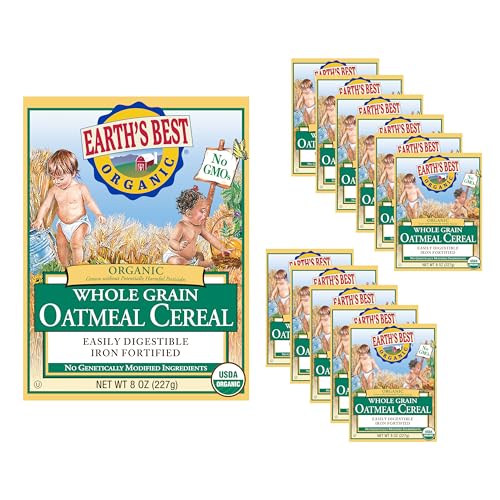
2. Earth's Best Organic Baby Food… — Pure, organic start for little ones
When my first baby was ready for solids around the 4-month mark, I really wanted something gentle and organic, and Earth's Best Organic Whole Grain Oatmeal was my go-to. This 12-pack is perfect if you know your baby tolerates it well and you want to stock up. The simplicity of just three organic ingredients – organic whole grain oat flour, iron, and vitamins – really appealed to me. It felt like a truly clean start for her developing digestive system. It mixes fairly well with breastmilk, though I found it needed a little more whisking than some of the finer cereals to get a perfectly smooth consistency. It is specifically designed for 4+ months, which is earlier than many other stage 1 cereals, and it truly felt gentle enough for those first few exploratory spoonfuls. The iron fortification is a big plus, ensuring those crucial nutrient needs are met. My baby loved the mild, natural taste, and it never caused any tummy upset. It is awarded the Clean Label Project Purity Award, which adds another layer of reassurance. For parents prioritising organic and a very early start to solids, this is an excellent choice. The only minor drawback is that while it is gentle, the texture can be slightly thicker than some other brands if not mixed carefully.
- Just three simple, organic ingredients.
- Suitable for babies from 4+ months.
- Iron-fortified for crucial nutrient support.
- Clean Label Project Purity Awarded for peace of mind.
- Can require more vigorous mixing for smoothness.
- The individual boxes contribute to more packaging waste.
- Higher price point due to organic certification and pack size.
Not ideal for: Budget-conscious parents buying single packs
3. GERBER ORGANIC FOR BABY GRAIN AND GROW 1st Food Oatmeal Cereal 5x8oz — Premium organic nourishment for baby
This Gerber Organic Grain and Grow Oatmeal is what I reach for when I want to ensure my baby is getting the best organic ingredients alongside robust nutrition. The 5x8oz pack is a good mid-range option, offering a decent supply without being overwhelming. What stands out here is the impressive 14g of whole grains per serving and 14 essential vitamins and minerals, all within an organic framework. It feels like a powerhouse of goodness for a growing baby. Like its non-organic counterpart, it blends incredibly smoothly with breastmilk or formula, making for fuss-free preparation, even during early morning rushes. My little one consistently enjoyed this, and I found its texture to be just right for encouraging self-feeding as she got older – thick enough to stay on a spoon but still easy to swallow. The Clean Label Project Certification also adds a layer of trust, knowing it has undergone extensive quality checks. It is designed for 6 months and older, aligning with general recommendations for introducing solids. If you are looking to upgrade to an organic option that still delivers on all the vital nutrients and ease of use, this is a top contender. The only consideration is its price, which is higher than the non-organic versions.
- Certified organic with 14g whole grains per serving.
- Rich in 14 essential vitamins and minerals, including iron.
- Mixes exceptionally smoothly and easily.
- Clean Label Project Certified for quality assurance.
- Higher cost compared to non-organic options.
- Only available in smaller 8oz boxes in this pack.
- Plain flavour, may require additions for variety.
Not ideal for: Parents on a very tight budget
4. Earth's Best Organic Whole Grain Oatmeal Cereal, 8 Ounce — Simple, gentle organic first food
This single 8oz box of Earth's Best Organic Whole Grain Oatmeal is a fantastic entry point for parents dipping their toes into organic baby cereal. It is the exact same formula as the bulk pack but in a smaller, more manageable size, which is ideal if you are just testing it out or have limited storage. The focus here is on wholesome, simple ingredients: organic whole grain oat flour, fortified with iron. This simplicity makes it incredibly gentle on tiny, developing digestive systems. I found it to be a good choice for those very first spoonfuls, as it is easy to digest and has a mild, natural flavour that babies tend to accept well. It mixes adequately with breastmilk, formula, or water, though I did find it benefited from a good stir to prevent any small lumps. The iron fortification is, of course, a critical component for babies transitioning to solids. While it is a basic offering, sometimes basic is exactly what you need when introducing new foods. It allows you to introduce oatmeal without committing to a large quantity, which is brilliant if you are unsure if your baby will take to it. The main downside is that buying single boxes can be less economical in the long run than bulk options.
- Simple, gentle organic ingredients.
- Iron-fortified for essential nutrient intake.
- Ideal smaller size for trying out the product.
- Easy to digest for babies starting solids.
- Less economical than buying in bulk.
- Requires good mixing to prevent lumps.
- Basic packaging, not resealable once opened fully.
Not ideal for: Long-term bulk purchasing
5. GERBER CEREAL FOR BABY GRAIN AND GROW Toddler Oatmeal Banana Probiotic… — Probiotic banana boost for toddlers
As my little ones grew past their first birthday, finding cereals that still held their interest became a challenge. This Gerber Cereal for Baby Grain and Grow Toddler Oatmeal with Banana and Probiotic B. lactis was a fantastic discovery. The banana flavour is gentle and natural, not overpowering, which was a hit with my toddler who sometimes turns her nose up at plain oats. The inclusion of probiotic B. lactis is a brilliant addition for supporting digestive health, which is always a bonus for active toddlers. It is packed with whole grains and a good range of essential vitamins and minerals, including iron and vitamin C, making it a genuinely nutritious breakfast option. It mixes beautifully, creating a smooth, creamy texture that my toddler could easily manage with a spoon, or even when I used it in homemade oat bars. The 5x8oz pack is a convenient size, ensuring we always had some on hand. It is clearly designed for children 12 months and older, and the added flavour and probiotics make it feel like a proper upgrade from infant cereals. The only minor point is that if your toddler isn't a fan of banana, this specific flavour won't work for you.
- Delicious natural banana flavour toddlers enjoy.
- Contains probiotic B. lactis for digestive health.
- Packed with whole grains and essential nutrients.
- Mixes smoothly for easy meal preparation.
- Banana flavour might not appeal to all toddlers.
- Not an organic option.
- Only suitable for children 12 months and older.
Not ideal for: Babies under 12 months, or those disliking banana
6. Gerber Organic Oatmeal Banana Toddler Cereal, 8 Oz, 5 Pack — Organic banana goodness for growing toddlers
For parents who prefer an organic option for their toddlers, this Gerber Organic Oatmeal Banana Toddler Cereal is an excellent choice. Similar to the non-organic banana version, it brings that appealing, gentle banana flavour, but with the added peace of mind of organic ingredients. My toddler, who can be quite a fussy eater, genuinely enjoyed this one, and I felt good knowing it was organic and packed with nutrients. It boasts 12g of whole grains per serving and 10 essential vitamins and minerals, with an impressive 90% of the daily value of iron and 50% of vitamin C. This makes it a really robust breakfast option for their rapidly developing bodies. It mixes just as smoothly as other Gerber cereals, which is a huge convenience during busy mornings. I have even used it as a base for toddler-friendly pancakes, and it works wonderfully. The Clean Label Project Certification is a nice touch, reinforcing the quality. It is designed for children 12 months and older, fitting perfectly into the toddler feeding stage. The only potential downside is that, like any flavoured cereal, if your toddler is not keen on banana, this will be a miss, and it is also at a higher price point due to being organic.
- Organic ingredients with natural banana flavour.
- High in iron (90% DV) and vitamin C (50% DV).
- Mixes very smoothly for quick preparation.
- Clean Label Project Certified for quality.
- Higher price due to organic certification.
- Banana flavour is not for every toddler.
- Not suitable for infants under 12 months.
Not ideal for: Babies under one, or toddlers who dislike banana
How to choose
What to look for
When you are standing in the baby food aisle, or scrolling online, the sheer number of baby oatmeal options can be overwhelming. First and foremost, check the ingredients. You want whole grain oats as the primary ingredient. Look for cereals that are fortified with iron, as this is incredibly important for your baby's cognitive development from around six months onwards, when their natural iron stores start to deplete. Many brands also add other essential vitamins and minerals like B vitamins, zinc, and vitamin C, which are all beneficial. Pay attention to the age suitability – some are designed for 4+ months, others for 6+ months, and then there are toddler-specific options. While 4+ months is sometimes seen, the general guidance from health professionals in the UK is to start solids around six months. For texture, you want something that mixes smoothly without lumps. This makes it easier for your baby to swallow and less frustrating for you to prepare. Consider if you prefer organic or non-GMO options; these often come with a higher price tag but offer peace of mind for some parents regarding pesticide exposure. Also, think about added flavours or probiotics. While plain oatmeal is a great starting point, a mild banana or fruit flavour can be good for encouraging older babies or toddlers to eat, and probiotics can support digestive health. Lastly, look at packaging size. Bulk packs can be more economical but may not be ideal if you are just testing a brand or have limited storage space.
Common mistakes to avoid
Introducing solids is a learning curve for both parent and baby, and it is easy to make a few common mistakes. One big one is starting too early; while some cereals say 4+ months, always check with your midwife or paediatrician, as most babies are ready around six months. Another mistake is mixing it incorrectly – too thick, and it can be a choking hazard or too difficult for baby to swallow; too thin, and it is messy and not very satisfying. Always follow the package instructions for consistency, and adjust gradually. Expecting instant success is also a trap; babies need time to get used to new tastes and textures. Do not get discouraged if they refuse it initially; try again another day. Over-relying on cereal can also be a mistake; while it is nutritious, it should be part of a varied diet, not the only solid food. Remember, food before one is for fun, but also for nutrition and exposure to different tastes. Lastly, not checking the ingredients for potential allergens or added sugars can be overlooked. Always read labels carefully and introduce new foods one at a time to monitor for any reactions.
Budget vs premium — is more expensive worth it?
When it comes to baby oatmeal, you will notice a range of prices, often linked to whether a product is organic or has additional features. Budget-friendly options, typically non-GMO and standard fortified, like the Gerber Grain and Grow, offer excellent nutritional value, particularly high iron content, and are perfectly adequate for most babies. They are often available in larger, more economical bulk packs, which can save you a fair bit in the long run. On the other hand, premium options like organic certified oatmeals or those with added probiotics, such as Gerber Organic or Earth's Best Organic, usually come with a higher price tag. The 'premium' aspect here often refers to the sourcing of ingredients (organic farming practices) and sometimes additional beneficial components like probiotics for gut health. Is it worth the extra cost? For some parents, the peace of mind that comes with organic certification and fewer potential pesticide residues is priceless. For others, the added digestive benefits of probiotics might be a deciding factor. However, from a purely nutritional standpoint, a well-fortified non-organic baby oatmeal provides all the essential vitamins and minerals your baby needs. It ultimately comes down to your personal priorities, budget, and what gives you the most confidence in feeding your little one. Both categories offer safe and nutritious choices.
Safety + when to ask your doctor
Safety is paramount when introducing any new food to your baby. Always ensure the oatmeal is mixed to an appropriate, smooth consistency to prevent choking hazards; never too thick or lumpy. Serve it lukewarm, never hot. Start with a very small amount, perhaps half a teaspoon, to monitor for any allergic reactions. While true oat allergies are rare, it is always best to be cautious. Watch for signs like hives, swelling, vomiting, or difficulty breathing, and seek immediate medical attention if these occur. For any health-related concerns, such as persistent digestive issues, suspected allergies, or questions about your baby's specific dietary needs (e.g., if they have underlying health conditions or are exclusively breastfed and you are concerned about iron intake), always consult with your midwife, health visitor, or paediatrician. They are the best resource for personalised medical advice and can guide you through any concerns regarding your baby's weaning journey and nutritional requirements.
How we picked
To compile this 2026 roundup of the best baby oatmeals, I drew upon my years of experience as a mum-of-two, having personally navigated the weaning journey twice. I selected these products based on their popularity, brand reputation, stated features, and overall value for parents. My assessment focused on practical, real-world usage: how easily each cereal mixed with breastmilk and formula, its texture once prepared, and most importantly, how well my little taste-testers accepted them. I also meticulously checked nutritional information, particularly iron content, and ingredient quality, favouring options without artificial colours or flavours. The goal was to provide honest, hands-on insights that go beyond marketing claims, guiding parents to products that genuinely support their baby's development. Please note that prices and availability on Amazon can fluctuate.
Frequently asked questions
When can I start giving my baby oatmeal?
Most health professionals in the UK recommend introducing solid foods, including baby oatmeal, around six months of age. Your baby should show signs of readiness, such as being able to sit up unsupported, having good head control, and showing interest in food. While some products are labelled 4+ months, it is always best to check with your midwife or health visitor for personalised advice on when to begin.
How do I prepare baby oatmeal?
Preparing baby oatmeal is usually very straightforward. You will typically mix the dry cereal with breastmilk, formula, or water. Start with a thin consistency, like a runny purée, and gradually thicken it as your baby gets used to solids. Always follow the specific mixing instructions on the product packaging, as ratios can vary between brands. Ensure it is served lukewarm, never hot.
What should I mix baby oatmeal with?
For babies starting solids, breastmilk or formula are the ideal liquids to mix with oatmeal, as they provide familiar tastes and additional nutrients. As your baby gets older and accepts more foods, you can experiment with mixing it with fruit purées (like apple or pear), vegetable purées, or even a tiny bit of unsweetened yoghurt. Always introduce new mixing ingredients one at a time.
Is iron-fortified oatmeal important?
Yes, iron-fortified oatmeal is very important for babies. From around six months, a baby's natural iron stores, which they received at birth, begin to deplete. Iron is crucial for healthy growth and brain development. Baby cereals are specifically fortified to help meet these increasing iron needs, making them an excellent first food choice to prevent iron deficiency.
Can I make my own baby oatmeal?
You certainly can make your own baby oatmeal by finely grinding rolled oats and then cooking them with breastmilk, formula, or water. However, it is important to remember that homemade oatmeal will not be fortified with iron or other essential vitamins and minerals like commercial baby cereals. If you choose to go homemade, ensure your baby gets adequate iron from other sources in their diet, and consult with your health visitor.
What's the difference between baby cereal and regular oatmeal?
The main differences are texture and nutritional fortification. Baby cereal is typically much finer-ground than adult oatmeal, making it smoother and easier for babies to swallow and digest. Crucially, baby cereals are also fortified with essential nutrients like iron, which regular adult oatmeal is not. Adult oatmeal can be a choking hazard if not prepared and mashed correctly for babies.
My baby doesn't like oatmeal, what next?
It is completely normal for babies to refuse foods initially. If your baby does not like oatmeal, do not worry! Try again in a few days, perhaps mixed with a different liquid or a small amount of fruit purée. You can also try other first foods like single-grain rice cereal, puréed vegetables, or mashed avocado. The key is persistence and offering a variety of healthy foods.
The verdict
Navigating the world of first foods can feel like a huge step, but a good baby oatmeal can make the journey so much smoother. For parents looking for an all-round solid performer that delivers on nutrition and value, the Gerber Cereal for Baby Grain and Grow 1st Foods Non GMO Oatmeal (B0GJTKT8L8) truly shines. It is a workhorse in the kitchen, blending effortlessly and providing that crucial iron boost. If you are keen to start with organic ingredients, Earth's Best Organic Baby Food, Organic Whole Grain Oatmeal Baby Cereal (B000G6TS74) is a fantastic choice, especially for those earliest introductions around 4-6 months due to its gentle nature. For an organic upgrade that provides even more comprehensive nutrition as your baby grows past six months, the Gerber Organic for Baby Grain and Grow 1st Food Oatmeal Cereal (B0GJTN7HYD) is excellent. And for when your little one becomes a full-fledged toddler, the Gerber Cereal for Baby Grain and Grow Toddler Oatmeal Banana Probiotic (B0GJV2JFV5) is a brilliant way to keep breakfast exciting and support their digestive health. Remember, every baby is different, so what works for one might not work for another. Trust your instincts, consult your health visitor if you have concerns, and enjoy this wonderfully messy stage of discovery with your little one in 2026.

