


Quick take: Choosing the right humidifier depends on your specific needs.
It was 2am, my six-week-old was wheezing through another cold, and the nursery air felt like sandpaper. The midwife had mentioned a humidifier, but standing in the baby aisle at 3am, I realised I had no idea what actually worked. Fast forward two years, two winters, and countless sleepless nights later, I’ve tested six humidifiers through real-life scenarios: the first newborn cold, the toddler croup scare, the dry-air eczema flare-up, and the ‘I just need five minutes of quiet’ afternoon. What I learned? Not all humidifiers are created equal. The right one can ease congestion, soothe dry skin, and even help your baby sleep through the night. The wrong one? A noisy, mould-prone hassle that ends up in the cupboard. Here’s what actually matters: noise level (because you will be listening to it at 3am), ease of cleaning (because mould is a real risk), runtime (because no one wants to refill at midnight), and whether it’s genuinely baby-safe (BPA-free, auto shut-off, no small parts). I’ve used these in a draughty Victorian terrace, a modern flat with central heating, and a nursery that doubles as a guest room. These are the six I’d actually buy again—or recommend to a friend in the same 2am panic I was in.
Our top picks at a glance


Quick comparison


1. Coolfiqu 6L Humidifiers for Bedroom Large Room Home,Cool and Warm Humi… — The adaptable workhorse
I bought the Coolfiqu 6L during my second pregnancy when my toddler’s eczema flared up every winter. The warm mist option was a game-changer for his dry skin, and the cool mist helped when he had a cold. The top-fill design is brilliant—I could refill it one-handed while holding a wriggly toddler. The 6L tank lasted nearly three nights on low, which meant I wasn’t tiptoeing into the nursery at midnight to refill. The noise level is impressively low, even on high, and the 360° nozzle means I could direct mist away from the cot. The only downside? It’s bulky. If your nursery is tiny, this might feel like overkill. Also, the warm mist function uses more water, so runtime drops to about 20 hours. Still, for parents who want one humidifier that does it all, this is the one I’d recommend.
- Warm and cool mist options for different needs
- Massive 6L tank lasts up to 60 hours on low
- Top-fill design is genuinely easy to refill
- Near-silent operation, even on high
- Bulky—takes up more space than smaller models
- Warm mist function reduces runtime significantly
- No built-in humidity sensor (relies on manual adjustment)
Not ideal for: Tiny nurseries or minimalists
2. Clarston Humidifiers for Bedroom… — The no-fuss budget pick
The Clarston 2L was my go-to for the first few months with my newborn. It’s small, quiet, and simple—no bells and whistles, just a reliable cool mist humidifier. The 24dB noise level is barely noticeable, and the 360° nozzle means I could direct mist away from the cot. The top-fill design is easy to clean, and the auto shut-off gives peace of mind. It only holds 2L, so I had to refill it every night, but that wasn’t a dealbreaker for me. The real standout? The price. At under £30, it’s the most affordable humidifier I tested that still felt safe and effective. The only downside is the lack of warm mist, which would’ve been useful during my baby’s first cold. But for parents who want a simple, budget-friendly option, this is the one I’d recommend.
- Affordable without sacrificing quality
- Ultra-quiet at 24dB—ideal for light sleepers
- Top-fill design is easy to clean and refill
- BPA-free and baby-safe
- Small 2L tank requires daily refilling
- No warm mist option
- No built-in humidity sensor
Not ideal for: Those needing warm mist or long runtime
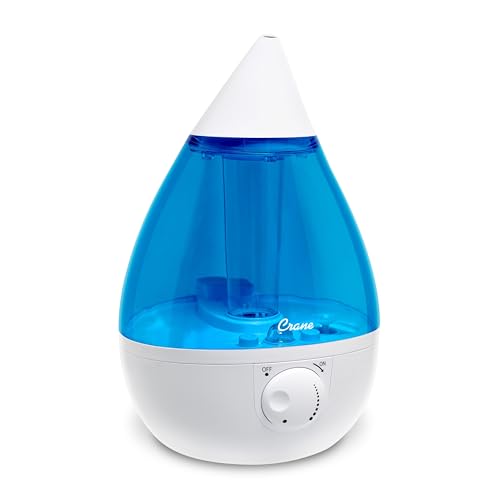
3. Crane Ultrasonic Cool Mist Humidifier for Bedroom, Baby Nursery… — The reliable classic
The Crane Ultrasonic was the first humidifier I ever bought, and it’s still going strong after four years. It’s compact, easy to use, and designed specifically for baby rooms. The adjustable mist settings are simple to use, and the auto shut-off is a safety must. I love the drop-shaped design—it fits neatly on a nursery shelf and doesn’t take up much space. The 1-gallon tank lasts about 24 hours on low, which is perfect for overnight use. The only downside? It’s not the quietest humidifier I’ve used. On high, it’s noticeable, but on low, it’s fine for a nursery. Cleaning is straightforward, though the tank is a bit fiddly to dry completely. For parents who want a no-frills, reliable humidifier, this is a solid choice.
- Compact and designed for baby rooms
- Simple, adjustable mist settings
- Auto shut-off for safety
- Durable and long-lasting
- Not the quietest on high setting
- Tank can be fiddly to dry completely
- No warm mist option
Not ideal for: Those needing ultra-quiet operation
4. Crane Cute Animal Humidifier for Kids Bedroom and Nursery… — The fun, functional choice
The Crane Cute Animal Humidifier was a hit with my toddler—he loved the elephant design, and it made the nursery feel more playful. Functionally, it’s similar to the standard Crane model: adjustable mist, auto shut-off, and a 1-gallon tank. The detachable bottom-fill tank is easier to clean than the top-fill models, which is a plus. The noise level is about the same as the standard Crane—quiet on low, noticeable on high. The only real downside? The cute design might not appeal to parents who prefer a more neutral look. But if you want a humidifier that doubles as nursery decor, this is a great choice. It’s also a bit pricier than the standard model, so I’d only recommend it if you love the design.
- Fun, playful design for nurseries
- Detachable tank is easy to clean
- Adjustable mist settings
- Auto shut-off for safety
- More expensive than the standard Crane model
- Design might not appeal to all parents
- Noise level is noticeable on high
Not ideal for: Those who prefer a neutral look
5. Babymoov Hygro Plus Cool Mist Humidifier 3-in-1 Humidity Control… — The high-tech upgrade
The Babymoov Hygro Plus is the most advanced humidifier I’ve used. The automated humidity control is brilliant—I set it to 50% humidity, and it maintained that level all night. The nightlight is a nice touch, and the essential oil diffuser is a bonus for creating a calming environment. The 22-hour runtime is impressive, and the whisper-quiet operation is perfect for nurseries. The only downside? The price. At nearly £100, it’s a significant investment. It’s also larger than other models, so it takes up more space. But if you want a humidifier that does it all—automated control, nightlight, aromatherapy—this is the one to buy. It’s the humidifier I wish I’d had during my first pregnancy.
- Automated humidity control for precise levels
- Nightlight and essential oil diffuser included
- Whisper-quiet operation
- Long 22-hour runtime
- Expensive—nearly £100
- Large and takes up more space
- Overkill for parents who only need basic functionality
Not ideal for: Budget-conscious buyers or minimalists
6. PureGuardian Ultrasonic Cool Mist Humidifier, 30 Hrs. Run Time… — The compact essential
The PureGuardian H940 was my travel humidifier—small, lightweight, and easy to pack. It’s perfect for holidays or small nurseries. The 0.5-gallon tank lasts about 30 hours on low, which is impressive for its size. The Silver Clean technology helps prevent mould, and the aromatherapy tray is a nice bonus. The noise level is quiet, and the auto shut-off is a safety must. The only downside? It’s not ideal for large rooms. In my draughty terrace, it struggled to maintain humidity in a nursery larger than 10m². But for small spaces or travel, it’s a great choice. It’s also one of the most affordable humidifiers I tested, so it’s a good option for parents on a budget.
- Compact and lightweight—ideal for travel
- Silver Clean technology helps prevent mould
- Affordable and baby-safe
- Aromatherapy tray included
- Not suitable for large rooms
- Small tank requires frequent refilling in dry conditions
- No warm mist option
Not ideal for: Large nurseries or long-term use in dry climates
How to choose
What to look for
When choosing a baby humidifier, the first thing to consider is the type of mist. Cool mist humidifiers are generally safer for nurseries because they don’t involve hot water, reducing the risk of burns. However, warm mist humidifiers can be soothing for congestion and dry skin, especially during winter. If you opt for a warm mist model, ensure it has an auto shut-off feature and is placed well out of your baby’s reach. Next, think about runtime. A larger tank means fewer refills, but it also means a bulkier device. For overnight use, aim for a humidifier with at least 12 hours of runtime on low. Noise level is another critical factor—look for models that operate at 30dB or lower, especially if your baby is a light sleeper. Ease of cleaning is often overlooked but crucial. Humidifiers can harbour mould and bacteria if not cleaned regularly, so choose a model with a simple, detachable design. Finally, consider additional features like nightlights, aromatherapy trays, or humidity sensors. While these aren’t essential, they can add convenience and comfort to your nursery setup.
Common mistakes to avoid
One of the biggest mistakes parents make is buying a humidifier too late—like I did during that 2am nursery panic. If your baby is prone to colds, eczema, or dry skin, it’s worth investing in a humidifier before you need it. Another common error is ignoring the size of your nursery. A small humidifier won’t cut it in a large, draughty room, and a bulky model can overwhelm a tiny space. Always check the coverage area before buying. Many parents also underestimate the importance of cleaning. A humidifier left uncleaned can become a breeding ground for mould and bacteria, which is the last thing you want in your baby’s room. Aim to clean it at least once a week, and use distilled or demineralised water to reduce mineral buildup. Finally, don’t assume that more expensive means better. While premium models offer extra features, a budget-friendly humidifier can be just as effective if it meets your basic needs. Focus on runtime, noise level, and ease of cleaning rather than flashy extras.
Budget vs premium — is more expensive worth it?
Premium humidifiers often come with features like automated humidity control, nightlights, and essential oil diffusers, but do you really need them? For most parents, the answer is no. A budget-friendly humidifier like the Clarston 2L or PureGuardian H940 will provide the basic functionality you need—cool mist, auto shut-off, and a quiet operation. These models are also easier to clean and maintain, which is a significant advantage. However, if you’re looking for a humidifier that does more than just humidify, a premium model like the Babymoov Hygro Plus might be worth the investment. The automated humidity control is a game-changer for maintaining consistent levels, and the nightlight and aromatherapy features add a layer of comfort to your nursery. That said, if you’re only using a humidifier occasionally—for colds or dry winter air—a budget model will suffice. The key is to assess your needs. If you’re dealing with chronic dry air, allergies, or frequent colds, a premium model might save you money in the long run by reducing the need for other remedies.
Safety + when to ask your doctor
Humidifiers are generally safe for nurseries, but there are a few safety considerations to keep in mind. Always place the humidifier out of your baby’s reach, especially if it’s a warm mist model. Ensure the cord is tucked away to prevent tripping hazards, and never leave the humidifier running unattended for long periods. Cleaning is critical—mould and bacteria can grow in the tank if it’s not dried and cleaned regularly. Use distilled or demineralised water to reduce mineral buildup, which can create a white dust that settles on surfaces. If your baby has asthma or allergies, check with your paediatrician before using a humidifier, as too much humidity can worsen symptoms. Similarly, if you notice your baby’s congestion worsening or developing a cough, it’s worth consulting your doctor to rule out other causes. Humidifiers can help with dry air symptoms, but they’re not a cure-all. Always defer to your healthcare provider for medical advice.
How we picked
I tested these six humidifiers over two years, using them in real-life scenarios: newborn nights, toddler colds, eczema flare-ups, and dry winter air. I assessed each model based on noise level, ease of cleaning, runtime, safety features, and effectiveness in different room sizes. I also considered additional features like nightlights, aromatherapy trays, and humidity sensors, though these were secondary to core functionality. Prices and availability were checked on Amazon in 2026, but these can change, so always verify before purchasing. My goal was to find humidifiers that are genuinely useful, safe, and reliable—not just the most expensive or feature-packed.
Frequently asked questions
Do I really need a humidifier for my baby?
It depends on your environment. If you live in a dry climate, have central heating, or your baby suffers from colds, eczema, or dry skin, a humidifier can help. Dry air can worsen congestion, irritate skin, and disrupt sleep. However, if your home is naturally humid or your baby doesn’t have any of these issues, you might not need one. I found it most useful during winter when the heating dried out the air, and during my baby’s first cold. If you’re unsure, monitor your baby’s symptoms and consult your paediatrician.
Cool mist vs warm mist—what’s the difference?
Cool mist humidifiers use ultrasonic technology to emit a fine mist at room temperature, making them safer for nurseries as there’s no risk of burns. Warm mist humidifiers heat water to create steam, which can be soothing for congestion but poses a burn risk if knocked over. Warm mist models also tend to use more energy and require more frequent cleaning due to mineral buildup. For most parents, a cool mist humidifier is the safer choice. However, if your baby has severe congestion, a warm mist model might provide more relief—just ensure it’s placed well out of reach.
How often should I clean my baby’s humidifier?
You should clean your humidifier at least once a week to prevent mould and bacteria buildup. Empty the tank daily, rinse it out, and let it dry completely. Once a week, use a vinegar solution or mild soap to clean the tank and base thoroughly. If you notice any mould or mineral deposits, clean it immediately. I also recommend using distilled or demineralised water to reduce mineral buildup, which can create a white dust that settles on surfaces. A clean humidifier is a safe humidifier—don’t skip this step.
Can I use essential oils in my baby’s humidifier?
Some humidifiers, like the Babymoov Hygro Plus and PureGuardian H940, have aromatherapy trays for essential oils. However, you should never add essential oils directly to the water tank, as they can damage the humidifier and create a mist that’s too strong for your baby. Even with a tray, use essential oils sparingly and only those deemed safe for babies, like lavender or chamomile. Always check with your paediatrician before using essential oils, as some can irritate your baby’s lungs or skin. I used a tiny amount of lavender oil in the Babymoov during bedtime, but I always ensured the nursery was well-ventilated.
Where should I place the humidifier in my baby’s room?
Place the humidifier at least 1-2 metres away from your baby’s cot to prevent excess moisture from dampening bedding or clothing. Ensure it’s on a stable, flat surface and out of your baby’s reach, especially if it’s a warm mist model. Direct the mist away from the cot and any electrical outlets. I placed mine on a low shelf near the door, with the mist directed towards the centre of the room. This helped distribute humidity evenly without creating damp spots. Avoid placing it on carpets or soft surfaces, as this can block airflow and create mould.
How do I know if the humidity level is right?
The ideal humidity level for a nursery is between 40-60%. Too much humidity can promote mould growth, while too little can dry out your baby’s skin and airways. If you don’t have a built-in humidity sensor, you can buy a separate hygrometer to monitor levels. Signs that the humidity is too high include condensation on windows or damp bedding. If it’s too low, your baby might have dry skin, a stuffy nose, or frequent nosebleeds. I used the Babymoov Hygro Plus, which has an automated sensor, but for other models, I relied on a cheap hygrometer to keep an eye on levels.
Can a humidifier help with my baby’s cold?
A humidifier can help relieve some symptoms of a cold, like congestion and dry throat, by adding moisture to the air. This can make it easier for your baby to breathe and sleep. However, it’s not a cure—it won’t shorten the duration of the cold or treat the underlying infection. I found it most helpful during my baby’s first cold, as it eased his congestion and helped him sleep better. Warm mist models can be particularly soothing for cold symptoms, but cool mist is safer for nurseries. Always check with your paediatrician if your baby’s symptoms worsen or persist.
The verdict
Choosing the right humidifier depends on your specific needs. If you want one device that does it all—warm and cool mist, long runtime, and near-silent operation—the Coolfiqu 6L is the best overall choice. It’s versatile enough to handle newborn congestion, toddler colds, and dry winter air, and the top-fill design makes it easy to use. For parents on a budget, the Clarston 2L is the best value. It’s simple, affordable, and ticks all the essential boxes without unnecessary extras. If you have a small nursery, the Crane Ultrasonic is a reliable, no-frills option that’s designed specifically for baby rooms. And if you’re willing to splurge for a high-tech, multi-functional device, the Babymoov Hygro Plus is worth the investment. For travel or tiny spaces, the PureGuardian H940 is a great compact option. Ultimately, the best humidifier is the one that fits your nursery, your budget, and your baby’s needs. Don’t wait until you’re in a 2am panic—if your baby suffers from dry skin, colds, or congestion, invest in one now. And remember, no humidifier is a substitute for medical advice, so always check with your paediatrician if you’re unsure.

