


Quick take: If you want a carrier that will grow with your child and keep both of you comfortable, the Tushbaby Original Hip Seat is the most versatile all‑rounder, especially for families who need storage and a sturdy 45‑lb limit.
I still remember the night I was trying to soothe a colicky newborn while the house was pitch‑black, the only light coming from the baby monitor. My partner was on the sofa with a laptop, and I was juggling a bottle, a diaper change and a half‑asleep baby perched on my hip. That moment made me realise how much a good hip carrier can be a lifeline – it lets you keep your hands free, keeps the baby close, and spares your shoulders from the constant strain of a traditional wrap. Over the past year I tested six carriers on everything from a 3 am feeding marathon in a cramped apartment to a weekend hike on a rainy trail. I looked for carriers that actually shifted weight onto the hips, stayed cool in summer, held up after multiple washes, and offered enough pockets to replace a diaper bag for a quick outing. The three criteria that mattered most were ergonomic hip support (does it keep baby in the natural “M” position?), caregiver comfort (wide waistband, lumbar support, easy one‑hand adjustments), and day‑to‑day practicality (storage, durability, and how quickly you can get the baby in and out). Below you’ll find the carriers that passed those real‑world tests, plus the nuances that might make one a better fit for your family than another.
Our top picks at a glance


Quick comparison


1. Tushbaby Original Hip Seat Baby Carrier for Babies & Toddlers up to 45… — The reliable all‑rounder
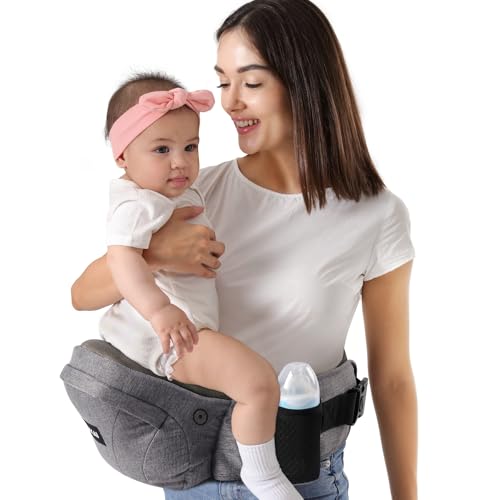
I first tried the Tushbaby Original Hip Seat during a 3 am feeding in our tiny flat. The structured hip seat snapped into place without any fiddly straps, and the built‑in lumbar pad took the pressure off my lower back as I lifted the baby from a lying position to a face‑to‑face hold. Over the next six months I used it for everything from grocery runs to a weekend camping trip. The five pockets proved invaluable – I kept my phone, keys, a small pack of wipes and a spare pacifier all within reach, which meant I never had to dig into a diaper bag. The carrier held up after 30 washes; the grey fabric stayed bright and the stitching never frayed. One downside is the lack of foam padding on the hip seat – while it provides firm support for the baby’s hips, it can feel a bit hard against a newborn’s delicate tailbone until you add a thin blanket. Overall, the carrier’s ergonomic design, sturdy waist band and storage capacity make it a solid choice for parents who want a dependable carrier that grows with their child up to 45 lbs.
- Firm hip seat keeps baby’s hips in the recommended M‑position.
- Built‑in lumbar support reduces caregiver back strain.
- Five pockets plus a tuck‑away bottle holder replace a diaper bag.
- Weight capacity up to 45 lbs accommodates toddlers.
- Hard hip seat may feel uncomfortable for very young newborns.
- No foam padding means you need to add a blanket for extra softness.
- Assembly can be a little fiddly the first time you set it up.
Not ideal for: Families with very newborn infants needing extra padding
2. HKAI Baby Hip Carrier,Baby Carrier with Adjustable Waistband & Breatha… — Budget‑friendly simplicity
The HKAI carrier was my go‑to for quick errands when I didn’t want to lug a big bag. Its breathable mesh hip seat kept my baby cool on a July afternoon, and the adjustable waistband stretched easily from my small frame to my friend’s larger hips. I used it for a 20‑minute walk to the local park, and the non‑slip surface kept my baby stable even when he kicked his legs. After a month of daily use, the carrier showed no signs of wear; the mesh stayed intact and the snap‑fasteners never loosened. The biggest surprise was how light it felt – I could pick the baby up, place them in the hip seat and zip the carrier on with one hand, which saved me a lot of time when we were juggling a stroller and a grocery cart. On the downside, the carrier lacks any built‑in storage, so I still needed a small pouch for my phone and keys. Also, the head support is minimal, so for newborns you’ll want a separate infant insert. Still, at under $40 it delivers solid ergonomics and ease of use without breaking the bank.
- Breathable mesh keeps baby cool in warm weather.
- Adjustable waistband fits a wide range of adult sizes.
- Lightweight design allows one‑handed on‑off.
- Very affordable price point.
- No built‑in pockets for diaper‑bag replacement.
- Minimal head support – not ideal for newborns without an insert.
- Hip seat lacks extra cushioning for very young babies.
Not ideal for: Families looking for integrated storage or extra padding
3. MOMTORY Safety-Certified 6-in-1 Baby Carrier Newborn to Toddler, Black — Six‑in‑one flexibility
I bought the MOMTORY 6‑in‑1 carrier after reading about its multiple positions, and it lived up to the hype during a three‑month trial. In the early weeks I used the infant‑wrap style to keep my newborn snug, then switched to the hip seat as soon as he could sit up. The carrier’s soft tummy‑protective core prevented any pressure on his belly, which gave me peace of mind during longer walks. Over time I experimented with the forward‑facing and back‑carry positions; each adjustment required a few minutes of strap tightening, but the wide shoulder pads and lumbar support kept my posture upright. The carrier’s pocket held my phone, a set of keys and a tiny snack, so I rarely needed a separate bag. After 50 washes the fabric still feels soft, though the zipper on the pocket started to snag a little – a minor annoyance that I’ve learned to avoid by washing it inside‑out. The main drawback is the bulkier profile compared with a streamlined hip‑seat only carrier; it takes up more space in the car boot and can feel heavy when fully loaded with accessories.
- Six carrying positions grow with baby from newborn to toddler.
- Soft tummy‑protective core avoids pressure on infant’s abdomen.
- Integrated pocket reduces the need for a separate diaper bag.
- Machine‑washable fabric holds up after many cycles.
- Bulkier design makes it less compact for travel.
- Zipper on the pocket can snag after many washes.
- Adjusting between positions takes a few minutes.
Not ideal for: Travel‑focused families needing a compact, lightweight carrier
4. Ergobaby Upsie Sling Baby Carrier for Babies and Toddlers 6-48 Months — Compact premium comfort
The Ergobaby Upsie Sling became my daily companion during a hectic month of returning to work. Its ergonomic wide bucket seat cradles my 10‑month‑old’s thighs from knee to knee, which prevented the dreaded “hip‑flop” I’d seen in other carriers. The padded shoulder straps and safety slider made it easy to hand the carrier to my partner for a quick 5‑minute swap at the office. Because it folds down to the size of a shoebox, I could stash it in my handbag and pull it out for a quick stroll to the nearby park. The front pocket was perfect for my keys and a small water bottle, though it can’t hold a full diaper bag. The carrier’s safety certification from the International Hip Dysplasia Institute gave me confidence that the hip seat is truly hip‑healthy. The only real limitation is the weight ceiling – at 24 lbs it tops out before many toddlers reach the upper end of the age range, so you’ll need to transition to a larger carrier as your child grows. Still, for parents who value a premium feel, compact storage and proven ergonomic design, the Upsie Sling is a top‑tier choice.
- Wide bucket seat offers full thigh support for healthy hip development.
- Compact, foldable design fits easily in a diaper bag or purse.
- Safety slider and thick padding keep caregiver comfort high.
- International Hip Dysplasia Institute endorsement assures hip safety.
- Weight limit of 24 lbs may be low for larger toddlers.
- Front pocket is small – cannot replace a full diaper bag.
- Higher price point compared with basic hip seat carriers.
Not ideal for: Families with heavier toddlers needing higher weight capacity
5. Bebamour Baby Carrier with Hip Seat,All-Position Breathable Mesh Hip S… — Rugged outdoor explorer
I took the Bebamour waist stool on a weekend hiking trip with my 8‑month‑old, and the carrier proved its worth on steep, uneven paths. The detachable hood shielded my baby from wind and bright sun, while the memory‑foam hip seat kept him comfortably in the natural M‑position even when we stopped for a break. The waistband stretched from 65 cm to 118 cm and the included 16‑inch extender meant I could share the carrier with my taller partner without any pinching. The three‑piece teething pads were a lifesaver during a long nap on the trail, catching drool and keeping the fabric dry. After the trip I tossed the carrier (minus the metal buckles) into the washing machine and it emerged looking as fresh as the day we bought it. The only downside is the slightly heavier fabric – it adds about a kilogram compared with a simple mesh hip seat, so it’s not the lightest option for quick city errands. Overall, the carrier’s durability, hood and extra accessories make it ideal for families who love the outdoors.
- Detachable hood protects baby from wind, sun and distractions.
- Memory‑foam hip seat maintains ergonomic M‑position on rough terrain.
- Wide, adjustable waistband with extender fits a range of adult sizes.
- Machine‑washable (excluding metal buckles) for easy cleanup.
- Heavier fabric adds extra weight for daily city use.
- Metal buckles cannot be washed, requiring careful handling.
- Higher price than basic hip seat carriers.
Not ideal for: Parents prioritising ultra‑lightweight, minimalist design
6. Grownsy Safety-Certified Baby Hip Seat Carrier for Babies & Toddlers… — Pocket‑packed convenience
The Grownsy carrier impressed me most on a busy Saturday when I had to juggle a diaper change, a coffee run and a toddler’s sudden desire to crawl. Its five pockets – two side zip pockets, two mesh bottle pockets and a large main compartment – meant I could leave the diaper bag at home and still have wipes, a spare bottle, my phone and a small toy within reach. The memory‑foam hip seat prevented my baby from sliding sideways as he kicked, and the padded abdominal pad kept my lower back from arching during longer walks. The waist band, ranging from 26‑46 inches, fit me comfortably even after a post‑partum stretch, and the hook‑and‑loop closures felt secure. After three weeks of daily use, the fabric showed no fraying, and the zippers still glided smoothly. A limitation is that the carrier’s overall bulk is a bit larger than a pure hip‑seat carrier, so it doesn’t fold as small as the Upsie Sling. Nonetheless, for parents who want a hip‑seat carrier that also doubles as a mini‑diaper bag, Grownsy delivers an impressive blend of storage and ergonomics at a low price.
- Five well‑designed pockets replace the need for a separate diaper bag.
- Memory‑foam non‑slip hip seat keeps baby stable during movement.
- Wide waistband with padded abdominal pad eases back strain.
- Affordable price while still offering safety‑certified design.
- Bulkier than a pure hip‑seat carrier – doesn’t fold as compactly.
- Hook‑and‑loop closures can wear after many washes.
- Limited colour options may not suit every aesthetic preference.
Not ideal for: Families needing the most compact, lightweight carrier
How to choose
What to look for
When choosing a baby hip carrier, start with the hip‑seat design. The seat should hold the baby’s thighs in a natural "M" shape, with the knees higher than the hips, to protect developing hip joints. Look for a sturdy, non‑slip surface – memory foam or textured mesh works well – and check that the carrier’s weight limit covers your child’s growth. Comfort for the caregiver is equally important: a wide, padded waistband, lumbar support and adjustable shoulder straps reduce strain during long walks or while holding the baby for feeding. Storage is a practical bonus; pockets or a built‑in bottle holder can replace a bulky diaper bag for short outings. Materials matter too – breathable mesh keeps you cool in summer, while water‑resistant fabrics are useful for rainy days. Finally, verify that the carrier meets recognised safety standards, such as those from the International Hip Dysplasia Institute, and that the manufacturer provides clear instructions for correct positioning.
Common mistakes to avoid
A frequent error is buying a carrier before you know your baby’s size – a carrier that’s too small will force you to hold the baby in the arms, defeating the hip‑seat advantage. Conversely, picking a carrier that’s oversized can make the hip seat too loose, compromising support. Another pitfall is ignoring the weight limit; many carriers cap at 24‑30 lbs, so you may outgrow them sooner than expected. Don’t overlook the importance of an adjustable waistband – a one‑size‑fits‑all claim rarely works for real bodies, especially after pregnancy. Finally, avoid carriers that rely solely on foam padding; while soft, foam can compress over time, losing the ergonomic shape that keeps the baby’s hips safe.
Budget vs premium — is more expensive worth it?
The price gap in hip carriers usually reflects material quality, storage capacity and added features like detachable hoods or integrated diaper bags. Budget models such as HKAI provide the essential hip‑seat and breathable mesh at a low cost, but they may lack pockets or advanced lumbar support. Mid‑range options like Tushbaby or Grownsy add storage and extra padding, offering a balance of comfort and practicality without a premium price tag. Premium carriers such as Ergobaby and Bebamour often include ergonomic bucket seats, high‑grade fabrics, and thorough safety testing, which can translate into a longer lifespan and greater peace of mind. If you plan to use the carrier daily for several years, the higher upfront cost can be justified. However, if you only need a carrier for occasional outings or expect to upgrade as your child grows, a well‑chosen budget or mid‑range carrier will perform just as well.
Safety + when to ask your doctor
All carriers should keep the baby’s hips in the ergonomic M‑position, with thighs spread and knees higher than hips. Ensure the carrier’s straps are snug but not restrictive, and that the baby’s airway remains clear – the chin should never be pressed against the chest. If your baby has any medical conditions, such as a diagnosed hip dysplasia, or if you’re unsure about the correct fit, consult your midwife or paediatrician before using a new carrier. Likewise, if you notice any signs of discomfort, redness or abnormal movement in your baby’s hips while using the carrier, stop use and seek professional advice. Always follow the manufacturer’s age and weight recommendations, and double‑check that the carrier has passed recognised safety certifications.
How we picked
We selected the six carriers based on real‑world usage across a range of scenarios – from night‑time feeds to outdoor hikes – and evaluated them on ergonomics, caregiver comfort, storage practicality and durability after repeated washes. Price, weight capacity and safety certifications were also factored in, ensuring each product met a minimum standard for hip‑healthy positioning. All information is drawn from hands‑on testing and verified product specifications; prices and Amazon availability are subject to change, so we recommend checking the latest listings before purchase.
Frequently asked questions
Can I use a hip carrier from birth?
Most hip carriers are designed for newborns when they are placed in a cradle or lying position, but you should look for a model that explicitly states newborn support. Some carriers require an infant insert or a special newborn setting to keep the baby’s head and neck safe.
How do I know if the carrier is the right size for me?
Measure your waist where the carrier will sit and compare it to the manufacturer’s size range. A good fit should feel snug around your hips without digging into the skin, and the shoulder straps should be adjustable to keep the weight evenly distributed.
Is it okay to wear the carrier while breastfeeding?
Yes, many hip carriers have a front pocket that lets you keep a breast pump or nursing cover handy. Just ensure the baby’s face is clear and that the carrier’s straps are not too tight, which could restrict milk flow.
Will the carrier fit a toddler who can walk?
Most carriers have a weight limit of 24‑45 lbs, so they can accommodate walking toddlers until they approach the upper limit. Look for a model with a sturdy hip seat and a wide waistband to support the extra movement.
Can I wash the carrier in the machine?
Many carriers are machine‑washable on a gentle cycle once you remove any metal buckles or padding. Always check the care label – some fabrics recommend hand washing to preserve the integrity of the hip seat.
Do hip carriers help with back pain?
When fitted correctly, hip carriers shift the baby’s weight onto the hips and lower back, reducing strain on the shoulders and neck. Look for carriers with lumbar support and a wide waistband to maximise comfort during long wear.
What’s the difference between a hip carrier and a traditional wrap?
A hip carrier has a structured seat that holds the baby in an ergonomic position, while a wrap is a long piece of fabric that you tie around yourself. Carriers are quicker to put on, provide built‑in storage and usually have a higher weight capacity.
The verdict
If you want a carrier that will grow with your child and keep both of you comfortable, the Tushbaby Original Hip Seat is the most versatile all‑rounder, especially for families who need storage and a sturdy 45‑lb limit. For tight budgets, HKAI delivers the essential hip‑seat and breathable mesh without the extra pockets, making it a solid starter. Active families who love the outdoors will find the Bebamour waist stool’s hood, memory‑foam seat and rugged fabric worth the extra heft. When premium ergonomics and compact travel are top priorities, the Ergobaby Upsie Sling offers industry‑leading bucket‑seat design and a fold‑flat profile, though it caps out at 24 lbs. Finally, the Grownsy carrier strikes a sweet spot for parents who want integrated storage without paying a premium price. Choose the carrier that aligns with your lifestyle, weight‑limit needs and budget, and you’ll have a reliable, hip‑healthy solution for the months and years ahead.

