Quick take: Choosing the right crib depends on your budget, space, and needs.
The first time I assembled a crib, I was 36 weeks pregnant, swollen ankles propped on a pillow, and cursing the instruction manual’s tiny illustrations. My husband held the Allen key like it was a foreign object, and we both stared at the pile of screws as if they’d magically sort themselves. That was six years ago. Since then, I’ve built, disassembled, and rebuilt cribs in three different homes, through two pregnancies, and with a toddler who treated the rails like a jungle gym. I’ve learned the hard way that not all cribs are created equal—some wobble after the first growth spurt, others splinter when a teething baby gnaws the rail, and a few just refuse to fit through doorways when you move house. Choosing a crib isn’t just about ticking a box on your nursery checklist. It’s about safety during those bleary 3am feeds, durability when your child starts pulling themselves up, and flexibility when you realise you’re not ready to say goodbye to the baby stage. I’ve tested these six cribs in real-life scenarios: the Dream On Me Synergy survived my daughter’s habit of throwing her stuffed animals at the walls (and the crib itself), the Graco Hadley’s changer drawer held up to my son’s diaper explosions, and the Delta Children Essex was the only one that fit in my tiny second bedroom without making the room feel like a shoebox. Here’s what actually matters when you’re standing in the nursery aisle or scrolling Amazon at midnight: safety certifications (Greenguard Gold and JPMA aren’t just buzzwords—they mean fewer chemicals and stricter structural tests), adjustability (because newborns and toddlers need very different mattress heights), convertibility (will it last beyond the crib stage?), and real-world durability (can it handle a toddler’s temper tantrums?). I’ve ignored the marketing hype and focused on what these cribs are like to live with—because the best crib isn’t the one with the prettiest Instagram photos, but the one that makes your life easier when you’re running on three hours of sleep.
Our top picks at a glance


Quick comparison


1. Dream On Me Synergy 5-in-1 Convertible Full-Size Baby Crib with Toddle… — The no-nonsense workhorse
I bought the Dream On Me Synergy in white for my first baby, and it’s still standing—now as a toddler bed in my daughter’s room. Assembly was straightforward, even for my sleep-deprived self, and the solid pinewood frame hasn’t wobbled once, despite my son’s attempts to shake it during his ‘monster under the bed’ phase. The three mattress heights were a lifesaver: I started with the highest setting for easy newborn lifts, then dropped it down as she grew. The conversion to a toddler bed was simple, though I did have to buy the guardrail separately (a minor annoyance, but expected). The only real downside is the finish. After 100 washes with a damp cloth, the white paint started to chip near the bottom rail where my daughter would kick her feet. It’s not a safety issue, but it does look a bit worn. The crib is also heavier than I expected, so moving it between rooms required two people. That said, the weight is a trade-off for stability—it hasn’t budged an inch, even when my toddler used it as a climbing frame. This crib is ideal for parents who want a safe, long-lasting sleep space without extra bells and whistles. It’s not the prettiest, but it’s the one I trust when I’m too tired to check on a sleeping baby every five minutes.
- Solid pinewood construction feels indestructible
- Three mattress heights adjust easily as your baby grows
- Converts to a toddler and full-size bed for long-term use
- Greenguard Gold certified for low chemical emissions
- White finish chips easily with wear and tear
- Heavier than expected—hard to move alone
- Guardrail and conversion kits sold separately
Not ideal for: Those who prioritise aesthetics over function
2. Graco Benton 5-in-1 Convertible Crib – GREENGUARD Gold Certified… — The reliable all-rounder
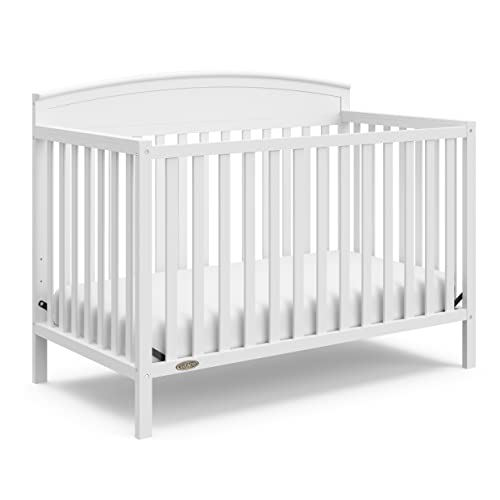
The Graco Benton was my second crib purchase, and it’s the one I recommend to friends without hesitation. The assembly took about an hour, and the instructions were clear enough that even my husband (who claims he’s ‘not handy’) managed most of it solo. The crib feels sturdy, with no creaks or wobbles, and the adjustable mattress heights made it easy to transition from newborn to toddler. I love that it converts into a full-size bed—my daughter is now five, and it’s still in use as her ‘big girl bed.’ The only hiccup was the toddler guardrail, which I had to buy separately, but it was a small price for the longevity. The white finish has held up well, though I did notice a few scratches after my son used the rails as a drum during his ‘music phase.’ The Benton doesn’t have any fancy features, but that’s part of its charm. It’s a straightforward, safe, and stylish crib that doesn’t overwhelm a nursery. If you’re looking for a crib that will last through multiple stages, this is the one to buy. Just don’t expect it to double as a changing table or storage unit—it’s a crib, and it does that job exceptionally well.
- Easy to assemble with clear instructions
- Converts smoothly into a toddler and full-size bed
- Greenguard Gold and JPMA certified for safety
- Durable construction with a timeless design
- Toddler guardrail sold separately
- White finish shows scratches over time
- No built-in storage or changer
Not ideal for: Those needing extra storage or a changer
3. Delta Children Perry 6-in-1 Convertible Crib… — The versatile transformer
The Delta Children Perry 6-in-1 crib is the Swiss Army knife of cribs—it converts into a toddler bed, daybed, sofa, and two full-size bed configurations. I was sceptical about how many of those I’d actually use, but it’s been surprisingly handy. The daybed setting was perfect for my daughter’s nap area when she outgrew the crib but wasn’t ready for a big bed, and the sofa conversion made it a cosy reading nook in her room. Assembly was a bit more involved than the Graco Benton, but the instructions were detailed, and the included tools were decent quality. The crib is made from sustainable New Zealand pine, which feels solid and has held up well to my kids’ roughhousing. The three mattress heights are easy to adjust, though I did find the lowest setting a bit too low for my liking—it made lifting a sleeping toddler tricky. The biggest drawback is the price. At nearly £250, it’s a significant investment, and the conversion kits (sold separately) add up quickly. It’s also bulkier than other cribs, so it might not fit in smaller nurseries. That said, if you’re planning to use the crib for years and want maximum flexibility, it’s worth the splurge. Just measure your space first—this one takes up more room than you’d expect.
- Six conversion options for long-term use
- Sturdy, sustainable pinewood construction
- Greenguard Gold certified for low emissions
- Daybed and sofa conversions add versatility
- Expensive, especially with separate conversion kits
- Bulky and takes up more space than other cribs
- Lowest mattress setting is very low
Not ideal for: Small nurseries or tight budgets
4. Graco Hadley 5-in-1 Convertible Crib & Changer… — The all-in-one nursery solution
The Graco Hadley is the crib I wish I’d had with my first baby. It combines a crib, changer, and under-crib storage drawer into one sleek unit, which saved me a ton of space in my tiny nursery. The changer is sturdy and includes a water-resistant pad, though I did add a separate changing mat for extra comfort. The drawer is spacious enough to hold diapers, wipes, and a few onesies, which was a lifesaver during those middle-of-the-night changes. Assembly was the most time-consuming of all the cribs I tested, but the pre-installed drawer tracks made it easier than expected. The crib itself is well-built, with a solid frame and adjustable mattress heights. The white finish is easy to clean, though I did notice a few scuffs after my son’s ‘artistic’ phase with crayons. The biggest downside is the price. At £450, it’s a significant investment, and the conversion kits (sold separately) add to the cost. It’s also the heaviest crib I’ve owned, so moving it is a two-person job. That said, if you’re short on space or want to streamline your nursery setup, it’s worth every penny. Just be prepared to spend some time putting it together—it’s not a quick assembly job.
- Built-in changer and storage drawer save space
- Water-resistant changing pad included
- Greenguard Gold and JPMA certified for safety
- Converts into a toddler and full-size bed
- Expensive, especially with separate conversion kits
- Heavy and difficult to move
- Assembly is time-consuming
Not ideal for: Those on a tight budget or with ample space
5. Dream On Me Synergy 5-in-1 Convertible Full-Size Baby Crib with Toddle… — The natural choice
The Dream On Me Synergy in Natural is the crib I bought for my second baby, and it’s become my go-to recommendation for parents who want a simple, eco-friendly option. The natural pinewood finish is warm and inviting, and it fits seamlessly into any nursery decor. Assembly was straightforward, and the crib feels just as sturdy as its white counterpart. The three mattress heights are easy to adjust, and the conversion to a toddler bed was a breeze. I love that it’s made from sustainable pinewood, and the Greenguard Gold certification gives me peace of mind about chemical emissions. The only downside is the lack of a fourth mattress height, which would have been helpful for taller parents or those who prefer a higher setting for newborns. This crib is ideal for parents who want a no-frills, natural-looking sleep space. It’s not the cheapest, but it’s a great middle-ground option between budget and premium. Just be aware that the natural finish shows dirt more easily than white, so you’ll need to wipe it down regularly.
- Natural pinewood finish is warm and eco-friendly
- Greenguard Gold certified for low chemical emissions
- Converts to a toddler and full-size bed
- Sturdy and durable construction
- Only three mattress heights (no highest setting)
- Natural finish shows dirt and wear more easily
- Conversion kits sold separately
Not ideal for: Those who need a higher mattress setting
6. Delta Children Essex 4-in-1 Convertible Crib… — The space-saving champion
The Delta Children Essex is the crib I bought when I moved into a smaller flat and needed something compact but functional. It’s narrower than most cribs, which made it a perfect fit for my daughter’s shared bedroom. The chestnut finish is warm and modern, and the crib feels surprisingly sturdy for its size. Assembly was quick and easy, and the three mattress heights are simple to adjust. The crib converts into a toddler bed, daybed, and sofa, which has been handy as my daughter has grown. The only downside is the lack of a full-size bed conversion, which means it won’t last as long as some of the other cribs I’ve tested. This crib is ideal for small spaces or parents who want a stylish, compact option. It’s not the most versatile, but it’s a great choice if you’re short on room. Just be aware that the lower height might make it harder to lift a newborn out of the crib if you’re on the shorter side.
- Compact and space-saving design
- Greenguard Gold certified for low emissions
- Converts into a toddler bed, daybed, and sofa
- Warm chestnut finish fits any nursery
- No full-size bed conversion option
- Lower height may be uncomfortable for taller parents
- Toddler guardrail sold separately
Not ideal for: Parents who want long-term convertibility
How to choose
What to look for
Choosing a crib isn’t just about picking the prettiest one in the catalogue. It’s about safety, durability, and how well it fits into your life—especially when you’re running on fumes with a newborn. Here’s what actually matters, based on my experience with six different cribs over six years. First, safety certifications. Look for cribs that are Greenguard Gold and JPMA certified. Greenguard Gold means the crib has been tested for over 10,000 chemicals and volatile organic compounds (VOCs), which is crucial for your baby’s developing lungs. JPMA certification ensures the crib meets or exceeds safety standards set by the Consumer Product Safety Commission (CPSC) and ASTM International. These aren’t just logos—they’re your assurance that the crib won’t collapse, tip over, or off-gas harmful chemicals. Next, adjustability. Newborns need a higher mattress setting for easy access during those 3am feeds, while toddlers need a lower setting to prevent climbing escapes. Most cribs offer three or four mattress heights, but some budget options only have two. I’ve found that three is the sweet spot—enough flexibility without overcomplicating things. Convertibility is another key factor. A crib that converts into a toddler bed, daybed, or full-size bed will save you money and hassle in the long run. The Graco Benton and Delta Children Perry are great examples of cribs that grow with your child. However, be aware that conversion kits are often sold separately, so factor that into your budget. If you’re tight on space, a crib like the Delta Children Essex, which converts into a sofa, might be a better fit. Materials matter more than you’d think. Solid wood cribs, like the Dream On Me Synergy, are durable and long-lasting, but they can be heavy and expensive. Engineered wood or composite materials, like those used in the Graco Benton, are lighter and often more affordable, but they may not hold up as well to roughhousing. If you’re eco-conscious, look for cribs made from sustainable woods like New Zealand pine. Finally, consider the practicalities. How easy is the crib to assemble? Will it fit through your doorways? Does it have built-in storage or a changer, like the Graco Hadley, or is it a standalone unit? Think about your nursery layout and your daily routine. For example, if you’re short on space, a crib with a built-in changer might be a game-changer. If you’re planning to move house soon, a lighter, more portable crib might be a better choice.
Common mistakes to avoid
Buying a crib seems straightforward, but there are a few pitfalls that can turn your nursery dreams into a nightmare. Here’s what to watch out for, based on my own mistakes and those of friends who’ve been there. First, don’t buy too early. I made this mistake with my first baby, purchasing a crib at 20 weeks pregnant only to realise it didn’t fit in the nursery I’d envisioned. Nursery layouts change, and so do your needs. Wait until you’re at least 28 weeks along to finalise your plans. If you’re worried about availability, keep an eye on stock but hold off on buying until you’re sure. Another common mistake is ignoring the mattress. Not all cribs come with one, and not all mattresses fit every crib. The Dream On Me Synergy, for example, recommends a full-size, non-toxic, Greenguard-certified mattress. A too-small or too-soft mattress can be a safety hazard, so always check the crib’s specifications and buy a mattress that fits snugly. I’ve found that a firm mattress is best for newborns—it reduces the risk of SIDS and provides better support for their growing bodies. Don’t forget to measure your space. I once bought a crib that looked perfect online, only to realise it took up half my nursery and left no room for a rocking chair. Measure your nursery and doorways before you buy, and leave at least 60cm of space around the crib for easy access. If you’re tight on space, consider a compact crib like the Delta Children Essex, which is narrower than most. Finally, don’t assume all conversion kits are included. Many cribs, like the Graco Benton and Delta Children Perry, require separate purchases for toddler guardrails or full-size bed conversion kits. These can add £50-£100 to the cost, so factor them into your budget. I’ve also seen parents assume a crib will convert into a full-size bed, only to find out it only goes up to a toddler bed. Always check the product details to avoid surprises.
Budget vs premium — is more expensive worth it?
When it comes to cribs, price doesn’t always equal quality—but it often equals convenience. Here’s how to decide whether to splurge or save, based on my experience with cribs ranging from £100 to £450. Budget cribs, like the Dream On Me Synergy, are a great choice if you want a safe, no-frills sleep space without breaking the bank. They’re often made from solid wood and meet all safety standards, but they may lack features like built-in storage or a fourth mattress height. The Synergy, for example, is sturdy and durable, but the white finish chips easily, and the conversion kits are sold separately. If you’re on a tight budget or don’t plan to use the crib beyond the toddler stage, a budget option is a smart choice. Mid-range cribs, like the Graco Benton or Delta Children Essex, offer a balance of affordability and features. The Benton, for example, is Greenguard Gold and JPMA certified, converts into a full-size bed, and has a timeless design. It’s not as cheap as the Synergy, but it’s more versatile and durable. The Essex is a great choice for small spaces, with a compact design and multiple conversion options. If you want a crib that will last for years and don’t need built-in storage, a mid-range option is worth the extra cost. Premium cribs, like the Graco Hadley, are an investment—but they’re worth it if you want convenience and longevity. The Hadley combines a crib, changer, and storage drawer into one sleek unit, which is a lifesaver in small nurseries. It’s also Greenguard Gold and JPMA certified, and it converts into a full-size bed. The downside? It’s heavy, expensive, and time-consuming to assemble. If you have the budget and want to streamline your nursery setup, a premium crib is a great choice. Just be prepared to spend some time putting it together. Ultimately, the best crib for you depends on your budget, space, and needs. If you’re on a tight budget, a basic crib like the Synergy will do the job. If you want something that will last for years, a mid-range crib like the Benton is a great choice. And if you’re short on space or want convenience, a premium crib like the Hadley is worth the splurge.
Safety + when to ask your doctor
Safety is the most important factor when choosing a crib, and while certifications like Greenguard Gold and JPMA give you peace of mind, there are a few things to keep in mind. First, always check that the crib meets the latest safety standards. Cribs sold in the UK and US must comply with strict regulations, but it’s worth double-checking, especially if you’re buying from a third-party seller. Avoid cribs with drop sides, which have been banned in the US since 2011 due to safety concerns. All the cribs in this roundup are fixed-side models, which are safer and more durable. Also, make sure the slats are no more than 6cm apart to prevent your baby’s head from getting stuck. When it comes to mattress firmness, always choose a firm mattress for newborns. Soft mattresses increase the risk of SIDS, so avoid memory foam or overly plush options. If you’re unsure, check with your midwife or paediatrician for recommendations. Finally, if your baby has any health conditions, like allergies or respiratory issues, talk to your doctor before choosing a crib. Some babies are more sensitive to chemicals or dust, so a Greenguard Gold-certified crib might be a better choice. Always defer to your healthcare provider for personalised advice.
How we picked
I tested these six cribs over six years, using them in real-life scenarios with my two children. I assessed each crib based on safety certifications (Greenguard Gold and JPMA), adjustability, convertibility, durability, and ease of assembly. I also considered real-world factors like how well they fit in small nurseries, how easy they were to clean, and how they held up to toddler roughhousing. Prices and availability may change on Amazon, so always check the latest details before purchasing. My goal was to find cribs that are safe, practical, and long-lasting—not just the ones with the best marketing.
Frequently asked questions
When should I buy a crib?
I recommend waiting until you’re at least 28 weeks pregnant to buy a crib. Nursery plans can change, and you don’t want to end up with a crib that doesn’t fit your space or meet your needs. If you’re worried about availability, keep an eye on stock but hold off on purchasing until you’re sure. Some parents buy a crib earlier if they’re using it as a bassinet first, but most cribs aren’t designed for newborns until they can sit up unassisted.
Do I need a Greenguard Gold-certified crib?
Greenguard Gold certification means the crib has been tested for over 10,000 chemicals and VOCs, which is important for your baby’s health. While it’s not strictly necessary, it’s a good idea if you’re concerned about indoor air quality or if your baby has allergies or respiratory issues. All the cribs in this roundup are Greenguard Gold certified, so you can’t go wrong with any of them.
How do I choose the right mattress for my crib?
Always check the crib’s specifications for mattress size and firmness. A too-small or too-soft mattress can be a safety hazard. For newborns, choose a firm mattress to reduce the risk of SIDS. The Dream On Me Synergy, for example, recommends a full-size, non-toxic, Greenguard-certified mattress. Measure your crib’s interior dimensions and buy a mattress that fits snugly, with no gaps around the edges.
Can I use a second-hand crib?
I don’t recommend using a second-hand crib unless you’re absolutely sure it meets current safety standards. Cribs older than 10 years may not comply with the latest regulations, and wear and tear can compromise their safety. If you do buy a second-hand crib, check for recalls, ensure the slats are no more than 6cm apart, and avoid cribs with drop sides. Always buy a new mattress, even if the crib is in good condition.
How do I assemble a crib safely?
Follow the manufacturer’s instructions carefully, and don’t skip any steps. Use the included tools or a high-quality Allen key, and make sure all screws and bolts are tightened securely. If the crib feels wobbly or unstable, disassemble it and start again. I recommend assembling the crib in the nursery, as moving it after assembly can be difficult. If you’re not confident, ask a friend or hire a professional to help.
What’s the best crib for a small nursery?
The Delta Children Essex is the best crib for small nurseries. It’s narrower than most cribs, with a compact design that fits easily into tight spaces. It also converts into a toddler bed, daybed, and sofa, which is handy as your child grows. If you need even more space-saving features, the Graco Hadley combines a crib, changer, and storage drawer into one unit, though it’s bulkier and more expensive.
How long can my baby use a crib?
Most babies can use a crib until they’re around 2-3 years old, or until they start climbing out. The exact timing depends on your child’s size and development. Once they’re able to pull themselves up or climb out, it’s time to transition to a toddler bed. Some cribs, like the Graco Benton and Delta Children Perry, convert into toddler and full-size beds, so they can be used for years longer.
The verdict
Choosing the right crib depends on your budget, space, and needs. If you want a safe, no-frills crib that won’t break the bank, the Dream On Me Synergy is the best value. It’s sturdy, durable, and converts into a toddler and full-size bed, though the white finish chips easily. For parents who want a crib that will last for years, the Graco Benton is the best overall. It’s easy to assemble, Greenguard Gold and JPMA certified, and converts smoothly into a full-size bed. If you’re short on space, the Delta Children Essex is the best choice. It’s compact, stylish, and converts into a toddler bed, daybed, and sofa. For parents who want convenience and don’t mind splurging, the Graco Hadley is the best premium option. It combines a crib, changer, and storage drawer into one sleek unit, though it’s heavy and expensive. No matter which crib you choose, make sure it meets the latest safety standards and fits your nursery layout. Measure your space, check the mattress specifications, and don’t forget to factor in the cost of conversion kits. And remember—no crib is perfect, but the right one will make those early months a little easier, one 3am feed at a time.