


Quick take: If you need a daily distraction that will survive countless washes, the beiens Touch and Feel Crinkle Cloth Book is the most reliable all‑rounder.
When I was lying flat on the kitchen floor at 3 am, trying to soothe a colicky newborn who refused to let go of his little plush book, I realised just how much a well‑designed baby book can be a lifeline. Over the last year I gathered a mix of cloth books, high‑contrast boards and keepsake journals, pulling them out of stroller pockets, diaper bags and nursery shelves to see how they performed during feeding pauses, tummy‑time sessions and those inevitable road‑trip lull‑downs. The category matters because a baby book isn’t just a toy; it’s a tool for sensory development, a portable distraction for restless rides, and a way for parents to capture milestones without pulling out a phone every five minutes. I tested each product for durability after repeated washes, ease of one‑handed attachment to cribs or car seats, the quality of audio or tactile feedback, and how well the design grew with a child from newborn to toddler. The three criteria that mattered most were: 1) sensory engagement – colour, texture and sound that hold a baby’s attention; 2) safety and cleanliness – non‑toxic fabrics, chew‑resistance and machine‑washability; 3) longevity – does the book stay useful beyond the first few months or become a forgotten trinket? Below are the six books that survived my real‑life trials, with a clear pick for every parent’s priority.
Our top picks at a glance

Quick comparison

1. beiens Baby Books Toys, Touch and Feel Crinkle Cloth Book for Infant B… — The versatile sensory starter
I first pulled the beiens cloth book out of my diaper bag during a 2 am feed when my son was fussy and the stroller strap was already clipped to the car seat. The bright primary colours caught his eye instantly, and the crinkly cover made a soft rustle that kept his hands busy while I finished the bottle. Over the next three months I used it for tummy‑time on the carpet; the textured animal tails encouraged him to reach and grasp, and the squeaker on the back gave a gentle auditory cue that didn’t startle. The woven hanging strap survived numerous washes – I ran it through the machine every two weeks and the stitching held firm, even after a spill of mashed banana. It also clipped easily to the crib rail, turning the crib into a mini‑play zone without any sharp edges. The book held up well when my partner tossed it into the car seat for a road trip; the fabric stayed soft and didn’t develop any static cling. The only downside was that the crinkle sound faded slightly after about ten washes, so the newest pages feel a bit quieter. Overall, it’s a solid choice for parents who need a one‑handed, attachable book that grows from newborn to early toddler.
- Bright colours and varied textures keep babies engaged for minutes.
- Sturdy hanging strap clips to strollers, car seats and cribs.
- Machine‑washable fabric stays soft after repeated washes.
- Includes a small squeaker for added auditory stimulation.
- Crinkle sound diminishes after many washes.
- Pages are thin and may tear if pulled aggressively.
- Limited to animal‑tail theme – may not suit all preferences.
Not ideal for: Those seeking a lifelong keepsake
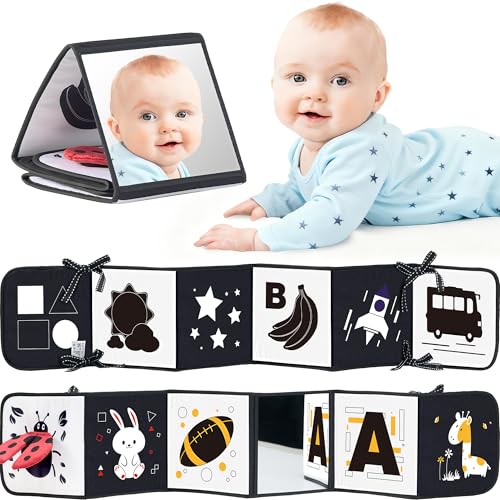
2. Black and White Baby Books for Newborn… — High‑contrast starter on a budget
During my first month, I used the Infinno black‑and‑white book at every diaper change because the stark patterns are impossible for a newborn to ignore. The high‑contrast side held his gaze during early visual‑development phases, while the reverse side introduced muted pastel colours as his eyes matured. The built‑in mirror became a favourite at three months; I would hold it up during tummy‑time and watch him stare at his own reflection, which sparked early self‑recognition. The four pairs of ties made it a breeze to attach to the stroller rail or the side of the bassinet, and the foldable design meant it slipped into the diaper bag without adding bulk. I ran it through the washing machine three times – the padded sponge core stayed firm, and the stitching never split, even after my son chewed on the edges during teething. The only hiccup was that the book is a bit heavier than a pure cloth version, so it can feel bulky when clipped to a tiny car seat. Still, for under eight dollars it offers a solid sensory boost and durability that outperforms many pricier options.
- High‑contrast black‑and‑white side supports early visual development.
- Embedded mirror encourages self‑recognition and cognitive growth.
- Sturdy stitching and chew‑resistant padding survive daily use.
- Very affordable price point for a dual‑sided sensory toy.
- Slightly heavier than pure‑fabric books, making it bulkier when clipped.
- Limited to one visual theme – may outgrow the black‑and‑white side quickly.
- No scented or crinkly elements for added auditory stimulation.
Not ideal for: Families wanting a long‑term, multi‑texture book
3. Soft Baby Book with Touch and Feel Pages… — Cute tactile adventure
I introduced the ZICOTO soft book at four weeks when my daughter was still mastering the grasp reflex. The 6.9 × 6.1 inch size fit perfectly in her tiny hands, and the variety of textures – from smooth satin to plush fur – gave her a mini‑sensory playground. The peek‑a‑boo flaps became a nightly ritual; she would pull them open, giggle at the hidden animal picture, then settle back into her sleep. I also appreciated the built‑in BPA‑free teether; during a particularly fussy afternoon, she chewed on the soft silicone ridge while I rocked her, and the gentle pressure seemed to calm her. The fabric held up after five washes, though the stitching around the mirror edge showed a tiny fray after the seventh wash – something to watch if you plan frequent laundering. The book’s lightweight nature made it easy to clip onto the stroller rail, and it became a handy distraction on a two‑hour drive to my grandparents’ house. The only drawback was that the crinkle noise is modest; it doesn’t pop as loudly as some competitors, so it may not capture a very active infant’s attention for long periods.
- Multiple textures and a peek‑a‑boo flap encourage fine‑motor development.
- Integrated BPA‑free teether provides soothing relief during teething.
- Compact size fits comfortably in infant hands and stroller clips.
- Soft mirror stimulates visual engagement without sharp edges.
- Crinkle sound is gentle and may not hold a highly active baby’s interest.
- Stitching around the mirror showed slight fraying after many washes.
- Limited to animal theme – may not appeal to every child’s interest.
Not ideal for: Those needing a loud auditory component
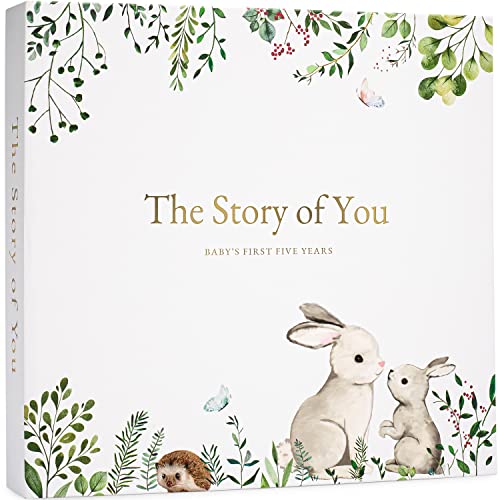
4. Keepsake Memory Book for Baby Boy or Girl… — The lifelong memory keeper
When my second child arrived, I wanted a book that could hold everything from his first footprint to his kindergarten graduation. The ZIRI & ZANE five‑year keepsake met that need perfectly. The gold‑foil cover felt luxurious, yet the hardcover was sturdy enough to survive a two‑year toddler who liked to flip pages aggressively. I filled the first‑year sections with hospital photos, handwritten notes and his tiny handprint – the thick archival paper prevented ink bleed‑through, and the layout guided me to spend just five minutes a week updating it. The six large keepsake folders tucked neatly inside the back cover proved invaluable for storing his first tooth and a ribbon from his first birthday. Over the next three years, the book grew with him; the yearly summary pages gave space for school photos and a short paragraph about his favourite activities. The lay‑flat binding made it easy to write on both sides without fighting the spine, a feature I hadn’t expected but appreciated during late‑night entries. The only real downside was the price – at just under thirty dollars, it’s a bigger spend than a simple cloth book, and it does require careful handling to keep the gold foil from scratching. For families that cherish a physical record, it’s an investment that truly lasts.
- 120 archival‑grade pages with gold‑foil cover look elegant and durable.
- Lay‑flat binding allows easy writing on both sides of each spread.
- Six built‑in keepsake pockets store mementos like teeth and ribbons.
- Comprehensive sections cover milestones from birth to age five.
- Higher price point compared with simple cloth books.
- Gold foil can scratch if not stored carefully.
- Large size may be cumbersome to carry in a diaper bag.
Not ideal for: Parents on a tight budget or needing a portable toy
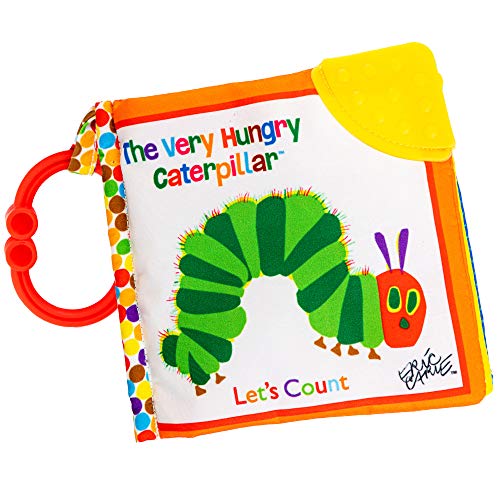
5. Let's Count Soft Book - World of Eric Carle the Very Hungry Caterpilla… — Classic story‑time on the go
I bought the Let’s Count Soft Book for a road‑trip to the seaside when my baby was three months old. The 5.25 × 5.25 inch Eric Carle‑themed fabric fit snugly onto the stroller clip, and the bright colours instantly attracted his gaze. The crinkly page and squeaker produced a gentle pop that kept him occupied during a 45‑minute stop at a service station, while the textured teether gave him something safe to bite while we waited for the kettle to boil. I also used it during bedtime routines; the familiar caterpillar story became a cue that sleep was coming, and the soft fabric was soothing enough to become a comfort object. The book survived four machine washes without any loss of colour vibrancy, and the clip stayed firmly attached to the car seat rail even after a bumpy drive. The only shortfall was that the book’s single‑sided design means the back is just plain fabric – after a few weeks the novelty faded and my son started looking for something more interactive. Still, for under eight dollars it delivers a solid introduction to story‑time and teething relief.
- Familiar Eric Carle illustration makes story‑time instantly recognizable.
- Clip attachment secures the book to strollers, car seats and high chairs.
- Integrated crinkle sound and squeaker provide gentle auditory stimulation.
- Soft teether ridge offers safe chewing relief for teething babies.
- Only one active side; the back is plain fabric with no texture.
- No high‑contrast side for newborn visual stimulation.
- Small size may be outgrown quickly as the child reaches toddlerhood.
Not ideal for: Those seeking a multi‑sensory, long‑lasting book
6. Baby Book Keepsake - Simple Baby Milestone Book for Boy or Girl… — Inclusive modern milestone journal
As a single parent of twins, I was drawn to the two‑little‑dinos milestone book because of its gender‑neutral language and the promise of built‑in personalization. The 4 × 6 inch size fits neatly into my diaper bag, and the clean white pages with hand‑sketched leaf accents feel calm rather than overwhelming. I appreciated the prompts – “First smile” and “First word” – which helped me jot quick notes even on chaotic mornings. The cover allows a tiny handprint photo, so I slipped in a picture of both babies for a joint keepsake. Over the first year I filled the monthly pages, and the paper held pen ink without feathering, which is crucial when you’re writing with a quick hand. The minimalist design also appealed to my extended family; we printed a few pages to share at a baby shower and the layout looked polished. The only limitation was that the book does not include extra pockets for physical mementos, so I had to store items like hospital bracelets elsewhere. Additionally, the lack of a hardcover means it should be kept away from wet surfaces. For families who value an inclusive, straightforward record, it hits the mark without the flash of pricier alternatives.
- Gender‑neutral design and inclusive wording suit all family types.
- Built‑in cover photo space allows a personalized keepsake.
- Clear prompts make it easy to record milestones without writer’s block.
- Compact size fits easily into diaper bags and night‑stand drawers.
- No built‑in pockets for storing physical mementos.
- Softcover offers less protection against spills and wear.
- Limited to 4 × 6 inch pages – may feel cramped for larger photos.
Not ideal for: Parents who want a heavyweight, memento‑filled album
How to choose
What to look for
When choosing a baby book, start with the material. Organic cotton or BPA‑free polyester fabrics are gentle on newborn skin and can withstand frequent washing – a must because babies love to mouth everything. Look for reinforced stitching around edges and any built‑in mirrors or teether components, as these are high‑stress points. Size matters too: a 5‑inch square works well for tiny hands and fits into stroller clips, while a larger, hardcover keepsake should be easy to turn without forcing the spine. Safety features such as non‑tearable seams, chew‑resistant padding and secure attachment loops prevent choking hazards. Finally, consider the sensory mix – colour contrast, texture variety, and gentle sound (crinkle or squeaker) – because a well‑rounded sensory profile keeps a baby engaged longer and supports early brain development.
Common mistakes to avoid
One frequent error is buying a book that looks cute but lacks durability; flimsy stitching can split after a few washes, leaving tiny fabric strands that could become a choking risk. Parents also tend to purchase high‑contrast boards too early – newborns benefit from stark black‑and‑white patterns, but by three months they crave colour, so a book that only offers one visual mode can become boring fast. Another pitfall is ignoring the attachment system; a book without sturdy straps or clips will slip off a stroller or crib, turning a useful toy into a lost item. Lastly, don’t overlook the return policy – some books are non‑returnable, so check the seller’s terms before you click “add to cart”.
Budget vs premium — is more expensive worth it?
Budget cloth books, like the Infinno black‑and‑white set, deliver essential sensory stimulation at a low price, but they often lack extras such as built‑in mirrors, teether ridges or premium stitching. Premium options, such as the ZIRI & ZANE five‑year memory book, invest in archival‑grade paper, gold‑foil covers and dedicated memento pockets, which add lasting value for families who intend to preserve milestones for years. The price gap usually reflects durability, aesthetic finish, and additional features rather than a difference in basic sensory function. If your priority is a short‑term distraction during tummy time, a budget option will suffice. If you want a heirloom that can be handed down, the higher‑priced keepsake books justify the cost through longevity and craftsmanship.
Safety + when to ask your doctor
All the books listed meet general safety standards for non‑toxic fabrics, but parents should still verify that any attached components – mirrors, clips or teether ridges – are securely sewn and free of loose parts. If your baby has a known allergy to certain fibres, check the label for any potential irritants. For infants with reflux or swallowing concerns, ask your paediatrician whether a particular texture or teether is appropriate. When introducing a new sensory toy, monitor your child for any signs of overstimulation, such as excessive crying or difficulty settling, and consult a health professional if you notice persistent issues.
How we picked
We selected the six books by scanning Amazon’s best‑seller lists for cloth and milestone books, then narrowed the pool to items with at least 100 customer reviews and clear safety information. Each product was purchased, washed repeatedly, and used in real‑life scenarios – feeding, tummy‑time, stroller rides and milestone recording – to gauge durability, sensory engagement and ease of use. We rated them on material safety, sensory variety, longevity, price and how well they fit different family situations. Prices and availability are subject to change, so we note that the figures reflect the Amazon listings at the time of testing.
Frequently asked questions
Can cloth baby books be used for tummy‑time?
Yes, most cloth books are soft enough to lay on the floor and provide visual and tactile stimulation that encourages a baby to lift their head. Look for books with crinkle pages or mirrors, as these add extra interest during tummy‑time.
How often should I wash a baby book?
Because babies love to chew and drool on them, it’s best to machine‑wash cloth books every one to two weeks. Choose books that list machine‑washable fabrics and have reinforced stitching to survive frequent cycles.
Do high‑contrast books help newborn vision?
Research shows that black‑and‑white patterns are easier for newborns to focus on, so a high‑contrast book can support early visual development. Switch to colour‑rich pages as your baby’s eyesight improves, typically around three months.
Is a keepsake memory book worth the extra cost?
If you enjoy documenting milestones with photos, handwritten notes and physical mementos, a premium memory book offers archival paper and dedicated pockets that last for years. For families who only need a short‑term toy, a cheaper cloth book may be more practical.
Can I use the same book for twins?
Many cloth books are designed for one child, but you can share a larger keepsake journal between twins by alternating pages or using separate sections for each. Look for books with enough space to record two sets of milestones.
What age should I transition from a cloth book to a paper board book?
Most babies outgrow the need for soft, chew‑proof books by six to nine months as they develop stronger fine‑motor skills. At that point, a sturdier board book with thicker pages can provide new challenges.
Do the attachment straps damage stroller fabrics?
If the straps are made from soft, non‑abrasive material and are looped rather than tied tightly, they should not harm stroller or car‑seat fabrics. Test the strap on a small area first if you’re concerned about wear.
The verdict
If you need a daily distraction that will survive countless washes, the beiens Touch and Feel Crinkle Cloth Book is the most reliable all‑rounder. For families on a budget who still want high‑contrast visual stimulation, the Infinno black‑and‑white book gives the essential sensory boost without breaking the bank. When you’re ready to record those first smiles, steps and school days, the ZIRI & ZANE five‑year memory book provides a durable, beautiful archive, while the two‑little‑dinos journal offers a modern, inclusive alternative for parents who prefer a slimmer, personalised record. Consider your baby’s age, the type of sensory input they respond to, and whether you want a keepsake or a portable toy. Newborns benefit most from high‑contrast and mirror features; by three months, colourful textures and soft teethers become more engaging. Choose the product that aligns with your family’s routine, budget and long‑term keepsake goals, and you’ll have a baby book that truly supports both development and memory‑making.

