Newborn skin is thin and can dry out quickly. After the first full bath, most experts suggest bathing 2 to 3 times per week during the first month. The AAP notes that daily baths are unnecessary unless the baby has a medical condition that requires extra cleaning.
If your baby has a skin condition like eczema, your pediatrician may recommend more frequent, shorter baths with prescribed cleansers. Conversely, if your baby’s skin stays supple, you can stick to the lower end of the range.
Remember that bathing is also an opportunity to check the baby’s skin for any irritation, rashes, or signs of dryness. A quick visual scan after each bath helps you catch issues early and adjust routine moisturizers as needed.
Can you bathe a newborn before the umbilical cord falls off?
As mentioned, a sponge bath is safe and recommended while the cord is still attached. Keep the bath area limited to the face, hands, and diaper region. Avoid using any soaps or shampoos on the stump. Once the cord has separated, you can transition to a full tub or sink bath.
The key is to keep the cord dry. If you accidentally get water on it, gently pat it dry with a clean cloth and monitor for any redness or discharge. Most cords heal without complication, but a soggy stump can become a portal for bacteria.
How to prepare for a newborn’s first bath at home
Preparation is the secret to a stress‑free bath. Gather everything you’ll need within arm’s reach before you undress your baby. This “bath station” approach prevents you from leaving the baby unattended, even for a moment.
- Warm water in a small tub or clean sink (see water‑temperature guidelines below).
- A soft washcloth or baby sponge.
- Gentle, fragrance‑free baby cleanser (optional).
- Two soft, hooded towels for wrapping.
- Clean diaper and clothing.
- A soft hairbrush or comb (if hair is present).
- All supplies placed on a stable, non‑slippery surface.
Before you start, test the water temperature with your wrist or elbow; it should feel comfortably warm, not hot. The room should be warm (about 22 °C/72 °F) to prevent the baby from getting chilly.
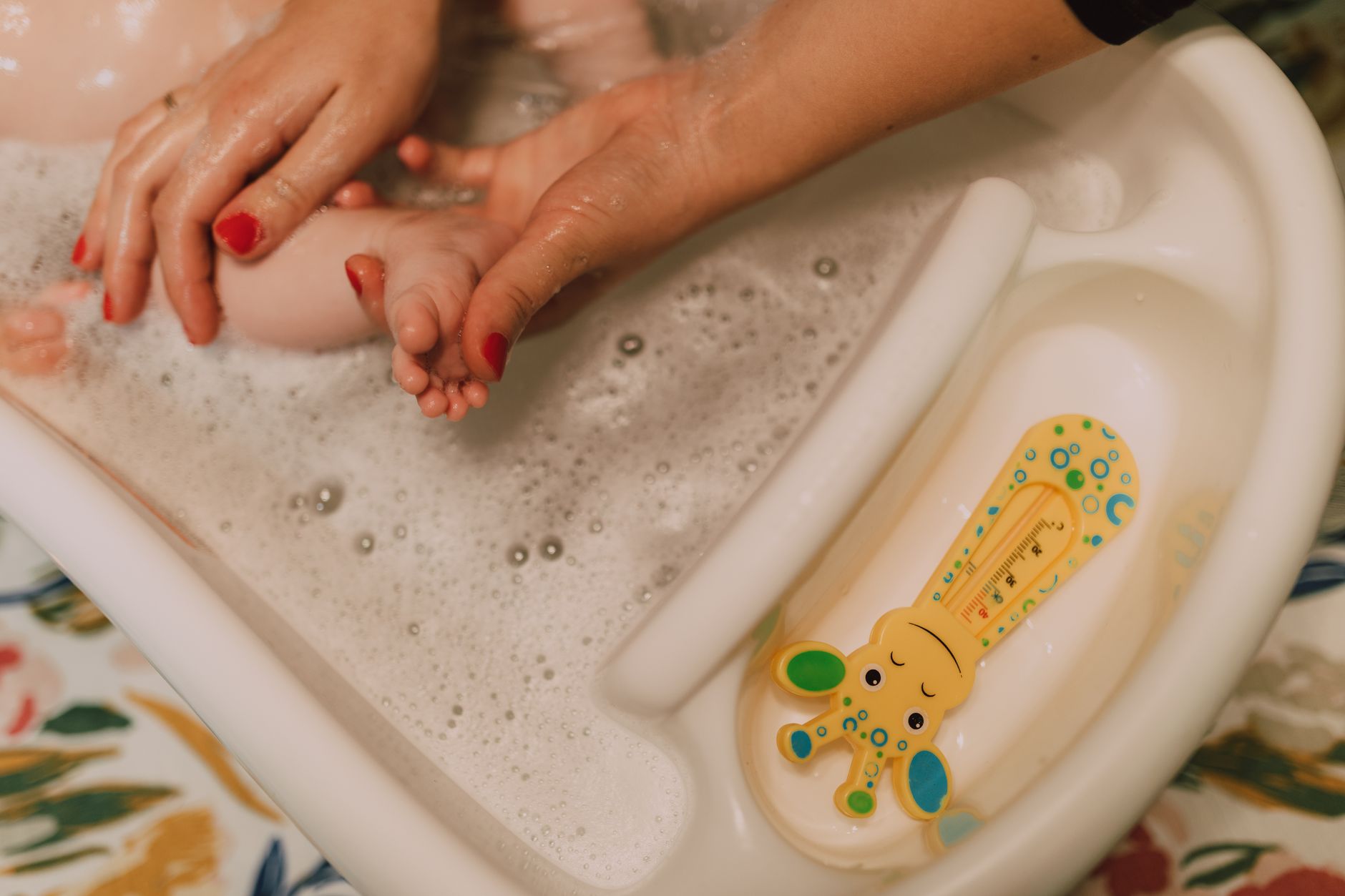
Newborn bath essentials
Here’s a concise checklist you can print and tape to the side of the tub:
- Thermometer or your elbow for water temperature
- Soft cotton washcloths (2‑3)
- Fragrance‑free baby cleanser (optional)
- Hooded towel or blanket
- Clean diaper and outfit
- Soft hairbrush (if needed)
- Baby-safe cotton gloves (to prevent scratching)
Having this list at eye level reduces the chance of forgetting a crucial item, which is especially helpful when you’re juggling a sleepy newborn and a half‑full diaper bag.
What are the benefits of delaying the first bath for newborns?
Delaying the first bath offers several health and bonding advantages, supported by the World Health Organization (WHO) and the AAP:
- Thermoregulation: The vernix caseosa—a white, waxy coating—helps keep newborns warm. Leaving it on for a few days protects against heat loss.
- Skin microbiome development: The natural bacteria in vernix nurture a healthy skin flora, reducing the risk of eczema and infections.
- Bonding: Skin‑to‑skin contact after birth releases oxytocin, promoting maternal‑infant bonding. A delayed bath allows more uninterrupted cuddling.
- Reduced stress: Early baths can be overstimulating. Waiting lets the baby adjust to the extra‑uterine environment before exposure to water.
Studies from the National Institutes of Health (NIH) show that newborns who receive their first bath after 24 hours have more stable heart rates and fewer episodes of crying compared with those bathed within the first few hours.
Additionally, keeping the vernix intact gives the newborn’s skin a gentle, natural moisturizer that can help prevent dryness during the first weeks, especially in dry climates.
What temperature should the water be for a newborn’s first bath?
Ideal water temperature is 37 °C (98.6 °F), which matches the baby’s core body temperature. Anything cooler can cause chilling; anything hotter can burn delicate skin. Use a digital bath thermometer if you have one, or simply test the water with the inside of your wrist.
Newborn bath water temperature guidelines
Always add water to the tub first, then adjust with cold water if needed. Never pour hot water directly onto the baby.
If you don’t have a thermometer, a quick test is to dip your elbow or wrist; the water should feel warm—not hot enough to make you pull away.
How long should a newborn’s first bath take?
Keep the first bath brief—aim for 5 minutes or less. Newborns can become chilled quickly, and a short, soothing session helps them stay comfortable. As the baby grows, you can gradually extend the time to 10‑15 minutes, but always monitor for signs of discomfort.
Newborn bath time routine
A simple routine that works for most families:
- Gather supplies and check water temperature.
- Undress baby, leaving the diaper on for added warmth.
- Support the head and neck, gently lower baby into the water.
- Use a washcloth to clean the face, then the body—one area at a time.
- Rinse quickly with a cup or handheld sprayer, avoiding splashing.
- Lift baby out, wrap in a hooded towel, pat dry.
- Apply a fragrance‑free moisturizer if skin feels dry.
- Dress and cuddle!
Consistency helps the baby learn that bath time is safe and predictable, which can reduce fussiness over the next few weeks.
When you finish, keep the baby wrapped in the towel for a minute or two before changing clothes. This transition period lets the baby adjust from the warm water to the room temperature without a sudden chill.
Newborn first bath safety tips
Safety is paramount. Follow these guidelines to minimize risk:
- Never leave baby unattended. Even a second away can lead to slipping.
- Keep the water level shallow—no deeper than 2‑3 inches.
- Use a non‑slippery mat in the tub or sink.
- Support the head, neck, and back at all times.
- Check water temperature every few minutes.
- Have a clean diaper and clothes ready before you start.
- Avoid using regular soaps or shampoos with harsh chemicals.
Common mistakes to avoid during a newborn’s first bath
Even well‑meaning parents can slip up. Here are frequent errors and how to prevent them:
- Using water that’s too hot or too cold. Always test temperature.
- Leaving the baby unattended. Keep all supplies within arm’s reach.
- Submerging the umbilical cord stump. Wait until it falls off.
- Using adult‑strength soaps. Stick to fragrance‑free, hypoallergenic baby cleansers.
- Bathing for too long. Aim for 5 minutes.
- Rough towel‑drying. Pat gently to avoid skin irritation.

First bath for newborn with jaundice
Jaundice is common in the first week. A gentle, warm bath can help promote bilirubin excretion through the skin, but avoid overly hot water which could worsen dehydration. Use lukewarm water (37 °C) and keep the bath short. Always follow your pediatrician’s advice on phototherapy and feeding frequency.
Bathing a newborn with eczema
For eczema‑prone skin, choose a fragrance‑free, soap‑free cleanser and limit bath time to 5‑7 minutes. Add a tablespoon of colloidal oatmeal to the water if your pediatrician recommends it. After the bath, apply a pediatric‑approved moisturizer while the skin is still damp to lock in moisture.
How to bathe a premature newborn
Premature babies (< 37 weeks gestation) have thinner skin and lower body temperature regulation. Wait until the infant’s medical team clears them for a tub bath—often after the umbilical cord falls off and the baby’s weight is at least 1.5 kg. Use a heated, infant‑size tub, keep water depth under 2 inches, and maintain room temperature at 24 °C (75 °F). Keep baths under 5 minutes and monitor vitals closely.
Bathing a newborn in a sink vs tub
Both options are safe if you follow the same principles. A sink can be more convenient for quick sponge baths and takes up less space. A small baby tub offers a more traditional “water‑only” experience and can be easier for parents who want to support the baby’s head and back while lying it down.
Bathing a newborn with a tongue tie
A tongue‑tie (ankyloglossia) does not affect bathing, but it can make it harder for the baby to latch during feeding afterward. Keep the mouth clean with a soft cloth, and avoid any soap that could cause irritation near the tongue. If you notice drooling or difficulty swallowing after the bath, mention it to your pediatrician.
Bathing a newborn after circumcision
Many parents wonder whether a newborn can be bathed after a circumcision, which is usually performed within the first week of life. The key is to keep the surgical site clean and dry while allowing it to heal. Most pediatric surgeons advise waiting 24‑48 hours before submerging the baby, but a gentle sponge bath is safe as long as you avoid direct water pressure on the incision.
Use a soft, damp cloth to gently clean around the circumcised area, patting dry with a clean towel. Apply any prescribed ointment, and keep the diaper snug but not too tight to prevent friction. If you notice excessive bleeding, swelling, or a foul odor, contact your pediatrician immediately.

Bathing a low‑birth‑weight infant
Low‑birth‑weight (LBW) infants—those weighing less than 2,500 g at birth—have more fragile skin and may struggle with temperature regulation. For these babies, a brief, “skin‑to‑skin” bath is often recommended, using a small, pre‑warmed basin with only a few centimeters of water.
Before the bath, check that the room is warm (around 24 °C/75 °F). Test the water with your wrist; it should feel comfortably warm, not hot. Limit the bath to 2‑3 minutes, and have a second caregiver ready to support the baby’s head and back. After the bath, wrap the infant in a soft, pre‑warmed blanket and monitor core temperature for at least 10 minutes.
If the baby has any medical devices (e.g., catheters), ensure they stay dry and protected. Always follow the guidance of the neonatal team, who may provide a customized bathing protocol based on the infant’s specific health needs.
Bathing a newborn in winter or cold climates
Cold rooms and drafts can quickly lower a newborn’s body temperature. In winter, pre‑heat the bathing area to at least 22 °C (72 °F) and keep the door closed. Use a space heater with a safety shut‑off if the room feels chilly, but place it at a safe distance from the baby. After the bath, wrap the infant in a soft, insulated blanket and keep the room warm for the next 30 minutes to prevent post‑bath cooling.
According to the NHS, a newborn can lose heat 25 % faster in a cool environment, so checking the water temperature and the room’s warmth becomes even more critical. If you’re unsure about the ambient temperature, a simple hand‑warmth test—holding your hand near the baby’s chest—can tell you if the space feels comfortably warm.
Choosing eco‑friendly and skin‑safe bath products
Many parents want to reduce chemical exposure while staying environmentally conscious. Look for cleansers labeled “certified organic,” “plant‑based,” or “biodegradable.” The Environmental Working Group (EWG) rates baby products on a scale of 1–10; aim for a score of 1‑2 for the most skin‑friendly and low‑toxic options.
Fragrance‑free, hypoallergenic brands such as Aquaphor, Cetaphil Baby, and California Baby often meet both safety and sustainability criteria. Always patch‑test a new product on a small area of the baby’s arm before full use, and rinse thoroughly to avoid residue that could irritate sensitive skin.
When shopping, check the ingredient list for common irritants like parabens, sulfates, and synthetic fragrances. Opt for products that list simple, recognizable ingredients such as “organic oat extract” or “shea butter.”
How to create a calm bathing environment for a newborn
Newborns are highly sensitive to light, sound, and temperature changes. Dim the lights, play soft instrumental music, and keep the space free of strong odors. A white‑noise machine set to a gentle “rain” or “heartbeat” sound can mimic the womb environment and help the baby stay relaxed.
Holding a soft, familiar lovey or swaddling blanket nearby can also provide reassurance. Many parents find that a brief “bath‑time lullaby” sung in a low voice helps the infant associate the water with comfort rather than surprise.
Consider using a warm, natural‑fiber bath mat that feels gentle under the baby’s feet, and keep the bathing surface free of any plastic or cold metal that could startle them.
Myth vs. fact
Myth: Newborns need a daily bath to stay clean.
Fact: Daily bathing can strip natural oils; 2‑3 baths per week are sufficient unless the baby gets dirty or has a medical condition.
Myth: The first bath must be done within the first 24 hours.
Fact: Delaying the first bath until the umbilical cord falls off supports better temperature regulation and skin health.
Myth: Any baby shampoo is safe for newborns.
Fact: Only fragrance‑free, hypoallergenic baby cleansers are recommended; adult shampoos can irritate delicate skin.
Key takeaways
- Wait for the umbilical cord stump to fall off (usually 7‑14 days) before a full bath.
- Use lukewarm water around 37 °C (98.6 °F) and keep the bath under 5 minutes.
- Bath 2‑3 times per week in the first month; daily baths are unnecessary.
- Gather all supplies beforehand; never leave baby unattended.
- For skin conditions (jaundice, eczema, prematurity) tailor water temperature and duration as advised by your pediatrician.
- After the bath, pat dry, moisturize if needed, and enjoy the bonding moment.
- In cold climates, pre‑heat the room and keep the baby wrapped after bathing.
- Choose eco‑friendly, fragrance‑free cleansers and create a calm, dimly lit environment to soothe your newborn.
- Special considerations apply after circumcision or for low‑birth‑weight infants; follow your provider’s guidance.
Frequently asked questions
When can I start bathing my newborn daily?
Daily bathing is generally not needed for most newborns. If a baby has a specific skin condition that requires daily cleansing, follow your pediatrician’s guidance. Otherwise, 2‑3 baths per week are sufficient in the first month.
How do I know if my newborn is ready for a bath?
Check that the umbilical cord stump has fallen off and the skin around the belly button is dry. The baby should also be able to stay calm for a few minutes when held. If the baby seems unusually fussy or the cord is still moist, wait another day and try again.
What are the risks of bathing a newborn too early?
Bathing before the cord falls off can increase infection risk and cause the stump to soften, leading to bleeding. Water that’s too hot can burn delicate skin, while water that’s too cold can cause hypothermia. Over‑bathing can also strip natural oils, leading to dry, irritated skin.
Can I use soap on my newborn’s first bath?
Soap is optional. If you choose to use a cleanser, pick a fragrance‑free, hypoallergenic baby wash. Apply only a tiny amount to a washcloth and rinse thoroughly. Many parents skip soap for the first few baths and rely on plain water.
How often should I bathe my newborn in the first week?
Two to three sponge baths per week are typical. Focus on cleaning the face, neck, hands, and diaper area. A full immersion bath can be introduced after the cord falls off, usually around day 7‑14.
What are the benefits of using a warm bath for newborns?
Warm water (around 37 °C) helps maintain body temperature, soothes the baby, and can promote better sleep. It also encourages gentle circulation and can aid in the natural exfoliation of the vernix, supporting skin health.
Are there any special considerations for bathing a newborn with a tongue tie?
A tongue tie does not affect the bathing process. However, keep the mouth clean with a soft cloth and avoid harsh cleansers near the tongue. If feeding difficulties arise after a bath, discuss them with your pediatrician.
Is it safe to use a bath thermometer?
Yes. A digital bath thermometer gives an accurate read of water temperature and helps prevent accidental scalds. Just be sure to calibrate it according to the manufacturer’s instructions and double‑check with your wrist before placing the baby in the water.
Can I add baby oil or moisturizer to the bath water?
Adding a few drops of fragrance‑free baby oil can help the water retain moisture, but it’s not necessary. Most experts recommend applying moisturizer directly to the skin after the bath while the skin is still damp for best absorption.
Can I use a bath seat for my newborn?
Bath seats are designed for older infants who can sit up and have good head control. For newborns, a seat can raise the baby too high, increasing the risk of slipping. A small tub or sink with a flat, supportive surface is safer for the first weeks.
What should I do if my newborn gets water in their ears?
A tiny amount of water in a newborn’s ears is usually harmless. Gently tilt the baby’s head to the side and use a soft towel to pat the outer ear dry. If you notice persistent redness, fluid discharge, or the baby seems uncomfortable, contact your pediatrician.
When to see a doctor / specialist
If you notice any of the following after the bath, contact your pediatrician promptly:
- Redness, swelling, or pus around the umbilical area.
- Persistent skin rash, severe dryness, or signs of eczema.
- Fever (temperature ≥ 38 °C/100.4 °F) that develops after the bath.
- Vomiting, persistent crying, or difficulty breathing.
- Any sign of a burn—red, blistered, or painful skin.
These symptoms may warrant evaluation by a pediatrician, dermatologist, or, in rare cases, a pediatric infectious disease specialist. This article is for informational purposes only and does not replace personalized medical advice.
References
- American Academy of Pediatrics. “Guidelines for Neonatal Care.” AAP, 2023.
- World Health Organization. “Essential Newborn Care.” WHO, 2022.
- National Institute of Health. “Neonatal Skin Development.” NIH, 2021.
- National Health Service (UK). “Newborn Bathing Guidelines.” NHS, 2023.
- American Academy of Dermatology. “Caring for Infant Skin.” AAD, 2022.
- Harvard T.H. Chan School of Public Health. “Infant Bathing and Skin Health.” Harvard, 2023.
- Environmental Working Group. “EWG’s Guide to Baby Products.” EWG, 2023.
- American Psychological Association. “The Impact of Early Skin‑to‑Skin Contact.” APA, 2022.
- American Academy of Pediatrics. “Circumcision Care.” AAP, 2021.
- National Institute for Health and Care Excellence (UK). “Low‑Birth‑Weight Infant Care.” NICE, 2022.



