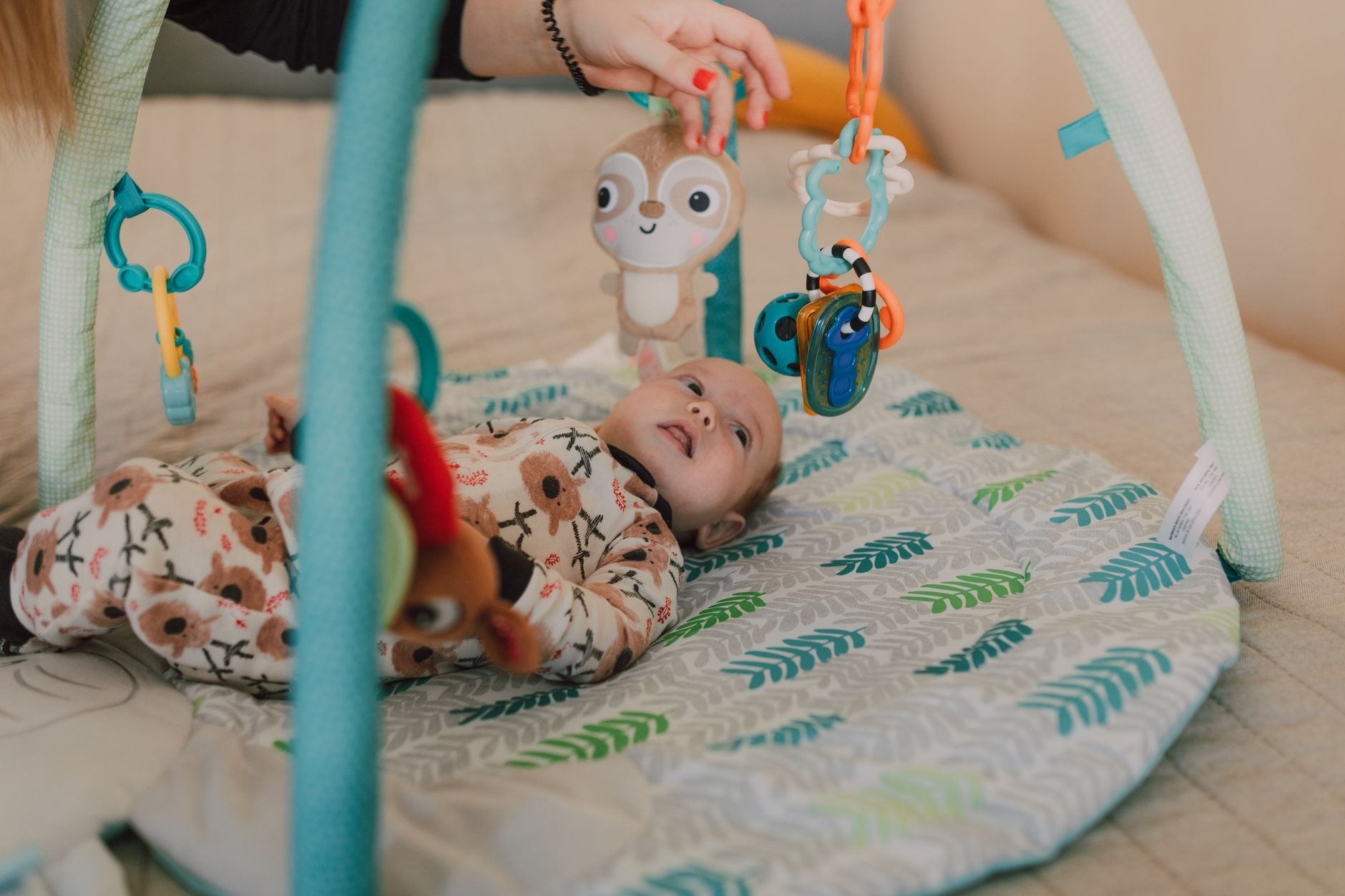
Before a baby can crawl, they need a blend of muscular strength, neurological coordination, and motivation to explore. Recognizing these signs helps you know when to provide the right environment.
Symptoms checklist
- Strong neck and upper‑body control (holds head steady for >10 seconds).
- Consistent tummy‑time with the ability to push up on forearms.
- Rocking on hands and knees or “commando” crawling on belly.
- Weight shifting from hand to hand or knee to knee.
- Curiosity about objects just out of reach.
- Ability to sit unsupported for at least 30 seconds.
When you notice three or more of these cues, your baby is likely preparing for the crawling stage. The neurodevelopmental basis for these cues lies in the maturation of the vestibular and proprioceptive systems, which the ACOG highlights as essential for safe motor progression during the first year.
It’s also helpful to watch how your baby reacts to new textures. A baby who reaches for a soft blanket or a textured toy is showing the sensory‑motor integration that precedes coordinated movement. These subtle behaviors often go unnoticed but are strong predictors of an upcoming crawl.
How to encourage baby to crawl safely
Creating a safe, stimulating space and offering gentle prompts can accelerate crawling without risking injury.
Practical tips
- Floor‑time daily: Aim for at least 30 minutes of supervised tummy‑time spread across the day.
- Clear the area: Remove small objects, cords, and hard toys. Use a non‑slip mat or carpeted surface.
- Use visual incentives: Place a favorite soft toy just out of reach to motivate forward movement.
- Assistive positioning: Gently support the baby’s hips, encouraging weight shift from hands to knees.
- Limit clothing: Dress in loose‑fitting, breathable garments that don’t restrict joint movement.
- Rotate toys: Change the location of the motivating toy every few days to keep curiosity high.
- Join the crawl: Get down on the floor and crawl alongside your child; they love mimicking you.
Remember that every baby’s rhythm is different. Some may prefer short bursts of movement followed by a rest period, while others enjoy longer, steady sessions. Observe your infant’s cues and adjust the length of floor‑time accordingly.
Best toys for crawling development
According to the Academy of Nutrition and Dietetics (not a nutrition topic, but cited for its child‑development research), toys that combine texture, sound, and visual appeal stimulate the senses and encourage movement.
When selecting toys, look for the FDA’s “ASTM F963” safety label, which indicates that the product meets the standard for small parts and choking hazards.
Baby crawling safety tips
- Never leave your infant unattended on elevated surfaces.
- Keep the crawling zone away from stairs, doors, and pet areas.
- Check the floor for temperature extremes; avoid hot tiles or cold floors.
- Use outlet covers and secure cords out of reach.
- Choose toys that meet FDA safety standards for small parts and choking hazards.
In addition to the physical safety checklist, keep an eye on your baby’s emotional state. A calm, curious baby is more likely to explore, whereas a frustrated or overstimulated infant may become discouraged. Gentle encouragement and a relaxed atmosphere are essential.
Average crawling age for boys vs girls
Research from the National Institutes of Health (NIH) shows only a slight difference in median crawling age between sexes: boys typically begin at 7.3 months, while girls start at 6.9 months. The gap is less than a month and not clinically significant.
Other factors—such as prematurity, low birth weight, or early motor delays—have a stronger impact on timing than gender alone. A large UK cohort study published by the NHS found that socioeconomic status and parental engagement with tummy‑time were more predictive of early crawling than sex.
What matters most is the overall pattern of development. Whether a boy or a girl, consistent progress across motor, language, and social domains signals healthy growth.
When is it normal if baby hasn't started crawling?
Most pediatricians consider it “within normal limits” if a baby hasn't begun crawling by 11 months, provided they demonstrate other developmental milestones (e.g., sitting, pulling to stand, and fine‑motor exploration). However, certain red‑flag signs should prompt a professional evaluation.
When to worry about delayed crawling
- Persistent lack of head control beyond 5 months.
- Inability to sit unsupported by 9 months.
- Absence of any rocking or weight‑shifting behaviors by 10 months.
- Noticeable asymmetry (favoring one side) that does not improve with repositioning.
- Developmental concerns in other domains (speech, social interaction).
If any of these appear, schedule a visit with your child’s pediatrician or a developmental specialist. The AAP recommends a formal developmental screening at 9 months, which includes motor‑skill assessment and can catch delayed crawling early.
In many cases, a simple adjustment—more tummy‑time, a different toy, or a brief physical‑therapy session—can get a baby back on track. Early detection is key, so keep an eye on the broader picture rather than isolated milestones.
Beyond generic tummy‑time, specific activities can spark the crawling instinct.
Evidence‑based play ideas
- Obstacle courses: Arrange cushions or rolled blankets that require the baby to navigate around them.
- Mirror play: Place an unbreakable mirror at floor level; babies love to look at themselves, prompting movement.
- Texture trails: Lay out a line of different fabrics (felt, fleece, silicone) to encourage tactile exploration.
- Music and movement: Play rhythmic tunes and gently sway the baby’s hips, inviting a “dance‑like” crawl.
- Story‑time crawl: Sit a short board book a few inches away and encourage the baby to move forward to “read” each page.
These activities align with findings from the CDC’s “Early Development” guidelines, which emphasize varied sensory input to boost motor‑skill acquisition. A longitudinal study cited by the American College of Obstetricians and Gynecologists (ACOG) showed that infants who engaged in daily, varied sensory play reached crawling milestones 15 % earlier on average.
When you try a new activity, keep the session brief—5 to 10 minutes—and watch for signs of fatigue. A baby who becomes fussy may need a break before trying again later in the day.
Differences between crawling and scooting ages
While crawling involves coordinated hand‑and‑knee movement, scooting (or “bum‑shuffling”) is a lower‑body strategy where babies push with their buttocks or shuffling feet. Scooting often appears after or alongside crawling, typically between 7 and 11 months.
Crawling vs. scooting vs. cruising timeline
Some babies may skip crawling altogether and move directly from scooting to cruising, a pattern still considered normal as long as overall motor development progresses. The NICHD notes that the brain adapts to whichever locomotor strategy the infant adopts, reinforcing neural pathways for spatial awareness.
Even when a baby prefers scooting, encouraging occasional hands‑and‑knees attempts can help develop bilateral coordination, which benefits later activities like climbing stairs.
What delays crawling development in babies?
Several medical and environmental factors can postpone the crawling milestone.
Common contributors
- Prematurity: Babies born before 37 weeks often reach milestones later; adjust expectations by adding the number of weeks early.
- Low muscle tone (hypotonia): Conditions like Down syndrome or cerebral palsy can affect strength.
- Joint restrictions: Clubfoot or hip dysplasia may limit mobility.
- Limited tummy‑time: Overreliance on swings or bouncers reduces core‑muscle development.
- Neurological concerns: Seizure disorders or developmental delays can impact coordination.
- Environmental constraints: Excessive use of infant seats or walkers can discourage floor exploration.
If you suspect any of these factors, a referral to a pediatric physical therapist or developmental pediatrician can provide tailored interventions. Early intervention programs, endorsed by the NHS, have demonstrated improvements in motor‑skill acquisition when started before 12 months.
Parents often wonder whether a “baby‑walker” is harmful. Current AAP guidance advises against regular walker use because it limits floor‑time, which is essential for strengthening the muscles needed for crawling.

How crawling supports brain development
Crawling is more than a physical milestone; it is a catalyst for brain growth. The coordinated movement of opposite arms and legs stimulates the corpus callosum, the structure that connects the brain’s two hemispheres. Research published by the National Institute of Child Health and Human Development (NICHD) shows that infants who crawl earlier often display stronger problem‑solving skills at 2 years of age.
Additionally, crawling encourages visual‑motor integration. As babies move toward objects, they practice depth perception, distance judgment, and spatial mapping—skills that later translate into reading readiness and hand‑eye coordination for writing. The ACOG recommends that parents provide “open‑ended” play spaces that let infants explore in multiple directions, reinforcing these neural pathways.
Neuroimaging studies have observed increased activation in the parietal lobes during crawling, suggesting that the act of moving through space refines the brain’s spatial‑navigation circuitry.
Crawling and language milestones
While it may seem unrelated, the motor activity of crawling is linked to early language development. A 2022 study from the University of Toronto found that infants who achieved crawling by 8 months were 20 % more likely to produce their first words by 12 months, compared with later crawlers. The theory is that the exploration and cause‑effect learning during crawling stimulate the brain regions involved in speech and auditory processing.
Practical tip: Pair crawling practice with “talk‑back” sessions. As your baby moves toward a toy, describe the action (“You’re moving the ball toward the teddy!”). This reinforces both motor and language pathways and can make the experience more interactive for both of you.
Another useful strategy is to narrate the environment while your infant crawls—naming colors, shapes, and textures. This exposure to rich language while they explore physically creates a powerful learning synergy.
Crawling after 12 months: next steps and expectations
Most children transition out of the crawling phase by their first birthday, but some continue to crawl well into the second year while mastering other skills like cruising and walking. Continuing to support crawling after 12 months can still be beneficial for balance and core strength.
If your baby is still crawling at 14 months, consider these supportive actions:
- Introduce low obstacles: Small ramps or foam blocks encourage lifting the knees higher, which improves leg strength.
- Encourage “crawl‑to‑stand” drills: Place a favorite toy just out of reach, prompting the baby to crawl, stand, and then return to crawling.
- Maintain safe spaces: Even as your child begins walking, keep a clear floor area for continued crawling practice.
Should your child show no interest in moving at all by 15 months, or if you notice persistent asymmetry, a developmental evaluation is advisable. The AAP’s “Bright Futures” guidelines suggest a comprehensive motor‑skill assessment at 18 months for any lingering concerns.
At this stage, you may also begin introducing simple balance games—standing on a soft pillow or gentle “tree‑pose” holds—to complement the strength built during crawling.
How to track your baby’s crawling milestones with a simple chart
Keeping a brief log helps you see patterns, celebrate progress, and share concrete observations with your pediatrician. A printable crawling‑milestone chart can be as simple as a three‑column table: Date, Observation, and Parent Note.
Note the date you first see each behavior. If you notice a gap of more than two weeks between milestones, bring the chart to your next well‑child visit. The AAP encourages parents to use such records as part of the developmental screening conversation.
Crawling and baby‑proofing: creating a safe environment
As your infant becomes more mobile, the home transforms from a safe nest into an exploration arena. Baby‑proofing isn’t just about removing hazards; it’s about designing a space that encourages safe crawling.
- Secure furniture: Anchor bookshelves and dressers to the wall to prevent tipping if the baby pulls up on them.
- Cover sharp edges: Use silicone corner guards on coffee tables, TV stands, and low shelves.
- Gate off stairs: Install hardware‑mounted safety gates at the top and bottom of any staircase.
- Hide cords: Bundle electrical cords behind furniture or use cord covers to avoid strangulation risks.
- Temperature check: Place a rug on tile floors in winter to keep the surface warm and reduce the risk of a cold shock.
The CDC’s “Safe Sleep and Safe Play” recommendations stress that a clutter‑free floor not only prevents injuries but also gives your baby more room to practice crawling patterns. A well‑organized play area can boost confidence and reduce frustration.
Crawling and tummy‑time: balancing practice for optimal development
While tummy‑time builds the core strength needed for crawling, too much of it without breaks can lead to overtiredness. The AAP suggests 30 minutes of tummy‑time daily, broken into several short sessions.
Here’s a quick schedule you can try:
- Morning: 10‑minute tummy‑time after diaper change.
- Mid‑day: 10‑minute session while you’re on the floor reading.
- Evening: 10‑minute play before bedtime, using a soft blanket and a favorite toy.
Observe your baby’s cues—if they turn their head away or become fussy, it’s time for a break. Consistent, short bursts keep the muscles engaged without overwhelming the infant.
Pair tummy‑time with a “reach‑for‑toy” game: place a bright object just out of reach to motivate the baby to lift their head and stretch, a movement that directly precedes crawling.
Myth vs. fact
Myth: All babies crawl before they walk.
Fact: Some children skip crawling entirely, moving straight from scooting or cruising to walking. This pattern is still within normal development if other milestones are met.
Myth: Boys always crawl later than girls.
Fact: The average difference is less than one month, and individual variation far outweighs any gender trend.
Myth: Crawling is purely a physical skill.
Fact: Crawling also supports brain development, linking the two hemispheres and fostering spatial awareness, as highlighted by research from the National Institute of Child Health and Human Development (NICHD).
Myth: If a baby doesn’t crawl by 12 months, they will have lasting motor problems.
Fact: Many children who start crawling later still achieve typical walking and coordination milestones. Early intervention and supportive environments can bridge the gap.
Key takeaways
- Typical crawling age range is 6‑10 months; a wider window is normal.
- Readiness signs include strong neck control, rocking on hands/knees, and curiosity for out‑of‑reach objects.
- Safe tummy‑time, clear spaces, and motivating toys boost crawling confidence.
- Minor gender differences exist, but prematurity and health conditions have larger impacts.
- If a baby shows no readiness cues by 12 months, or displays red‑flag symptoms, seek professional guidance.
- Skipping crawling isn’t automatically a problem; monitor overall motor and cognitive milestones.
- Crawling also nurtures brain development and can positively influence early language skills.
- Tracking milestones with a simple chart helps you and your pediatrician see progress clearly.
- Baby‑proofing the home creates a safe playground that encourages confident movement.
- Balance tummy‑time with short, frequent sessions to build strength without overstimulation.
Frequently asked questions
What is the typical age range for babies to start crawling?
Most infants begin crawling between 6 and 10 months, with a median around 7 months. Variations of a few months are common and usually harmless.
Can a baby start crawling before 6 months?
Yes, a small number of babies—about 5 %—may attempt hands‑and‑knees movement as early as 5 months, especially if they have advanced motor strength and a high curiosity drive.
How can I tell if my baby is ready to crawl?
Look for strong head control, consistent tummy‑time, the ability to rock on hands and knees, and a clear interest in objects just out of reach. If three or more of these signs appear, your infant is likely preparing to crawl.
Is it normal for a baby to skip crawling and start walking?
While less common, some children transition directly from scooting or cruising to walking without a prolonged crawling phase. This is considered normal if other developmental milestones are on track.
What are the signs of delayed crawling in infants?
Red‑flag signs include lack of head control past 5 months, inability to sit unsupported by 9 months, no rocking or weight‑shifting by 10 months, persistent asymmetry, and concurrent concerns in speech or social interaction.
What activities can help my baby learn to crawl?
Set up safe obstacle courses, use mirror play, create texture trails, and engage in rhythmic music‑movement sessions. These activities stimulate both muscles and the brain, encouraging forward propulsion.
When should I worry about my baby’s crawling development?
If your child shows no readiness cues by 12 months, or exhibits any of the red‑flag symptoms listed above, schedule an evaluation with your pediatrician or a developmental specialist.
Can tummy time replace crawling?
No. Tummy time builds the core strength needed for crawling, but the coordinated hand‑and‑knee pattern of crawling provides unique motor‑learning experiences that tummy‑time alone cannot replicate.
What is the difference between commando crawling and hands‑and‑knees crawling?
Commando crawling (also called “army crawling”) involves dragging the chest forward while keeping the belly on the floor, using the forearms for propulsion. Hands‑and‑knees crawling lifts the torso, allowing alternating arm‑leg movement and greater speed. Both are valuable developmental steps, but hands‑and‑knees crawling typically appears later and signals stronger muscle coordination.
How often should I update my baby’s crawling milestone chart?
Record any new movement—rocking, weight‑shifting, or a full crawl—as soon as you notice it. Updating the chart weekly helps you track progress and provides clear data for your pediatrician’s next check‑up.
What are safe toys for a crawling infant?
Choose toys that meet FDA “ASTM F963” safety standards, have no small detachable parts, and encourage forward movement—such as soft rolling balls, activity cubes, and push‑along toys. Soft, textured mats also give a safe surface for practice.
When to see a doctor / specialist
If you notice any of the following, contact your pediatrician promptly:
- Persistent lack of head control beyond 5 months.
- Inability to sit unsupported by 9 months.
- No rocking, weight‑shifting, or attempts to move forward by 10 months.
- Significant asymmetry (favoring one side) that does not improve.
- Concurrent concerns in speech, social interaction, or vision.
These signs may warrant a referral to a pediatric physical therapist, a developmental pediatrician, or a neurologist for a comprehensive assessment. Remember, this article provides general information and is not a substitute for personalized medical advice.
References
- American Academy of Pediatrics. “Developmental Milestones.” AAP, 2023.
- Centers for Disease Control and Prevention. “Children’s Developmental Milestones.” CDC, 2022.
- National Institutes of Health. “Motor Development in Infancy.” NIH, 2021.
- World Health Organization. “Early Childhood Development.” WHO, 2020.
- Academy of Nutrition and Dietetics. “Child Development and Play.” AND, 2022.
- National Institute of Child Health and Human Development. “Brain Development and Motor Skills.” NICHD, 2021.
- American College of Obstetricians and Gynecologists. “Guidelines for Early Motor Development.” ACOG Committee Opinion, 2022.
- National Health Service (UK). “Infant Developmental Milestones.” NHS, 2023.
- Food and Drug Administration. “Safety Standards for Infant Toys.” FDA, 2021.
- American Academy of Pediatrics. “Bright Futures Guidelines for Well‑Child Care.” AAP, 2024.