Ensure used car seat safety by checking expiration dates, recall status, and damage. Learn how to verify if a used car seat is safe for your child with our essential guide and checker.
By Shubhra Mishra — a mom of two who turned her own confusion during pregnancy into BumpBites, a global mission to make food choices clear, safe, and stress-free for every expecting mother. 💛
Check whether any food is safe during pregnancy with the BumpBites Food Safety Checker.
Quick take: Using a car seat past its expiration date or one that's been recalled can compromise your child's safety. Always check for a manufacturing date and expiration date on the seat, look up recalls using the model number, and thoroughly inspect any used car seat for damage or missing parts. When in doubt, it's always safest to buy new.
The journey into parenthood is a whirlwind of decisions, and few feel as weighty as ensuring your little one's safety. Among the biggest concerns for many expecting or new parents is the car seat. It's the first line of defense, a crucial piece of equipment designed to protect your most precious cargo. But what if you're considering a used car seat to save money, or you've been gifted one? It's natural to wonder: Is it truly safe?
🔢 Calculate it for your situation: Use our Car Seat Expiration for a personalized result in seconds.
That used car seat might look perfectly fine on the outside, but underneath the fabric, there could be hidden dangers – from expired materials to undisclosed crash history or even an active recall. We get it; the cost of baby gear adds up fast, and hand-me-downs or second-hand items can be a lifesaver for the budget. However, when it comes to car seats, safety must always come first.
This comprehensive guide will walk you through everything you need to know about checking a used car seat for safety. We'll show you exactly how to find expiration dates, check for recalls, and conduct a thorough inspection, so you can make an informed decision for your family. Your peace of mind, and your baby's safety, are our top priorities.
Why Car Seats Expire: More Than Just a Date
It might seem odd that a piece of plastic and fabric could have an expiration date, but car seats aren't like other baby gear that can be passed down indefinitely. They are complex safety devices, and just like food or medication, their effectiveness can degrade over time. The expiration date isn't an arbitrary number; it's a critical safety guideline set by manufacturers to ensure the seat performs as intended during a crash.
Several factors contribute to a car seat's expiration. First, the materials themselves degrade. The plastics used in car seats can become brittle or weaken over years of exposure to extreme temperatures – hot summers in the car, freezing winters – and UV light from the sun. This environmental exposure can cause microscopic cracks or reduce the plastic's ability to absorb impact effectively during a collision. While you might not see these changes with the naked eye, they can compromise the seat's structural integrity.
Second, car seat technology and safety standards are constantly evolving. Manufacturers continuously research and develop new materials and designs to offer better protection. An older car seat, even if it hasn't technically expired, might not meet the most current safety standards. This means it may not offer the same level of protection against newer crash test protocols as a more recently manufactured seat. The expiration date helps ensure that seats in use incorporate reasonably up-to-date safety features.
Third, wear and tear from everyday use takes its toll. Straps can fray, buckles can become stiff or less reliable, and padding can compress, reducing its cushioning effect. Components like adjusters, recline mechanisms, and LATCH connectors can also wear out, potentially failing when needed most. Even cleaning chemicals and spills can weaken fabrics and plastics over time. The expiration date accounts for this cumulative degradation, serving as a manufacturer's best estimate of the seat's safe lifespan.
Using an expired car seat carries significant risks. In a collision, an expired seat may not adequately protect your child. The weakened plastic shell could crack or shatter, the harness straps might fail to hold your child securely, or the buckle could malfunction. These failures can lead to serious injuries that a properly functioning, unexpired seat would prevent. It’s a risk no parent wants to take, which is why adhering to the expiration date is a non-negotiable aspect of car seat safety.
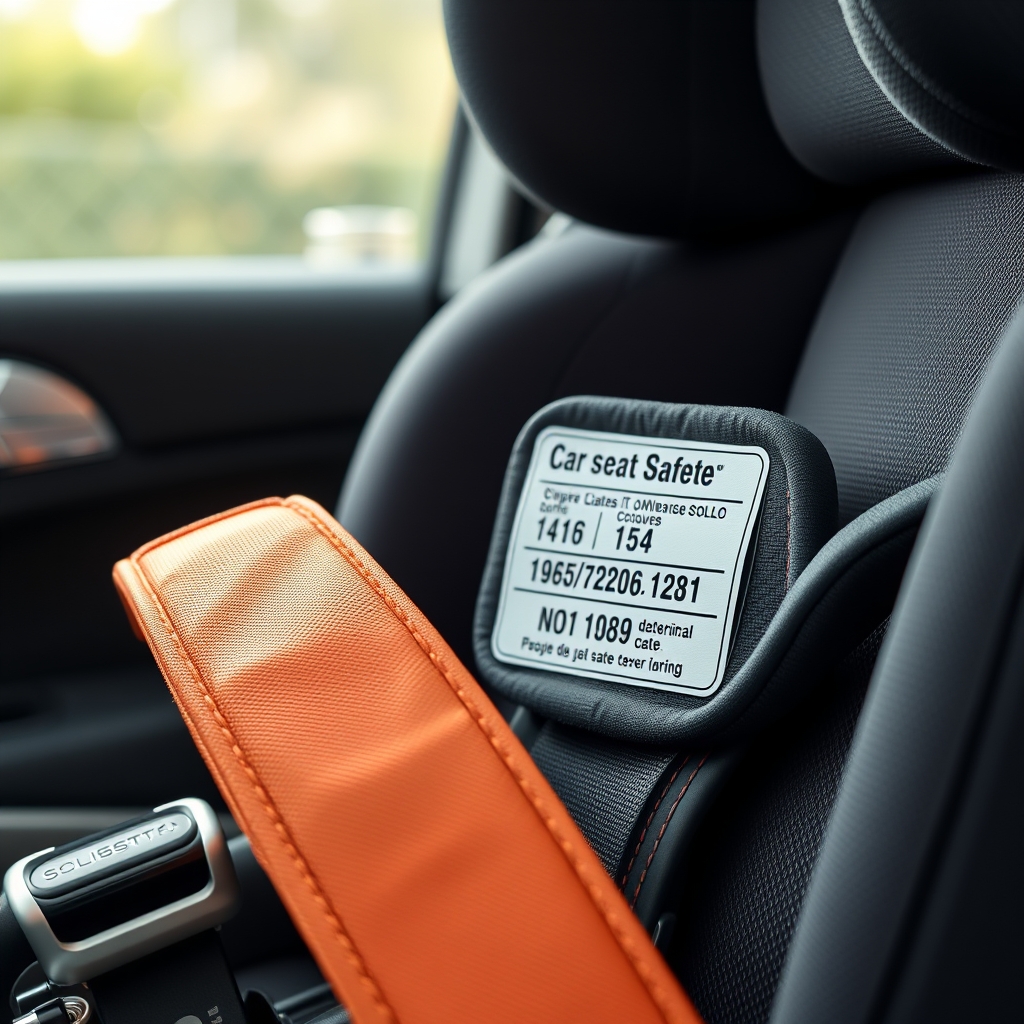
Always check the car seat's label or molded plastic for vital safety information like the expiration date.
How to Find the Expiration Date on Any Car Seat
Findi
ng the expiration date on a car seat is one of the most crucial safety checks you can perform. This date is typically found in one of a few standard locations, though it can vary slightly between manufacturers and models. Don't worry, we'll guide you through exactly where to look.
The most common place to find the expiration date is on a **sticker or label** affixed to the car seat's shell. This label is usually white, silver, or black, with clear text. You might find it on the bottom or side of the car seat base, on the back of the seat, or sometimes under the fabric cover near the child's feet. Look for phrases like "Do Not Use After," "Expiration Date," "Discard Date," or "Service Life." Often, it will be printed alongside the manufacturing date, so you can easily see both.
Another common location is **molded directly into the plastic shell** of the car seat. Manufacturers will often emboss the date into the plastic, usually on the back or bottom of the seat. This might be a circular dial with an arrow pointing to the month and year, or simply a series of numbers. Sometimes, you'll see a specific expiration date, while other times you'll find the "Date of Manufacture" (DOM), and the expiration date will be a set number of years from that date (e.g., 6, 7, or 10 years). If you only find a DOM, you'll need to check the car seat's instruction manual or the manufacturer's website for its specific lifespan.
Here's a step-by-step guide to help you locate it:
Remove the car seat from your vehicle: This will give you better access to all sides of the seat.
Check the bottom and back: These are the most common spots. Look for a large white sticker with black text.
Look under the fabric cover: Sometimes the label is hidden beneath the seat pad, especially on convertible or all-in-one seats.
Examine the plastic shell: Feel and look for dates molded into the plastic itself. They might be small and harder to read.
Consult the manual: The car seat's instruction manual will always specify where to find the date and what the exact lifespan of that particular model is. If you don't have the manual, you can usually find a digital version on the manufacturer's website by searching for the model name and number.
Once you've found the date, compare it to the current date. If the "Do Not Use After" date has passed, or if the "Date of Manufacture" indicates the seat is beyond its recommended lifespan, the car seat is expired and should not be used. For a quick way to calculate if your car seat is still safe based on its manufacturing date and typical lifespan, you might find our Car Seat Expiration calculator helpful. Remember, different types of car seats (infant, convertible, booster) can have different lifespans, so always refer to the specific seat's information.
Understanding Car Seat Recalls: Common Reasons and Safety Implications
Car seat recalls are an important part of ensuring ongoing safety. A recall happens when a manufacturer or a government agency (like the National Highway Traffic Safety Administration, or NHTSA, in the US) determines that a car seat model has a defect that could pose a safety risk to children. These defects might not be immediately obvious, but they can compromise the seat's ability to protect in a crash or even lead to injury during normal use.
Common reasons for car seat recalls include a wide range of issues. Sometimes, it's a **manufacturing defect**, such as a faulty buckle that can become stuck or release unintentionally, or a harness strap that doesn't adequately tighten. Other recalls stem from **design flaws**, where a component might not perform as expected under specific conditions, or the instructions could be unclear, leading to improper installation.
For example, recalls have been issued for:
Buckle malfunctions: Buckles that become difficult to unlatch, posing a risk in emergencies, or those that unlatch too easily.
Harness system issues: Straps that fray, adjusters that slip, or chest clips that break.
Structural weaknesses: Cracks in the shell, faulty recline mechanisms, or issues with LATCH connectors that prevent secure installation.
Labeling or instruction errors: Incorrect weight limits, unclear installation diagrams, or missing warning labels that could lead to misuse.
Flammability concerns: Fabric materials that do not meet federal flammability standards.
The safety implications of a recalled car seat can be severe. A faulty buckle could prevent a child from being quickly removed from a vehicle in an emergency. A weak shell might not withstand the forces of a crash, leading to head or internal injuries. An issue with the harness could allow a child to be ejected or move unsafely within the seat. Even a seemingly minor issue, like a confusing instruction manual, can lead to improper installation, which is a leading cause of car seat injury.
It's crucial to understand that a recall doesn't necessarily mean every single unit of a particular model is defective. However, it does mean that there's a significant enough risk that the manufacturer or agency has deemed it unsafe for continued use without correction. When a recall is issued, manufacturers are required to provide a remedy, which often involves sending a free repair kit, replacement parts, or sometimes even a full replacement car seat. Ignoring a recall means knowingly putting your child at risk.
How to Check for Car Seat Recalls
Checking for car seat recalls is a vital step in ensuring your child's safety, especially if you're using a used seat or have had a seat for a while. The good news is that there are straightforward ways to do this. Here’s a step-by-step guide to help you check for any active recalls on your car seat.
1. Gather Your Car Seat Information
Before you start, you'll need some key information about the car seat. This is usually found on a label on the side, back, or bottom of the seat:
Model Name and Number: (e.g., "Graco SnugRide SnugFit 35," "Chicco KeyFit 30")
Date of Manufacture (DOM): This is usually in MM/DD/YYYY format.
Make sure to write down the full model name and number, as some brands have similar-sounding models. The Date of Manufacture is particularly important because recalls often affect specific production runs or date ranges.
2. Use the NHTSA Recall Database (United States)
The National Highway Traffic Safety Administration (NHTSA) is the primary government agency responsible for vehicle safety in the U.S., including car seats. Their website has a comprehensive recall database:
Look for the "Child Seats" section or a search bar specifically for child restraint systems.
Enter the car seat's brand name, model name, or model number into the search field. You can also search by the specific car seat's serial number if available, but the model details are usually sufficient.
Review the search results. If your car seat model appears, click on it for details about the recall, including the affected date range, the nature of the defect, and the prescribed remedy.
NHTSA also allows you to sign up for email alerts for car seat recalls, which is a great way to stay informed about future issues.
3. Check Manufacturer Websites
Most car seat manufacturers have a dedicated "Recalls" or "Product Safety" section on their official websites. This can sometimes provide more detailed information specific to their products, and you can often directly order recall repair kits through their site.
Go to the official website of your car seat's manufacturer (e.g., Graco, Chicco, Britax).
Navigate to their "Support," "Safety," "Recalls," or "Product Registration" section.
Look for a search tool or a list of current and past recalls.
Enter your car seat's model information to see if it's affected.
Manufacturers often provide clear instructions on what to do if your seat is recalled, including how to obtain free repair kits or replacement parts.
4. Register Your Car Seat
This is arguably the easiest way to stay informed about recalls. When you purchase a new car seat, always fill out and mail in the product registration card, or register online. This ensures the manufacturer has your contact information and can directly notify you if your specific car seat model is part of a future recall. While you can't register a used car seat in your name (as it was registered by the original owner), it's a critical step for new purchases.
Checking for recalls is not a one-time task. It's a good practice to periodically check the NHTSA website, especially if you haven't registered your seat or if you're using a hand-me-down. Staying vigilant ensures that your car seat continues to meet safety standards throughout its lifespan.
The "Safe Used Car Seat" Checklist (Beyond Expiration & Recall)
Even if a used car seat passes the expiration and recall checks, there are still several critical factors to evaluate before you even consider using it. Think of this as your essential pre-flight checklist for car seat safety. Skipping any of these steps could compromise your child's protection.
1. Know the Car Seat's History – Especially Crash History
This is paramount. You should *never* use a car seat that has been involved in a moderate to severe crash. Many manufacturers and safety organizations (including NHTSA) also recommend replacing a car seat after even a minor crash. Why? Because even if the car seat looks fine, the forces of a collision can cause unseen structural damage to the shell, harness, or internal components. This damage can weaken the seat, making it less effective in a subsequent crash. Unless you can verify with 100% certainty that the car seat has *never* been in a crash, it's best to err on the side of caution and not use it. This is why buying from a stranger is inherently risky, as you can't verify its history.
2. Obtain the Instruction Manual
Every car seat comes with a detailed instruction manual, and you absolutely need it. This manual provides crucial information on proper installation for your specific vehicle and your child's weight/height, how to adjust the harness, cleaning instructions, and the seat's specific expiration date. Without the manual, you risk incorrect installation or usage, which can be just as dangerous as a faulty seat. If the used seat doesn't come with one, you can usually find and download it from the manufacturer's website using the model name and number.
3. Inspect for Visible Damage and Missing Parts
Conduct a thorough visual inspection of the entire car seat:
Plastic Shell: Look for any cracks, stress marks, dents, or signs of impact. Pay close attention to the areas where the harness attaches and where the seat belt/LATCH connectors are threaded.
Styrofoam/EPS Foam: Many car seats have energy-absorbing foam (often white styrofoam) inside the shell. This foam is critical for impact protection. Look for any cracks, breaks, compression, or missing pieces. If the foam is damaged, the seat is unsafe.
Harness Straps: Check for fraying, tears, cuts, or excessive wear. Ensure the straps are not twisted and that they move freely through the adjusters.
Buckle: Test the buckle. It should latch securely with a clear click and release easily with the push of a button. Look for cracks or damage to the buckle housing.
Adjusters: Ensure the harness adjuster mechanism (often a button or lever at the front) works smoothly and locks securely. Check the recline mechanism and headrest adjuster (if applicable) for proper function.
LATCH Connectors/Seat Belt Path: Inspect the LATCH connectors (hooks or push-on connectors) for damage. Ensure the seat belt guides are intact and not broken.
All Components Present: Confirm that all original components are present. This includes the infant insert, head support, shoulder pads, crotch buckle pad, and any anti-rebound bars or load legs. Missing parts can affect safety and fit.
4. Check for Proper Functionality
Beyond visual inspection, test the seat's moving parts:
Harness Adjustment: Can you easily tighten and loosen the harness straps? Do they remain tight once adjusted?
Buckle Release: Does the buckle release smoothly and completely?
Recline Positions: If the seat has multiple recline positions, do they lock securely into place?
Headrest/Harness Height: Does the headrest or harness height adjuster move smoothly and lock firmly?
Any stiffness, sticking, or failure to lock correctly is a red flag.
5. Verify All Labels Are Intact and Legible
Ensure that all warning labels, instructional labels, and the manufacturing label (with model name, number, and DOM/expiration) are still attached to the seat and are fully legible. Missing or unreadable labels can indicate a damaged or very old seat and make it impossible to check for recalls or proper usage.
Here's a quick comparison table to summarize key checks:
Car Seat Component/Factor
Check For
Red Flag (Do NOT Use)
Expiration Date
Printed on sticker/plastic
Date has passed
Recall Status
NHTSA/Manufacturer database
Active recall without remedy applied
Crash History
Known history from owner
Involved in any moderate/severe crash (or even minor, per manufacturer)
Instruction Manual
Included or downloadable
Cannot obtain the correct manual
Plastic Shell
Cracks, stress marks, dents
Any visible damage, especially cracks
EPS Foam
Cracks, breaks, compression
Any damage to the energy-absorbing foam
Harness Straps
Fraying, cuts, tears, stiffness
Any damage; inability to tighten/loosen smoothly
Buckle
Cracks, stiffness, secure latch
Doesn't latch/unlatch smoothly or securely
LATCH/Belt Path
Damage to connectors/guides
Broken or damaged connectors/guides
Labels
Intact, legible, present
Missing or unreadable crucial labels
If a used car seat fails *any* of these checks, it is not safe to use. Your child's safety is worth the investment in a new, fully verifiable car seat.
Car Seat Crash History: Why It Matters So Much
The crash history of a car seat is arguably the most critical piece of information you need when considering a used car seat. Even if a car seat looks perfectly intact on the outside, a previous collision can compromise its structural integrity in ways that are invisible to the naked eye. This hidden damage can render the seat useless in a subsequent crash, putting your child at severe risk.
When a car seat is involved in a crash, it's designed to absorb and distribute impact forces to protect the child. This process, even in what might seem like a minor fender bender, can stress and weaken the plastic shell, internal harness components, and energy-absorbing foam. Think of it like a bicycle helmet: once it's taken a hit, it's done its job and should be replaced, even if it looks fine. The same principle applies to car seats.
Most car seat manufacturers and child passenger safety technicians recommend replacing a car seat after *any* crash, regardless of severity. The National Highway Traffic Safety Administration (NHTSA) provides specific guidance, stating that car seats should be replaced after a moderate or severe crash. For minor crashes, NHTSA allows continued use only if *all* of the following apply:
The vehicle could be driven away from the crash site.
The vehicle door nearest the car seat was undamaged.
No one in the vehicle sustained any injuries.
The air bags (if any) did not deploy.
There is no visible damage to the car seat.
If even one of these conditions isn't met, or if you're unsure, the car seat should be replaced. The difficulty with a used car seat is that you almost never have 100% verifiable information about its crash history. The previous owner might honestly not remember a minor incident, or they might not disclose it. Without this certainty, you cannot guarantee the seat's safety.
The risk simply isn't worth it. A car seat that has been weakened by a previous crash may not provide the necessary protection in a second collision, leading to potentially devastating consequences. This is why, when considering a used car seat, the inability to confirm a pristine, crash-free history is often a deal-breaker for safety-conscious parents and experts alike. It's one of the strongest arguments for purchasing a new car seat whenever possible.
Proper installation is just as critical as the car seat's condition. Always read the manual for your specific seat and vehicle.
What to Do if Your Car Seat is Expired or Recalled
Discovering that your car seat is expired or subject to a recall can be unsettling, but it's important to act promptly and correctly to ensure your child's safety. Here's what you need to do:
If Your Car Seat is Expired
An expired car seat should be immediately retired from use. It's no longer considered safe, even if it looks perfectly fine. Here’s how to properly dispose of it:
Cut the straps: Using scissors, cut all the harness straps and the LATCH straps. This prevents anyone from trying to reuse the seat.
Remove the fabric cover: If possible, remove the fabric cover.
Write "EXPIRED" or "UNSAFE" on the shell: Use a permanent marker to clearly write this on the plastic shell.
Disassemble (if possible): Break the plastic shell into smaller pieces if you can, further ensuring it cannot be reassembled and used.
Recycle or Discard: Some areas have car seat recycling programs, especially during trade-in events at major retailers. Check with your local waste management facility or recycling centers to see if they accept car seats. Otherwise, place the disassembled, marked seat in your regular trash. The goal is to make it unusable and unrecognizable as a car seat.
Replace the seat: Purchase a new, appropriate car seat for your child's age, weight, and height.
If Your Car Seat is Recalled
When a car seat is recalled, the manufacturer is obligated to provide a remedy. Your actions will depend on the nature of the recall:
Stop using the seat (if instructed): Some recalls are critical and advise immediate cessation of use. Others might allow continued use until a repair kit is received, especially if the defect is minor or only poses a risk under specific circumstances. Always follow the manufacturer's specific instructions.
Contact the Manufacturer: Use the contact information provided in the recall notice or on the manufacturer's website. They will guide you through the next steps.
Obtain the Remedy:
Repair Kit: Most commonly, the manufacturer will send you a free repair kit with instructions on how to fix the defect (e.g., a replacement buckle, a new part for the harness adjuster). Follow these instructions carefully.
Replacement Part: Sometimes, a specific part (like a base or an infant insert) might be replaced.
Replacement Seat: In rare cases, if the defect is severe and not repairable, the manufacturer might offer a full replacement car seat.
Register Your Seat: If you haven't already, register your car seat with the manufacturer. This ensures you'll be directly notified if future recalls affect your model.
Do NOT try to fix it yourself (unless instructed): Unless the manufacturer provides specific instructions and parts for a repair, do not attempt to fix a recalled car seat with your own modifications. This can void the warranty and compromise safety.
Remember, a recalled car seat, even if it appears to function, has a known safety defect. Addressing the recall is paramount to ensuring your child is protected.
When Is It Safe (or Never Safe) to Use a Used Car Seat?
The decision to use a used car seat comes with a lot of considerations. While the safest option is always to purchase a new car seat, we understand that's not always feasible for every family. So, when is it potentially safe, and when should you absolutely, unequivocally avoid it?
It Might Be Safe If ALL of These Conditions Are Met
These are stringent requirements, and if even one is missed, the answer shifts to "never safe."
You know the full history: This is the hardest part. You must be 100% certain that the car seat has *never* been involved in a crash, even a minor one. This usually means obtaining it from a trusted friend or family member who can vouch for its history.
It has not expired: You have located and verified the expiration date (or date of manufacture + lifespan) and it is still current.
It has not been recalled (or the recall has been fully remedied): You have checked the NHTSA database and the manufacturer's website, and either there are no recalls for that specific model and date range, or any existing recall has been officially remedied by the manufacturer with the correct parts and instructions.
It comes with its original instruction manual: You have the physical manual or have downloaded the exact manual for that model and year from the manufacturer's website.
All parts are present and in excellent condition: You have thoroughly inspected the seat (as per our checklist above), and there are no signs of damage, wear, or missing components. This includes the shell, foam, harness, buckle, and all inserts.
It fits your child and your vehicle: The car seat is appropriate for your child's current weight, height, and developmental stage, and you can achieve a secure installation in your vehicle according to the manual.
It Is NEVER Safe If Any of These Conditions Are Present
If you encounter any of these, the car seat should be immediately discarded and replaced with a new one.
You don't know the full crash history: This is the most common reason to avoid a used car seat. If you can't verify it's never been in a crash, do not use it.
The expiration date has passed: No exceptions. An expired seat is unsafe.
It's been recalled and not remedied: If there's an active recall and the manufacturer's remedy hasn't been applied (or you can't verify it was applied correctly), it's unsafe.
It has visible damage: Any cracks in the plastic, damaged foam, frayed straps, or a malfunctioning buckle makes the seat unsafe.
It's missing parts: If any original parts (harness pads, infant inserts, LATCH connectors, etc.) are missing, the seat's safety and functionality are compromised.
You don't have the instruction manual: Without the manual, proper installation and use are nearly impossible, making the seat unsafe.
It's too old (even if not technically expired): If the seat is very old (e.g., 8-10+ years old) and doesn't meet current safety standards, even if its specific expiration date hasn't passed, newer technology offers superior protection.
The bottom line is that while it's tempting to save money on a car seat, the risks associated with an unknown history or compromised integrity are simply too high. If you cannot meet *all* of the "might be safe" criteria with absolute certainty, always opt for a new car seat. Your child's safety is priceless.
From our medical team: As healthcare providers, we always emphasize prevention and safety. A correctly installed, unexpired, and unrecalled car seat is one of the most effective ways to protect your child from injury in a vehicle. Don't let the desire to save money outweigh safety; if you have any doubts about a car seat's history or condition, please choose a new one. Many community programs and hospitals offer car seat checks by certified technicians who can help ensure proper installation and fit.
🔢 Ready to crunch your numbers? Use our Car Seat Expiration for a personalized result in seconds.
Myth vs. Fact
There are many misconceptions circulating about car seat safety, especially when it comes to used seats. Let's clear up some common myths with the facts:
Myth: "If a car seat looks fine, it's safe to use, even if it's old or used." Fact: Appearance can be deceiving. The plastic in car seats degrades over time due to temperature fluctuations and UV exposure, weakening its ability to withstand crash forces. Internal components can also wear out. Furthermore, a car seat can sustain invisible damage in a crash. Always check the expiration date and crash history, regardless of how good it looks.
Myth: "Recalls only affect brand new car seats, or I'd be notified if mine was recalled." Fact: Recalls can affect car seats of any age, from brand new to several years old, depending on the manufacturing date range of the defect. While registering your car seat helps ensure notification, many people don't register, or they receive used seats. It's your responsibility to proactively check for recalls on the NHTSA website or the manufacturer's site, especially with a used car seat.
Myth: "A minor fender bender doesn't require replacing the car seat." Fact: Not necessarily. NHTSA and most manufacturers recommend replacing a car seat after *any* crash, even a minor one, unless very specific and stringent conditions are met (e.g., vehicle drivable, no injuries, no airbag deployment, no visible car seat damage). Even a low-impact crash can cause unseen structural damage that compromises the seat's safety in a future collision. When in doubt, replace it.
Myth: "All car seats expire after 6 years." Fact: While 6 years is a common lifespan for many infant and convertible car seats, expiration dates vary by manufacturer and model. Some seats may have a 7-year, 8-year, or even 10-year lifespan. Always check the specific expiration date or date of manufacture and lifespan printed on your car seat's label or molded into its plastic shell, or consult the manual.
Key Takeaways
Always prioritize safety over cost when choosing a car seat.
Every car seat has an expiration date, usually 6-10 years from the date of manufacture, found on a label or molded into the plastic.
Never use an expired car seat; its materials may have degraded, compromising safety.
Regularly check for car seat recalls using the NHTSA database (nhtsa.gov/recalls) and the manufacturer's website.
You should *never* use a car seat if you cannot verify its complete crash-free history.
Thoroughly inspect any used car seat for visible damage, frayed straps, malfunctioning buckles, or missing parts.
Always obtain and follow the specific car seat's instruction manual for proper installation and use.
If a car seat is expired or recalled, follow proper disposal methods (cut straps, mark UNSAFE) or contact the manufacturer for a remedy.
Frequently Asked Questions
How do I know if my car seat is expired?
You can tell if your car seat is expired by checking the label, usually found on the side, back, or bottom of the seat. Look for a sticker or date molded into the plastic that explicitly states "Do Not Use After," "Expiration Date," or "DOM (Date of Manufacture)." If you find a DOM, consult the manual or manufacturer's website for the seat's specific lifespan (e.g., 6 or 7 years from DOM).
Can I use a car seat after its expiration date?
No, you should never use a car seat after its expiration date. The plastics and other materials in the seat degrade over time due to environmental exposure and normal wear and tear, which can compromise its ability to protect your child in a crash. Always replace an expired car seat with a new one.
How do I check for car seat recalls?
To check for car seat recalls, first locate your car seat's manufacturer, model name/number, and date of manufacture. Then, visit the National Highway Traffic Safety Administration (NHTSA) recalls website at nhtsa.gov/recalls and enter your seat's information. You should also check the car seat manufacturer's official website for any specific recall information or remedies.
Is it safe to use a second-hand car seat?
Using a second-hand car seat is generally discouraged, but it *might* be safe if you can meet very strict criteria: you must know its full crash-free history, it's not expired, it hasn't been recalled (or has been remedied), and it has all original parts and the instruction manual. If you cannot verify all these points with absolute certainty, it is never safe to use a second-hand car seat.
What information do I need to check a car seat recall?
To check for a car seat recall, you will need the car seat's manufacturer/brand name, the specific model name and model number, and the Date of Manufacture (DOM). This information is typically found on a label affixed to the car seat's plastic shell.
Where is the expiration date on a car seat?
The expiration date on a car seat is most commonly found on a sticker or label on the back or bottom of the car seat's plastic shell. It can also be molded directly into the plastic itself, often near the bottom of the seat. Look for phrases like "Do Not Use After," "Expiration Date," or "DOM" (Date of Manufacture) which you then use to calculate its lifespan.
When to Take Action and Important Safety Reminders
While this article provides comprehensive guidance on car seat safety checks, remember that this information is for educational purposes only. It is not a substitute for professional medical advice or consultation with a certified Child Passenger Safety Technician (CPST).
Take action immediately if:
You discover your car seat is expired.
Your car seat is subject to a recall and has not been remedied.
You find any damage to the car seat's shell, foam, harness, or buckle.
You are unsure of your car seat's crash history.
In these situations, replace the car seat or contact the manufacturer for recall remedies.
If you have any concerns about your child's health or specific medical conditions, always consult with your doctor or healthcare provider. For expert guidance on car seat installation, fit, or to have your car seat inspected, locate a certified Child Passenger Safety Technician in your area through resources like NHTSA's inspection station locator.
References
National Highway Traffic Safety Administration (NHTSA). Car Seats and Booster Seats.
National Highway Traffic Safety Administration (NHTSA). Child Seat Recalls.
American Academy of Pediatrics (AAP). Car Seats: Information for Families.
Mayo Clinic. Car seat safety: Avoid common mistakes.
Consumer Reports. Car Seat Safety: Why Car Seats Expire.
Not sure about the label on Used Car Seat Safety Expiration Recall Checker Calculator products?
Snap the ingredients list and SafeFilter checks every ingredient for your stage — only 3 free scans this month, then you're locked until reset. Unlimited from $7/mo or $50/yr.
When Shubhra Mishra was expecting her first child in 2016, she was overwhelmed by conflicting food advice — one site said yes, another said never. By the time her second baby arrived in 2019, she realized millions of mothers face the same confusion.
That sparked a five-year journey through clinical nutrition papers, cultural diets, and expert conversations — all leading to BumpBites: a calm, compassionate space where science meets everyday motherhood.
Her long-term vision is to build a global community ensuring safe, supported, and free deliveriesfor every mother — because no woman should face pregnancy alone or uninformed. 🌿
🌍 Stand with mothers, shape safer guidance
Join a small circle of experts who review BumpBites articles so expecting parents everywhere can decide with confidence.