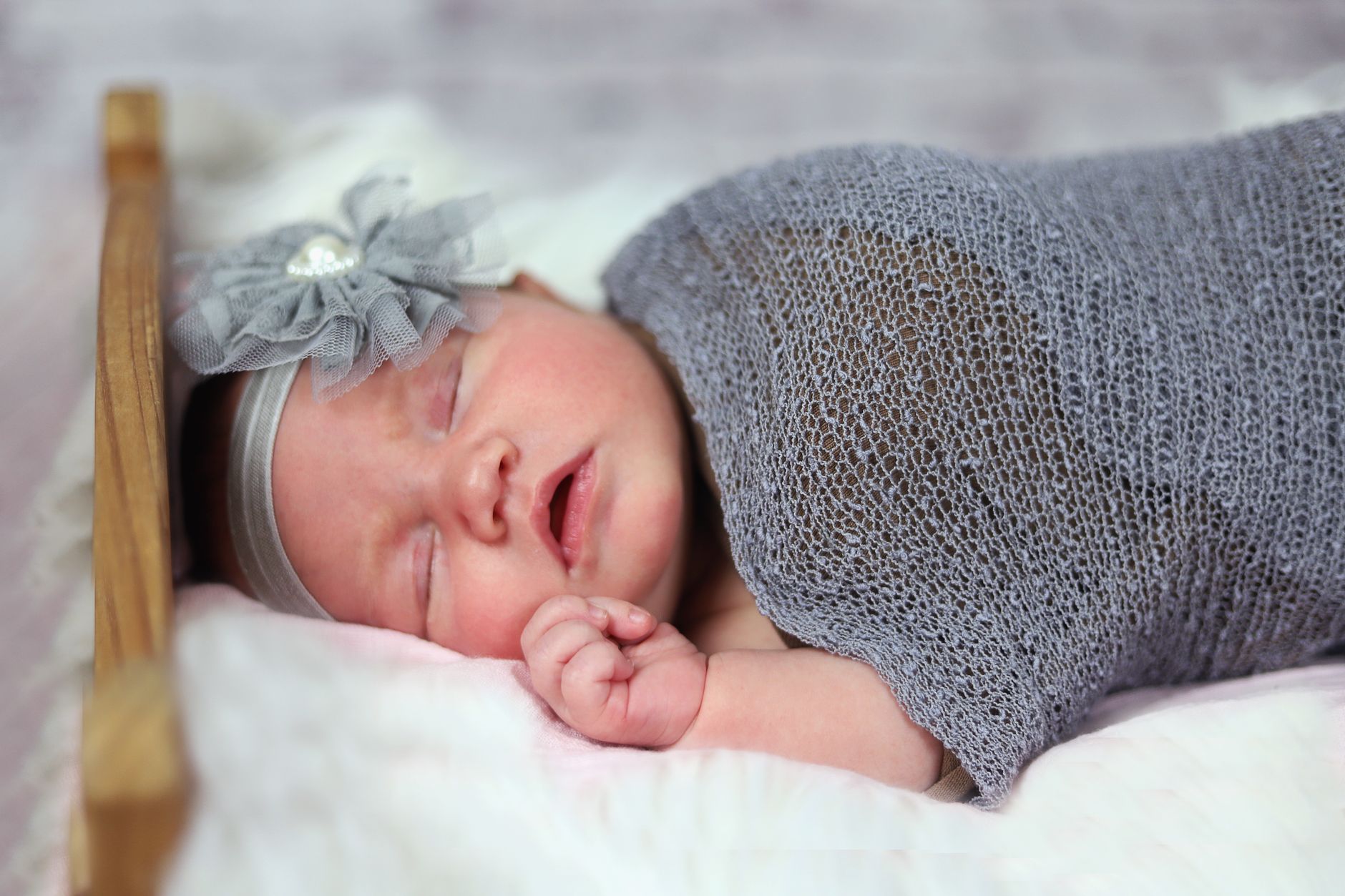
The key is “secure but not restrictive.” A swaddle that’s too loose can unravel, increasing the risk of the baby’s face becoming covered. Too tight, however, can hinder breathing, raise core temperature, and most importantly, affect hip development.
Parents often wonder whether a tighter swaddle will help their baby sleep longer. While a snug torso can calm the startle reflex, the blanket must still allow natural chest movement and hip flexion. Adjust the tightness as your baby grows, checking frequently for any signs of restriction.
Recommended tightness
- Chest and shoulders: The blanket should be snug enough that you can fit two fingers between the fabric and the baby’s chest. This prevents the blanket from slipping over the face.
- Arms: If you’re swaddling with arms in, the arms should be able to move slightly; a completely rigid position can increase the startle (Moro) reflex.
- Hips and thighs: The legs must be free to bend outward. A “hip‑healthy” position resembles a frog’s legs—knees higher than the hips, thighs open at a 45‑degree angle.
To test snugness, try the “hand‑test”: place your hand over the baby’s chest and press gently. If the blanket feels firm but you can still feel the baby’s ribs moving, you’ve achieved the right balance.
When can I stop swaddling my baby and transition to a sleep sack?
Most babies outgrow the need for a swaddle between 8 weeks and 4 months. The exact timing depends on developmental milestones, especially rolling over. The AAP advises to stop swaddling as soon as the baby shows any sign of attempting to roll onto their stomach.
Watch for subtle cues—like increased squirming or a new ability to push up on hands—because these may precede the actual rolling motion. Transitioning early, before the baby fully rolls, reduces the chance of a dangerous stomach‑on‑blanket scenario.
Signs it’s time to transition
- Attempts to roll over during sleep.
- Increased movement and less “calm” response to swaddling.
- Age of 2 months or more, especially if the baby is gaining weight and strength.
How to transition smoothly
- Start with “arms‑out” swaddles for a few nights, letting the baby’s arms free while keeping the legs snug.
- Introduce a wearable sleep sack (also called a “sleep‑nest”) that has a roomy bottom and a secure zip.
- Use a “half‑sack” (zippered only from the waist down) for the first few nights, allowing the baby to adjust to the new feel.
- Gradually increase the time the baby spends in the sleep sack each night.
Most parents find that the transition is easier if they keep the bedtime routine consistent—same lullabies, dim lighting, and a calm environment—while introducing the new sleep garment.
Can swaddling cause hip dysplasia and how to prevent it?
Developmental dysplasia of the hip (DDH) occurs when the hip socket is shallow or the femoral head is misaligned. Improper swaddling that forces the legs into an extended position can increase DDH risk, especially in newborns whose ligaments are still lax.
Routine pediatric hip checks, typically performed at well‑child visits, can catch early signs of DDH. If a clinician notes any asymmetry, they may order an ultrasound to evaluate hip development more closely.
Hip‑healthy swaddling guidelines
- Always allow the hips to flex and abduct (spread apart). The blanket should hold the thighs loosely.
- Use “hip‑friendly” swaddle blankets that have a “leg pouch” or “hip‑allowance” design.
- Avoid swaddling the legs tightly together or straightening them against the body.
- Check the baby’s hips daily: the thighs should form a “V” shape, and the knees should be higher than the hips.
For premature or low‑birth‑weight infants, the risk of DDH is higher, so extra attention to hip positioning is essential. If you notice any clicking sounds, uneven leg lengths, or limited hip movement, contact your pediatrician promptly.
Best swaddle blankets for newborn safety and comfort
Choosing the right blanket reduces the likelihood of overheating, skin irritation, and hip issues. Below is a comparison of three popular swaddle‑blanket types, focusing on safety, breathability, and ease of use.
For hot climates, bamboo or lightweight muslin blankets are best because they draw moisture away from the skin. If you prefer a “one‑size‑fits‑all” approach, look for blankets with a built‑in leg pouch that naturally keeps the hips in a frog‑leg position.
Proper care extends safety: wash the blanket before first use to remove any residual chemicals, and re‑wash after each diaper change to keep the fabric fresh. Most manufacturers recommend a gentle cycle and low‑heat drying to preserve the softness.
How to swaddle a baby with arms out to reduce startle reflex?
The Moro (startle) reflex peaks at 2 months and can wake a swaddled baby if the arms are tightly restrained. Swaddling with the arms out—sometimes called “hands‑free” swaddling—helps calm the reflex while still providing the snug feeling that many infants love.
Parents often notice that an arms‑out swaddle allows the baby to self‑soothe by gently moving their hands, which can be especially comforting during nighttime awakenings.
Hands‑free swaddling steps
- Lay the blanket as described in the basic technique.
- Place the baby on their back, arms naturally by their sides.
- Fold the right side of the blanket over the right arm, tucking it under the left side of the body, leaving the right arm free.
- Repeat on the left side, wrapping the left side of the blanket over the left arm and tucking it under the right side.
- Secure the bottom of the blanket around the hips, ensuring the legs can move freely.
This method keeps the torso snug while allowing the arms to move, which can reduce the intensity of the startle reflex. Many parents report that babies settle more quickly and stay asleep longer with arms out.
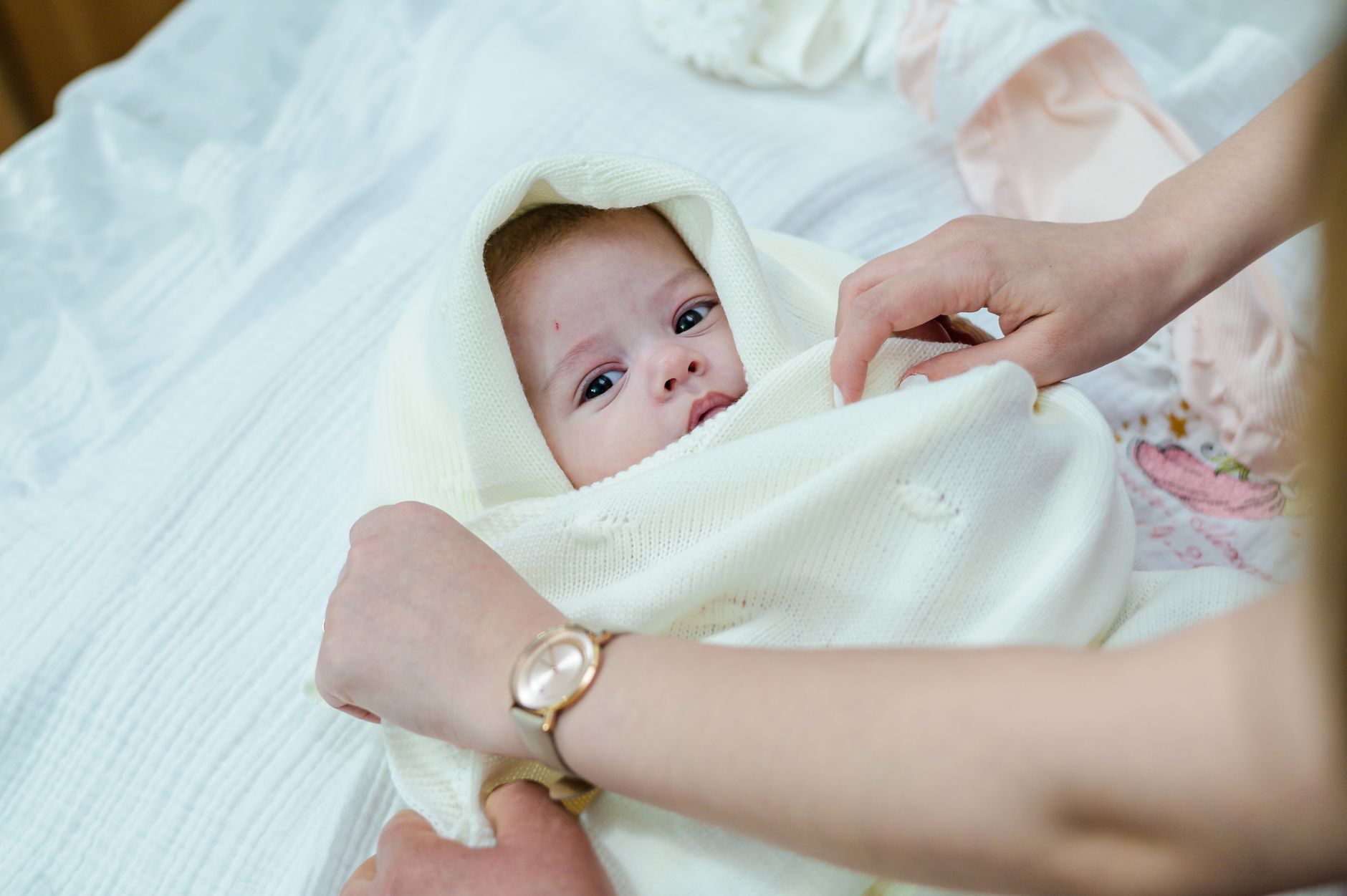
Swaddling safety tips for hot weather and preventing overheating
Overheating is a known risk factor for Sudden Infant Death Syndrome (SIDS). In warm climates or during summer months, extra precautions are needed.
Even in cooler rooms, babies can overheat if too many layers are used. A quick fan set on low can circulate air without creating a draft, helping maintain a stable temperature.
Temperature guidelines
- Maintain the room at 68‑72 °F (20‑22 °C). Use a room thermometer to monitor.
- Dress the baby in one more layer than an adult would feel comfortable in the same environment.
- Avoid heavy blankets; choose breathable muslin or bamboo.
- Consider “arms‑out” swaddling or a lightweight sleep sack with ventilation panels.
Signs of overheating
- Flushed or red cheeks.
- Rapid breathing or sweating.
- Heat rash or dampness in the diaper area.
- Restlessness or frequent waking.
If any of these signs appear, remove the swaddle immediately, cool the room, and consider a lighter covering. The CDC advises that parents should check the baby’s temperature by feeling the back of the neck or the abdomen—these areas should feel warm, not hot.
How to check if my baby is overheating while swaddled?
Regular monitoring is simple and takes only a few seconds.
Some parents find a small, wearable skin‑temperature sensor helpful for nighttime checks; these devices alert caregivers if the baby’s skin exceeds safe limits.
Quick temperature check
- Gently feel the baby’s neck, chest, or back of the head.
- If the skin feels hot to the touch or you notice sweating, the baby may be too warm.
- Feel the diaper area; a wet or damp diaper can indicate excess heat.
For a more objective measure, use a digital infrared thermometer aimed at the baby’s forehead. A temperature above 99.5 °F (37.5 °C) while swaddled suggests overheating. In that case, loosen the swaddle, remove extra layers, and lower the room temperature.
Swaddle techniques for premature infants: safety guidelines
Premature infants (born before 37 weeks) often have underdeveloped temperature regulation and fragile skin. Swaddling can still be beneficial, but the approach must be gentler.
NICU teams frequently use a “snug‑but‑flexible” swaddle that incorporates a stretchy leg pouch, allowing the tiny baby to move while maintaining warmth. Consult your neonatologist before introducing any new swaddle at home.
Key considerations for premature babies
- Temperature control: Premature infants lose heat quickly. Use a single lightweight muslin blanket and keep the nursery at the higher end of the recommended temperature range (71‑73 °F or 22‑23 °C).
- Skin protection: Choose blankets with a soft, hypoallergenic finish. Avoid any seams or tags that could irritate delicate skin.
- Hip positioning: Follow the same hip‑healthy guidelines, but ensure the leg pouch is loose enough to accommodate smaller thighs.
- Medical monitoring: If the baby is in a NICU or has a medical device (e.g., a pulse‑oximeter), consult the neonatologist before swaddling.
Many NICUs use “premie‑friendly” swaddle blankets with a stretchy, breathable fabric that adapts to the baby’s growth. If you’re unsure, start with an “arms‑out” method and monitor the baby closely for any signs of distress.
Differences between swaddle blankets and wearable sleep sacks
Both options aim to keep babies cozy, but they differ in design, safety profile, and ease of use.
For parents who struggle with the wrapping technique, a sleep sack offers a safer, more consistent fit. However, swaddle blankets remain a favorite for newborns who love the cocoon sensation and for those who want to customize tightness. Cost‑wise, blankets tend to be less expensive upfront, while high‑quality sleep sacks may represent a larger single investment but often last longer.
Swaddle safety tips for twins or multiple babies
Swaddling twins adds logistical challenges, but the same safety principles apply.
Practical tips
- Prepare a “swaddle station” with all supplies—blankets, diaper changes, and a timer—within arm’s reach.
- Swaddle each baby individually on a firm surface; never stack one on top of the other.
- Use contrasting colors or patterns to keep track of which blanket belongs to which infant.
- Consider using wearable sleep sacks for one or both babies to reduce the number of folds you need to manage simultaneously.
Many families find that alternating the order of swaddling (e.g., first baby A, then baby B) helps keep the routine smooth and reduces the chance of mixing up blankets.
How to swaddle a baby with a diaper rash safely
Diaper rash can make a baby’s skin extra sensitive, and a tight swaddle may worsen irritation.
Choosing a barrier cream with zinc oxide and allowing it to fully absorb before swaddling can create an extra protective layer, especially during longer sleep periods.
Gentle swaddling steps for rash
- Choose a soft, breathable muslin blanket without any seams near the diaper area.
- Apply a thin barrier cream (e.g., zinc oxide) after diaper changes, allowing it to dry before swaddling.
- Wrap the blanket leaving extra space around the diaper—avoid tucking the blanket tightly at the hips.
- Check the rash every few hours; if the skin looks more irritated, loosen the swaddle or switch to a sleep sack made of breathable fabric.
Keeping the diaper area exposed to air as much as possible helps the rash heal faster. If the rash persists beyond 48 hours or shows signs of infection (e.g., pus, fever), contact your pediatrician.
Swaddling and newborn sleep patterns: what the research shows
Several studies, including a 2022 meta‑analysis published in the Journal of Pediatric Nursing, have found that swaddling can increase total sleep time by 30–45 minutes in the first three months of life. The soothing effect appears strongest when the infant’s startle reflex is limited, which is why many parents choose an “arms‑out” approach.
However, research also warns that the benefit fades as babies develop motor skills. The American Academy of Pediatrics (AAP) notes that once infants begin to roll, swaddling can disrupt natural sleep cycles and increase the risk of unsafe sleep positions. Balancing the short‑term sleep gains with long‑term safety is the key takeaway.
Choosing the right swaddle size for your baby
Swaddle blankets typically come in sizes ranging from 35 × 35 inches (small) to 48 × 48 inches (large). A blanket that is too small can restrict hip movement, while one that is too large may be difficult to secure and increase the chance of the baby’s face becoming covered.
Measure your baby’s length and shoulder width before purchasing. For newborns up to 7 pounds, a 35‑inch square works well; for babies between 7‑15 pounds, the 40‑inch size offers more room for growth while still allowing a snug torso wrap. Always follow the manufacturer’s weight guidelines and revisit size as your baby gains a few ounces each week.
Myth vs. fact
Myth: Tighter swaddles always mean a calmer baby.
Fact: Over‑tight swaddling can restrict breathing, raise core temperature, and increase the risk of hip dysplasia. The ideal swaddle is snug around the torso but loose around the hips and arms.
Understanding the evidence behind each claim helps you make informed choices and avoid common pitfalls that can arise from well‑meaning but outdated advice.
Key takeaways
- Keep the swaddle snug around the chest, but allow the hips to bend outward.
- Use breathable fabrics—muslin, bamboo, or lightweight cotton—to prevent overheating.
- Watch for signs of overheating: flushed skin, sweating, or a hot back.
- Transition to a sleep sack when the baby shows any attempt to roll, typically 8 weeks–4 months.
- For premature infants, prioritize temperature control and gentle hip positioning.
- If you notice any hip clicking, persistent rash, or signs of distress, contact your pediatrician immediately.
These points summarize safe swaddling practices, but every baby is unique. Trust your instincts and adjust as your little one grows.
Frequently asked questions
Is it safe to swaddle a baby with their arms inside the blanket?
Yes, as long as the arms can move slightly and the swaddle is not so tight that it restricts the chest. Many newborns prefer arms‑in swaddles for comfort, but if the startle reflex is strong, an “arms‑out” method may be gentler.
How many weeks should I swaddle my newborn before stopping?
Most experts, including the AAP, recommend stopping swaddling between 8 weeks and 4 months, or sooner if the baby begins to roll onto their stomach. Monitor your baby’s development and adjust accordingly.
Can swaddling increase the risk of SIDS?
Swaddling itself does not cause SIDS, but improper swaddling—especially if the baby rolls onto their stomach or becomes overheated—can raise the risk. Follow AAP guidelines: keep the baby on their back, ensure a breathable environment, and transition out of swaddling when rolling begins.
What signs show my baby is too hot while swaddled?
Look for flushed cheeks, sweating, rapid breathing, a damp diaper, or restlessness. If you feel the baby’s back and it feels hot to the touch, remove the swaddle, cool the room, and consider a lighter covering.
Should I use a swaddle blanket or a sleep sack for safety?
Both can be safe when used correctly. Swaddle blankets give you control over tightness but require proper technique. Sleep sacks provide a consistent, hands‑free option and often include hip‑friendly designs. Choose based on your comfort level and your baby’s preferences.
How do I know if the swaddle is too tight around the hips?
The baby’s thighs should be able to spread apart, forming a “V” shape. If the legs appear straight and pressed tightly against the body, the swaddle is too tight. Loosen the bottom part of the blanket to allow free hip movement.
Can I swaddle a baby who has a diaper rash?
Yes, but use a soft, breathable muslin blanket, keep the diaper area as open as possible, and apply a barrier cream after each diaper change. Monitor the rash closely and adjust the swaddle if irritation worsens.
What if my baby wakes up frequently even when swaddled?
Frequent waking can be a sign that the swaddle is too tight around the arms, that the baby is too warm, or that they are ready to roll. Try an “arms‑out” swaddle, check the room temperature, and consider transitioning to a sleep sack if rolling cues appear.
Is it okay to use a fleece blanket for swaddling in winter?
Fleece is not recommended for swaddling because it traps heat and can cause overheating. Opt for lightweight, breathable fabrics such as muslin or bamboo even in cooler months, and add a sleep sack over the swaddle if extra warmth is needed.
When to see a doctor / specialist
While swaddling is generally safe, certain signs warrant prompt medical attention. Contact your pediatrician or a pediatric orthopedic specialist if you notice:
- Persistent clicking or popping sounds in the hips.
- One leg appearing shorter or the hips not moving symmetrically.
- Skin breakdown, severe diaper rash, or signs of infection (pus, fever).
- Signs of overheating that do not improve after removing the swaddle (persistent fever, lethargy).
- Your baby rolls onto their stomach while swaddled.
Early evaluation can prevent complications and give you peace of mind. This article is for informational purposes only and does not replace personalized medical advice. Always discuss any concerns with your healthcare provider.
References
- American Academy of Pediatrics. “Safe Sleep for Babies.” AAP, 2023.
- Centers for Disease Control and Prevention. “Sudden Unexpected Infant Death (SUID) and Safe Sleep.” CDC, 2022.
- National Institute of Child Health and Human Development. “Developmental Dysplasia of the Hip (DDH) in Infants.” NIH, 2021.
- World Health Organization. “Thermal Protection of the Newborn.” WHO, 2020.
- Academy of Nutrition and Dietetics. “Choosing Fabrics for Infant Sleep.” EatRight.org, 2022.
- Harvard T.H. Chan School of Public Health. “Infant Sleep and Temperature Regulation.” Harvard Health Publishing, 2023.
- British National Health Service (NHS). “Swaddling and Sleeping Safety.” NHS.uk, 2022.
- American Academy of Orthopaedic Surgeons. “Hip‑Healthy Swaddling Techniques.” AAOS, 2021.
- National Institute of Child Health and Human Development. “Premature Infant Care Guidelines.” NIH, 2022.
- Journal of Pediatric Nursing. “Swaddling and Infant Sleep Duration: A Meta‑Analysis.” 2022.