Bathing your newborn for the first time can feel daunting, but it's simple! Wait until the umbilical cord stump falls off, then use a sponge bath or a shallow tub with warm water. Learn step-by-step how to bathe your newborn safely and confidently, ensuring a calm and positive experience for both of you.
By Shubhra Mishra — a mom of two who turned her own confusion during pregnancy into BumpBites, a global mission to make food choices clear, safe, and stress-free for every expecting mother. 💛
Check whether any food is safe during pregnancy with the BumpBites Food Safety Checker.
Quick take: Giving your newborn their first bath can feel daunting, but with a little preparation, it can be a calm and bonding experience. Start with gentle sponge baths until your baby's umbilical cord stump falls off and heals, typically around 1-3 weeks. When you do transition to a full tub bath, keep it short, warm, and focused on safety, ensuring you have all your supplies ready before you begin.
It’s a moment many new parents approach with a mix of excitement and trepidation: your newborn’s first bath. Maybe you’re picturing a serene, splashy scene from a movie, or perhaps you’re imagining a slippery, crying baby and feeling a surge of anxiety. You're not alone. The idea of holding that tiny, delicate body, keeping them warm, and getting them clean can feel like a monumental task. But take a deep breath – we're here to guide you through it, step by gentle step, to make your newborn's first bath a safe, comforting, and even enjoyable experience.
We’ll cover everything from when to start, what you’ll need, how to give both a sponge bath and a full tub bath, and crucial safety tips. Our goal at BumpBites is to empower you with clear, accurate, and reassuring information, so you can focus on the precious moments with your little one.
When is the best time to give a newborn their first bath?
The timing of your newborn's first bath has actually changed in recent years based on new research and recommendations from leading health organizations. While it used to be common practice to bathe babies soon after birth, many hospitals now delay the first bath for at least 6 to 24 hours, and sometimes even longer. This delay offers several important benefits for your baby.
For one, delaying the first bath helps with thermoregulation, which is your baby's ability to maintain a stable body temperature. Newborns are not yet able to regulate their temperature as effectively as older children or adults, and a bath can cause a significant drop in their body heat. Waiting allows them to better adjust to the outside world and avoid becoming chilled. This is especially important in the first few hours after birth.
Another key benefit is preserving the vernix caseosa, a white, waxy, protective coating found on a newborn's skin. This natural substance acts as a moisturizer, protects against infection, and helps with skin barrier development. Washing it off too soon can strip your baby's delicate skin of these vital benefits. The vernix is naturally absorbed into the skin over the first day or two, providing optimal protection.
Furthermore, delaying the bath can promote successful breastfeeding and enhance skin-to-skin bonding. Babies who are not immediately bathed are often more alert and stable, making it easier for them to initiate feeding and for parents to engage in uninterrupted skin-to-skin contact, which is crucial for bonding and early attachment.
What about the umbilical cord stump?
Perhaps the most common question about newborn bathing concerns the umbilical cord stump. It's crucial to keep the umbilical cord stump dry and clean until it falls off naturally, which usually happens between one and three weeks after birth. Until the stump detaches and the area is fully healed, a full tub bath is not recommended. Submerging the stump in water can slow down the healing process and increase the risk of infection.
Instead, during this period, your baby should receive sponge baths. We’ll go into detail about how to give a sponge bath shortly, but the key is to gently clean your baby without getting the cord stump wet. Once the stump has fallen off and the navel area is dry and healed, usually around two to four weeks postpartum, you can transition to a full tub bath.
Many parents also wonder about the benefits of delaying the first bath at home beyond the initial hospital stay. Even once you're home, there's no rush to give your newborn a full bath every day. Their skin is incredibly delicate and can dry out easily. Spot cleaning and sponge baths are often sufficient for the first few weeks or even months, especially if your baby isn't getting particularly dirty beyond diaper changes.
Having all your bathing supplies ready and within reach before you start is key to a calm bath time.
What essential supplies do you need for a newborn's first bath?
Preparation is key to a stress-free bath time. Gathering all your supplies beforehand means you won't have to leave your baby unattended, even for a second, and you can keep the experience calm and continuous. Here's a checklist of what you'll need, whether you're giving a sponge bath or preparing for a full tub bath:
Infant Bathtub or Basin: For full baths, a dedicated infant tub or a clean plastic basin designed for babies provides a safe, non-slip surface and helps conserve water. For sponge baths, a clean towel on a flat surface is sufficient.
Soft Washcloths: Have at least two or three soft washcloths. These are gentler on a newborn's sensitive skin than sponges.
Two Soft Hooded Towels: One for drying your baby immediately after the bath, and an extra one just in case. Hooded towels are perfect for keeping their head warm and cozy.
Gentle Baby Cleanser/Soap: Choose a mild, fragrance-free, pH-neutral baby wash that is specifically designed for newborns. Look for products labeled "tear-free" and "hypoallergenic." Avoid adult soaps or harsh detergents.
Cotton Balls or Soft Gauze Pads: Useful for cleaning around the eyes and face, as they are very gentle.
Warm Water: Always have warm (not hot!) water ready. For sponge baths, you'll need a small bowl of warm water. For tub baths, ensure the bath water is ready before bringing your baby into the room.
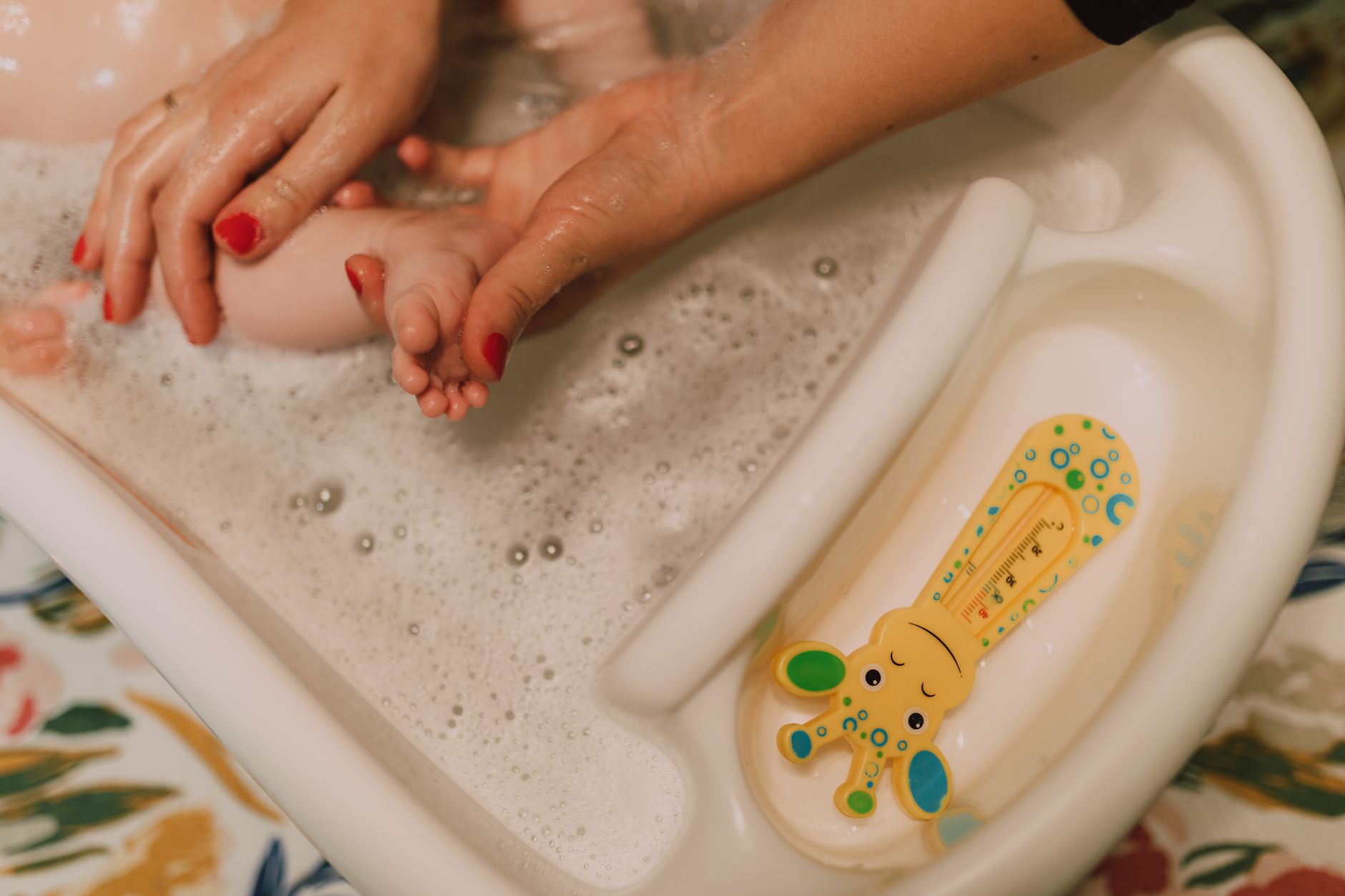
Bath Thermometer: While not strictly essential, a bath thermometer can give you extra peace of mind, ensuring the water is at the optimal temperature (around 98-100°F or 37-38°C).
Clean Diaper: Have a fresh diaper ready to go immediately after the bath.
Clean Clothes: Lay out a clean outfit, including a onesie, pajamas, or whatever your baby will wear next, so they can be dressed quickly and stay warm.
Baby Lotion or Moisturizer (Optional): If your baby has dry skin, a gentle, fragrance-free baby lotion can be applied after the bath to lock in moisture.
Changing Pad or Soft Towel: To lay your baby on during a sponge bath or for post-bath drying and dressing.
Here’s a quick overview of essential bath supplies:
Easy-to-read display, floats, specifically for baby baths
Clean Diaper & Clothes
Post-bath preparation
Appropriate size, soft fabrics, easy to put on
Baby Lotion (optional)
Moisturizing dry skin
Fragrance-free, hypoallergenic, dermatologist-tested for babies
Make sure all these items are within arm's reach before you even bring your baby into the bathing area. This setup creates a smooth, safe, and efficient bath routine, allowing you to focus completely on your little one.
How do you give a newborn a sponge bath safely?
A sponge bath is the safest and most recommended method for cleaning your newborn until their umbilical cord stump has fallen off and the navel area is fully healed. It allows you to clean your baby gently without submerging the cord or risking infection. Here’s a step-by-step guide to giving a safe and effective sponge bath:
Step 1: Prepare the environment and gather supplies
Choose a warm room: Ensure the room is comfortably warm and free of drafts. Your bathroom or nursery can work well.
Prepare a flat surface: Lay a clean, soft towel or changing pad on a sturdy, flat surface like a changing table, countertop, or even the floor.
Gather all supplies: As listed above, have everything within arm's reach: a bowl of warm water, two soft washcloths, gentle baby soap, cotton balls, a clean diaper, fresh clothes, and a hooded towel.
Wash your hands: Always start with clean hands.
Step 2: Undress your baby and keep them warm
Gently undress your baby, but keep them wrapped in a clean, dry towel. You’ll expose only the part of their body you’re cleaning at any given time to help maintain their body temperature.
Step 3: Clean your baby's face and hair
Eyes: Dip a fresh cotton ball or the corner of a clean washcloth into plain warm water (no soap). Gently wipe each of your baby's eyes from the inner corner (near the nose) outwards. Use a fresh cotton ball or a clean section of the washcloth for each eye to prevent spreading any potential infection.
Face: Using a clean, damp washcloth (again, no soap), gently wipe your baby’s face, including behind the ears and in the creases of their neck.
Hair/Scalp: If your baby has hair, dampen a washcloth with warm water and a tiny drop of baby cleanser. Gently massage it into their scalp. Rinse by wiping with a clean, damp washcloth. Be extra careful to avoid getting soap or water in their eyes. Many newborns don't have much hair, so just a gentle wipe is often enough.
Step 4: Wash the rest of the body
Body: Unwrap a section of your baby's body, like an arm or leg. Dip a washcloth into the warm water, add a tiny amount of baby cleanser, and gently wash the area. Pay attention to creases, like under the arms, behind the knees, and between fingers and toes.
Rinse: Use a separate, clean washcloth dampened with plain warm water to thoroughly rinse off any soap residue from the washed area.
Repeat: Continue this process, uncovering and washing one small section of your baby’s body at a time, then re-covering them with the dry towel to keep them warm.
Step 5: Umbilical cord care
When you reach the umbilical cord area, be sure to keep it dry. If it accidentally gets a little wet, gently pat it dry with a clean, soft cloth. There's no need to apply alcohol or any other substances unless specifically instructed by your pediatrician. The goal is to allow it to air dry and fall off naturally.
Step 6: Diaper area
For the diaper area, clean thoroughly with warm water and a small amount of soap, wiping from front to back. Rinse well. This area can get particularly dirty, so be diligent but gentle.
Step 7: Drying and dressing
Once your baby is fully clean, gently pat them dry with the soft hooded towel. Pay special attention to all the skin folds and creases, as moisture left behind can lead to irritation or rashes.
Dress your baby quickly in their clean diaper and clothes to prevent them from getting cold.
A representative story from one of our readers highlights the initial anxiety: "I was so nervous about the sponge bath, especially around the cord stump. My baby, Leo, was just a few days old, and he felt so delicate. I remember laying him on a soft towel on the changing table, with everything meticulously laid out. The first time I wiped his tiny arm, he startled, but then he just relaxed into it. I kept talking to him, telling him what I was doing, and by the end, he was calm and cozy, bundled up in his towel. It wasn't perfect, but it was a moment of connection, and I realized it wasn't as scary as I thought."
Remember, a sponge bath doesn't need to be long. A few minutes of gentle cleaning is all that's required to keep your newborn fresh and comfortable.
Always keep a firm, supportive hand on your baby when they are in the tub, ensuring their head is well-supported.
What are the steps for giving a newborn a full tub bath?
Once your baby's umbilical cord stump has fallen off and the navel area is completely dry and healed (typically around 2-4 weeks after birth), you can transition to a full tub bath. This can be a wonderful bonding experience, but it requires careful attention to safety and temperature. Here’s how to give your newborn a safe and comfortable full tub bath:
Step 1: Prepare the bath area and gather all supplies
Choose a safe tub: Use a small infant bathtub that fits inside your regular tub, a large sink, or directly on the bathroom floor. Ensure it's clean and stable.
Warm the room: Just like with a sponge bath, make sure the room is comfortably warm and draft-free.
Gather supplies: Place all your essential bathing items (baby wash, washcloths, towels, clean diaper, clothes, lotion) within easy reach. Never leave your baby unattended to fetch something.
Fill the tub: Fill the infant tub with about 2-3 inches (5-7.5 cm) of warm water. Use a bath thermometer to ensure the water temperature is between 98-100°F (37-38°C). If you don't have a thermometer, test the water with your elbow or the inside of your wrist – it should feel pleasantly warm, not hot.
Step 2: Undress and gently introduce your baby to the water
Undress your baby: Gently remove your baby's clothes and diaper.
Support their head and neck: Hold your baby securely, supporting their head and neck with one arm and hand. Their head should always be above the water.
Lower gently: Slowly and gently lower your baby feet-first into the water. As their body settles into the water, continue to support their head and neck, allowing them to relax. Many infant tubs have a recline feature or a sling that helps support your baby, freeing up one of your hands.
Reassure them: Talk softly, sing, and maintain eye contact to help them feel secure and calm.
Step 3: Wash your baby's body
Use a washcloth: Using a soft washcloth and a tiny amount of gentle baby cleanser, start by washing your baby's face with plain water (no soap), wiping from the inner corner of the eye outwards.
Wash the body: Gently wash their body, moving from top to bottom. Pay special attention to creases in the neck, underarms, groin, and behind the knees. Use circular motions and be very gentle.
Genital area: For girls, wipe from front to back. For boys, clean around the penis and scrotum. Do not retract the foreskin if your baby is uncircumcised.
Step 4: Wash your baby's hair
Wet hair: Using a wet washcloth or a small cup, gently wet your baby's hair, tilting their head back slightly to avoid getting water or soap in their eyes.
Apply cleanser: Apply a small drop of tear-free baby shampoo or body wash to your hands, lather it gently, and massage it into their scalp.
Rinse: Rinse thoroughly with a wet washcloth or by gently pouring small amounts of clean water over their head, ensuring all soap is removed.
Step 5: Rinse and remove from the tub
Thorough rinse: Make sure all soap is rinsed off your baby’s body to prevent skin irritation.
Remove gently: Once clean, lift your baby carefully out of the tub, continuing to support their head and neck.
Step 6: Drying and post-bath care
Wrap immediately: Immediately wrap your baby in a warm, soft hooded towel.
Pat dry: Gently pat your baby dry, paying extra attention to all skin folds, creases, and especially the navel area to prevent moisture buildup and irritation.
Moisturize (optional): If your baby has dry skin, apply a gentle, fragrance-free baby lotion or moisturizer while their skin is still slightly damp to help lock in moisture.
Diaper and dress: Put on a clean diaper and dress your baby in their clean clothes quickly to keep them warm and comfortable.
Keep the first tub baths very brief – no more than 5-10 minutes. The goal is to get them clean without chilling them or over-drying their delicate skin. As they get older and more accustomed to bath time, you can gradually extend the duration.
How warm should the water be for a newborn's bath?
Ensuring the correct water temperature is one of the most critical safety measures when bathing a newborn. Their delicate skin is much more sensitive to heat than adult skin, and they can easily get burned or chilled. The ideal water temperature for a newborn's bath should be warm, but not hot.
According to the American Academy of Pediatrics (AAP) and the NHS, the water temperature should be around 98-100°F (37-38°C). This is roughly body temperature or slightly warmer. It's a common misconception that bath water should be very hot; in reality, water that feels comfortably warm to an adult hand might be too hot for a baby.
How to test the water temperature
Bath Thermometer: The most accurate way to check is with a dedicated bath thermometer. These are readily available and often designed to float in the tub, giving you a clear reading.
Elbow or Wrist Test: If you don't have a thermometer, use your elbow or the inside of your wrist to test the water. These areas of your skin are more sensitive to heat than your hand. The water should feel pleasantly warm, not hot, and definitely not cold.
Never use your hand: Your hands are less sensitive to heat, so what feels fine to you could be too hot for your baby.
Mix thoroughly: Always swirl the water around to ensure there are no hot spots before putting your baby in.
It’s also important to consider the room temperature. The room where you're bathing your baby should be comfortably warm, ideally around 75-80°F (24-27°C). This helps prevent your baby from getting chilled when you undress them and when they come out of the warm bath water. Close windows and doors to avoid drafts. Newborns lose body heat quickly, so maintaining a warm environment before, during, and after the bath is essential for their comfort and safety.
Always fill the tub with water before bringing your baby into the room. This prevents accidental exposure to running hot water and allows you to test the temperature thoroughly without distractions. Never add hot water to the tub while your baby is in it, as this can cause severe burns.
How often should you bathe a newborn baby?
When it comes to how often to bathe a newborn, less is often more. Contrary to what some might expect, daily bathing is generally not necessary and can actually be detrimental to a newborn's delicate skin. The American Academy of Pediatrics (AAP) recommends bathing newborns no more than two or three times a week during their first year, and often less frequently in the first few months.
Why less frequent bathing is better
Preserves natural skin oils: A newborn's skin is very sensitive and prone to dryness. Frequent bathing, especially with soap, can strip away the natural oils that protect their skin, leading to dryness, irritation, and even conditions like eczema.
Maintains skin barrier: The skin acts as a protective barrier against germs and environmental irritants. Over-bathing can weaken this barrier.
Not necessary for cleanliness: Newborns don't typically get very dirty in the way older children or adults do. Most of their "dirt" comes from diaper changes and spit-up.
For the first few weeks, and even months, sponge baths or "top and tail" washes are often sufficient. This involves gently cleaning your baby's face, neck, hands, and diaper area with a warm, damp washcloth. This approach keeps them clean where it matters most without over-exposing their entire body to water and soap.
If your baby has a "blowout" diaper or a significant amount of spit-up, a quick, targeted clean-up or an extra sponge bath is perfectly fine. The key is to be responsive to your baby's actual needs rather than adhering to a strict daily bath schedule.
As your baby gets a little older, perhaps around 6 months, and starts to become more mobile, crawl, or eat solid foods, their need for more frequent baths might increase. Even then, every other day or three times a week is often plenty. You can always adjust the frequency based on your baby's activity level, skin condition, and personal preferences.
Many parents find that bath time becomes a soothing part of their baby's bedtime routine, helping them wind down for sleep. If this is the case for you, and your baby enjoys it, you can certainly incorporate a bath into your routine a few times a week, ensuring it's short, gentle, and followed by moisturizing if needed.
What common mistakes should you avoid when bathing a newborn?
Even with the best intentions, it's easy to make mistakes when you're new to bathing a newborn. Being aware of these common pitfalls can help ensure a safer and more pleasant experience for both you and your baby:
Leaving your baby unattended: This is the most critical mistake to avoid. Even for a second, leaving a baby alone in or near water can lead to serious accidents, including drowning. If you must leave the room (e.g., to answer the door), wrap your baby in a towel and take them with you.
Using water that is too hot or too cold: As discussed, water that is too hot can cause burns, while water that is too cold can lead to hypothermia. Always test the water temperature accurately with a thermometer or your elbow/wrist.
Not having all supplies ready: Rushing to grab a towel or soap mid-bath can put your baby at risk. Gather everything you need beforehand and place it within arm's reach.
Using harsh soaps or too much soap: Adult soaps, bubble baths, or even some baby products contain fragrances, dyes, and harsh chemicals that can irritate a newborn's sensitive skin, strip natural oils, and cause dryness or rashes. Use only a tiny amount of mild, fragrance-free baby cleanser.
Prolonged bath times: Newborn baths should be short – 5 to 10 minutes at most. Longer baths can dry out their skin and cause them to get cold.
Not drying thoroughly: Moisture left in skin folds (neck, armpits, groin) can lead to skin irritation, rashes, or even fungal infections. Gently pat your baby completely dry, especially in these areas.
Over-bathing: Bathing too frequently (e.g., daily) can strip your baby's skin of its natural protective oils, leading to dryness, irritation, and increased risk of eczema. Stick to 2-3 times a week, with spot cleaning in between.
Ignoring your baby's cues: If your baby is crying, shivering, or clearly distressed during the bath, it might be too cold, too long, or they might just not be enjoying it. Try to understand what's bothering them and adjust.
Forgetting to support their head and neck: Newborns have very little head control. Always provide firm support to their head and neck, especially when lifting them or lowering them into the tub.
Not checking the temperature of the room: A cold room can make your baby uncomfortable and cause them to lose body heat quickly, even if the bath water is warm. Ensure the room is cozy and draft-free.
By being mindful of these common mistakes, you can create a safer, more comfortable, and more enjoyable bathing experience for your little one.
How to ensure newborn bath time is safe and enjoyable?
Bath time doesn't have to be a source of stress; it can be a wonderful opportunity for bonding, sensory exploration, and relaxation. By prioritizing safety and creating a positive atmosphere, you can ensure that bath time is both secure and enjoyable for your newborn.
Prioritize safety above all else
Constant Supervision: Never, ever leave your baby alone in or near water, not even for a second. If you need to step away, wrap your baby in a towel and take them with you.
Prepare in Advance: Have all your supplies (towels, soap, clean diaper, clothes) ready and within arm's reach before you start. This prevents you from having to leave your baby unattended.
Correct Water Temperature: Always test the water with a bath thermometer or your elbow/wrist to ensure it's between 98-100°F (37-38°C).
Shallow Water: Only use 2-3 inches (5-7.5 cm) of water in an infant tub.
Secure Hold: Maintain a firm but gentle grip on your baby, always supporting their head and neck. Use one arm to support their head and upper back, keeping their head above water.
Non-Slip Surfaces: Ensure your infant tub is stable and won't slip. If bathing in a sink, consider a non-slip mat.
Baby-Specific Products: Use only mild, fragrance-free, tear-free baby washes and shampoos. Avoid bubble baths or adult products.
Hot Water Heater Settings: Consider setting your home's water heater to below 120°F (49°C) to prevent scalding accidents.
Make it enjoyable
Warm Environment: Ensure the room is comfortably warm (around 75-80°F or 24-27°C) and free of drafts so your baby doesn't get chilled.
Gentle Touch: Handle your baby with soft, reassuring movements. Your touch conveys comfort and security.
Talk and Sing: Use a calm, soothing voice. Talk to your baby, describe what you’re doing, or sing a gentle lullaby. This helps them feel secure and makes the experience more engaging.
Maintain Eye Contact: Looking into your baby’s eyes during bath time strengthens your bond and helps them feel connected.
Keep it Short: Especially for newborns, baths should be brief (5-10 minutes). As they get older, you can gradually extend the time as they begin to enjoy splashing.
Establish a Routine: Consistency can be comforting. Many parents integrate bath time into their bedtime routine, followed by a gentle massage, feeding, and sleep. This helps signal to your baby that it’s time to wind down.
Post-Bath Cuddles: Wrap your baby immediately in a warm, soft hooded towel. The transition from warm water to a cozy towel and gentle drying can be very soothing. Follow with cuddles, a feeding, and quiet time.
Watch for Cues: Pay attention to your baby's reactions. If they seem uncomfortable or distressed, try to figure out why (water too hot/cold, too long, hungry?) and adjust accordingly. Some babies simply don't enjoy baths at first, and that's okay.
Remember, bath time is not just about getting clean; it's an opportunity for sensory stimulation, connection, and creating positive memories. With careful planning and a loving approach, you can make it a cherished part of your routine.
From our medical team: "Many new parents feel overwhelmed by the thought of bathing their newborn, but it's a skill you'll quickly master. The most important thing is to always prioritize safety: never leave your baby unsupervised, ensure the water temperature is just right, and use gentle, appropriate products. Remember, a bath doesn't have to be a daily event; a few times a week is often sufficient for a newborn's delicate skin. Focus on making it a warm, calm, and loving interaction rather than just a task."
Myth vs. fact
Let's clear up some common misconceptions about newborn bathing:
Myth: Newborns need a bath every day to stay clean.
Fact: Daily baths are generally not necessary for newborns and can actually dry out their delicate skin. 2-3 baths per week, with spot cleaning in between, is usually sufficient and helps preserve their skin's natural oils.
Myth: You can give your newborn a full tub bath as soon as you bring them home from the hospital.
Fact: It's best to wait for a full tub bath until your baby's umbilical cord stump has fallen off and the navel area is completely healed, which typically takes 1-3 weeks. Until then, gentle sponge baths are recommended.
Myth: Bath time must be a stressful or difficult experience for newborns.
Fact: While some babies might be startled at first, bath time can be a very soothing and enjoyable bonding experience. By ensuring a warm room, correct water temperature, gentle handling, and talking or singing, you can create a calm and positive environment.
Myth: Any soap is fine for a baby's bath.
Fact: A newborn's skin is highly sensitive. You should only use mild, fragrance-free, pH-neutral, and tear-free baby cleansers specifically designed for newborns. Adult soaps or harsh products can cause irritation and dryness.
Key takeaways
Delay full tub baths until your baby's umbilical cord stump has fallen off and healed (1-3 weeks); use sponge baths before then.
Always gather all necessary supplies (infant tub/basin, washcloths, towels, gentle soap, clean diaper/clothes) before starting to ensure uninterrupted supervision.
Ensure the water temperature is between 98-100°F (37-38°C) and the room is warm and draft-free to prevent chilling.
Bathe newborns no more than 2-3 times a week to protect their delicate skin from dryness, using mild, fragrance-free baby products.
Maintain constant supervision during bath time – never leave your baby unattended in or near water, even for a second.
Make bath time a positive experience by speaking softly, singing, maintaining eye contact, and ensuring gentle handling.
Frequently asked questions
When can I give my newborn a full bath?
You can give your newborn a full tub bath once their umbilical cord stump has fallen off and the navel area is completely dry and healed. This typically happens between one and three weeks after birth. Before then, stick to gentle sponge baths.
What do I need for a newborn's first bath?
For a newborn's first bath (sponge bath), you'll need a warm room, a flat surface covered with a soft towel, a bowl of warm water, soft washcloths, gentle baby soap, cotton balls, a clean diaper, fresh clothes, and a hooded towel. For a full bath, add an infant tub and a bath thermometer.
How do you bathe a newborn for the first time step by step?
For a sponge bath: prepare supplies, undress baby (keeping them partially covered), clean face and hair with plain water, then body with soapy washcloth, rinsing each section. Keep the umbilical cord dry. Pat dry, diaper, and dress immediately. For a full bath, follow similar steps but gently immerse them in 2-3 inches of warm water in an infant tub, ensuring head and neck support.
How long should a newborn's first bath be?
Newborn baths should be very brief, lasting no more than 5-10 minutes. This short duration helps prevent your baby from getting chilled and avoids over-drying their sensitive skin. As they get older and more comfortable, you can gradually extend the time.
Do you wash a newborn's hair every bath?
No, it's not necessary to wash a newborn's hair every bath. For most newborns, a gentle wipe with a damp washcloth is often enough. If they have more hair or it seems dirty, a tiny drop of tear-free baby shampoo once or twice a week is usually plenty.
Is it OK to bathe a newborn every day?
It is generally not recommended to bathe a newborn every day. Daily baths can strip their delicate skin of natural oils, leading to dryness, irritation, and potentially exacerbating conditions like eczema. Two to three baths per week, combined with daily spot cleaning, is usually sufficient.
When to call your doctor
While newborn bathing is generally safe, there are times when you should contact your pediatrician or midwife:
If your baby develops a rash or significant skin irritation after a bath.
If you notice any signs of infection around the umbilical cord stump (redness, swelling, pus, foul odor) or if it hasn't fallen off by four weeks.
If your baby experiences unusual shivering or seems excessively cold after a bath, despite your efforts to keep them warm.
If your baby seems unusually distressed or in pain during or after bath time.
If you have any concerns about skin dryness, eczema, or other skin conditions that seem to be worsened by bathing.
This article is for informational purposes only and is not a substitute for professional medical advice, diagnosis, or treatment. Always seek the advice of your physician or other qualified health provider with any questions you may have regarding a medical condition.
Not sure about the label on How To Bathe Newborn First Time products?
Snap the ingredients list and SafeFilter checks every ingredient for your stage — only 3 free scans this month, then you're locked until reset. Unlimited from $7/mo or $50/yr.
When Shubhra Mishra was expecting her first child in 2016, she was overwhelmed by conflicting food advice — one site said yes, another said never. By the time her second baby arrived in 2019, she realized millions of mothers face the same confusion.
That sparked a five-year journey through clinical nutrition papers, cultural diets, and expert conversations — all leading to BumpBites: a calm, compassionate space where science meets everyday motherhood.
Her long-term vision is to build a global community ensuring safe, supported, and free deliveriesfor every mother — because no woman should face pregnancy alone or uninformed. 🌿
🌍 Stand with mothers, shape safer guidance
Join a small circle of experts who review BumpBites articles so expecting parents everywhere can decide with confidence.