If you’ve ever used Cocomelon as a "wind-down" tool before bedtime, you’re not alone. The show’s slow, repetitive songs (*"Baby Shark," "Wheels on the Bus"*) can lull some toddlers to sleep. But does it actually *improve* sleep—or just mask sleep deprivation?
The answer depends on how you use it. The UK’s National Health Service (NHS) recommends avoiding screens 1 hour before bedtime for toddlers, as blue light can interfere with melatonin production (the hormone that regulates sleep). However, if your toddler is already in bed and the show is helping them relax, it might not be harmful—just not ideal.
**When Cocomelon *can* help with sleep:**
- If your toddler is already drowsy and falls asleep quickly after watching.
- If it’s used as a *consistent* part of their bedtime routine (e.g., 5 minutes of *Baby Shark* followed by a book).
- If the volume is low and the room is dimmed (to minimize blue light exposure).
**When it might *disrupt* sleep:**
- If they watch it right before bed *and* then wake up frequently during the night, suggesting overstimulation.
- If they associate the show with sleep *but* then refuse to fall asleep without it (creating dependency).
- If they’re watching it in a bright, stimulating environment (e.g., living room with lights on).
**Better sleep alternatives:**
- A calming bedtime routine with a warm bath, lullabies, and a short book (like *Goodnight Moon*).
- White noise or nature sounds (birds, rain) to mask household noises.
- A "no-screen wind-down" rule, starting 1 hour before bed.
**Real mom moment:** *A friend of mine swore by Cocomelon for her 2-year-old’s naps—but she noticed her daughter would wake up *more* frequently once the show became part of the routine. She switched to audiobooks (like *The Very Hungry Caterpillar*) and saw a big improvement in nap quality. Now her daughter naps longer and sleeps through the night better.*
How much Cocomelon is safe for toddlers? Screen time guidelines demystified
If you’ve ever felt guilty scrolling through Cocomelon’s endless playlist, you’re not alone. The question of *how much* is safe is one of the most searched—and debated—topics among parents. The short answer? **Less is more.**
The American Academy of Pediatrics (AAP) recommends:
- Toddlers (2–4 years): No more than 1 hour per day of high-quality screen time, and it should be co-viewed (watched with a parent).
- Infants (under 18 months): Avoid screen time entirely, except for video chatting.
- Preschoolers (3–5 years): Still limited to 1 hour, with a focus on interactive content.
But what counts as "high-quality"? Cocomelon’s repetitive structure isn’t inherently educational—it’s designed to be *engaging*, not *teaching*. The AAP emphasizes that **screen time should complement real-world play and interaction**, not replace it.
**How to stay within safe limits:**
- Set a timer for 20–30 minutes of Cocomelon, then switch to a book or outdoor play.
- Use a structured daily schedule to balance screen time with other activities (meals, naps, playdates).
- Avoid "background TV"—if it’s on, your toddler is likely watching it, even if they’re not looking.
- Try the "one show, one activity" rule: For every 10 minutes of Cocomelon, pair it with 10 minutes of coloring, building blocks, or dancing.
**What if my toddler *refuses* to stop watching?**
Some toddlers become fixated on certain shows due to their predictable, soothing nature. If this is the case, try these strategies:
- Gradually reduce screen time by 5 minutes each day until you reach the 1-hour limit.
- Replace Cocomelon with similar but gentler content (like *Ms. Rachel* or *Super Simple Songs*).
- Introduce a "special time" rule: "Cocomelon is only for [specific activity], like car rides or doctor visits."
**Real mom moment:** *A reader shared that her 2-year-old would cry if she turned off Cocomelon after 30 minutes. She realized it was less about the show and more about the transition. Now she ends screen time with a "5-minute warning" and follows it up with a favorite book or song. Her daughter still loves Cocomelon—but she’s learned to accept the end of the show.*
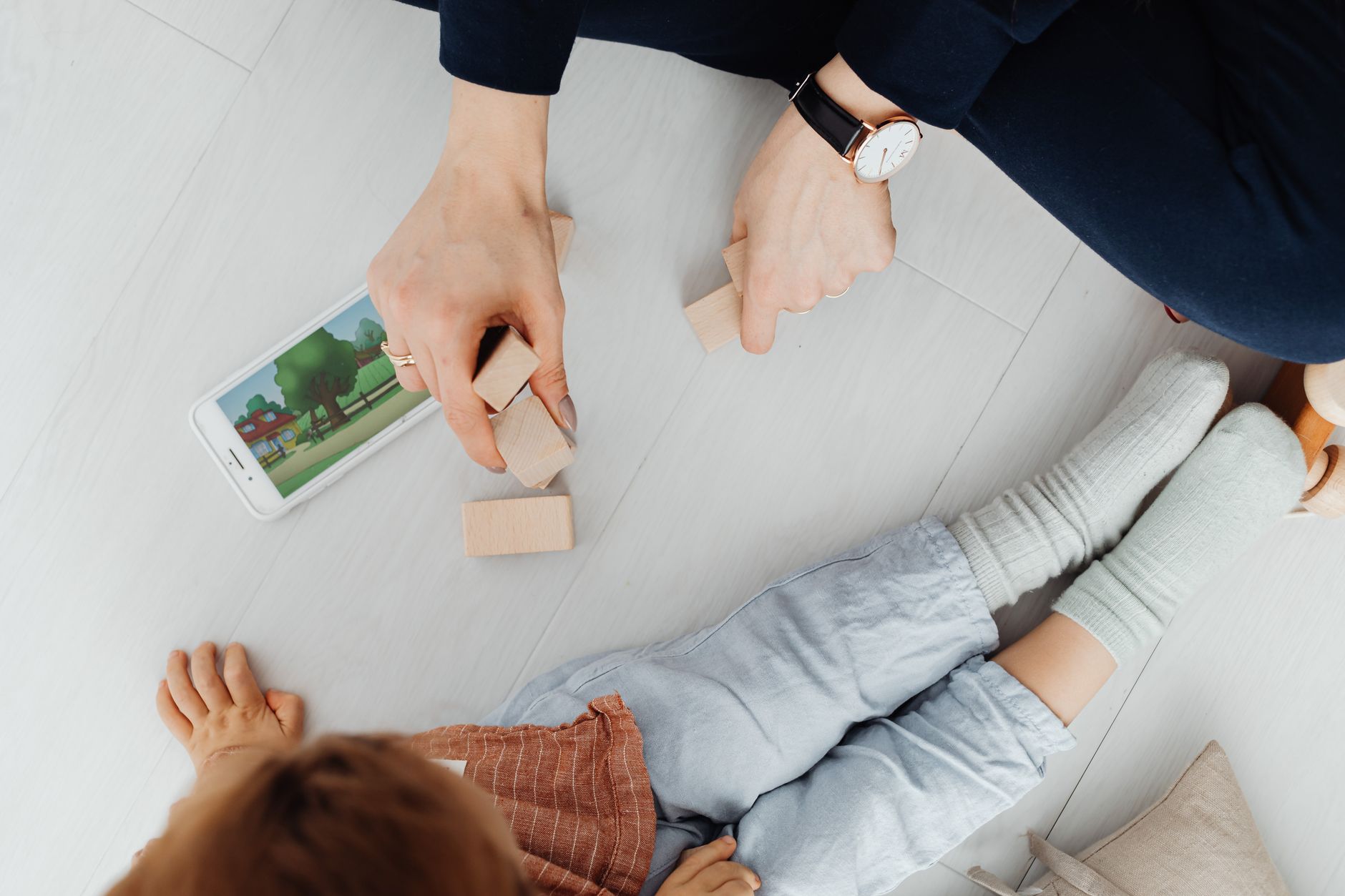
Cocomelon vs. other kids' shows for behavior: What makes it unique?
If you’ve ever compared Cocomelon to *Baby Shark* or *Ms. Rachel*, you know they’re not all the same. So how does Cocomelon stack up in terms of behavior, engagement, and developmental impact?
Here’s a quick comparison based on AAP guidelines and parent reports:
**Which is best for your toddler?**
- If your toddler is **easily overstimulated**, try *Ms. Rachel* or *Super Simple Songs* for a gentler pace.
- If your toddler **loves repetition**, Cocomelon or *Baby Shark* might work—but limit to short bursts.
- If you’re concerned about **behavioral dependency**, co-view with an activity (like coloring or dancing) to balance screen time.
- If you want **educational benefits**, pair Cocomelon with interactive play (e.g., singing along while building blocks).
**Real mom moment:** *A friend of mine tried switching from Cocomelon to *Ms. Rachel* because her daughter was getting fussy when the show ended. At first, her daughter resisted—but after a few days, she started engaging more with the gentler content. Now they watch *Ms. Rachel* during snack time and Cocomelon only for car rides.*
Cocomelon educational benefits for toddlers: What are they learning?
If you’ve ever watched your toddler bobbing their head to *Baby Shark* and wondered, *"Is this actually helping them learn?"*—you’re not alone. While Cocomelon isn’t a substitute for real-world play and interaction, it *can* have some developmental benefits when used mindfully.
The American Psychological Association (APA) notes that **high-quality screen time**—even for toddlers—can support early learning when it’s:
- **Interactive** (singing along, dancing, pointing at objects).
- **Short and frequent** (10–15 minutes at a time).
- **Paired with real-world activities** (e.g., singing *Wheels on the Bus* while pushing a toy car).
**Potential educational benefits of Cocomelon:**
- Language development: The repetitive nature of the songs can help toddlers learn new words and patterns. Studies from the NHS suggest that children who watch interactive shows (like Cocomelon) may develop larger vocabularies.
- Rhythm and music appreciation: The consistent beats and melodies can help toddlers develop a sense of rhythm, which is linked to early math and language skills.
- Social-emotional learning: Shows like *Baby Shark* can teach turn-taking (e.g., "You sing, I sing") and simple routines (e.g., "Goodbye, friends!").
- Cognitive engagement: The predictability of the shows can help toddlers develop early problem-solving skills (e.g., anticipating what comes next in a song).
**But here’s the catch:** Cocomelon’s primary goal is **entertainment**, not education. The repetitive structure isn’t designed to teach complex concepts—it’s designed to be *catchy*. That’s why experts recommend balancing it with:
- **Books** (like *Brown Bear, Brown Bear* by Bill Martin Jr.).
- **Outdoor play** (running, climbing, exploring).
- **Conversational play** (talking about what they’re doing, naming objects).
**Real mom moment:** *A reader shared that her daughter started saying *"Wheels on the Bus"* before bedtime—and now she’s asking for more books about buses and trucks. She realized Cocomelon had sparked her daughter’s curiosity, so she started reading *Wheels on the Bus* books together. Now they combine the show with real-world play (pushing toy buses around the house).*
Cocomelon impact on language development in toddlers: Does it help or hinder?
If you’ve ever heard your toddler singing *"Baby Shark"* before they can say *"mama"* or *"dada,"* you might be wondering: **Is Cocomelon helping—or hurting—their language development?**
The answer depends on *how* you use it. Research from the American Psychological Association (APA) suggests that **passive screen time** (just watching without interacting) may not support language growth as effectively as **active engagement** (singing along, naming objects, talking about what’s happening).
**How Cocomelon *can* support language development:**
- Repetition builds memory: The predictable lyrics help toddlers remember words and patterns, which is a key part of early language learning.
- Singing encourages vocalization: If your toddler sings along, they’re practicing speech sounds and rhythm.
- Conversations spark curiosity: After watching, ask questions like, *"What’s the bus doing?"* or *"Can you sing about the wheels?"* to extend the learning.
**How it *might* hinder language development:**
- Passive watching: If your toddler just sits and watches without singing, talking, or interacting, they’re missing out on the language-building opportunities.
- Reduced real-world talk: If screen time replaces conversations, mealtimes, or playdates, your toddler may miss out on rich language exposure.
- Overstimulation: If the show is too fast-paced, your toddler might tune out—especially if they’re not engaged in the moment.
**Tips to maximize language benefits:**
- **Sing along together.** Make eye contact and mimic their sounds.
- **Pause and talk.** After a song, ask, *"What’s missing? Can you sing about the *dog*?"*
- **Pair with books.** Read *Wheels on the Bus* or *Baby Shark* books together.
- **Limit to interactive moments.** Avoid letting Cocomelon run in the background while you do chores.
**Real mom moment:** *A friend of mine noticed her son was saying *"Baby Shark"* before he could say *"ball."* She started singing along and pointing at objects (*"Where’s the shark?" "Where’s the dog?"*), and soon he was combining words (*"Shark swim!"*). Now she uses Cocomelon as a language tool—singing, pausing, and talking about what they’re seeing.*
Cocomelon age recommendation for toddlers: When is it appropriate?
If you’ve ever wondered, *"Is Cocomelon too much for my 1-year-old?"* or *"Should my 3-year-old be watching it every day?"*—you’re not alone. The short answer? **It depends on your toddler’s age, development, and how you use it.**
The American Academy of Pediatrics (AAP) has clear guidelines:
- Under 18 months: Avoid screen time entirely, except for video chatting. At this age, toddlers learn best through real-world interaction, not screens.
- 18–24 months: If you introduce screen time, keep it to no more than 10 minutes per day, and always co-view with an adult. Choose gentle, interactive content (like *Ms. Rachel* over Cocomelon).
- 2–4 years: Limit to 1 hour per day, with a focus on high-quality, educational content. Cocomelon can be included—but it shouldn’t be the only show.
- 4–5 years: Still limit to 1 hour, but encourage more independent play and real-world activities.
**When to introduce Cocomelon:**
- If your toddler is **developmentally ready** for short attention spans (most toddlers can handle 10–15 minutes at this age).
- If it’s used as a **transition tool** (car rides, doctor visits) rather than a primary activity.
- If you’re **co-viewing** and engaging with them (singing, talking, pointing).
**When to avoid it:**
- If your toddler is **under 18 months** (the AAP strongly advises against screen time for this age).
- If it’s replacing **real-world play, books, or conversations**.
- If your toddler seems **overstimulated** (screaming, fidgeting, refusing to stop watching).
**Real mom moment:** *A reader introduced Cocomelon to her 18-month-old during car rides—and noticed her daughter became fixated on the show. She switched to *Ms. Rachel* for a gentler alternative and saw her daughter engage more with real-world play. Now she uses Cocomelon sparingly, only for special occasions like long drives.*
Cocomelon screen time guidelines: How to set healthy limits
If you’ve ever felt like you’re in a never-ending cycle of *"Just one more episode"* with your toddler, you’re not alone. Setting screen time limits can feel impossible—especially when Cocomelon seems to be the only thing keeping your little one calm. But with a few smart strategies, you can enjoy the show *without* it taking over your day.
Here’s how to set healthy limits:
1. Use the "One Hour Rule" for Toddlers (2–4 years):
- Set a daily limit of **1 hour total** for all screen time (not just Cocomelon).
- Break it into **two 30-minute sessions** (morning and afternoon) to avoid overstimulation.
- Use a **visual timer** (like a sand timer or app) so your toddler can see when the time is up.
2. Pair Screen Time with Active Play:
- For every 10 minutes of Cocomelon, have your toddler do **10 minutes of active play** (dancing, coloring, building blocks).
- Try the **"Screen Time + Activity" rule:** *"If you watch the bus song, we’ll build a bus with these blocks!"*
3. Avoid Background TV:
- If Cocomelon is playing in the background while you cook or clean, your toddler is likely watching it—even if they’re not looking.
- Instead, **watch together** and engage (sing, point, talk about what’s happening).
4. Use Parental Controls:
- Set up **YouTube Kids** (with strict parental controls) to limit access to only Cocomelon content.
- Use **app timers** (like *Screen Time* on iOS or *Digital Wellbeing* on Android) to block Cocomelon after 1 hour.
- Try **YouTube’s "Supervised Experience"** to restrict access to only approved content.
5. Create a "No-Screen" Routine:
- Designate **specific times** when screens are off (mealtimes, naps, bedtime).
- Replace Cocomelon with **books, puzzles, or outdoor play** during these times.
- If your toddler resists, **gradually reduce screen time** by 5 minutes each day until you reach your goal.
**Real mom moment:** *A friend of mine used to let her toddler watch Cocomelon for hours while she worked from home. She realized it was making her daughter fussy and dependent on screens. Now she sets a 30-minute timer, pairs it with coloring, and follows it up with a book. Her daughter still loves Cocomelon—but she’s also more engaged in real-world play.*
Cocomelon vs. Baby Shark behavior effects: Which is worse for toddlers?
If you’ve ever debated between *Baby Shark* and Cocomelon, you’re not alone. Both shows are viral sensations—but which one is *better* for your toddler’s behavior? The answer depends on how you use them, but here’s a breakdown of their potential effects.
**Baby Shark vs. Cocomelon: Key Differences**
- Repetition: *Baby Shark* is **more repetitive**—the same lyrics, the same melody, over and over. Cocomelon also repeats songs, but it varies the songs more (e.g., *Baby Shark*, *Wheels on the Bus*, *Old MacDonald*).
- Engagement Level: *Baby Shark* is **more addictive**—the fast pace and simple lyrics make it hard to resist. Cocomelon is also engaging but has a slightly slower pace.
- Behavioral Impact: *Baby Shark* can be **overstimulating** for some toddlers, leading to meltdowns when it stops. Cocomelon is slightly gentler but can still create dependency.
- Educational Value: Neither is *highly* educational, but Cocomelon includes **more varied content** (songs about animals, vehicles, routines). *Baby Shark* is mostly about repetition.
**Which is "worse" for toddlers?**
Neither is inherently "worse"—but *Baby Shark* is more likely to create **overstimulation and dependency** due to its extreme repetition. Cocomelon is slightly gentler but can still become a crutch if overused.
**How to use them mindfully:**
- **Limit to short bursts** (10–15 minutes max).
- **Pair with active play** (dancing, coloring, building).
- **Avoid using as a pacifier** (e.g., only letting them watch when they’re fussy).
- **Switch between shows** to keep things fresh (e.g., *Baby Shark* for car rides, Cocomelon for mealtimes).
**Real mom moment:** *A reader shared that her daughter became obsessed with *Baby Shark*—but she noticed her daughter was getting fussy and overstimulated. She switched to Cocomelon for a gentler alternative and saw her daughter engage more with real-world play. Now they take turns watching both shows, keeping things balanced.*
Cocomelon content analysis for toddlers: What are they *really* learning?
If you’ve ever wondered, *"What’s actually in Cocomelon?"*—you’re not alone. While the show is fun and engaging, it’s not designed to teach complex lessons. But what *are* toddlers picking up from those catchy songs?
**What Cocomelon *does* teach (intentionally or not):**
- Repetition and memory: The predictable structure helps toddlers learn patterns, which is linked to early language development.
- Basic routines: Songs like *Old MacDonald* teach turn-taking and simple sequences (e.g., *"Moos"* for cows, *"Oinks"* for pigs).
- Rhythm and music: The consistent beats help toddlers develop a sense of rhythm, which is important for early math and language skills.
- Social interactions: Shows like *Baby Shark* can teach simple greetings (*"Hello, friends!"*) and goodbyes (*"Goodbye, friends!"*).
**What Cocomelon *doesn’t* teach (and what parents should add):**
- Complex language: The lyrics are simple and repetitive—great for early words but not for advanced vocabulary.
- Problem-solving: There’s no real conflict or resolution in the songs—just repetition.
- Real-world exploration: Toddlers learn best through hands-on play, not screens.
- Emotional regulation: While songs can be calming, they don’t teach coping skills for big emotions.
**How to make Cocomelon *more* educational:**
- **Talk about what you’re seeing.** *"Look, the bus is going *vroom vroom*! Can you make the noise?"*
- **Pair with real-world play.** After watching *Wheels on the Bus*, take a toy bus for a "drive" around the house.
- **Ask questions.** *"What comes next in the song?"* or *"Can you sing about the *dog*?"*
- **Read related books.** After *Baby Shark*, read *Baby Shark’s Big Blue Ocean* or *Baby Shark’s Bath Time*.
**Real mom moment:** *A friend of mine noticed her son was saying *"Vroom vroom!"* after watching *Wheels on the Bus*. She started acting out the song with toy cars and soon he was combining words (*"Car go vroom!"*). Now she uses Cocomelon as a springboard for imaginative play—building roads, driving toy cars, and singing along.*
Cocomelon parental control settings: How to limit access safely
If you’ve ever felt like you’re in a battle of wills with your toddler over Cocomelon, you’re not alone. Luckily, there are **easy ways to set parental controls** to limit screen time and keep your little one safe. Here’s how to do it on the most common platforms.
On YouTube (and YouTube Kids):
- **Enable Supervised Experience:** This restricts access to only approved content (like Cocomelon). Go to Settings > Supervised Experience and turn it on.
- **Set Screen Time Limits:** In Settings > Screen Time Limits, set a daily limit (e.g., 30 minutes).
- **Use Restricted Mode:** This filters out inappropriate content. Go to Settings > Restricted Mode and turn it on.
- **Block Specific Channels:** If you don’t want your toddler watching other Cocomelon-related content, go to Settings > Blocked Content and add the channel.
On iOS (iPhone/iPad):
- **Screen Time Settings:** Go to Settings > Screen Time > Content & Privacy Restrictions > Content Restrictions > Web Content > Limit Adult Websites. Enable this to block non-child-friendly sites.
- **App Limits:** Set a daily limit for YouTube or Cocomelon. Go to Settings > Screen Time > App Limits > Add Limit and choose YouTube.
- **Guided Access:** Lock your toddler into a single app (like YouTube Kids) and set a timer. Go to Settings > Accessibility > Guided Access and enable it.
On Android:
- **Digital Wellbeing:** Set app timers for YouTube. Go to Settings > Digital Wellbeing & parental controls > Dashboard > App Timers and set a limit for YouTube.
- **Family Link (Google’s parental controls):** Use this to manage screen time, block apps, and set bedtime limits. Download the Family Link app and set it up.
- **YouTube Kids App:** The official YouTube Kids app has built-in parental controls, including screen time limits and content restrictions.
On Smart TVs (Roku, Fire Stick, etc.):
- **Parental Controls:** Most streaming devices have parental controls. For example, on a Roku, go to Settings > Parental Controls > Enable Parental Controls and set a PIN.
- **YouTube Kids App:** Install the YouTube Kids app instead of the regular YouTube app for safer, kid-friendly content.
- **Timer Settings:** Set a daily limit for how long your toddler can use the device. On a Fire Stick, go to Settings > Parental Controls > Screen Time and set a limit.
**Real mom moment:** *A reader struggled with her toddler constantly asking for more Cocomelon. She set up YouTube Kids with a 30-minute limit and used the Guided Access feature on her iPad. Now she can hand the tablet over without worrying—it automatically turns off after the timer goes off.*
Cocomelon alternative shows for toddlers: Gentle options for screen time
If you’ve ever felt like you’re stuck in a Cocomelon rut—or worried about overstimulation—you’re not alone. Luckily, there are **plenty of gentler alternatives** that offer similar engagement without the repetitive overload. Here are some of the best options for toddlers.
Gentler Alternatives to Cocomelon:
- Ms. Rachel (YouTube Kids): A slower-paced, interactive show with simple songs and gentle animations. Great for toddlers who need a break from fast-paced content.
- Super Simple Songs (YouTube Kids): Features a variety of songs (like *Baby Shark* but slower-paced) with simple lyrics and bright visuals.
- Pinkfong




