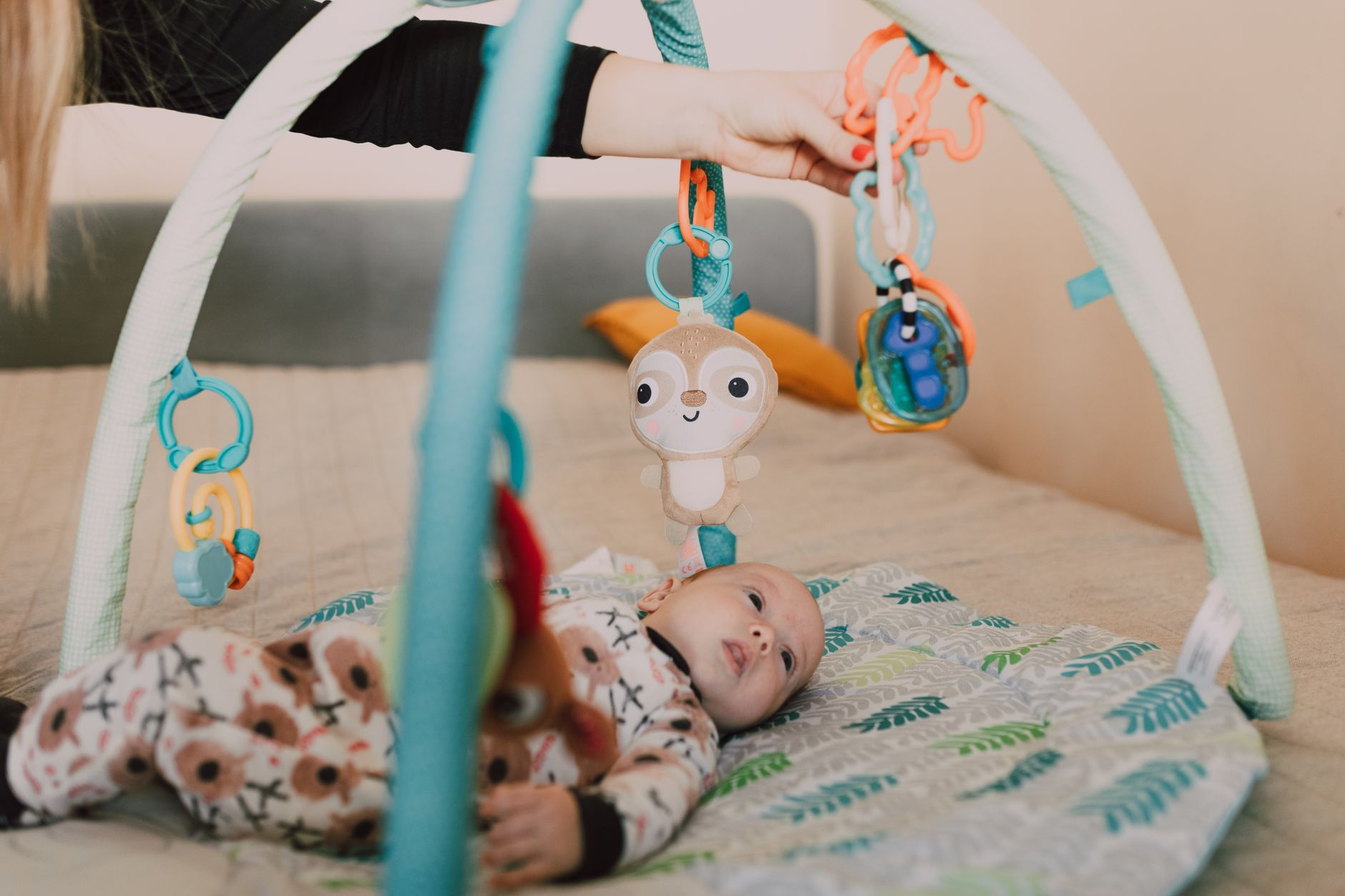
Discover the key baby milestones at 6 months, including physical, cognitive, and social developments. Learn what to expect and how to support your baby’s growth.
By Shubhra Mishra — a mom of two who turned her own confusion during pregnancy into BumpBites, a global mission to make food choices clear, safe, and stress-free for every expecting mother. 💛
Check whether any food is safe during pregnancy with the BumpBites Food Safety Checker.
Quick take: By six months most babies can roll over, sit with minimal support, babble and show early social smiles. Expect a range of normal – some may master these skills a few weeks earlier or later. If your infant is missing several of these milestones or shows concerning signs, reach out to your pediatrician.
It’s 2 a.m., you’re half‑asleep, and the soft coo of your baby in the crib makes you wonder: “Is this the right time for rolling? Is my little one supposed to be babbling yet?” You’re not alone. Six months is a bustling milestone checkpoint, and the flood of advice online can feel overwhelming.
In this guide we’ll walk through the typical physical, cognitive, language, and social‑emotional milestones you can expect around the six‑month mark, explain how to spot variations that deserve a chat with your provider, and share practical activities, nutrition tips, and safety reminders to help your baby thrive.
We’ll also answer the exact questions many parents type into Google, from “what are the typical 6 month baby milestones for rolling over and sitting up?” to “how many months before a baby can crawl after reaching 6 month milestones?” Let’s dive in, one milestone at a time.
What are the typical 6‑month baby milestones for rolling over and sitting up?
At six months, most infants are transitioning from reflexive movements to purposeful motor control. The two hallmark physical milestones are:
Rolling over: Babies usually roll from front to back (prone to supine) by 4–5 months and from back to front (supine to prone) by 5–6 months. By six months, you’ll likely see both directions.
Sitting up: Around the six‑month mark, many babies can sit upright with minimal hand support. By 7 months the majority sit unaided for short periods.
These skills rely on strengthening the neck, core, and shoulder muscles. You may notice your infant reaching for toys, kicking legs, and using their hands to push up during tummy time. The progression often looks like this:
Head control: lifts head 90° while on tummy (by 2–3 months).
Chest lift: pushes up on forearms, gaining weight‑bearing strength (by 4 months).
Rolling: uses torso rotation to turn over (by 5 months).
Sitting: leans forward, uses hip flexors, and gradually releases hand support (by 6 months).
Every baby develops at their own pace, and a few weeks’ variation is normal. The key is consistent forward movement—not a sudden stop. If you see your little one experimenting with one‑arm pivots or a brief wobble before they settle, that’s a sign the muscles are getting the practice they need.
Common concerns include:
Baby still on back at 6 months – often still within normal range if other skills are progressing.
Asymmetrical rolling (e.g., only front‑to‑back) – watch for symmetry over the next month; if it doesn’t develop, discuss with your pediatrician.
Safety tip: As your baby gains mobility, clear the floor of small objects, cover electrical outlets, and always supervise tummy‑time sessions.
Both the American Academy of Pediatrics (AAP) and the UK’s NHS note that early motor milestones are best assessed in the context of overall development, not in isolation. Regular well‑child visits give clinicians a chance to track progress and intervene early if needed.
Encourage rolling during tummy time with bright, easy‑to‑grasp toys.
When do babies usually start babbling and saying their first words at 6 months?
Language development accelerates around the half‑year point. By six months, most babies:
Produce repetitive consonant‑vowel sounds such as “ba‑ba,” “da‑da,” or “ma‑ma.”
Begin to respond to their name by turning their head.
Show interest in spoken language, smiling or cooing when you talk.
Babbling is the baby’s experimentation with the vocal cords, tongue, and breath control. It usually starts around 4–5 months, with “canonical” babbling (repeated syllables) becoming prominent by 6 months. First true words—often “mama” or “dada”—typically appear between 9 and 12 months, though some babies may say “baba” or “dada” earlier.
To nurture early speech, make the environment a language‑rich playground. Talk about what you’re doing, label colors and textures, and pause after you speak so your baby gets a chance to “reply.” Reading short, rhythmic books daily also builds auditory memory, and pointing to pictures while naming them reinforces word‑object connections.
It’s also helpful to keep a “babble diary” for a week—note the sounds your baby makes each day. You’ll often notice a pattern emerging, such as a preference for “b” or “m” sounds, which can guide you in choosing toys that encourage those phonemes (e.g., rattles that make a “b” sound when shaken).
Research from the AAP highlights that responsive “serve‑and‑return” interactions are linked to stronger language outcomes later in childhood, reinforcing the importance of frequent, intentional conversation even before words appear.
How can I tell if my 6‑month‑old’s motor skills are developing normally?
Observing a range of movements will give you a clear picture of motor development. Here’s a quick checklist you can use during daily play:
Milestone
Typical age range
What to look for
Head control
2–4 months
Turns head to side while lying on back; lifts head 90° in tummy time.
Rolling over
4–6 months
Rolls front‑to‑back, then back‑to‑front; uses torso rotation.
Sitting with support
5–6 months
Sits upright while hands support hips or forearms.
Reaching and grasping
4–6 months
Uses whole hand to scoop toys; transfers objects from hand to hand.
Fine‑motor hand‑to‑mouth
5–7 months
Brings objects to mouth deliberately, not just reflexively.
If your baby is missing multiple items on this list, especially rolling and sitting, it’s worth bringing up at the next well‑child visit. However, isolated delays (e.g., delayed rolling but strong grasp) are often just variations of normal development. The NHS’s “Baby‑check” guidance emphasizes that a single lag does not automatically signal a problem, but patterns should be monitored.
Watch for symmetry: both sides of the body should develop equally. Persistent asymmetry may signal a neurological concern that benefits from early assessment. According to the American College of Obstetricians and Gynecologists (ACOG), early detection of motor asymmetry can guide referrals to physical therapy before a child falls behind.
Safety reminder: As motor skills improve, baby‑proofing becomes essential. Secure furniture, use outlet covers, and keep cords out of reach.
What are the social and emotional milestones for a 6‑month‑old baby?
Social‑emotional growth at six months is subtle but observable. Key milestones include:
Reciprocal smiling: Your baby smiles in response to your smile, establishing a two‑way exchange.
Stranger anxiety: Some infants begin to show wariness around unfamiliar faces, often accompanied by a brief cry.
Expressive joy: Laughter emerges, especially during games like peek‑a‑boo.
Early attachment cues: Reaches for you, shows preference for familiar voices, and may calm when held.
These behaviors reflect the infant’s growing awareness of self versus others and the beginning of emotional regulation. They are also linked to language development; social interaction provides the context for babbling and later words.
To support healthy social‑emotional development, practice “serve and return” dialogue—respond to your baby’s coos with a word or smile. Even brief eye contact and a gentle “yes” or “no” helps the brain map social cues. The NHS recommends a minimum of 30 minutes of responsive interaction each day for infants under one year.
Gentle, brief separations (e.g., stepping out of the room for a minute) can also teach trust that you’ll return, laying groundwork for later independence. If your baby’s crying feels unusually intense or prolonged, keep a log of triggers and share it with your provider; sometimes feeding patterns or reflux can masquerade as emotional distress.
What signs suggest a 6‑month‑old baby may be behind on developmental milestones?
While variation is normal, certain patterns may indicate a delay that warrants professional evaluation. Look for:
Persistent inability to roll in either direction by 7 months.
Inability to sit with any hand support by 8 months.
Limited eye contact or lack of social smiles by 7 months.
Absence of babbling or vowel sounds by 9 months.
Failure to track moving objects smoothly across the visual field.
Early signs of autism can appear as early as six months, though they are subtle. Indicators include:
Limited eye contact despite a caregiver’s presence.
Reduced response to name or lack of orientation toward voices.
Unusual repetitive movements (e.g., hand flapping) that dominate play.
These signs do not confirm a diagnosis, but they are red flags for early developmental screening. The American Academy of Pediatrics (AAP) recommends routine developmental surveillance at every well‑child visit, with formal screening at 9, 18, and 24 months.
If you notice any of the above, schedule a discussion with your pediatrician. Early intervention services can make a significant difference when started promptly.
Which activities and toys help a 6‑month‑old reach their milestones?
Play is the work of a six‑month‑old. The right toys can reinforce motor, cognitive, and language growth while keeping safety front‑and‑center.
Motor‑skill boosters
Soft activity mats: Provide a safe surface for rolling and tummy‑time. Look for mats with contrasting colors that stimulate visual tracking.
Grasping rings and textured cubes: Encourage the pincer grasp and hand‑to‑mouth coordination.
Seated floor seats: Allow babies to sit with minimal support, promoting core strength.
Cognitive and cause‑and‑effect toys
Cause‑and‑effect toys: Simple toys that make noise when pressed (e.g., a wooden block that clicks) teach that actions produce outcomes.
Peek‑a‑boo scarves: Help develop object permanence—the understanding that things continue to exist even when out of sight.
Language‑rich options
Board books with high‑contrast images: Turn pages together, point to pictures, and name objects.
Singing plush toys: Play gentle songs that encourage babbling and turn‑taking.
When selecting toys, prioritize non‑toxic materials, no small parts, and sturdy construction. Rotate toys regularly to keep curiosity alive without overwhelming the space.
Mix tactile toys with books to support both motor and language milestones.
Nutrition tips to support 6‑month baby milestones
Nutrition fuels growth, so the transition to solids around six months should be thoughtful:
Iron‑rich purees: Offer iron‑fortified cereals, lentil or bean purees, and soft‑cooked meats to support brain development.
Healthy fats: Avocado, full‑fat yogurt, and small amounts of olive oil provide essential fatty acids for myelination.
Varied textures: Progress from smooth purees to mashed foods, encouraging oral‑motor skills needed for speech.
Hydration: Small sips of water in a cup can aid swallowing coordination.
Continue breastfeeding or formula as the primary source of nutrition until at least 12 months, supplementing with solids as directed by your pediatrician. The FDA’s “Guidance for Industry: Infant Formula” emphasizes that iron‑fortified formula remains essential until 12 months for most infants.
How many months before a baby can crawl after reaching the 6‑month milestones?
Crawling typically emerges after a baby has mastered sitting and early hip strength. The timeline varies:
Early crawlers: Some babies begin “commando” crawling (dragging the belly) as early as 6–7 months.
Classic hands‑and‑knees crawl: Most infants achieve this pattern between 7–10 months.
Late crawlers: A minority skip the traditional crawl and move directly to pulling‑to‑stand and cruising, usually by 11–12 months.
On average, expect a baby to start moving forward with hands‑and‑knees within 2–4 weeks after they can sit without support for a minute or two. The exact number of weeks can differ based on muscle tone, motivation, and floor space.
Encourage crawling by:
Placing toys just out of reach during tummy time.
Providing a safe, low‑carpeted area free of hazards.
Limiting time spent in restrictive seats (bouncers, swings) to allow floor exploration.
Remember, each baby follows their own path. If your infant has not begun crawling by 12 months, discuss it with your pediatrician to rule out any underlying issues.
How much tummy time is recommended for a 6‑month‑old?
The AAP and NHS both advise that infants get at least 30 minutes of supervised tummy time each day by six months, broken into shorter sessions that suit the baby’s mood. Tummy time builds the neck, shoulder, and trunk muscles critical for rolling, sitting, and eventually crawling.
Start with 5‑minute bouts when your baby is alert and happy, gradually extending the duration as stamina improves. If your baby fusses, place a mirror or a favorite high‑contrast toy within view to keep interest alive. The goal is cumulative time, not a single marathon.
When your baby first lifts their head, you’ll notice a “tummy‑time win”—a brief smile or a focused stare on a toy. Celebrate these moments; they’re the building blocks for later milestones.
Short, frequent tummy‑time sessions keep muscles active and mood positive.
What vaccinations are due at six months?
Immunizations protect infants when their immune systems are still developing. In the United States, the CDC’s 2023 schedule recommends the following vaccines around the six‑month mark:
Hib (Haemophilus influenzae type b) – fourth dose.
PCV13 (pneumococcal conjugate) – fourth dose.
Rotavirus – third dose (if using the 2‑dose series, the series is complete).
In the United Kingdom, the NHS schedule aligns closely, offering the 6‑month booster for DTaP/IPV/Hib and PCV, plus the first dose of the MenB vaccine. These vaccines are safe and have been shown to dramatically reduce severe disease. If you have concerns about vaccine timing or reactions, discuss them with your pediatrician; they can provide reassurance and monitor any side effects.
How to create a simple 6‑month milestone tracking chart
Keeping a visual record helps you notice patterns and share concrete observations with your provider. A printable chart can include columns for “Date,” “Milestone,” and “Notes.” Fill in each time you see a new skill—rolling, babbling, or a social smile. The NHS recommends reviewing such a chart at each well‑child visit to streamline the conversation.
Digital options are also handy. Many parenting apps allow you to log milestones and even attach photos or short videos. When you document both successes and any concerns (e.g., missed rolling attempts), you create a clear narrative that makes it easier for clinicians to decide if further assessment is needed.
Use a simple chart to track rolling, babbling, and social smiles.
Safe sleep recommendations for a 6‑month‑old
Even as babies become more mobile, safe‑sleep practices remain crucial. The AAP and NHS both advise the “Back to Sleep” position—placing the infant on their back for every sleep episode, even naps. A firm mattress with a fitted sheet, no blankets, pillows, or stuffed animals, and a sleep environment free of gaps are essential.
At six months, many infants can roll over during sleep, but you should still start them on their backs. If they roll onto their stomachs on their own, you do not need to reposition them unless they cannot lift their head. A sleep sack or wearable blanket keeps them warm without loose bedding.
Room‑sharing (but not bed‑sharing) with your baby for at least the first six months reduces the risk of sudden infant death syndrome (SIDS). Keep the crib or bassinet away from cords, curtains, or toys that could pose a choking hazard.
Doctor’s note
From our medical team: “Six‑month milestones are guidelines, not strict rules. If your child is progressing in most areas but lags slightly in one, keep an eye on it and share observations with your provider. Early, open communication helps identify any concerns while supporting your baby’s natural growth curve.”
Myth vs. fact
Myth: All babies should be crawling by six months.
Fact: Crawling typically appears between 7 and 10 months; many babies still roll and sit at six months while preparing for the next stage.
Myth: If a baby doesn’t say a word at six months, they have a language delay.
Fact: First words usually emerge after the first birthday. Babbling and vowel sounds are the true language milestones at six months.
Myth: You can’t teach a baby anything before they can sit up.
Fact: Even while lying on their tummy, babies learn cause‑and‑effect, object permanence, and early communication through interactive play.
Key takeaways
By six months most babies roll both ways, sit with hand support, and babble with repeated sounds.
Watch for symmetry and consistent progress; isolated delays are often normal.
Encourage development with tummy‑time, textured toys, and daily reading.
Introduce iron‑rich and healthy‑fat foods while continuing breastmilk or formula.
Safety matters: baby‑proof the floor as mobility increases.
If you notice multiple red‑flag signs—no rolling, limited eye contact, or absent babbling—consult your pediatrician promptly.
Frequently asked questions
What should a 6‑month‑old baby be able to do?
A typical six‑month‑old can roll over both directions, sit with minimal hand support, babble consonant‑vowel sounds, respond to their name, smile socially, and transfer objects hand‑to‑hand.
Is it normal for a 6‑month‑old to not roll over yet?
Yes, some babies roll later; however, if by 7 months your infant still cannot roll in either direction, discuss it with your pediatrician.
When do babies typically start sitting without support?
Most babies sit unsupported for short bursts between 7 and 8 months, after mastering sitting with hand support at around six months.
How many words should a 6‑month‑old baby say?
At six months, babies usually do not say recognizable words; they are busy babbling and experimenting with sounds.
What are the red flags for delayed development at 6 months?
Red flags include lack of rolling, inability to sit with support, no babbling, limited eye contact, and prolonged inconsolable crying.
Can a 6‑month‑old baby recognize their own name?
Many infants begin to turn toward familiar voices by six months, but consistent name recognition typically emerges closer to 9 months.
How can I tell if my baby is ready for solid foods?
Readiness signs include sitting up with minimal support, good head control, and a diminished tongue‑thrust reflex. Offer single‑ingredient purees and watch for any allergic reactions over 3‑5 days.
What are typical sleep patterns for a six‑month‑old?
Most six‑month‑olds sleep 12–15 hours total, including 2–3 daytime naps and a longer nighttime stretch of 10–12 hours. A consistent bedtime routine—dim lights, a lullaby, and a brief feeding—helps reinforce healthy sleep cycles.
Can a 6‑month‑old drink cow’s milk?
No. The AAP advises against giving whole cow’s milk before 12 months because it lacks essential nutrients and can be hard for a baby’s kidneys to process. Breastmilk, formula, or fortified alternatives remain the primary source of nutrition.
What’s the best way to encourage my baby to start crawling?
Place enticing toys just out of reach during tummy time, keep a safe, open floor space, and limit time in restrictive seats. Gentle “push‑away” games where you help the baby shift forward can also build confidence.
When to call your doctor
If you notice any of the following, contact your pediatrician right away: persistent inability to roll or sit, lack of babbling after 9 months, limited eye contact, prolonged inconsolable crying, or any sudden loss of previously acquired skills. This article provides general information and is not a substitute for personalized medical advice.
References
American Academy of Pediatrics (AAP). “Developmental Milestones: Birth to 2 Years.” Updated 2023.
Centers for Disease Control and Prevention (CDC). “Child Development: Milestones.” 2022.
World Health Organization (WHO). “Infant and Young Child Feeding.” 2021.
National Institute for Health and Care Excellence (NICE). “Developmental Surveillance and Screening in Early Childhood.” 2022.
Royal College of Paediatrics and Child Health (RCPCH). “Developmental Delay and Autism Spectrum Disorder.” 2023.
U.S. Department of Agriculture (USDA). “Nutrition for Infants and Toddlers.” 2022.
Healthline. “Baby Developmental Milestones at 6 Months.” Accessed July 2026.
American College of Obstetricians and Gynecologists (ACOG). “Physical Therapy Referral for Infant Motor Delay.” 2023.
National Health Service (NHS). “Baby Development: What to Expect at 6 Months.” Updated 2023.
Food and Drug Administration (FDA). “Guidance for Industry: Infant Formula.” 2022.
Centers for Disease Control and Prevention (CDC). “Immunization Schedule for Children Aged 6 Months.” 2023.
National Health Service (NHS). “Vaccination Schedule for Babies.” 2023.
American Academy of Pediatrics (AAP). “Safe Sleep Practices.” Updated 2022.
National Health Service (NHS). “Safe Sleeping for Babies.” Updated 2023.
Not sure about the label on Baby Milestones At 6 Months products?
Snap the ingredients list and SafeFilter checks every ingredient for your stage — only 3 free scans this month, then you're locked until reset. Unlimited from $7/mo or $50/yr.
When Shubhra Mishra was expecting her first child in 2016, she was overwhelmed by conflicting food advice — one site said yes, another said never. By the time her second baby arrived in 2019, she realized millions of mothers face the same confusion.
That sparked a five-year journey through clinical nutrition papers, cultural diets, and expert conversations — all leading to BumpBites: a calm, compassionate space where science meets everyday motherhood.
Her long-term vision is to build a global community ensuring safe, supported, and free deliveriesfor every mother — because no woman should face pregnancy alone or uninformed. 🌿
🌍 Stand with mothers, shape safer guidance
Join a small circle of experts who review BumpBites articles so expecting parents everywhere can decide with confidence.